
Home » Uncategorized (Page 24)
Category Archives: Uncategorized
Dropped into a Fairytale
Cruising the River Rhine from Koblenz to Bacharach is relaxing and mesmerizing. One medieval castle after another dots the high green hills along the way. Vineyards, planted perpendicular to the river on the steep hills, are interspersed with thick forest, now beginning to turn gold and scarlet. Along the way, quaint villages with tall towers and church steeples lay along the river side. It is a journey that transports one back in time.
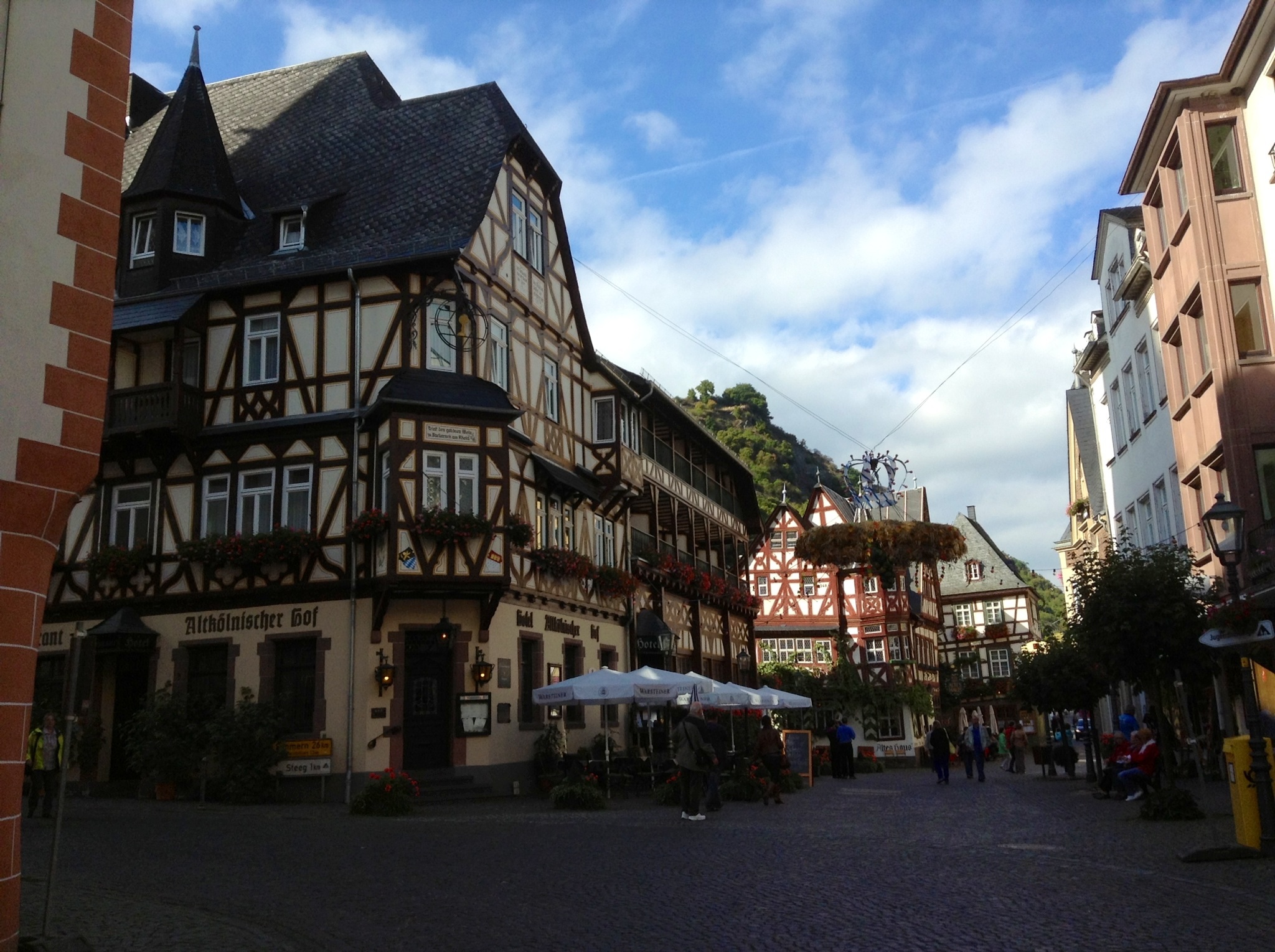
We had pre-made arrangements to stay in Bacharach for the evening. I had never heard of it, yet, wanted our friends, Allen and Rhonda, to experience a village along the river rather than traveling on to some large city for the evening. I was not prepared for the drop dead medieval beauty that lay in store. We entered the city from the water through an arched gate, and everywhere we looked we saw one astounding sight after another. It was as if we had been dropped into a fairytale. Half-timbered buildings dating from the 1300s lined the streets. A castle loomed over the village. A majestic Lutheran Church anchored the main square, and the remnants of a Gothic chapel, many gargoyles still flying in place, were perched on the cliff above. Vineyards rose up the hills to the rear of the village and along the valleys beyond. It was hard to believe that we had happened into such beauty, and yet, we had. WEG

Chocolate and Mercedes
Quote of the Day: “I might leave Allen behind, but I’m not leaving my chocolate behind!”–Rhonda
Shopping Tip of the Day: “The A series Mercedes is Allen’s new fav car.”–Allen
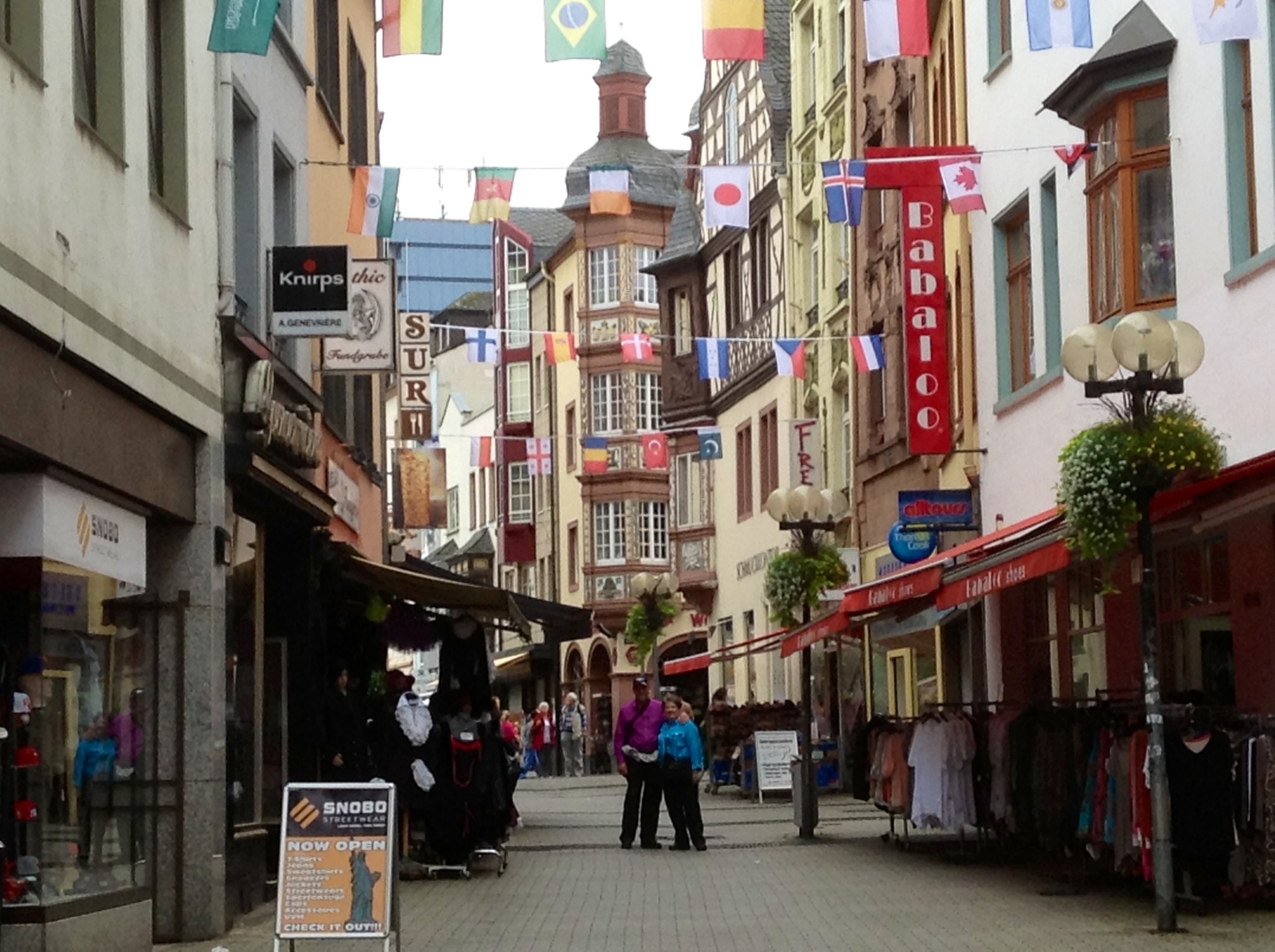
In between all of the merriment, we found Koblenz, Germany, to be a delightful city. The German Corner, or Deutsches Eck, is the focal point of the city with its imposing national monument to Kaiser Wilhelm at the point where the Mosel River joins the River Rhine. The Altstadt (Old Town) was stunning. The city fair was in full swing–strolling medieval performing troupe, German food stalls, medieval handicraft-making booths– the iron forger was very interesting–and beer booths and wine taverns made for a very interesting day. The fair was set amidst the beautiful surroundings of the ancient buildings with pastel colors and beautiful exterior scroll work. Live bands were providing entertainment. We ate and drank our way through the fair and also toured the Prince Elector Palace Gardens. The palace exterior was humongous and majestic. In the evening, we ate in a four-generation family-run restaurant that was so authentic it hurt. And the food was amazing–when Chef Allen says it is at the top of his list, that is noteworthy. WEG

Rhonda Rides Again
+Did Rhonda ride a train, a subway, and a bus all in one day?
+Did Rhonda ride transportation in order to partake of the “longest bar in the world” in Dusseldorf, Germany?
+Did Rhonda “ride” the Aachen Altar Guild about how they arranged the Cathedral flowers?
+All of the above?
Yes, it was, all of the above!
What an eventful day! We experienced almost all forms of transportation as we traveled to Aachen and Dusseldorf today. Aachen is famous as the founding point of Europe, when Charlemagne united most of the continent as the Holy Roman Empire in the late 700s A.D. Aachen was the seat of Charlemagne’s government, and the great cathedral that was built there was the scene of over 40 coronations of royalty over the centuries. The interior is basically royal blue and gold mosaic tile–gorgeous and regal! A city fair was just kicking off, and the winding cobble stone streets lined with beautiful traditional buildings were alive with outdoor cafes filled with people.
Dusseldorf is the fashion center of Germany, with its famous “Ko” street lined with exclusive shops. We, however, were more interested in the Altstadt, or Old Town, which is noted for its numerous (over 300) biergartens and eateries, acclaimed as “the longest bar in the world.” We walked the River Rhine and the narrow streets of the Altstadt dotted with many beautiful plazas. We ate German potato salad, cabbage slaw, potato pancakes, German beef goulash, and other traditional foods.
We were thrilled with the traditional German architecture we encountered today in both Aachen and the Altstadt in Dusseldorf. Lots and lots of pictures were taken. The weather was wonderful as was our day. WEG


Chocolate
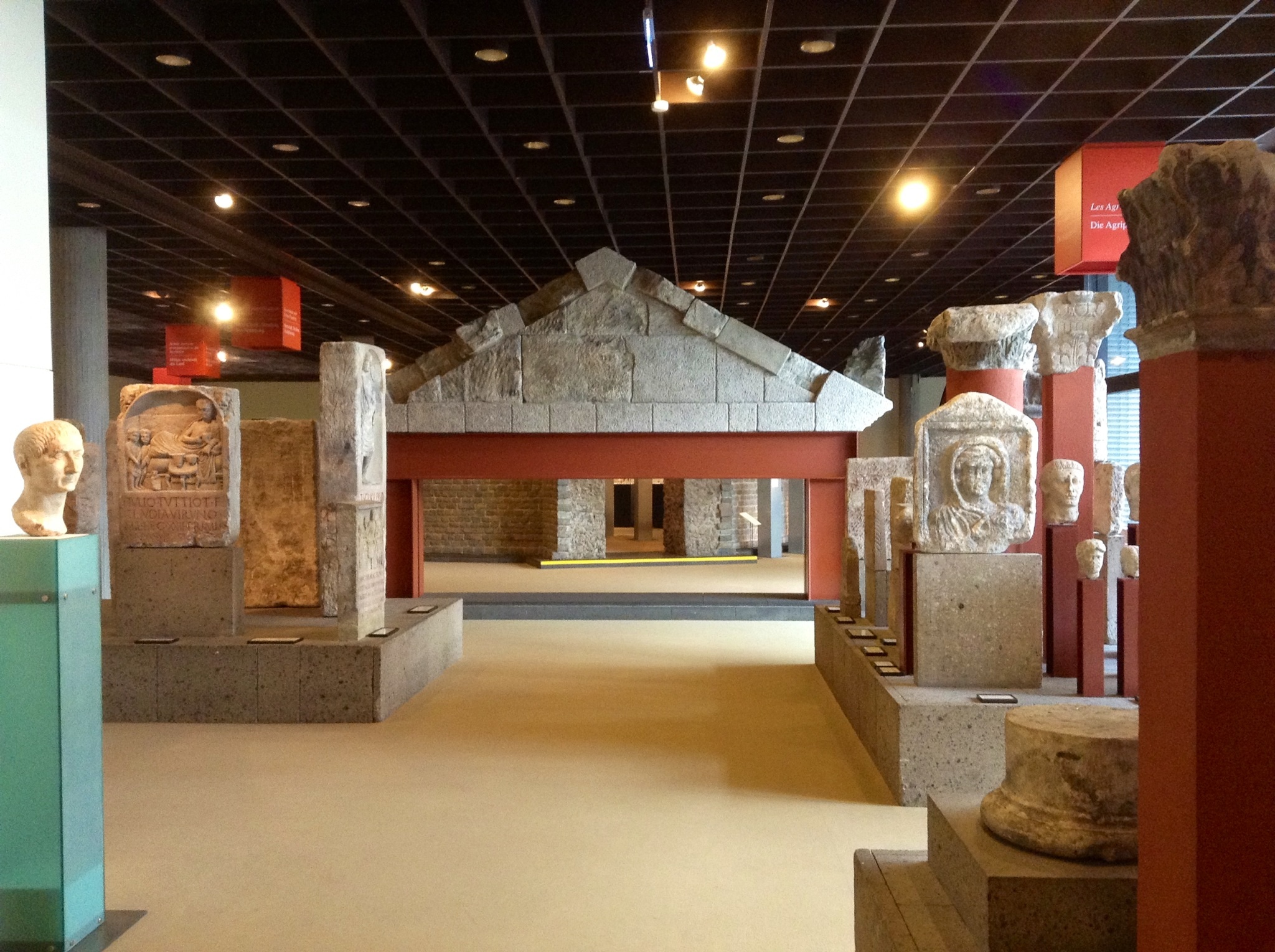
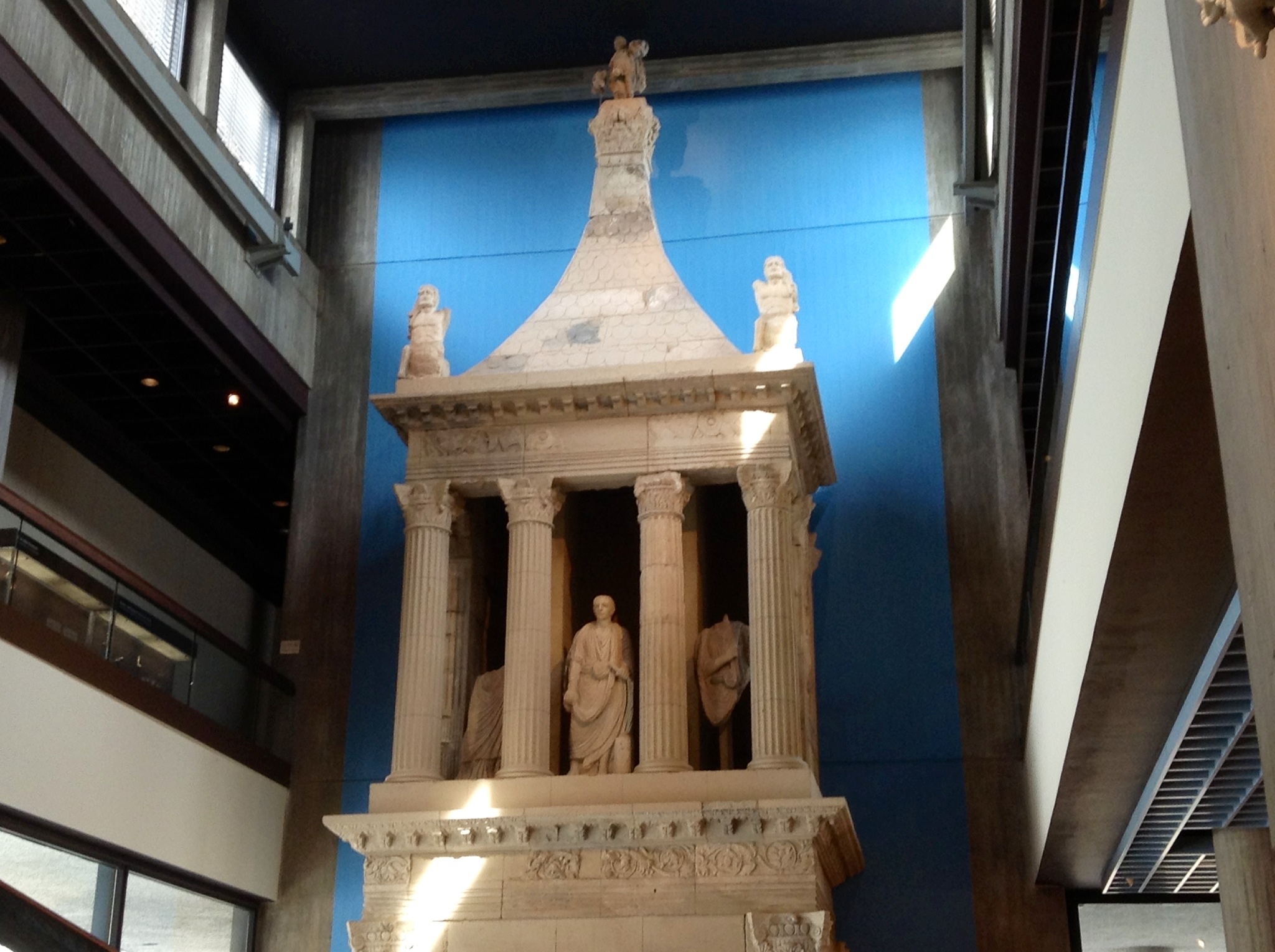
It was museum day in Koln (Cologne) today. Both the Romisch-Germanisches (Roman-German) Museum and Das Schokoladen (The Chocolate) Museum held delightful surprises.
One thinks of Italy when the Roman Empire is mentioned, but Koln was the Capitol of the Northern Part of the Empire and a very important Roman outpost. Not only did a major road connect the city to Rome, but trade from the area was important to the Roman economy. Therefore, Roman artifacts abound in the city and the museum is a repository of many of the precious items uncovered over the years. In my opinion, the museum is as good in historical documentation as any in Italy that I have seen. This is the first museum in which I have seen the incense altars at which all Romans were required to throw increase to honor Roman religious deities. This the Christians refused to do, and thus they were persecuted.
Das Schokoladen Museum was a totally different kind of experience. The striking architecture of the building as it sat on a small island on the River Rhine was a dramatic introduction to the history of chocolate that lay within the walls. The European taste for chocolate caused the need for chocolate production and transportation to explode. The museum tracked that history from its beginning in the new world until today. A chocolate factory lay within the walls as well, and one could observe up front and personal the production of a bar of chocolate. We could buy different varieties of chocolate in a large visitor shop, and our friend Rhonda loaded up. She said it was for friends back home, but I have already observed her husband Allen sneaking some. If any of you reading this blog were thinking Rhonda was buying some for you, my guess is you shouldn’t hold your breath! WEG

<a 
Goodby–Hello
We said “goodby” to our friends in Telgte, Germany, took the train to Koln (Cologne) and said “hello” to our Tomball/Rosehill friends, Allen and Rhonda, who are joining us in a German travel adventure over the next few weeks.
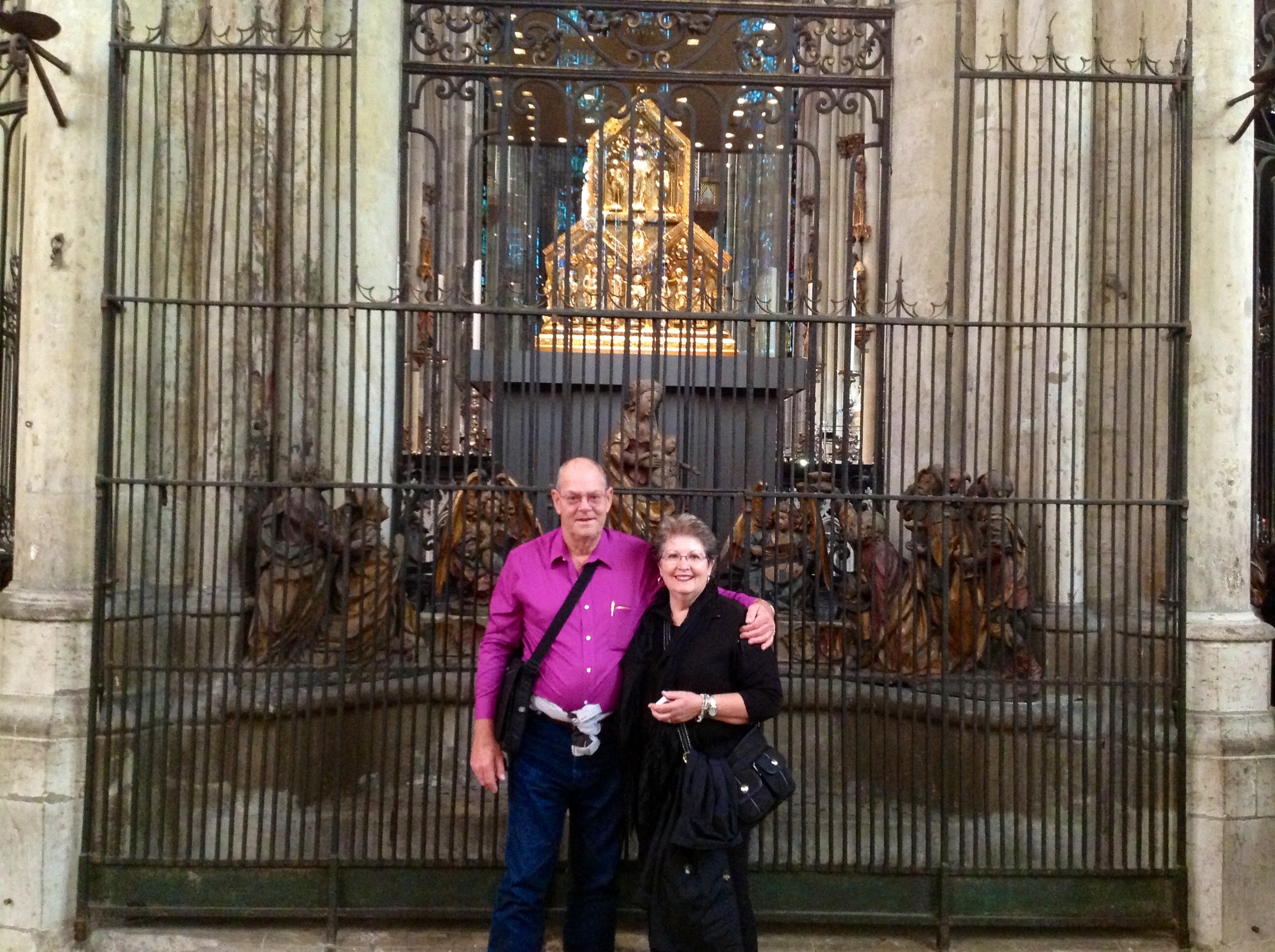
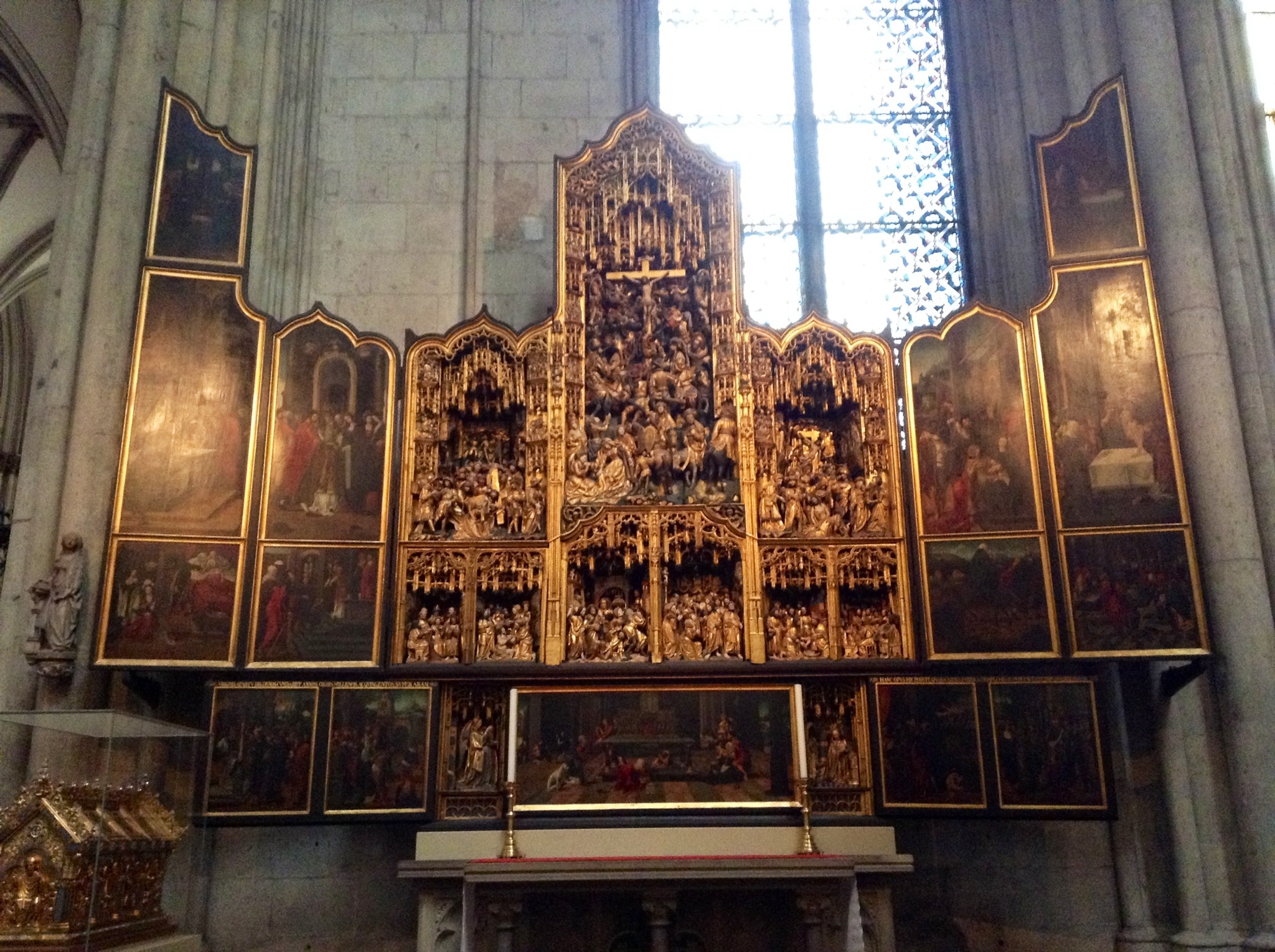
We spent a great afternoon in the magnificent Koln Cathedral. Its twin spires reach 516 feet and the Gothic structure is magnificent as it towers over the Rhine River. The flying buttresses almost seem delicate, like lace. The interior contains beautiful stained glass windows, but the highlight of the church is the huge gold container, in which, it is claimed, are the remains of the three Wise Men, who brought the gifts of gold, frankincense and myrrh to the Christ Child. The end cap of the container holds their three crowns, which are only displayed on January 6–Epiphany–the date on the Christian calendar commemorating the coming of the Wise Men to Bethlehem.
Since Rhonda has been active in the Altar Guild at Salem Lutheran Church of Rosehill over the years, we visited the Cathedral Treasury, which houses the religious supplies of the cathedral, still in use, but centuries old. Gold and sliver communion ware, Cardinal copes and mitres, altar linens and illustrated liturgy books were some of the precious items held in the treasury. Before we knew it, several hours had passed.
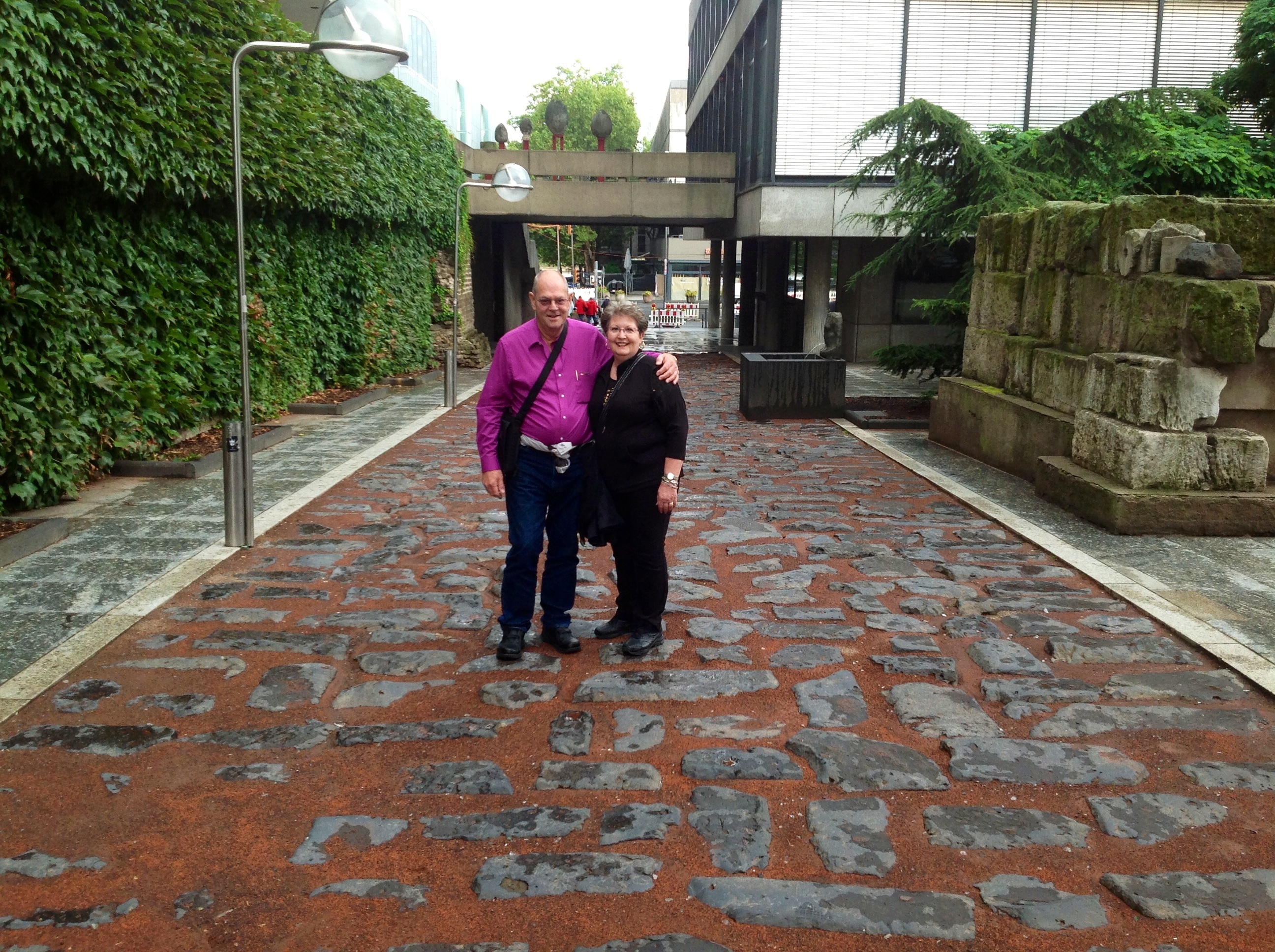
At the side of the cathedral plaza we found the old Roman road, uncovered in more recent excavations. Built in 37 B.C. when Cologne was an important Roman outpost, the bumpy rock road gave credence to the ancient phrase, “All roads lead to Rome.” We walked the road built before the time of Christ.
It was time to eat. We headed straight for the Fruh Brewery, known for its Kolsch beer, which is served in thin glasses. If you don’t put a coaster over your glass, the wait staff will keep bringing beer, putting a mark on a coaster to keep count. We all ordered traditional German fare like oxtail soup and sweinhoxen (a braised pork hock). Very good! We didn’t have room for dessert. A great first day for a German adventure. WEG


Rouladen
German food is surprising in many ways, but always tasty. We have been fed fabulously over the past five days while in Telgte. Some of my favorites and insights:
+ I walked past the potato pancake kiosk at the Maria-Geburtsmarkt Festival several times and could not stop because we were going to eat somewhere else. Today, we had some free time, and I was able to eat four potato pancakes. Made with grated potatoes, the pancakes are fried and slathered with apple sauce–too good, and they went down fine.
+ Rouladen is a thin cut flank steak filled with coarse sausage and a mustard sauce and dill pickle and baked in a dark herbed cream gravy. Amazing! Its most important side is spatzle, a heavy noodle made from dough cut into boiling water. I could have eaten, but did not, the entire serving dish for all 75 guests at the meal. Fortunately, I also eaten it at the Bavarian Inn to which we were taken several days earlier.
+ Beer. In Germany, it is food :-). The Germans take beer production, refined over the centuries, quite seriously. Order the wrong one and you are seen as ignorant or offensive. For instance, in Munsterland, an alt (old beer) is popular and is served in a regular looking beer glass, but in Koln (Cologne) it is called Kolsch and served in a narrow tall glass. Dare not order Alt in Koln or Kolsch in Munster, although the two cities are close in proximity. Whatever the name, it is good. Right now we are in light-colored beer country, not dark beer. This is good for me since light beer is my preference. My wife, Kathy, much prefers dark beer. In Spain and Italy, I wanted pastries, she wanted gelato–in Germany, I want light beer, she wants dark. Don’t tell her that I planned this entire German adventure to keep us in areas where only light beer is produced–water for her, beer for me.
+ Plum cake, whether it is in the form of a crumble cake, or a kuchen, plum pastries are wonderful–enough said. I ate it every day at least once. Kathy wanted some of mine and I said, “Go eat gelato.” Of course, I did not say that! I hid my pastries from her instead. Of course, I did not do that. Well, maybe, once.
I could write much more about steak tartar and sausage and saurkraut and wine and foods I cannot pronounce much less spell–it was all good! Our hosts were outstanding and Holger and Silka who were with us daily and took us under their welcoming wings are outstanding and loving folks. Many thanks to God for such blessings and friendships. WEG
The Maria-Geburtsmarkt Festival
It has been going on for 775 years.
It has a large midway with games and rides.
It has an old-fashioned carillon.
It has the German version of fair food.
It has shops that sell authentic “made in Germany” items.
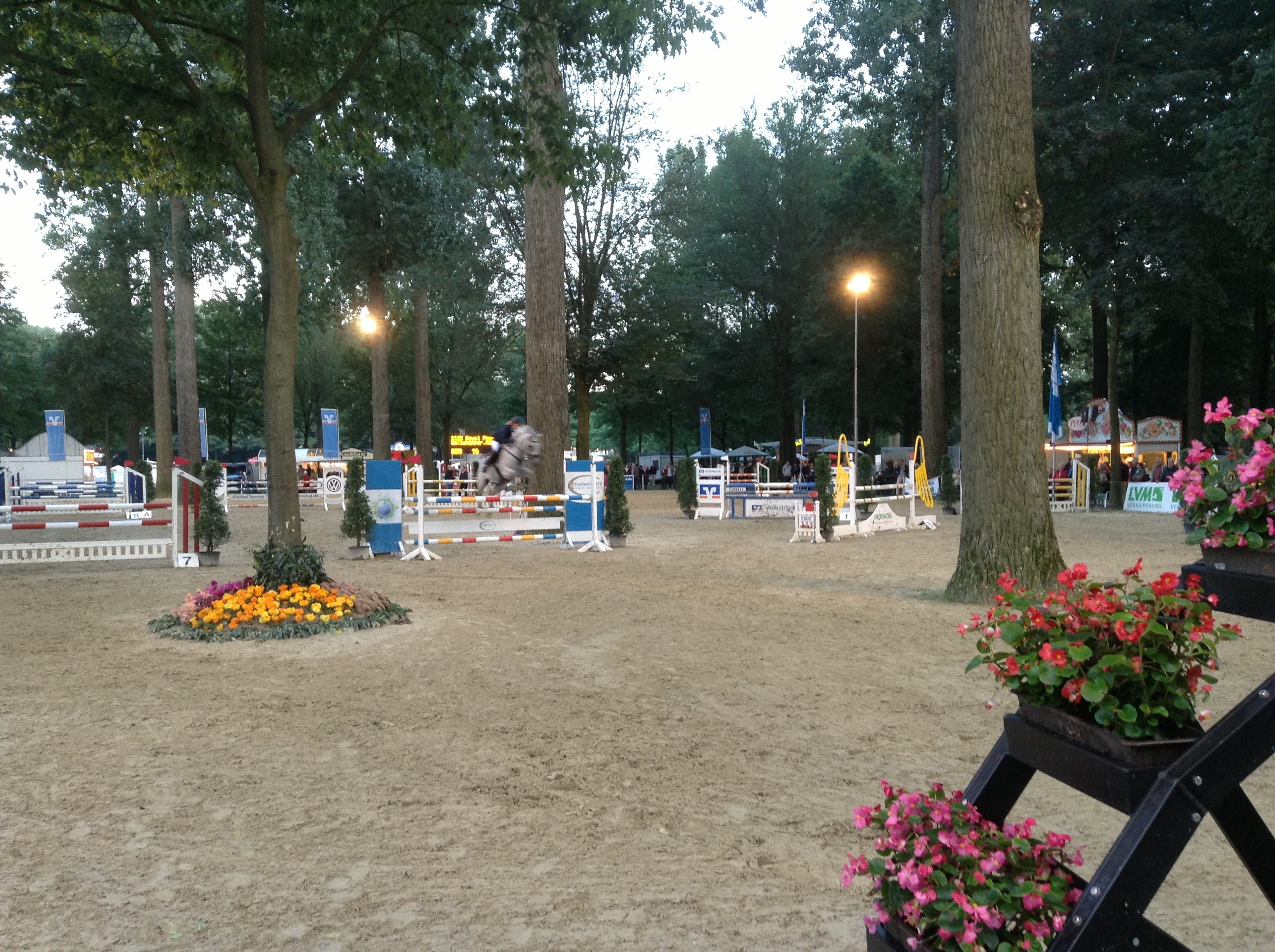
It has a horse arena for riding competitions.
It has livestock trading.
It has an explosive fireworks display.
It has thousands of attendees.
It’s the Maria-Geburtsmarkt Festival in Telgte, Germany!
Tonight the Sister City participants were treated to a white tent event at the horse steeplechase arena. Free food, free drinks, good seats!
The Maria-Geburtsmarkt Festival started in the Middle Ages after lightning struck a linden tree in the city that caused an image of the Virgin Mary to appear in the charred wood. The fair was begun in her honor and has been held annually ever since. The fair continues the medieval tradition of selling livestock on a handshake when the price is right. If the price offered is too low, the seller slaps away the outstretched hand of the bidder until the bidder offers an acceptable price, at which time the seller clasps the hand of the bidder, and the deal is done.
It has been another wonderful day in this charming Sister City of Tomball, Texas. WEG
“Food, Glorious Food!”
The day started with a worship service at the Lutheran Church in Telgte, Germany. The sister city delegations from Poland, Russia, and Tomball joined our German hosts at St. Peter’s Church. A choir and orchestra led the festive, joy-filled service. Occasionally, we sang hymns in all four languages simultaneously.
Following worship, we were treated to a soup meal in the churches fellowship hall–a welcome treat on a cool rainy morning. Carolyn, Kathy L., Diane, my wife, and I then got into rented Mercedes vans, accompanied by our hosts, Holger & his wife, and medical student, Nick, and his mom, and headed out into the countryside. What refreshing beauty–manicured farm lands, impressive homes and barns with red-tiled roofs, corn fields ripe for harvest, reaching right up to the edge of the country roads! Many roads were lined with white-barked linden trees just beginning to turn red as the cool weather approaches. We headed into the hills and into deep dark forest on winding roads. Soon, we reached a Bavarian Inn–though we are not in Bavaria, but North Rheinland Westphalia. Here we dined on Bavarian sausages and saurkraut and spatzle–a German noodle–served with big steins of beer. I took a short walk into the woods until called back to our group. We headed out beyond the forest to the Unesco World Heritage city of Tecklenburg, famous for the German tribe victory against invading Roman legions centuries ago. The city is charming with its white stucco and wood frame houses and buildings, narrow streets and imposing towers. Here, we were seated at a popular pastry shop where we happily ate humongous pieces of German Black Forest cake, poppy seed cake and plum cake. We walked the city’s streets for awhile and then had to rush back to a country guesthouse where we sat to eat an amazing meal of everything German–chicken schnitzel, red cabbage, German potato salad, etc. and, of course, more beer. It was a feast day for sure!
The evening ended quite festively when a Russian delegate pulled out an accordion and Russian dances soon commenced. A woman from Poland stood and sang a native ballad impromptu and unaccompanied. We Tomball folks sang, “The Eyes of Texas are Upon You.” More Russian singing and dancing followed. We retired for the evening quite satisfied after a wonderful day amongst international friends. WEG 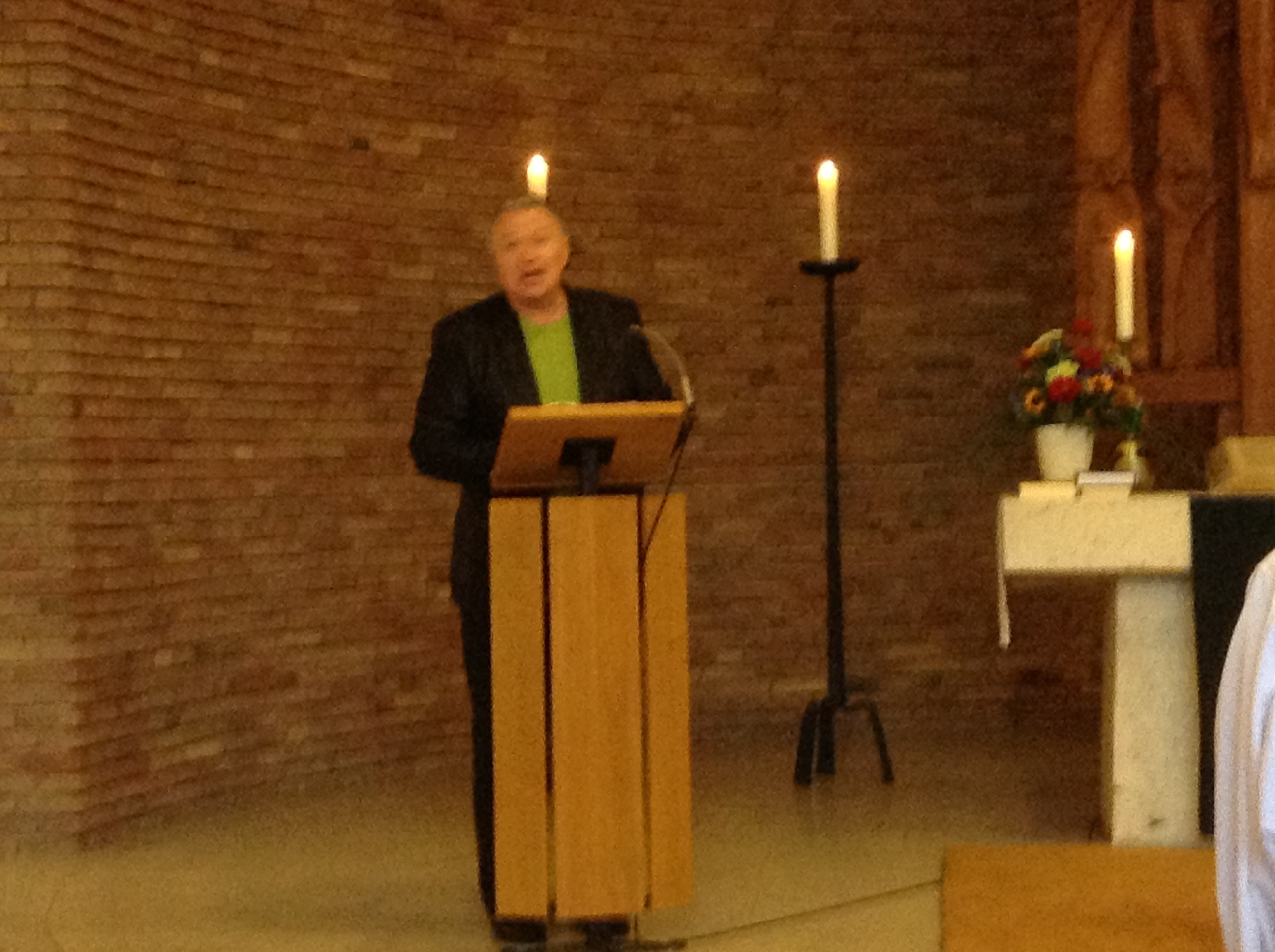


It Begins
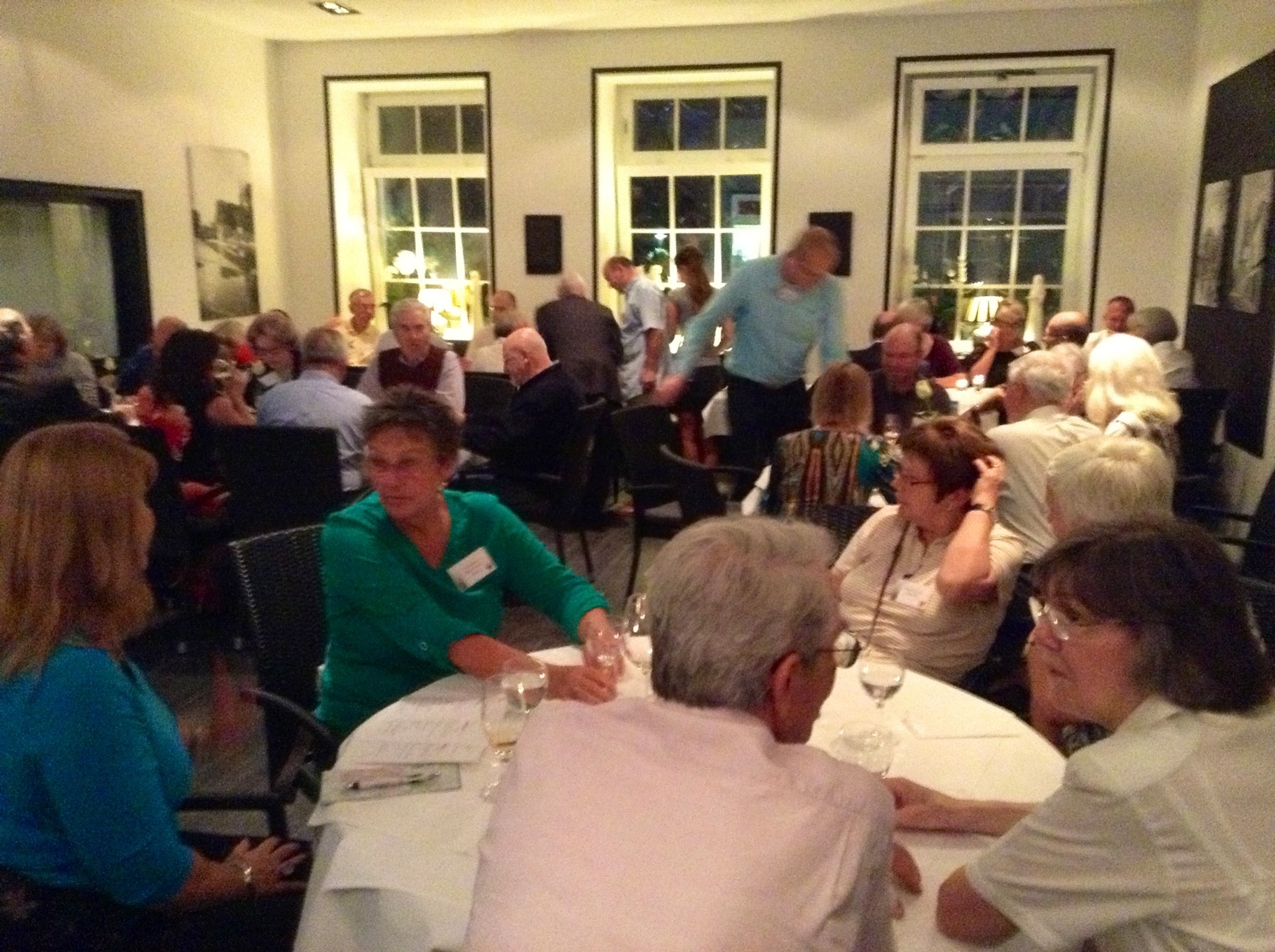
The official opening of the Telgte Sister City Celebration began this evening. The delegations from Poland, Russia, and Tomball were welcomed by the Burgermeister and the Telgte Sister City Team for a festive evening of food, drink, and fellowship.
Telgte is a wonderful city, and the leadership of the city has gone all out to make our stay pleasant and welcoming. It is good to see so many of our Tomball friends here for this event. We look forward to making even more friends while here.
The rage here in terms of food is “spaghetti ice cream,” made by pressing ice cream through a cold potato ricer and adding red strawberry cream toppings (sauce) and slivered white almonds (parmesan). All the ice cream shops have various sauce selections for your frozen “spaghetti.” We also learned a new dark beer “Altbier” drink, mixed with raspberry syrup, called in Germany, “Alt Schuss.” We will try to recreate our new German foods with other recipes we have learned in other countries when we return home at the end of the year. WEG

Telgte
In 1999, I had my first glimpse of Telgte, Germany. I was a team member with the Tomball community leadership which established a sister city relationship with this quaint northwestern German city and as such attended the official declaration activities. Today, Kathy and I arrived to attend more sister city activities and Telgte is rolling out the red carpet. It is the city’s 775th running of its city fair, the Maria-Geburtsmarkt.
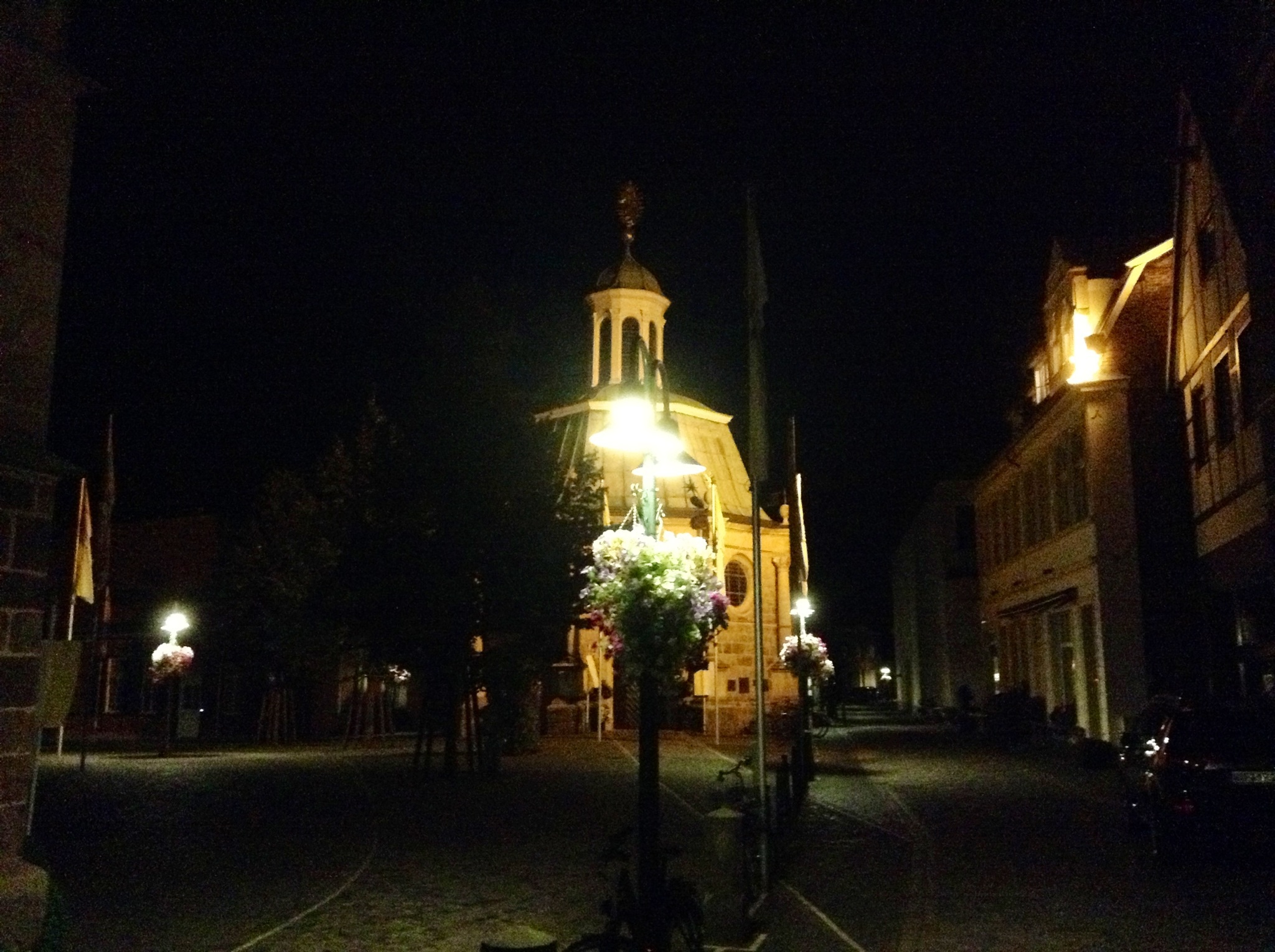
Telgte is the image of the idealized German city–narrow cobblestone streets with bicycle traffic, flowers blooming everywhere, public art, baroque architecture, outdoor cafes and beer gardens, brick wine cellars, a beautiful church with tall steeple and a river with a water wheel that runs through the center of the city. It is peaceful, yet vibrant. The city planners are strict to keep the city’s look and feel intact. Kathy and I love it here–somewhere from deep inside our past heritage, this feels familiar.
We sat outside in a beer garden in the pleasant evening air, drank local beer, ate schnitzel, took a quiet walk and once again felt thankful for the year of travel we are experiencing. WEG
 kgraumann
 wgraumann
 gofarther.me