
Contrasts
Krakow is a city of extreme contrasts. Beauty is everywhere. History permeates the fabric of life. Prosperity is evident. Food is glorious. Underneath it all is the story of pain endured and hope restored.
The most telling recent example of that pain is the indescribable loss of the Jewish community in the city. For centuries, the Krakow Jewish community had flourished in the city. With 20% of the city’s population, or 65,000 people prior to WW II, the community was integral to all that was Krakow. Then, the Germans invaded and the Nazis were in control. Life changed. Everyone suffered in Krakow, but the Jews vanished. We saw the ghetto wall that was constructed to contain the Jews. We saw the square in which brutality was exacted upon the ghetto inhabitants on a daily basis. We saw the massive jail built by the Nazis to hold “subversives.” Thousands were sent to work camps and extermination camps where they died or were murdered. One day in March, 1943, the ghetto was “liquidated.” In the end, less than 1,000 survived. We saw the memorial to the victims, and we saw the “factory” made famous by the book and movie called “Schindler’s List,” where one person, sick of the terror, risked all to save the Jewish work prisoners at his factory. What chilling sights! The horrendous Auschwitz Extermination Camp lies outside Krakow. We did not have time to visit it.
The city survived the war basically unscathed physically, but emotionally devastated. Today, its past is part of its story. The city has grown and prospered. We saw churches as beautiful as anywhere. We saw historic palaces and squares vibrant with life. We saw Israeli tourists flocking to the city as a place of their history and a story of survival and hope. We saw synagogues repaired and an old Jewish area brought back to life.
I think that if cities were jewels in a crown, Krakow would be one of them, and it would be a pearl–produced through long pain, emerged to be beautiful and gaining luster with age. WEG
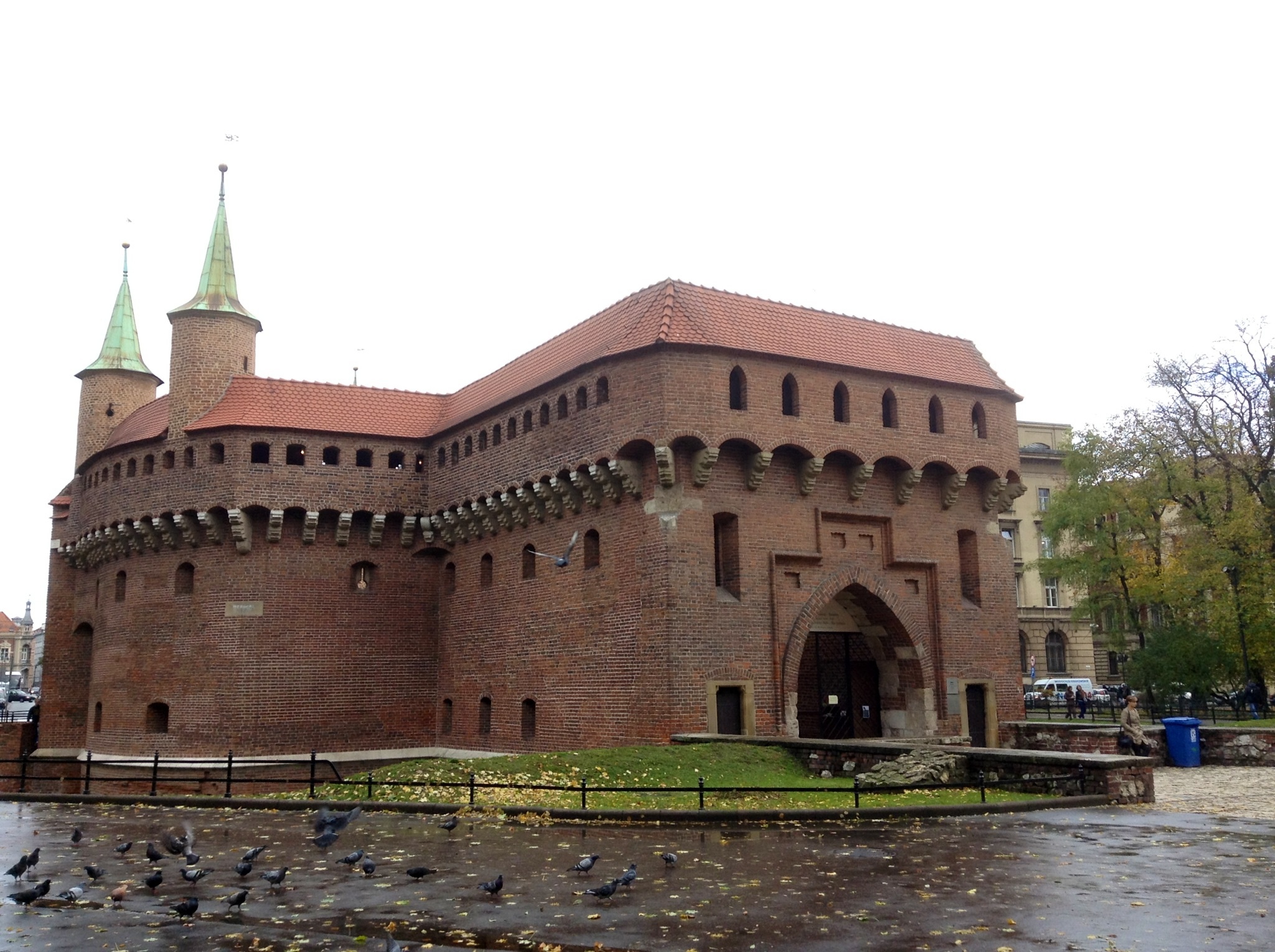
Krakow’s 15th century circular fortress, the Barbican
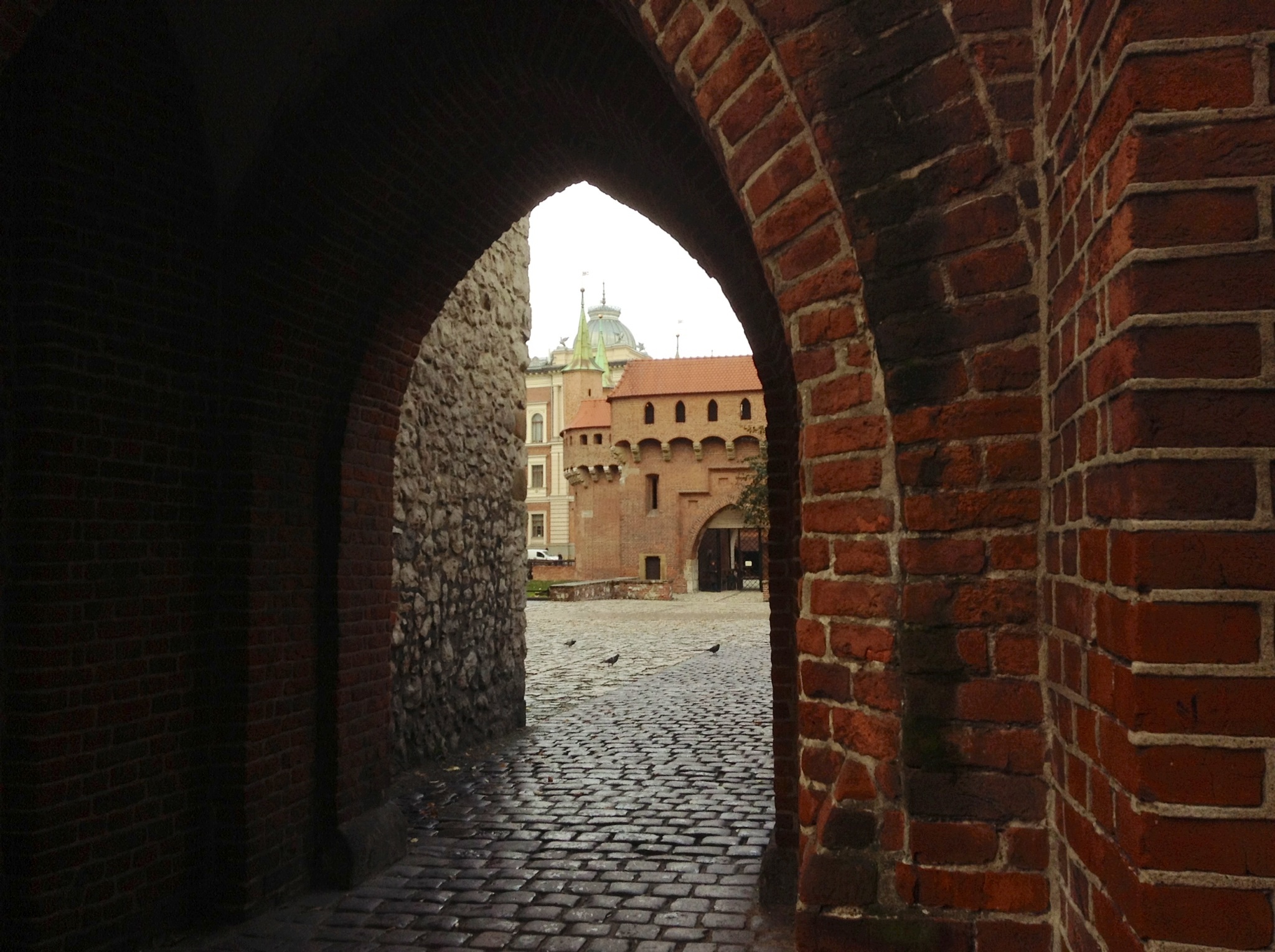
The Florianska Gate from 1307, across from the Barbican, is the beginning of the “Royal Route.”

Interior view of St. Mary’s Basilica in Krakow’s main market square, the Rynek, the largest medieval market square in Central Europe

Krakow’s Slowacki Theatre, completed in 1893

Krakow’s Wawel Castle

Krakow’s Cloth Hall from 1300 where textiles, fabrics, pottery, and woodcraft are sold in merchant stalls

Jewish Temple Synagogue used by the Nazis as a warehouse and stables, now hosts concerts and religious ceremonies

Jewish Ghetto Wall Fragments

Jewish Ghetto Heroes Square
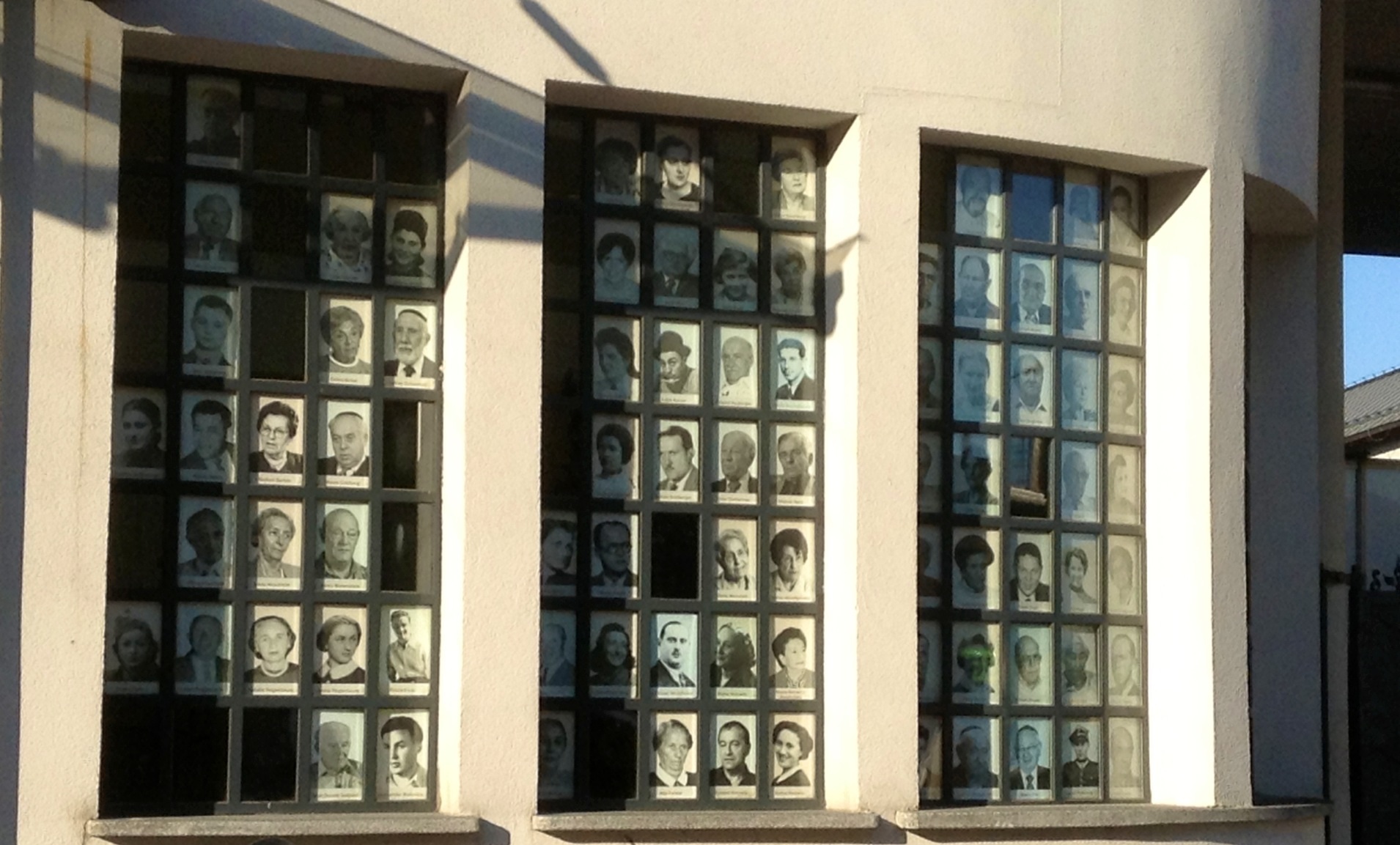
Photos of some of the 1,200 Jews saved by Oskar Schindler

A beautiful park in Krakow’s Old Town by the Barbican – October 2013
Worth Your Salt
Today I really was in a salt mine, the most famous one in the world, in fact. In the first group of sites to be named a Unesco World Heritage Site, the Wieliczka Salt Mine is truly amazing. Started in the 1200s and going down over 1,000 feet deep, the mines are filled with grottoes, caverns and miles of tunnels. Carved statues line the way, and one chapel holds weekly worship services still today. Even the massive chandeliers are carved from salt as are the tile floors, altars, and wall art, including a replica of “The Last Supper.”
Because salt was so valuable, more costly than gold, a person who worked hard and did well was said to be “worth their salt.” There is a health resort in the mines, lakes, restaurants, and gift shops. One of the large caverns was being set up for a boxing match, and the deepest cavern holds the Guinness World Record for the deepest bungee jump.
Tours from our hotel were sold out for the day, so we ventured out on our own. We found a city bus that went to the mine and jumped on it. The ticket machine on the bus did not take paper money, and we had no coins. A teen-aged boy was helping us negotiate the machine, and an older gentleman who saw our predicament dug through every pocket to make change for our bill. Tickets in hand, we were secure in our journey. On the bus ride, a group of young Australians–in their 30s–boarded and were so kind to us. We ended up on the same salt mine tour, and they made sure we were in the right place at the right time. We love venturing out, off the beaten tourist path. We had a fun and educational day, in Krakow. WEG

Wieliczka Salt Mine outside Krakow, Poland

One of the salt statues carved in the salt mine

The chapel is all salt–even the chandelier–in the bowels of the earth
Appreciated Upgrade
Today was a long day and a travel day. The train ride from Wroclaw to Krakow, Poland, was five and a half hours long. Thankfully, there were no transfers, so we settled into our comfortable seats and stayed put. Some interesting tidbits. Poland is still developing after such a long and harsh communist rule. The gray and drab buildings of the communist era stick out like a sore thumb. You can see upgrades being made everywhere, but there is so much to do. The train tracks along the first part of the journey were new. Everything was so clean and smooth, and I even commented such to Kathy. Then, we hit the renewal section, and everything slowed down. For possibly 100 miles, the tracks were being replaced and new buildings were being built or old ones refurbished. Old factories were closed and decaying while new ones were being utilized or constructed. The train moved slowly for several hours. The autumn scenery, thankfully, was spectacular. The train itself, and this is true of all the trains we saw, was old. I reminded Kathy that 37 years ago we used such trains in Germany, and they were new then. The good news is that the old trains had seats that could make into a bed and, sure enough, I could manipulate them to do that. The windows also open. No leather seats, though. The bathrooms (I posted a video some time back of the marvels of the new high tech bathrooms in modern trains) were anything but high tech. You stepped on foot levers to make water run for the commode and the wash basin. We passed trains that were older than the one we were riding. I must say, however, that the train seats were comfortable.
Once we arrived in Krakow, in the evening, we were surprised to find that our hotel upgraded us to a marvelous suite. Here we do have leather couches 🙂 and several rooms. It is an appreciated and unexpected treat that we will appreciate for the next few days as we explore this ancient and one time capitol city of Poland. WEG
An Eastward Pull
I have noticed that Poland is a nation that has both a Western and an Eastern face. Over centuries, this part of the world was a tug of war between the East and West. After WW II, under Russian influence, it took an Eastern turn. You can see it in the buildings, not the simple box-like structures the Communists built to replace destroyed buildings after the war–and it looks like the Polish authorities are revamping those buildings to look Polish–but in the old buildings, the ones that could be in Germany, except the woodwork and turrets are different, and the colors are more pastel. They have an Eastern flavor. (A bit of history–this area is known as Silesia, a battleground over centuries, as Austria, Poland, and Prussia fought over it. Eventually, it was Germany for centuries, and mainly Lutheran. After WW II, the Russians gave it to Poland, as an outcome of the Potsdam Agreement, in exchange for annexing part of Poland into Russia. Overnight, Germans were forced out, and displaced Poles were transported in. Lutheran churches became Roman Catholic and, under Russian domination, Poland took an Eastern turn.)
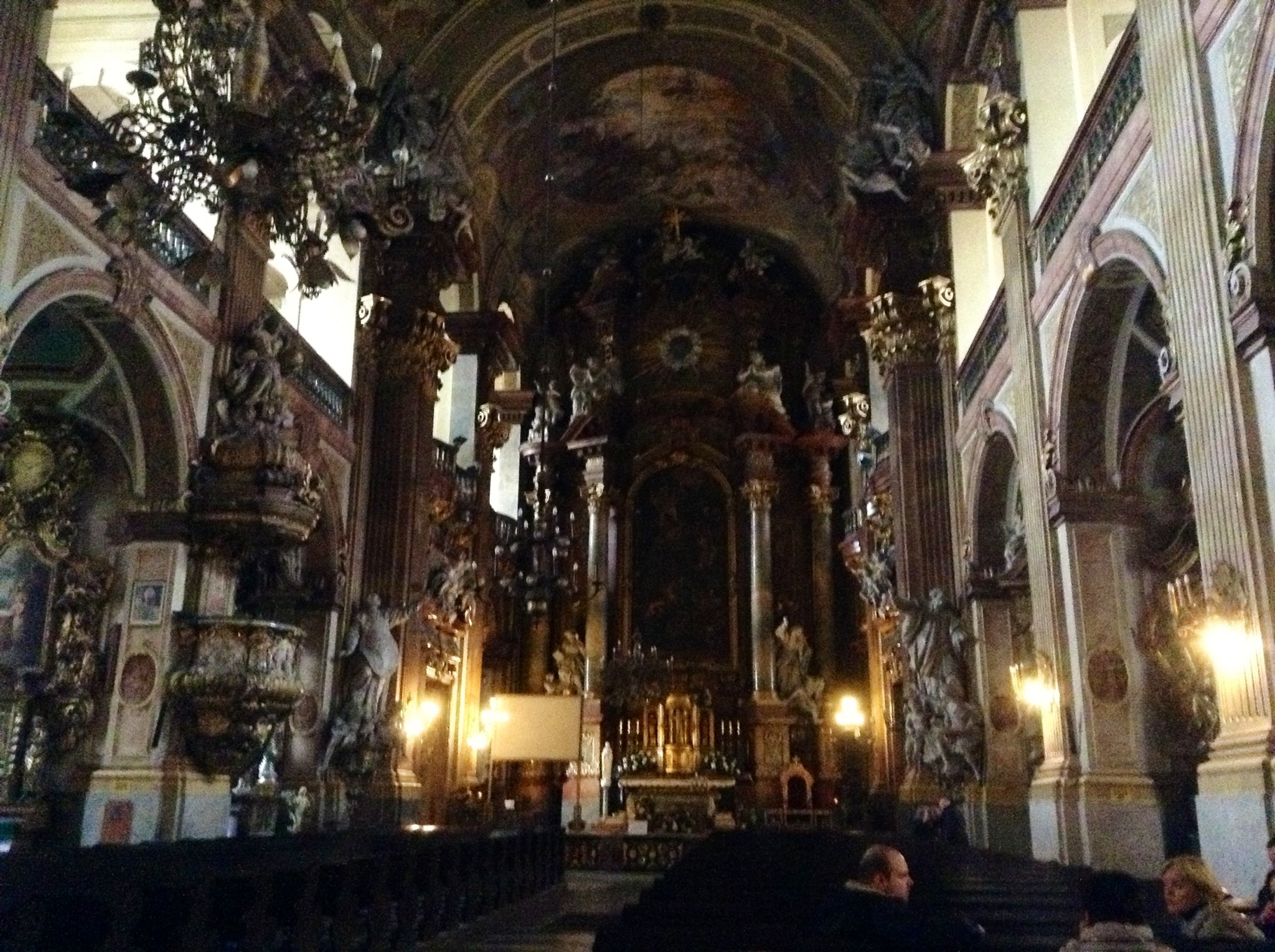
Baroque Church of the Most Holy Name of Jesus, Wroclaw, Poland
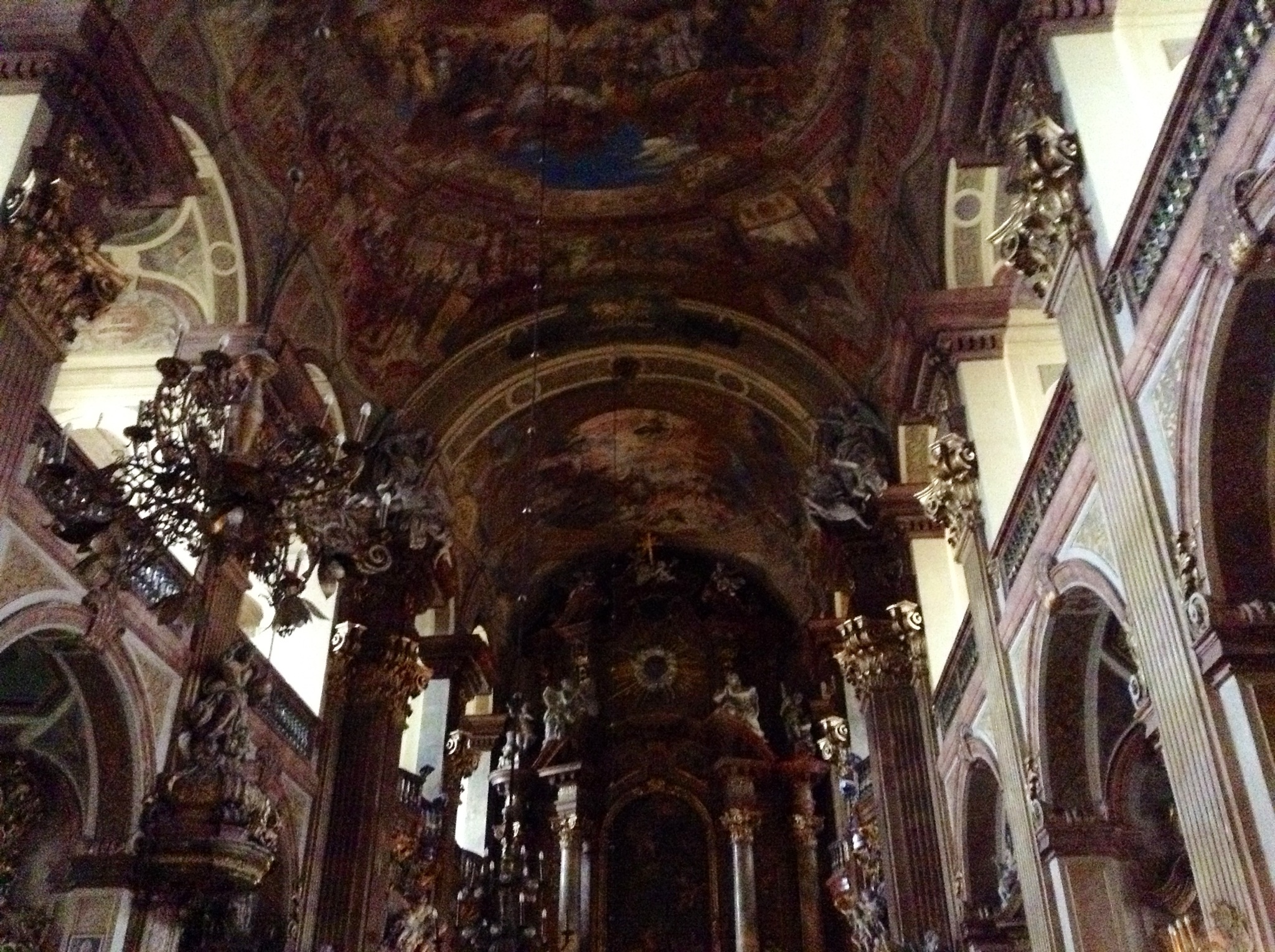
Church of the Most Holy Name of Jesus, Wroclaw, Poland
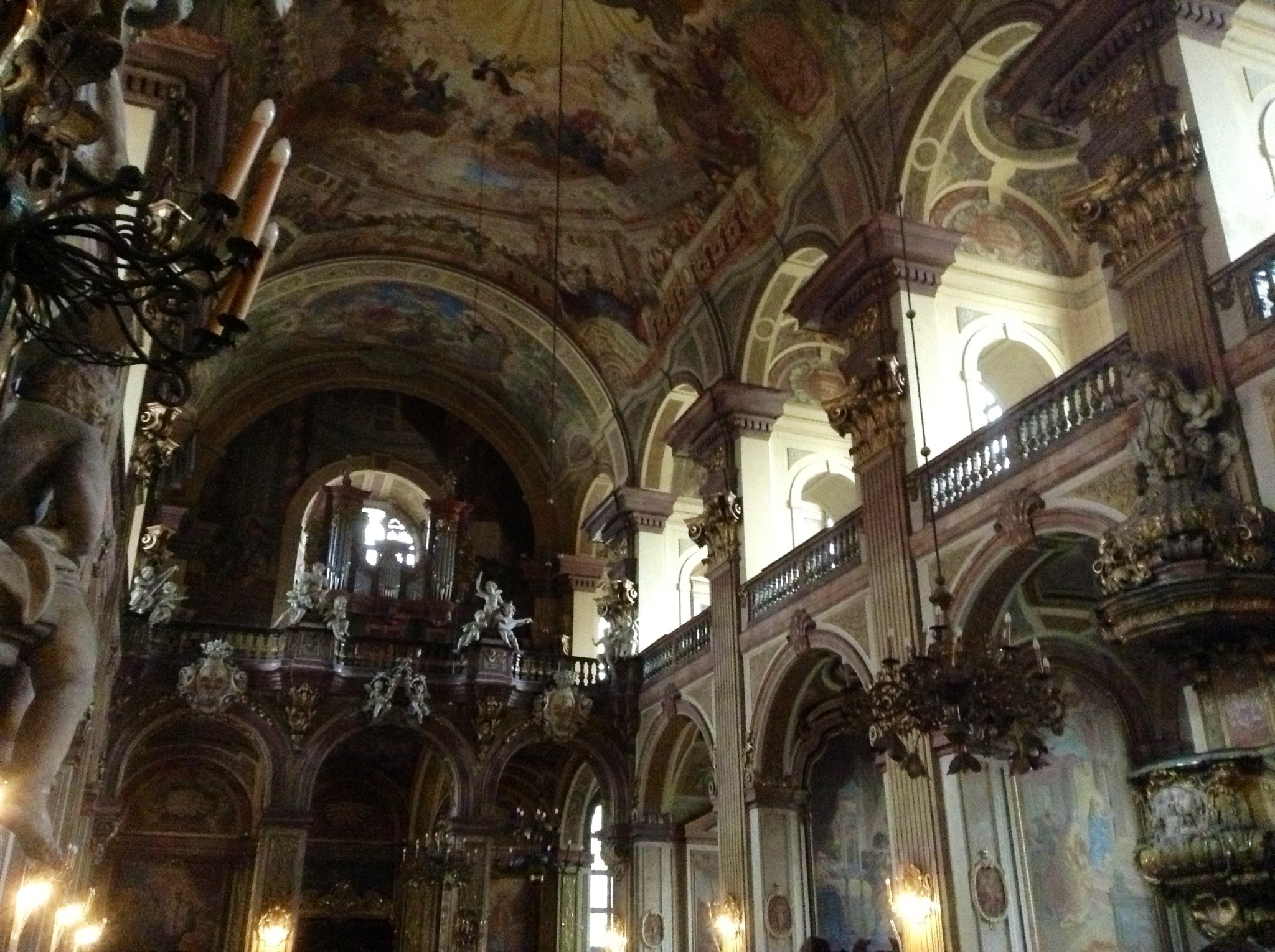
Interior of the Church of the Most Holy Name of Jesus, Wroclaw, Poland, miraculously avoided destruction during World War II.

Old Town street scene in Wroclaw, Poland

Street scene in Wroclaw, Poland’s Old Town
Today, we ate amazing food. Yes, we got the wonderful lard spread with roasted garlic again, along with great sour dill pickles and cabbage salad fixed three ways; but, pierogi were the star. They are delectable dough pockets filled with cottage cheese, potatoes and onion, boiled and covered with onions sautéed in bacon fat–need I say more! I wanted more, but nine huge ones seemed like the place I should stop! I consoled myself with the thought that we go to Krakow in east Poland for several days–more of an Eastern turn–and I can “fill-er-up” there. Oh, I forgot to mention the hot chocolate so thick, you ate it with a spoon, covered with real whipped cream and dark chocolate curls. Are you hungry yet? WEG

Pierogi lunch Kathy and I shared in Wroclaw, Poland

Traditional Polish restaurant in Wroclaw, Poland, which served pierogies and other traditional fare
Lard Spread on Bread
It’s our first time in Poland and for our first meal, I ate lard on bread. Don’t knock it until you’ve tried it. It was good. Made with lard and garlic, it spread easily over the fresh baked roll, also made with garlic. The main course was an oven baked bread pocket filled with beef and cabbage or chicken and cheese. Delicious.

Eating lard on bread in a traditional Polish restaurant in Wroclaw
The train ride from Dresden to Wroclaw was one of the longer we have taken to date, so we didn’t get in much sightseeing once we arrived. However, the train ride was marvelous. Valleys and hills and lakes and rivers surrounded by trees rushing toward full fall colors. I could not take my eyes away from the scenery during the journey.
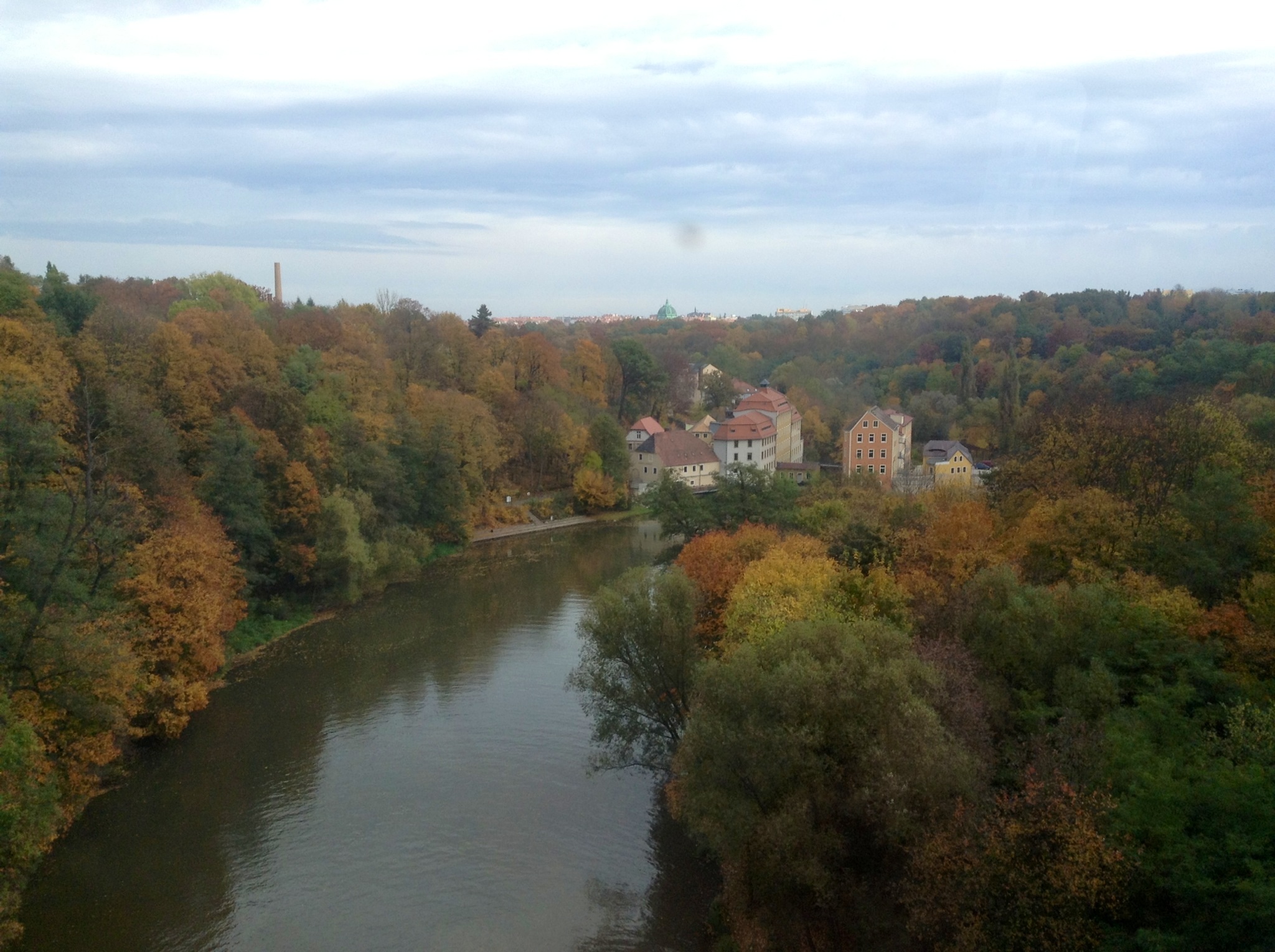
Autumn scenery on the train ride between Dresden and Wroclaw/Breslau,
October 15, 2013
I made an honest tourist mistake once we arrived. Poland is part of the European Union, so I automatically assumed they used the Euro. While they do, it has not caught on yet, and so the old currency is still in effect. The taxi bill to the hotel was 25.80 (I’m thinking Euros) and that was outrageously high for our short journey. The older cab driver (he did not speak English) was taking my Euros as I counted them out and when I got to 20 he waved his hand to stop and said goodby and drove off. I inquired at the hotel desk, and they informed me that my 20 Euros were worth 84 Zloty–I had paid the gentleman over three times the amount needed. I told Kathy that maybe he needed that money today, and we blessed him with it. WEG
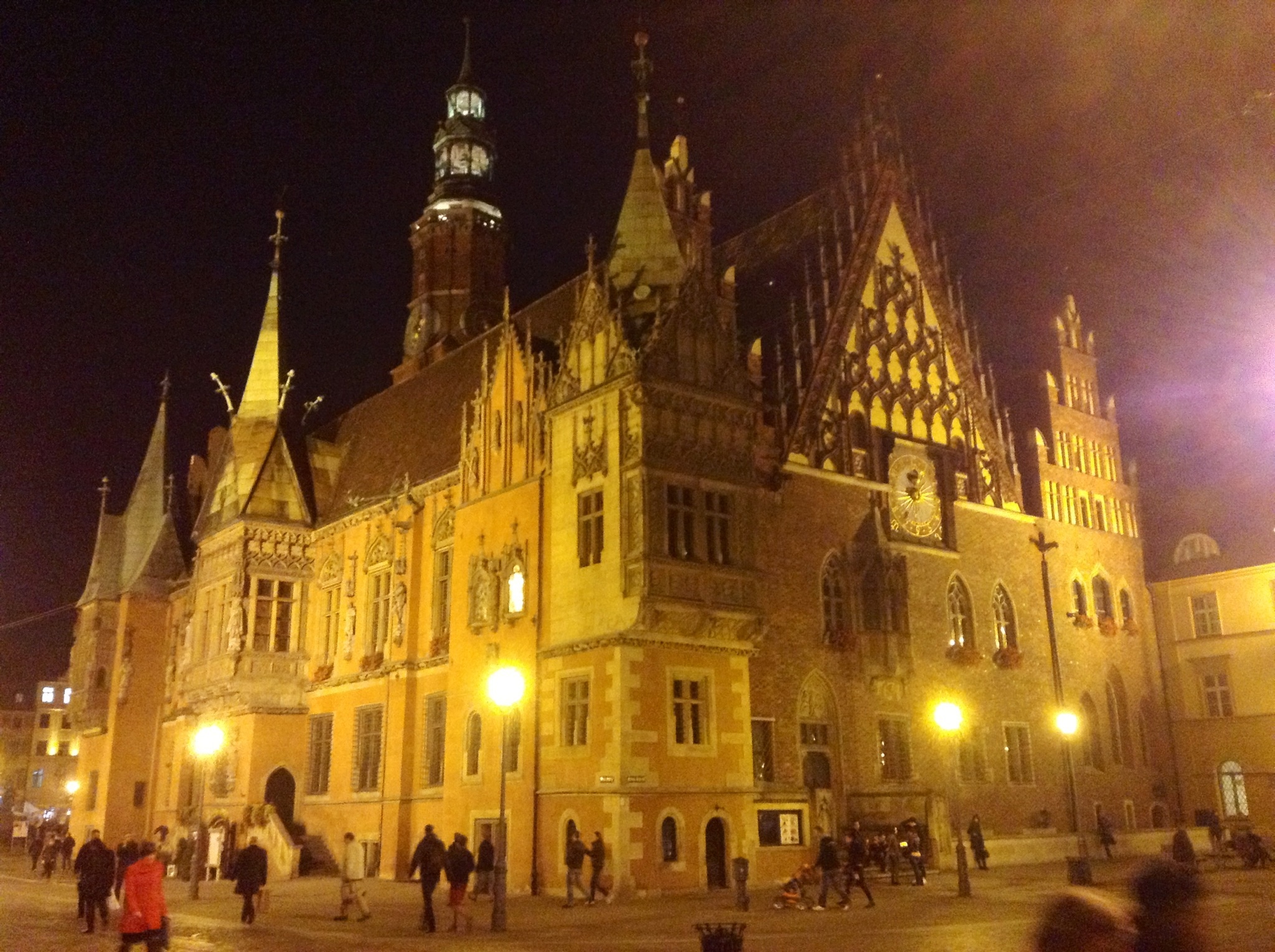
Town Hall in Old Town Wroclaw, Poland
A Grand Adventure
I don’t think most people will do what Kathy and I do when we travel, and that is, to travel into the unknown. We decide in advance, “que sera, sera.” We decide not to stress. Today, we headed out the door to go to Moritzberg to see the Saxon Royal Hunting Castle. We could have taken a tour for €100, but doing it our way cost €30 and we ended up doing so much more than the tour would have afforded. We had a marvelous adventure.
We headed out for the train station in the Neustadt (New Town). We had never been to this station before; yet, we decided to walk. The weather was perfect, and the walk was picture perfect. My city map was accurate. Our 25 minute walk took us over the Elbe River on a beautiful bridge and along fall-colored, tree-lined boulevards. We needed to catch a bus and were fortunate that it was at the stop when we arrived and the driver sold tickets. Therefore, we did not have to negotiate the ticket machine. The bus ride was delightful. It picked up school children as it went through wonderful Dresden neighborhoods. The houses were Dresden’s version of our more expensive neighborhoods in Texas, with the exception that these homes had turrets and towers on boxed roofs with slate shingles and window boxes with flowers and with vegetation that was gold and red and yellow and orange with the colors of fall. Our bus took us eventually along country lanes where we saw a goose farm with geese as far as the eye could see and through quaint country villages that were obviously untouched by WWII. The trip lasted about 30 minutes and stopped directly in front of the castle.
What a castle! I realized I had seen it before on HDTV on a showing of castles of the world. Sitting on an island in the middle of a lake, the castle holds a regal air. Symmetry was the architect’s goal. The rooms were filled with hunting memorabilia and with hunting trophies. I have never seen that many points on a deer head. It was enough to make some hunters I know go dizzy with giddiness. The walls were all leather, hand painted with paisley designs and huge paintings of hunting scenes or of animals. The main dining room wall was covered with hunting trophies with gold trim and some of the heads were gold with only the antlers being natural. Huge windows brought the outdoors in and looked out on the lake and a massive formal garden. The castle had housed the royal’s porcelain collection, the largest collection in the world. Some pieces remain, but most have been dispersed into the Dresden Porcelain Museum. Imagine a large castle filled with hunting trophies with golden heads and priceless porcelain! I told Kathy, it would have been my castle of choice. WEG
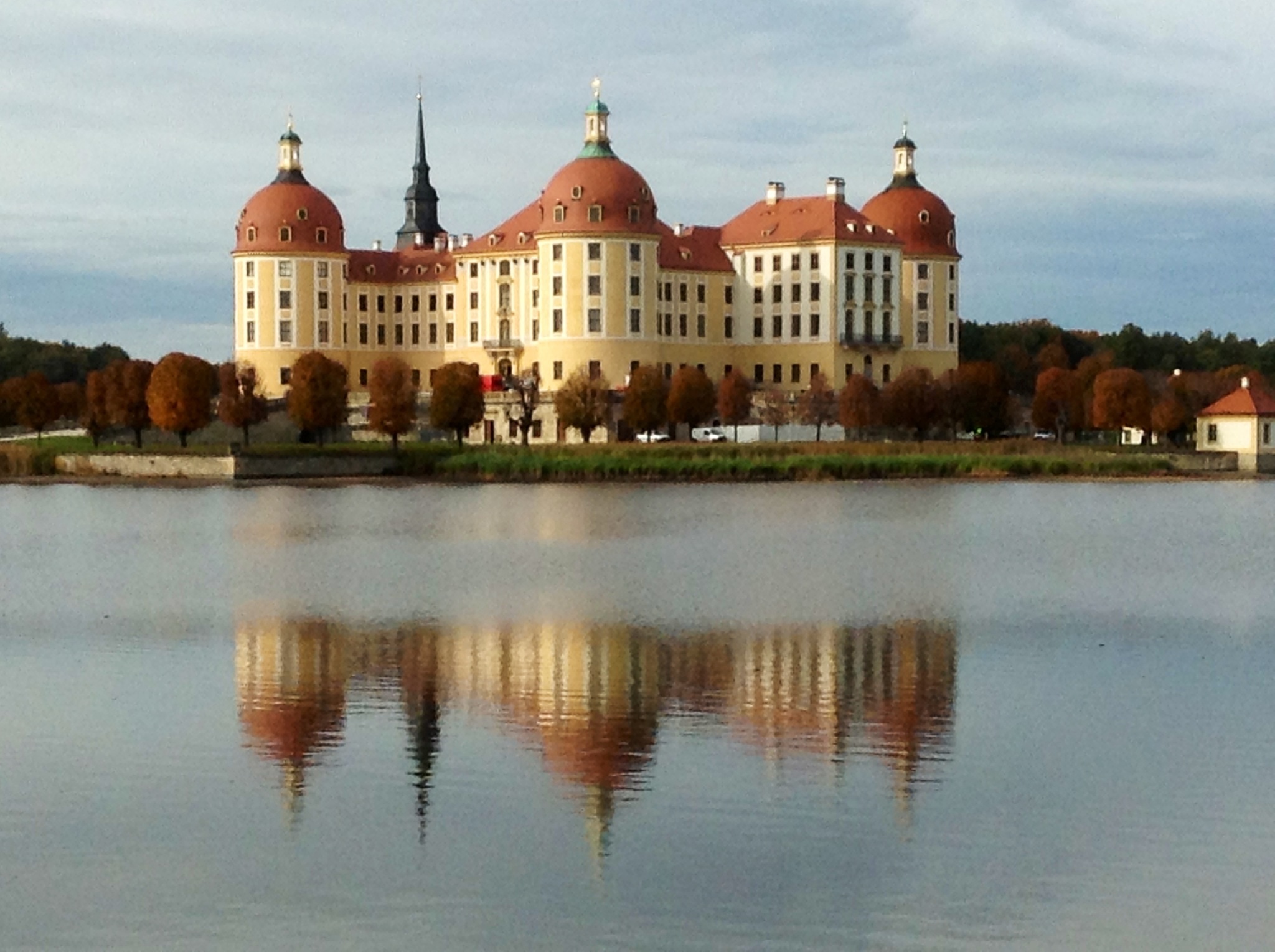
The Moritzburg Castle just outside Dresden, Germany

Approaching front entry of Moritzburg Castle, hunting lodge of Saxon royalty
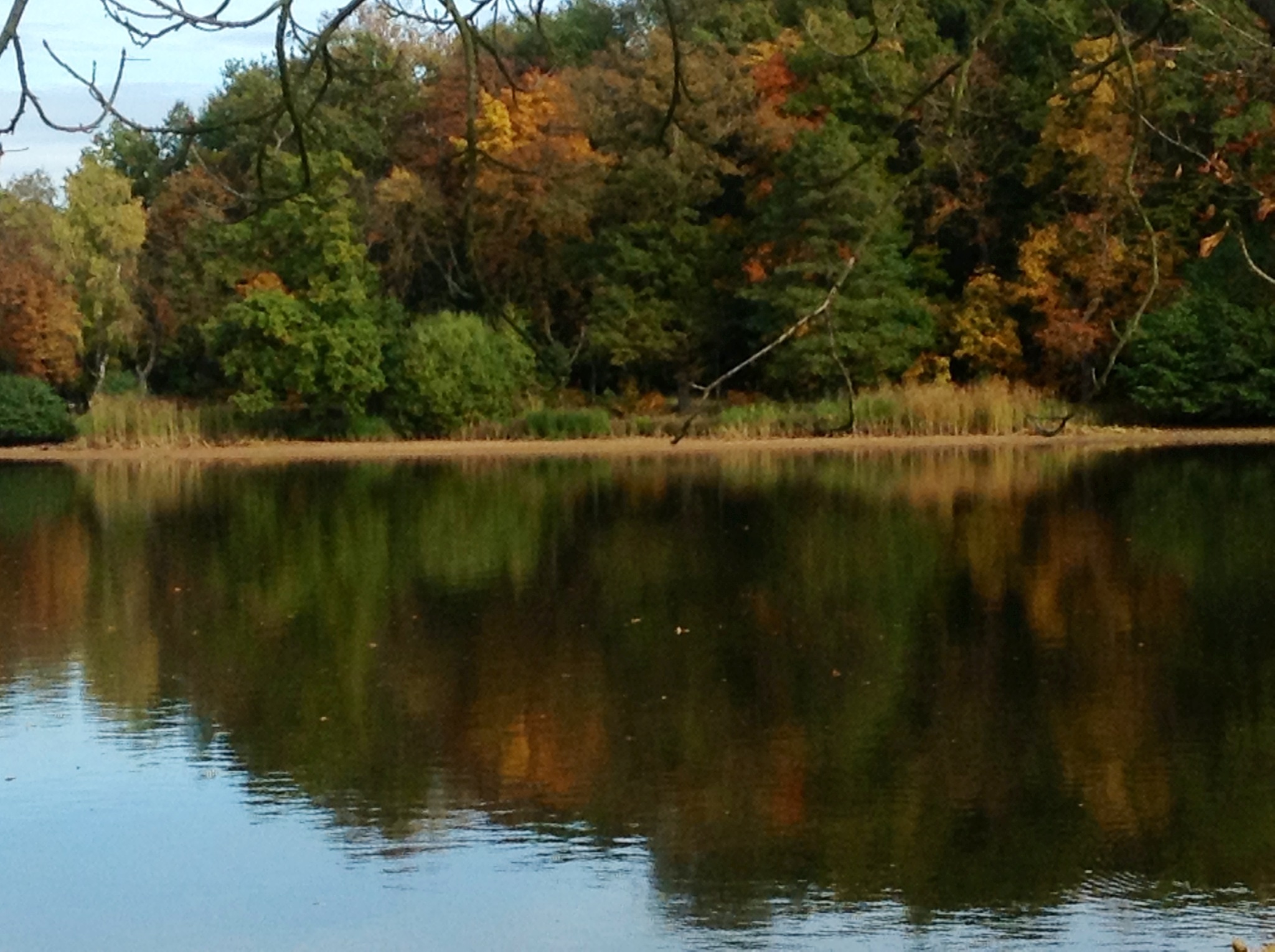
Autumn splendor reflected in the moat surrounding the Moritzburg Castle, Dresden

Example of antlers, leather wall coverings, and porcelain inside the Moritzburg Castle that is being refurbished

Another view of the Moritzburg Castle, Dresden, Germany
Sunday Worship
Kathy and I went to the late morning worship at the Lutheran Church of Our Lady (Frauenkirche) in Dresden this morning. We have attended worship in many beautiful worship centers across Europe–the Seville Cathedral, Notre Dame in Paris, the Castle Church in Wittenberg, for instance. It was nice to be able to walk out the door of our apartment and into the door of the Frauenkirche in three minutes. The bells pealed for ten solid minutes before service began in this massive church. I quickly noticed how you could tell visitors from members–the members go to their seat and stand and pray before sitting. The church was decently full. You cannot help but look upward in the church. The light green and blue and white and gold altar extends skyward for over 100 feet. The statuary on the altar move the eye upward. Moses and the Apostle Peter are on the left of Jesus (depicted in prayer in the Garden of Gethsemane) and a host of angels and the Apostle Paul and King David are to the right. Above Jesus is a massive golden burst of sun. At the top of the altar is the beautiful gold and white pipe organ adorned with angels playing trumpets. Above the entire seating area, which is in seven levels, is the bell dome, 311 feet above the main floor. It depicts events in the life of Christ in painting surrounded by pink and blue.
The service began with organ, brass, and percussion playing Bach–majestic. The brass were up high beside the organ. The church reverberated. The Pastor entered wearing a black robe with a big white bifken (neck attachment with two streamers flowing downward). The liturgy was simple and short; the pastor chanted, and there were congregational responses. There was a baptism and a sermon, prayers and hymns–all in German. The people participated in the service. Since taxes support the church in Germany, offerings are not taken, as such. Nevertheless, we left an offering. All in all, the service was formal, but uncomplicated, with everything printed out in the service folder. At every church we have attended in Europe, the pastor is formal. The sermon is without emotion to any degree and seems like a lecture. We have yet to hear a laugh or a sigh. No thundering or moment of quiet. Just straight forward and with consistent delivery.
After worship, we went for a walk on this lovely day, another day the Lord hath made. WEG
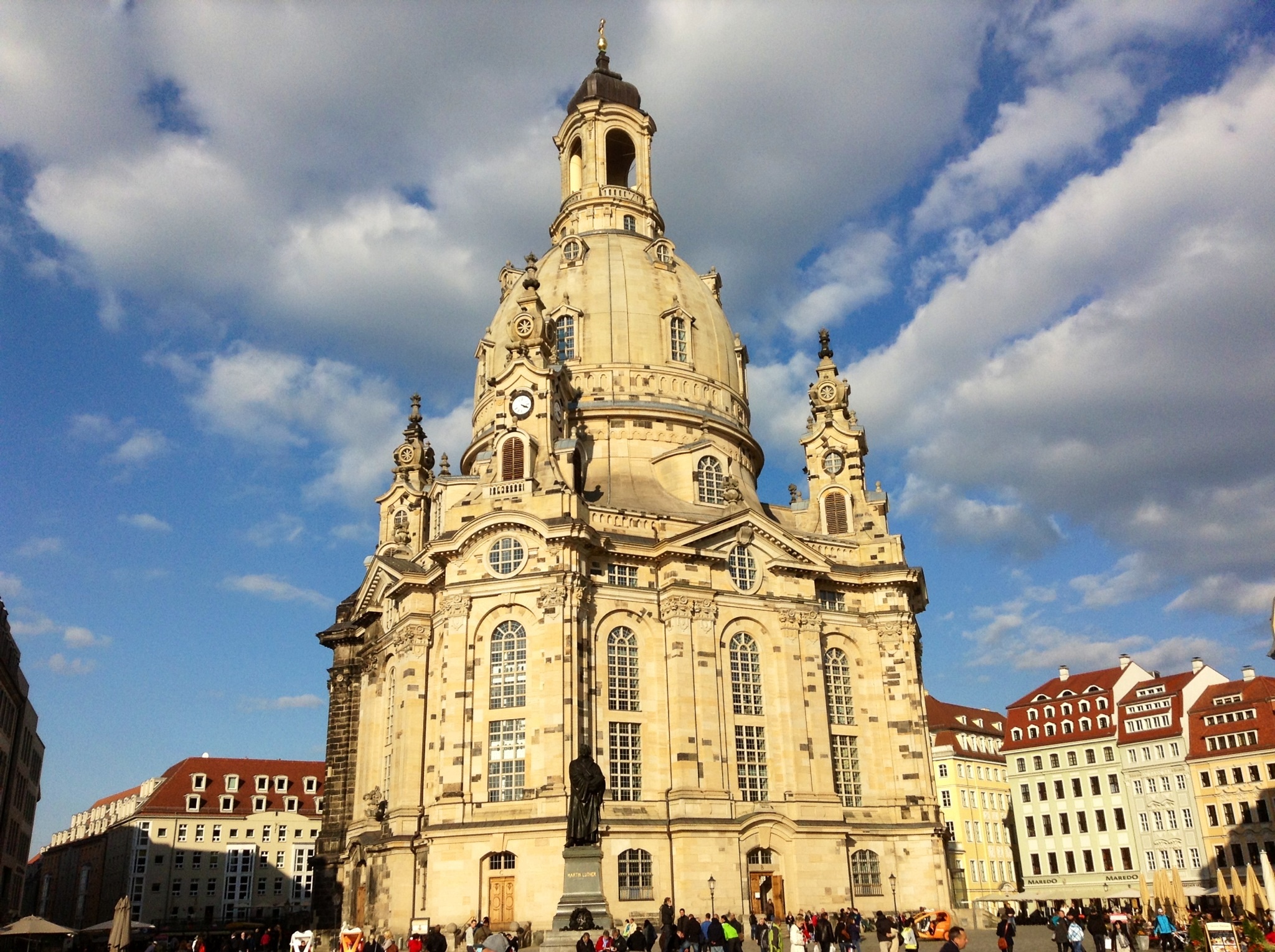
Dresden’s Frauenkirche (Lutheran Church)

The frescoed dome of the Frauenkirche just steps from our apartment
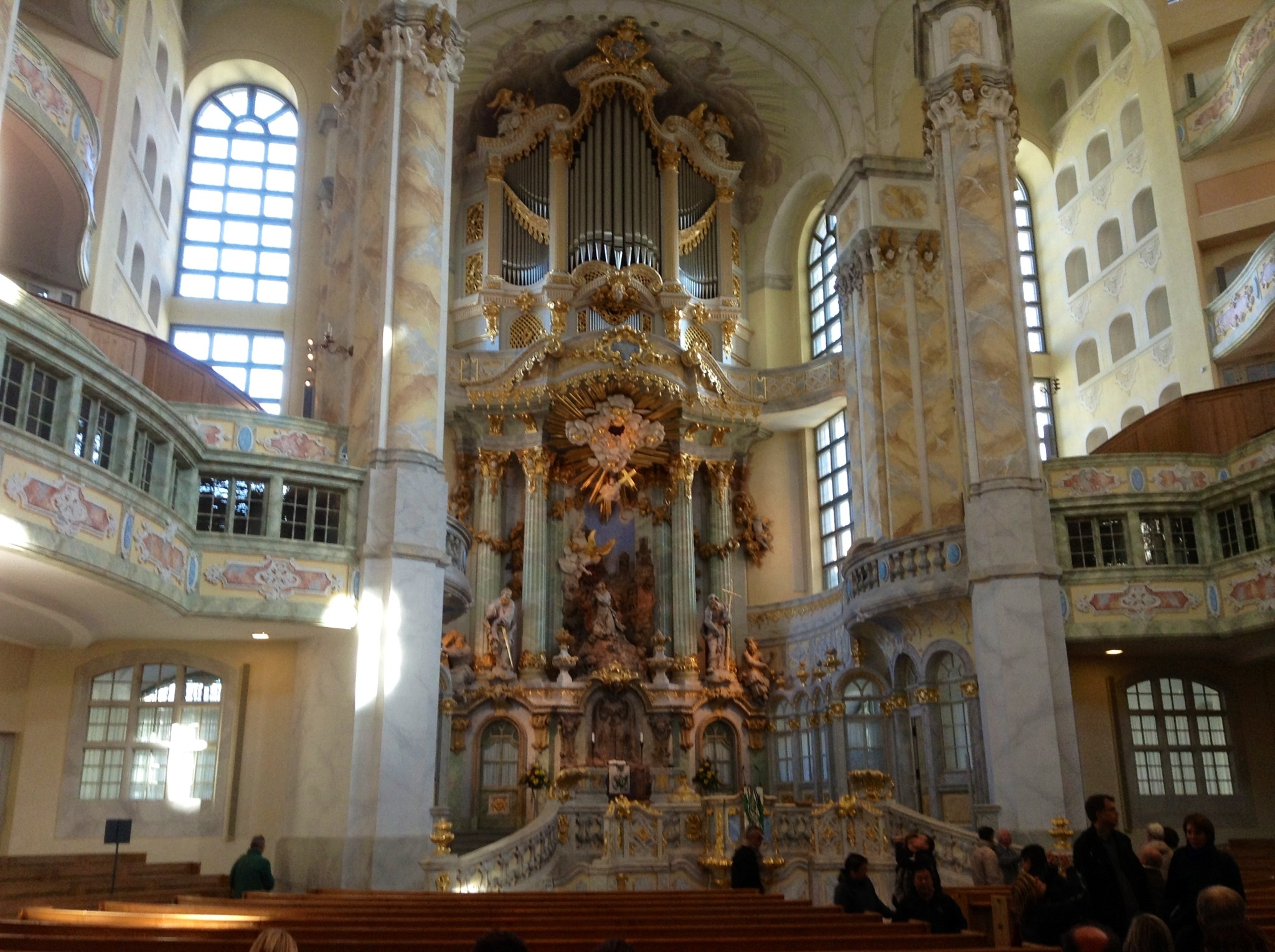
Altar of Dresden’s Frauenkirche
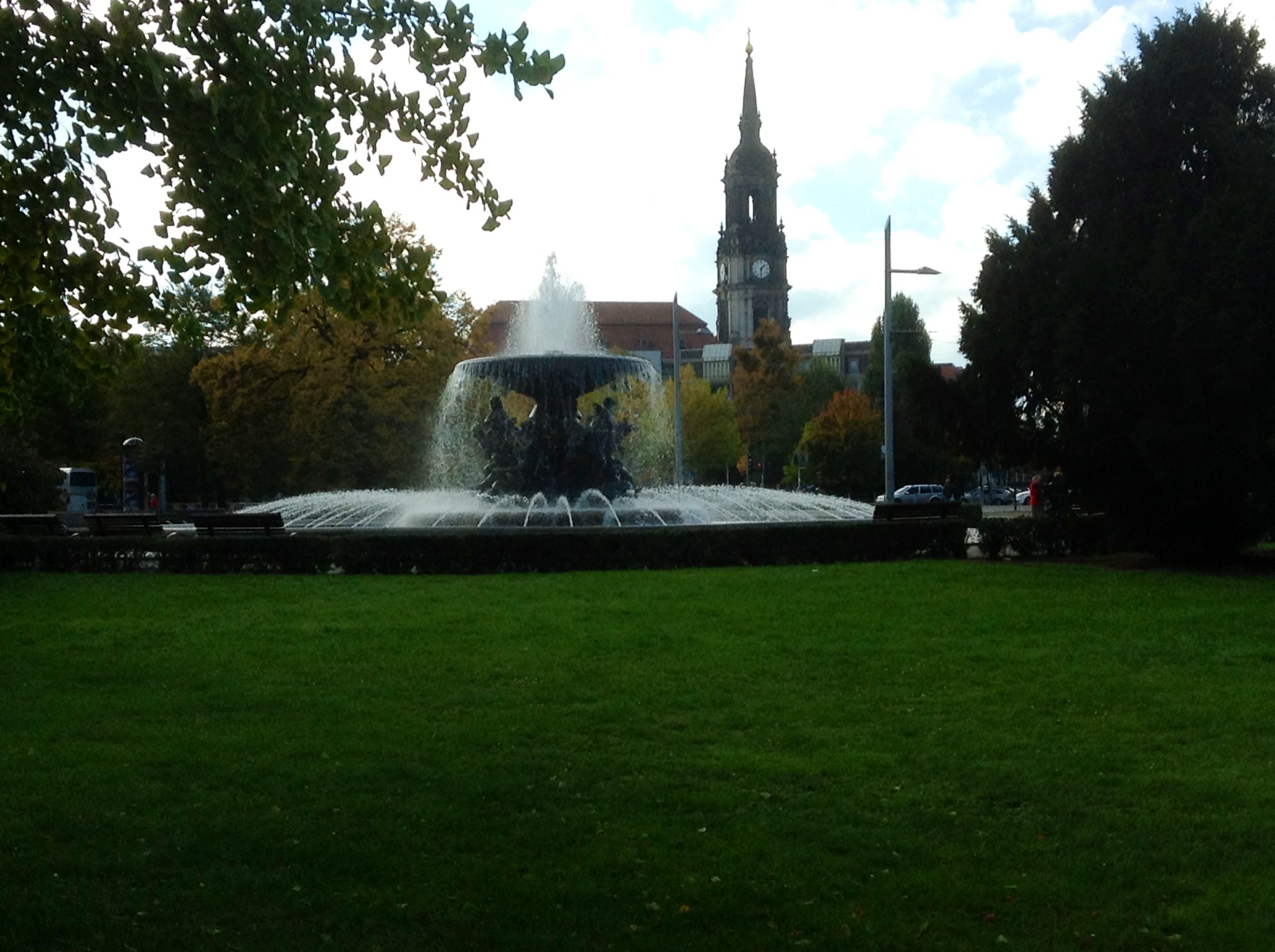
A fountain in Dresden’s Neumarkt
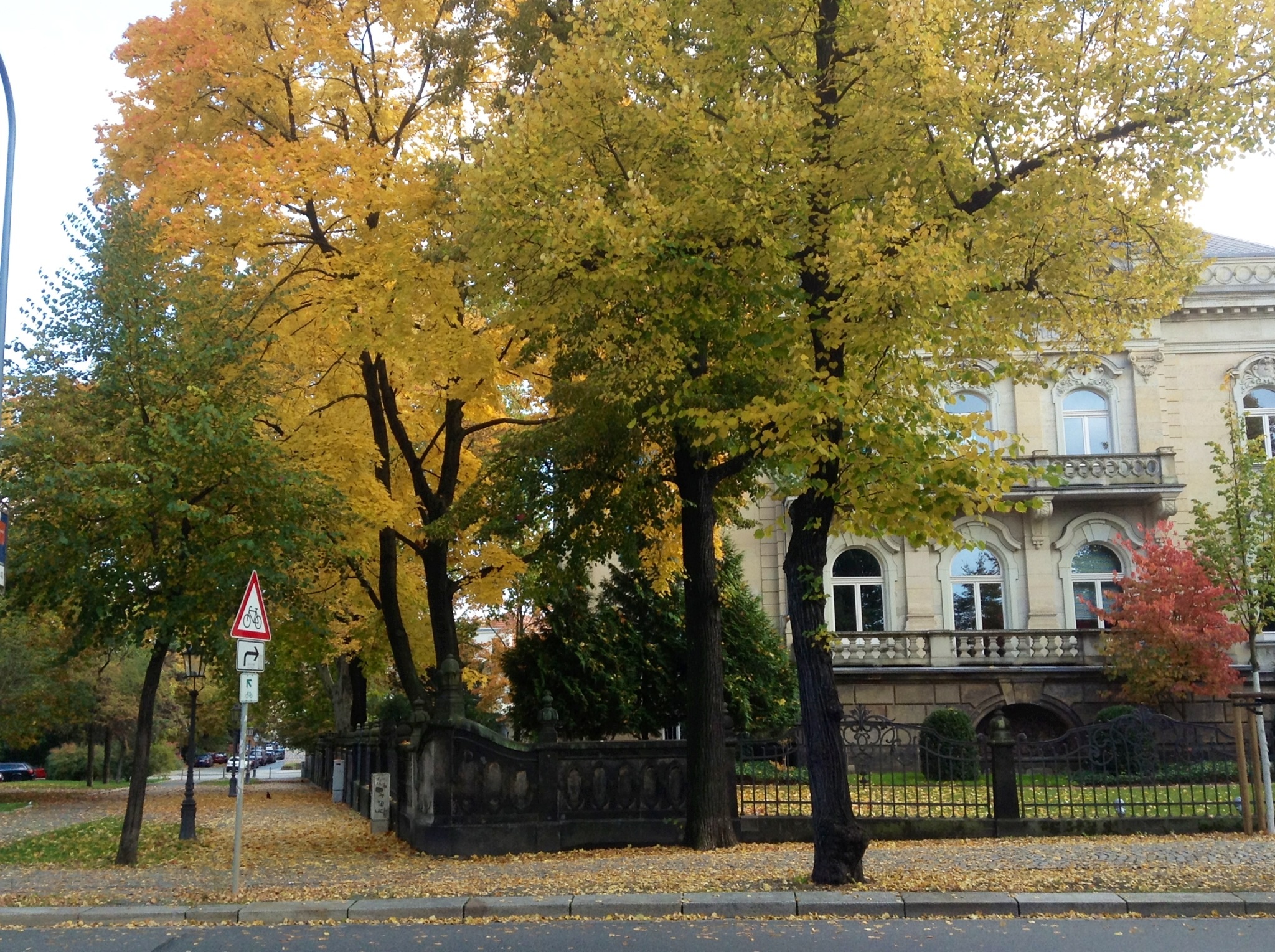
Tree-lined autumn day walk in Dresden’s Neumarkt
A Day Not Known
It occurred to Kathy that we had not in our lives simply spent carefree days together. I’m a long range planner, and there was always something ahead to achieve. It is not that we did not take time to do fun and interesting things; we did. We traveled, and we had great adventures with our kids. Our daily existence was filled with good things. We had a wonderful and blessed life! But sitting on a park bench with no future plan, soaking in the surroundings just because it felt good–not so much.
Today was one of those days. We walked the gardens of the Saxon Summer Palace–Pillnitz–on the Elbe River just outside Dresden. It was a carefree day–just walk and sit and absorb. Such beauty in the trees and such refreshment in the air. No plan, just be. It was strange, but good. Maybe I can do this once or twice a year in the future–oh, that sounds like a plan, not too spontaneous. Maybe this was my once in a lifetime experience.
WEG

Front portal of the Pillnitz Castle on the Elbe River
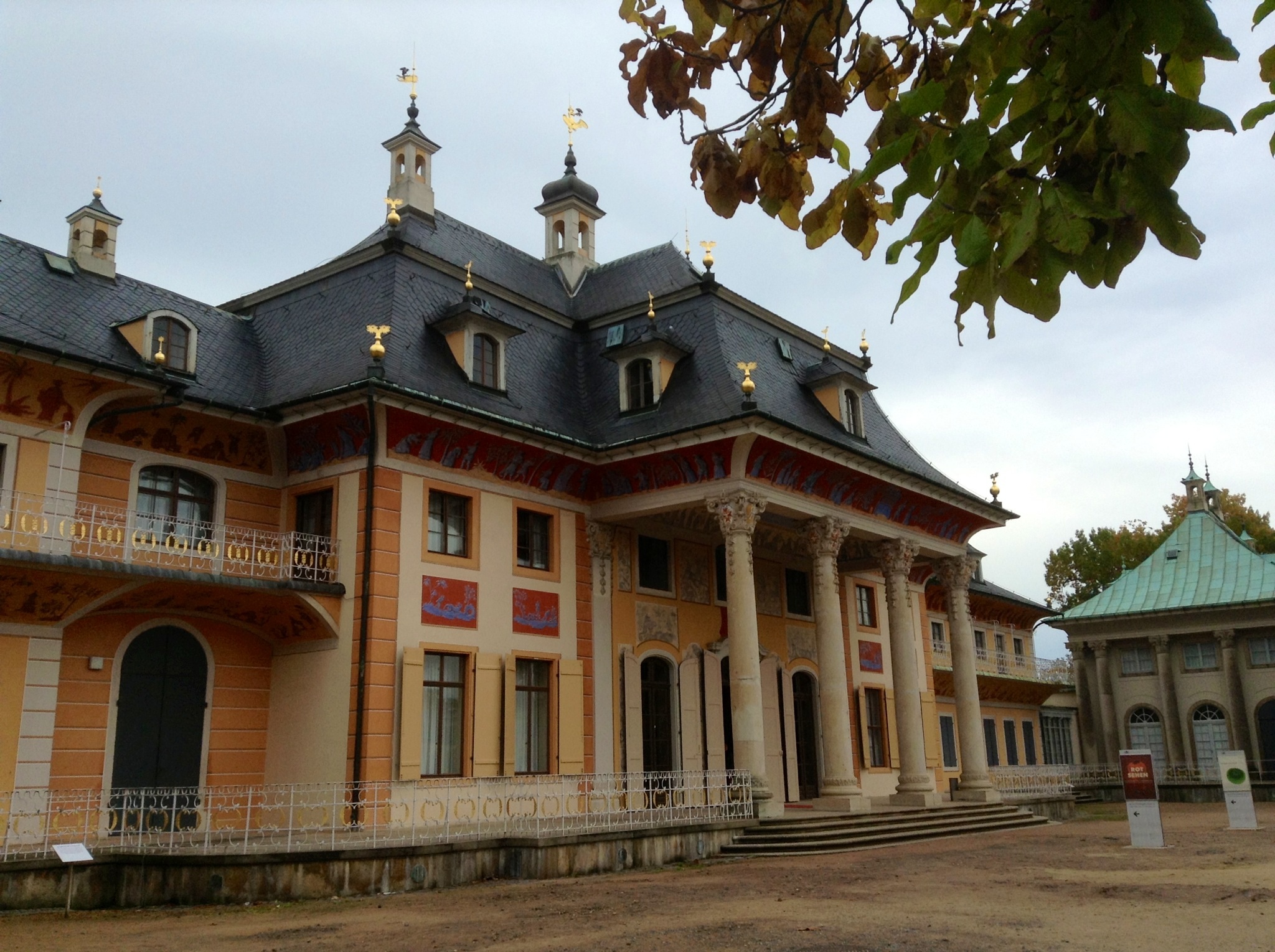
One wing of Pillnitz Castle on the central courtyard
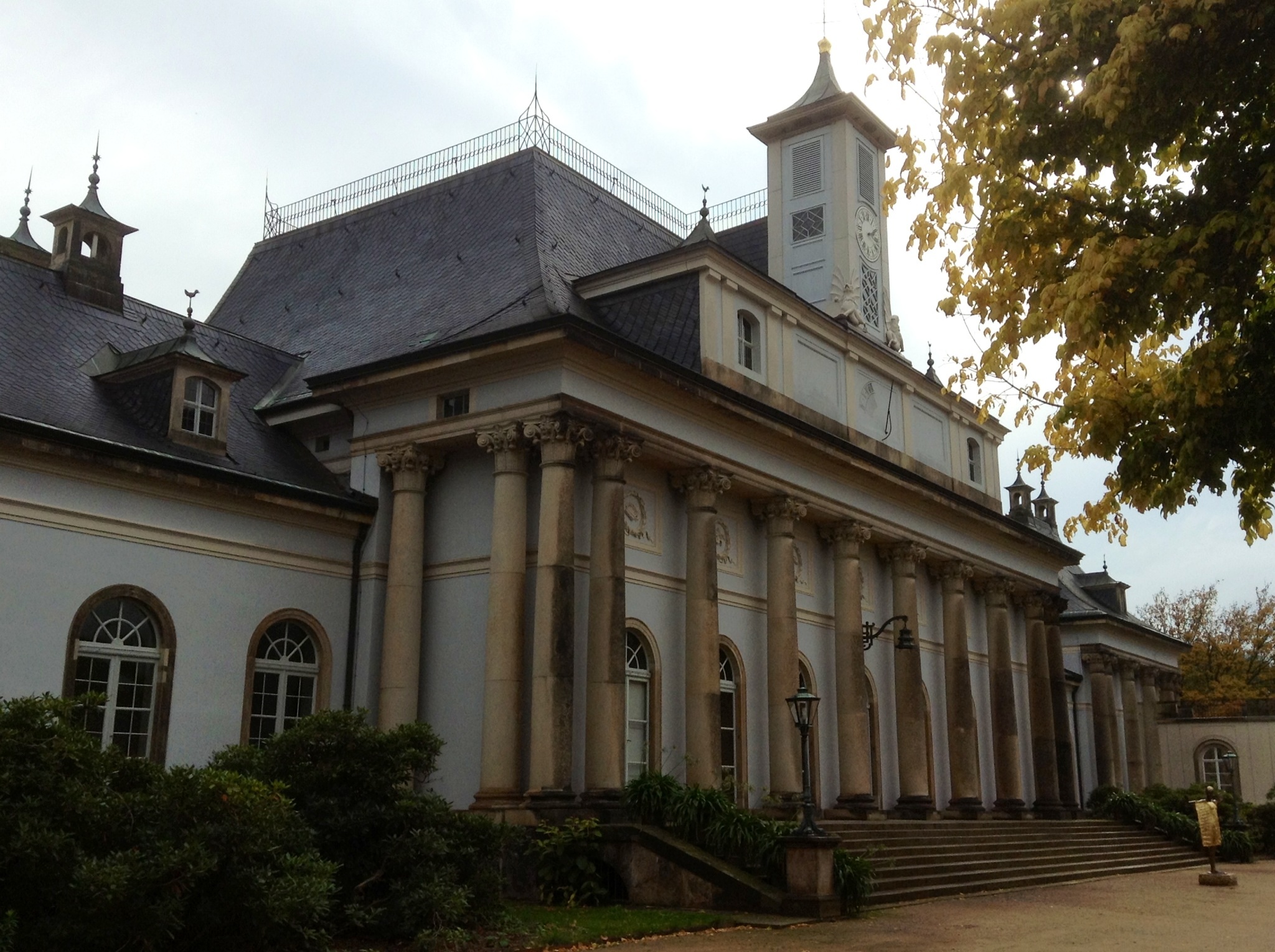
Another section of the Pillnitz Castle from the central courtyard
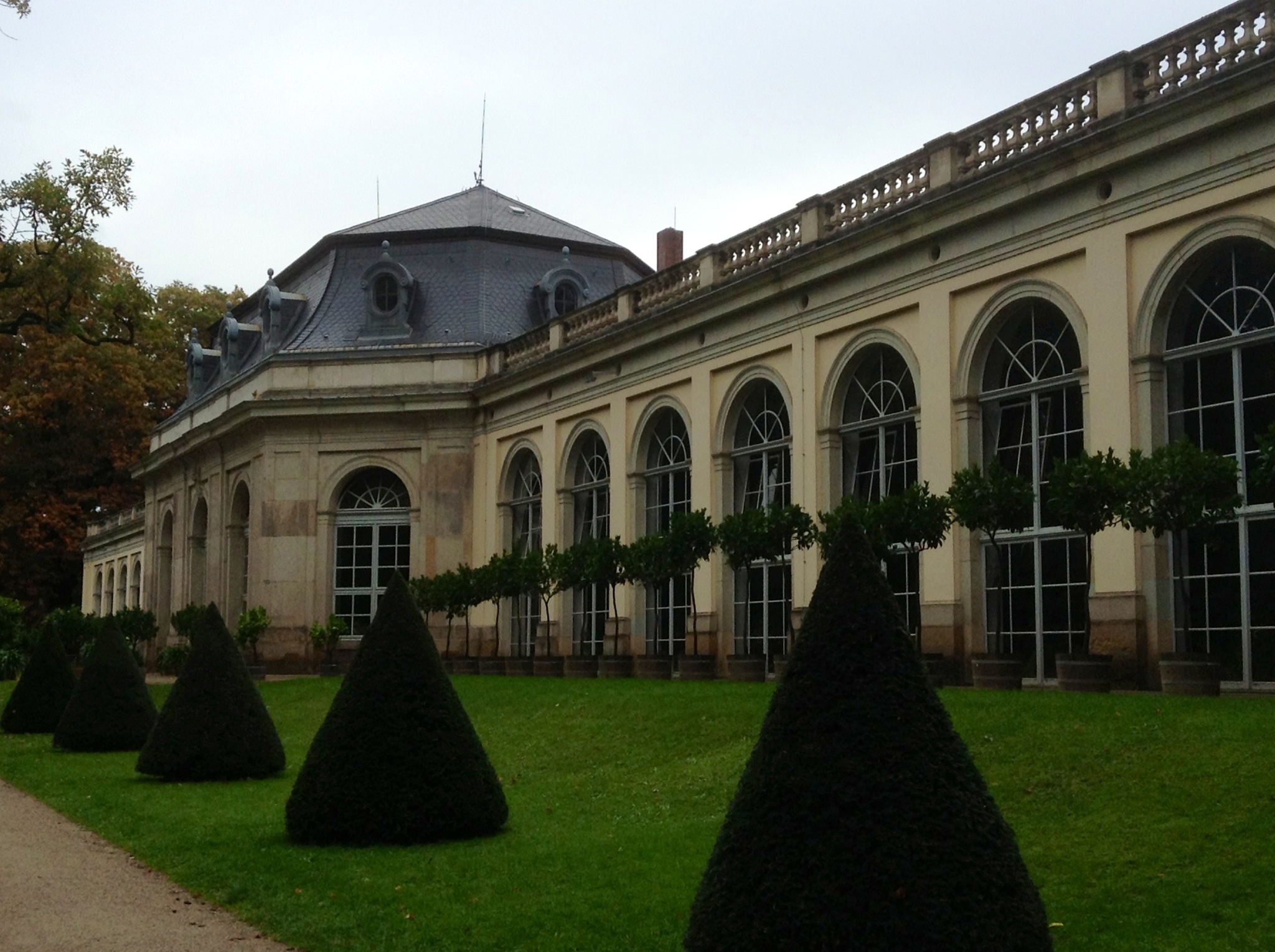
The Orangery in the Pillnitz Gardens
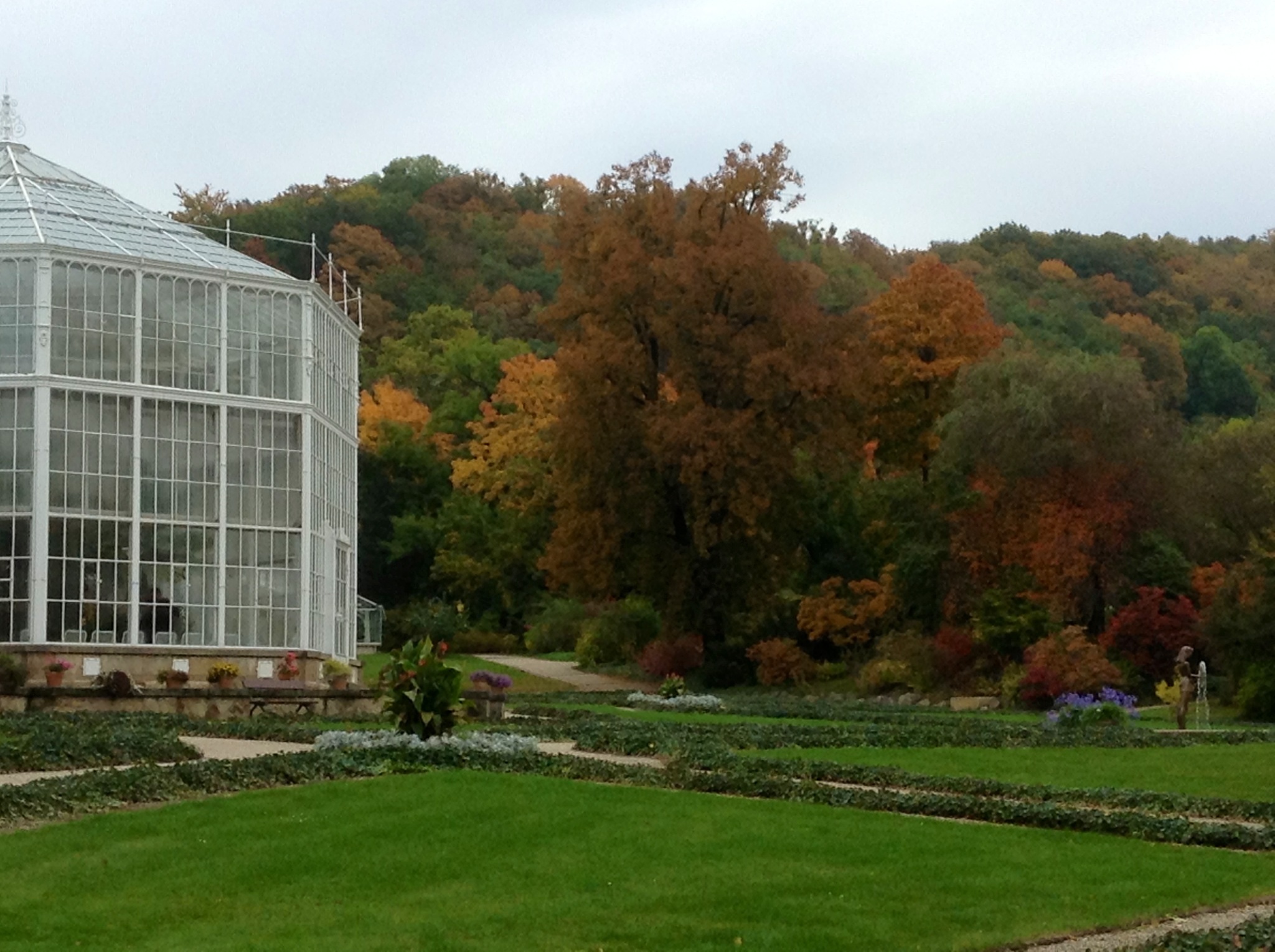
Chinese Pavilion in the gardens of the Pillnitz Castle
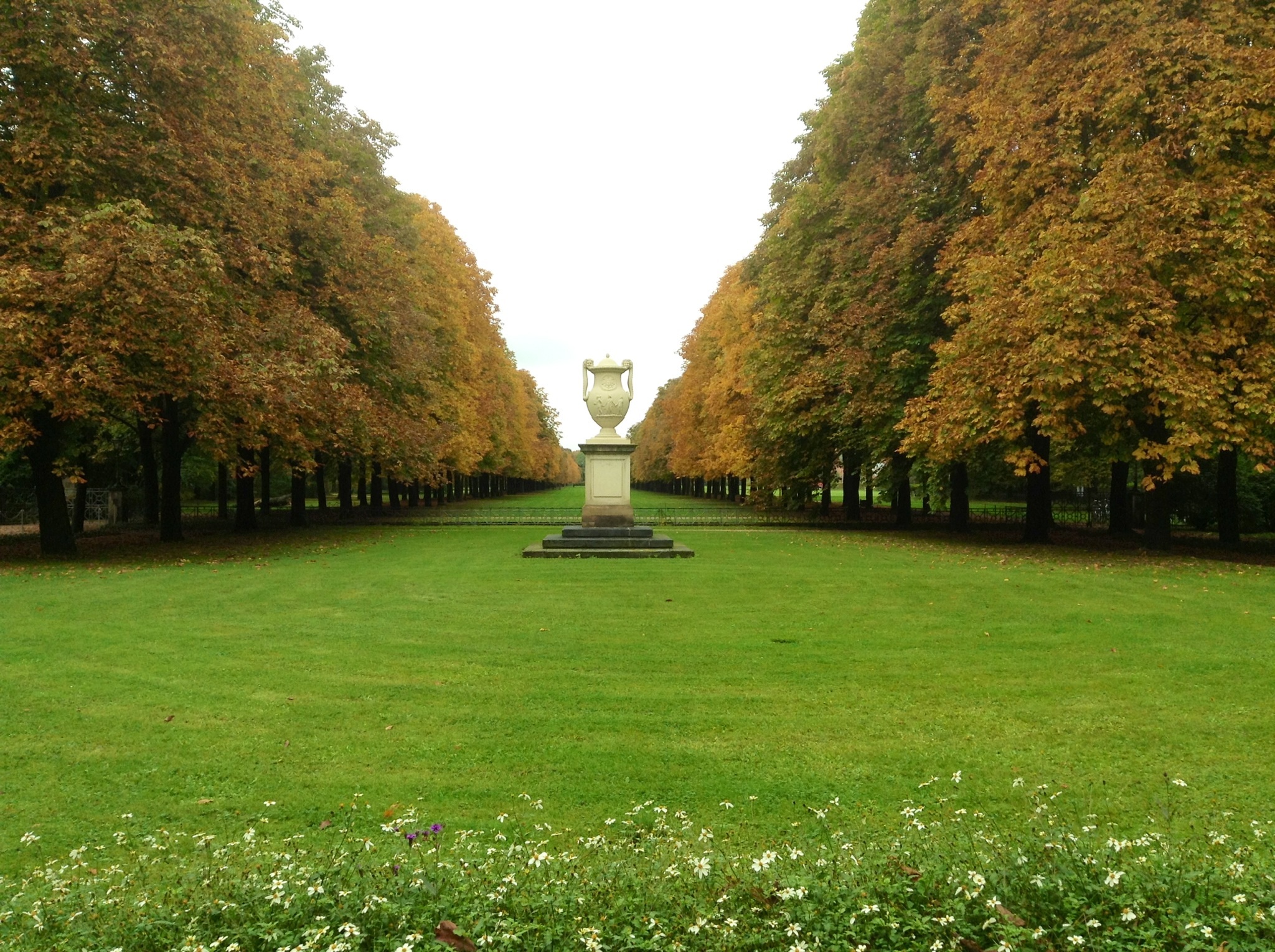
The chestnut tree-lined promenade in the gardens of the Pillnitz Castle
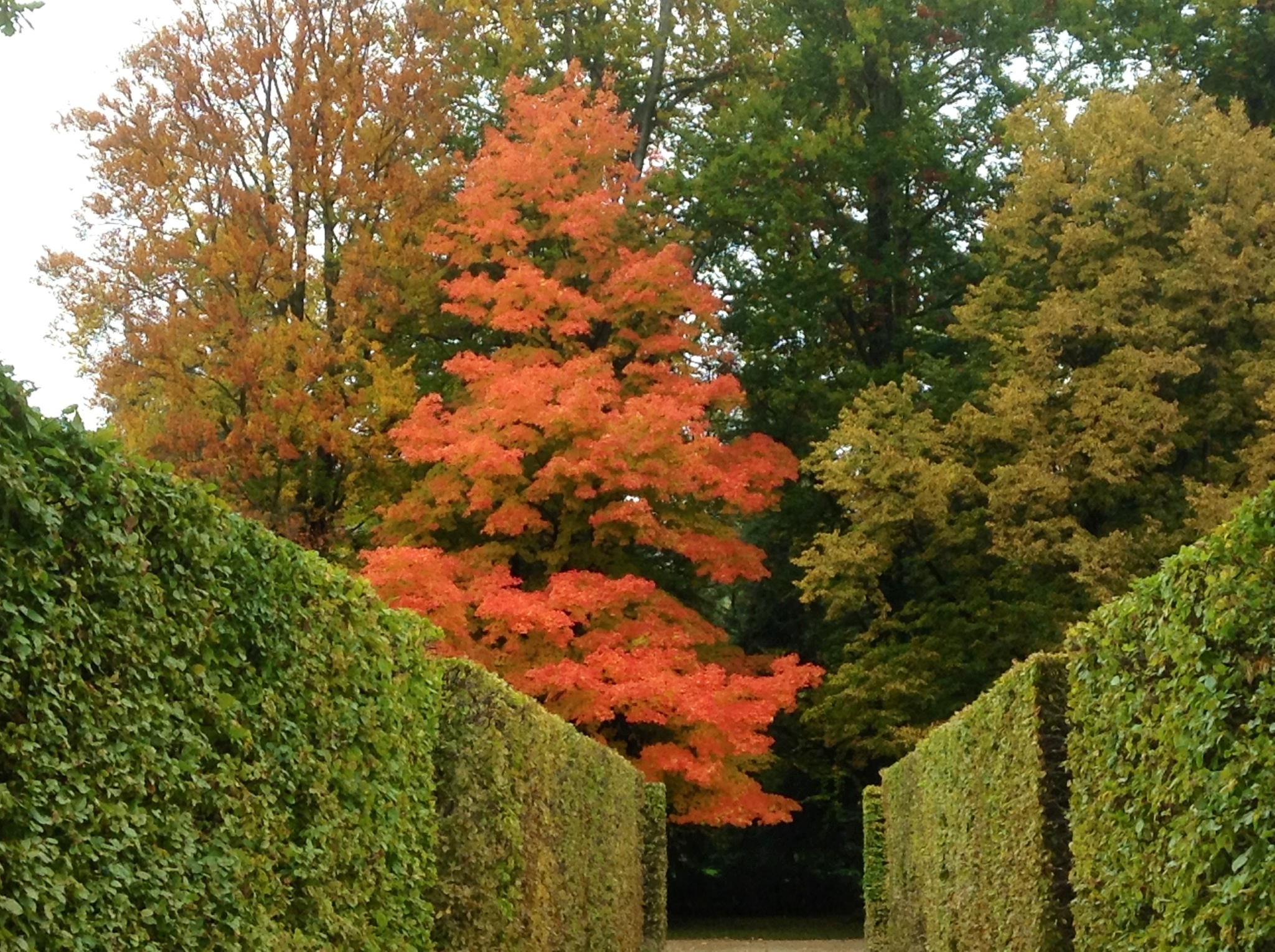
The hedge garden at the Pillnitz
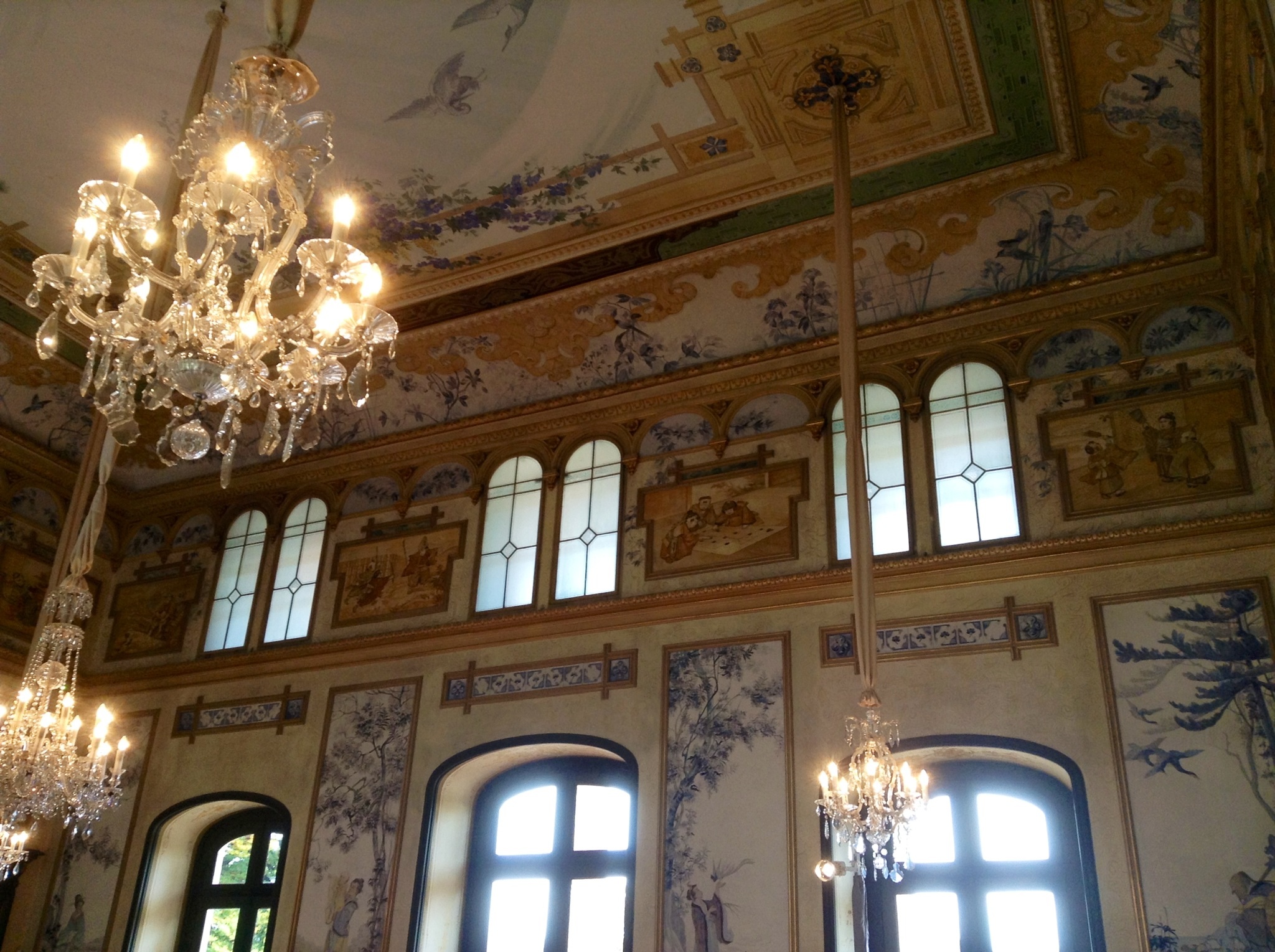
The Chinese room in the Pillnitz Castle
The Green Vault
It’s called the Green Vault because of the color of the stone used in the foundation and some supporting walls. It is a world class museum in Dresden; the first of its kind, royal family treasures opened to the public. And treasures they are! The rooms were built to totally integrate the treasures into the setting. Thus, the rooms themselves are masterpieces.
It is hard to describe the wonders Kathy and I saw. Rhinoceros horns, ostrich eggs and sea shells etched and polished and covered in gold and silver and precious jewels. Alabaster, mother of pearl and amber made into all kinds of objects and laden with gold and silver and jewels. Rock crystal made into goblets and serving containers, luminescent yet translucent, and once again trimmed in precious metals and jewels. Enamels made into paintings and serve ware and presentation boxes, some incorporating art pieces from antiquity into the design. Ivory, lots of ivory, made into amazing objects. Art ware made of glass molten with gold, mostly ruby in color. Bronze work acquired from around the world. And the jewels, the most complete collection in the world–stunning! It is not just the jewels, but the craftsmanship that accompanied them, such as buttons for the king’s robe that took the goldsmith years to construct making fine gold filigree by hand before the pearls and diamonds were attached. And jewels, lots of jewels–brilliant and shimmering in rings, necklaces, broaches, swords, walking canes, case after case of jewels.
August the Strong, Saxon Prince Elector and King of Poland and Lithuania was the mastermind behind the Green Vault contained in his palace in Dresden. The Green Vault is divided into two sections–the historic, or Historisches Grünes Gewölbe, and the new, or Neues Grünes Gewölbe. In addition, the Old Master’s Gallery is also housed in another palace, the massive Zwinger, just steps up the street.
During WWII, the Germans took the Green Vault treasures to a hiding place for safety. Thus, they were unharmed, although the wonderful rooms which were built for them sustained serious damage. The Russians, who occupied this part of Germany after the war, took the Green Vault to Russia and only over the last years have they been returned and the Green Vault rooms restored. Restoration from the war continues in the Schloss and, indeed, throughout Dresden. I am simply amazed at the art that fills this city and the determination of the people to restore the city to all its former glory. WEG
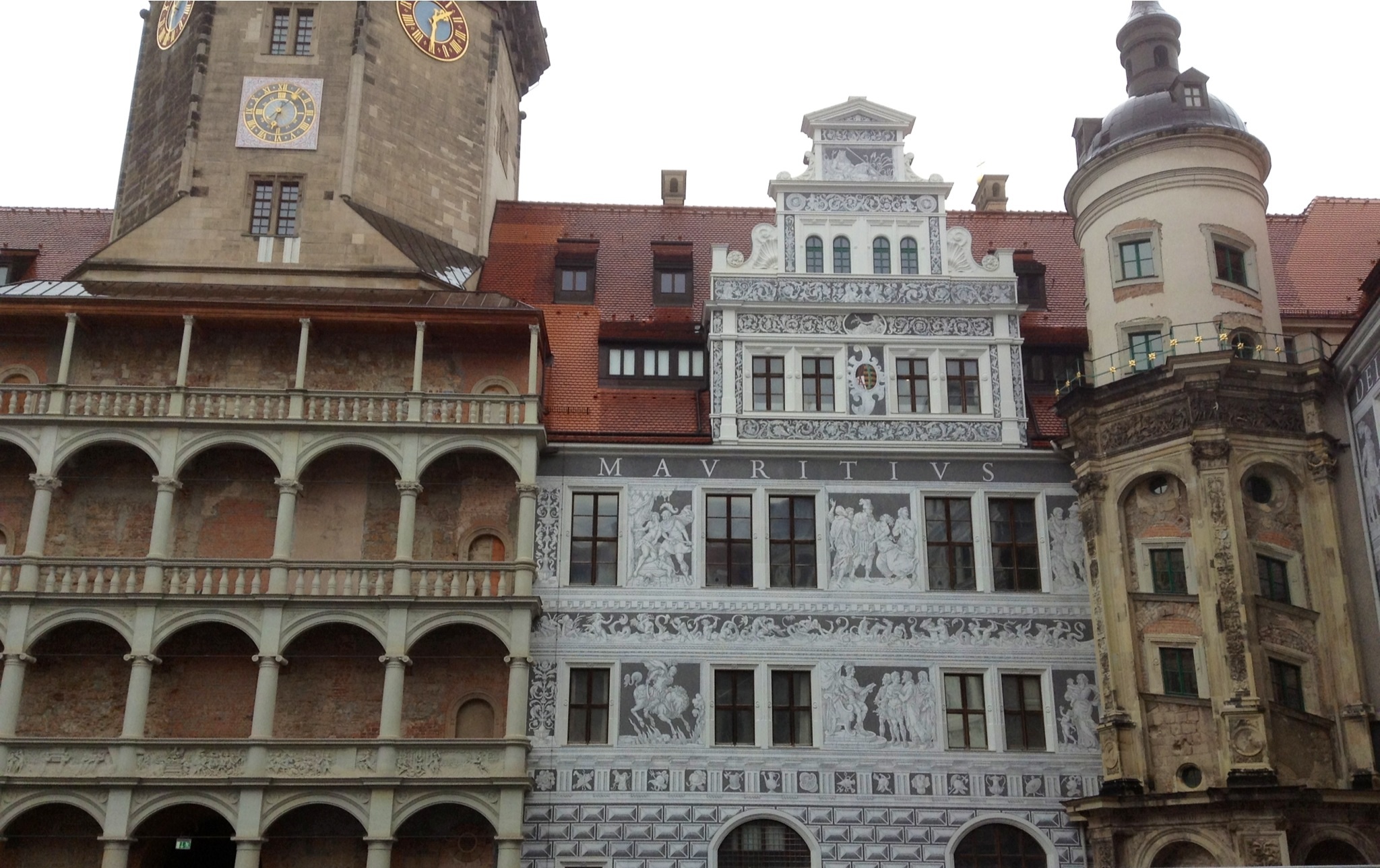
Ongoing Reconstruction at Dresden’s Schloss Palace, Home of the Historic Green Vault
Autumn and Porcelain
The Fall colors are deepening. Kathy and I spent the day out, walking in falling golden leaves. The hills are awash in orange gold and rust red with splashes of yellow and red. The air is cool and the breeze is refreshing. A light sweater is enough.

The city of Meissen, Germany, is awash in the brilliance of autumn colors. October 9, 2013
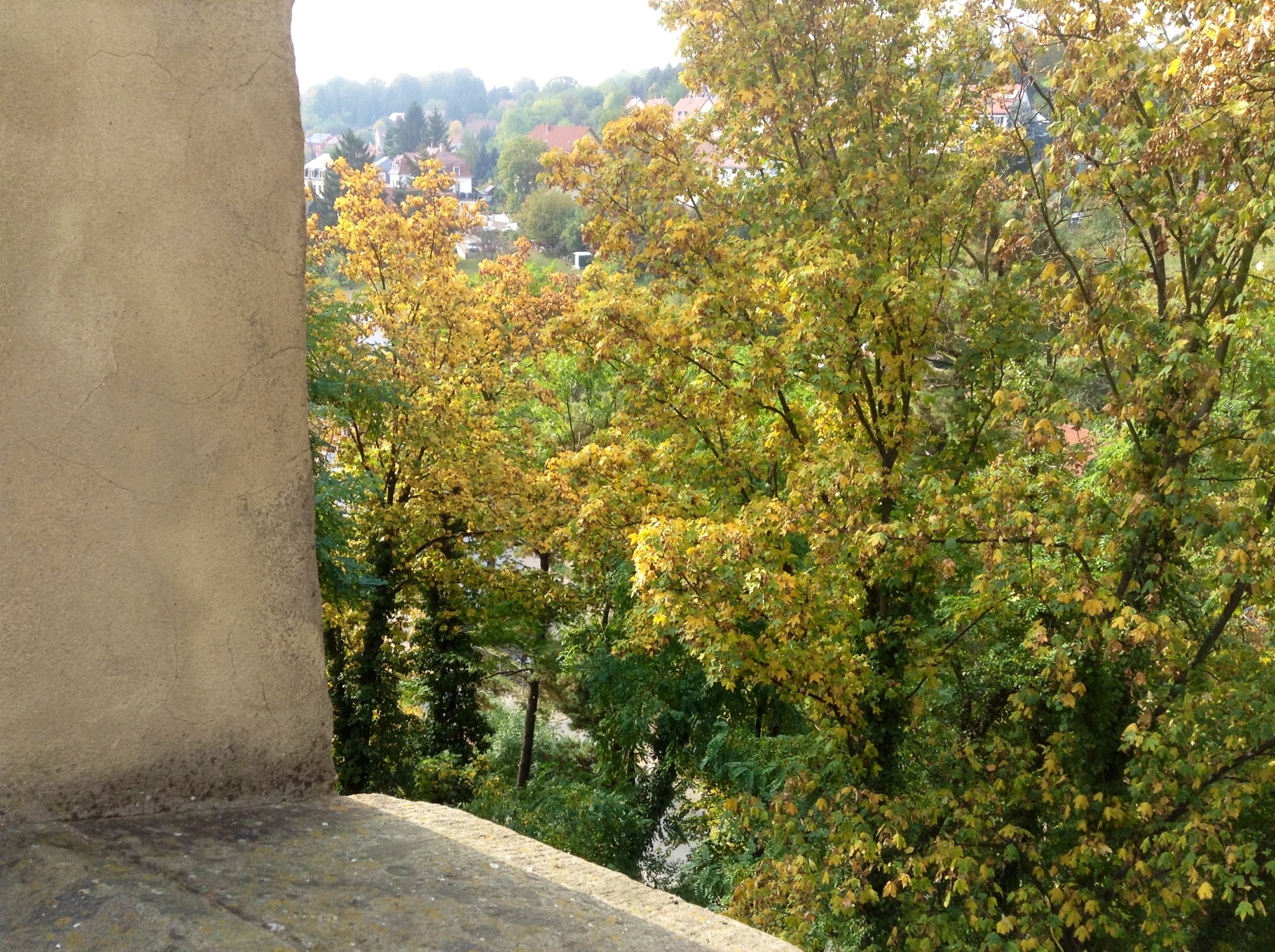
Autumn in Meissen, Germany – October 9, 2013

Autumn in Meissen, Germany – October 9, 2013
We did most of our walking in Meissen, where we spent the day. Meissen is synonymous with porcelain, being the first place in Europe to produce it. The crossed swords of the Meissen brand mean hand made quality and horrendous price. A new five piece place setting of a moderate version is about $2,750. Think about dropping one of those plates. We went on the tour to see porcelain production up close. Very interesting.
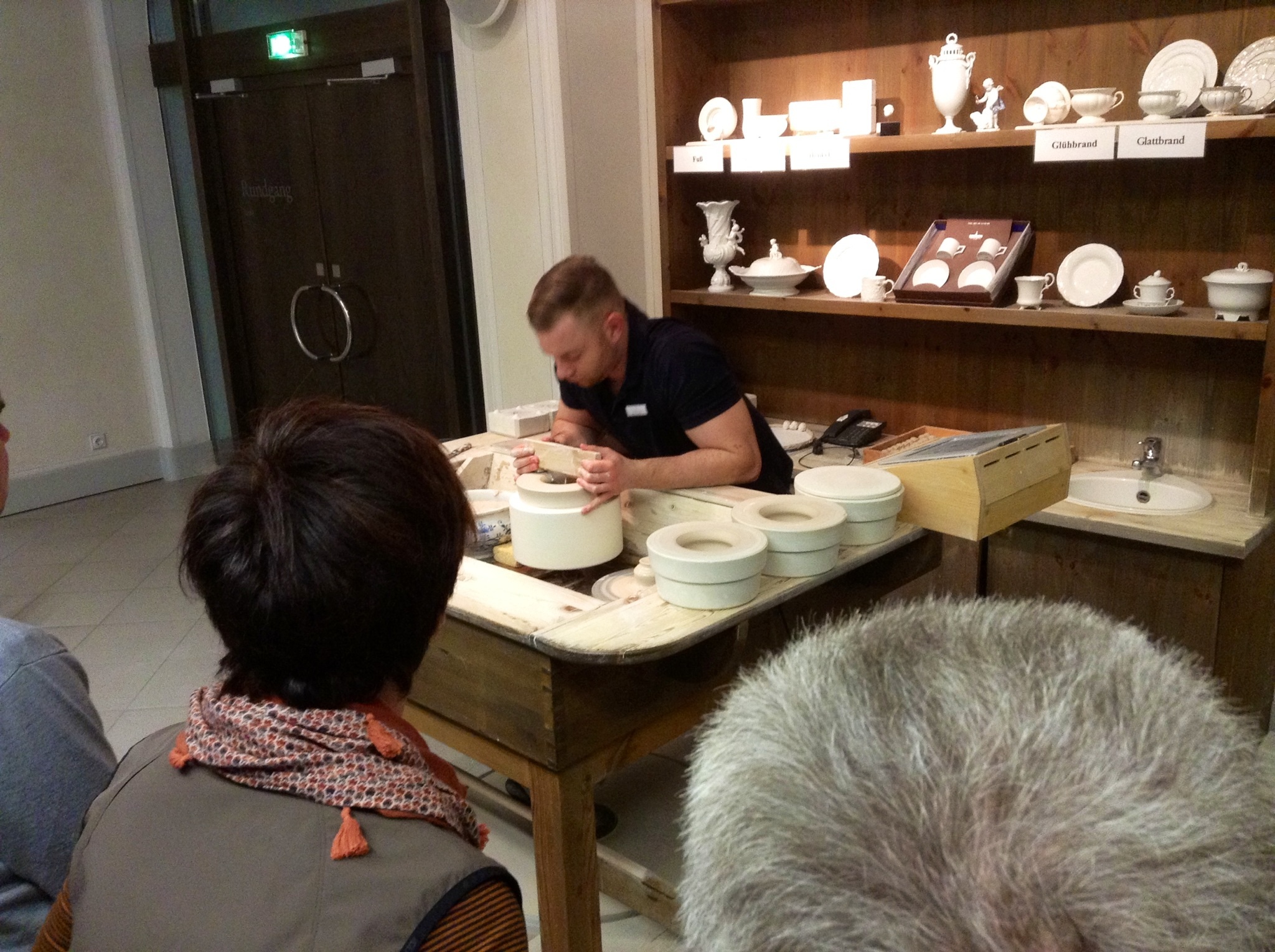
Each piece of Meissen porcelain is delicately handcrafted.
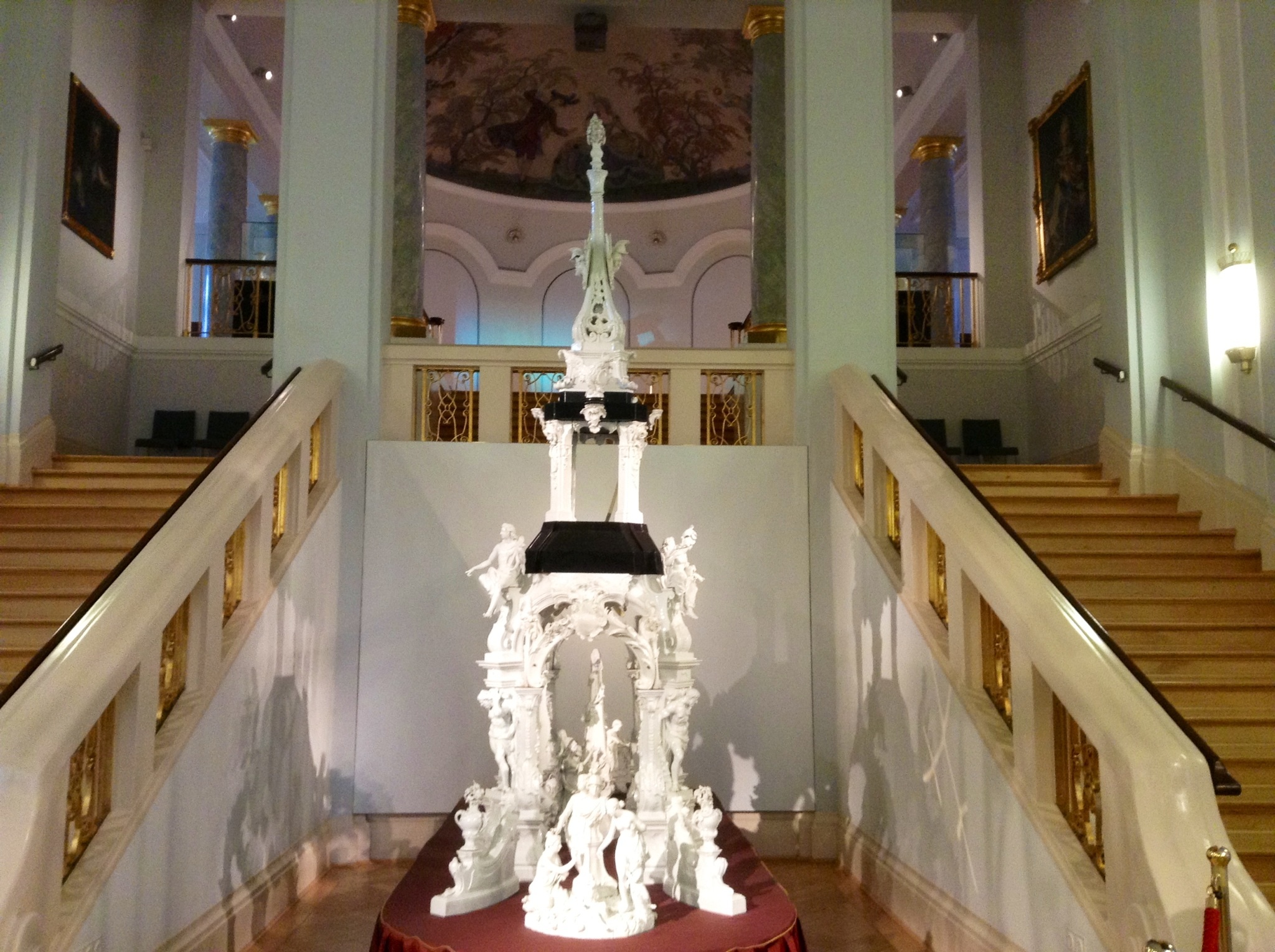
This was the largest porcelain piece produced in the 1700s.
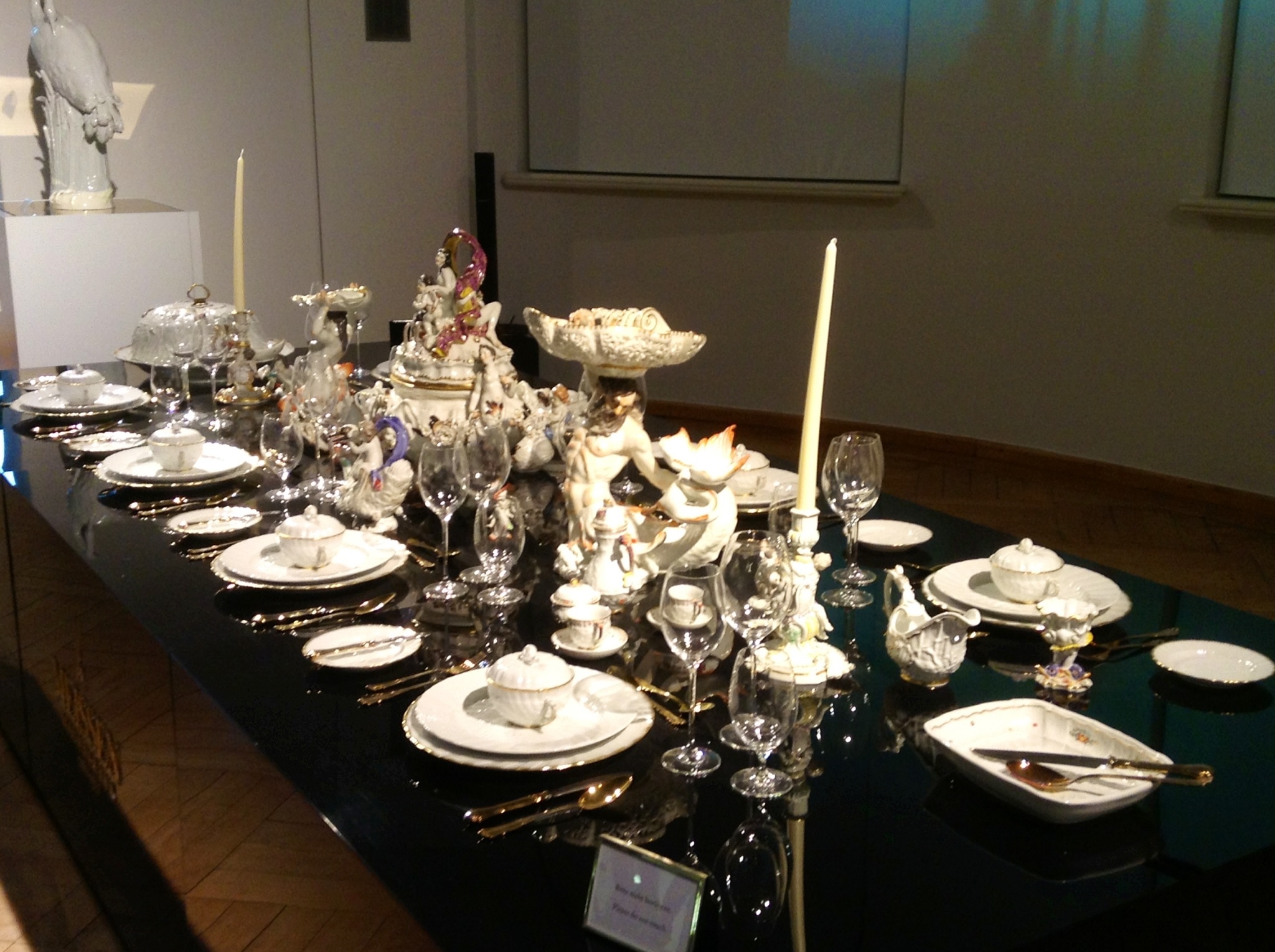
2,200 Meissen Swan Service table ware pieces created for German royalty

Meissen Porcelain
Meissen is also known for its Lutheran Cathedral and royal Wettin family Schloss that occupy the same high hill top above the city and Elbe River. The cathedral had a number of Martin Luther memorabilia on display. Looking out over the palace walls, we could see autumn unfolding before our eyes. We savored the time and took it all in. In the autumn of my life, autumn feels really good. WEG
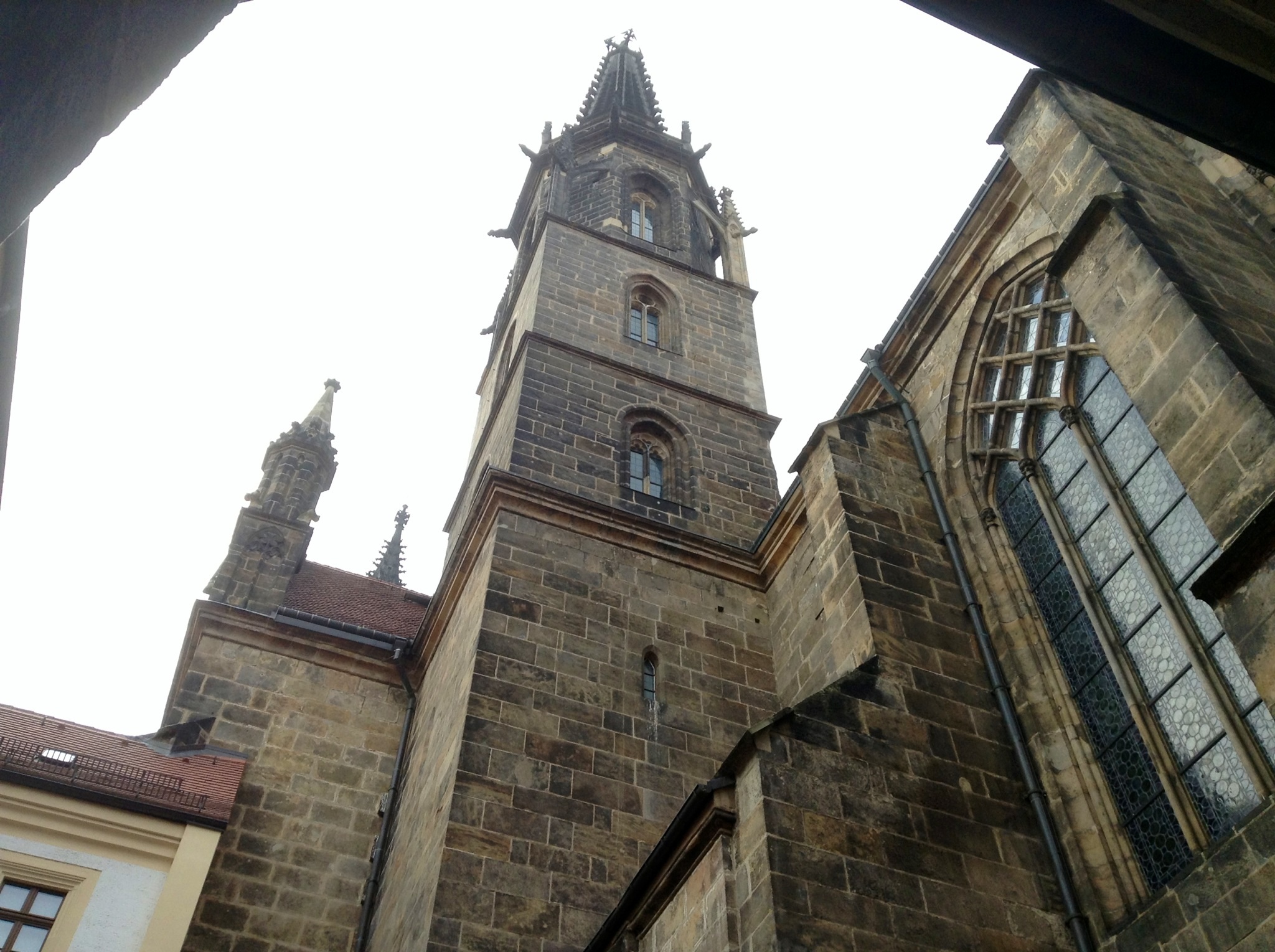
Lutheran Cathedral, Meissen, Germany

Bible translated into the German language by Martin Luther on display in the Cathedral Dom, Meissen, Germany
 kgraumann
 wgraumann
