
September 20–24, 2026
Germany has thousands of castles. A small few stand out as the “cream of the crop,” and Schwerin Castle is easily one of them! Schwerin is in eastern Germany, in the northern part of the state of Mecklenburg-Western Pomerania, located not far from the Baltic Sea. Filled with Renaissance-style architecture, the small city is clean and stately—a proper German city.
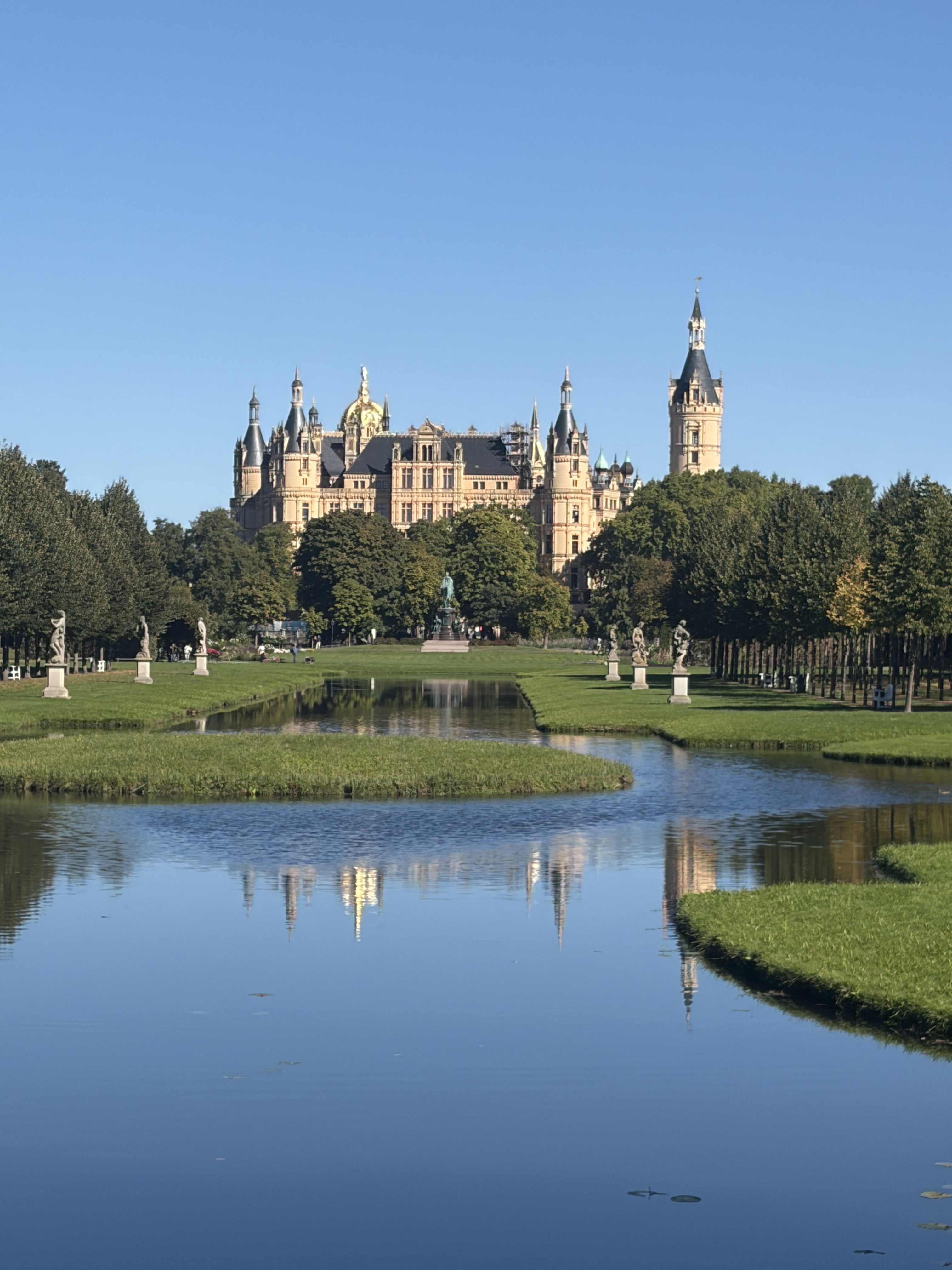
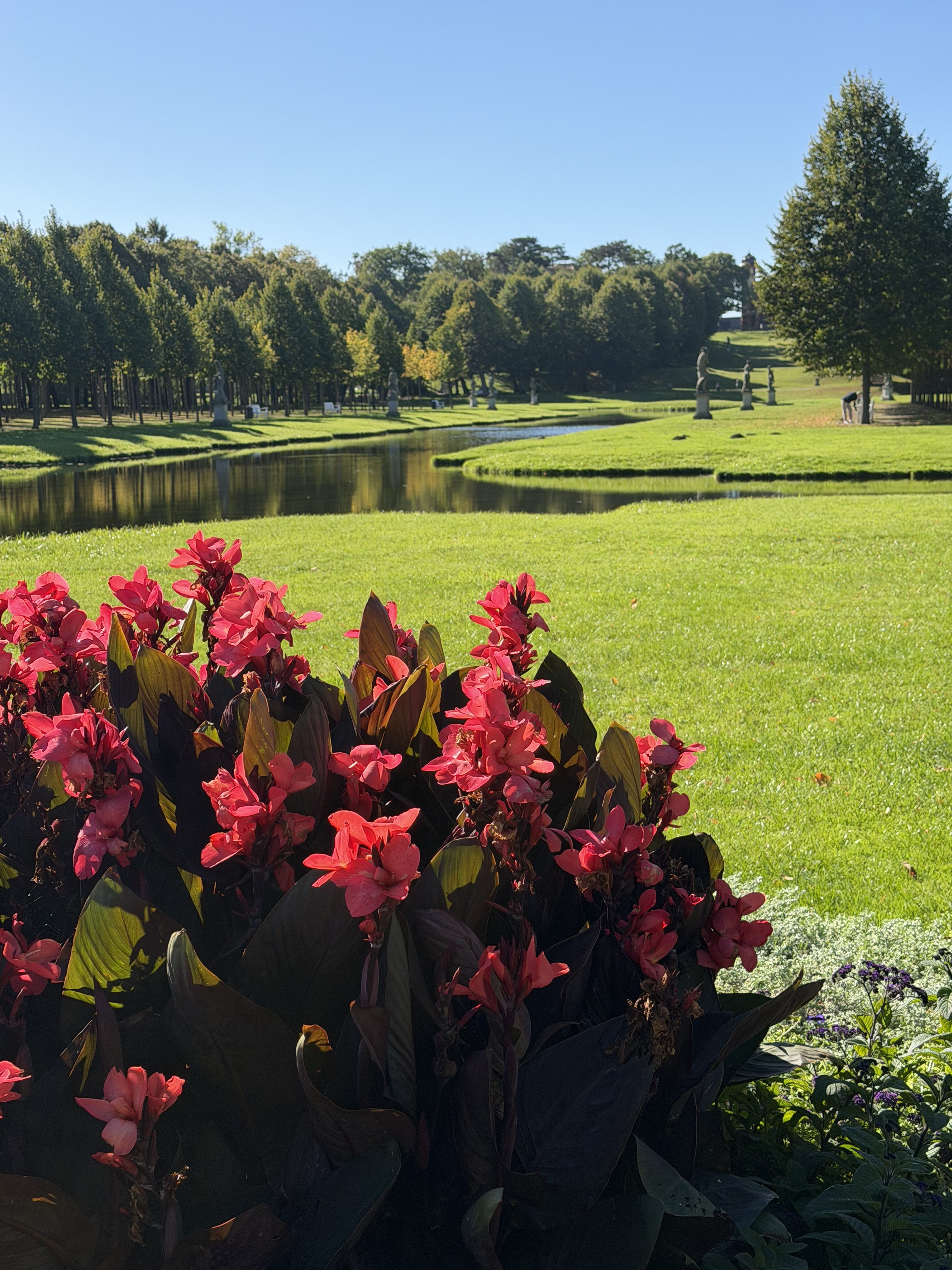
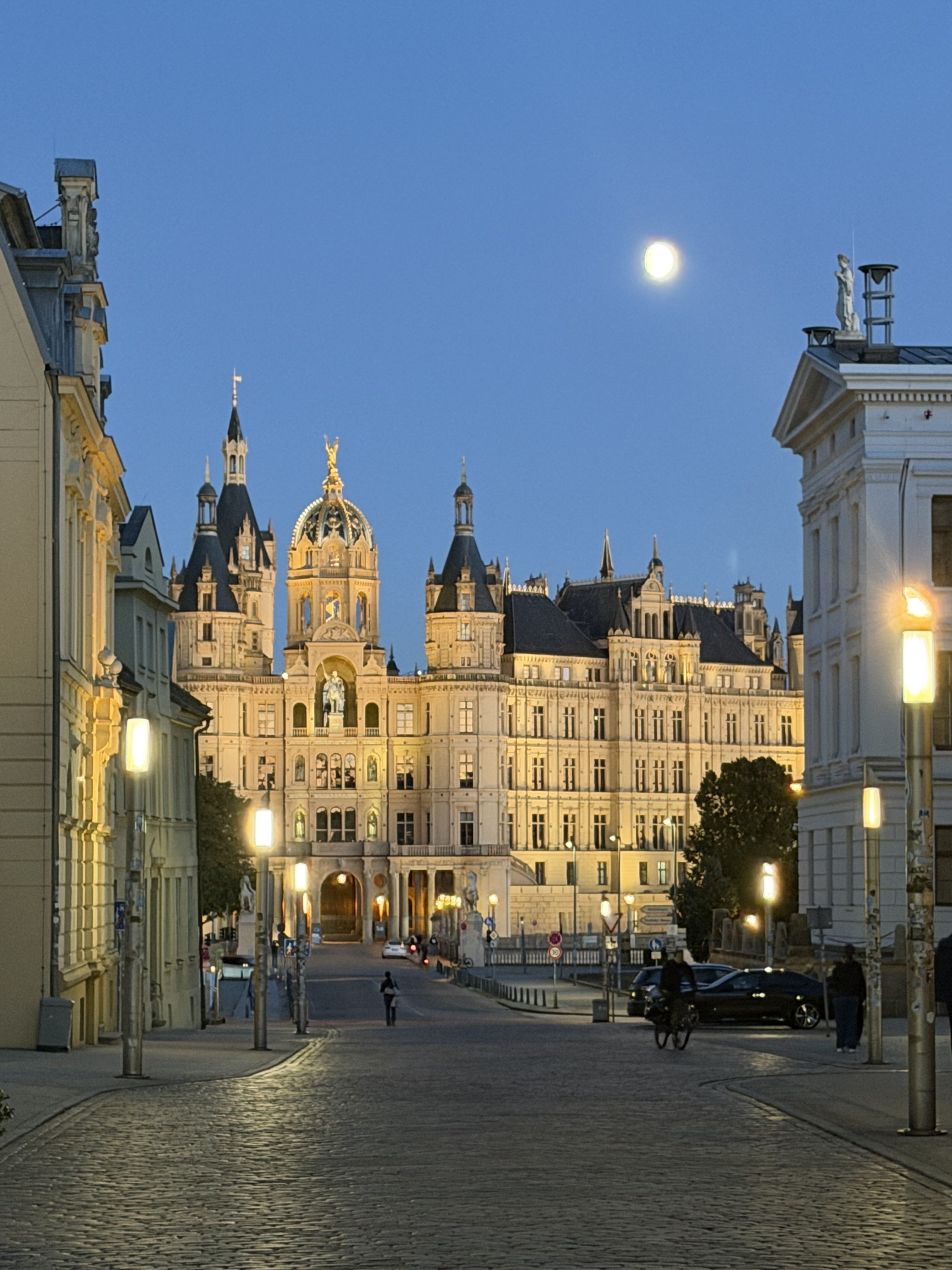
Schwerin Castle is both fairy-tale-like and elegant, with tall, pointy turrets and a marvelous black-and-gold dome atop a tall tower in the center. During the day, the dome shines, and at night, it gleams in the lights. The castle sits on an island in a large inland lake surrounded by beautiful gardens. Flower displays, statuary, meticulously straight rows of trees, and water features are interspersed with rolling lawns and vine-covered arched walkways.
Only a few of the elegant interiors remain in the castle, as most were destroyed by bombing during World War II. One marvelous element that escaped the bombing was the Lutheran Chapel, the first purpose-built Protestant structure after the Reformation. The castle was totally restored; however, most of the building is now used for the state legislature and government offices.
Randy, Melissa, Tom, Nancy, Kathy, and I took a boat cruise around the lake. We enjoyed the fresh, slightly cool air and saw thatched-roof buildings, vacation cottages, elegant houses, and, of course, the majestic castle.
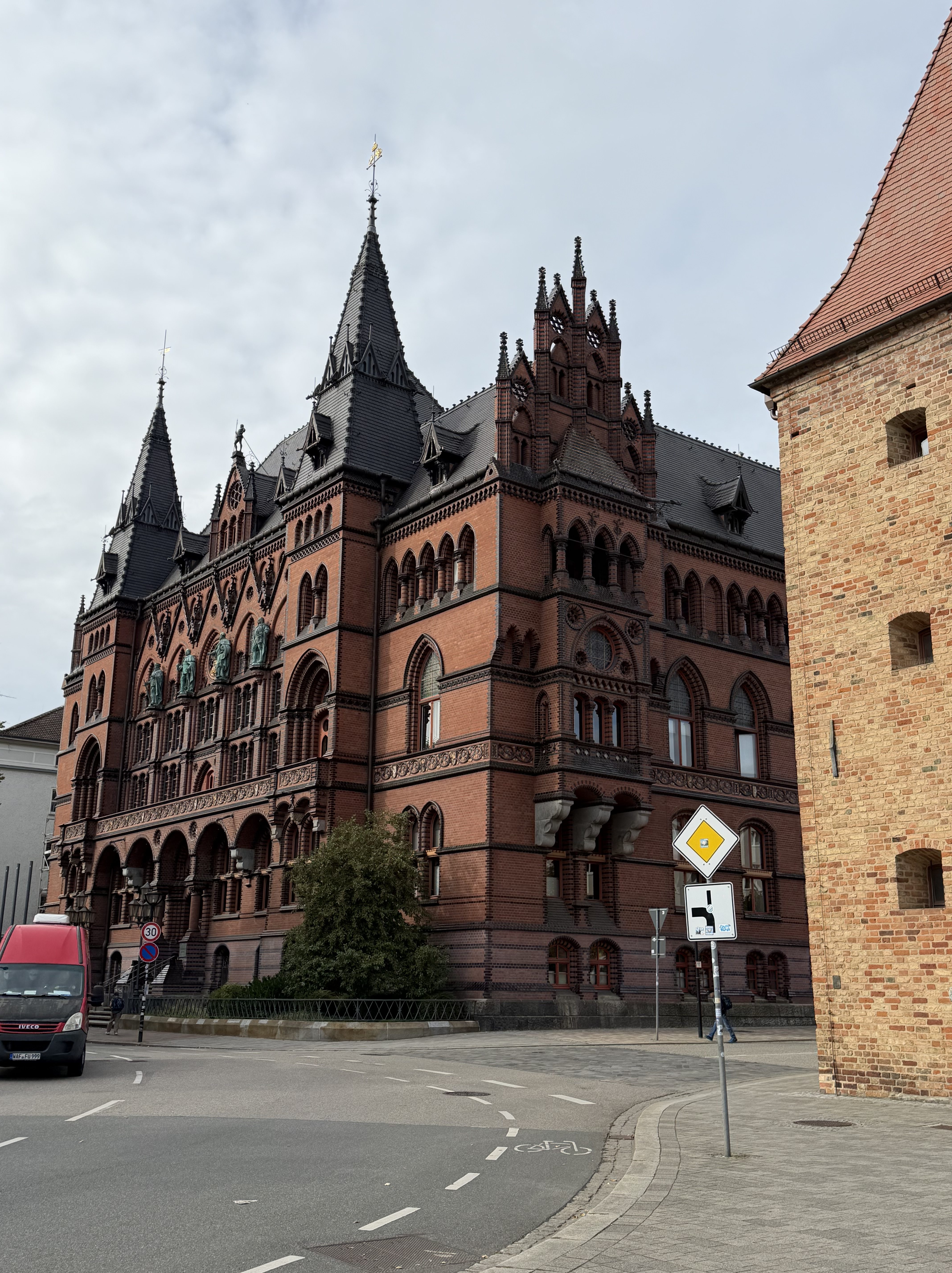
Our day trips took us to Wismar and Rostock. Both are on the Baltic Sea, and both had prosperous pasts. The buildings have both a Scandinavian and Dutch vibe. Cobblestone streets meander through market squares and alongside huge red-brick Lutheran churches. We marveled at the very high ceilings, decoratively painted.
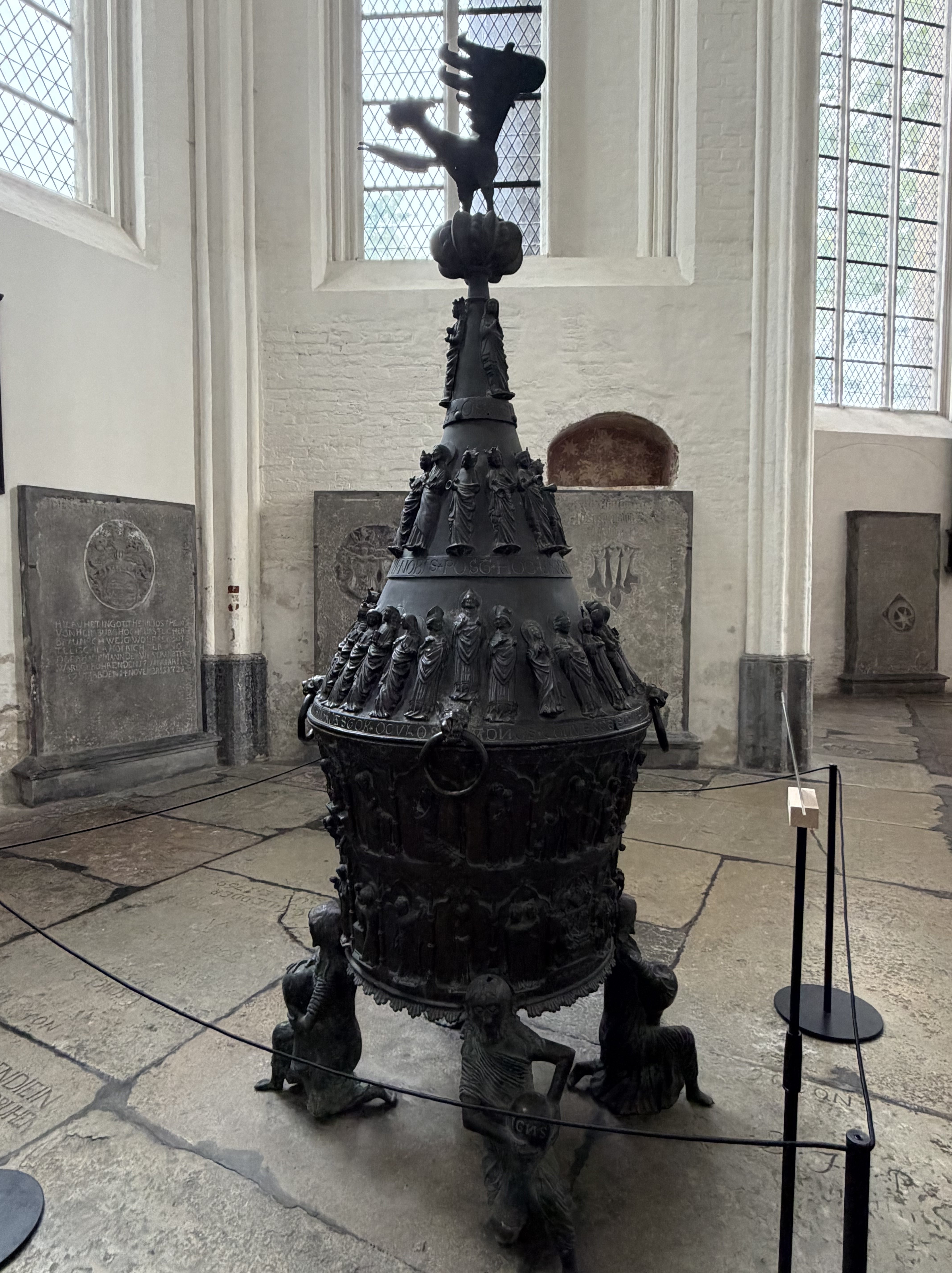
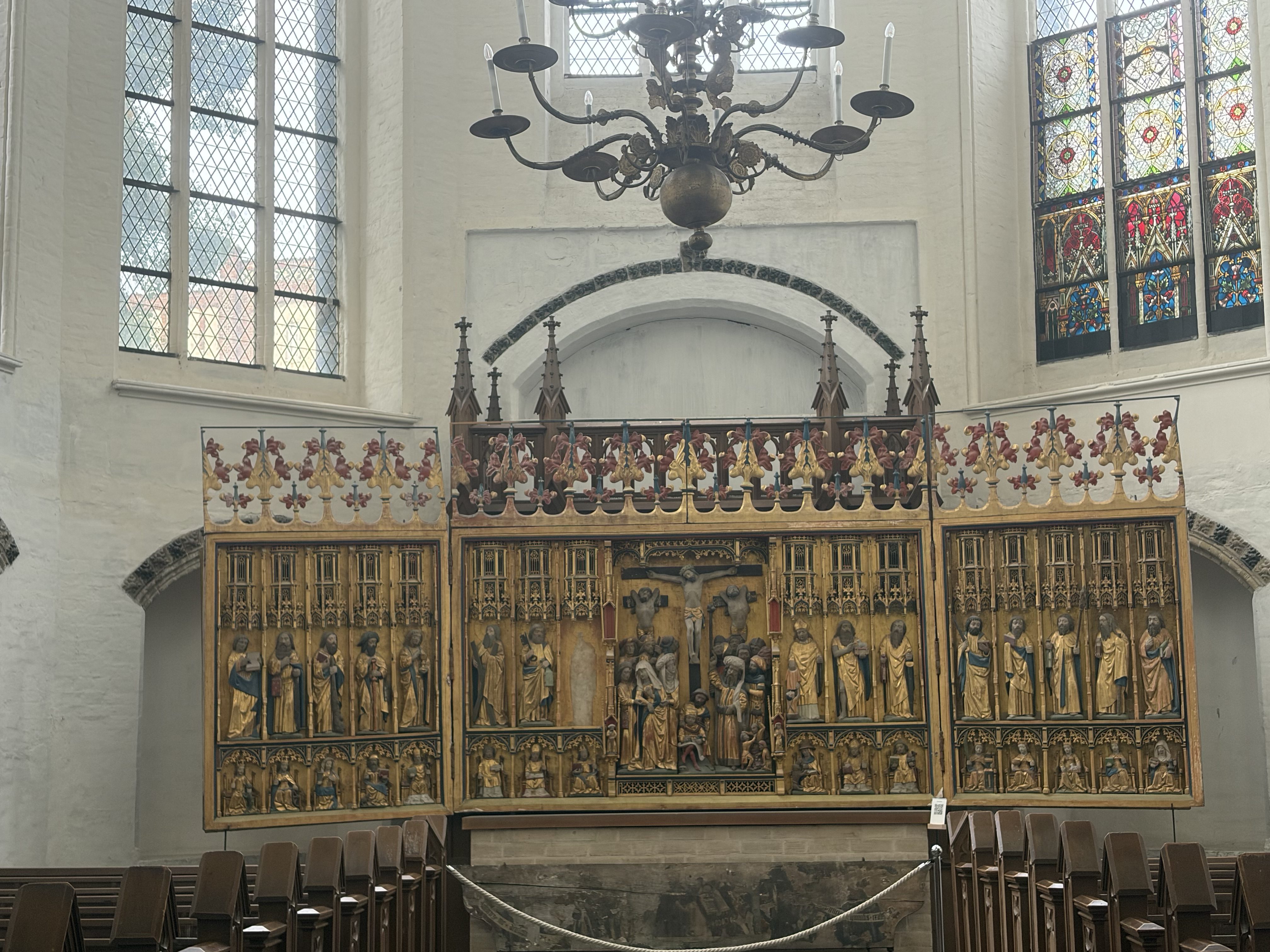
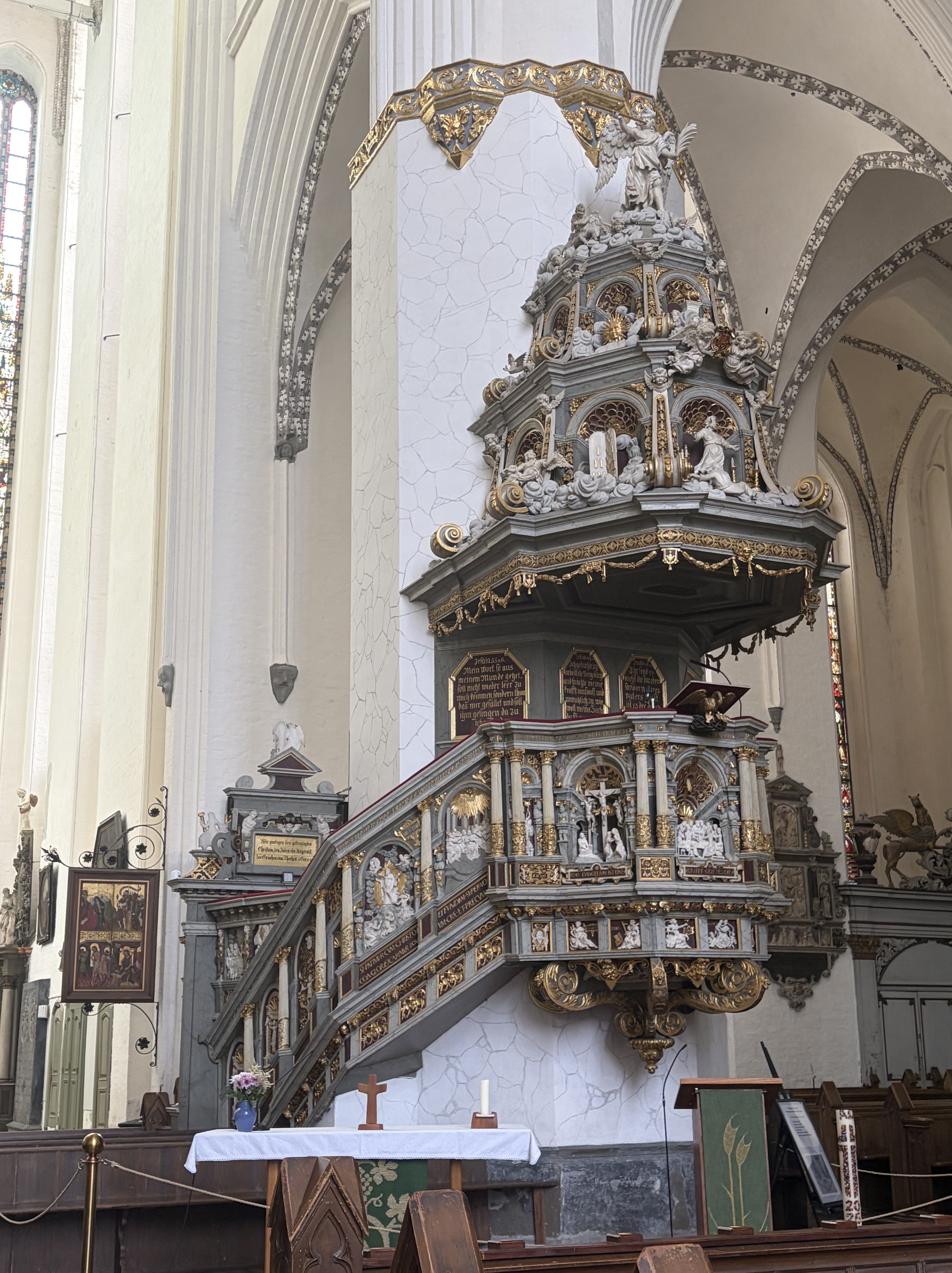
Of the three main Lutheran churches in Wismar, only St. Nikolai was not destroyed during World War II. It is a beautiful red-brick Gothic structure whose height pulls one’s eyes upward. The Baroque altar contains a Rubens painting of Christ’s descent from the cross. The imposing bronze baptismal font is also striking.
The other two large churches are ruins—one with a massive tower still standing and the other with its walls and ceiling stabilized, but its interior gutted. Melancholy, to say the least.
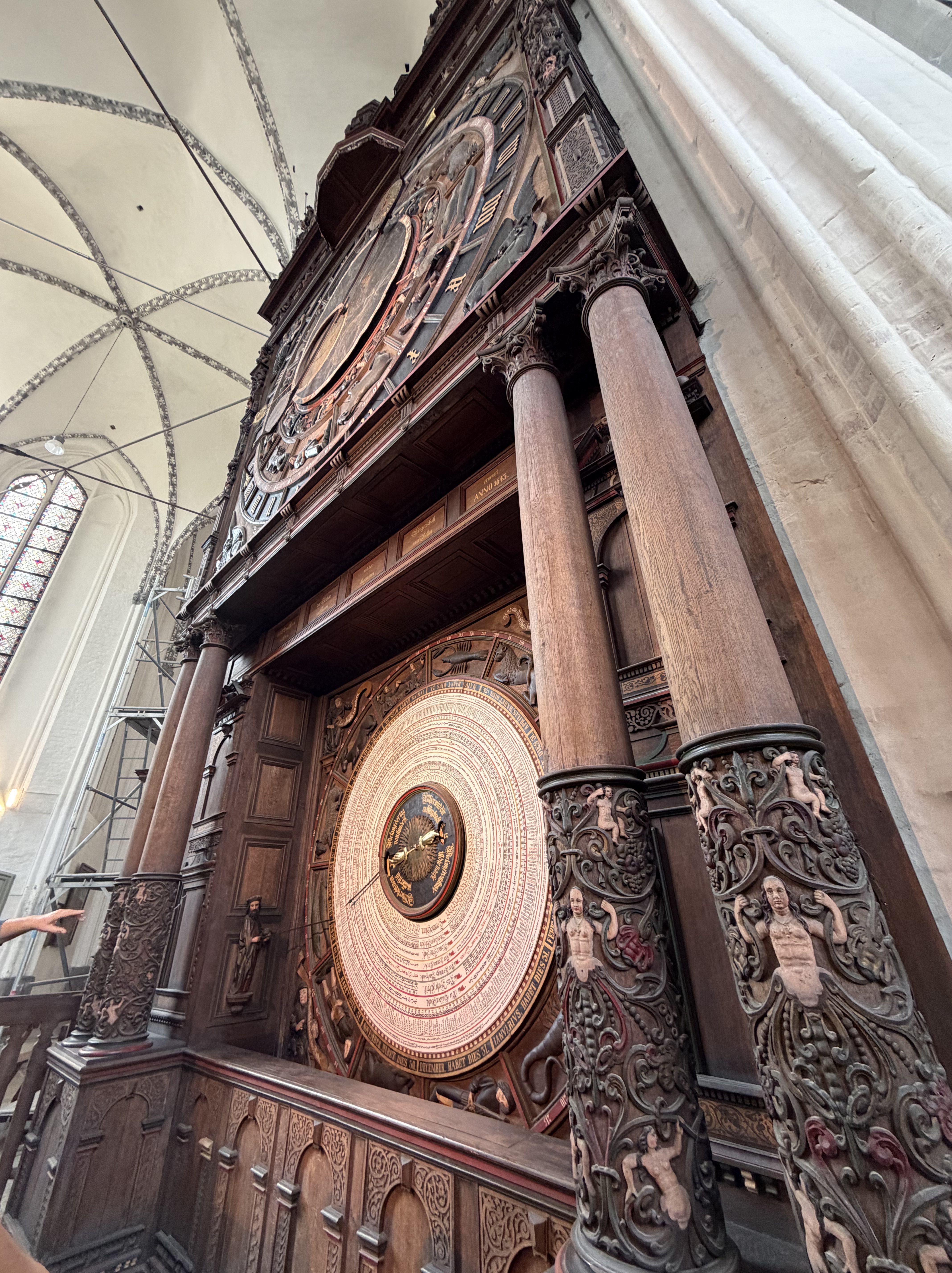
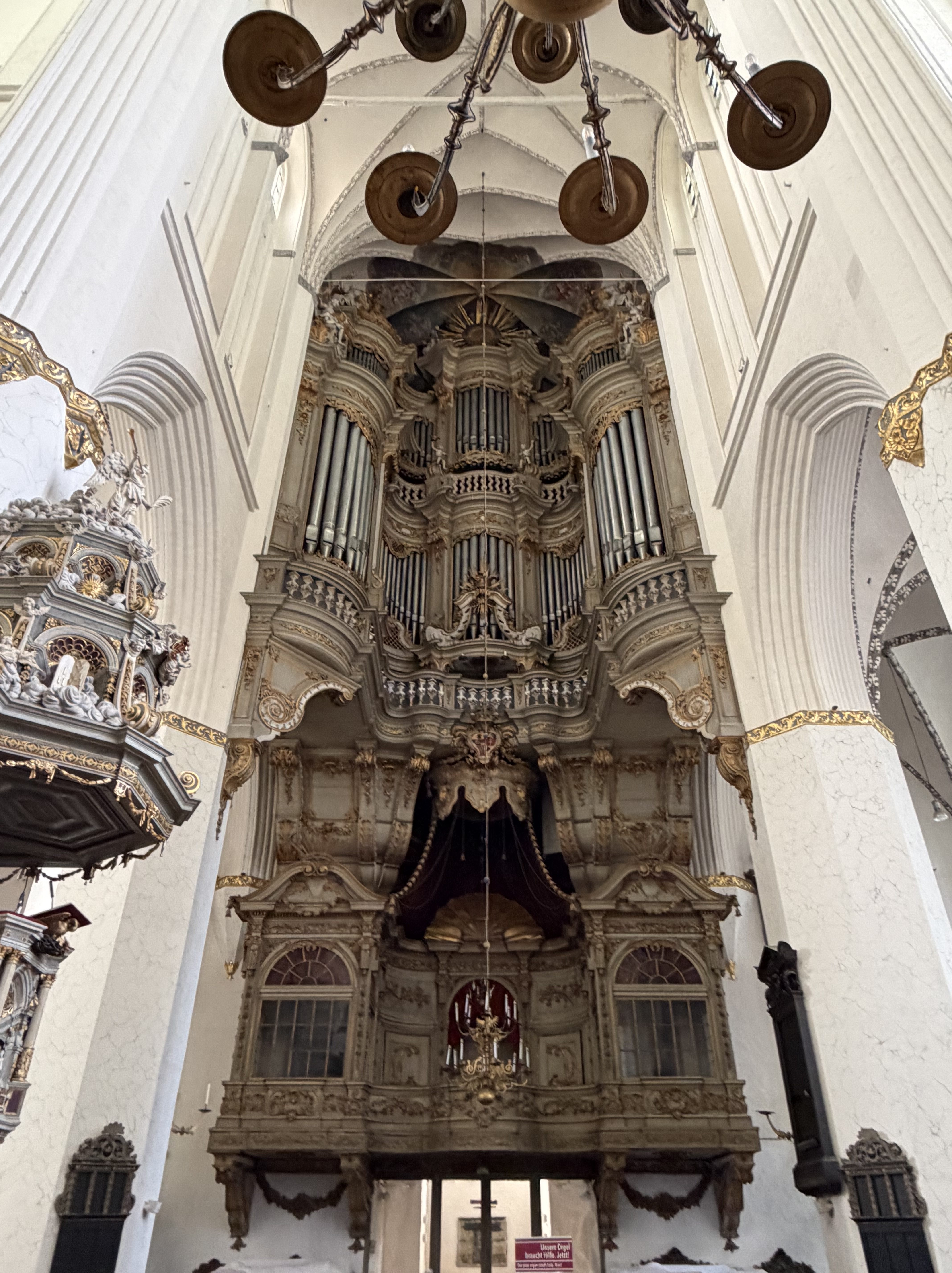
Rostock’s churches tell the same story—three main churches, two of them heavily damaged or destroyed. The still-standing St. Mary’s Church is massive, with a huge 89-foot-tall pipe organ housed in an impressively carved case. The astronomical clock is also a standout feature. Built in 1472, it still runs on its original mechanical workings. The main wood-carved altar is 79 feet tall, with white statues and gold accents. Beautiful!
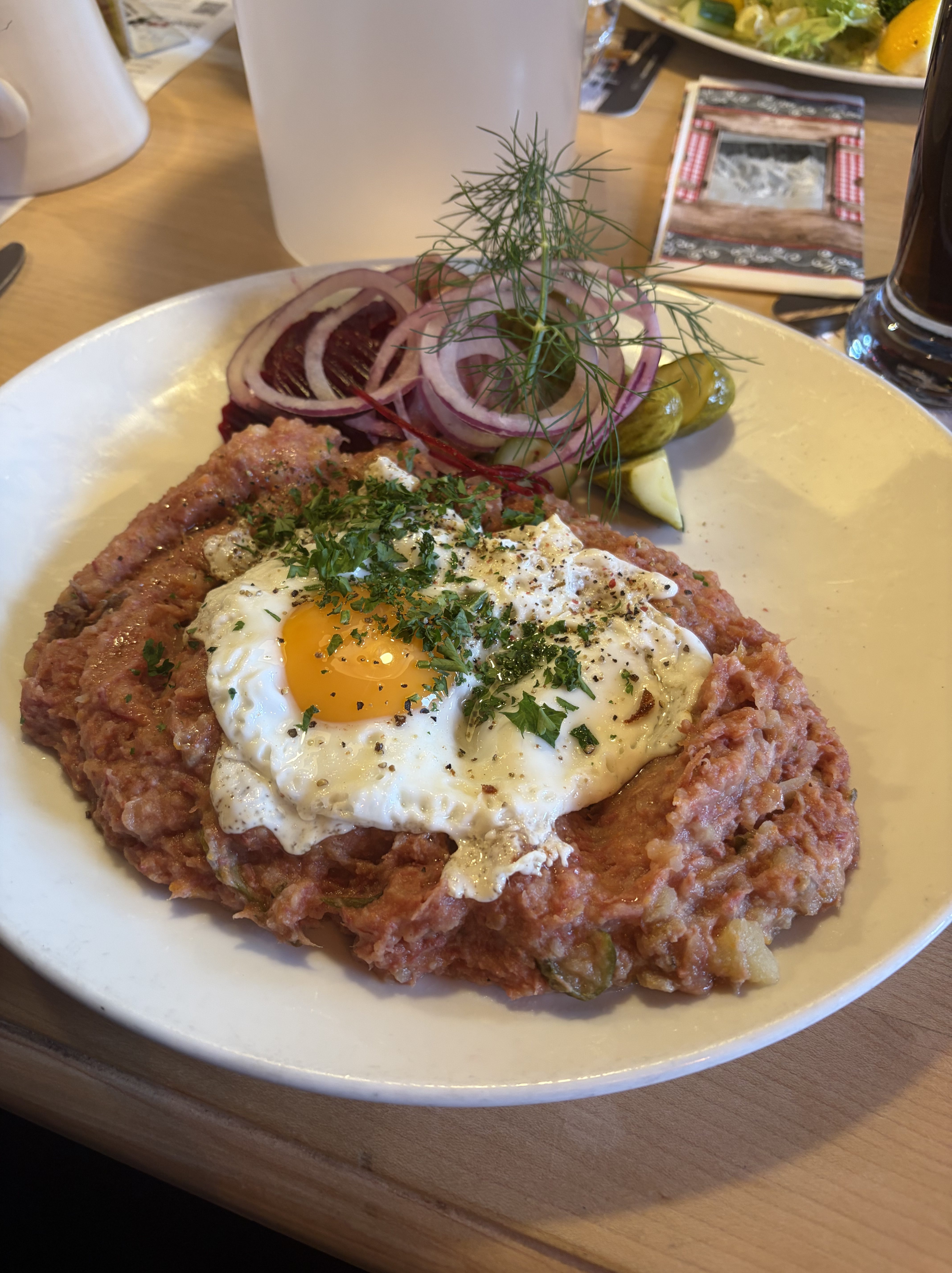
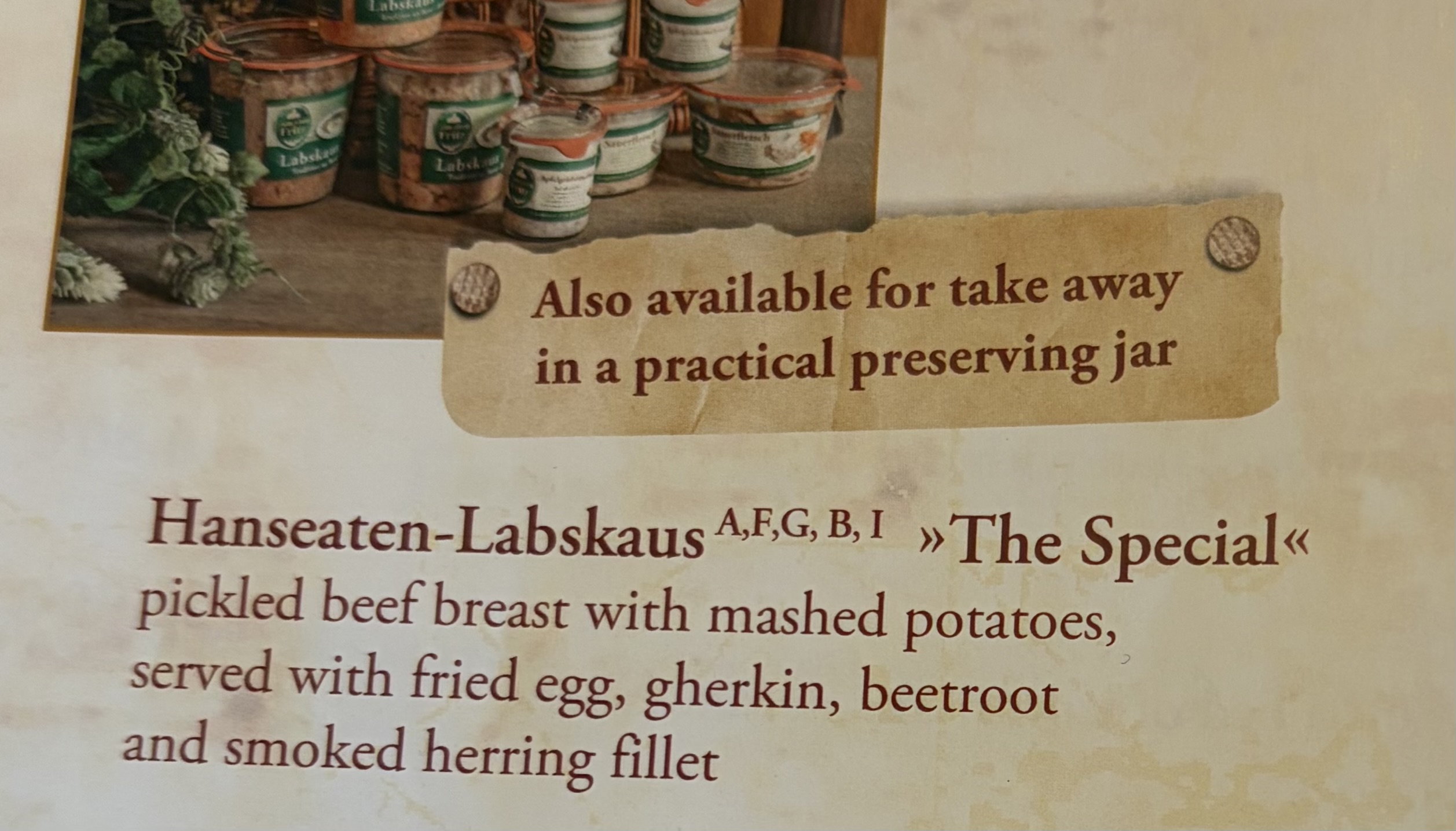
Food, glorious food, from the Baltic! Kathy is in heaven! She loves herring, and it comes in many forms. One particular dish is called Labskaus—a sailor’s food. It is made with smoked herring and pickled beef, along with beets, mashed potatoes, and gherkins, all topped with an over-easy egg. These are all favorite foods of hers, and here they are, all on one plate! All of us have enjoyed various fried fish and other delights.
We all agreed that Schwerin and the surrounding area is a wonderful way to start our East and North German adventure, and God blessed us with delightful weather.
WEG
 kgraumann
 wgraumann

That dish that Kathy ate looks absolutely wonderful! it looks just like a dish my mother used to make for us for dinner. Her family is of German descent, but she made it a little differently. She used two cans of corned beef, hash, would heat them in the iron skillet until the bottom was crispy, brown, then she would crack eggs over the top of it, cover it and let it cook until the eggs were done. Sometimes she would fix them in individual casserole cups with one egg cracked over the top of each and bake them in the oven. We loved herring, too, but we did not serve it as a side. We would have them as hors d’oeuvres on crackers.
WOW great trip. Love the history
Thanks for sharing your trip. Glad to see you got to see so many wonderful sights. Hugs.