
Home » Posts tagged 'history'
Tag Archives: history
Classical Elegance in Dresden
October 10–14, 2026
Kathy and I have returned to Dresden, Germany, many times. It is a city renowned for its cultural life, world-class museums, Baroque beauty, and quiet vibrancy. Over the years, we have watched it steadily rebuild the historic buildings that were reduced to rubble during the devastating bombings of World War II. Today, that remarkable restoration seems nearly complete.
Our hotel was an NH Collection property conveniently located in the Altstadt (Old Town). I had never booked with this hotel chain before, and we were delighted to discover that each couple received a suite. What a pleasant surprise!
Our first event in Dresden was a marvelous concert at the Kreuzkirche (Church of the Cross), a Lutheran church. The music reverberated beautifully throughout its vast stone-and-concrete interior, beneath the enormous tiers of balconies.
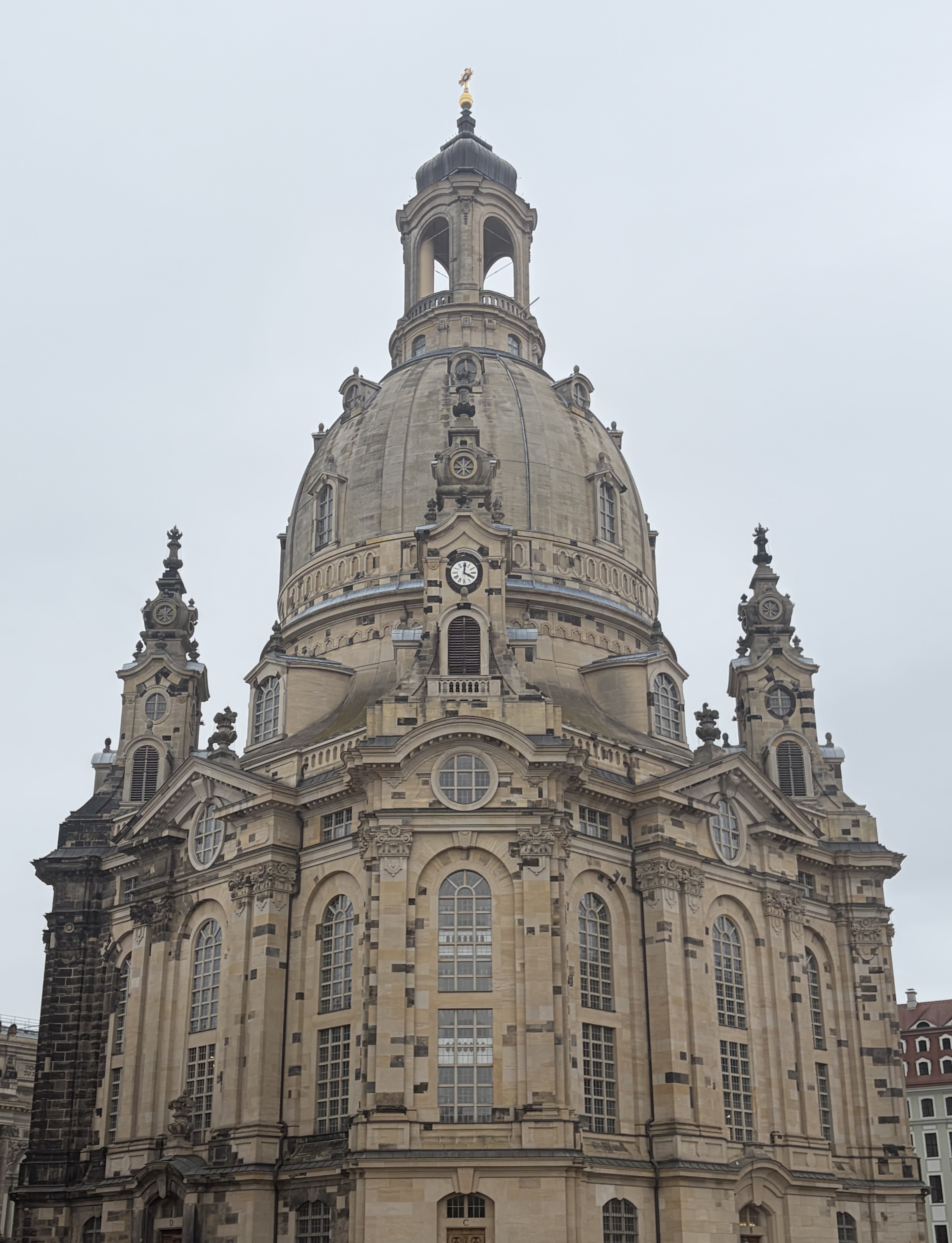
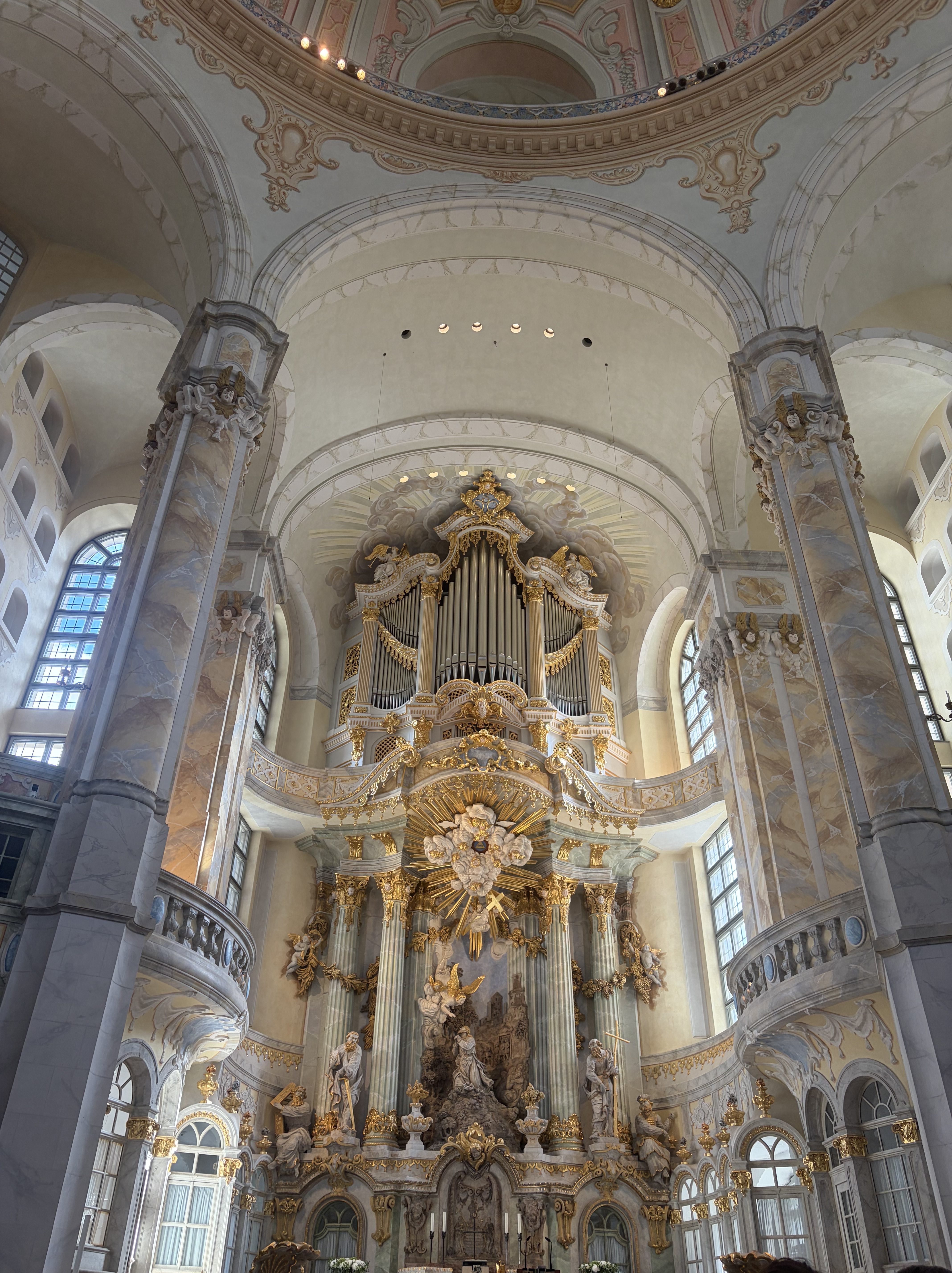
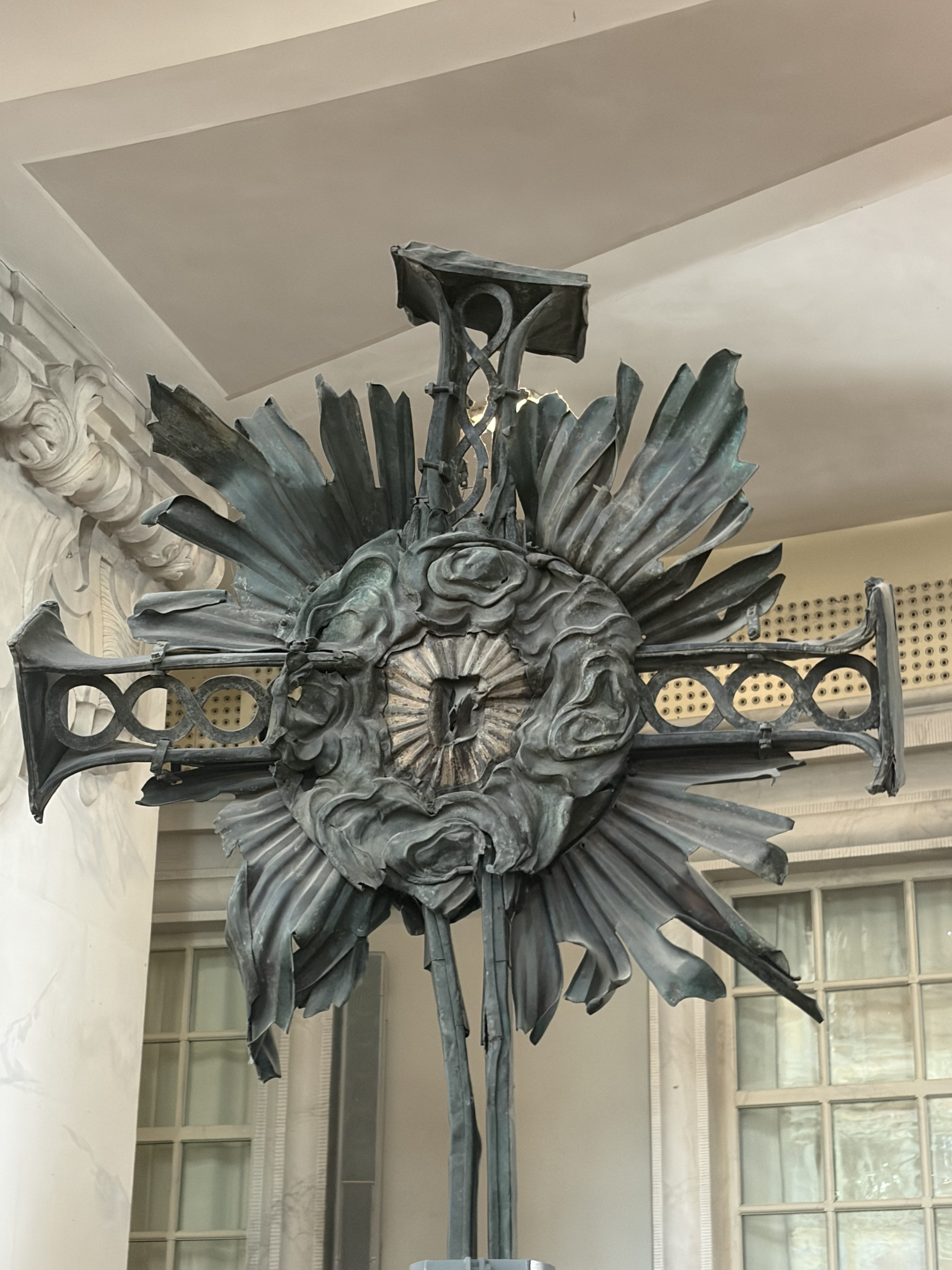
The following day, we were privileged to attend the full German-language Sunday morning service at Dresden’s most recognizable landmark, the magnificent Frauenkirche (Church of Our Lady), often called the city’s “Stone Bell.” The eye is immediately drawn to the towering white-and-gold sculpted altar, centered on Jesus in the Garden of Gethsemane, with angels attending Him. Five tiers of balconies draw the eye upward toward the Baroque dome, decorated with biblical scenes in soft pinks and blues. From the main floor to the top of the interior dome is an astonishing 220 feet! We especially enjoyed the music of the enormous pipe organ.
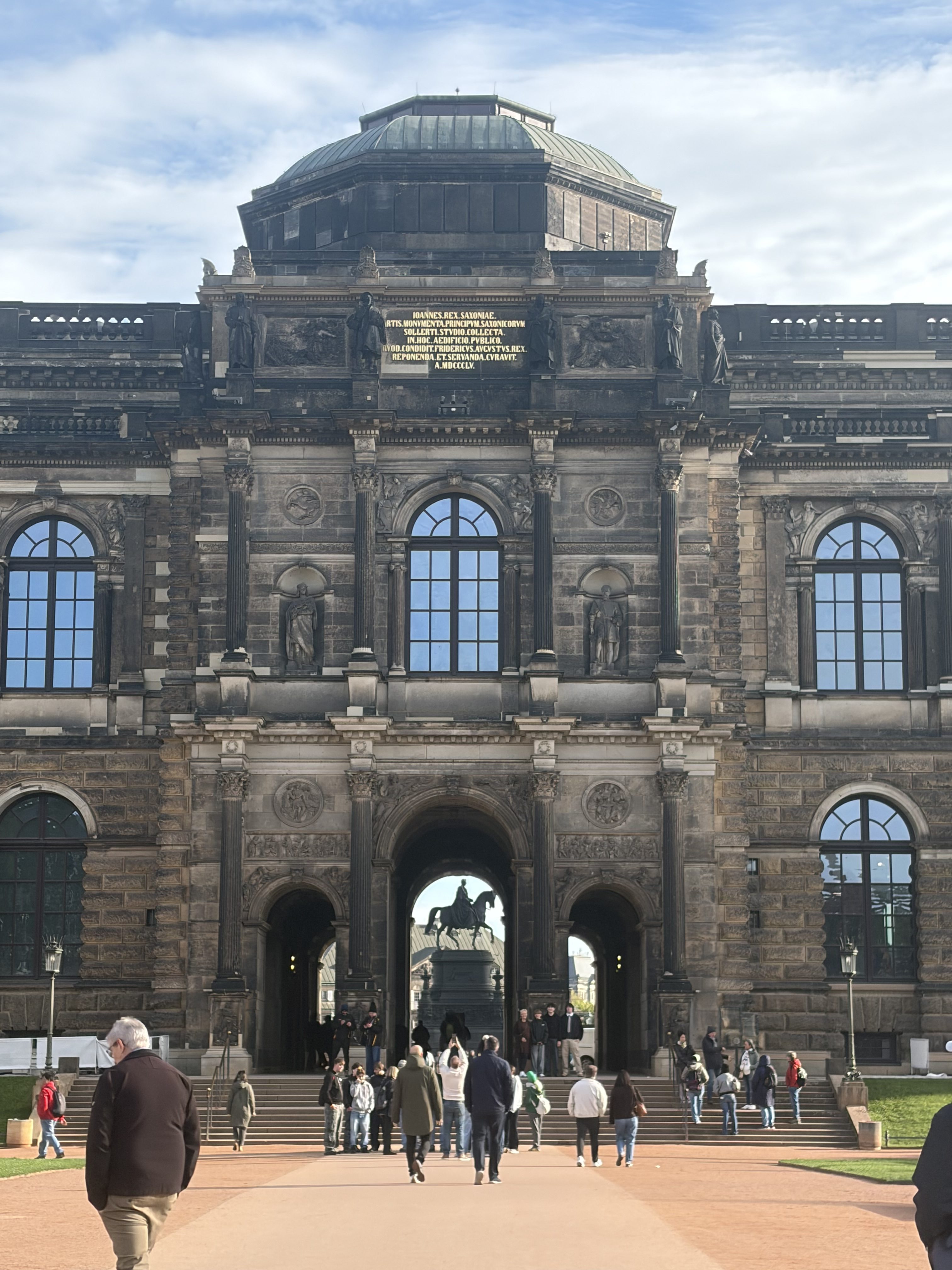
We spent hours walking among Dresden’s elegant buildings, admiring their architecture and the intricate sculptures adorning their façades. The Roman Catholic Cathedral, or Dom, is crowned with sculptures of saints encircling its roofline. Across the square stands the famous Semperoper (opera house), adorned with bronze horses and chariots. The Zwinger Palace is equally stunning, with a large black-and-gold crown rising above its walls.
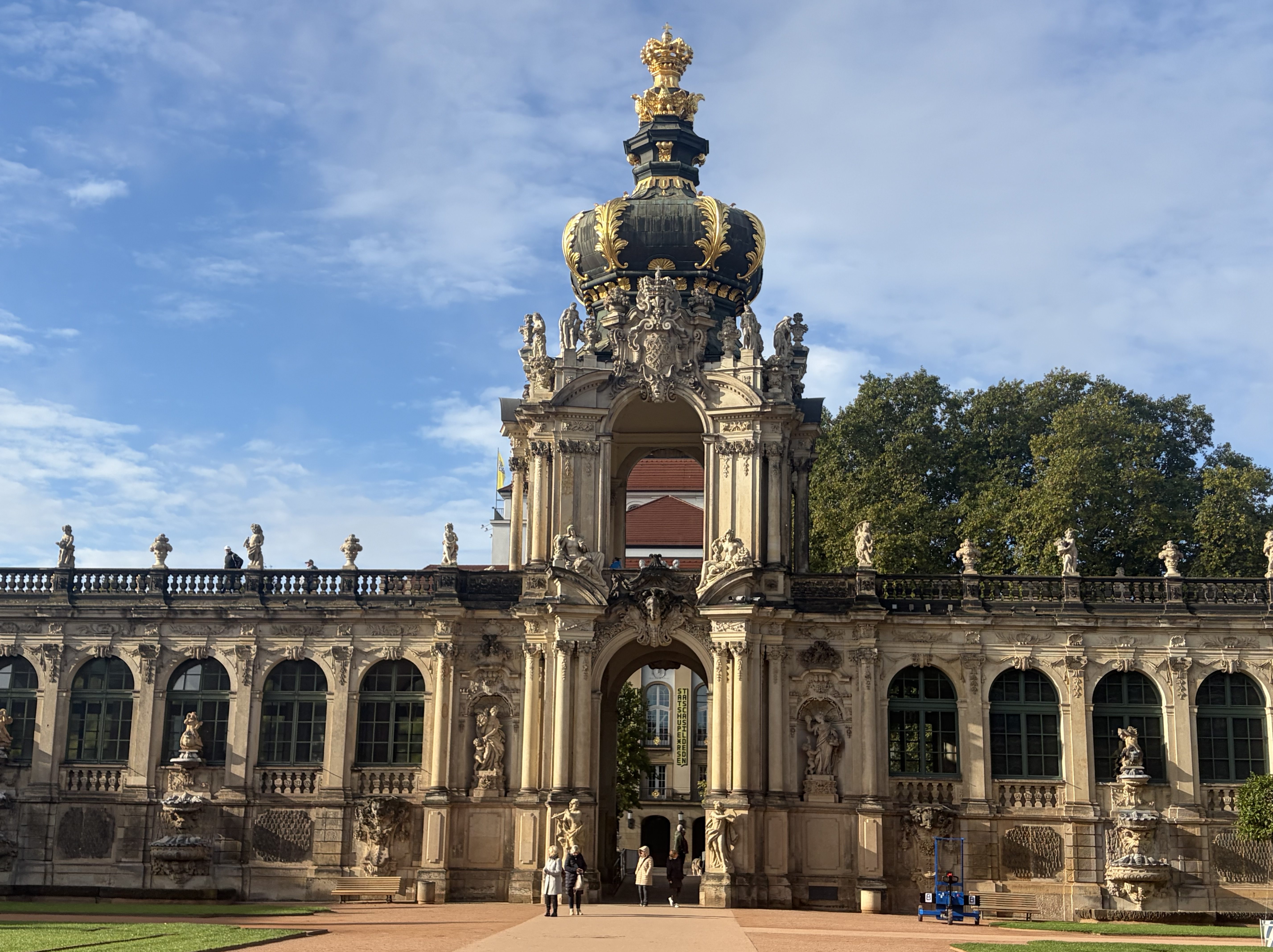
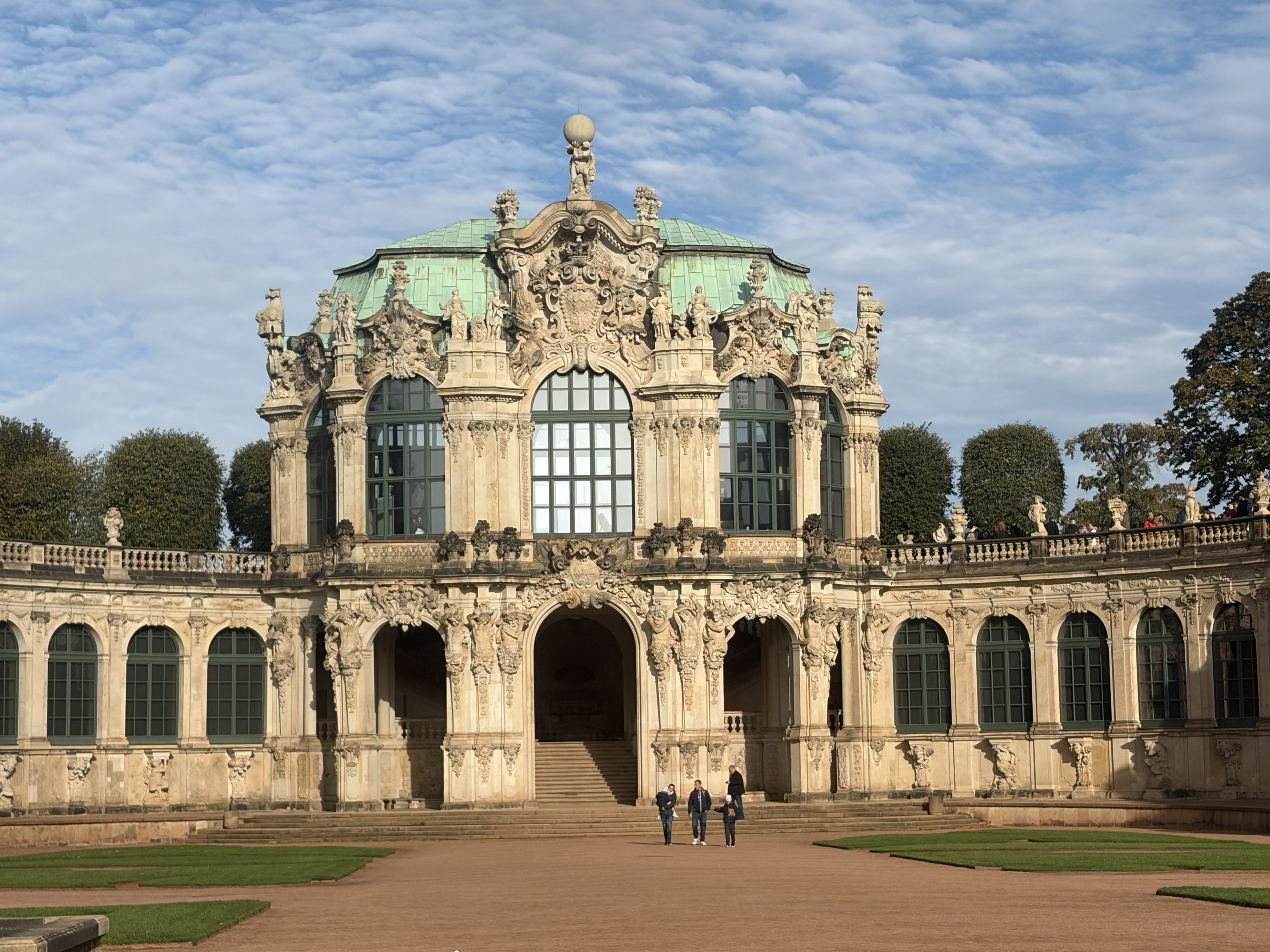
Tom and Nancy, along with Randy and Melisa, visited the famous Green Vault, which houses an extraordinary collection of unusual and opulent works of art. One simply cannot overstate the Baroque charm of Dresden!
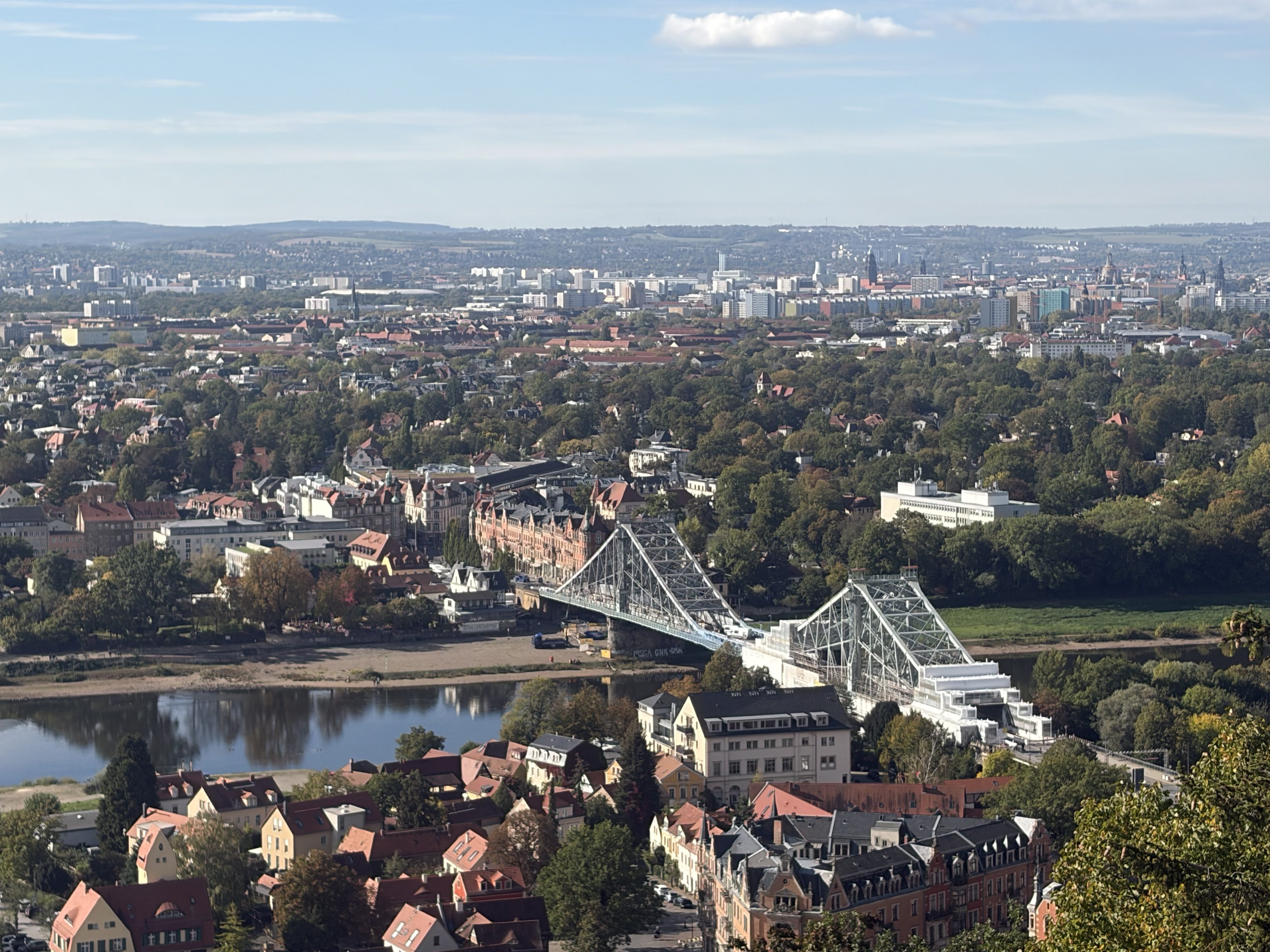
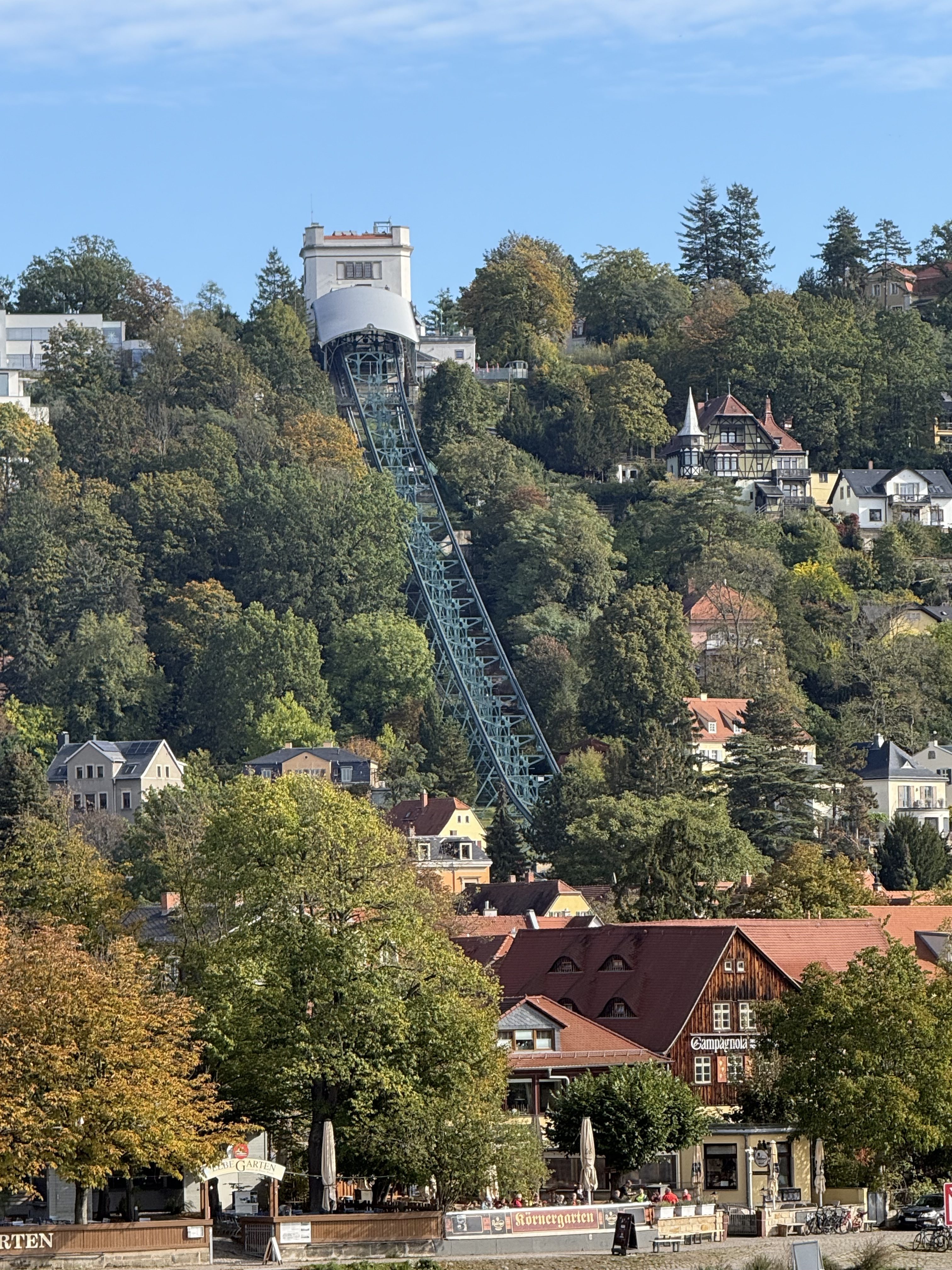
We also enjoyed a fun adventure as we set out to find and ride the suspended funicular, which climbs the hillside above the Elbe River, only a mile and a half from our hotel. Another unexpected adventure came when we boarded a bus and enjoyed a two-hour tour through beautiful residential neighborhoods, making what seemed like umpteen stops along the way! We returned to favorite restaurants we had enjoyed on previous visits and savored every morsel.
We also took a wonderful day trip to Leipzig, an emerging European technology center. As the home of Johann Sebastian Bach, the great composer and musician, Leipzig holds a special place in musical history. We enjoyed strolling through its main pedestrian district.
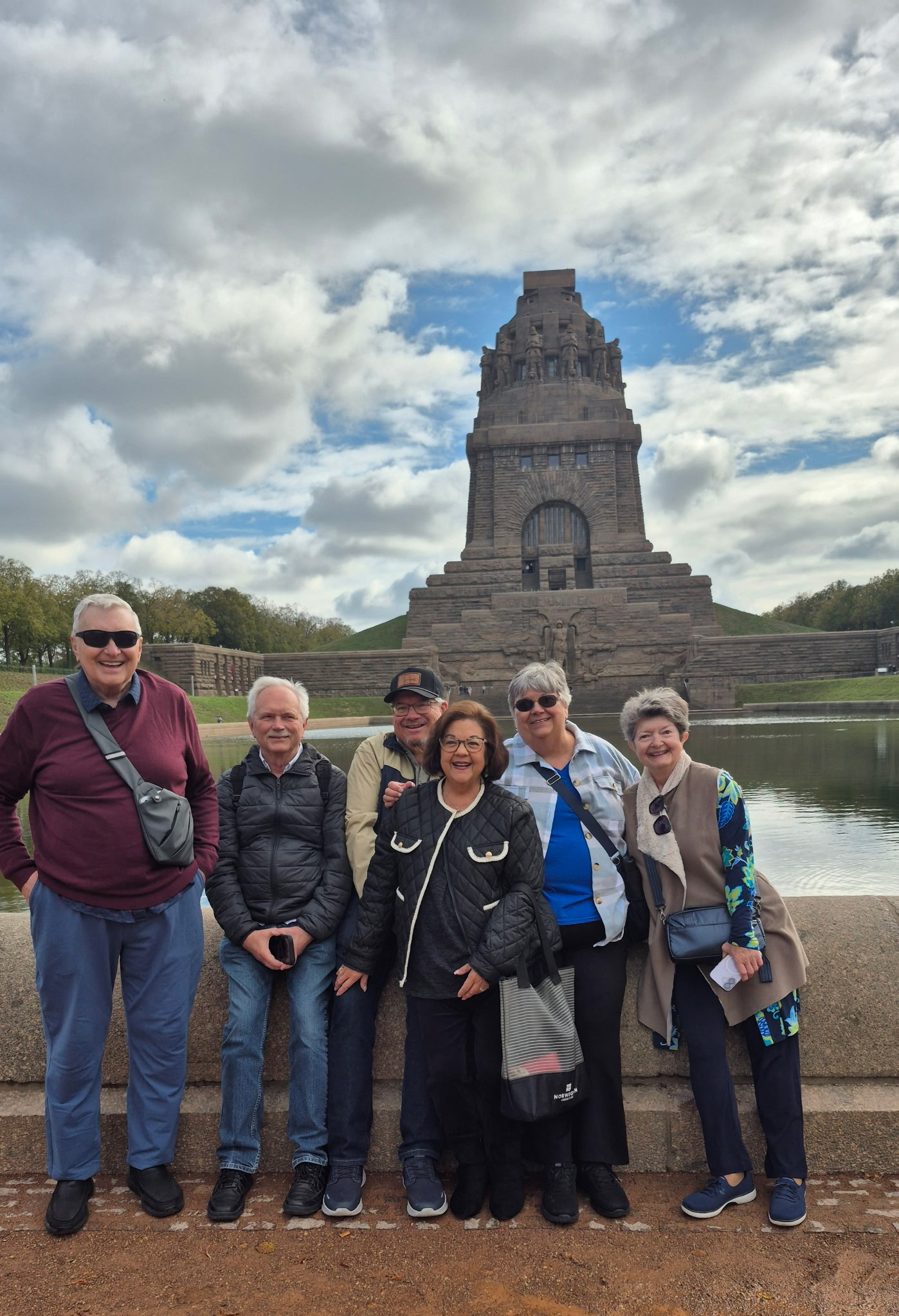
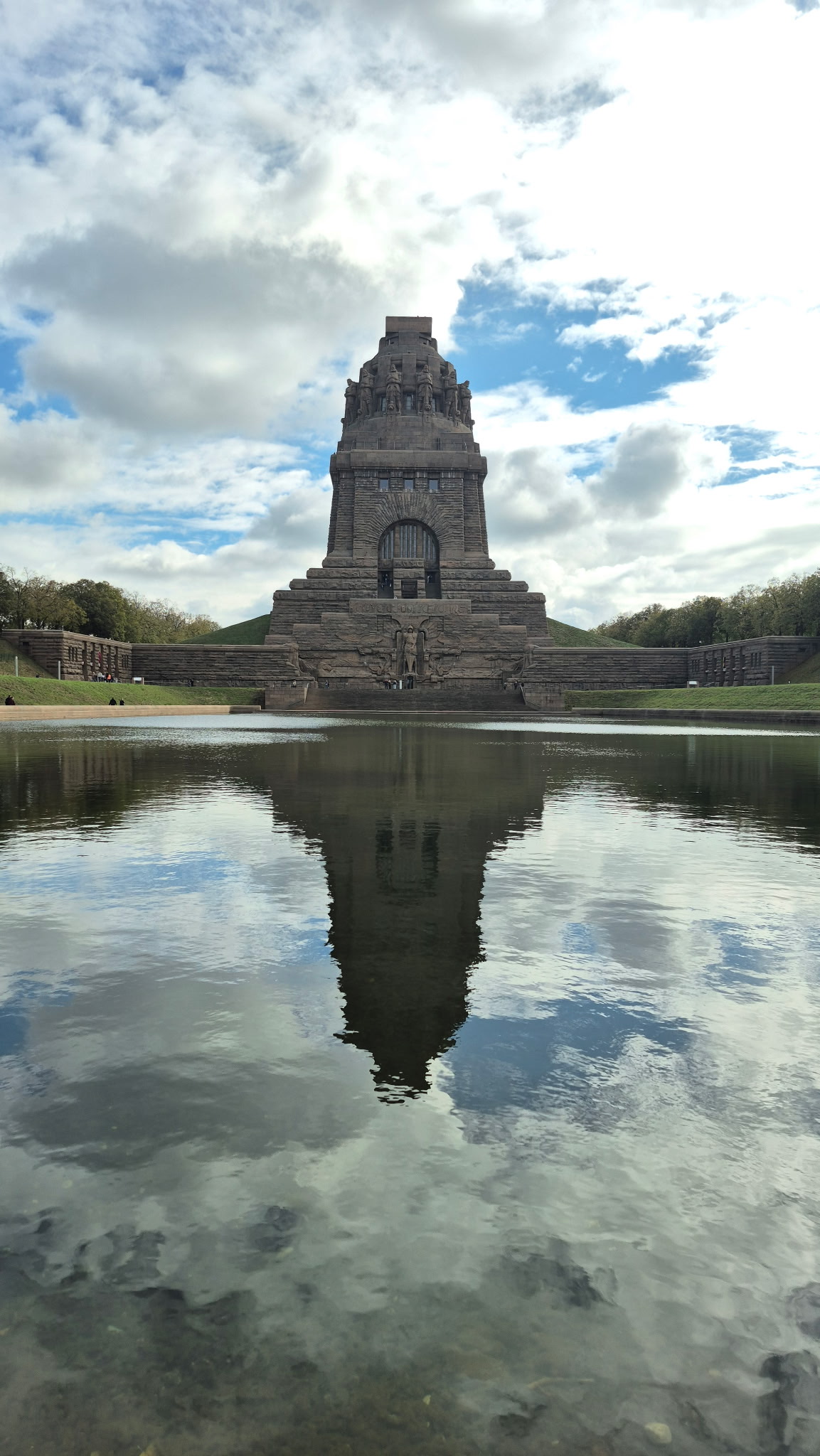
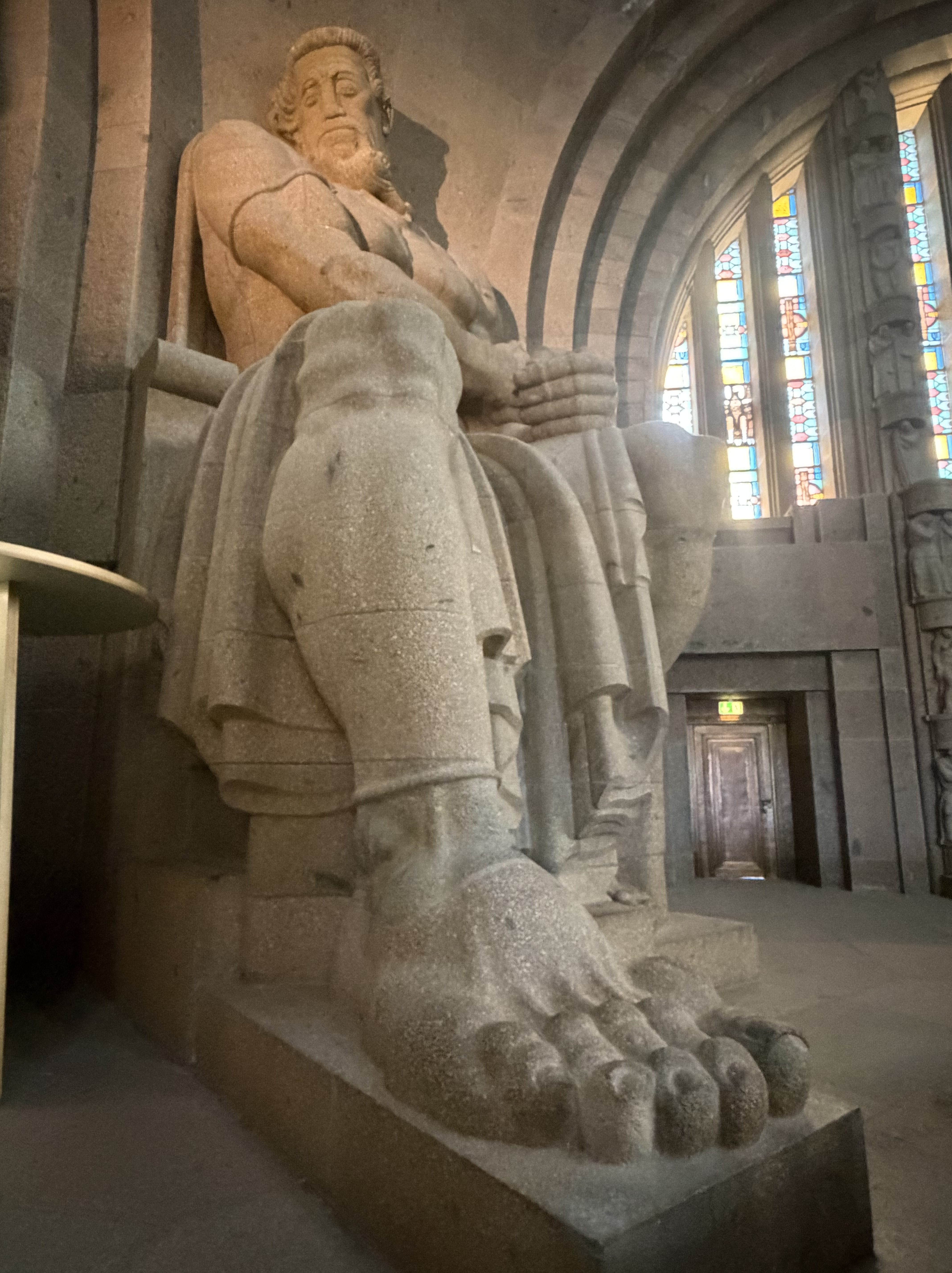
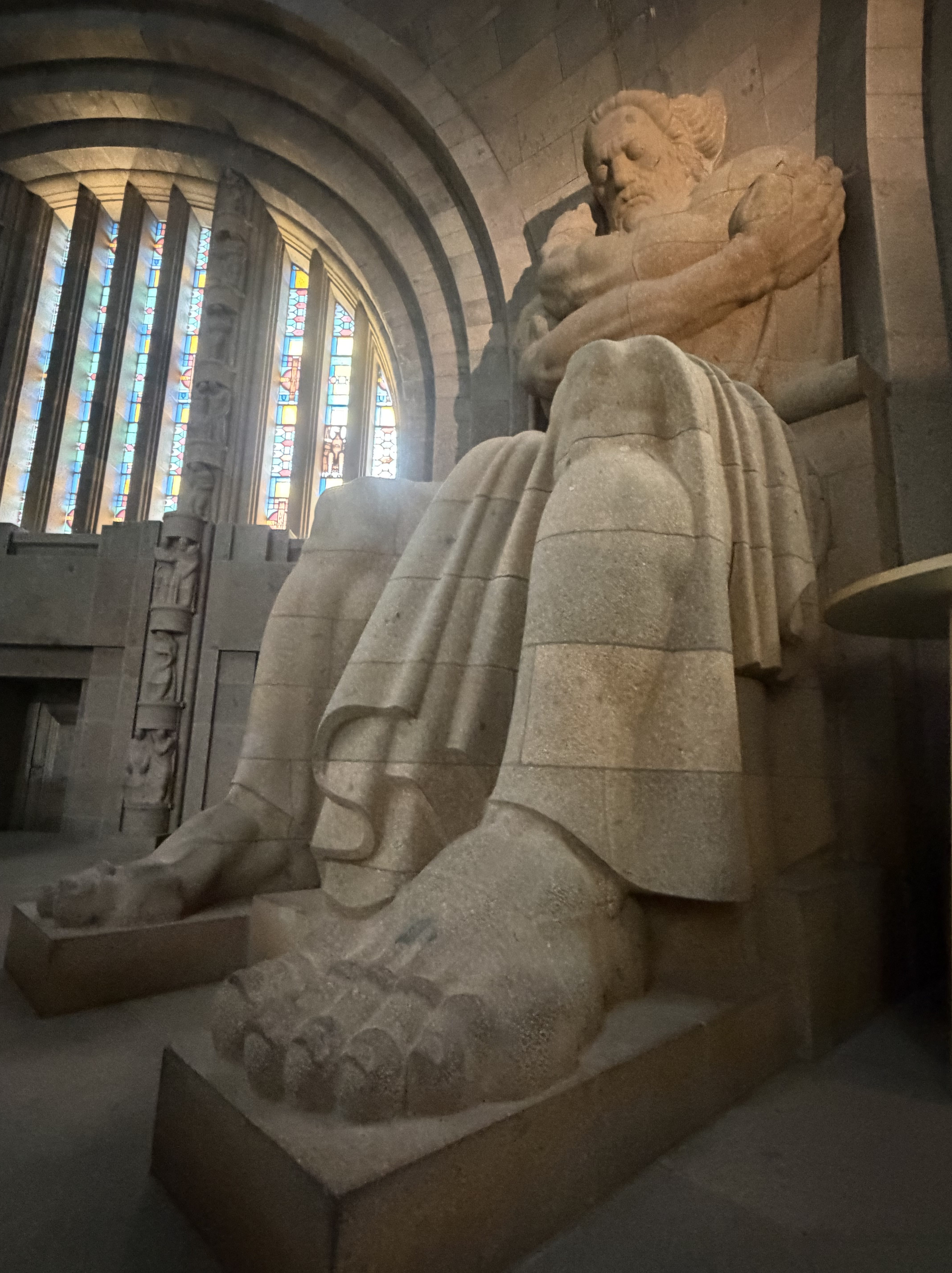
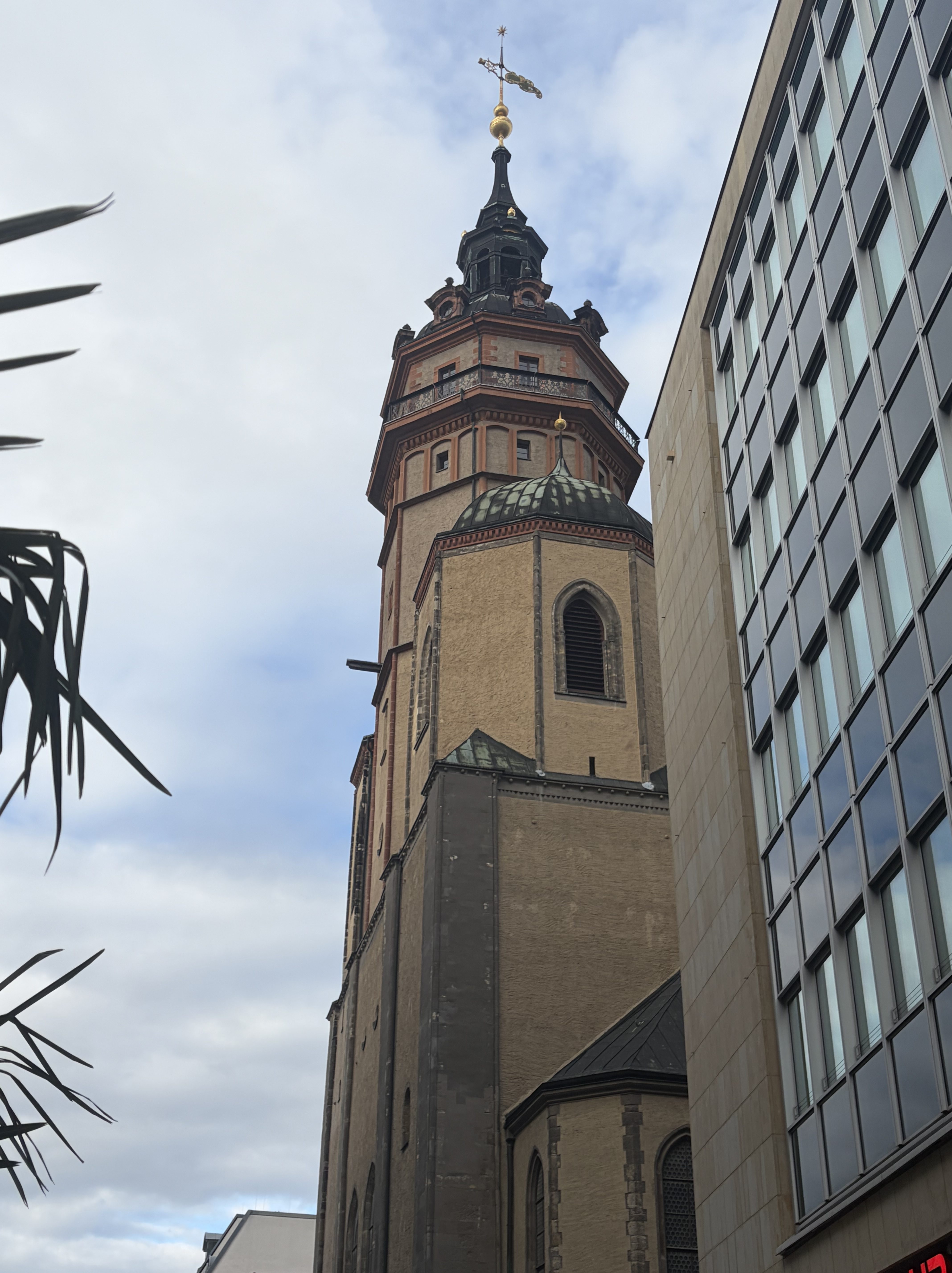
There, we visited St. Nicholas Church, a Lutheran church with a striking pink-and-green Baroque interior. Its enormous pillars, painted in delicate shades of pink and adorned with stucco palm fronds, create intricate patterns that reach toward the lofty ceiling. This church also holds a significant place in modern German history. It was here that the peaceful demonstrations, accompanied by candle-bearing crowds, helped spark the movement that ultimately led to the fall of the Berlin Wall, which had divided East and West Germany.
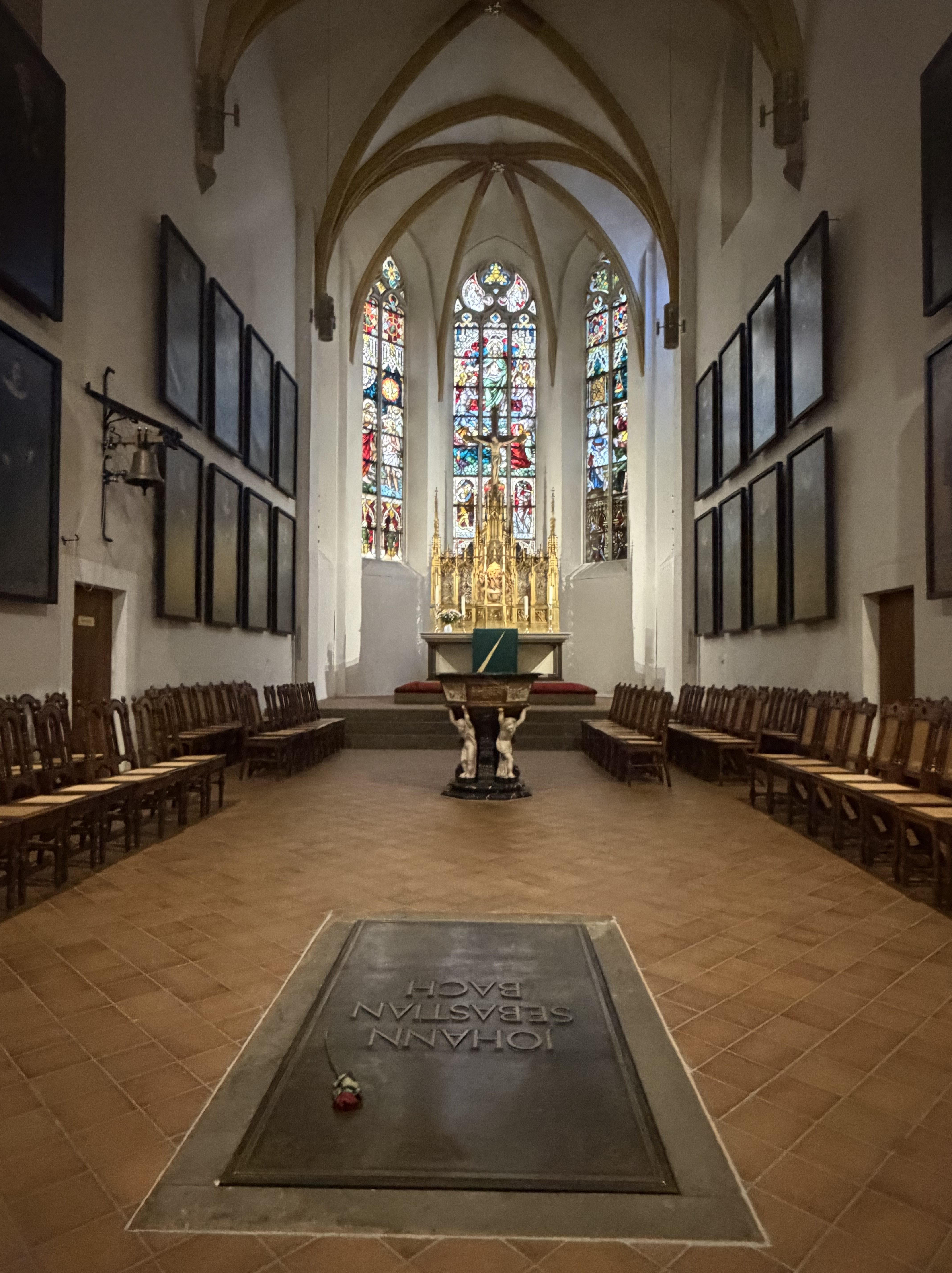
We also visited St. Thomas Church, another Lutheran landmark, where J. S. Bach served as music director and composed many of his important works. The church is home to the renowned St. Thomas Boys Choir, whose history spans more than eight centuries, and Bach himself is buried there. Standing in such a historic place, surrounded by the legacy of this extraordinary musician, was a special experience.
The weather throughout our day in Leipzig was outstanding, adding to our enjoyment of this memorable excursion!
Now, on to Berlin!
MAJESTIC OVERLOAD
October 5-10, 2026
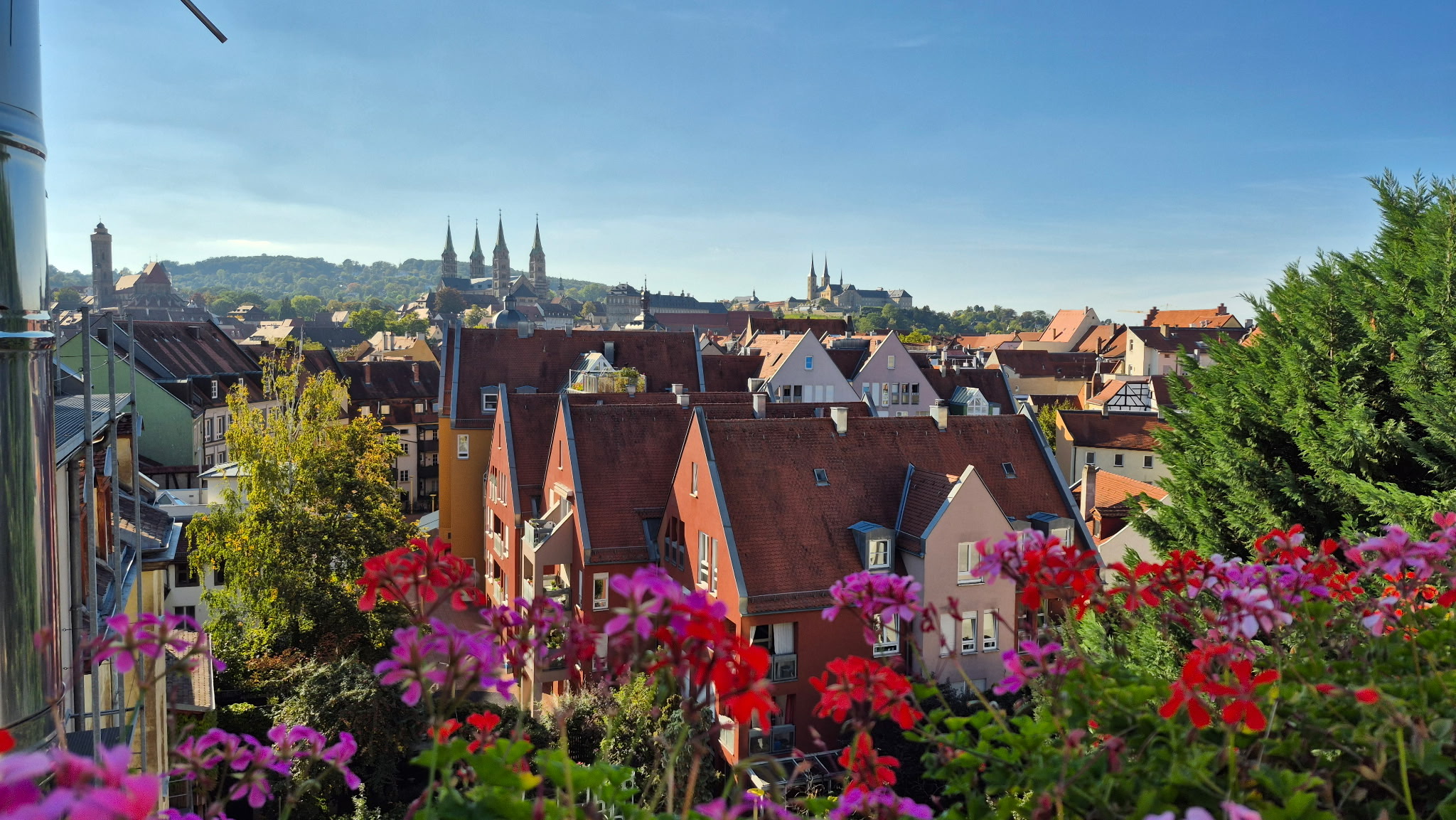
When we travel, we often go for the instagram sites and places we have heard about. Well and good; however, often the most majestic sites/sights are found in lesser known places and tucked away in unassuming quarters. This was the case for Randy, Melisa, Tommy, Nancy, Kathy and I as we headquartered in Bamburg, Germany, for five days and day-tripped to some of the wonderful surrounding cities. Our hotel was a renovated historic building right in the Altstadt (old town). Perfect for exploring. Fall has definitely arrived and so has cooler (two days, wetter) weather. It was nostalgic walking in fallen leaves in autumn colors.
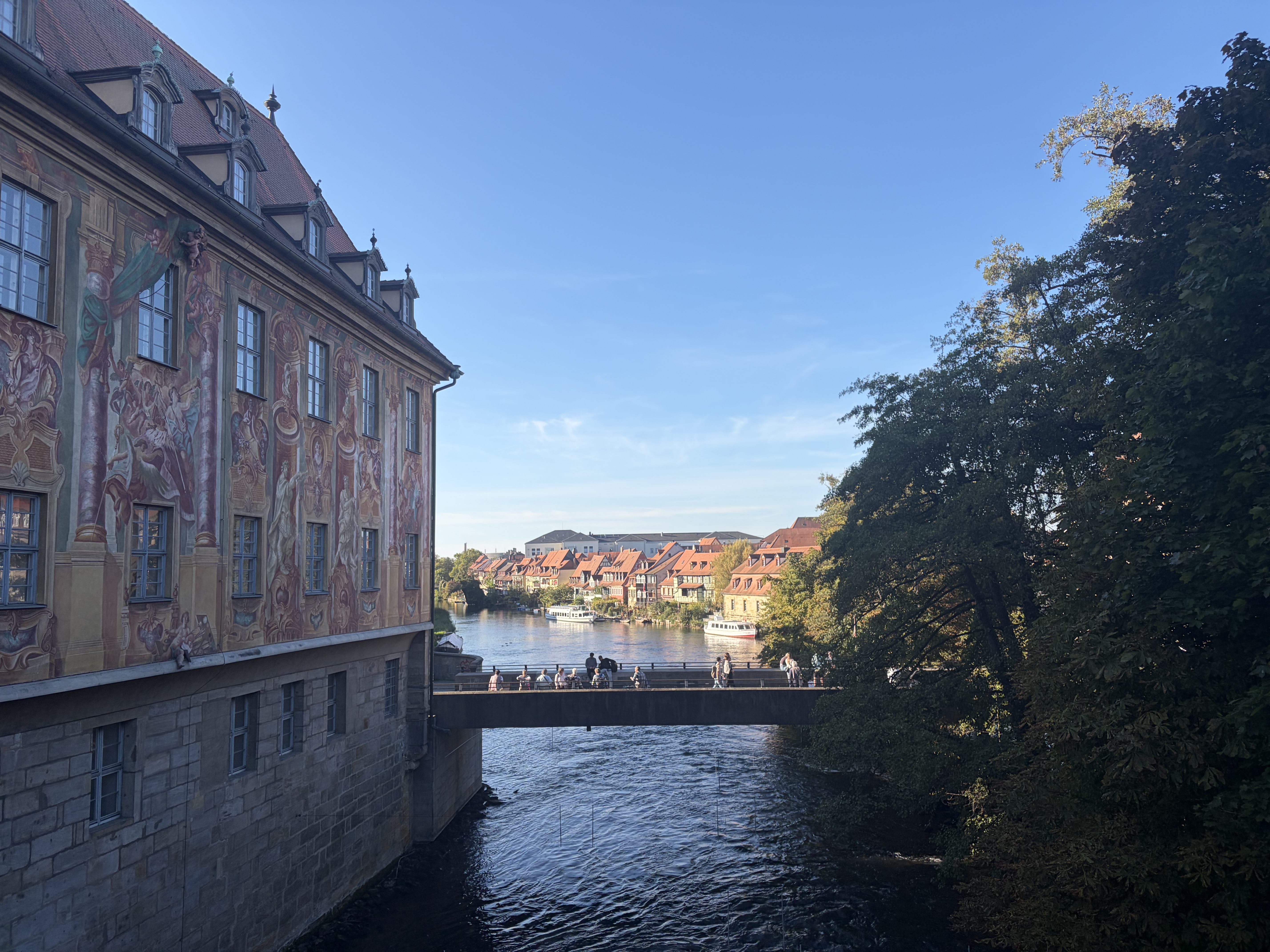
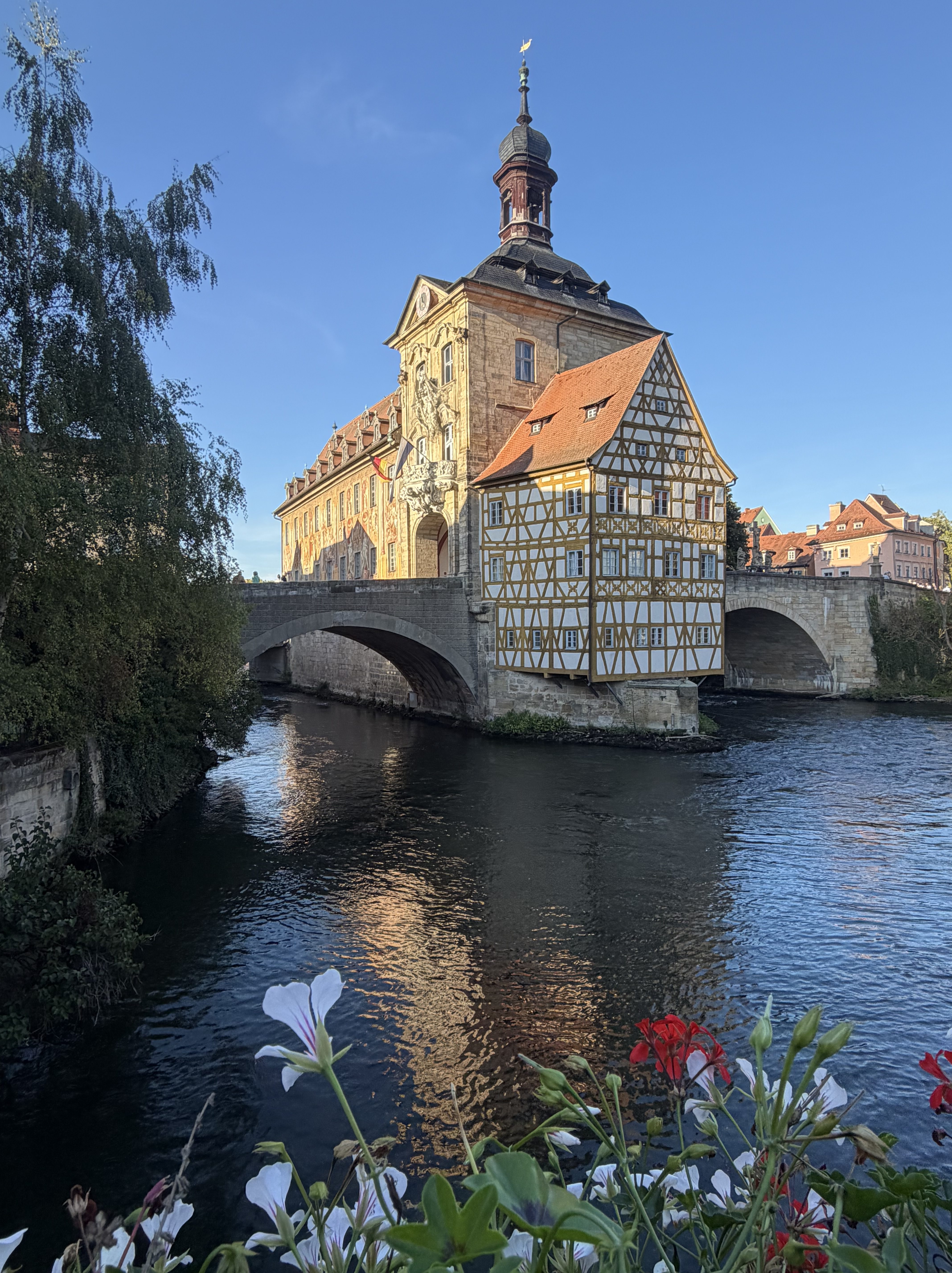
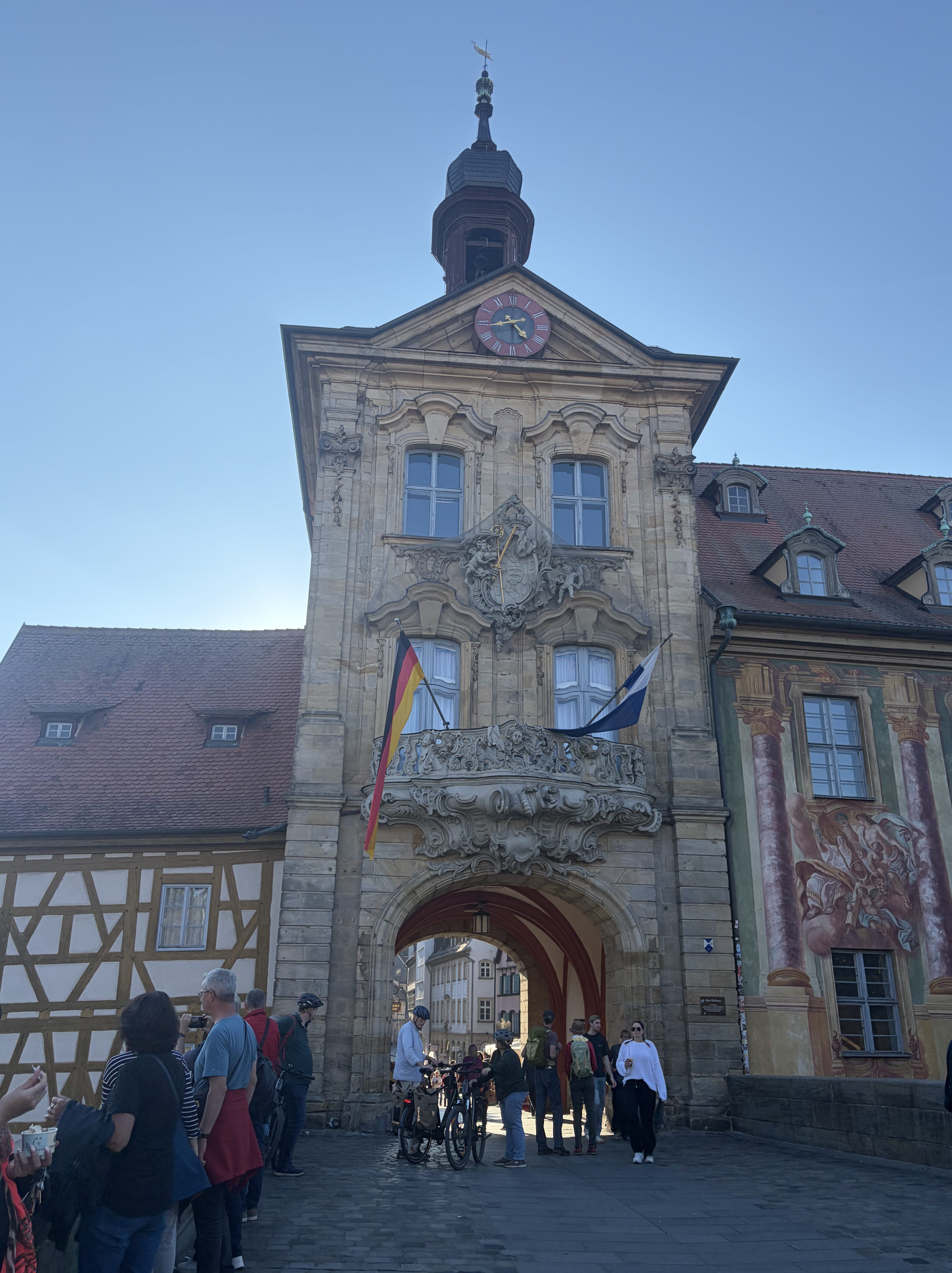
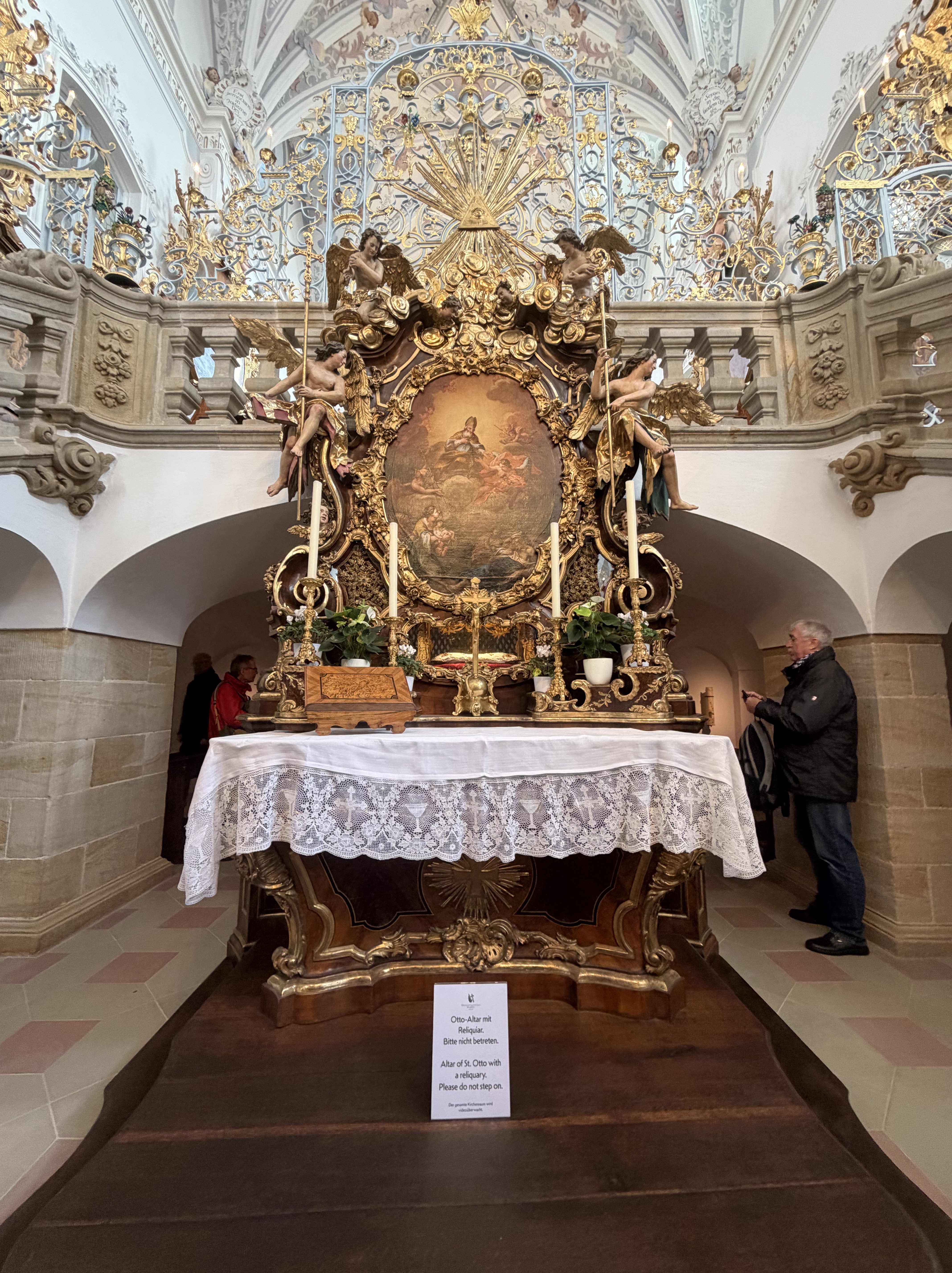
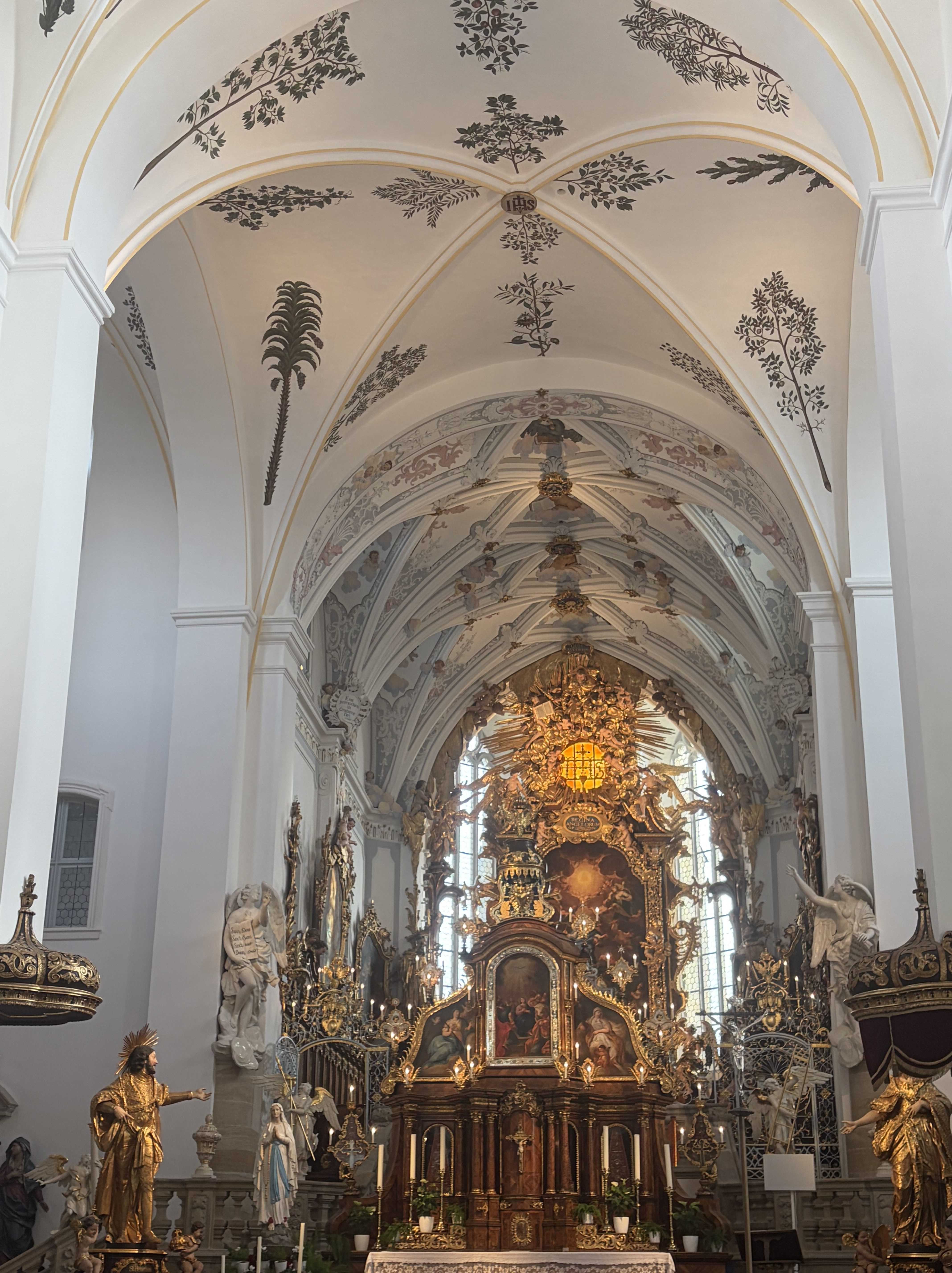
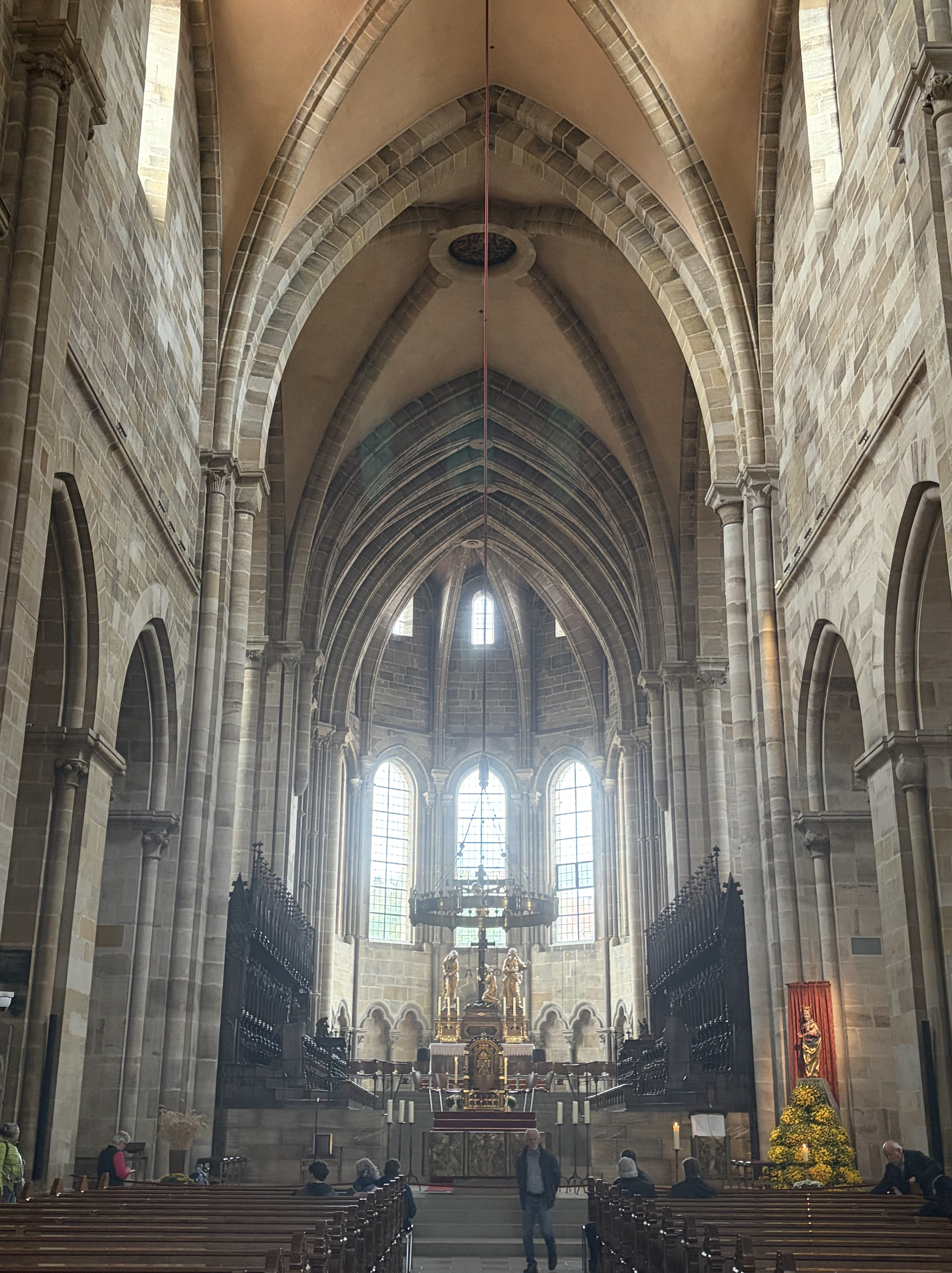
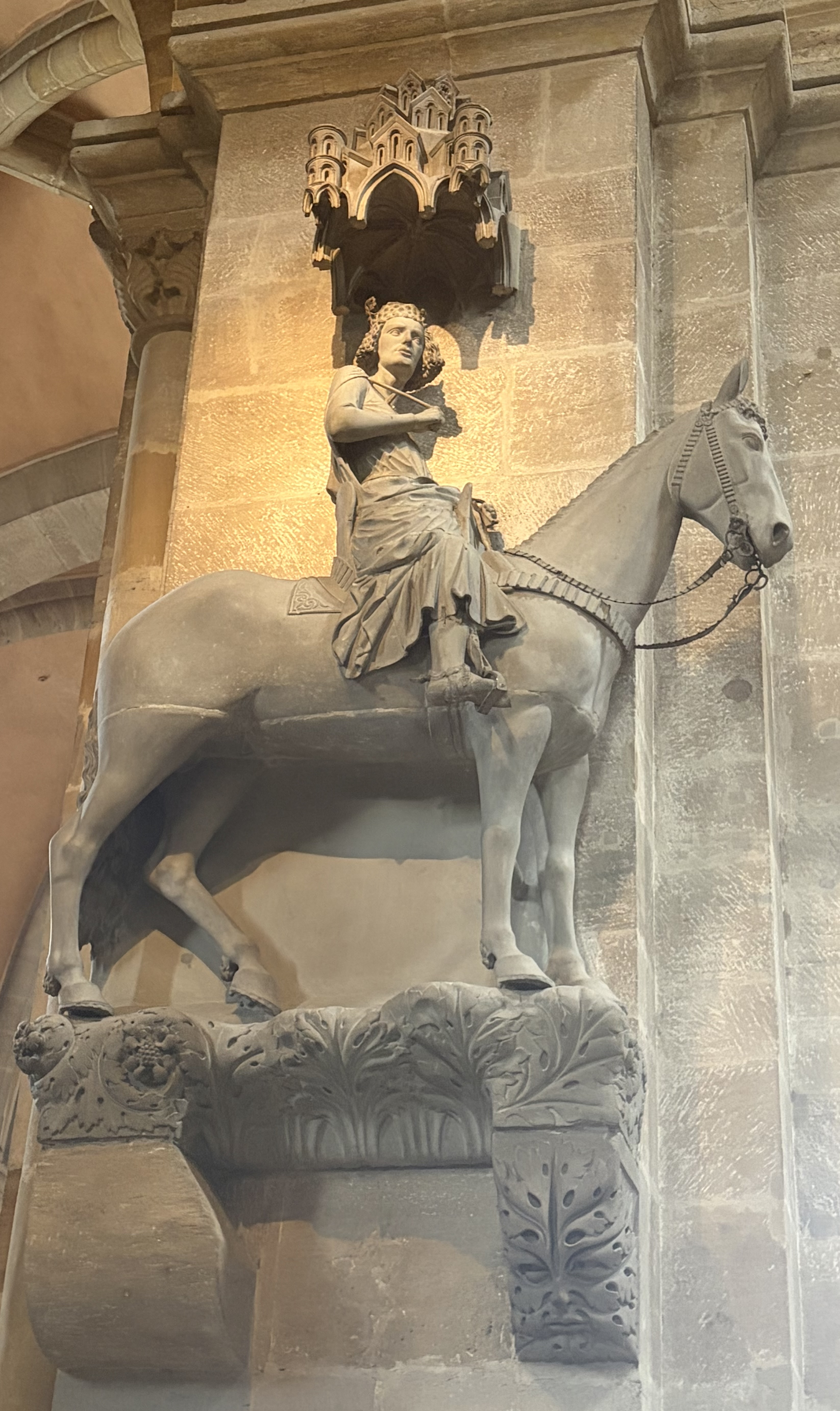
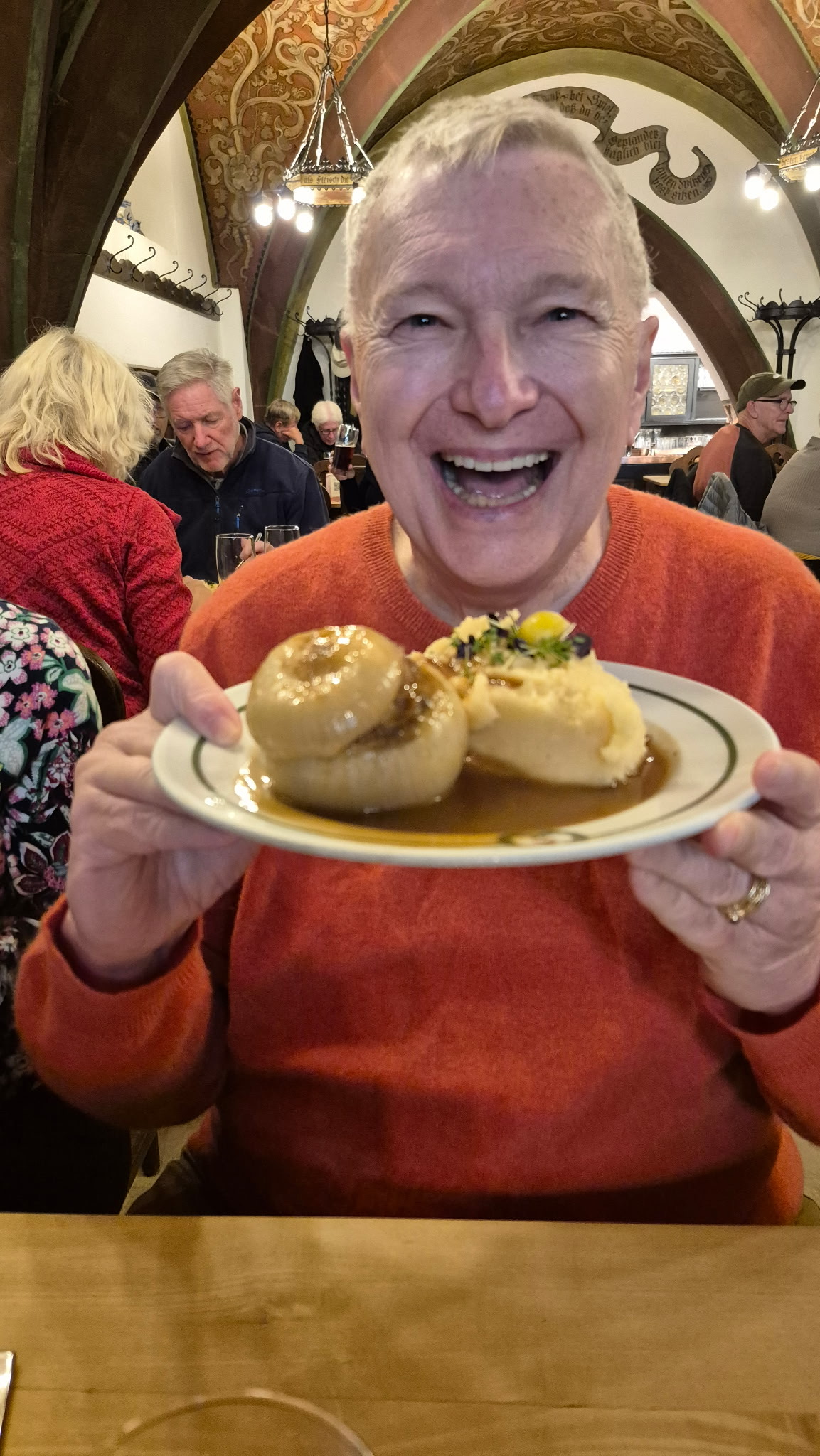
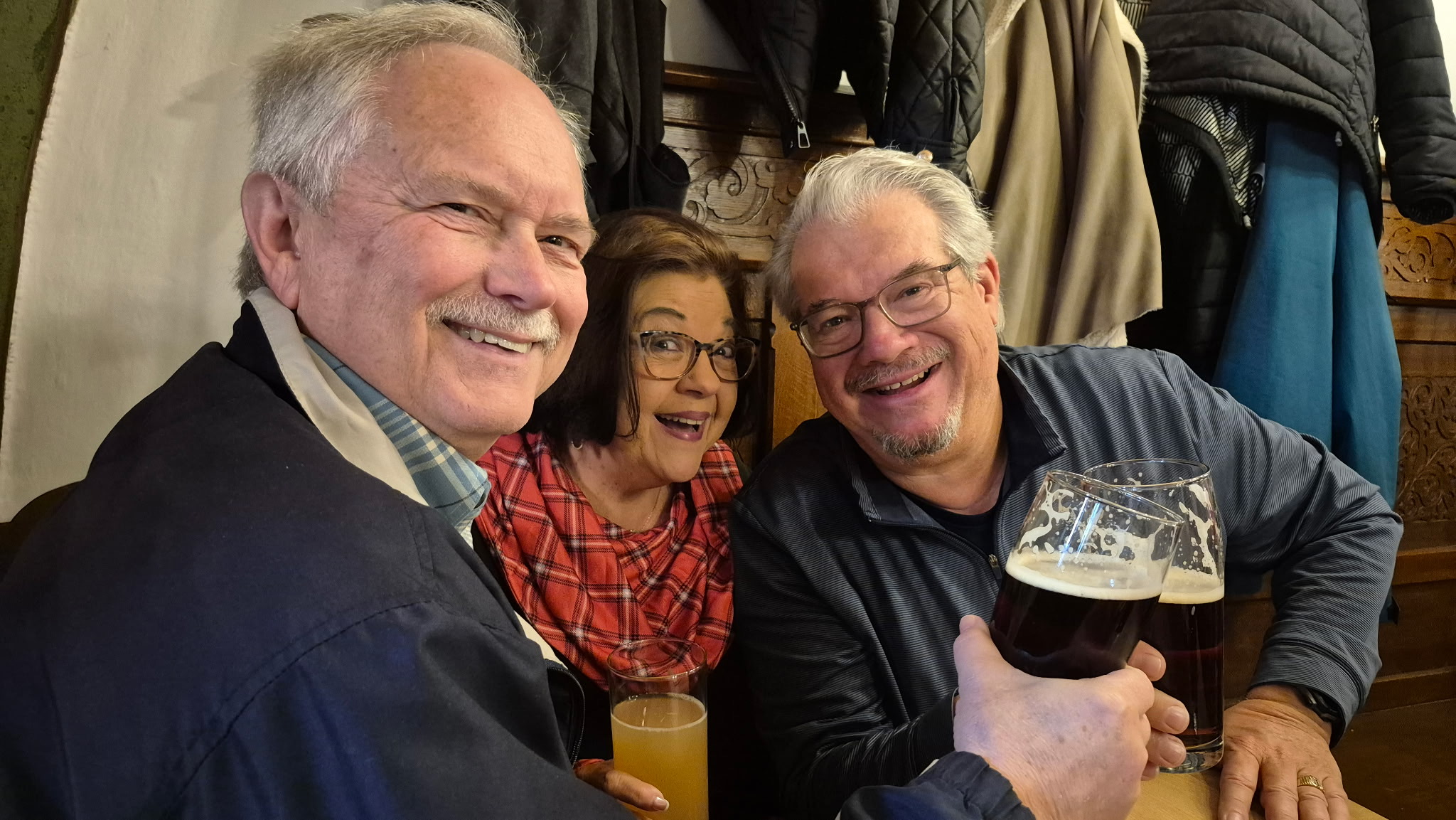
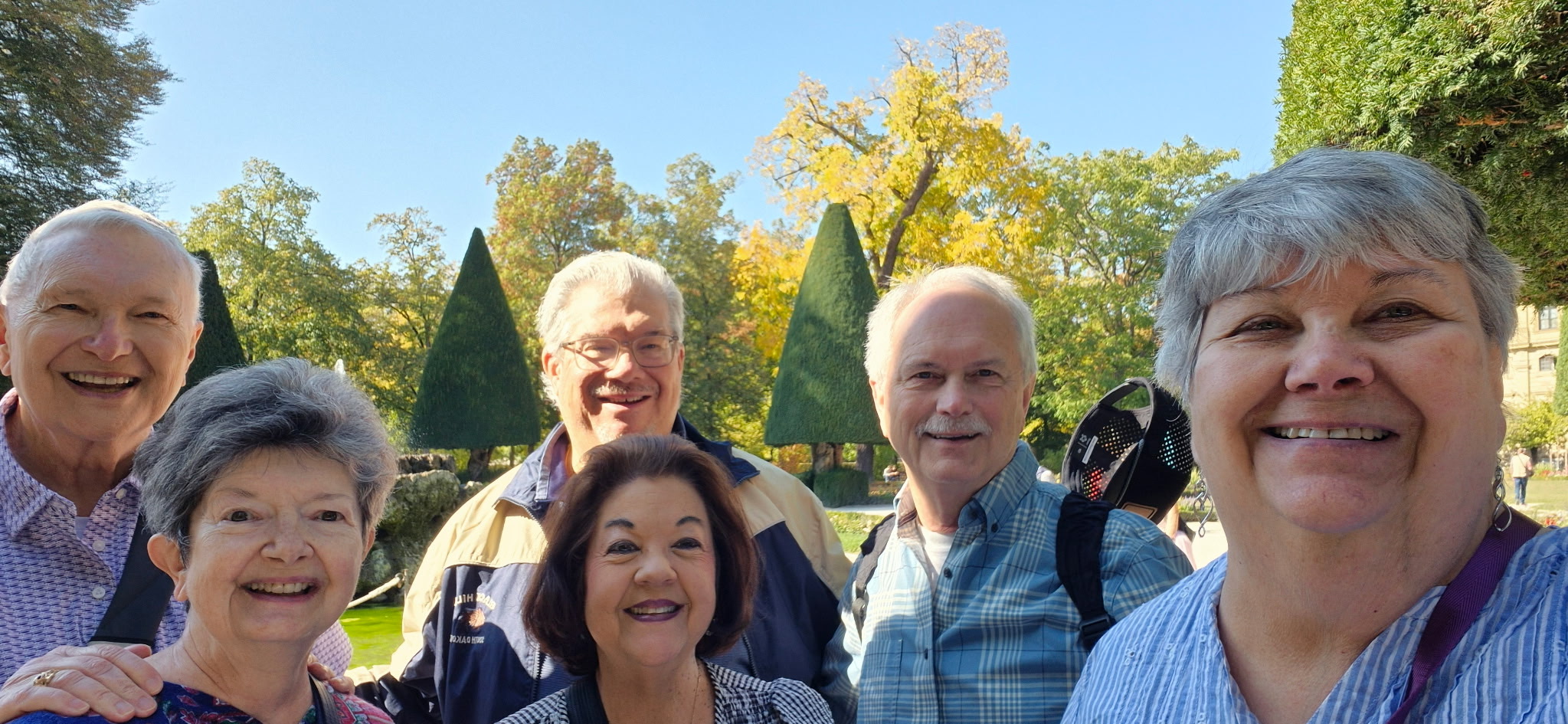
Majestic is the word that describes this area of Germany (Old Frankonia) now far north Bavaria, yet central Germany. Bamburg was little touched by WWII and so its buildings and streets are charming and filled with elegant and traditional architecture. Built on seven hills, it is sometimes referred to as the “Northern Rome.” Its mainly Roman Catholic character further enhances that claim. The cathedral (Dom) with its four tall spires stands majestically on top of the hill on which it was constructed. The horse with rider sits regally attached to one of the huge columns. Considered a fine example of art from the 1200’s, it attracts crowds of tourists. Smoked beer (Rauch bier) tastes like bacon. Nancy said it smelled like a camp fire, and Randy thought it was good. It is Bamburg’s beer, and we ate in the rustic wooden and lively restaurant attached to the brewery. Randy and I ate the onion stuffed with minced pork and covered with smoked bier sauce. We will try to recreate it once we are home. Two other highlights of Bamburg are the painted Rathaus (town hall) sitting on an island in the middle of the Main River that runs through Bamburg and the St. Michael’s Abby atop another hill. Both are splendid; however, the Abby, opened in July after sixteen years of reconstruction due to previous neglect, was the highlight. Awe and splendor! The ceiling is painted with herbs in vivid green… a one of its kind and breathtaking. The white and gold statuary, pulpit and altar magnify the upward gaze. Work is still progressing, but we were privileged to enjoy the majesty of that space. Randy and Kathy were courageous to crawl through the grave of one of the early rulers, Otto, hidden behind the altar in a passageway carved through the sarcophagus.
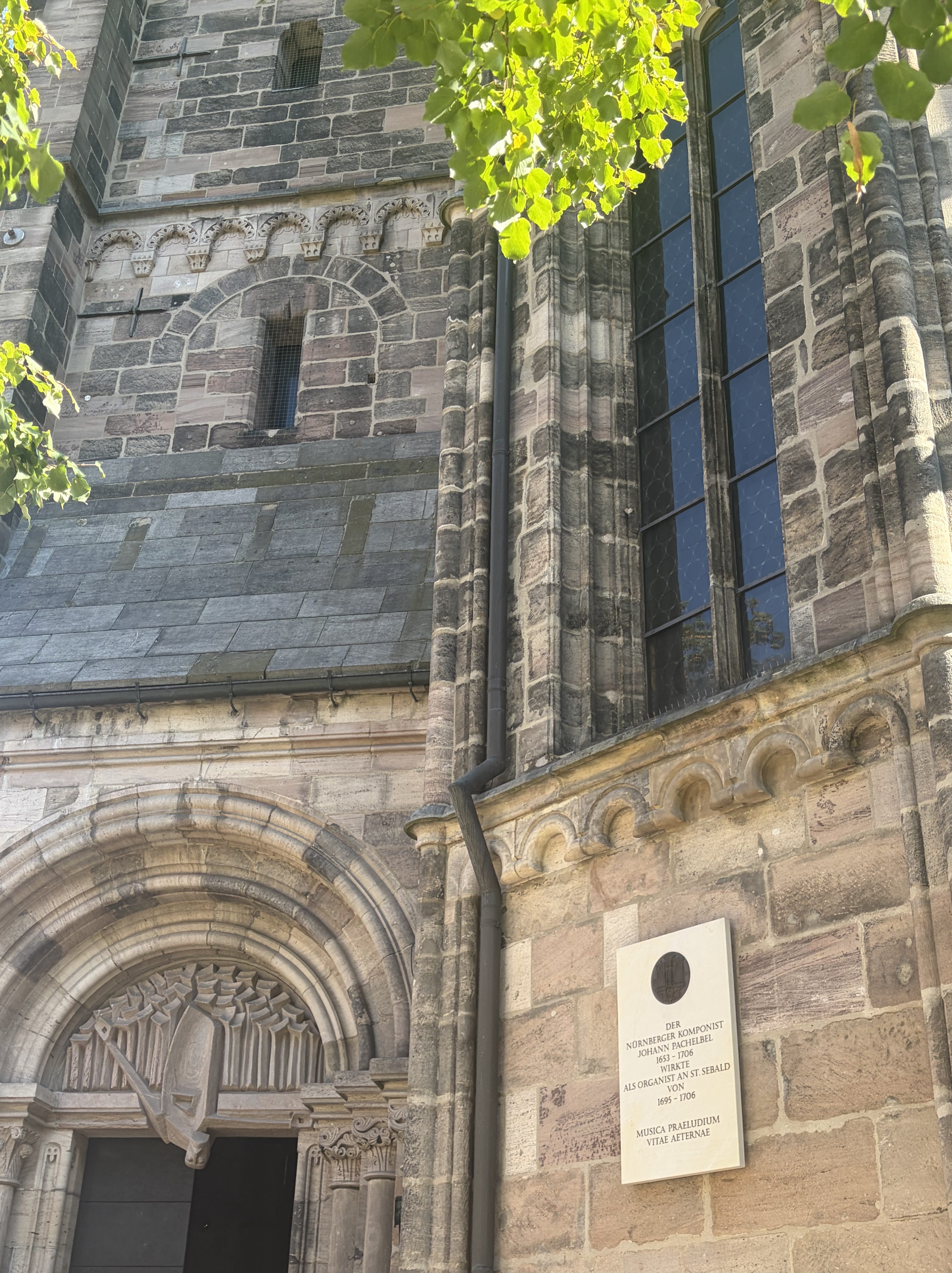
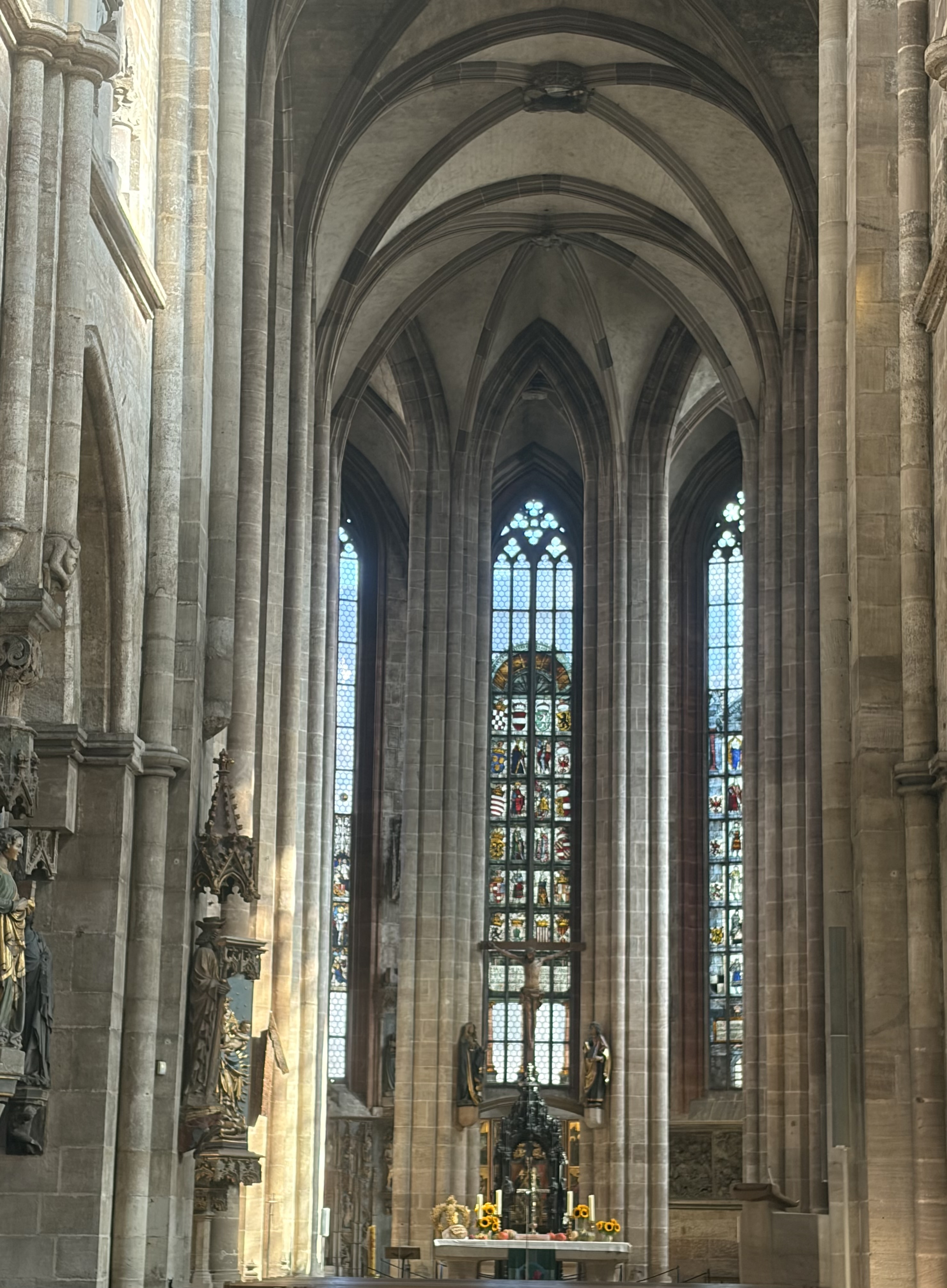
Around Bamburg on easy day trips are cities of equal beauty. Nüremberg, the Old Imperial Capitol of the Holy Roman Empire, is crowned with the huge Imperial Castle sitting majestically on the high hill overlooking the city. The Reformation came early to Nüremberg and the two main churches are Lutheran. St. Lorenz contains two very important religious works of art: “The Annunciation” by the late-Gothic German artist, Veit Stoss, and the “Sacramental Tabernacle” by the late-Gothic German sculptor, Adam Kraft, an over 90 foot hand carved sandstone structure for the elements of the Sacrament of the Altar. The huge “Annunciation” was down at eye level as art technicians were cleaning and reguilding the gold highlights. St. Sebaldus is the oldest parish church in Nüremberg from around 1215. It contains the remains of the mystic monk, declared a saint. All around are beautiful altars and reminders of the city’s past. Both churches were heavily harmed by bombing in WWII and rebuilt to former glory. We had time to shop for lebkuchen, the ginger cookie, for which the city is famous.
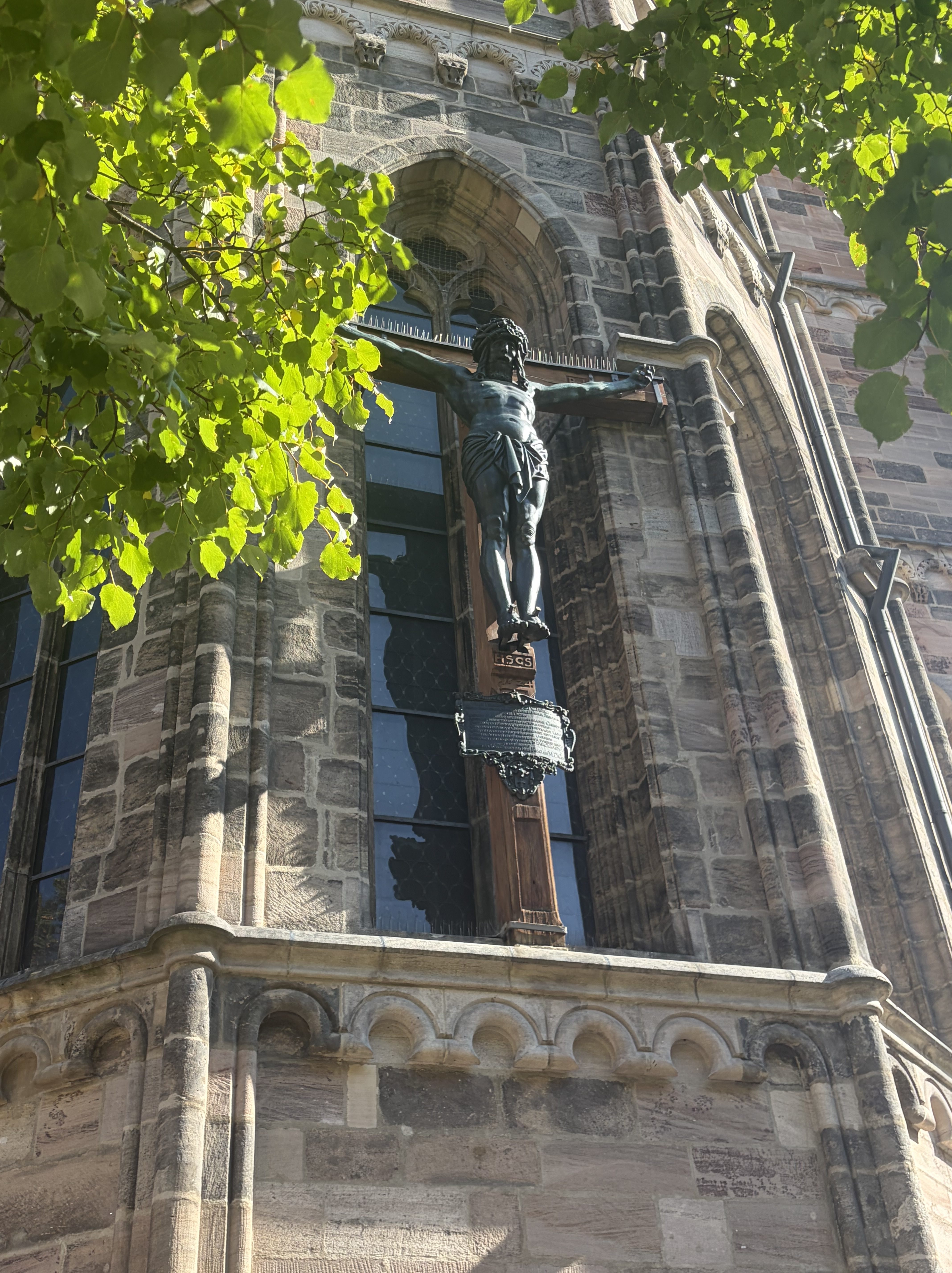
Sacramental Tabernacle in St. Lorenz Lutheran Church, Nuremberg, Germany
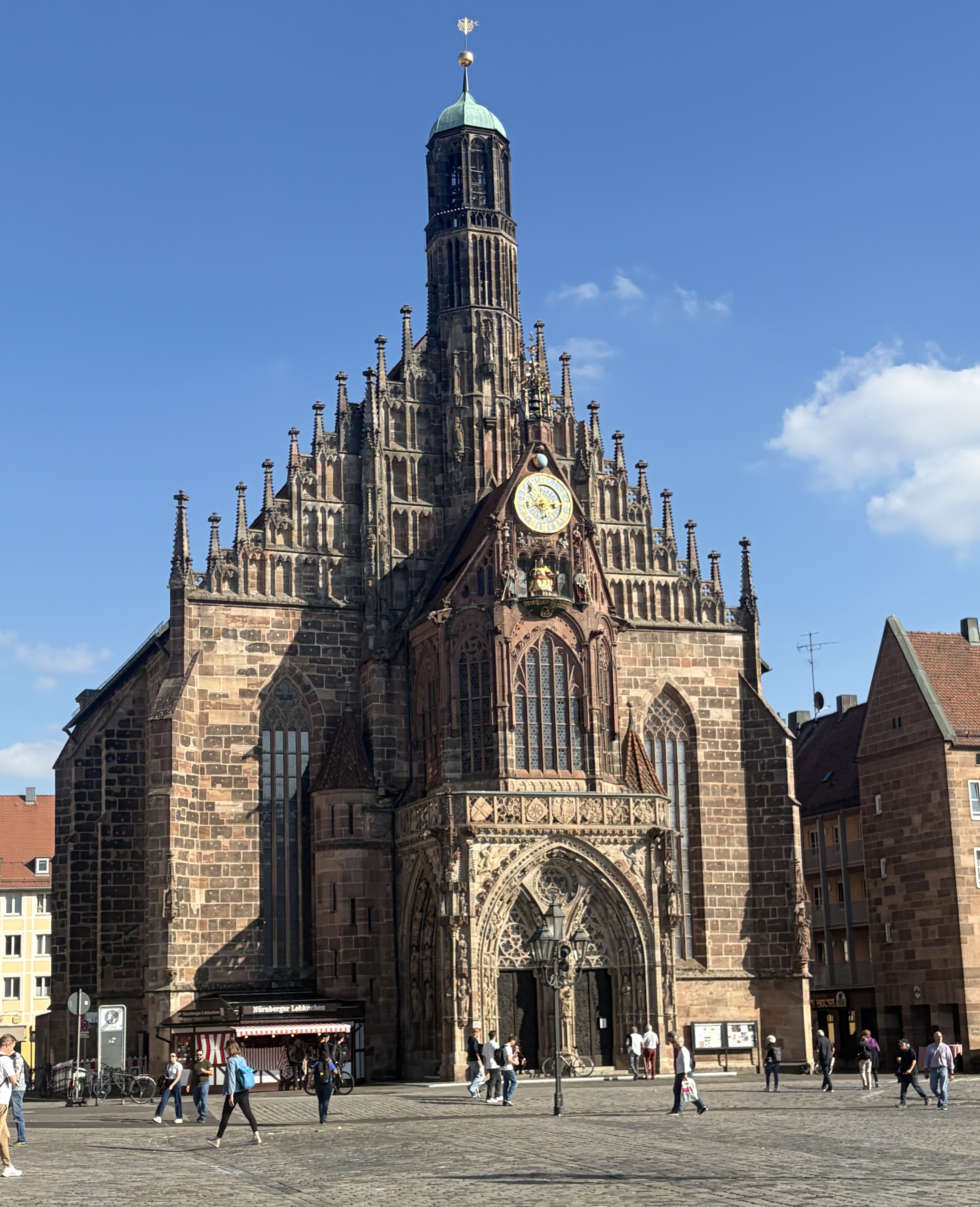
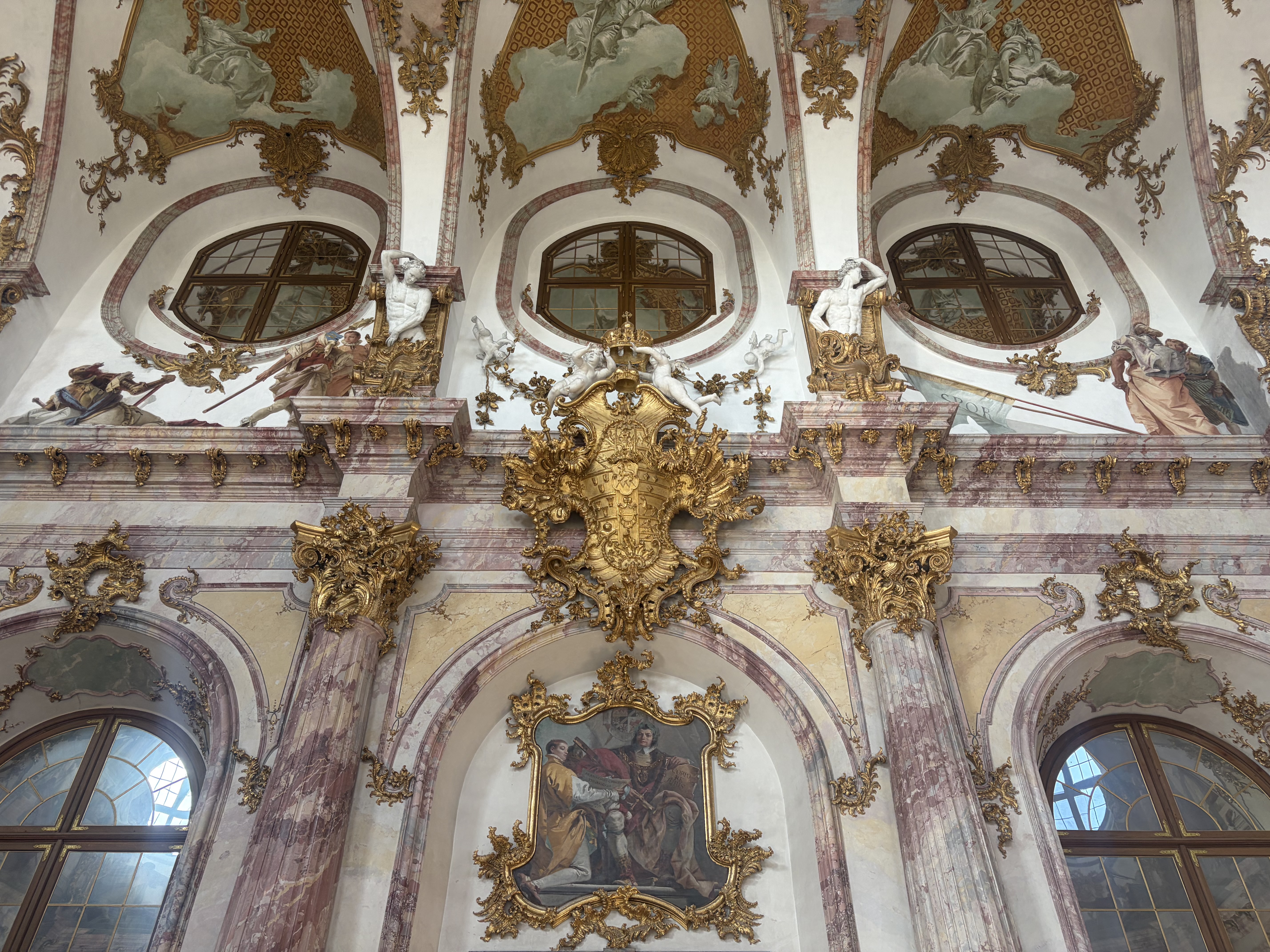
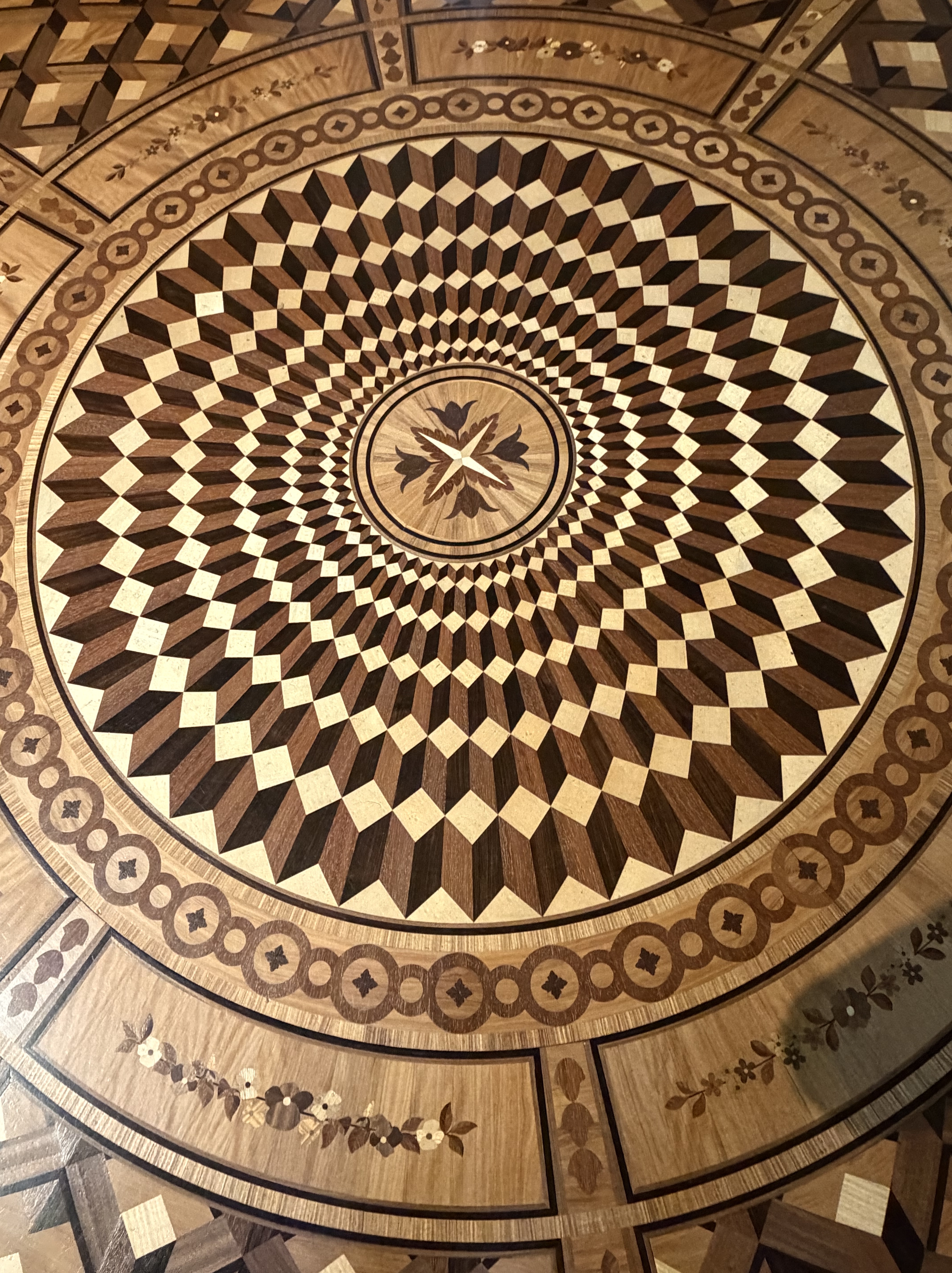
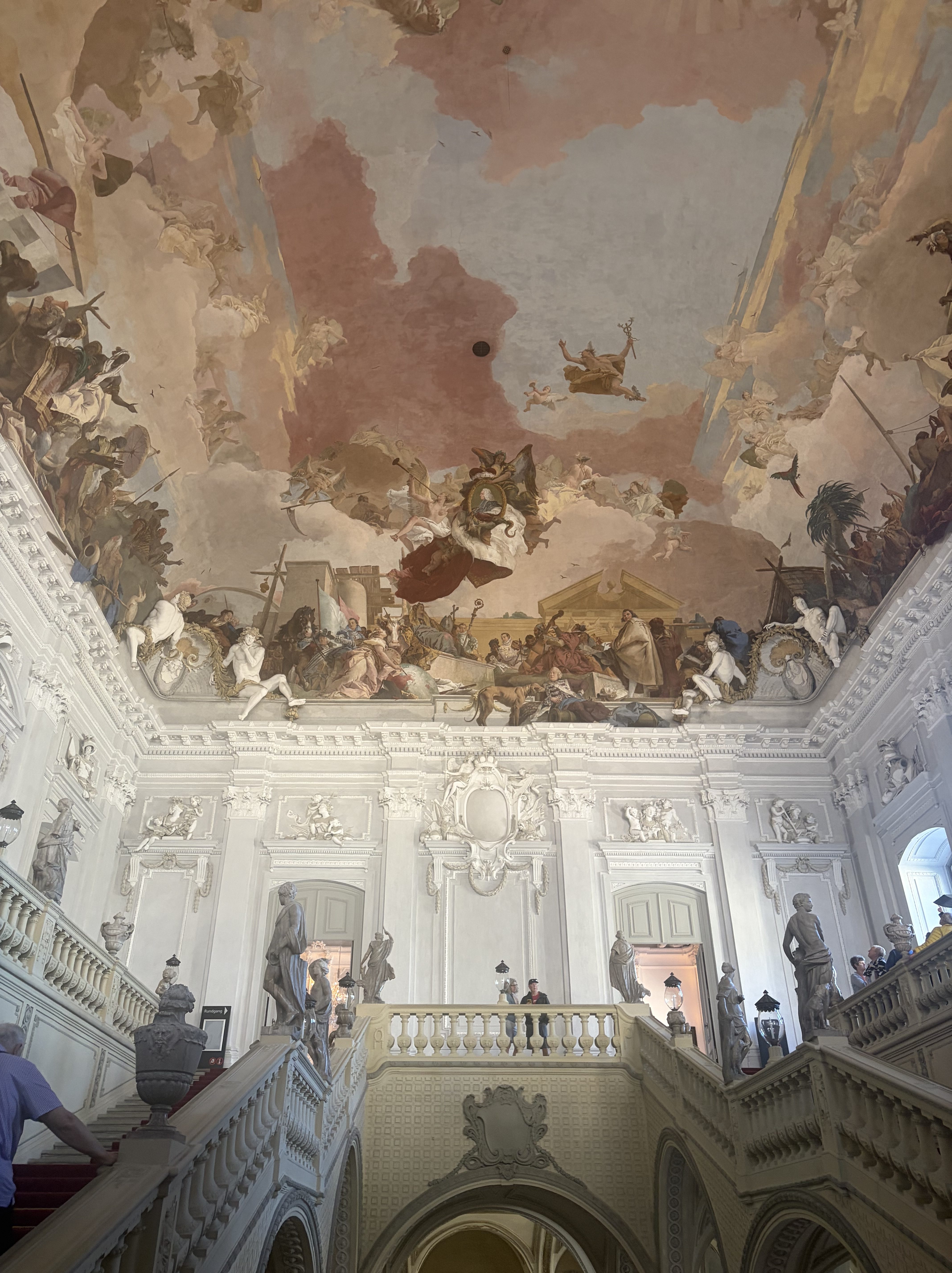
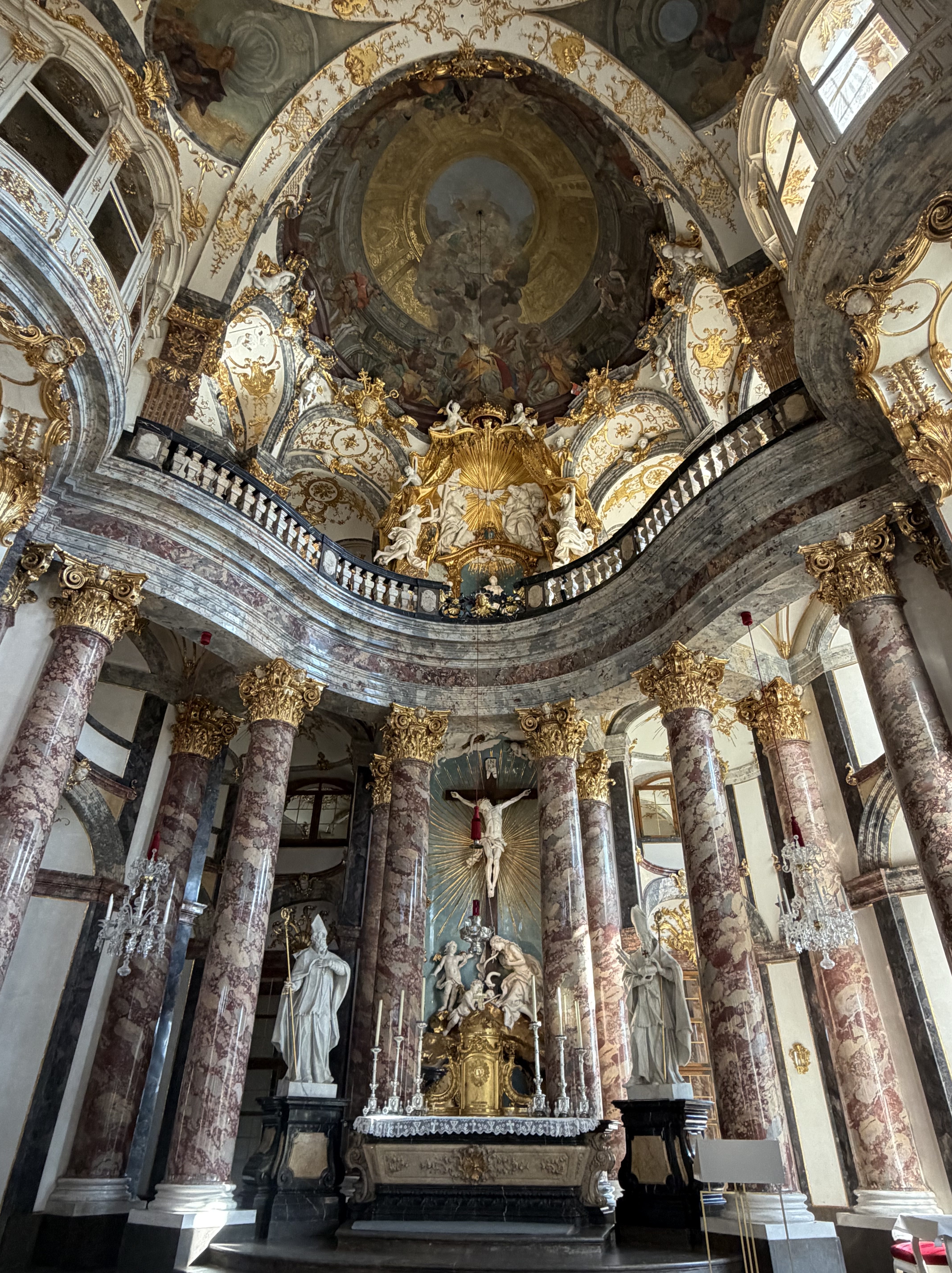
Würzburg is famous for its unbelievably ornate “Prince Bishop’s Palace.” Stucco in marvelous curving patterns; elegant staircases; ceiling frescoes painted by Giovanni Tiepolo; silk wall coverings; rooms adorned with statuary, crystal chandeliers, and intricately patterned wood flooring. The mirror cabinet—a room filled with painted mirrors reflecting back and forth—was a favorite of our group.
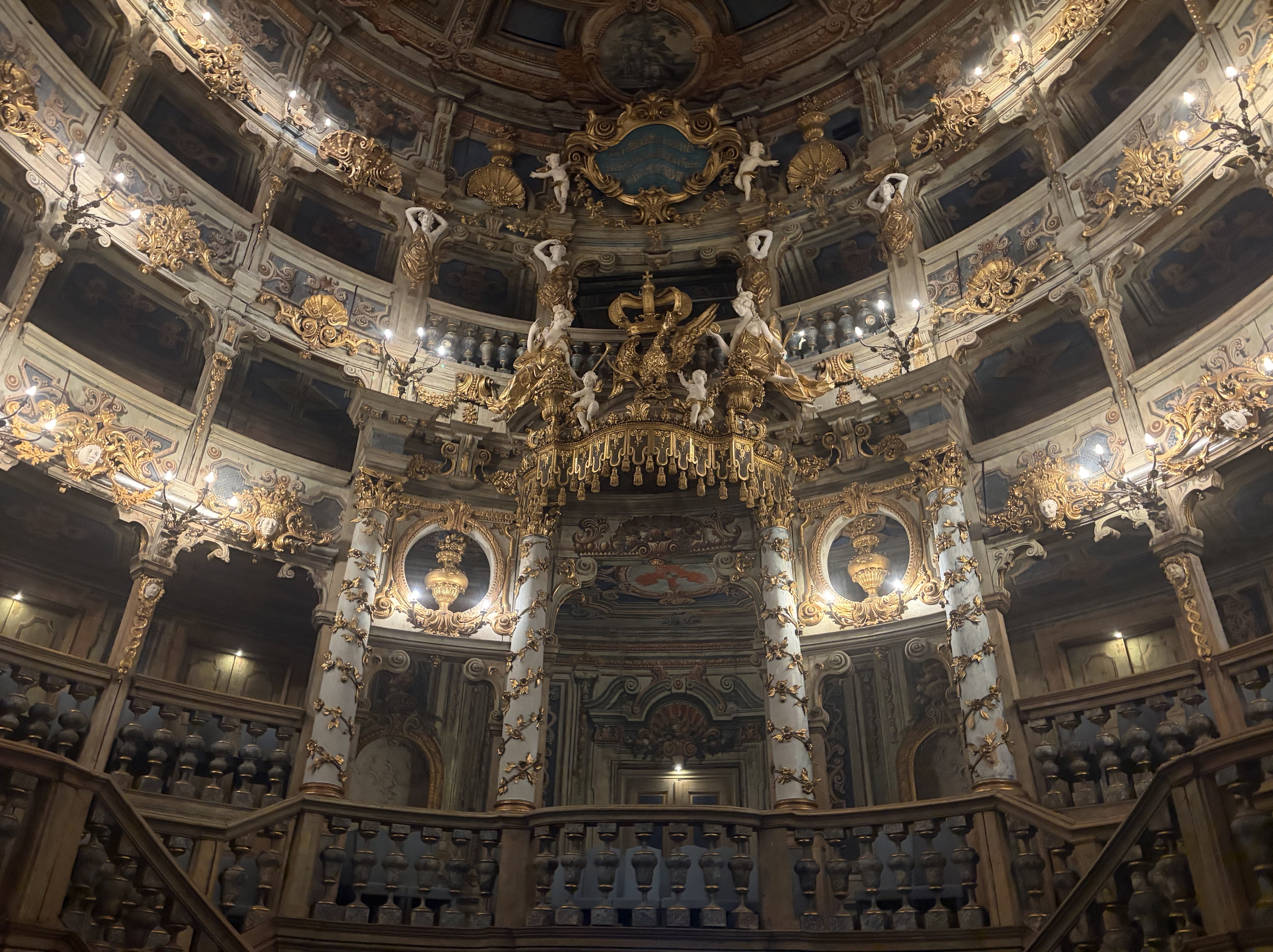
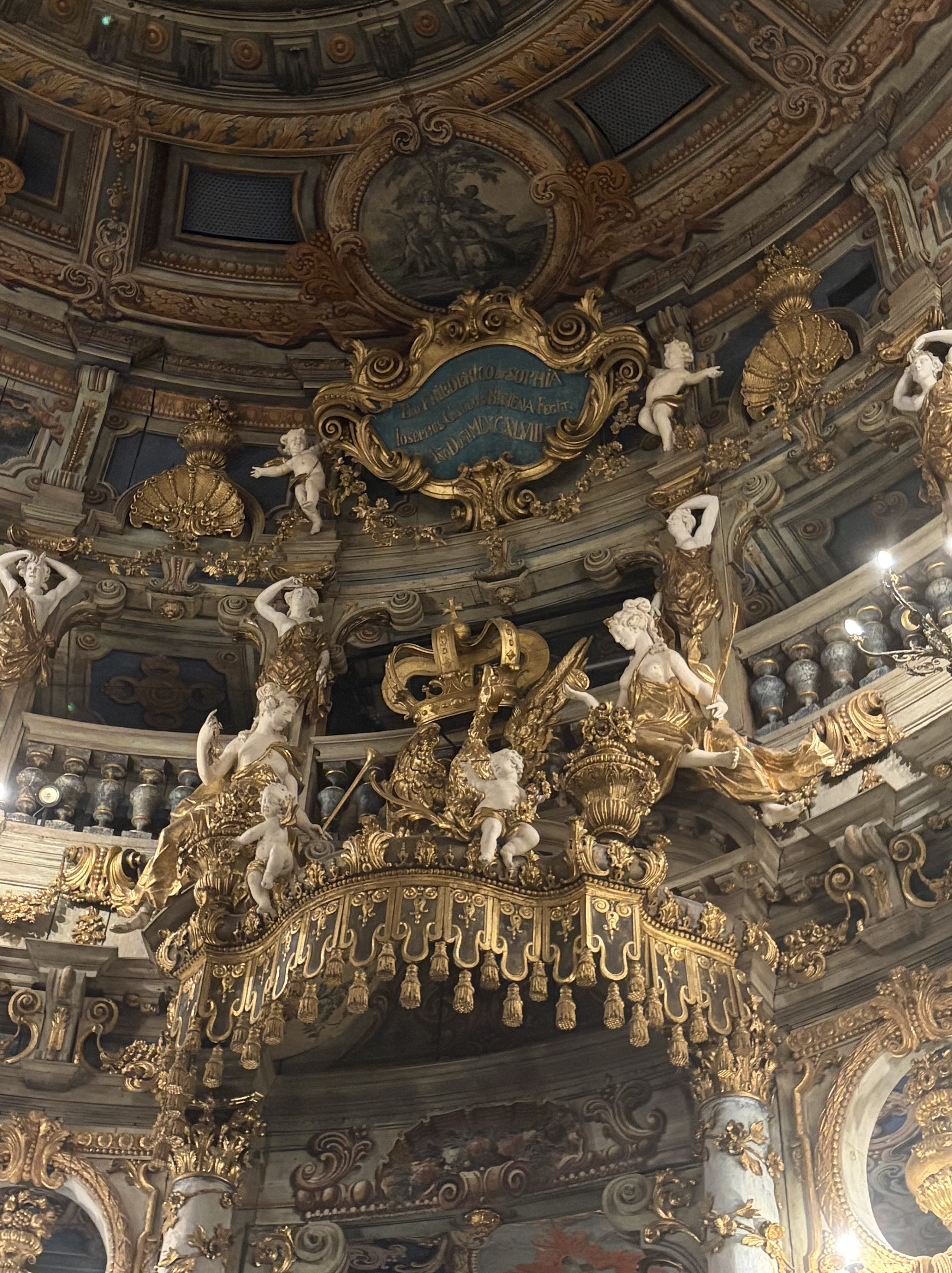
Bayreuth is home to two famous opera houses. Richard Wagner had one constructed to house his huge operatic productions. Every year opera fans flock to the city from around the world to attend “The Ring,” a presentation of three of Wagner’s operas. As far as jaw-dropping splendor is concerned, the Margravial Opera House fills the bill! Often copied but never surpassed, the Opera venue is a cacophony of sight. Not one inch is without opulent imagery.
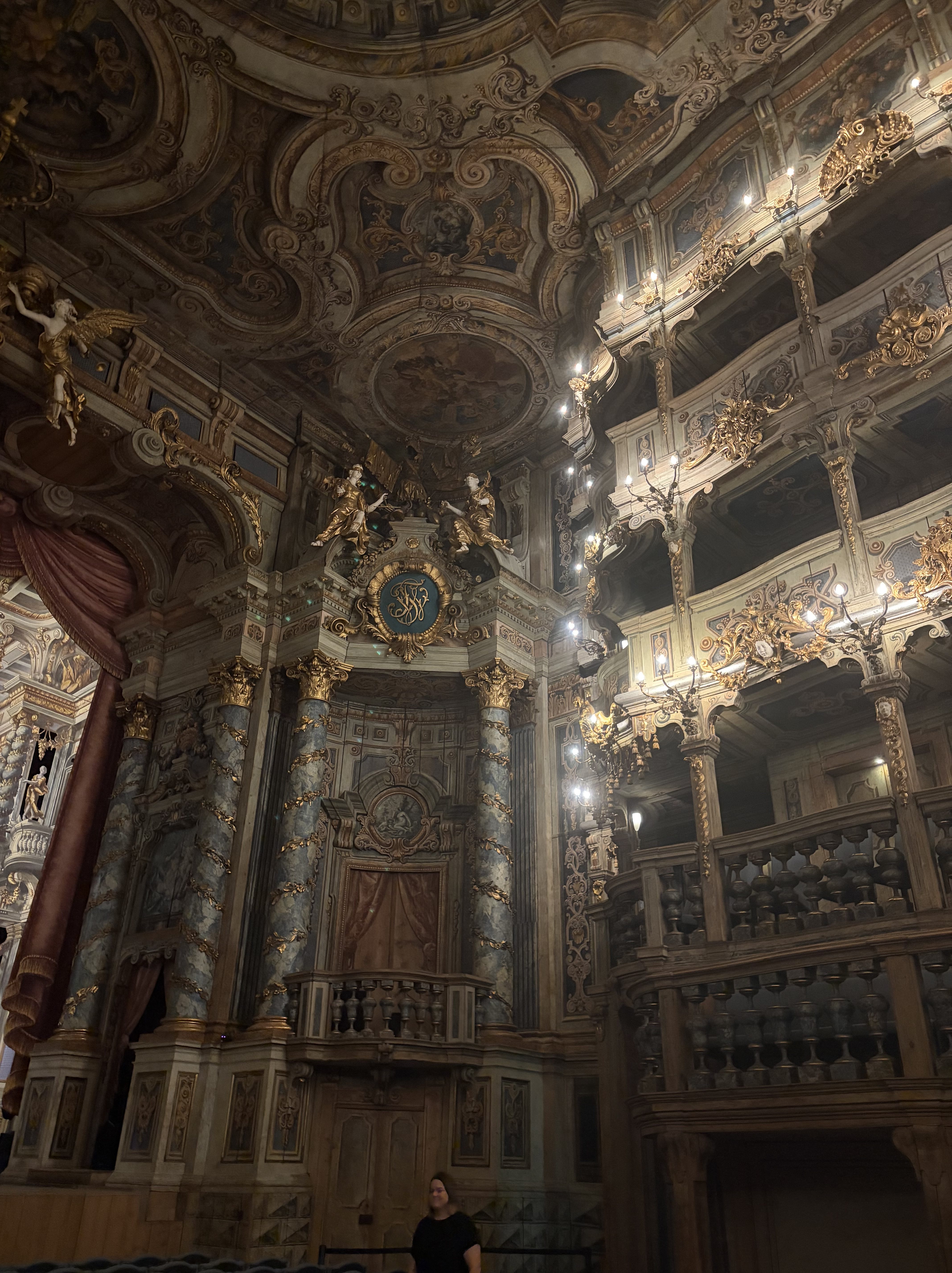
We thoroughly enjoyed our days in the region of Bamburg. We ate tasty Frankonian food and drank great wine and beer.
Disaster Turned to Delight—Randy Strikes Again
October 2-5, 2026
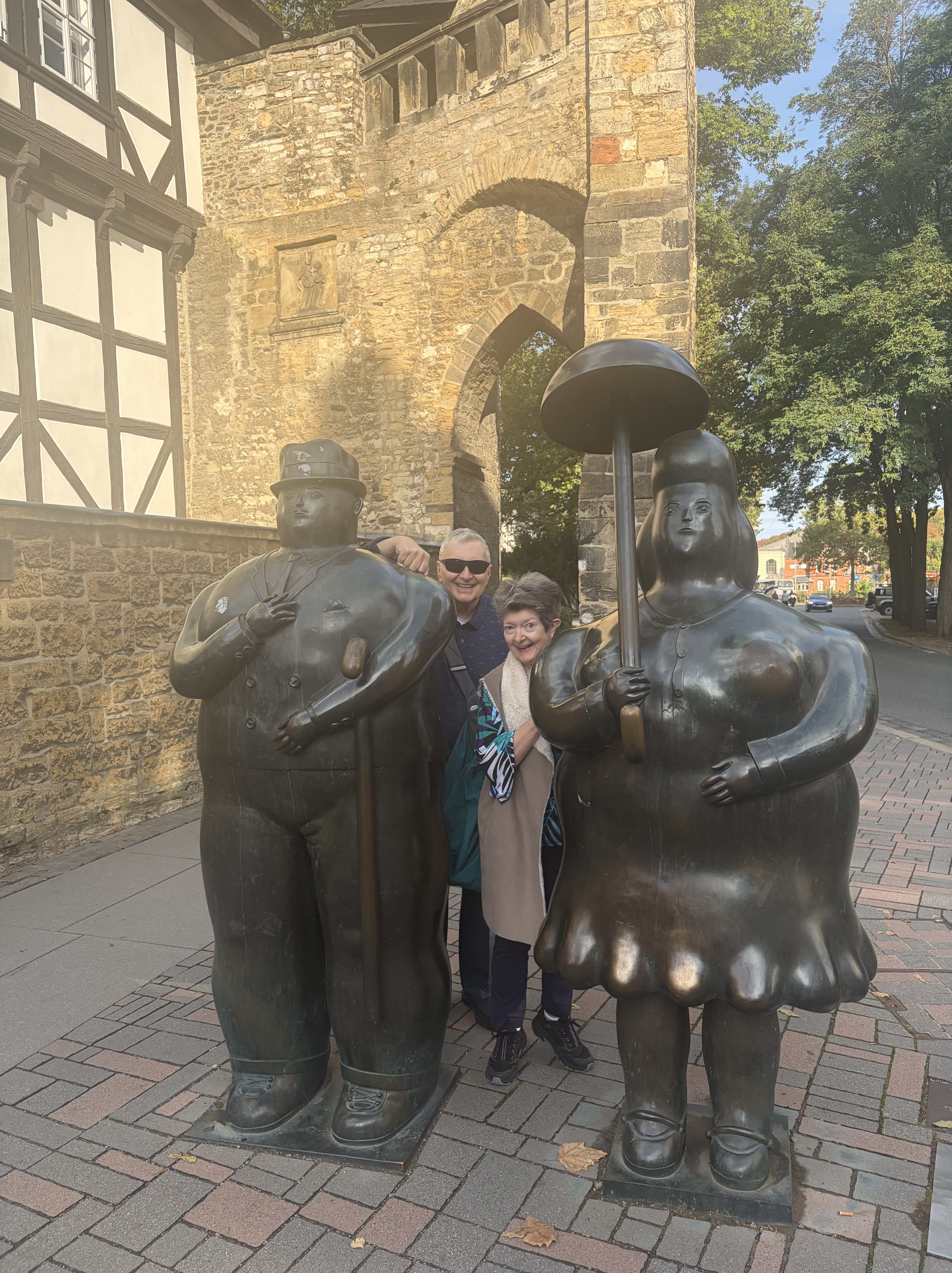
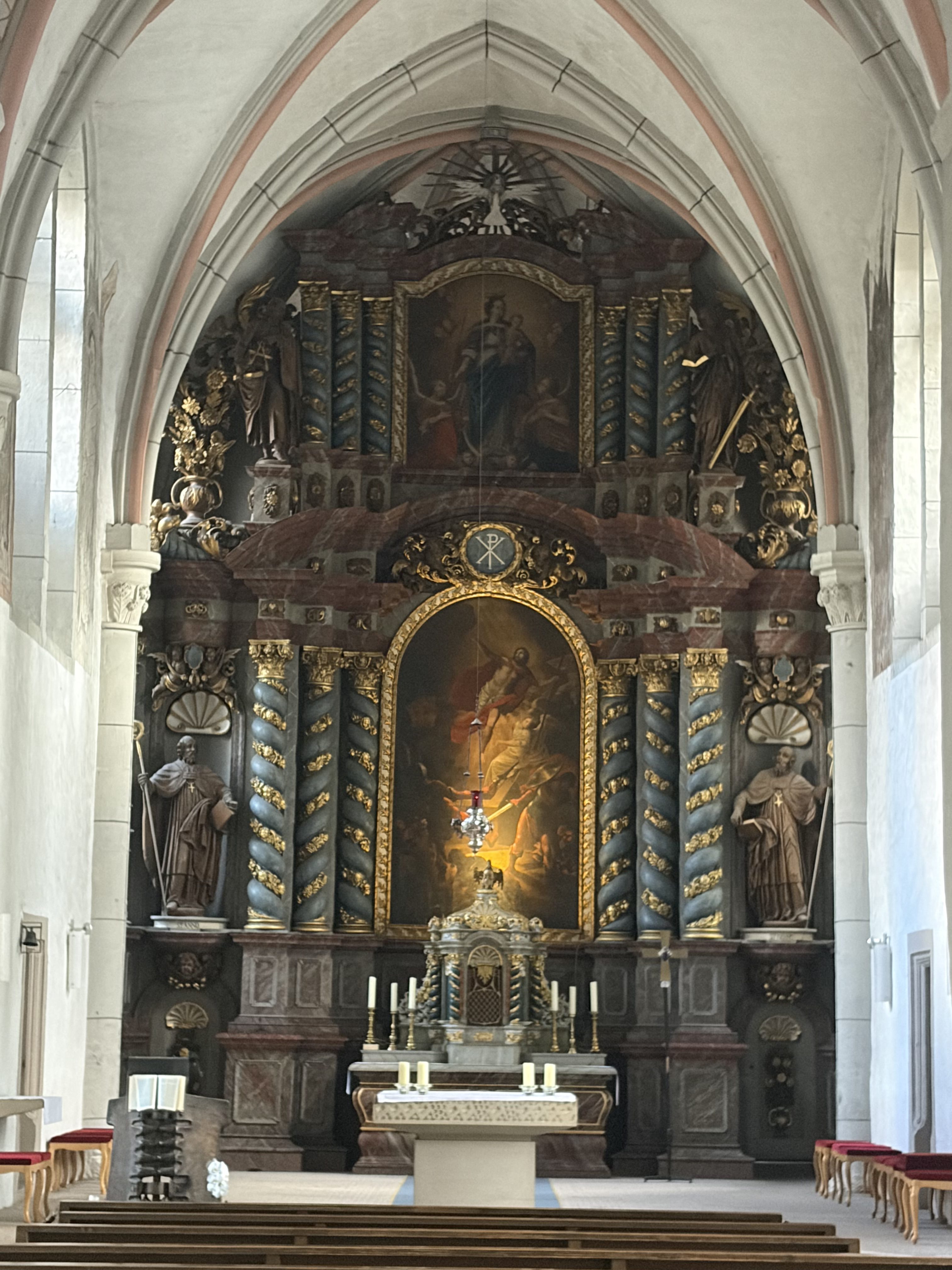
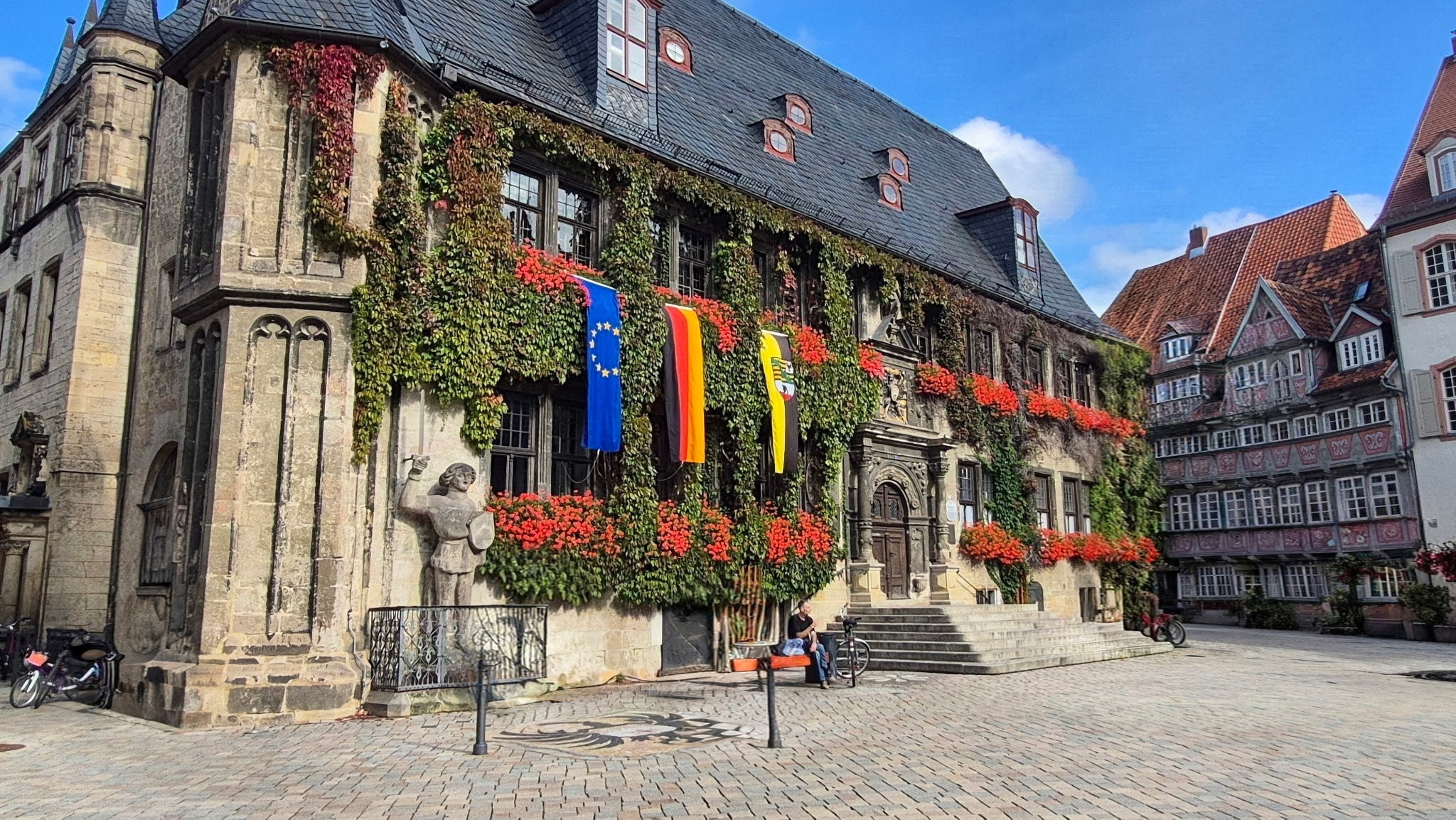
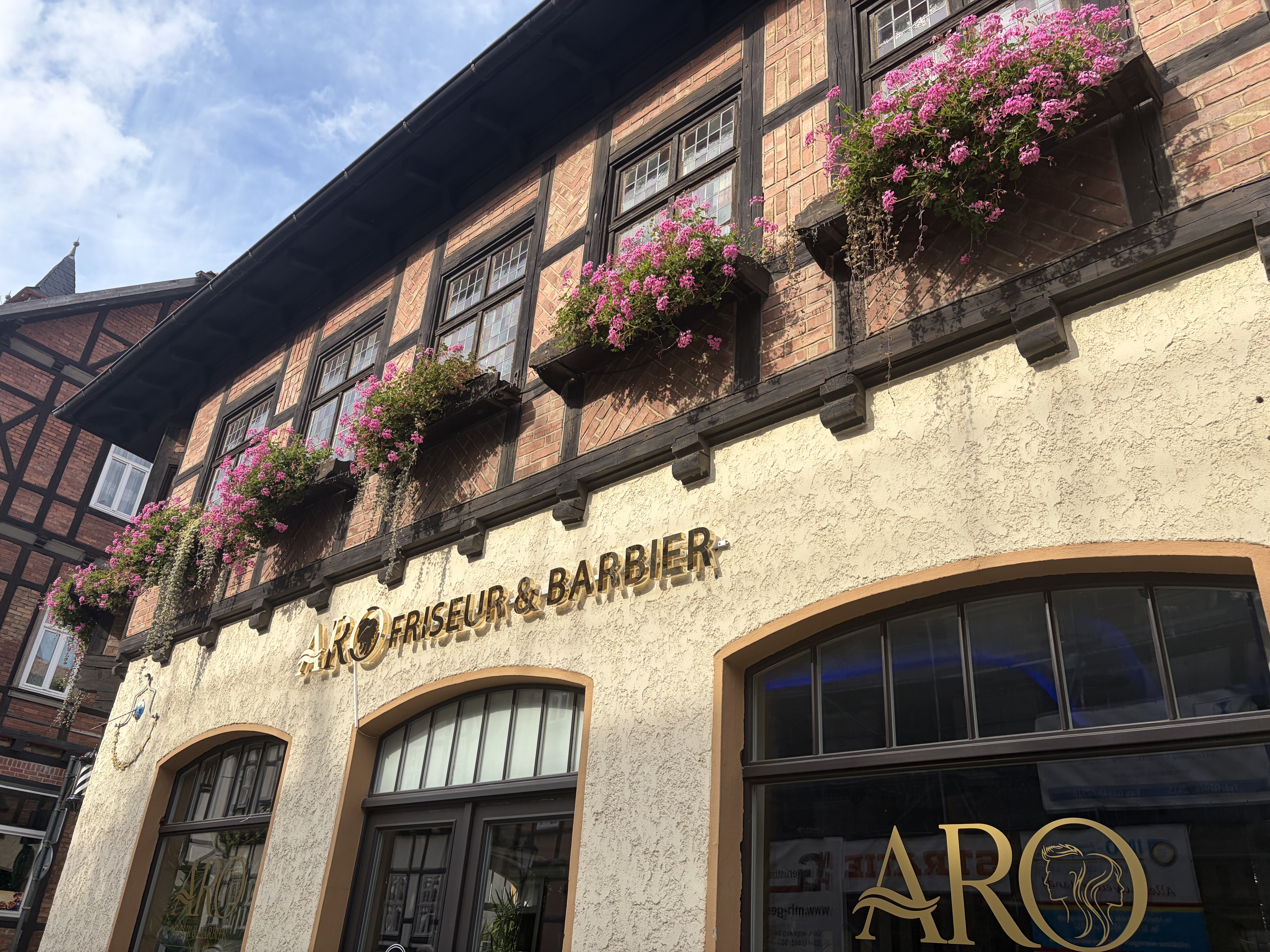
Fall came to the Harz Mountains of North Central Germany while we were there—yellows, golds, and reds began to appear with increasing density. The cities of Quedlinburg and Wernigerode and Goslar, where we headquartered, were our reason for visiting the Harz. All three cities are half-timbered treasures—UNESCO says so, and they are! Goslar was once the seat of government of the Holy Roman Empire, and a palace remains there. Quedlinburg has more half-timbered buildings, over 2000, than almost any other place. Wernigerode is picture postcard perfect with a fairy tale castle looming over the pristine half-timbered lanes.
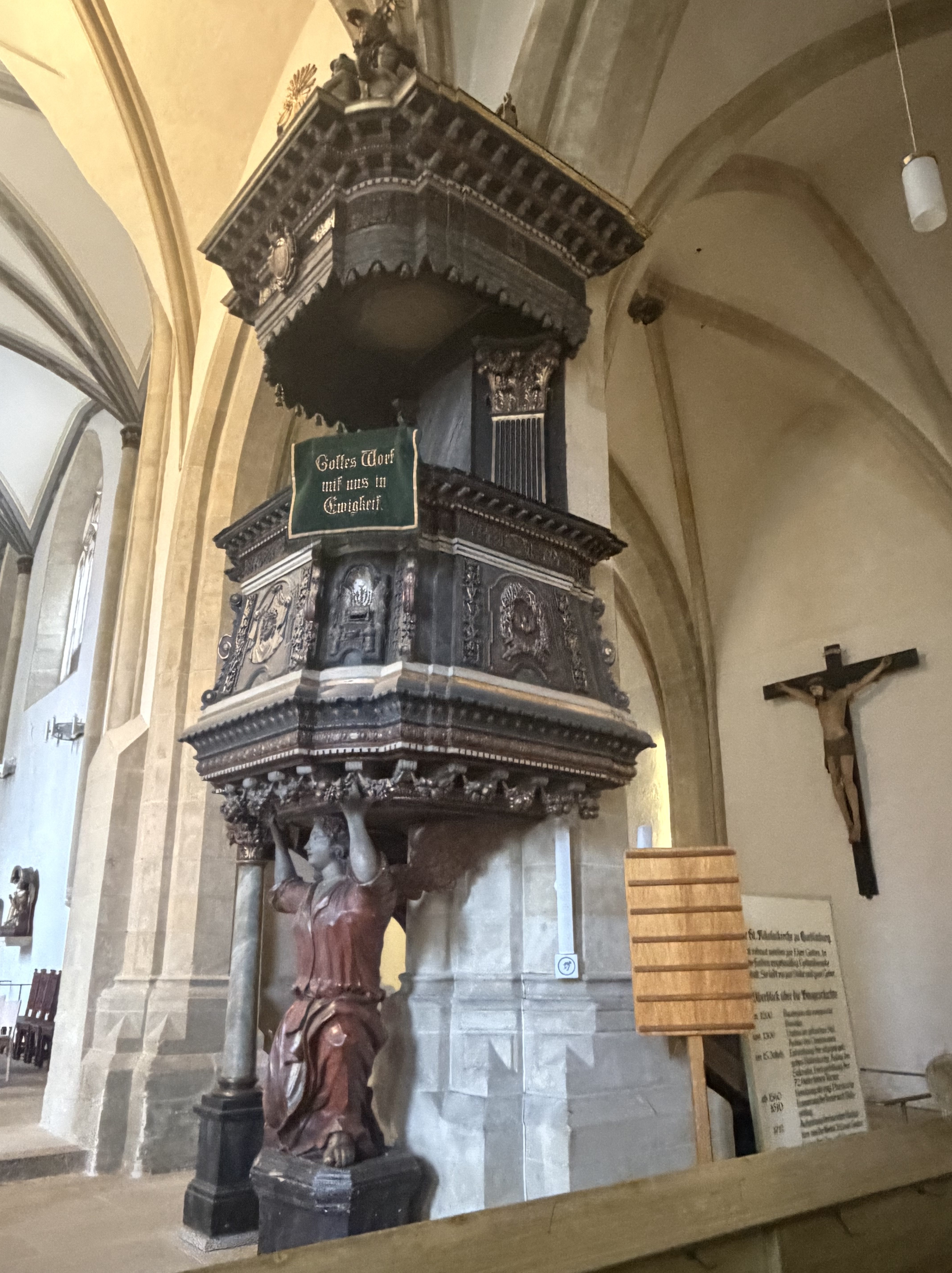
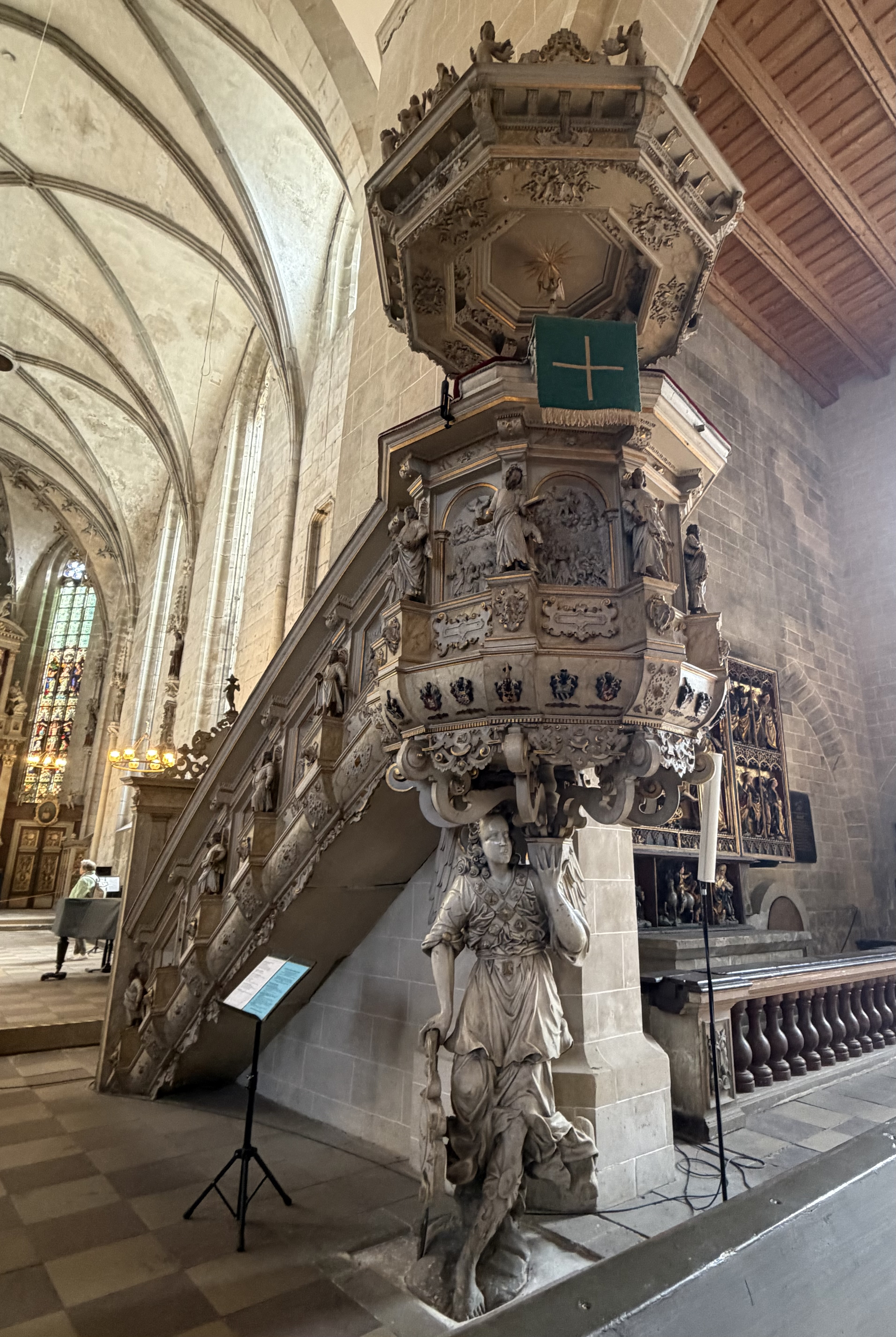
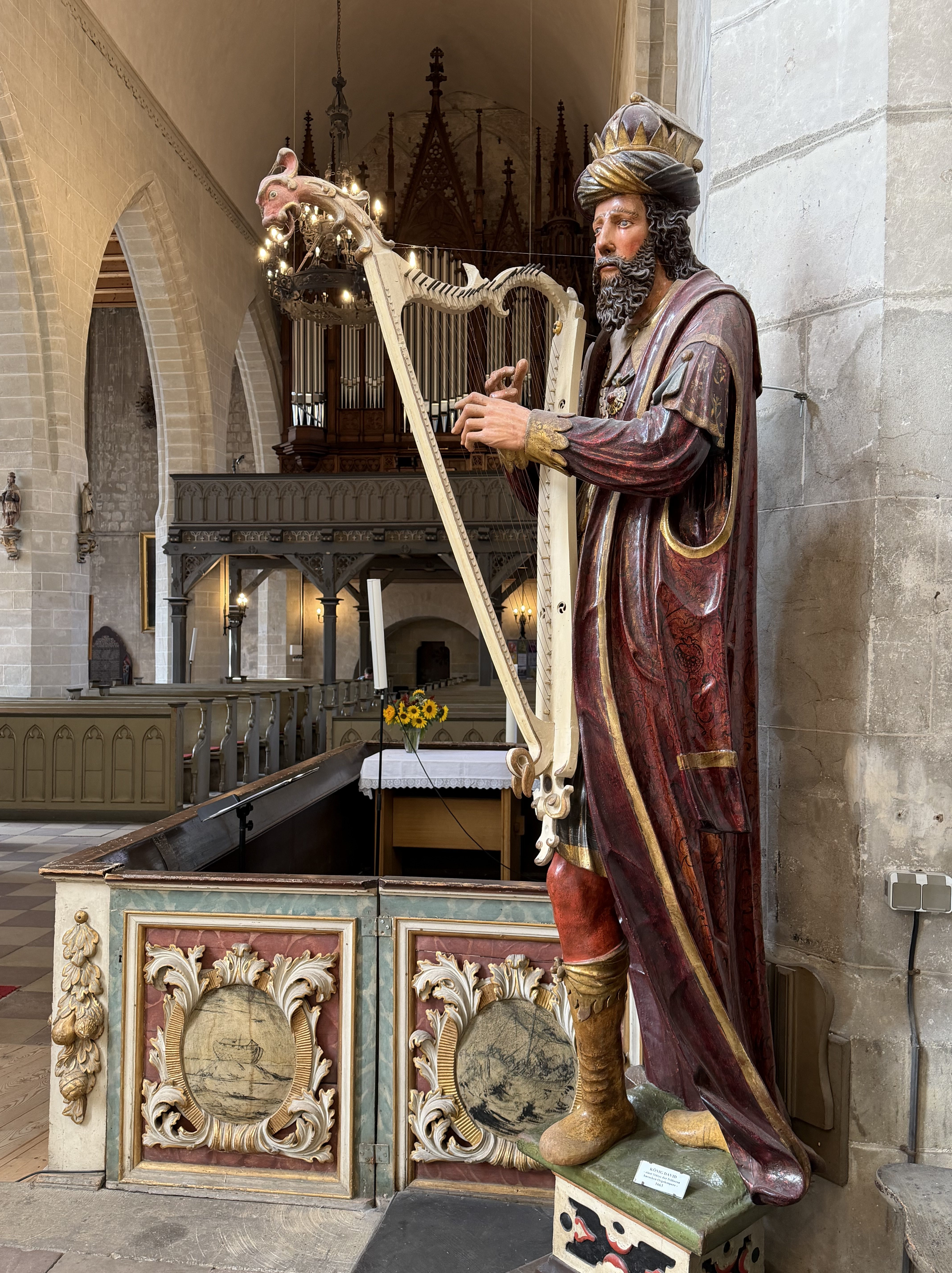
We were fortunate as a medieval festival was being held in Goslar while we were there. Fun! Folks in medieval costume walked the streets as live madrigal played on stage and acrobats performed. Food stalls were period-themed and the items offered were the same. I was especially drawn to the salmon being smoked, held on wooden planks slanted to catch the smoke rising from the open fire. This entire area of Germany is predominantly Lutheran. While churches here were not as large as other places we have been, they were still imposing and each had wonderfully carved pulpits with Biblical scenes carved into spiral staircases that rose upward. The pulpits were often held aloft with huge angels, and the pulpit crowns (wood-carved coverings above the pulpit) were often painted in jewelled tones. Altars were equally as beautiful, and baptismal fonts were striking, some with such heavy coverings that required built-in hoists to remove them for baptisms.
We all enjoyed our time here, and the weather matched the beautiful mountains and villages. On our venture to Wernigerode from Goslar on a day trip, Randy sought out a bus to take us from the bahnhof (train station) to the Altstadt (old town). Nancy commented, “Why are we sending the least German person (Randy) to speak to the German-speaking bus driver?” She was wise! Randy assured us this was the right bus. All aboard… and then Randy soon came over excitedly to me—“Here is where we are supposed to be going (as he pointed to his phone’s map) and here is where we are.” We were headed in the opposite direction and soon out into the country. We had no idea where we were headed, and more importantly, how to get back to Wernigerode. Oh yes, we were on an adventure! The bus began to wind its way up the mountains and soon highways turned into lanes as the forests closed in on us. The bus slowed to a crawl to make sharp turns. IT WAS BEAUTIFUL with lakes and colorful trees. I told Randy, “Put your phone away,” as he was frantic to find us a way back to Wernigerode, “and enjoy the serendipitous adventure.” An English-speaking German traveler came to our rescue. He told us the bus would stop in a city near the bahnhof that had a train back to Wernigerode. Yes! As we alighted the bus, Kathy noticed that a bus on the other side of the street was headed to Wernigerode—we quickly hopped on that bus and reversed our beautiful journey. Amazingly, the bus had a stop right at the entry to the Wernigerode Altstadt. And off we went, thankful for having taken the wrong bus!
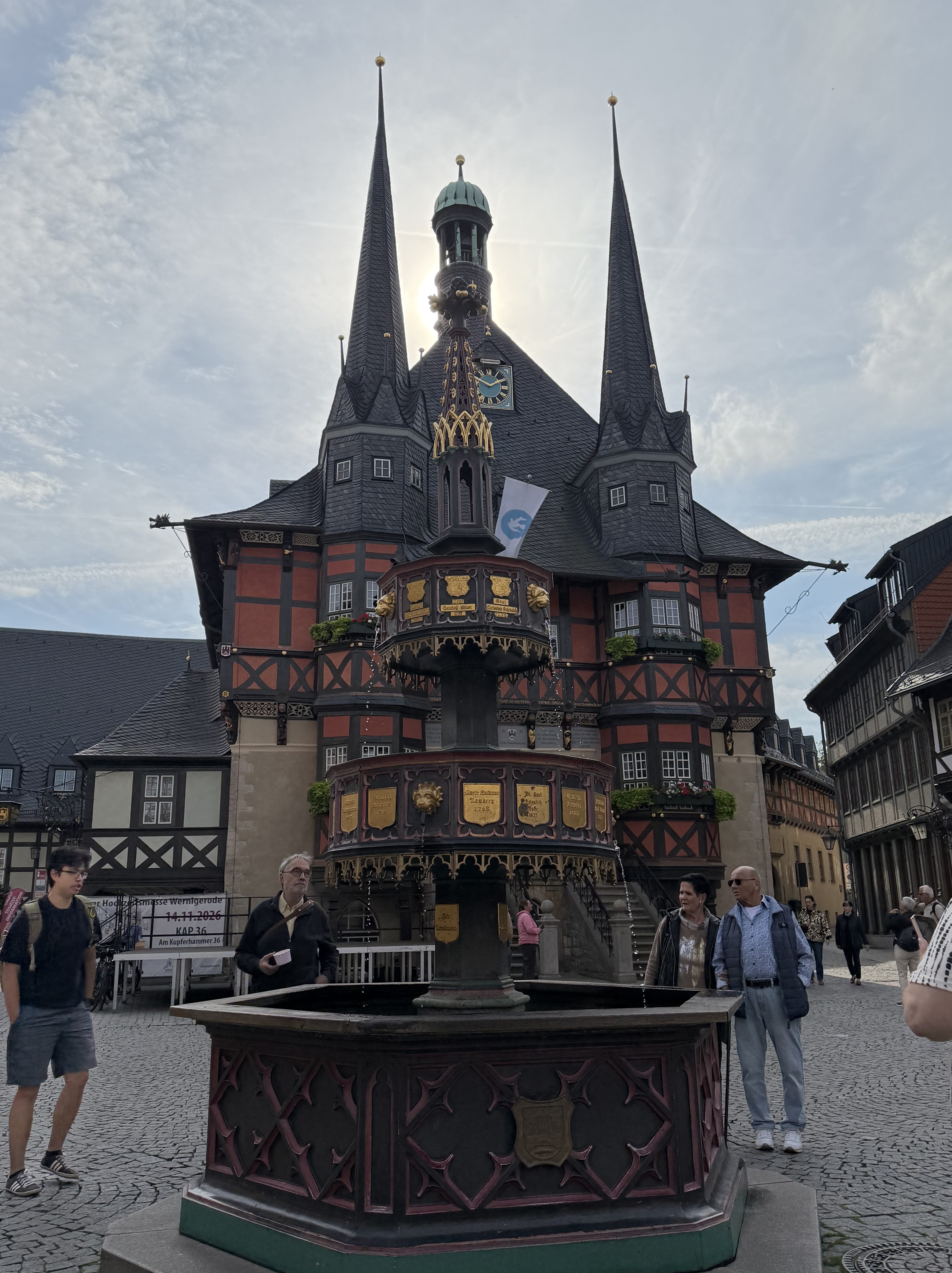
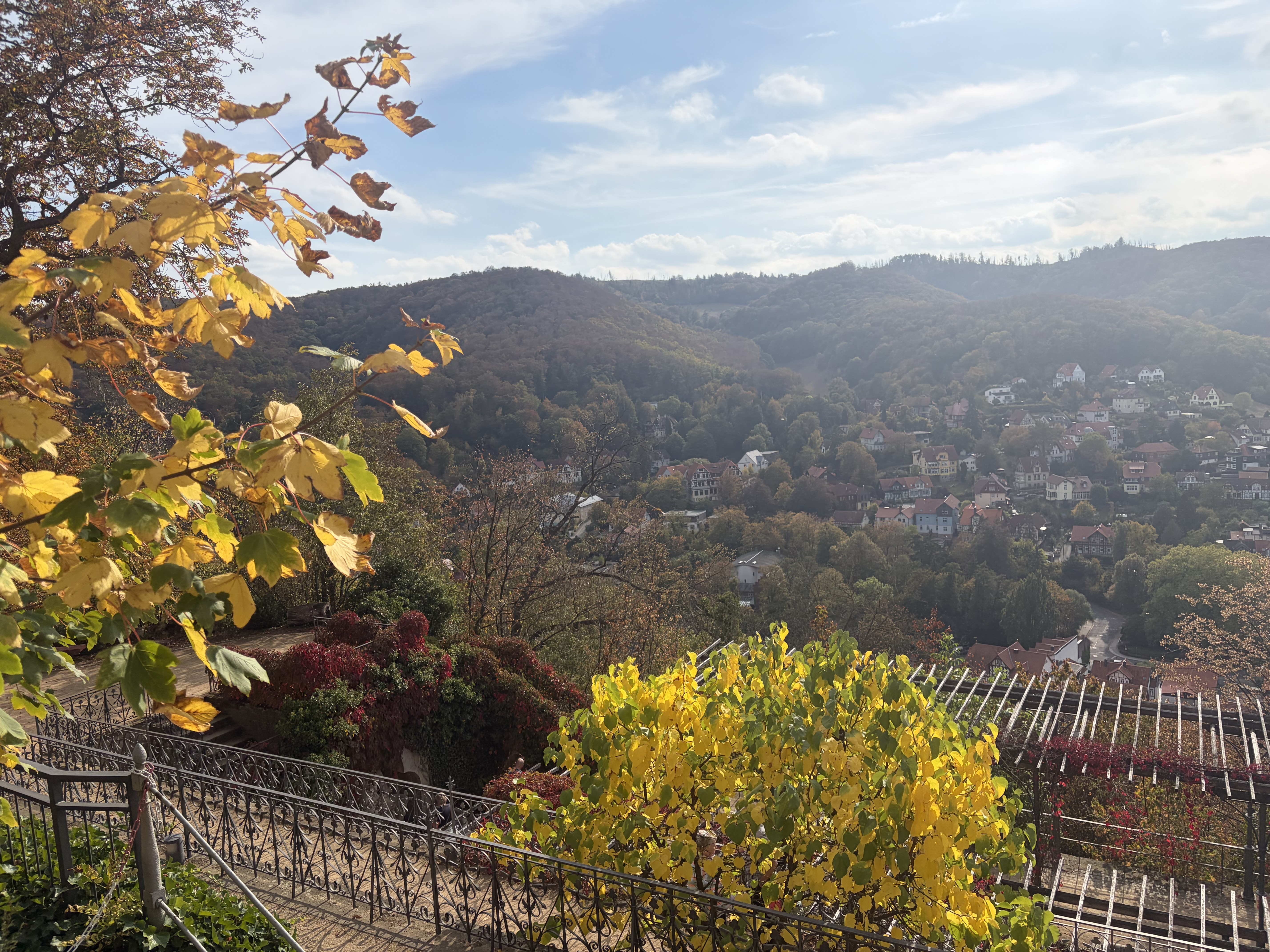
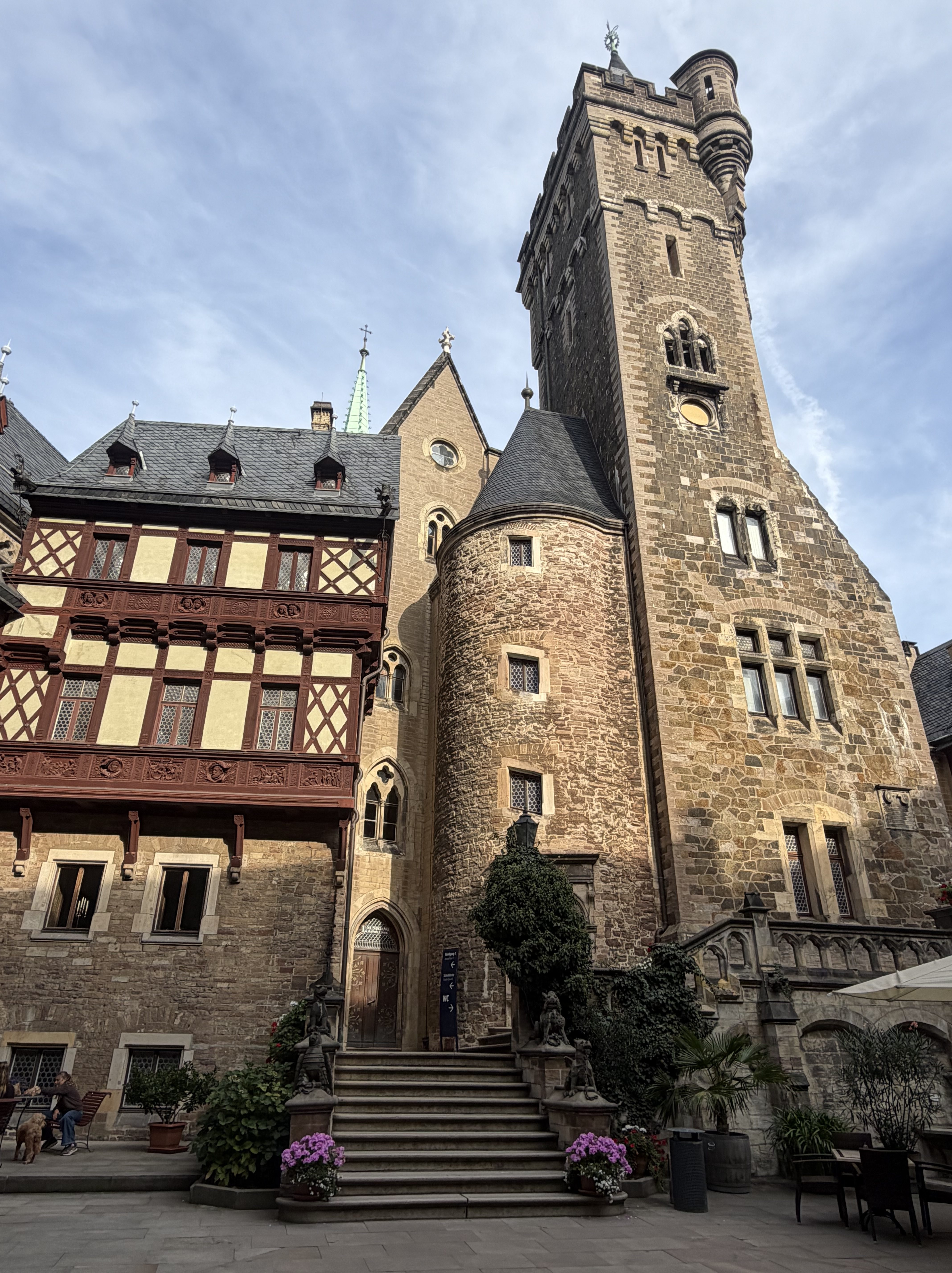
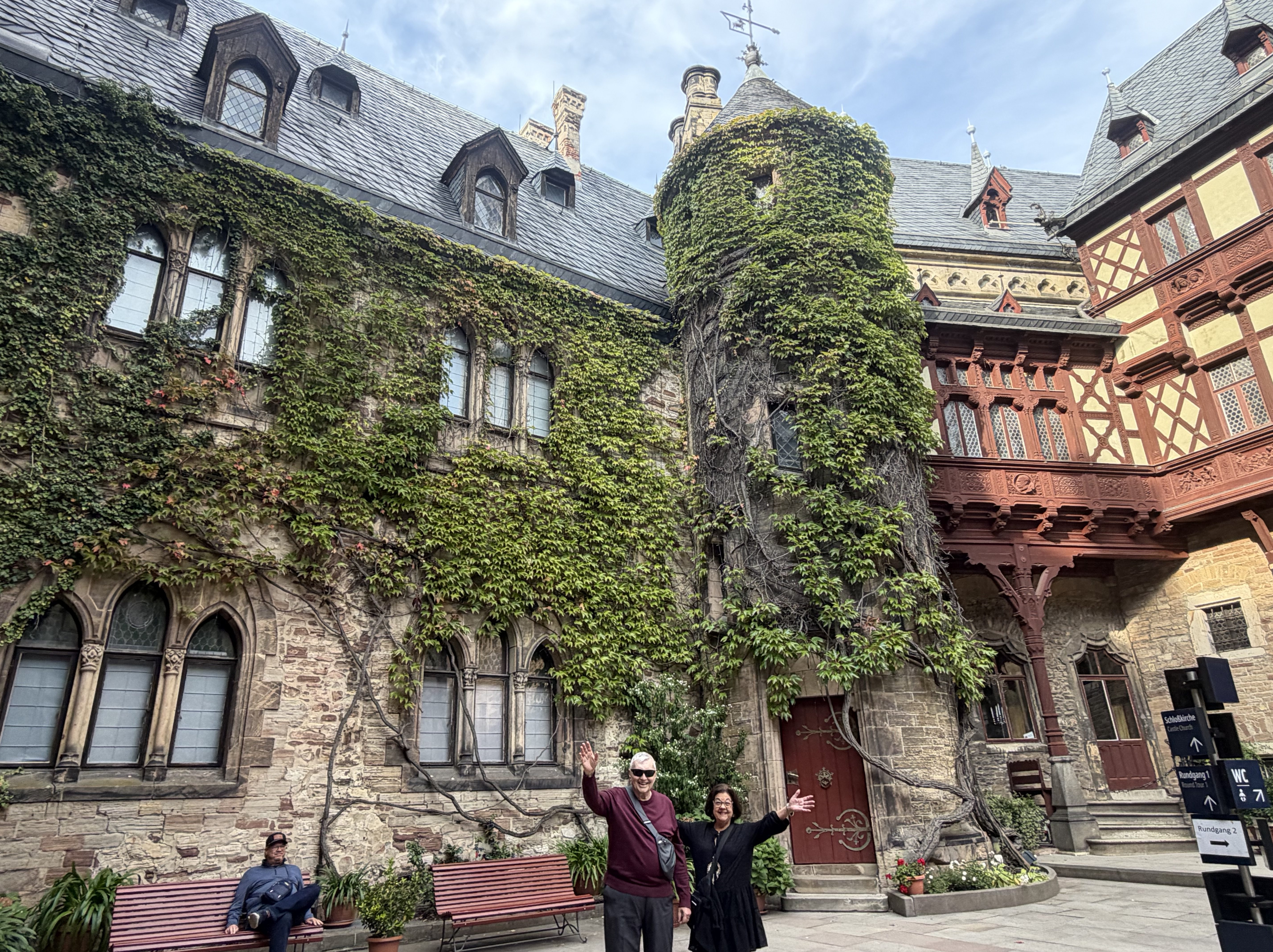
After several days of wonderment in the Harz Mountains, we are now off today for several days in Bamburg in far north Bavaria, north enough to be in central Germany. WEG
BREMEN IS LOVE AT FIRST SIGHT
September 28-October 2, 2026
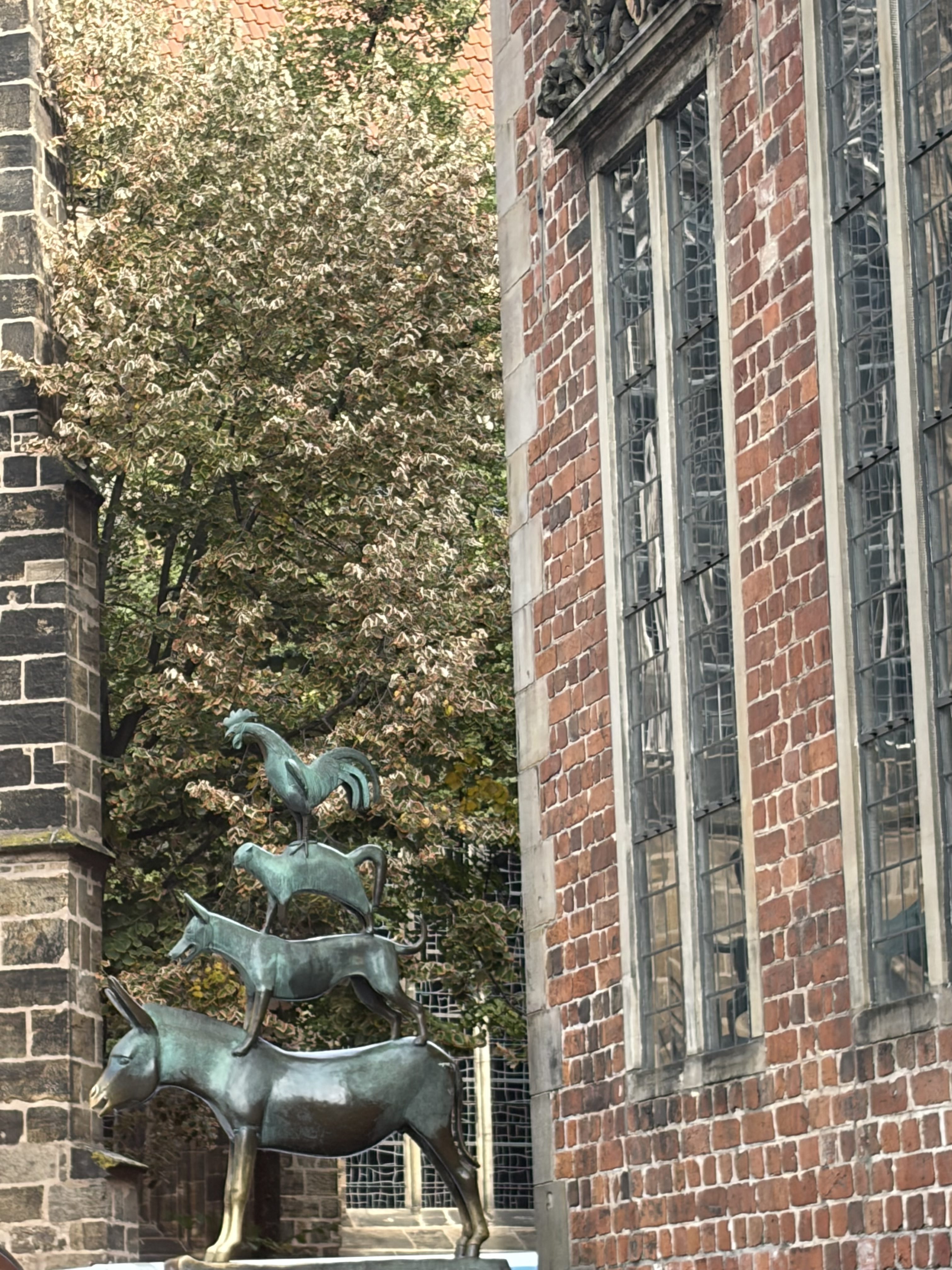
One simply stands in awe of the beauty of the architecture of this north German city. Around every corner was another amazing building! Wonderful cobble-stoned lanes stretched into the distance, all lined with elegant buildings. Bremen, founded in the 8th Century, became wealthy because the Weser River on which it lies was navigable into the North Sea causing trade to flourish. As a free city associated with the Hanseatic League, a consortium of powerful free cities tied together by trade, its wealth fueled art and architecture.
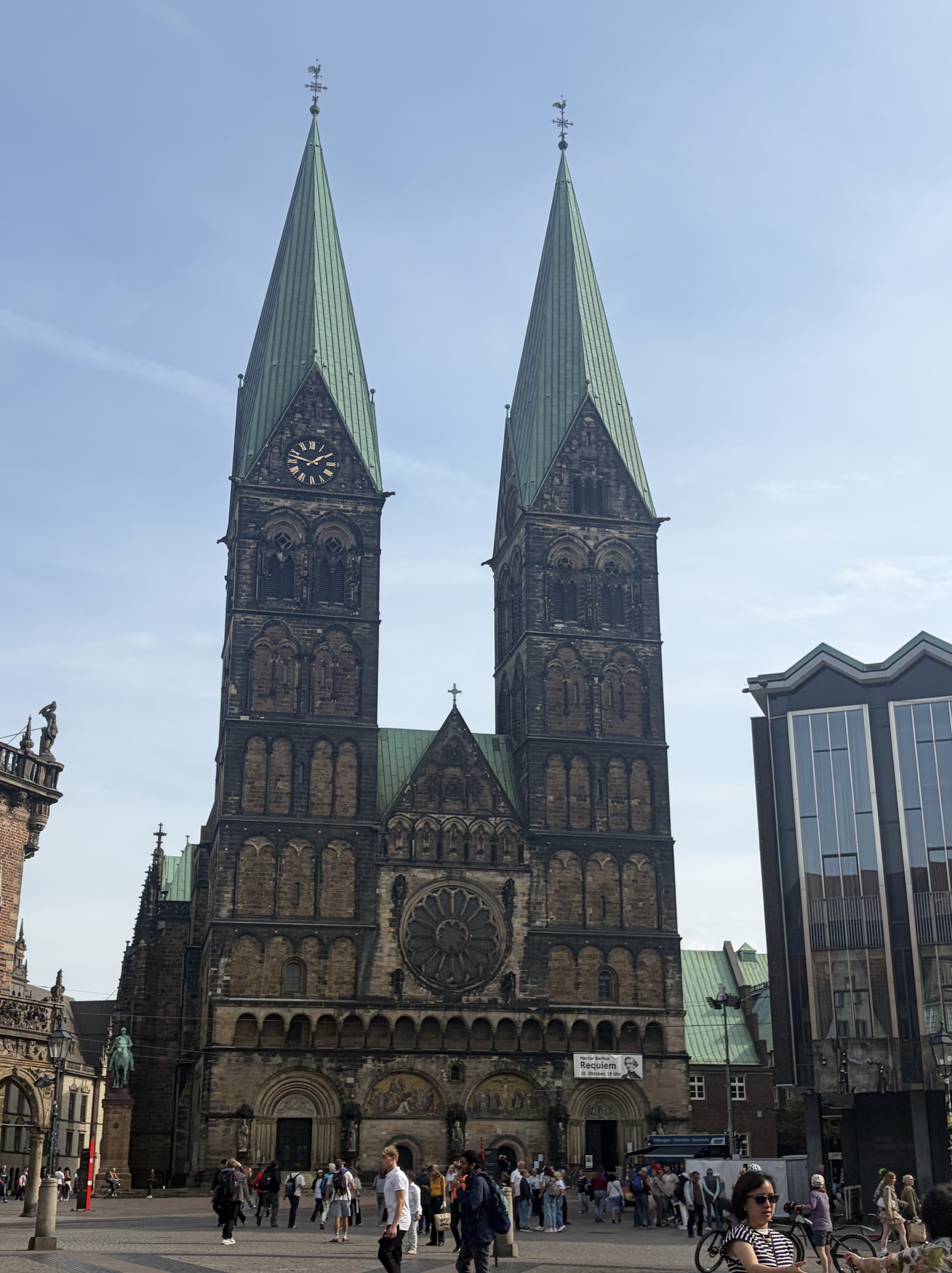
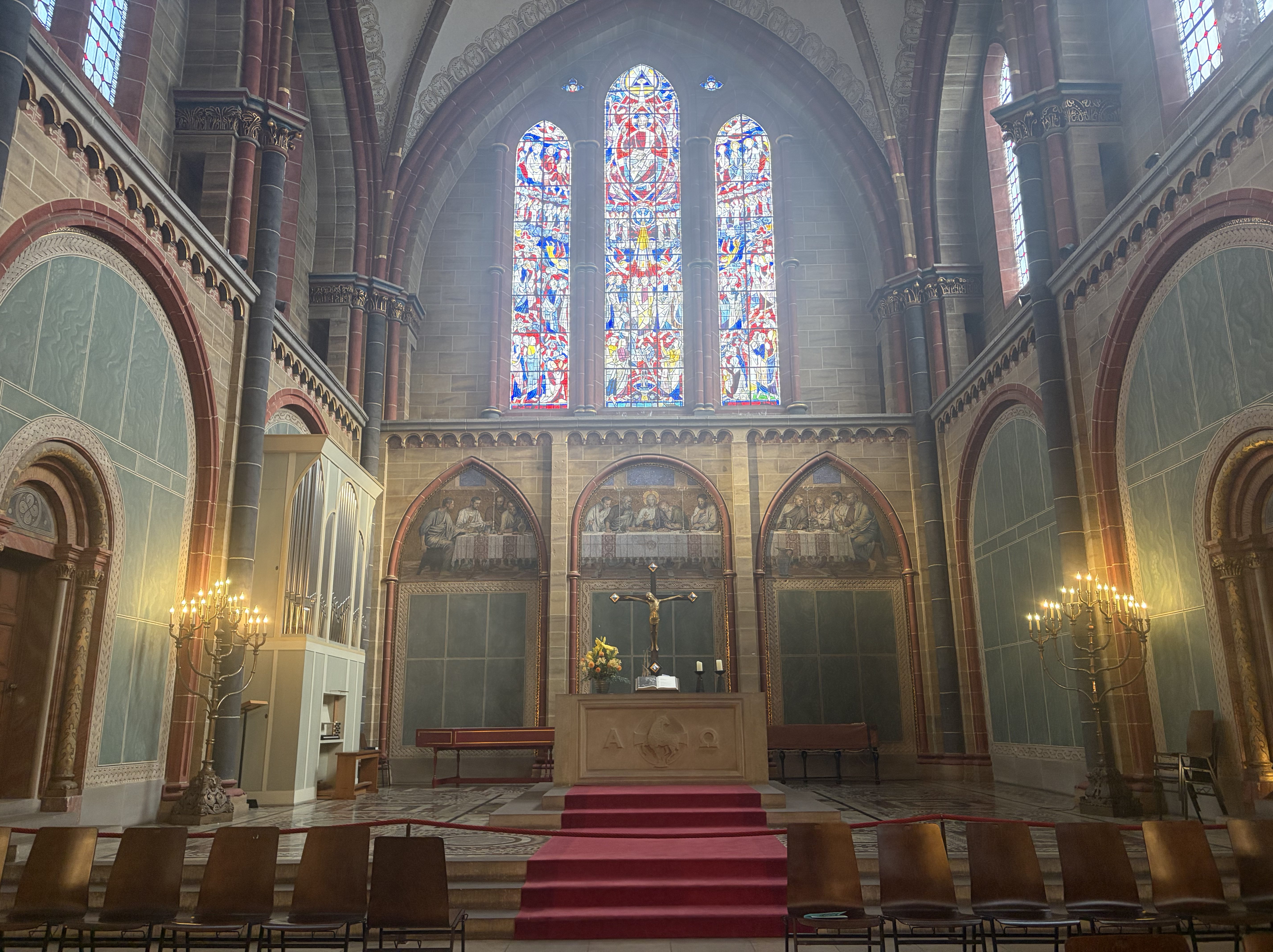
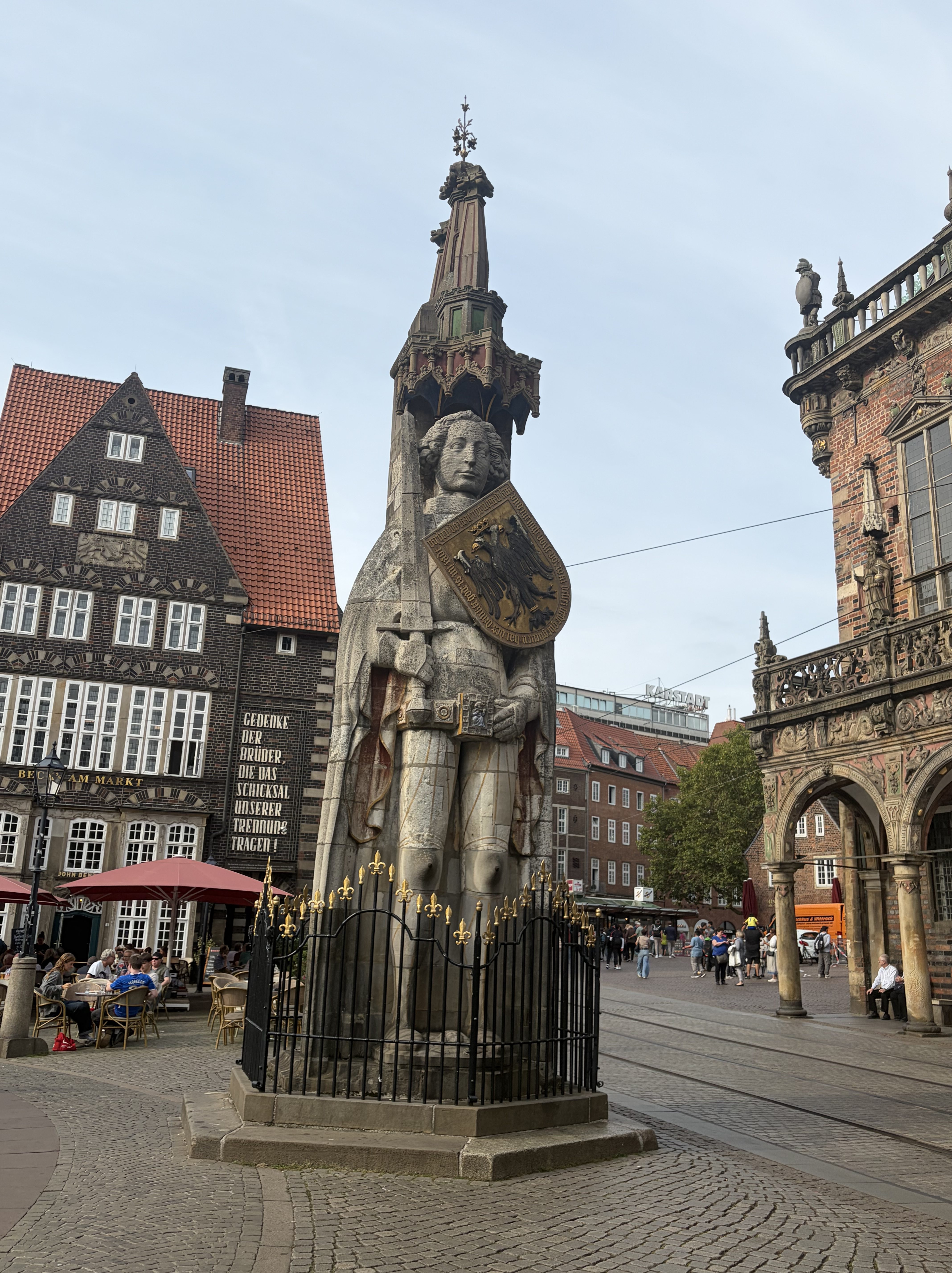
The 18-foot Roland Statue in the main square still stands from 1404—legend says that as long as it stands, Bremen will prosper. Roland was the bravest of Charlemagne’s warriors and although killed in battle, he became the symbol of freedom. Five important buildings frame the square: The Börse, the stock exchange, with colonnades and a dome; The Schütting, the guild hall of the merchants, with a stepped gable and ornate stone carvings; the Rathaus, town hall, a Gothic brick hall with a Renaissance facade and interior painted ceilings and two large Lutheran Churches on opposite sides of the square both with tall towers. The Church of our Dear Lady is rather plain, but with an ornate pulpit featuring Moses and the four Evangelists. The St. Peter’s Cathedral is ornate with a Baroque canopy and altar and a magnificent pulpit, a gift from the Queen of Sweden. Off in every distance are more beautiful buildings.
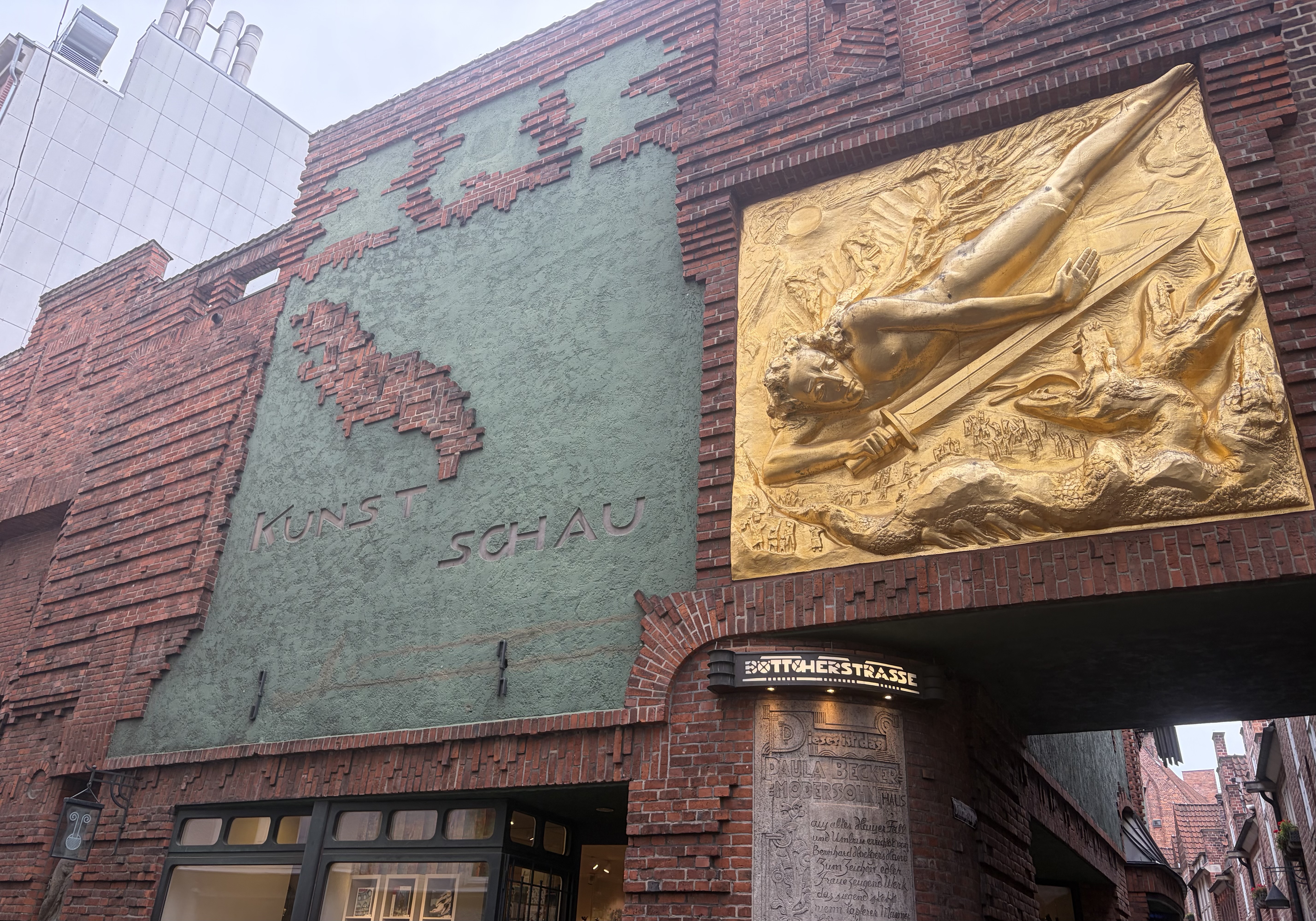
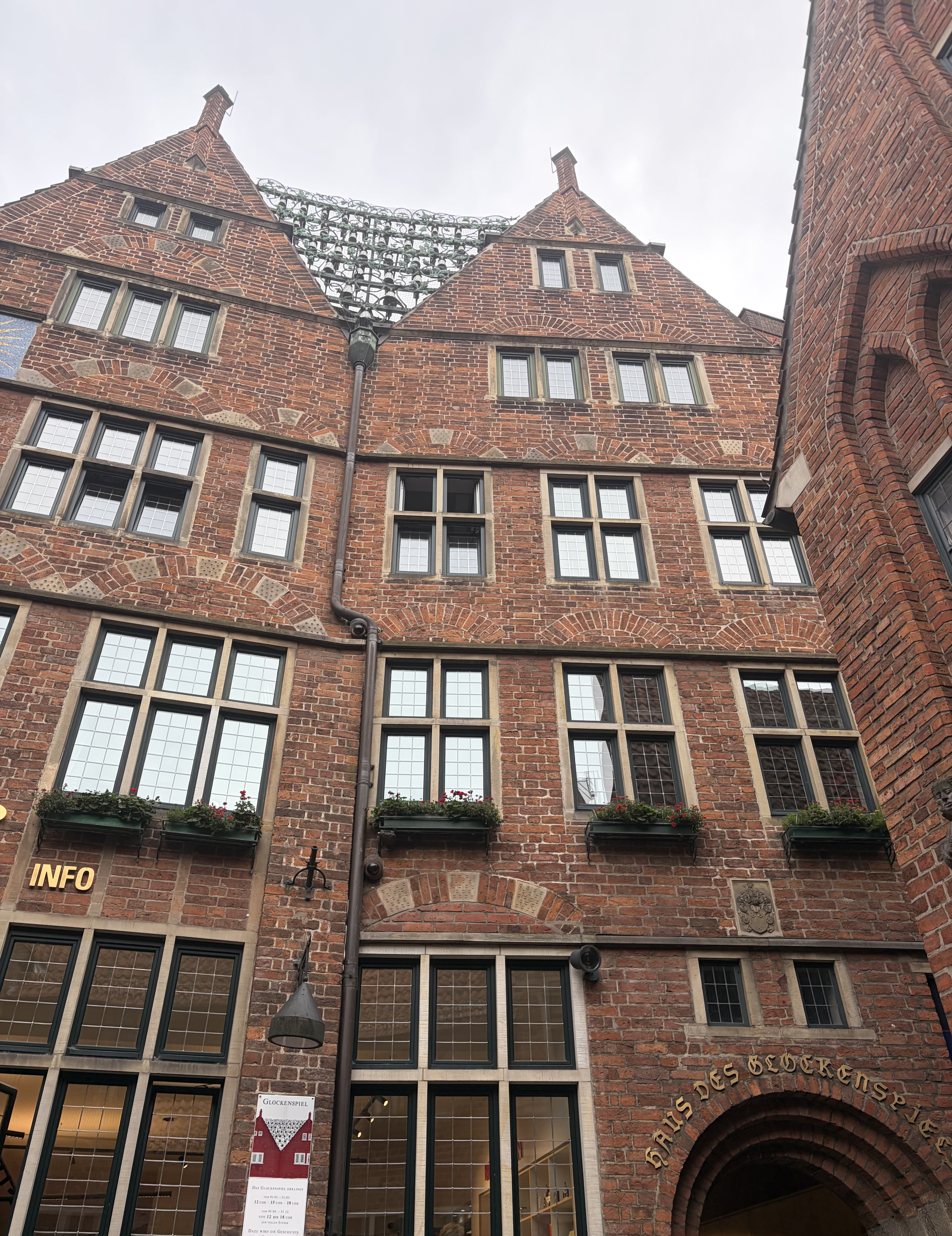
Of special interest is the Schnoor District, narrow twisted streets lined with crooked half-timbered houses and buildings. Upscale shops and restaurants beckon as one meanders along. The Böttcherstrasse is filled with wonderful brick buildings. Master brick layers made intricate designs using brick. The Meissen porcelain carillon, 30 bells hung between the gables of the Glockenspiel House, play beautifully. As they play, a vertical cylinder rotates showing ten images of famous Atlantic crossings from Leif Erikson to Charles Lindbergh. One interesting and eye catching installation to a wall in the Böttcherstrasse is a 12×12 foot golden panel depicting an angel with a sword slaying a dragon, called the Lichtbringer. It was originally dedicated to Adolf Hitler, but rejected by him as degenerate art!
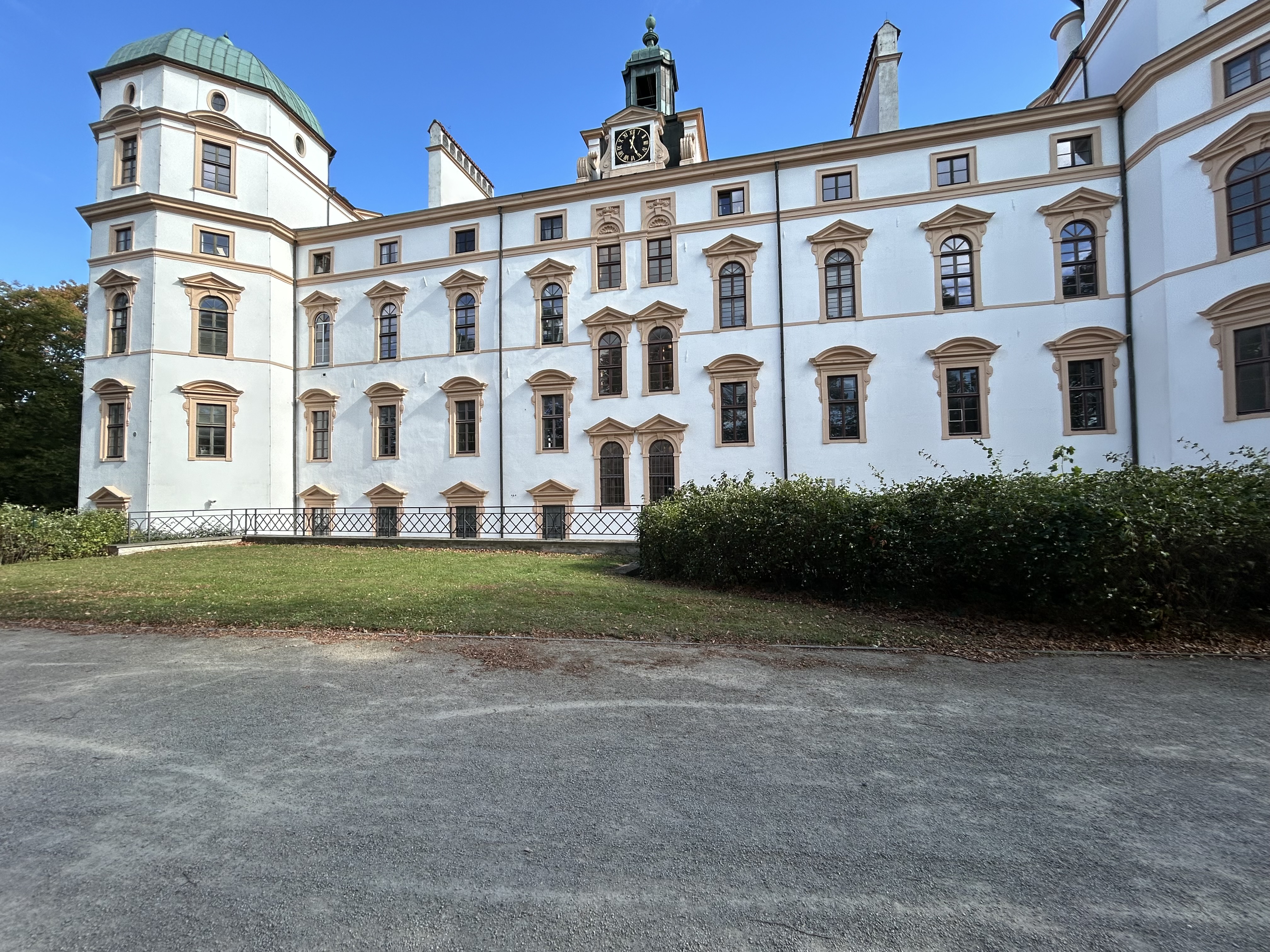
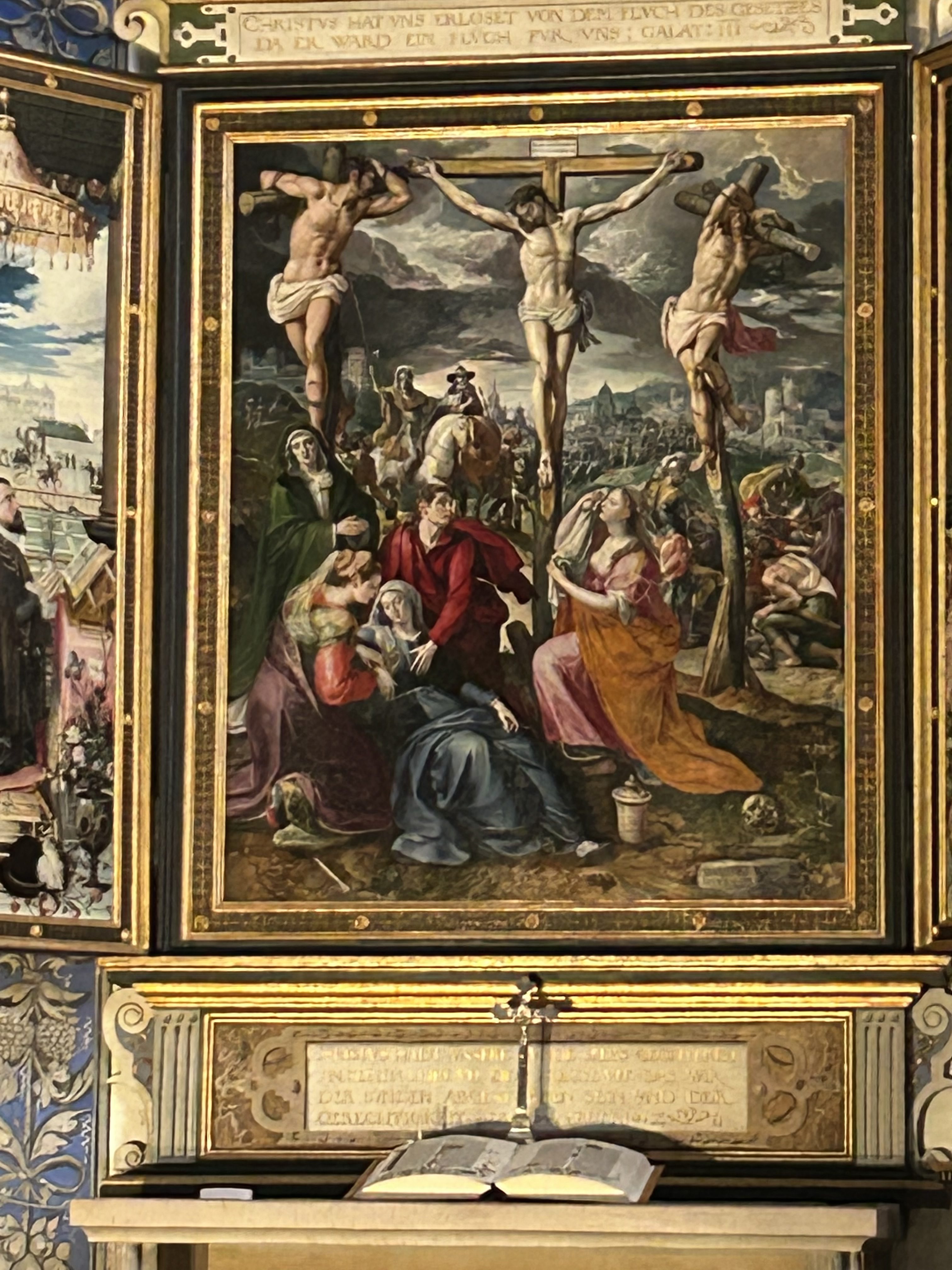
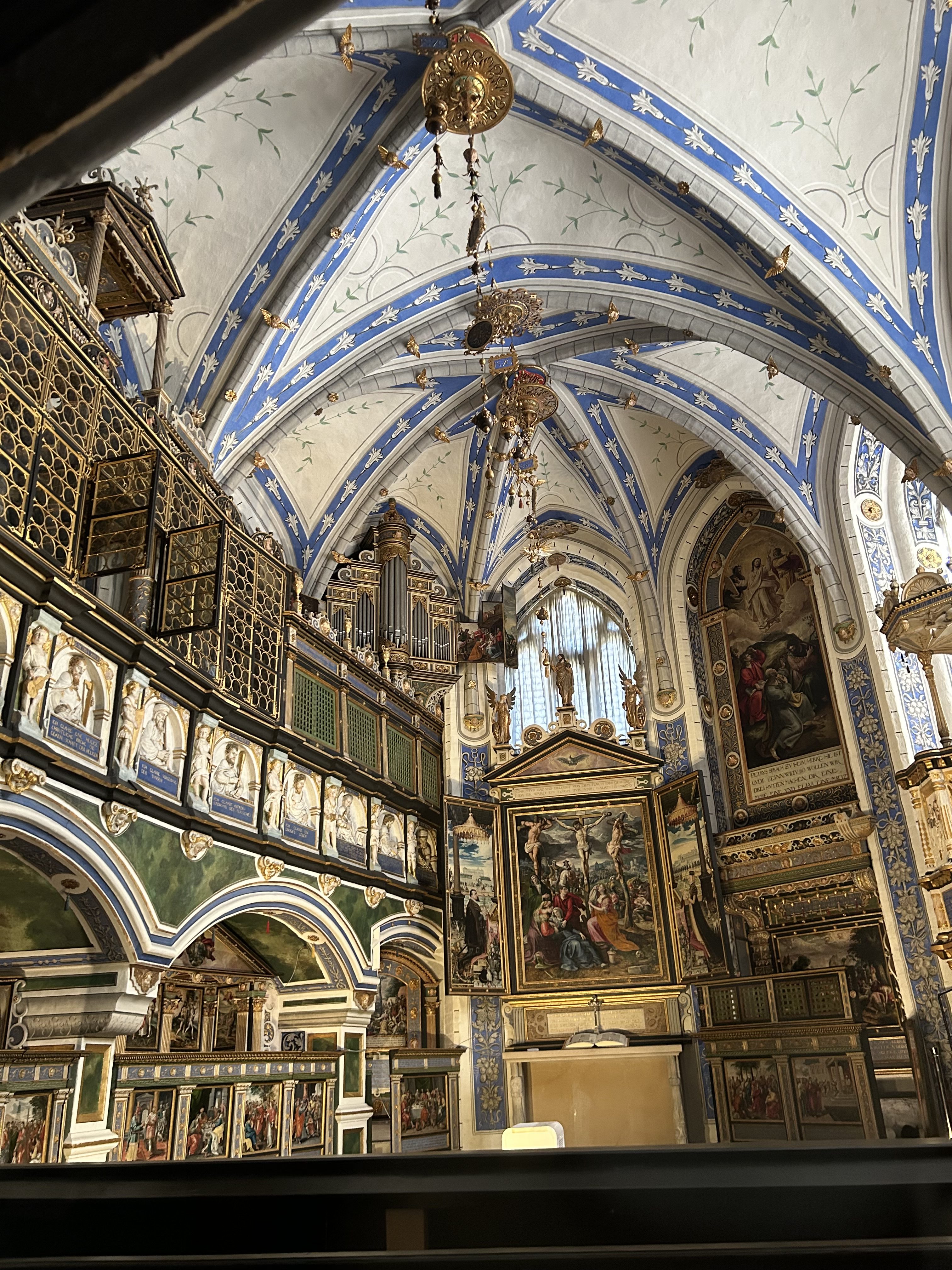
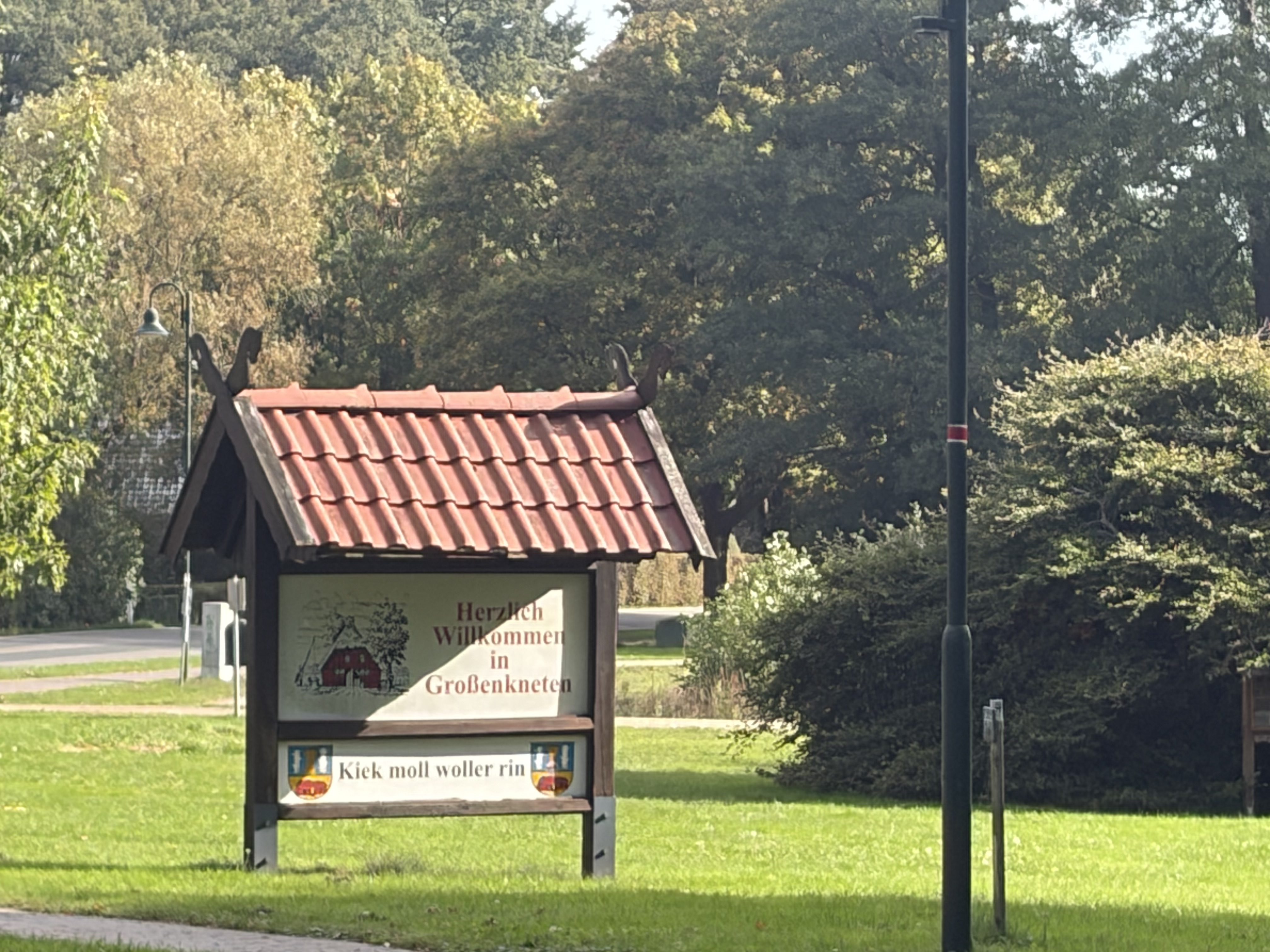
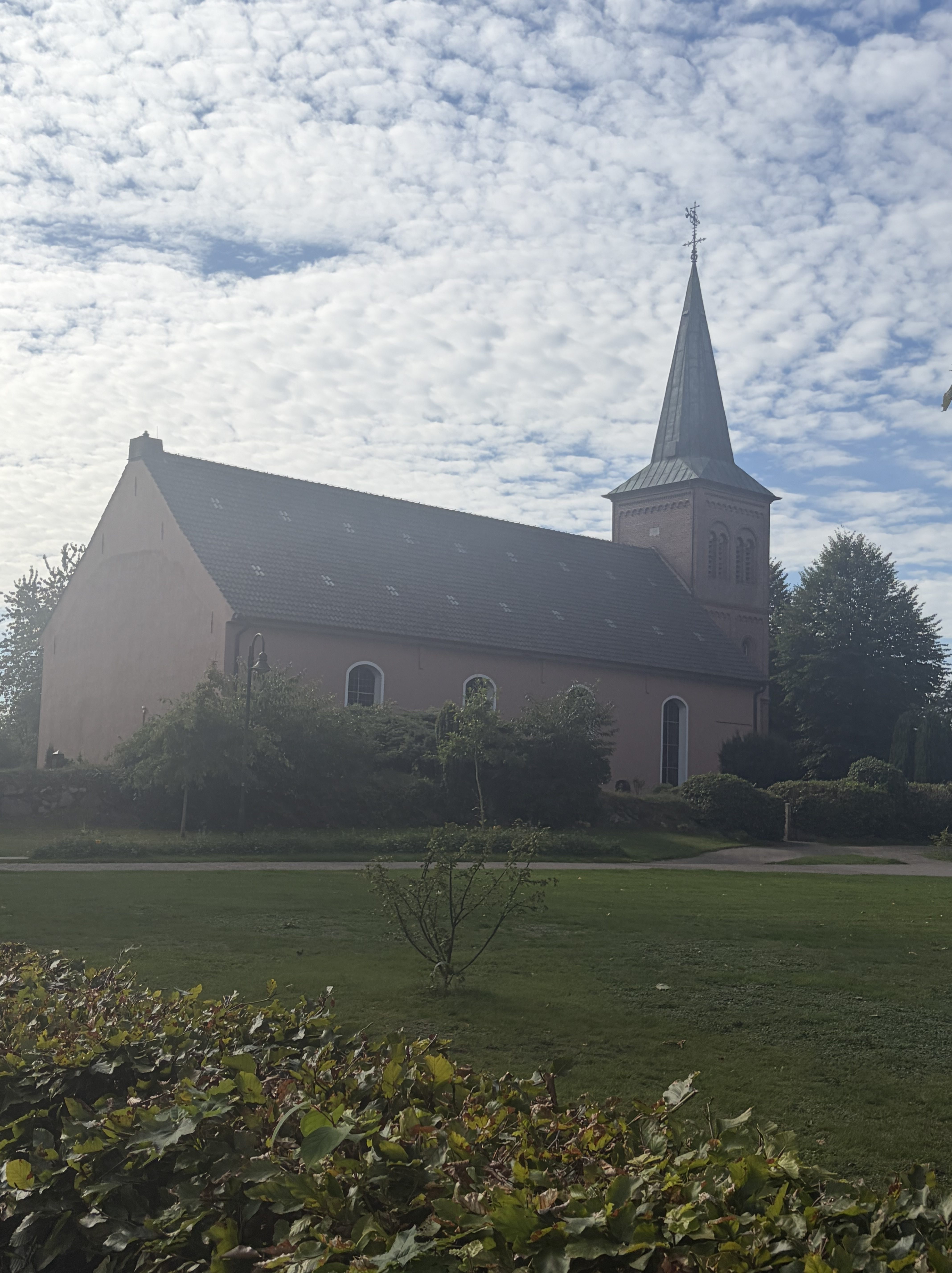
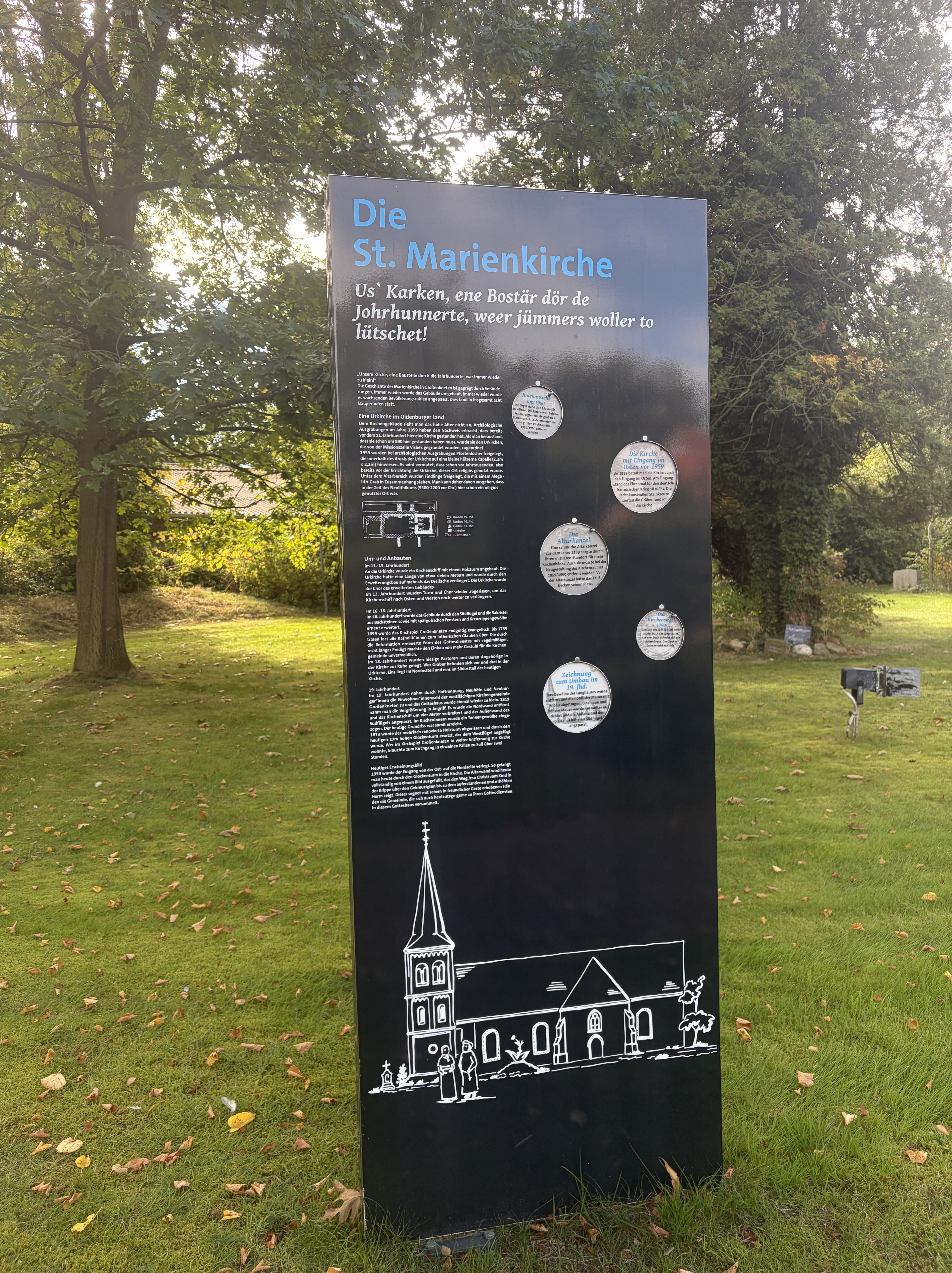
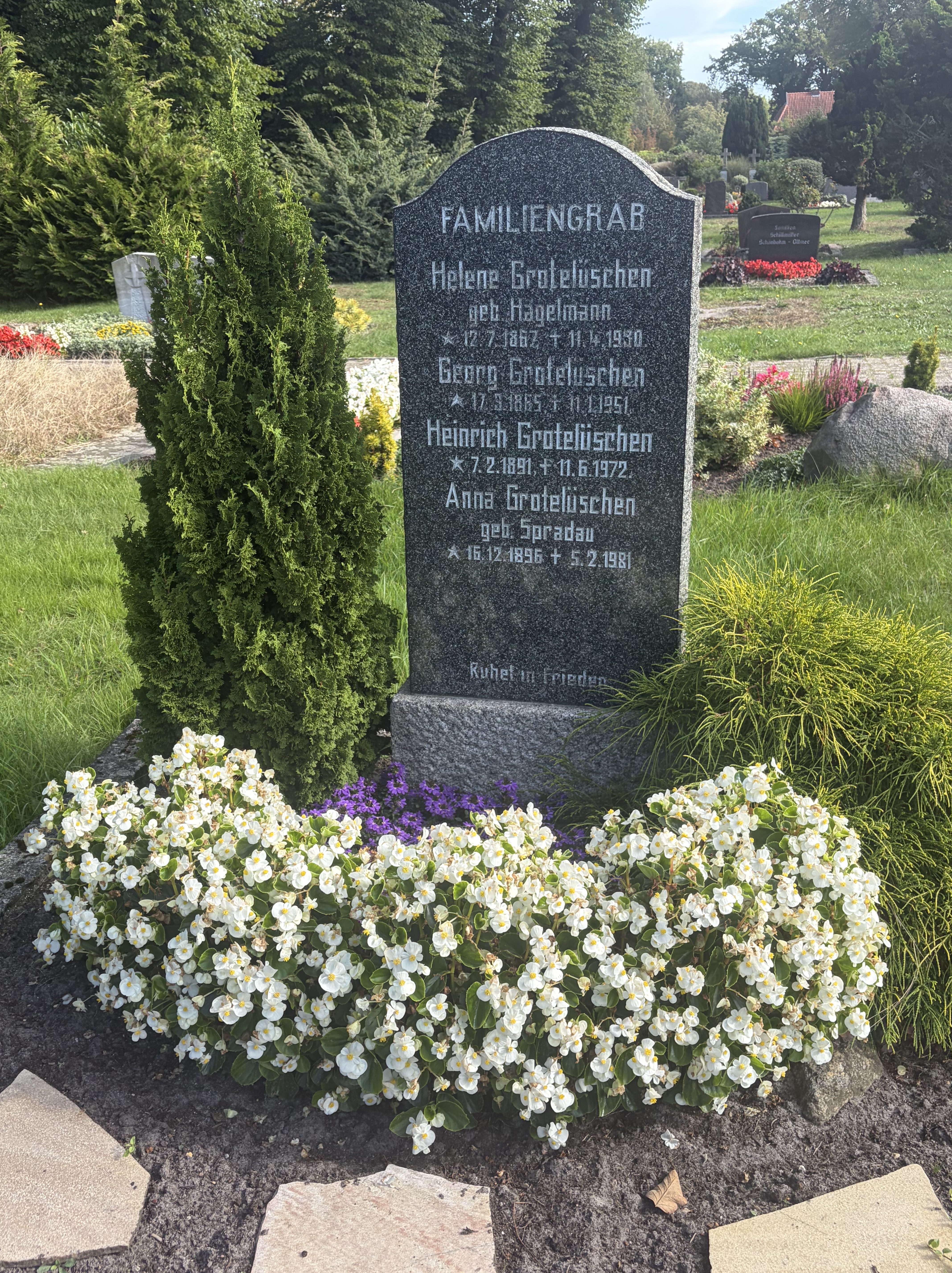
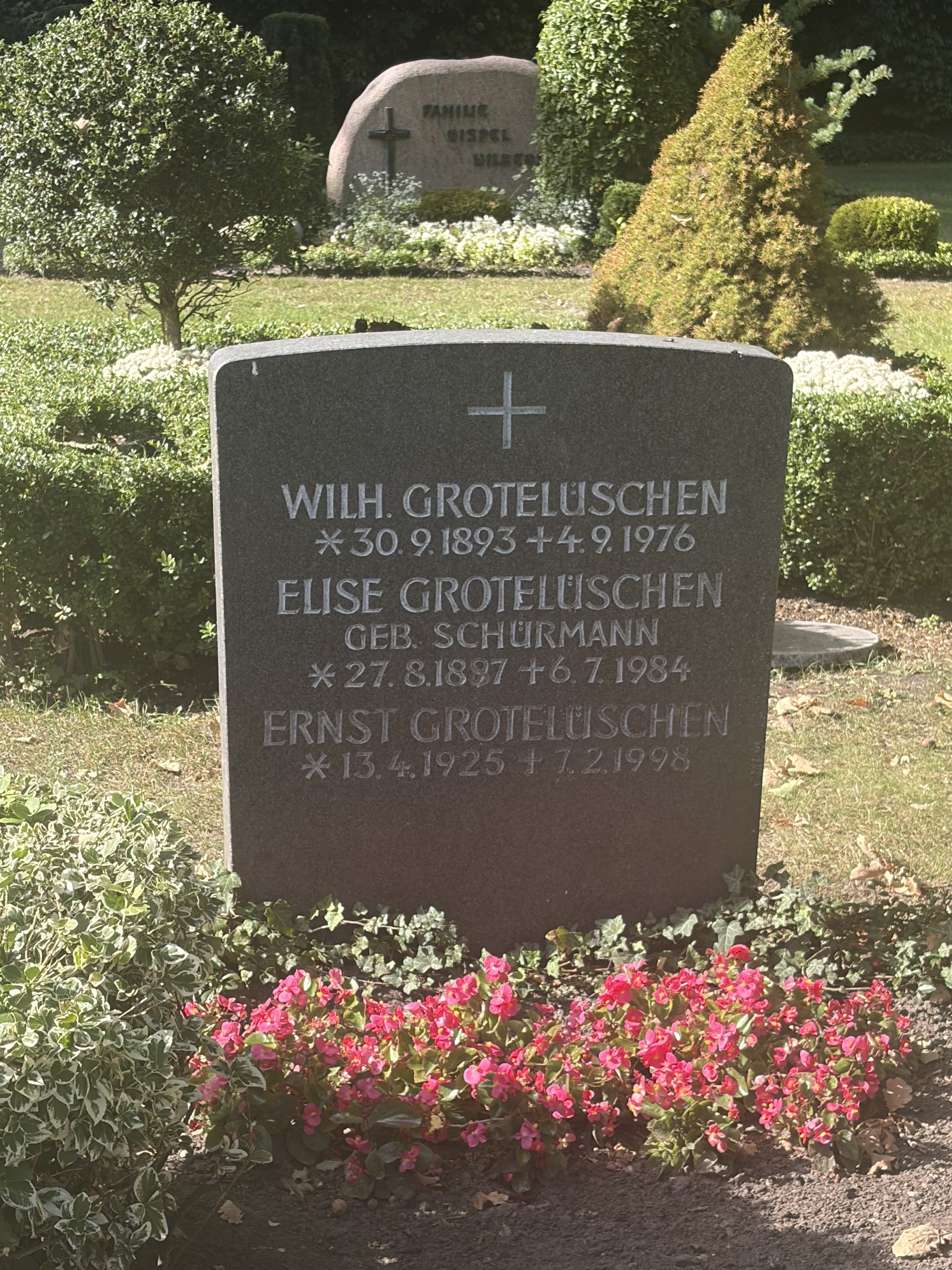
One day, Tom and Nancy, Randy and Melissa took at day trip to Celle, a well preserved medieval city with attractively carved half-timbered buildings and a beautifully painted Lutheran Chapel. They had a magnificent day! That same day, Kathy and I had a much anticipated journey going to visit her mother’s–Dr. Grandma’s–family ancestral home in Grossenkneten, a short distance from Bremen. We tried to keep our expectations in check. I had traced the Grotelüschen line back to the late 1590s in the Sage farming village which is a part of the Grossenkneten community. The St. Marien Lutheran Church, founded in the 8th Century, was the ancestral church home. It still remains. Its beautiful flower-filled cemetery has hundreds of graves. Kathy found many Grotelüschen burial sites. Unfortunately, the older graves were all destroyed during wars over the centuries. Napoleon, whose armies came through the area, purposely destroyed graveyards. He thought that by erasing history and memory he could more easily control people in the future. We were thrilled that every grave—there were hundreds—were well-tended and flower-laden. Watering stations were situated throughout and a medieval-looking brick garden shed contained tools and accessories for tending. Magnificent! It was a memorable and emotional day. Walking back to the train station, we stopped at a bakery and found poppy seed kuchen—perfect—an American Grotelüschen family favorite.
All of us on this journey loved, loved, loved Bremen and the surrounding area! It was a chill-out stop, no rushing at all, in a magnificent city.
BAROQUE AND BUSY
September 24 – 28, 2026
Hamburg is Germany’s second largest city; it is a very busy place! Though majorly destroyed in World War II, it has renewed and rebuilt, mainly without its former historic beauty. What is today’s Hamburg is a fine modern city. Here and there, beautiful historic buildings are visible.
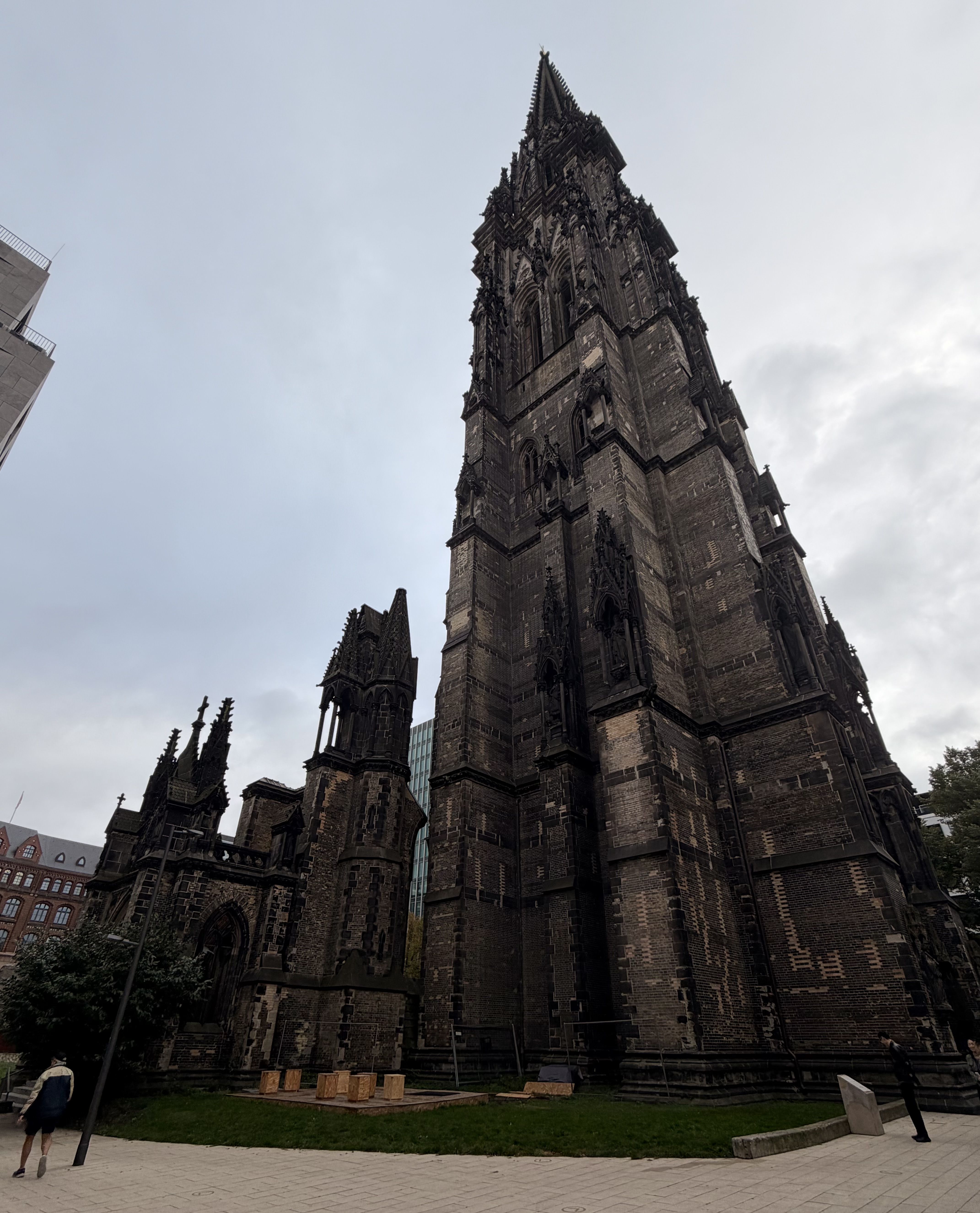
Our first site off the tram from our hotel was a view of the remains of St. Nicholas Lutheran Church with its 483 foot tower reaching heavenward. It is still one of the tallest church towers in the world, although all that remains of the huge church are remnants of walls and blackened sculptures.
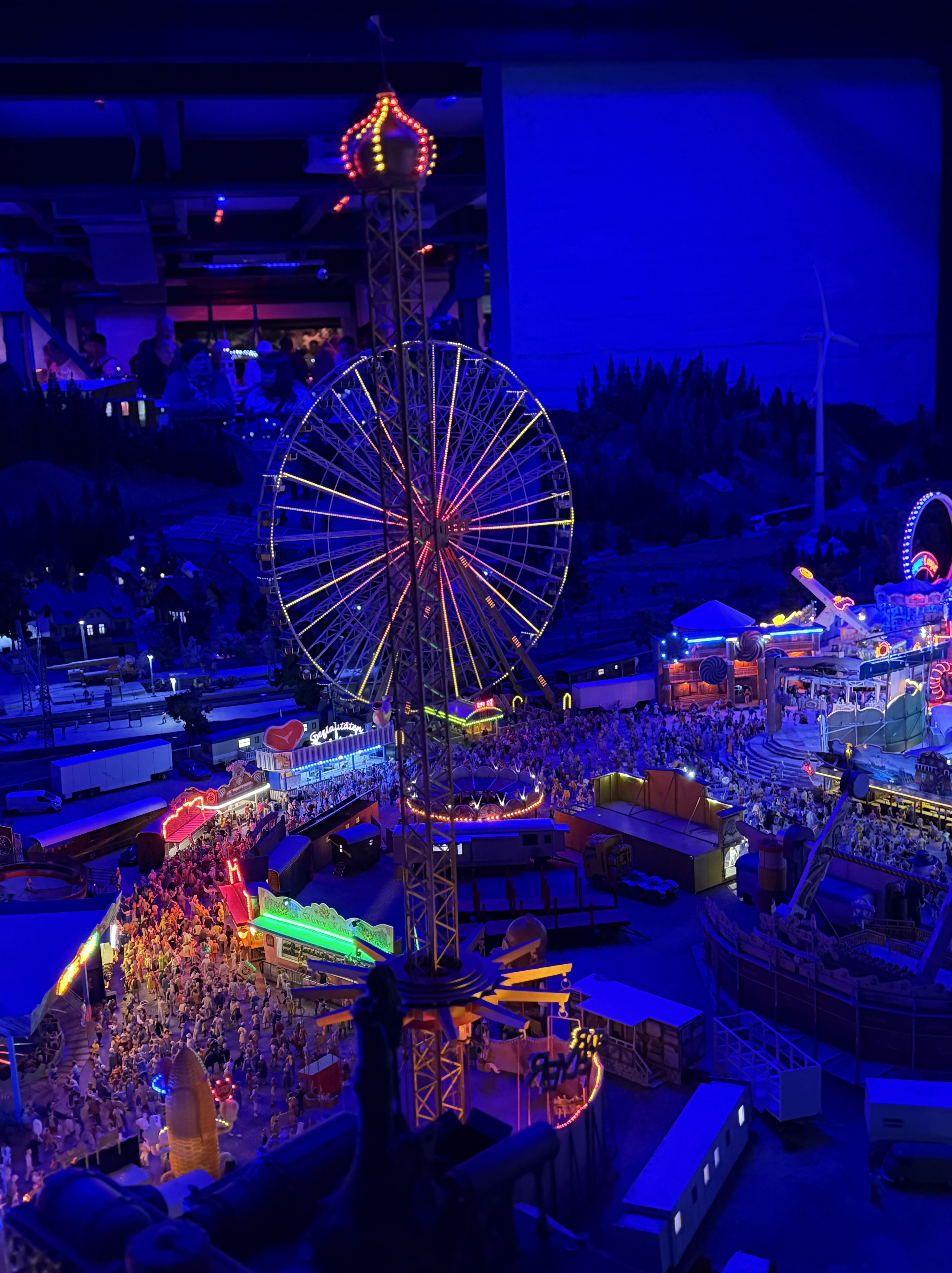
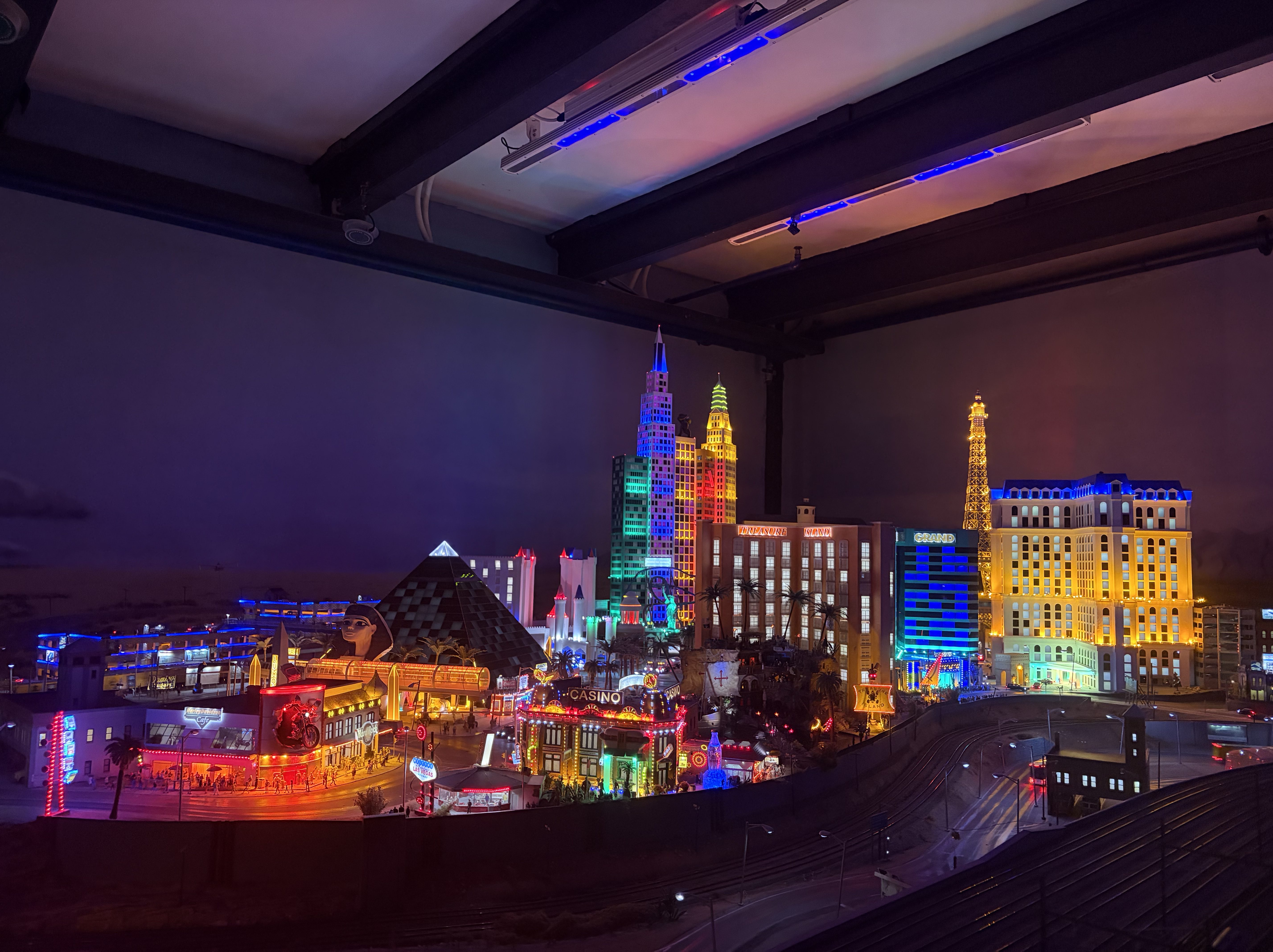
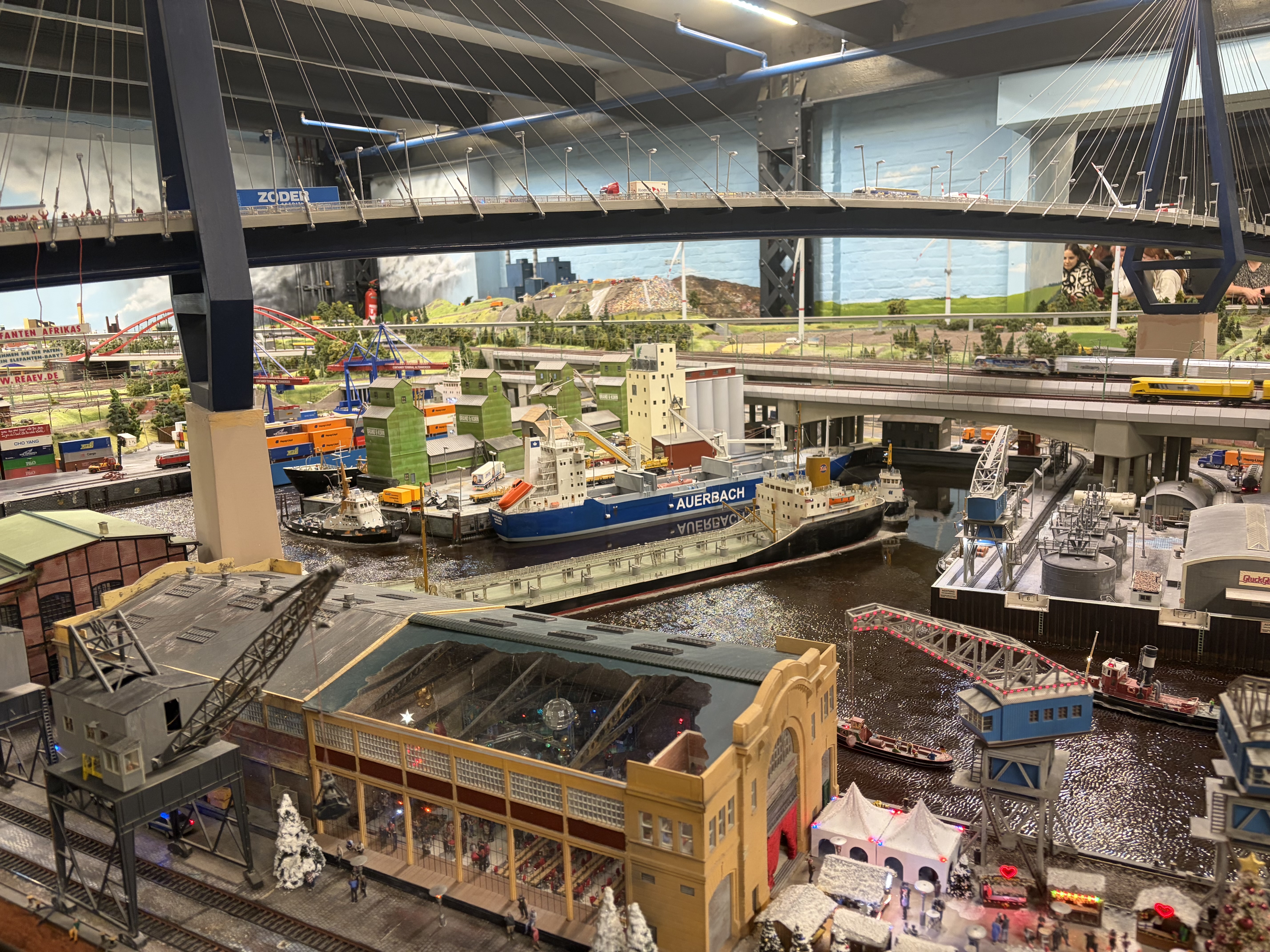
Our afternoon goal was to tour Miniature Wonderland, Hamburg’s major attraction down the street from the Memorial Church. It is filled with sets/scenes from around the world, each handcrafted with precision. We are talking about stadiums filled with 50,000 spectators, each so small (1/87th actual size) and yet so precise–each and everything hand made. Ocean vessels sailing the seas; Alpine mountains and villages with trains, cars, and trucks all moving. The airport caught everyone’s attention as planes took off and landed, and police cars and baggage handlers moved along the runway. Glaciers calved; the lights of Las Vegas blinked. One could spot TVs glowing through apartment windows and billboards displaying changing ads. Throughout the displays, daylight changed to night as city and country lights glowed, and then daylight returned. The several hours of amazement just didn’t provide enough time. Had we had more time, our friend Tommy would have returned for another visit as his various life experiences were on living display.
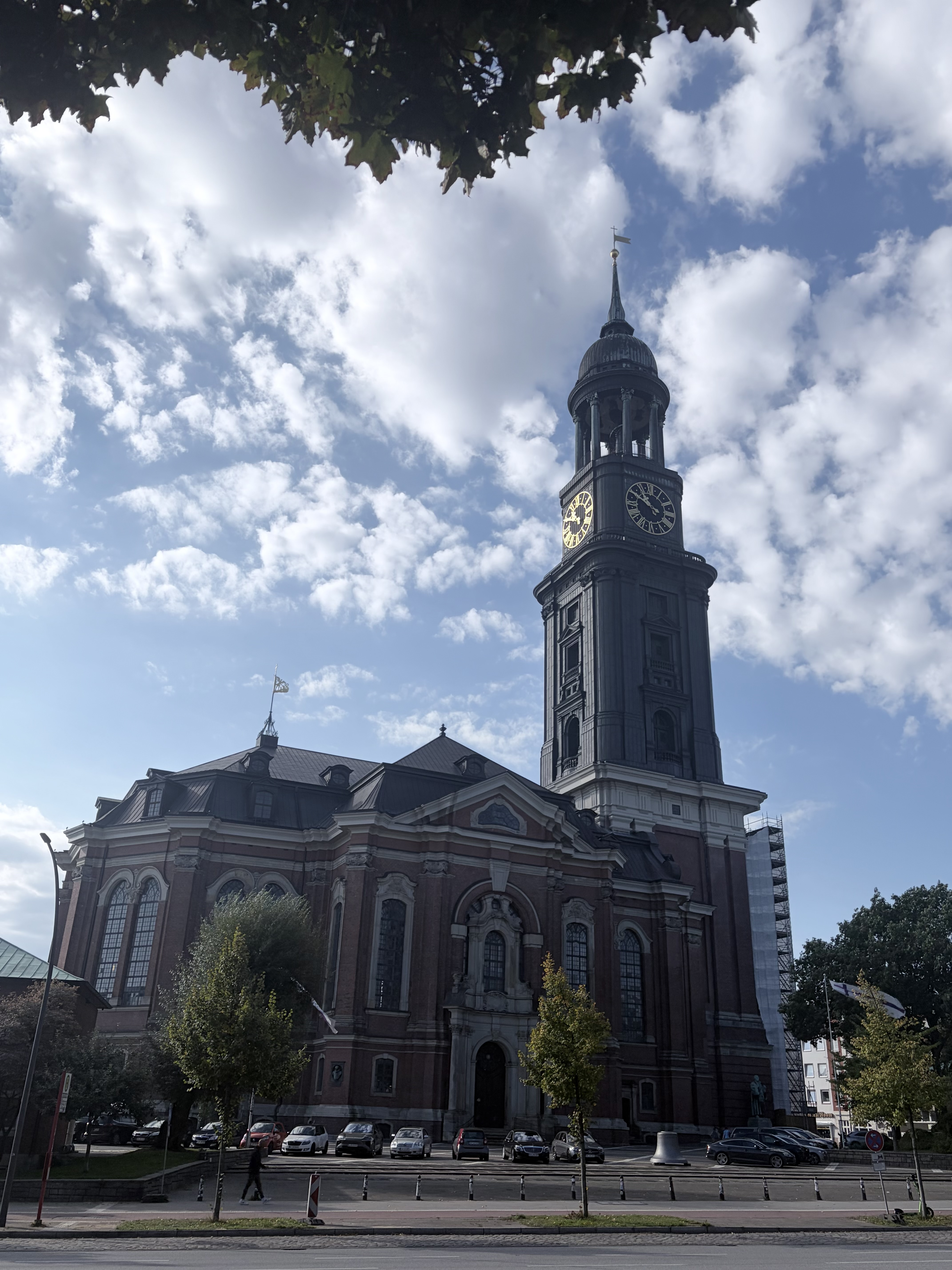
Our Sunday was a glorious day! We attended noon devotions with an organ recital at the beautiful St. Michael’s Lutheran Church, a stately baroque masterpiece. Since the service was in German, we only understood the invocation, Lord’s Prayer, and benediction. The organ music was both peaceful and meditative, then majestically powerful. The church’s interior is gleaming white with balconies and gold baroque accents, five pipe organs, and a 66-foot stunning marble altar, the centerpiece of which is a glass mosaic of the risen Christ. White sculptured angels peeked out at each corner of the interior, almost missed due to the beauty all around.
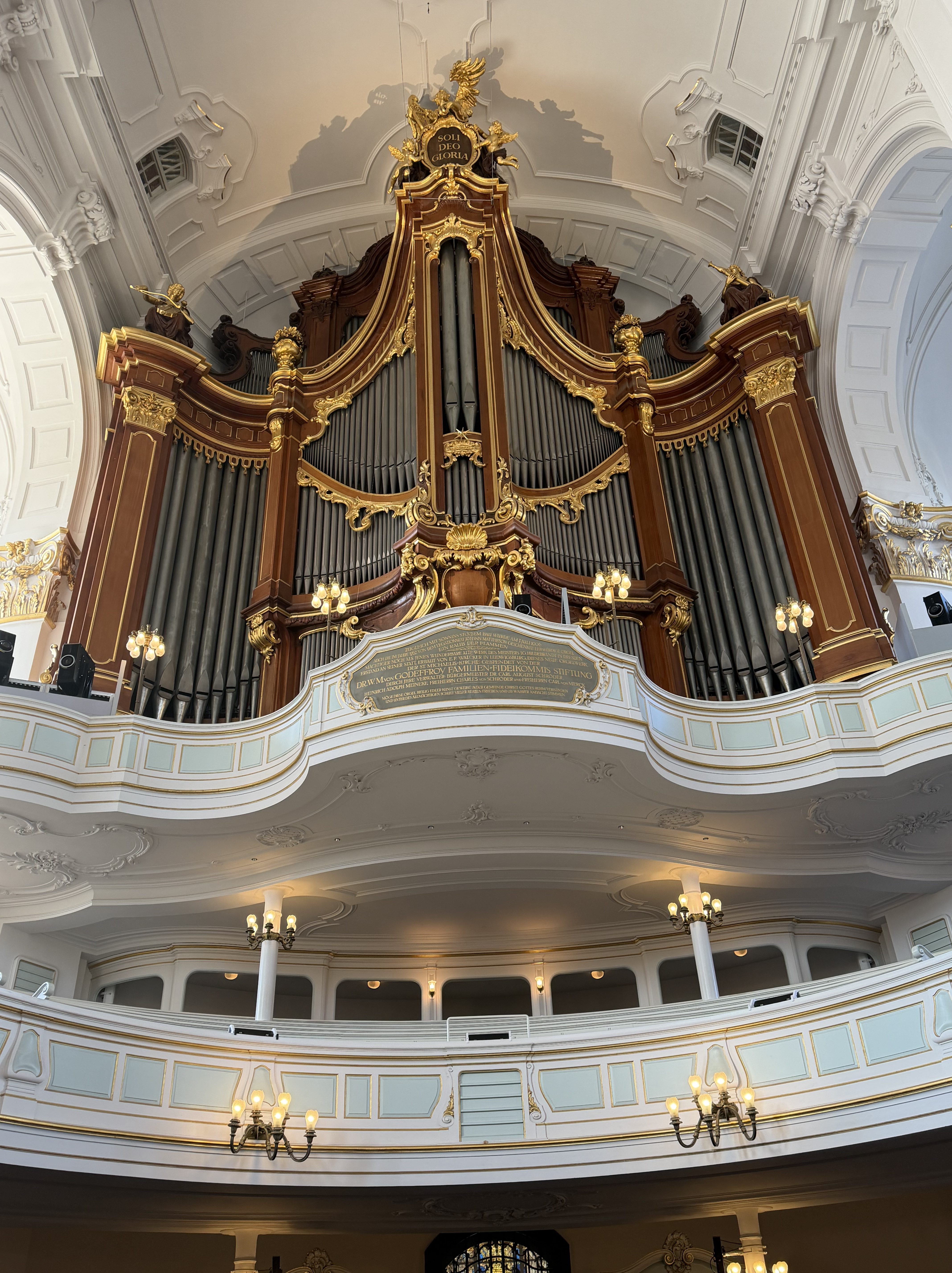
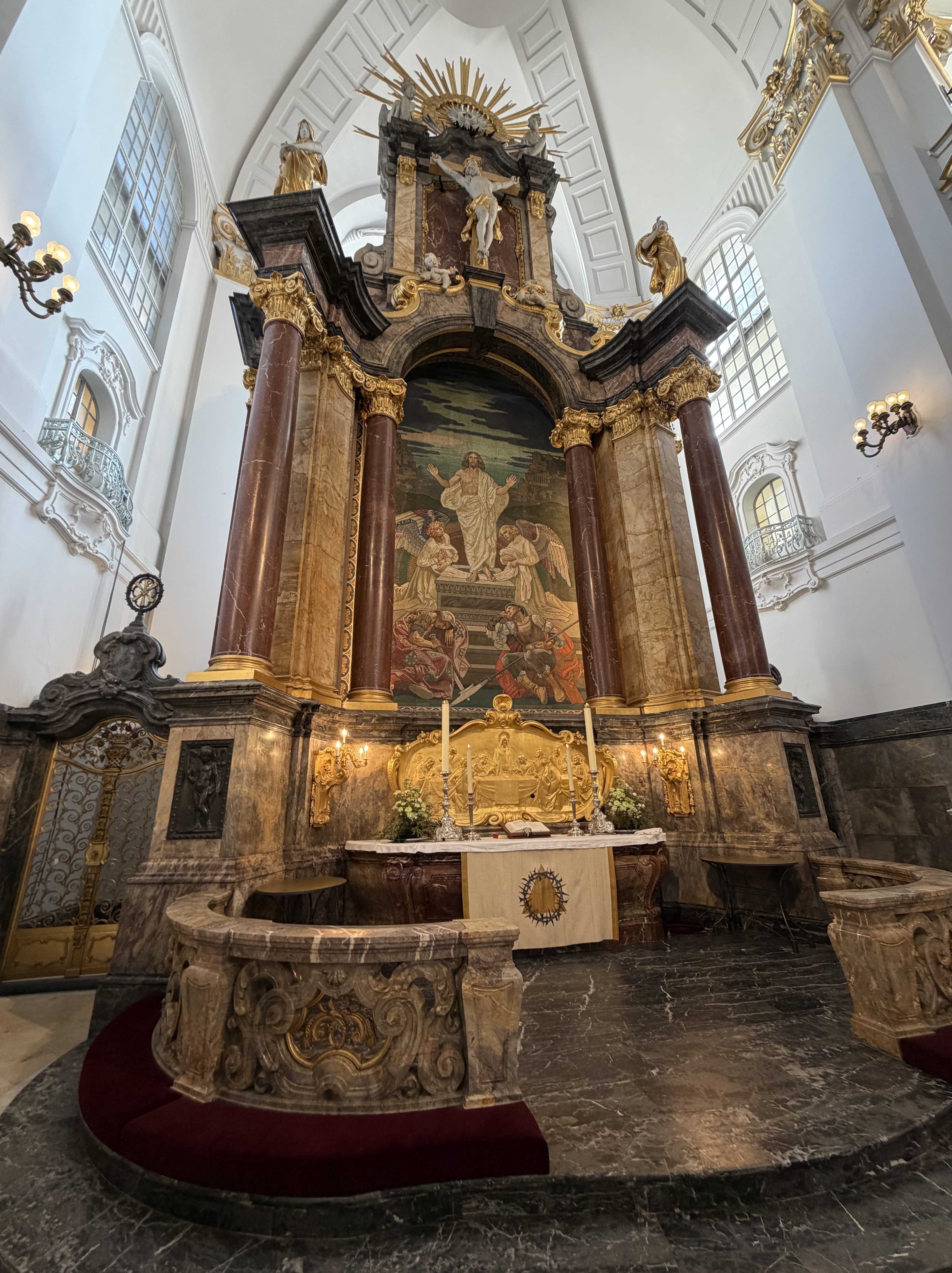
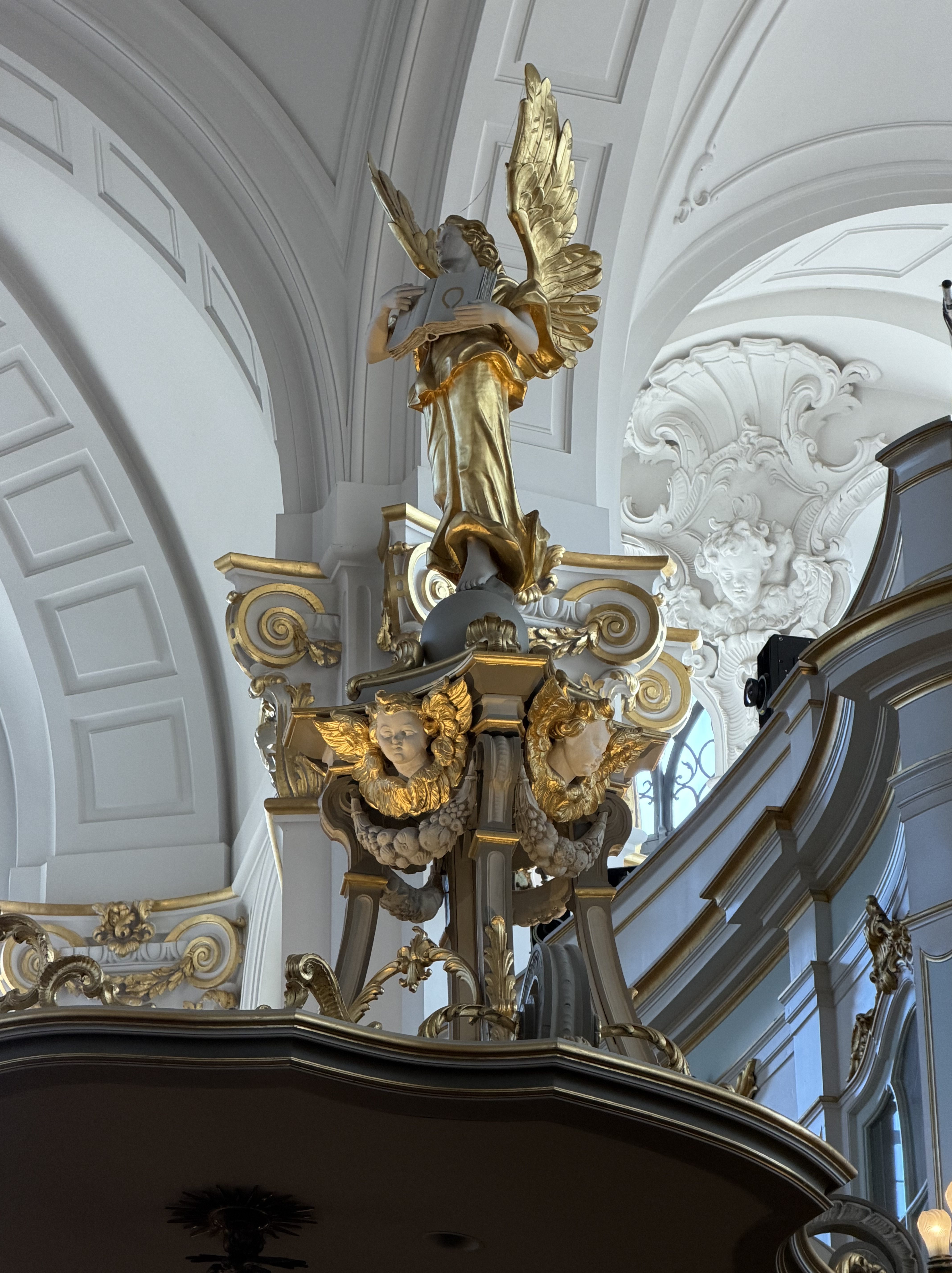
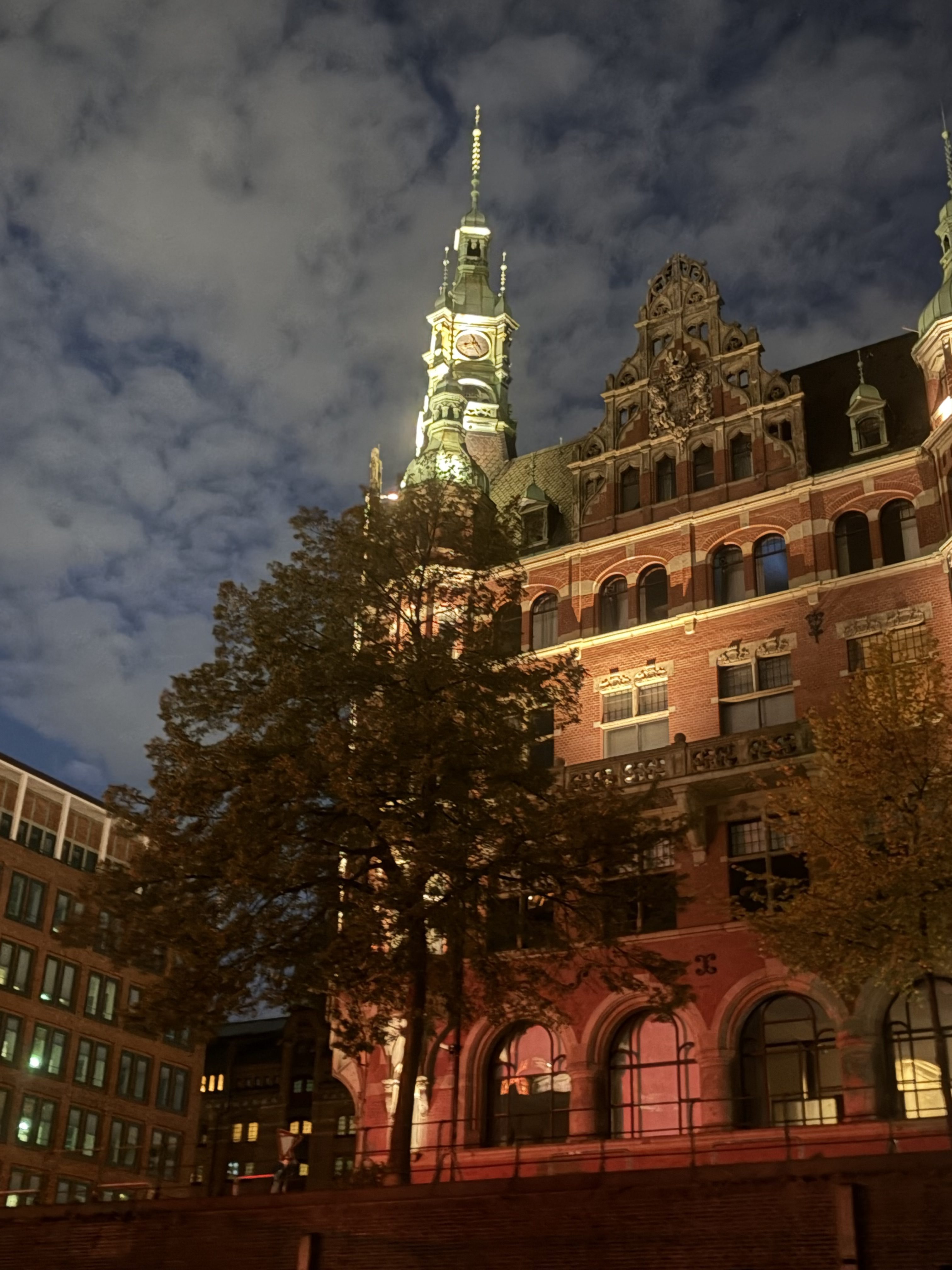
Later in the afternoon we attended a music concert of Vivaldi’s Four Seasons at the Laeiszhalle (Hamburg’s old concert hall). That event was a wow many times over! The young violinist, featured at center stage, had his whole body in motion as he played. We agreed he is indeed a rising virtuoso. Standing ovations and bravos echoed throughout his performance. In the evening we all enjoyed a harbor cruise on the port of Hamburg experiencing the charm of the historic Speicherstadt, the old red-brick warehouse district built on a wooden foundation in the canals. The Elbphilharmonie, the new glass concert hall with its top mimicking the waves of the sea towered above us. We cruised right up alongside a massive cargo ship as cranes were loading it with thousands of cargo containers. It was a long, yet memorable day.
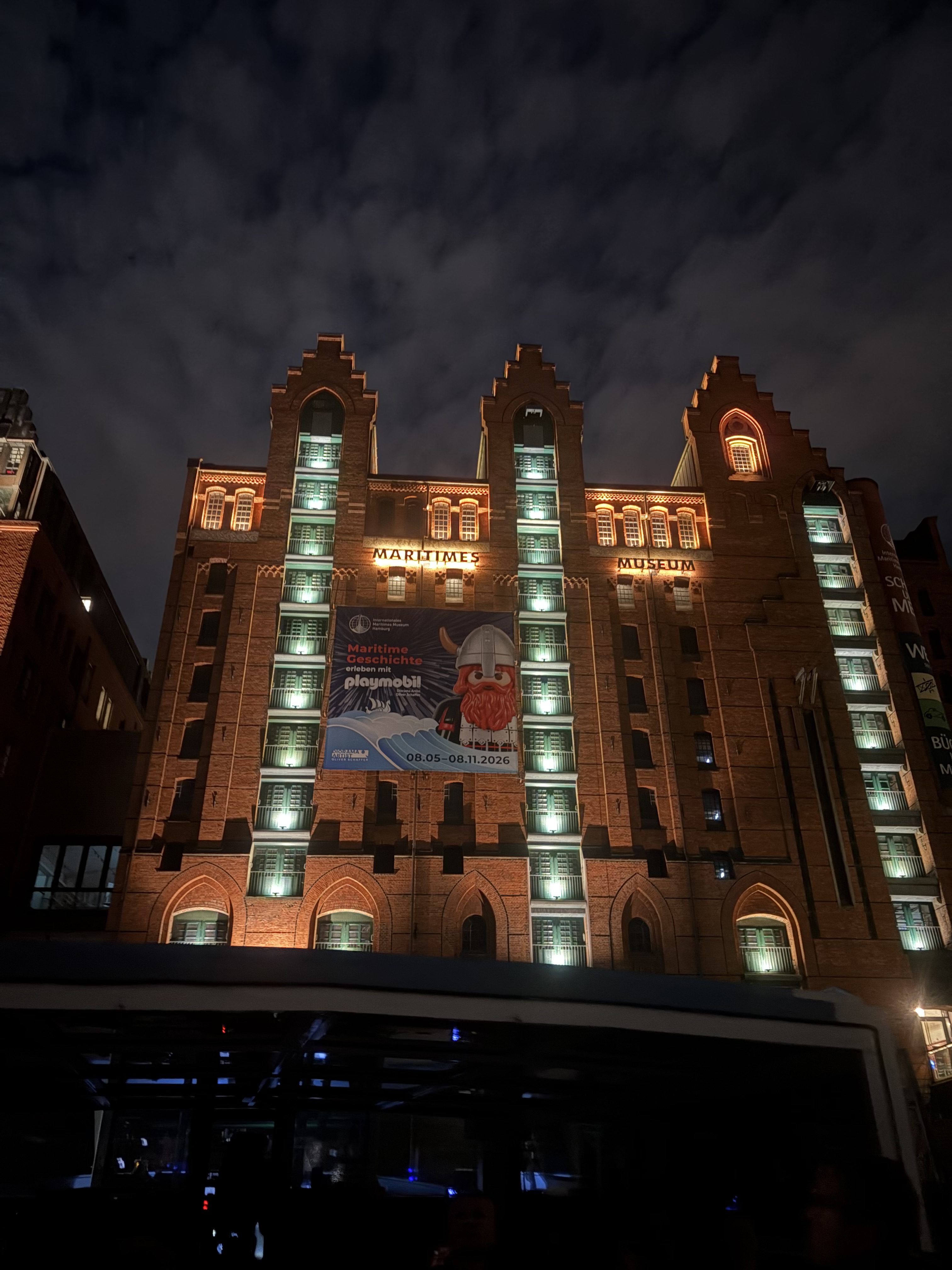
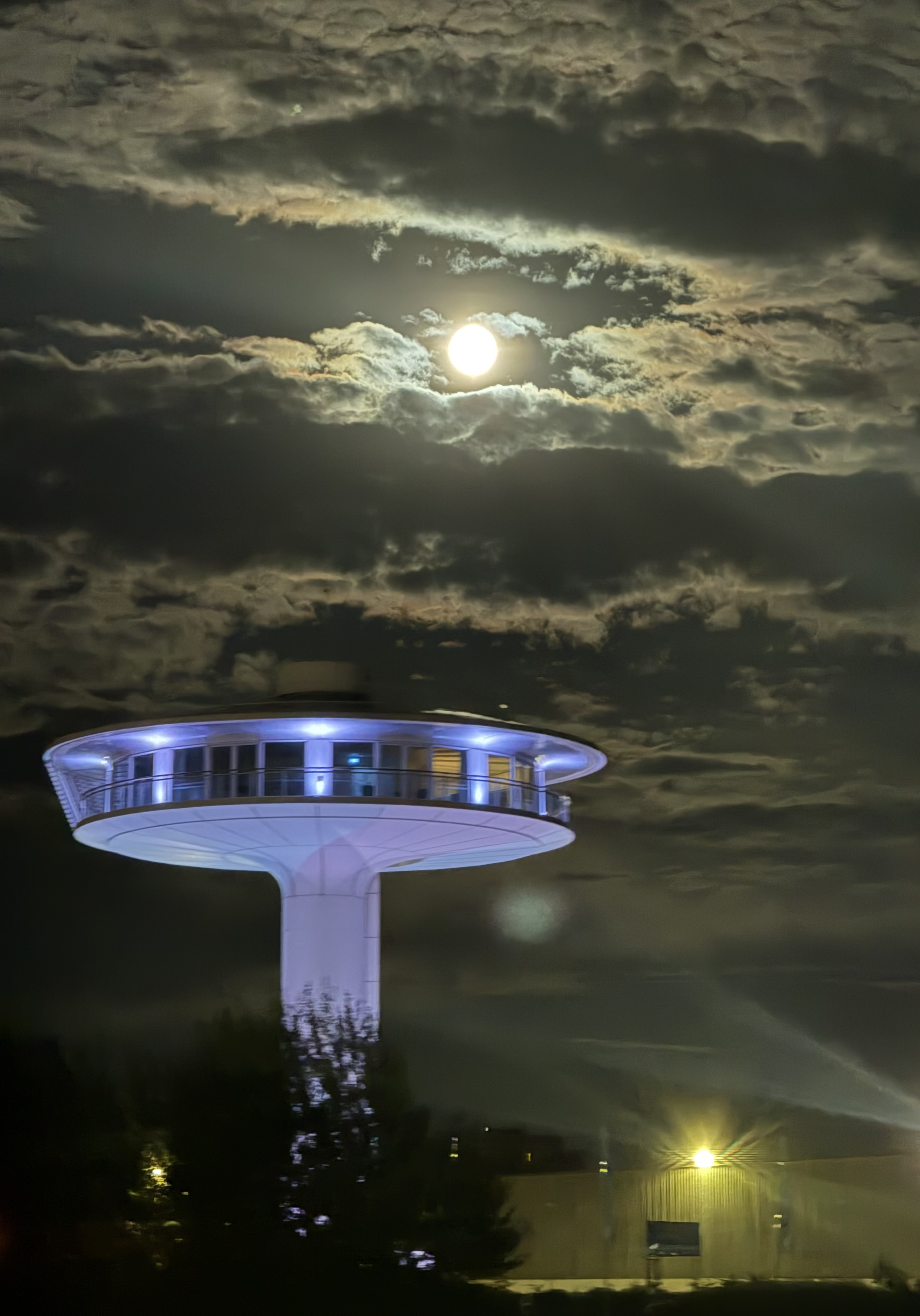
Our days in Hamburg were interspersed with day trips to Lubeck and Luneberg. Both cities well represent the red brick architecture that exemplifies North Germany. Both were important to the Hanseatic League, a coalition of free cities that banded together to trade around the world. This brought wealth to the cities.
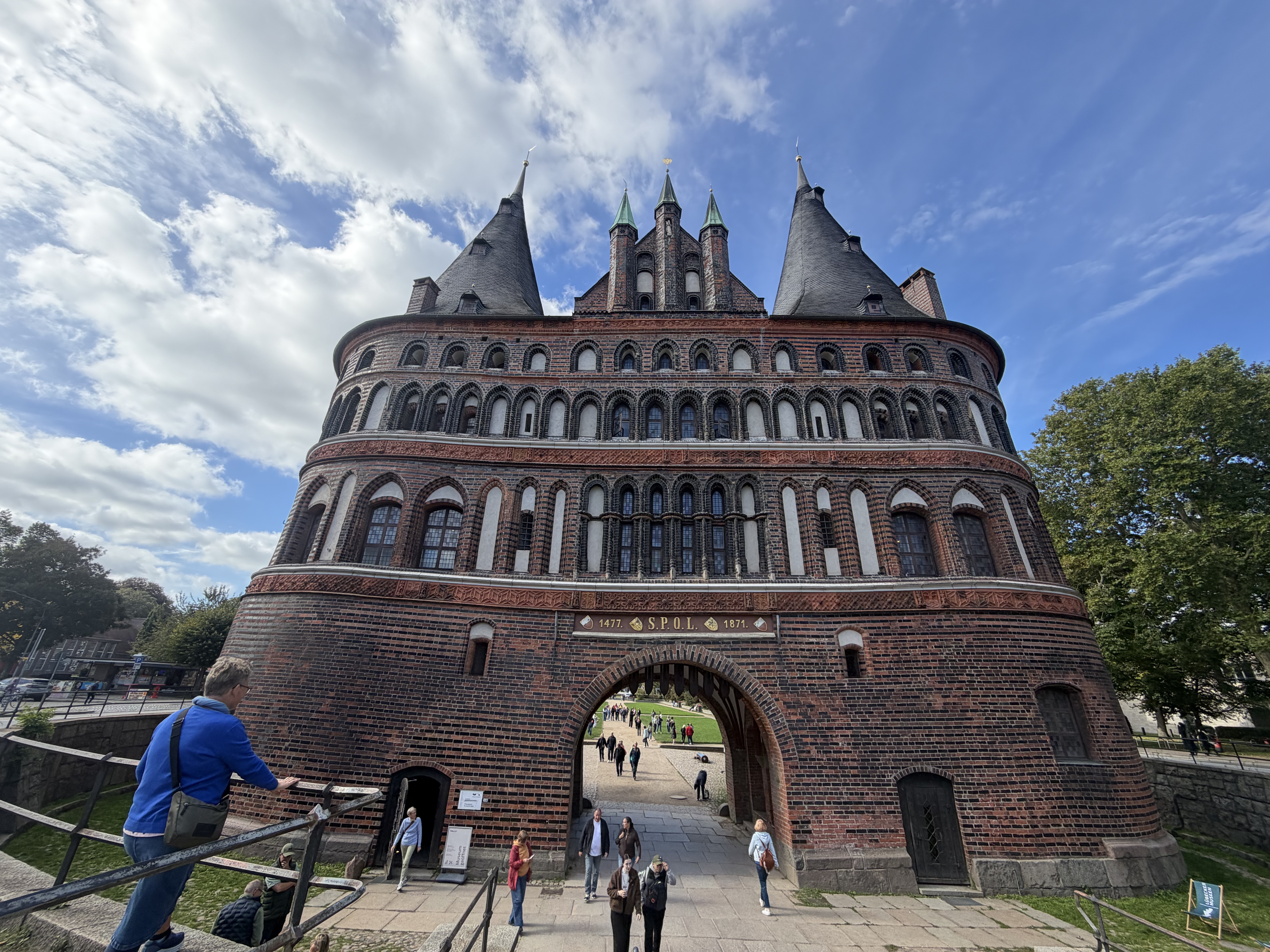
Lubeck’s Holstentor is the iconic twin-towered 1478 brick town gate and the first site we approached upon our arrival to the city by train. We walked to the Lutheran Marienkirche, the largest brick church in the world considered the “mother” of Gothic brick churches as it became a model for more than 70 churches throughout the Baltic region. Inside is an astronomical clock and the lengthy “Dance of Death” fresco depicting a stream of people of both high and low stations in life greeted by a death figure signifying death awaits us all.
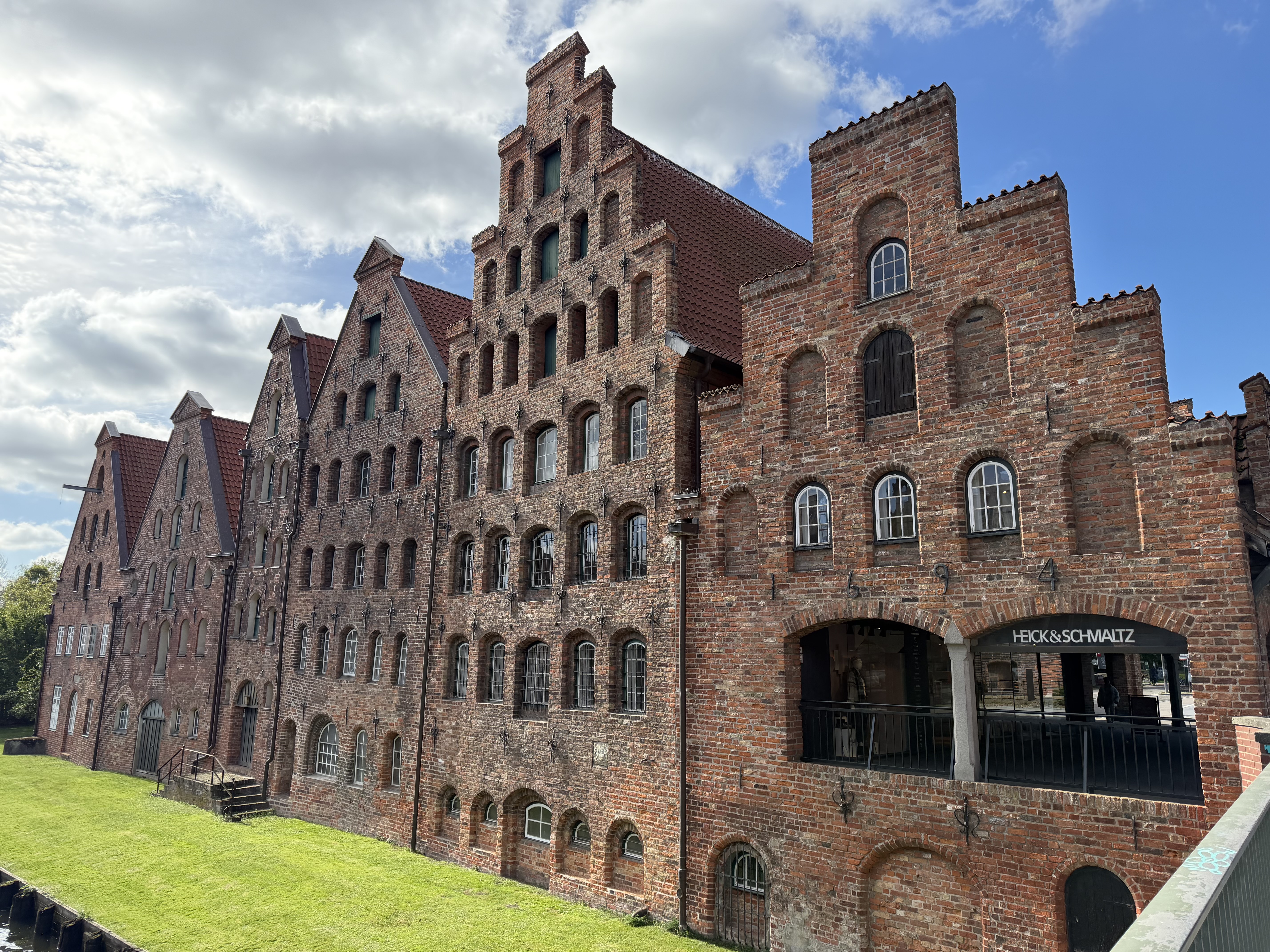
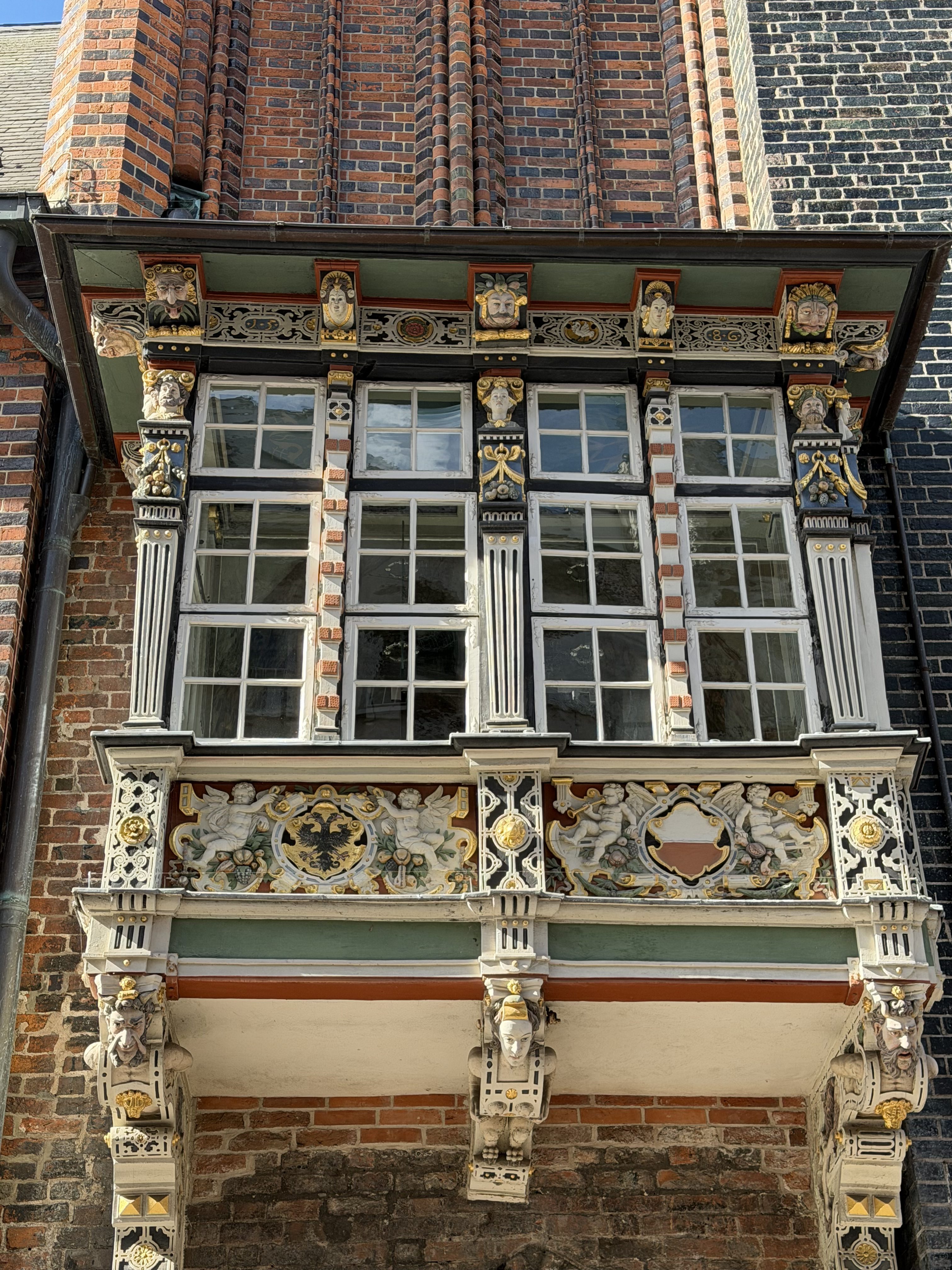
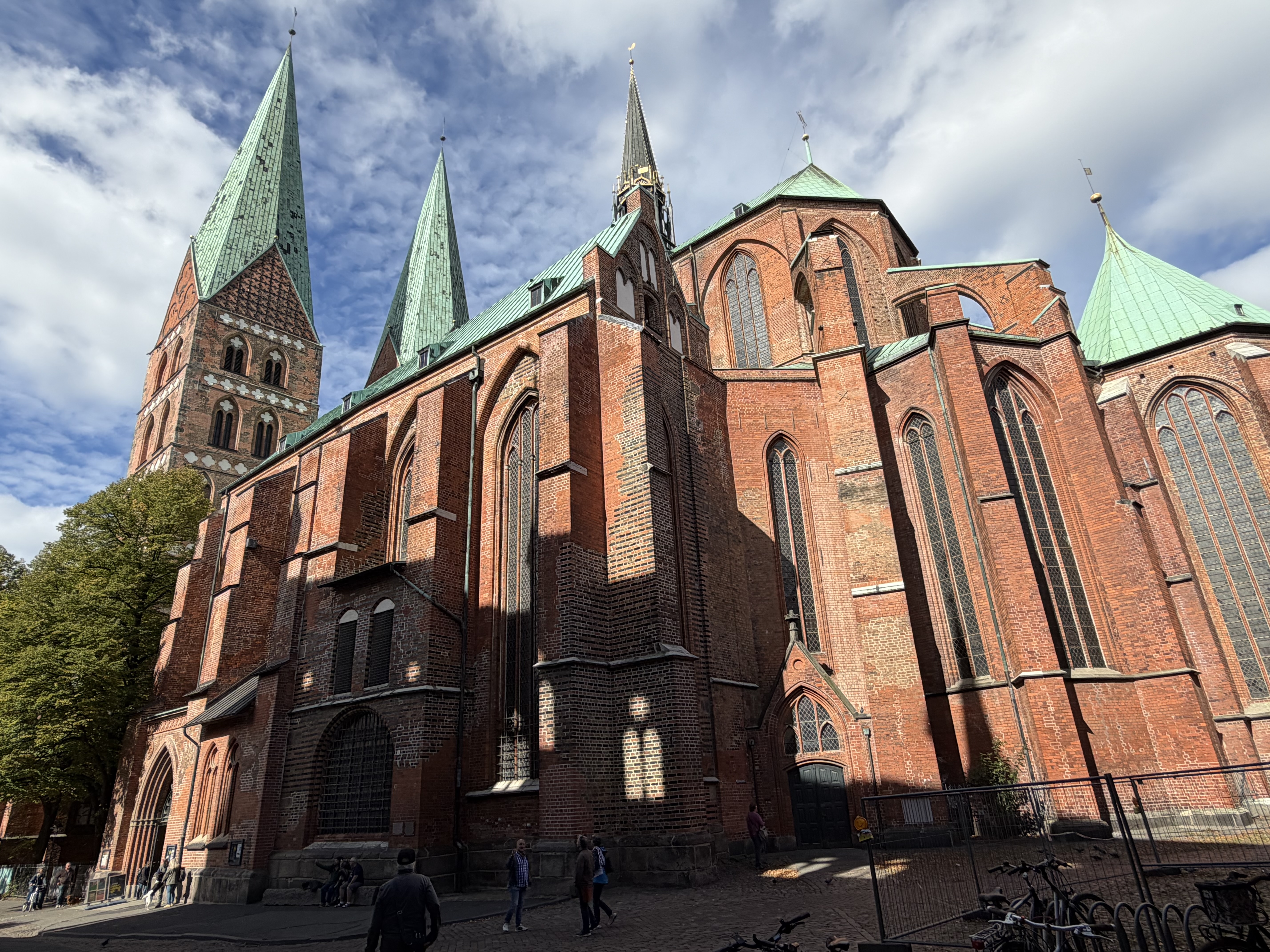
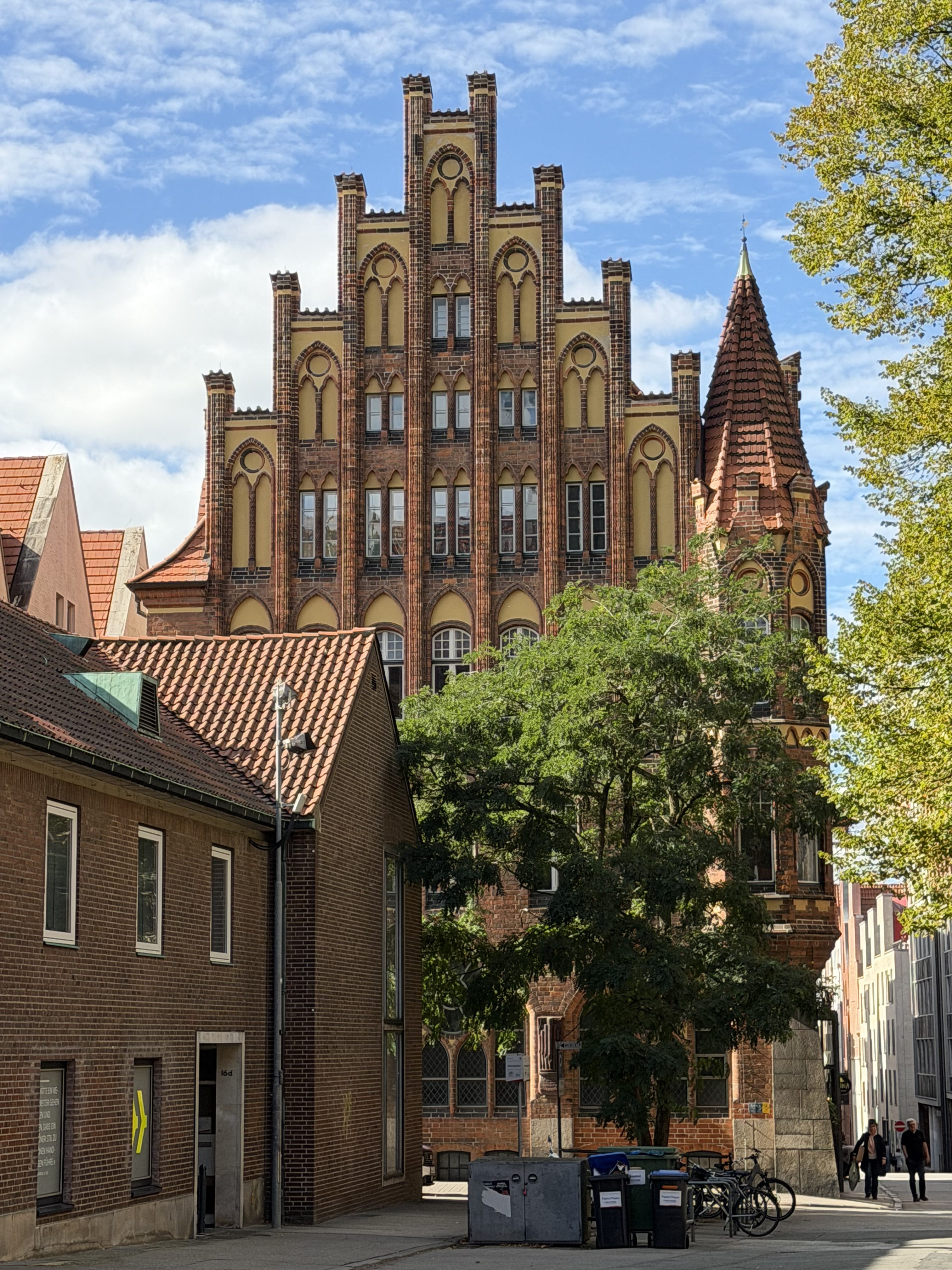
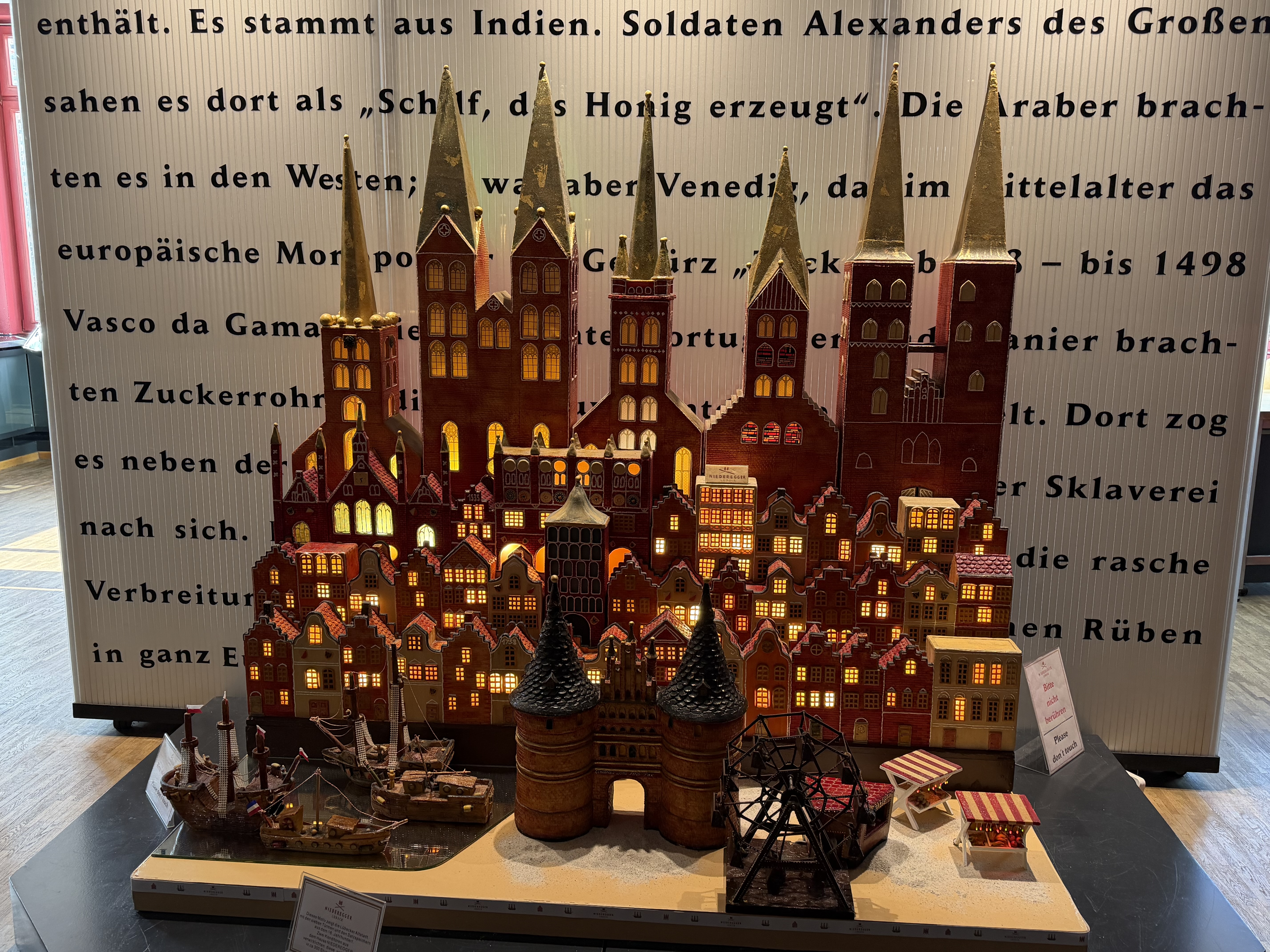
Lubeck’s many-spired Rathaus (town hall) is in one of Germany’s finest Gothic civic centers. We could not miss Niedereggers, the famous marzipan shop, and its museum telling the story of the renowned almond paste.
Luneberg was a delight! We arrived on market day as a children’s festival was being celebrated. Girls dressed in ceremonial garb meandered through the crowds, and a band paraded as we strolled the streets admiring the beautiful brick architecture and the abundant garden products available for purchase.
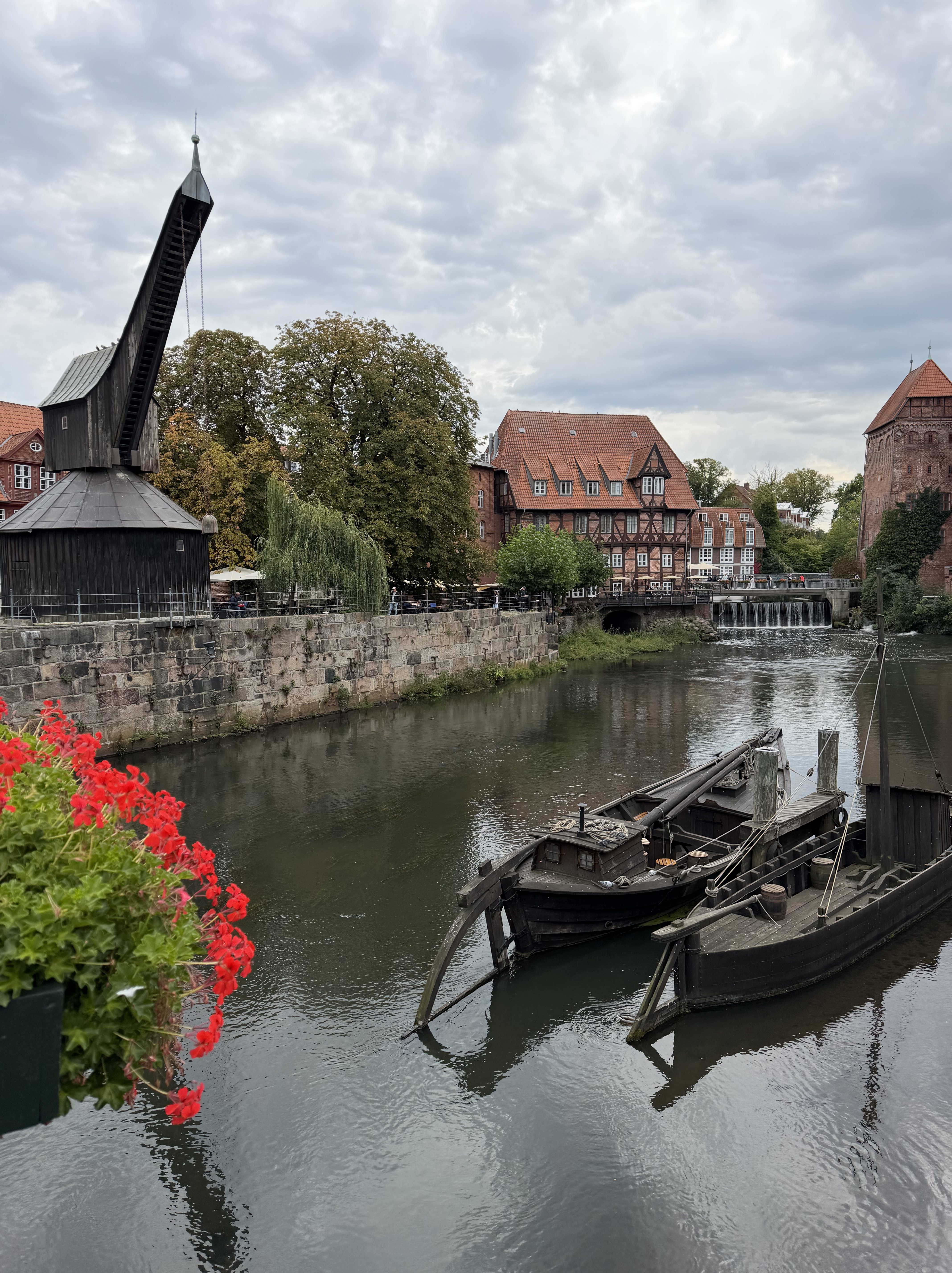
The St. Johannis Lutheran Church dominated the entrance to the city square. The Wasserviertel –the old water canal district with crooked half-timbered buildings and its Alter Kran (Old Crane) –captivated our attention. This wooden tread wheel crane standing over sixty feet high is the only one remaining in the world. It loaded salt onto boats and made Luneberg rich.
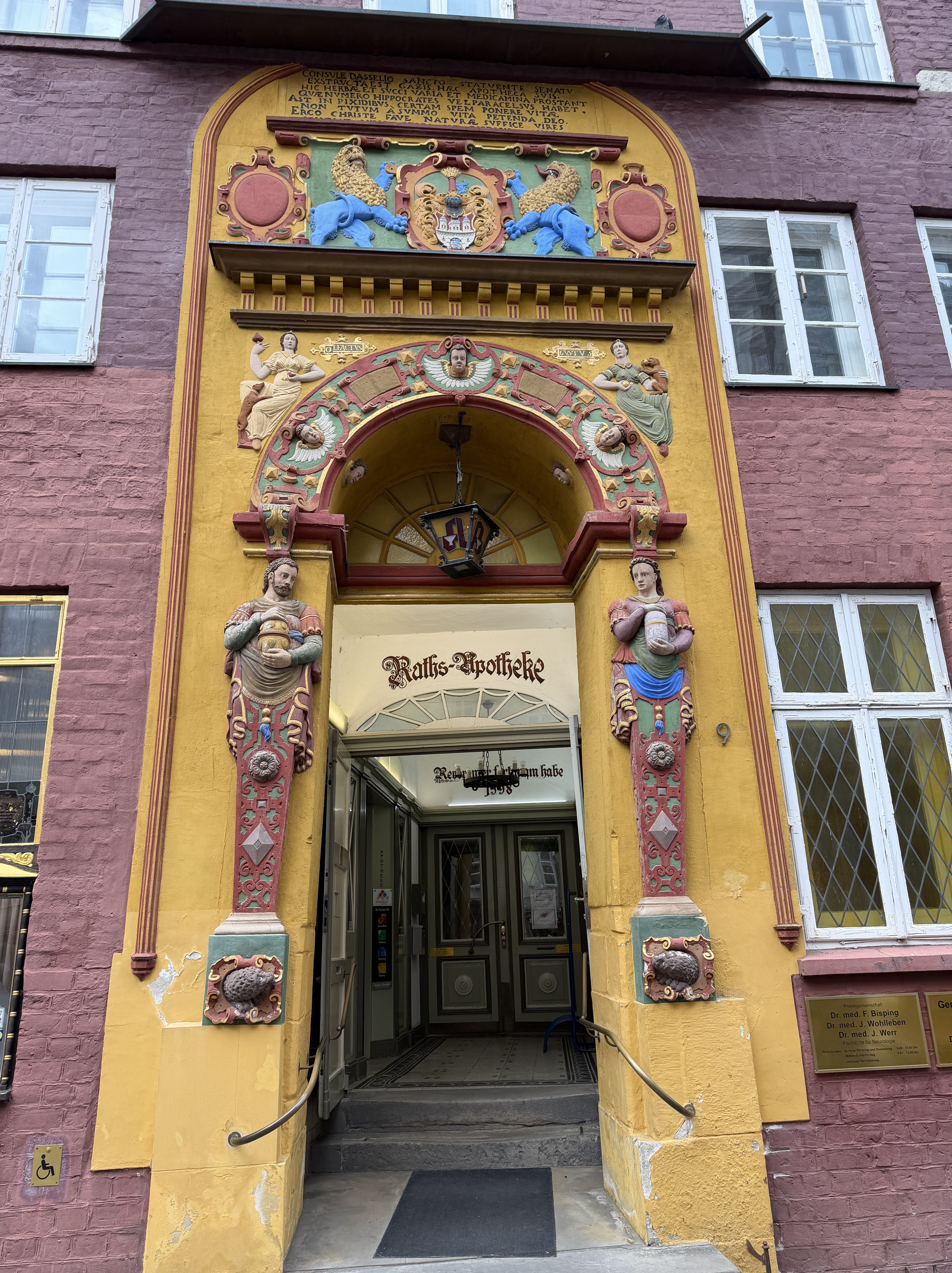
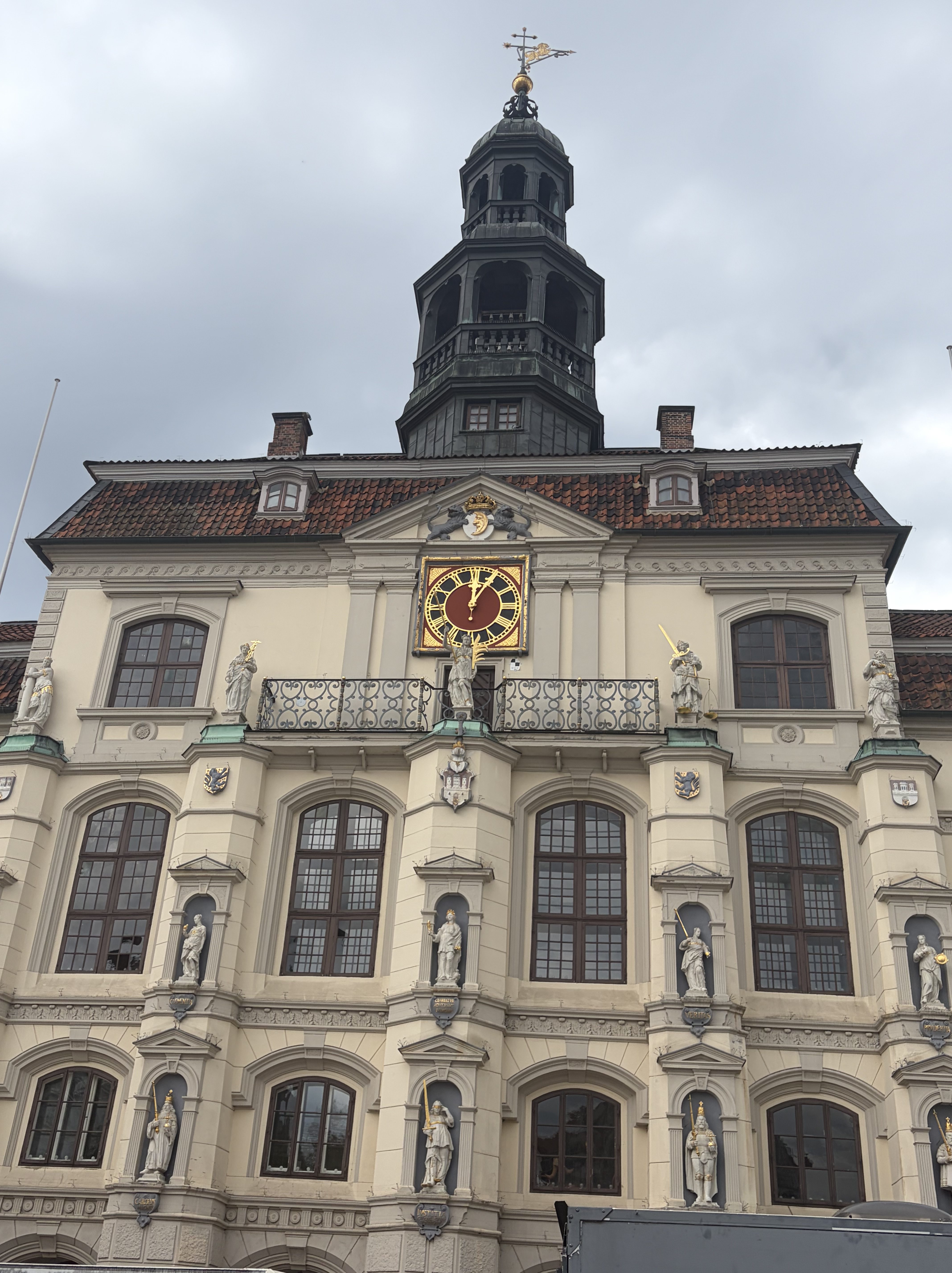
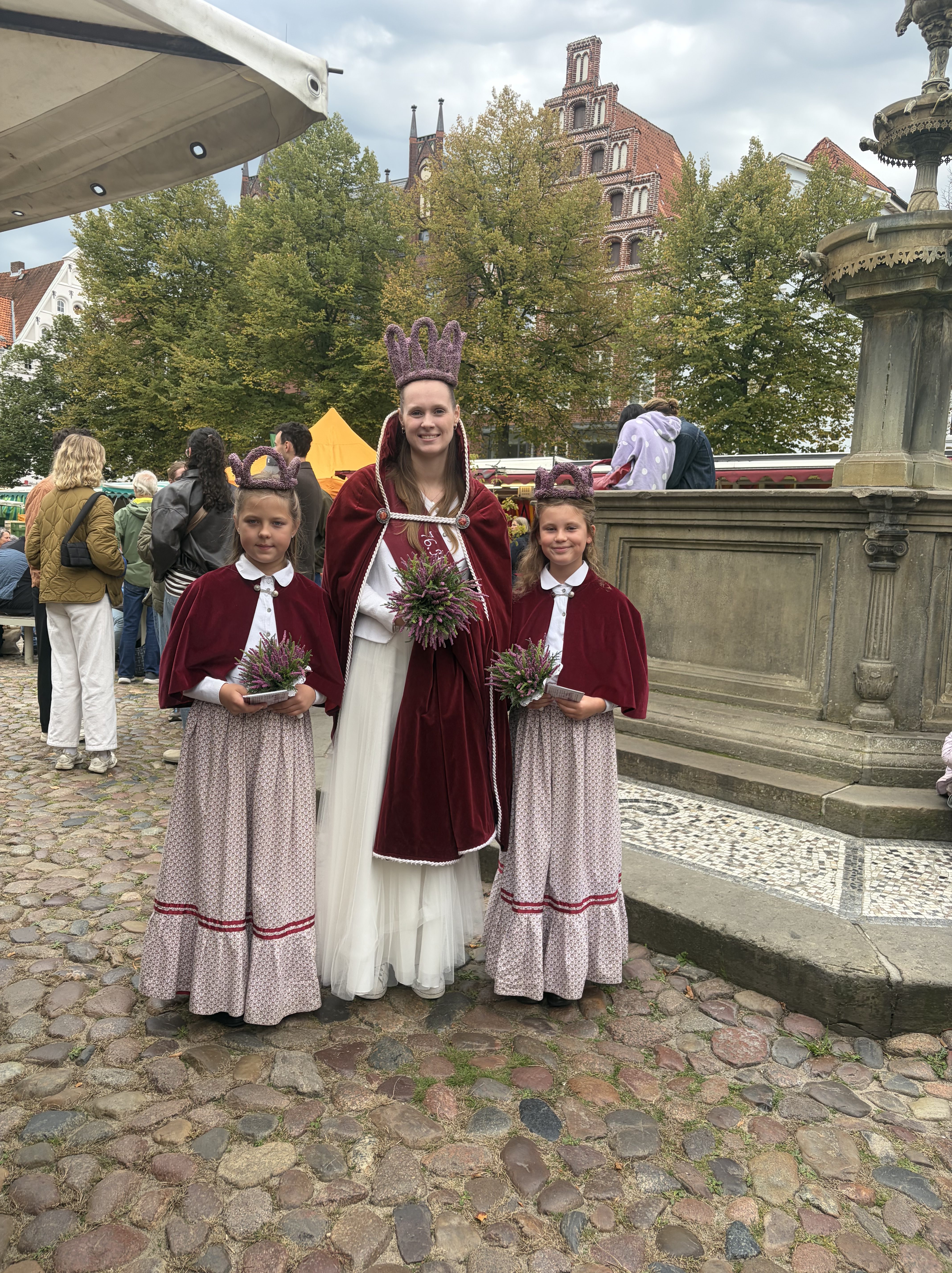
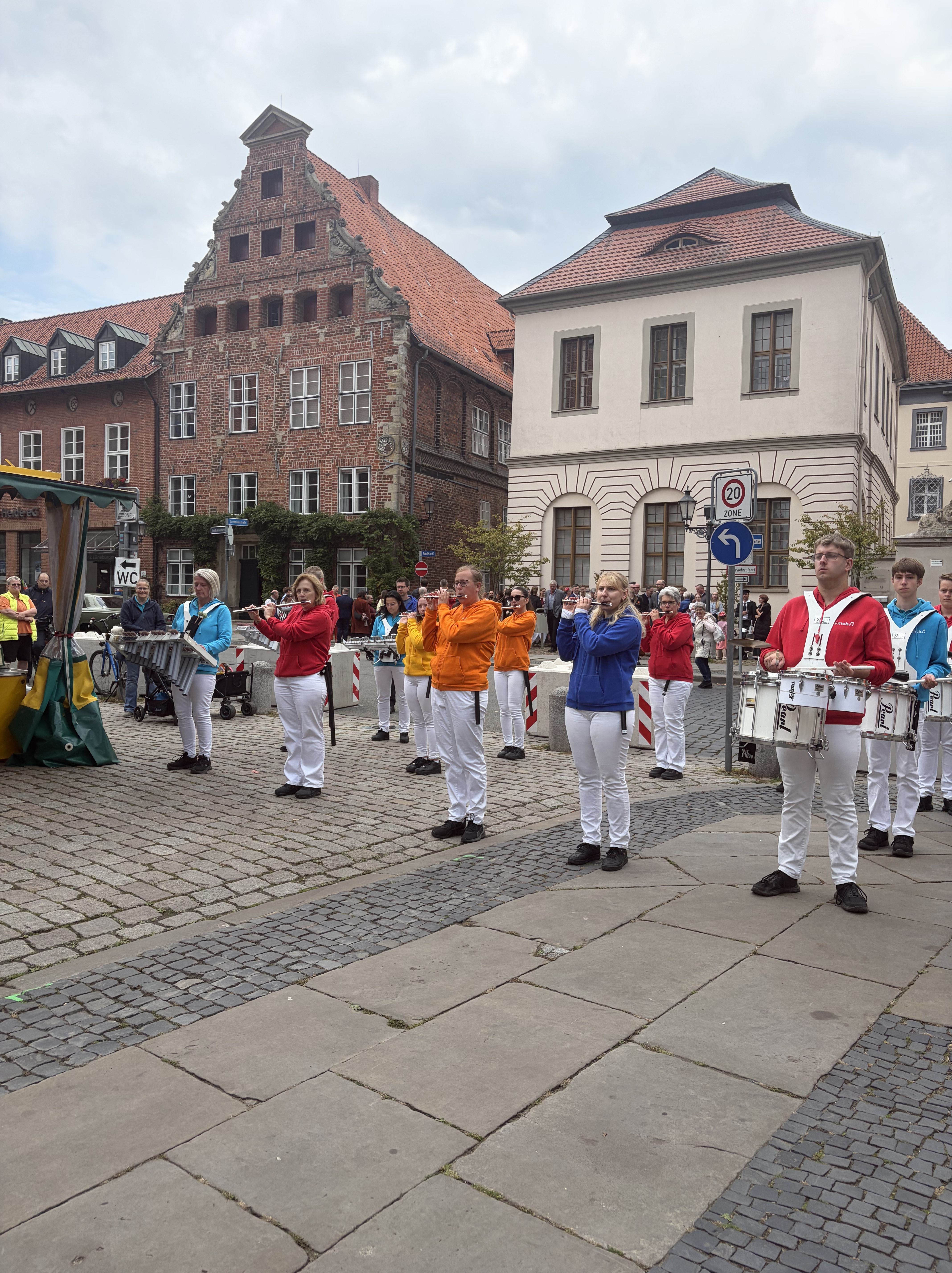
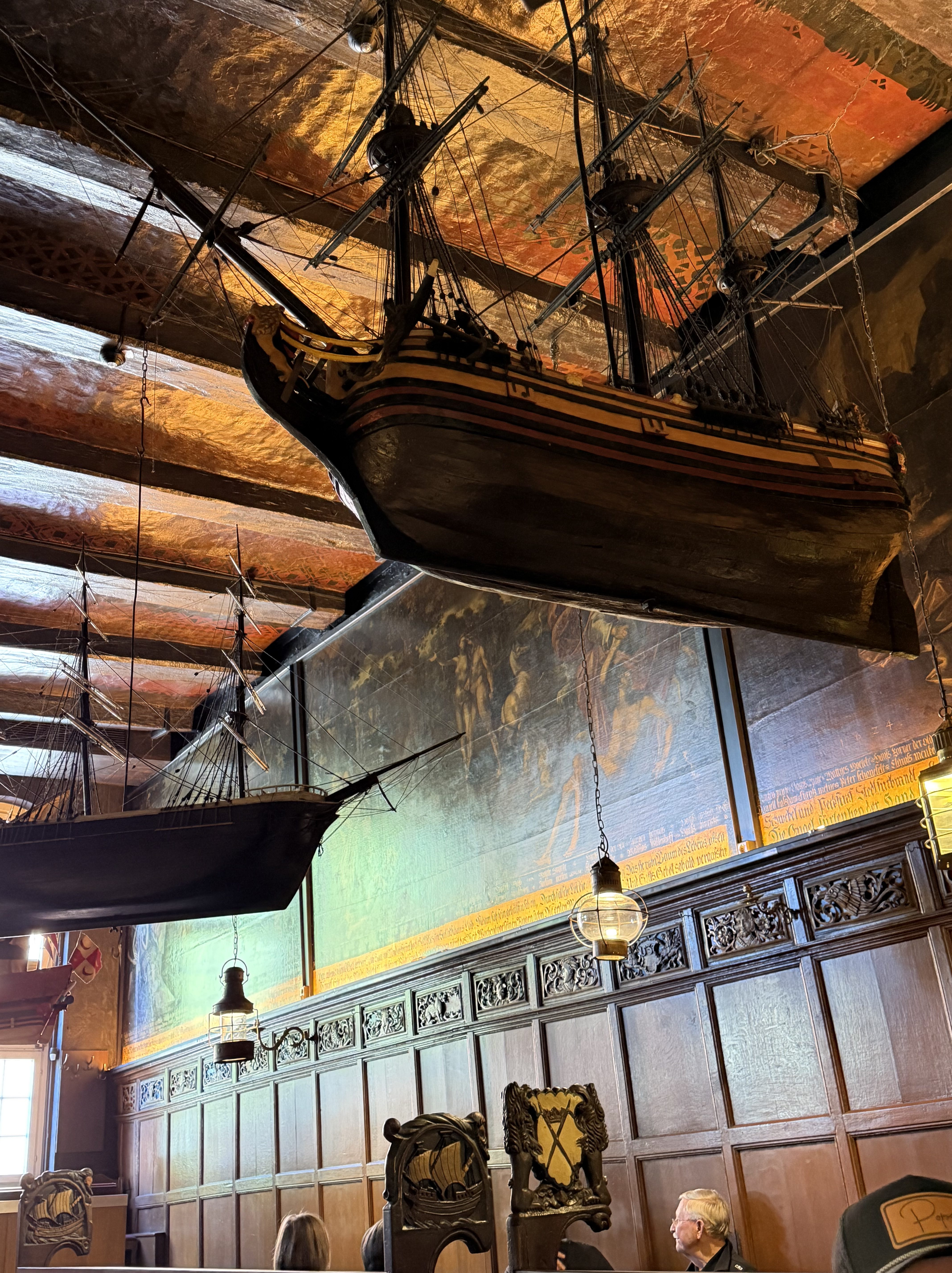
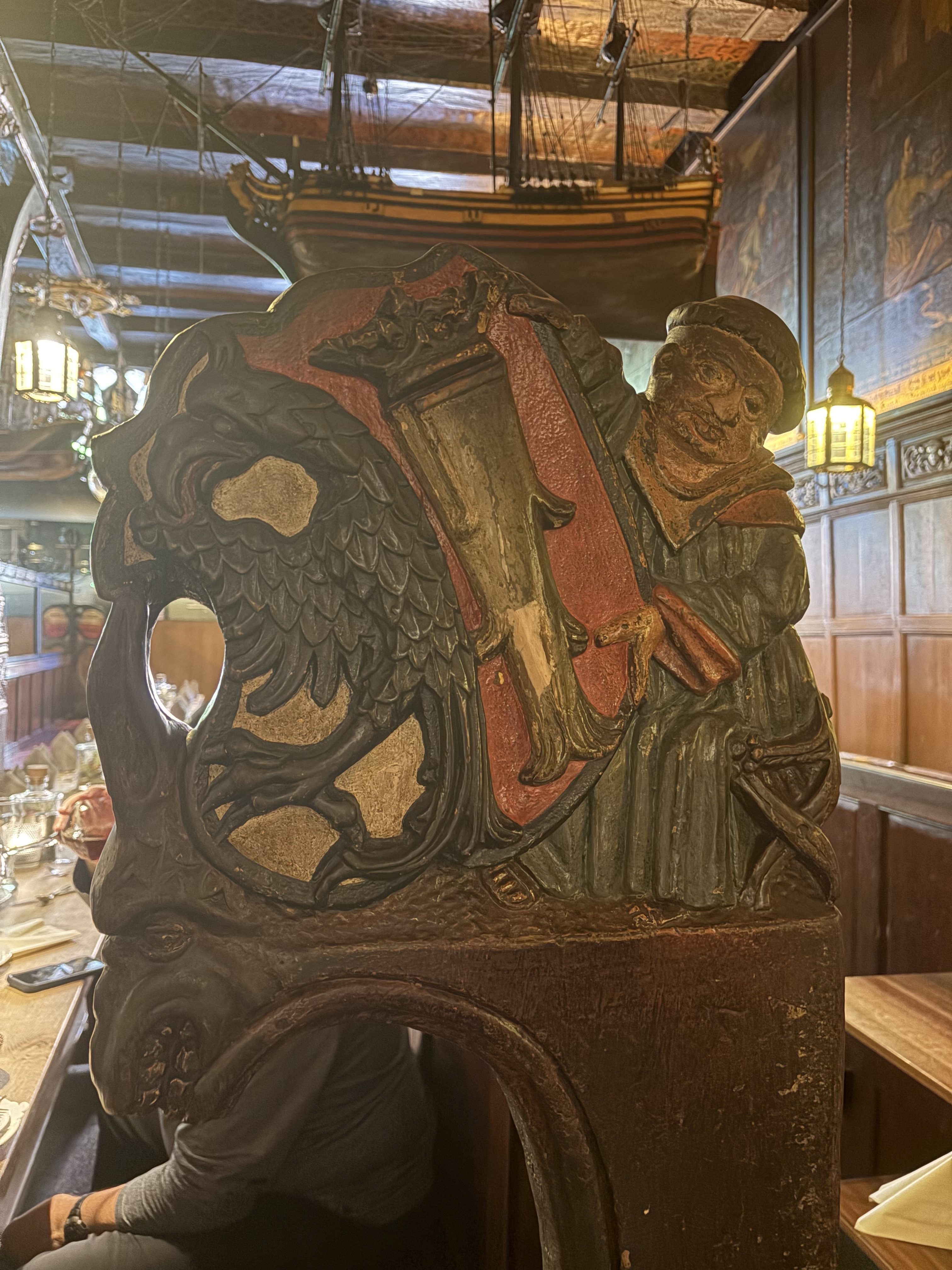
Did we eat! One memorable meal was at the Schiffergessellschaft, Lubeck’s historic restaurant that is now government-protected. Its rich interior is adorned with wood carvings and stained glass with wooden ships hanging from the intricately painted ceilings.
Lubeck, Germany
Our visit in Hamburg, Lubeck, and Luneberg was beautiful, busy, and filled with Baroque grandeur.
A CASTLE TO REMEMBER
September 20–24, 2026
Germany has thousands of castles. A small few stand out as the “cream of the crop,” and Schwerin Castle is easily one of them! Schwerin is in eastern Germany, in the northern part of the state of Mecklenburg-Western Pomerania, located not far from the Baltic Sea. Filled with Renaissance-style architecture, the small city is clean and stately—a proper German city.
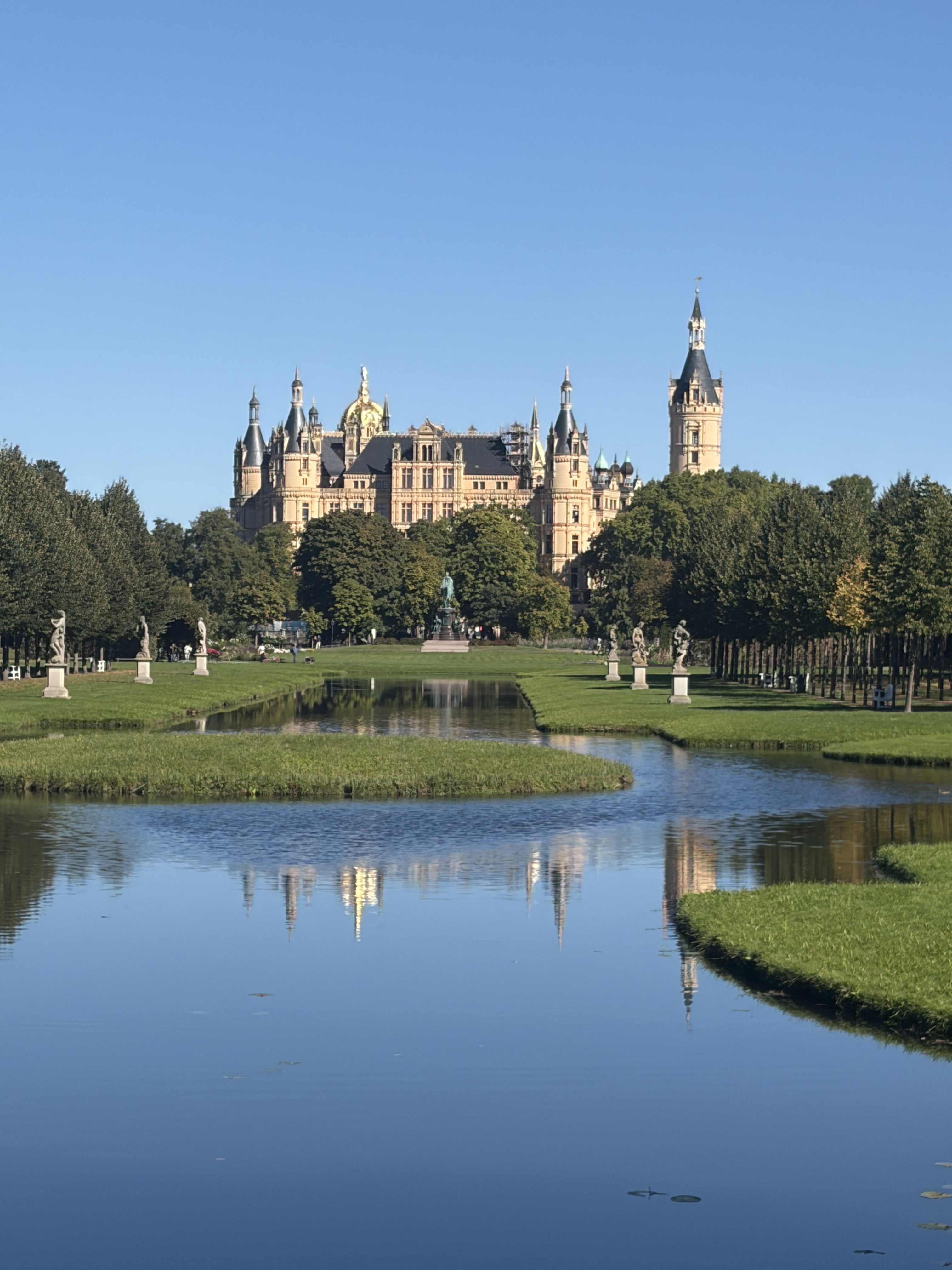
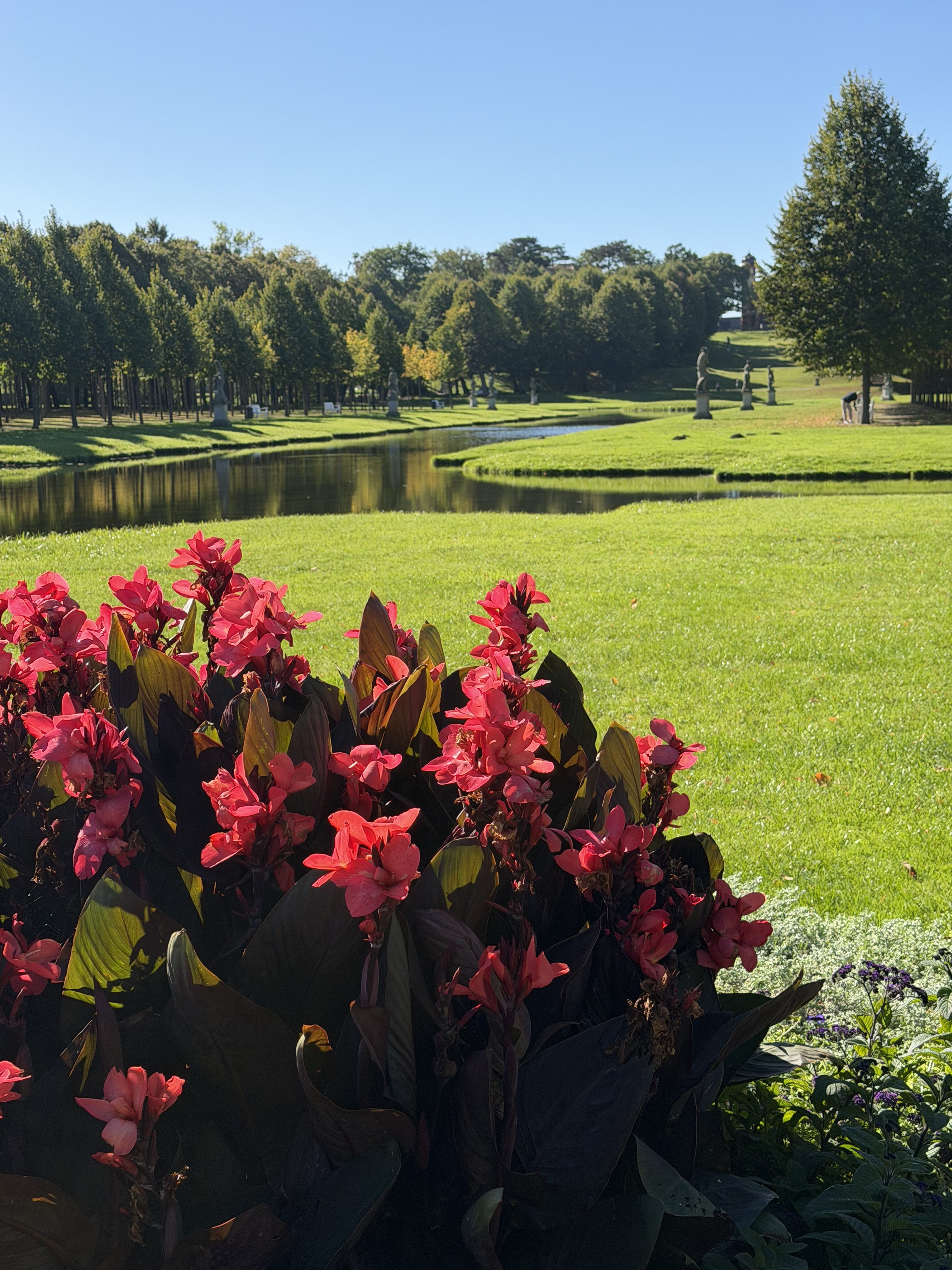
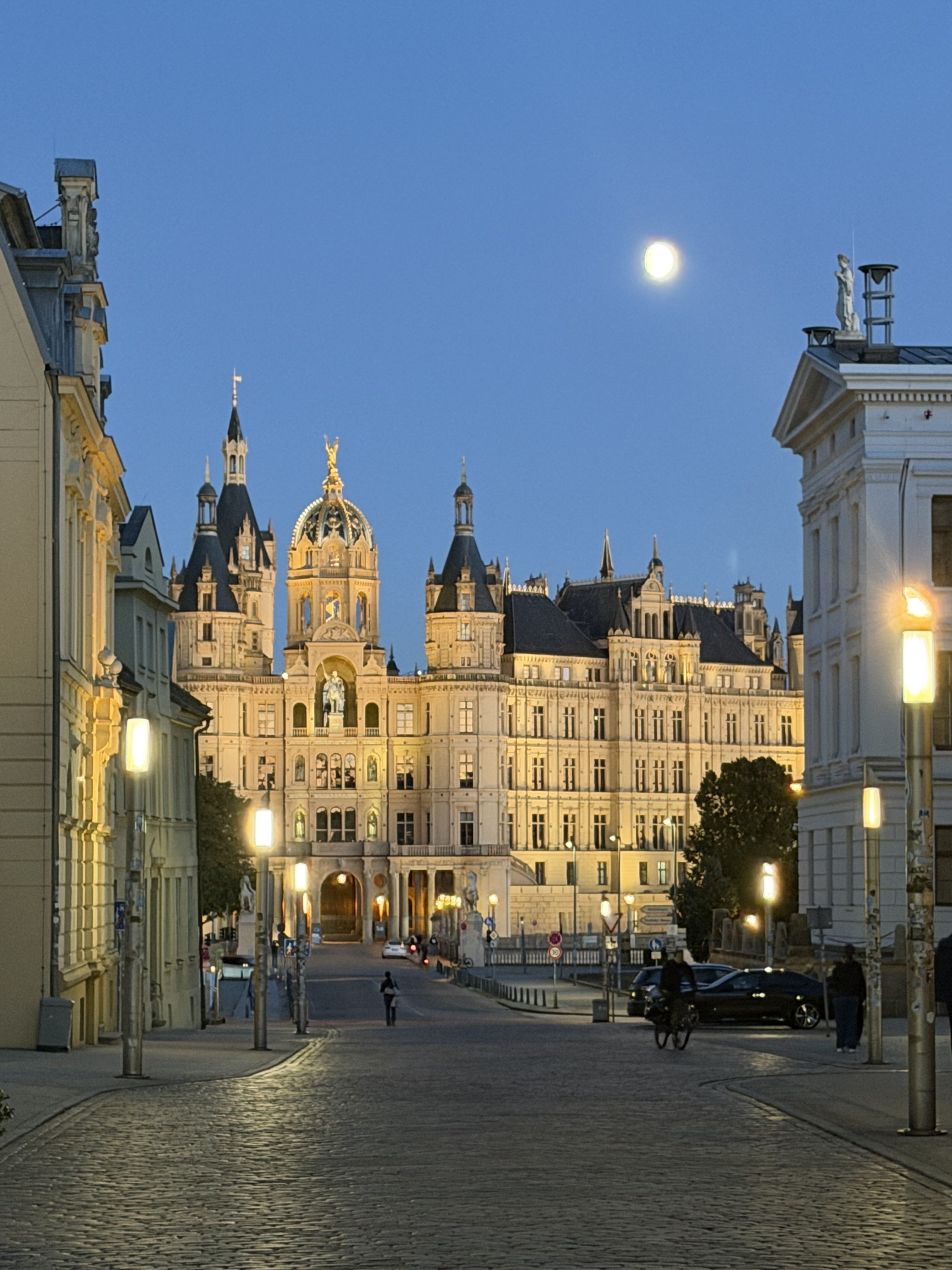
Schwerin Castle is both fairy-tale-like and elegant, with tall, pointy turrets and a marvelous black-and-gold dome atop a tall tower in the center. During the day, the dome shines, and at night, it gleams in the lights. The castle sits on an island in a large inland lake surrounded by beautiful gardens. Flower displays, statuary, meticulously straight rows of trees, and water features are interspersed with rolling lawns and vine-covered arched walkways.
Only a few of the elegant interiors remain in the castle, as most were destroyed by bombing during World War II. One marvelous element that escaped the bombing was the Lutheran Chapel, the first purpose-built Protestant structure after the Reformation. The castle was totally restored; however, most of the building is now used for the state legislature and government offices.
Randy, Melissa, Tom, Nancy, Kathy, and I took a boat cruise around the lake. We enjoyed the fresh, slightly cool air and saw thatched-roof buildings, vacation cottages, elegant houses, and, of course, the majestic castle.
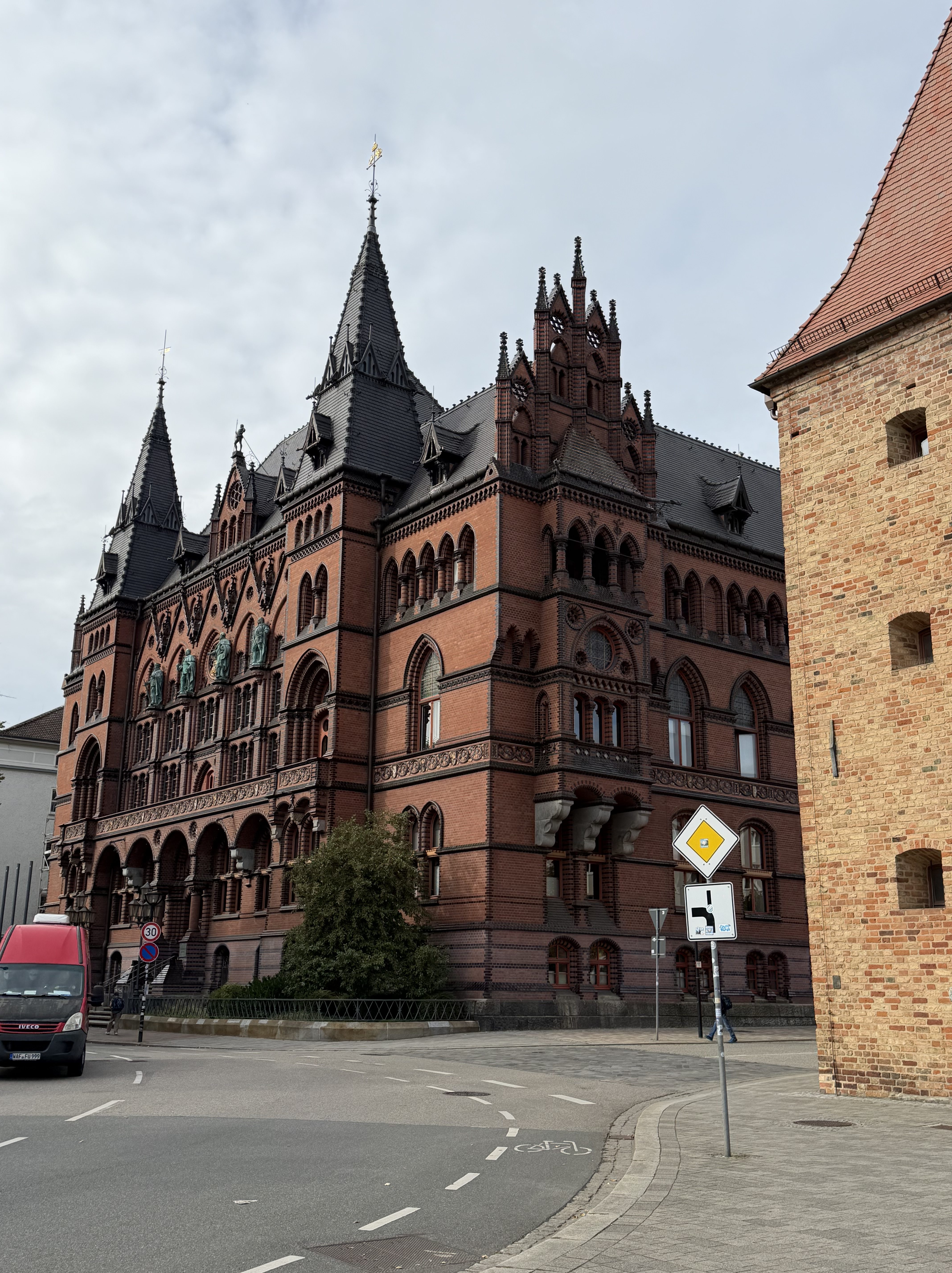
Our day trips took us to Wismar and Rostock. Both are on the Baltic Sea, and both had prosperous pasts. The buildings have both a Scandinavian and Dutch vibe. Cobblestone streets meander through market squares and alongside huge red-brick Lutheran churches. We marveled at the very high ceilings, decoratively painted.
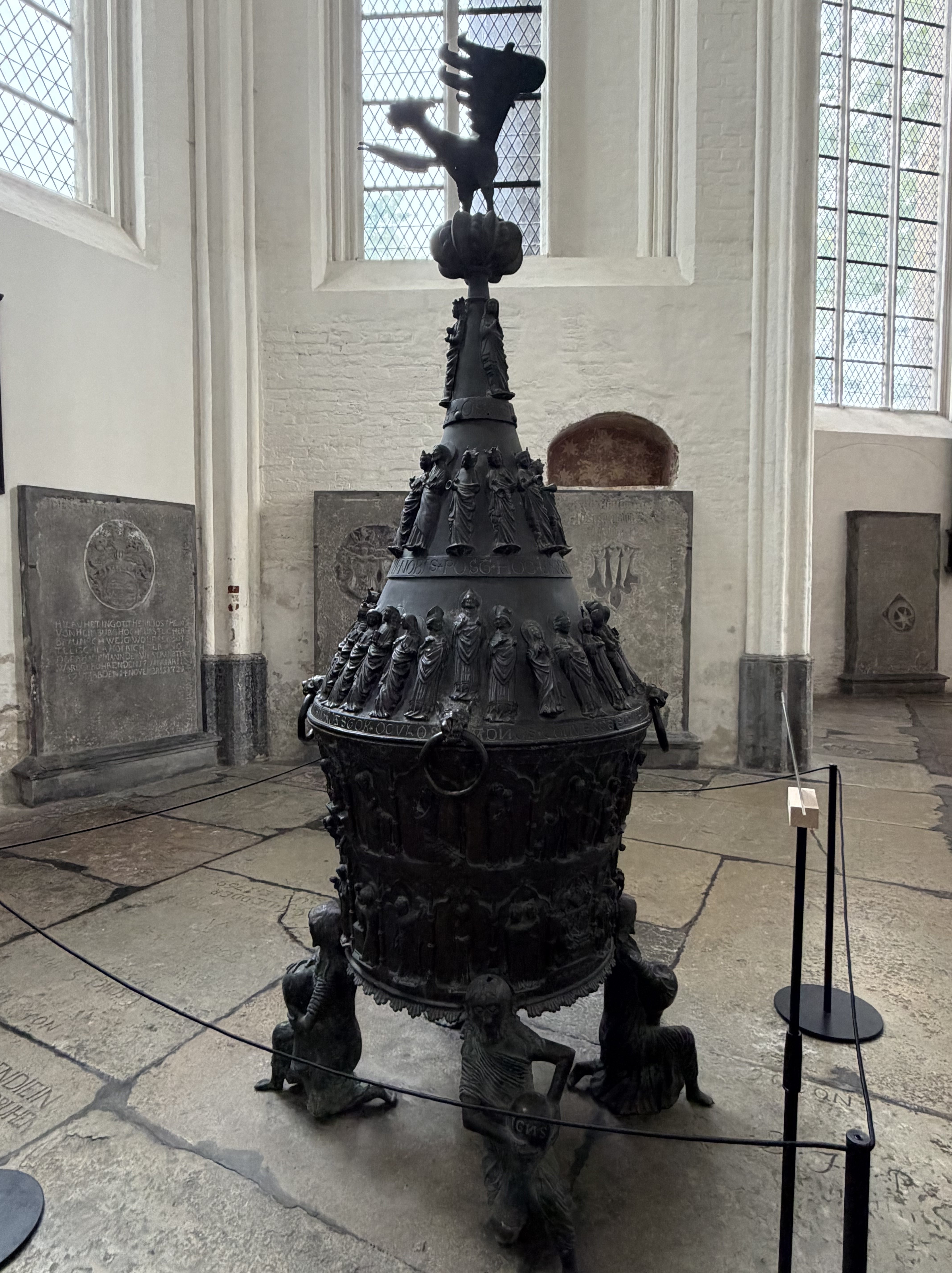
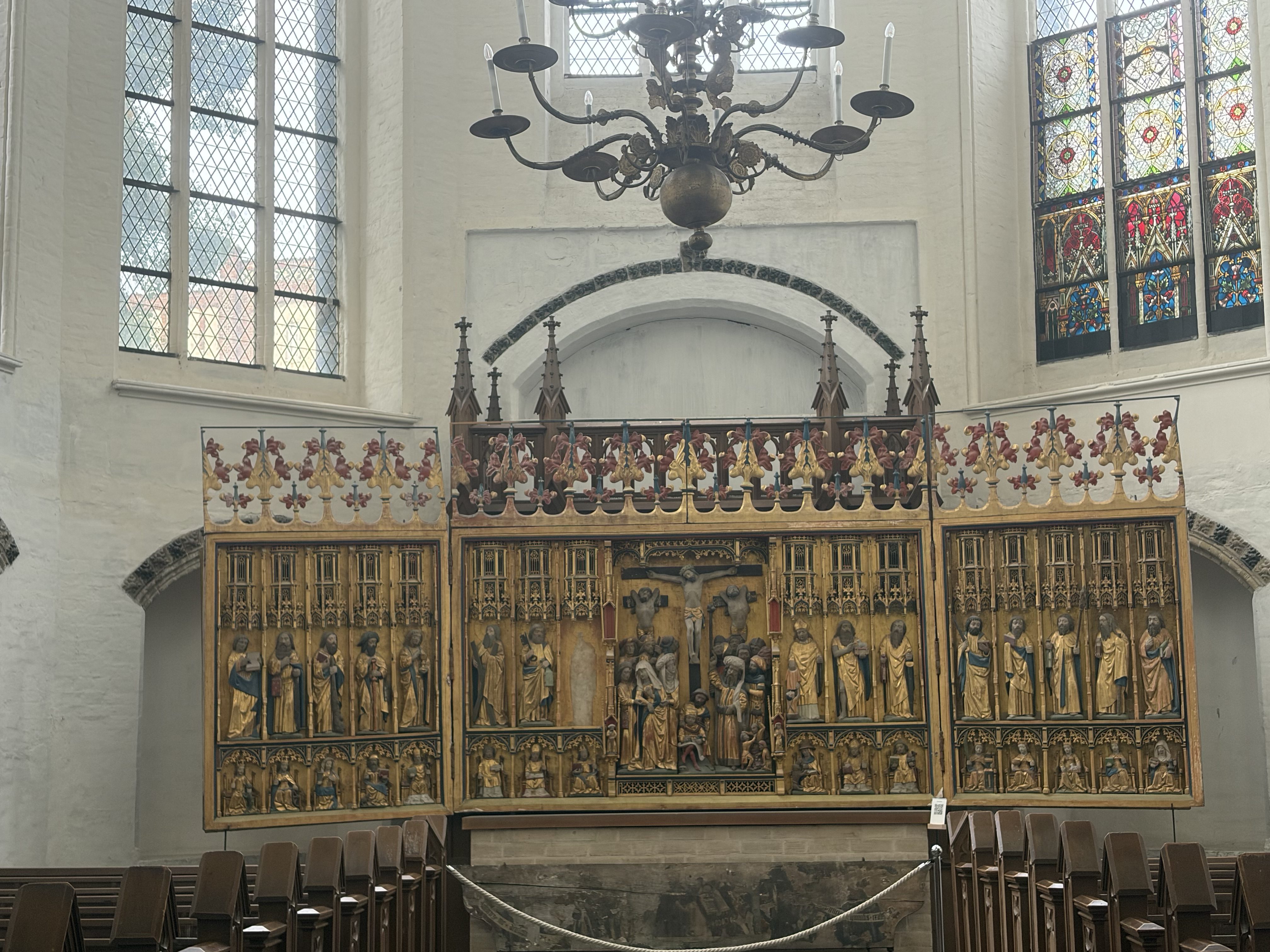
Of the three main Lutheran churches in Wismar, only St. Nikolai was not destroyed during World War II. It is a beautiful red-brick Gothic structure whose height pulls one’s eyes upward. The Baroque altar contains a Rubens painting of Christ’s descent from the cross. The imposing bronze baptismal font is also striking.
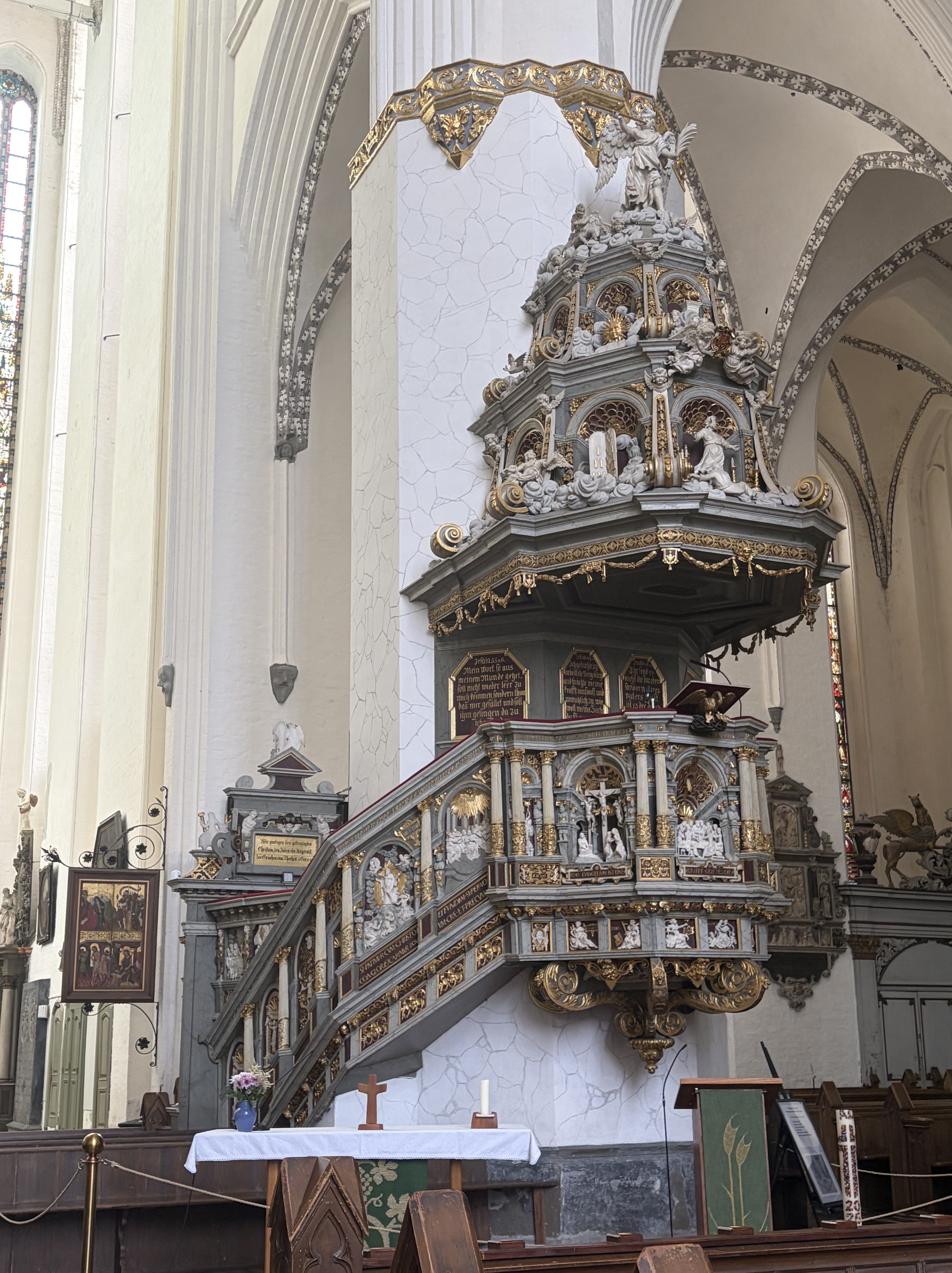
The other two large churches are ruins—one with a massive tower still standing and the other with its walls and ceiling stabilized, but its interior gutted. Melancholy, to say the least.
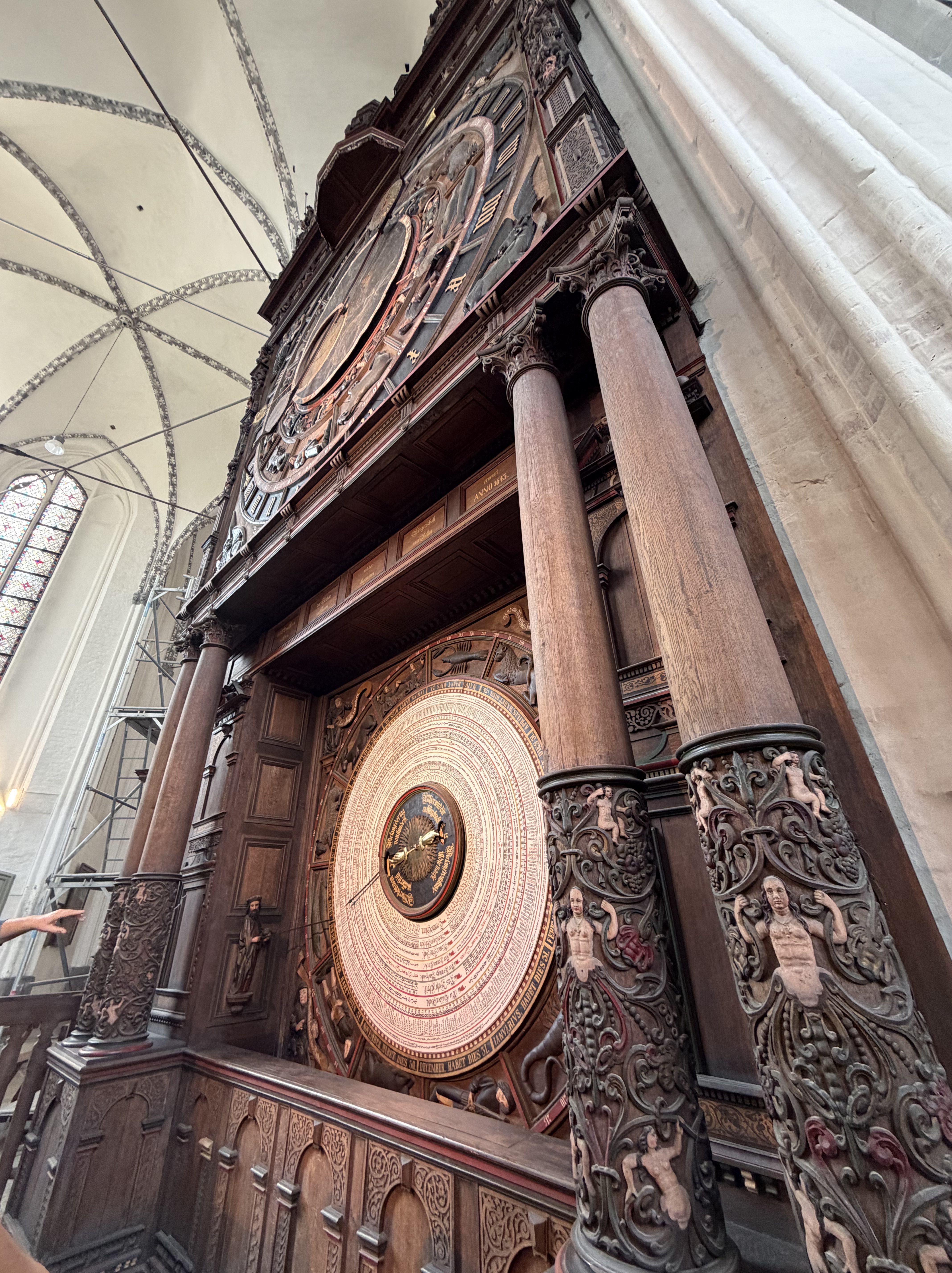
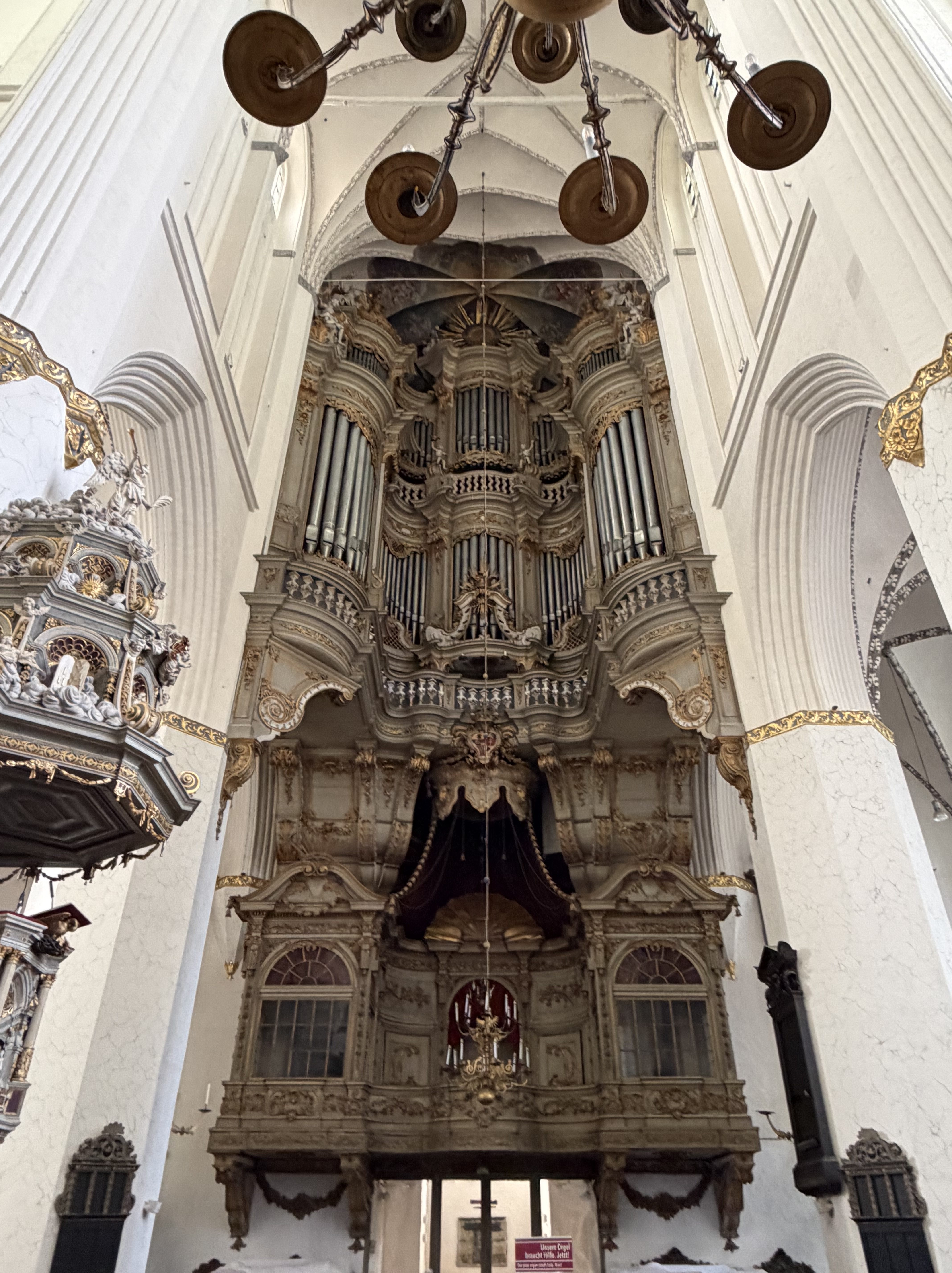
Rostock’s churches tell the same story—three main churches, two of them heavily damaged or destroyed. The still-standing St. Mary’s Church is massive, with a huge 89-foot-tall pipe organ housed in an impressively carved case. The astronomical clock is also a standout feature. Built in 1472, it still runs on its original mechanical workings. The main wood-carved altar is 79 feet tall, with white statues and gold accents. Beautiful!
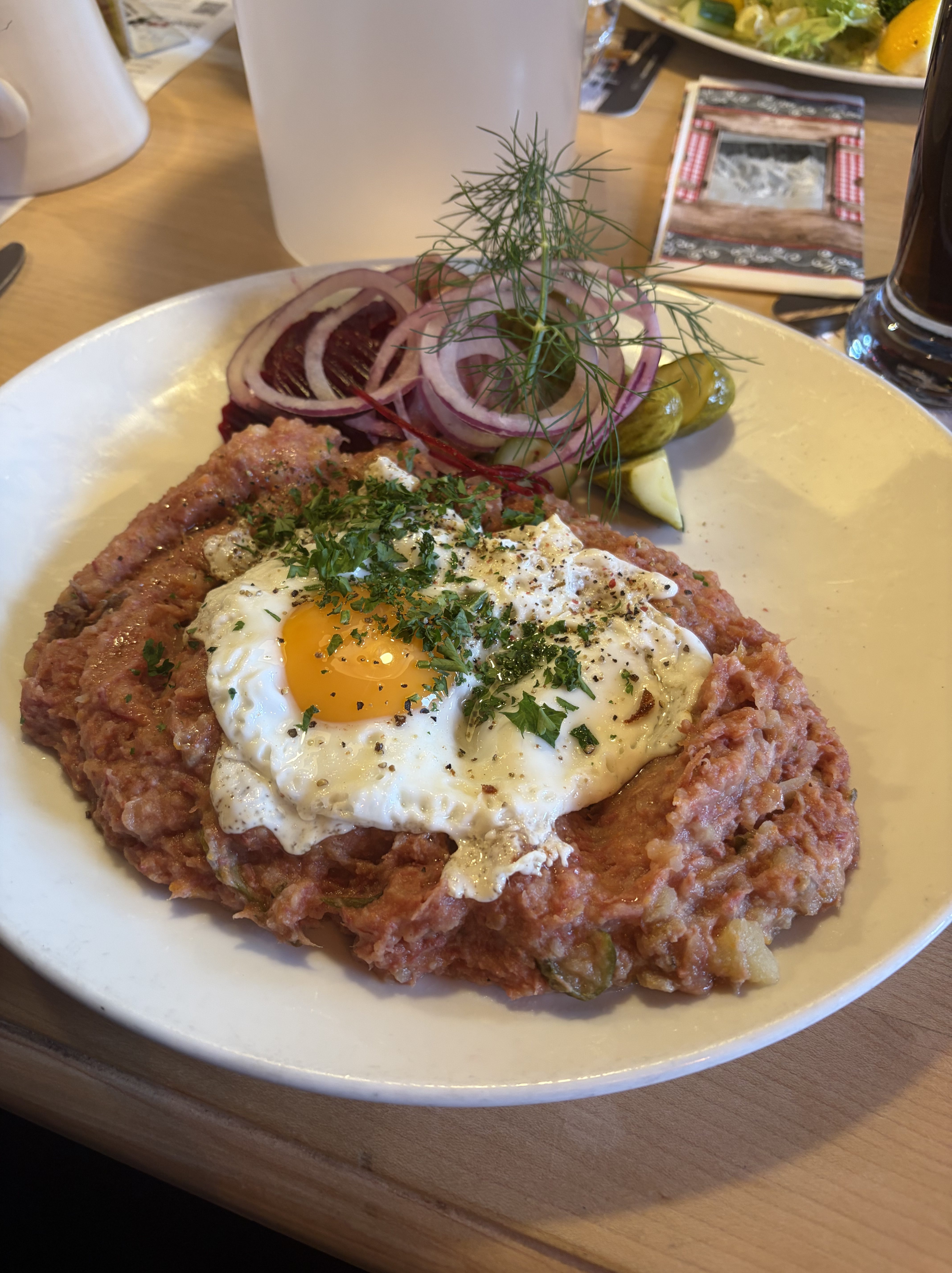
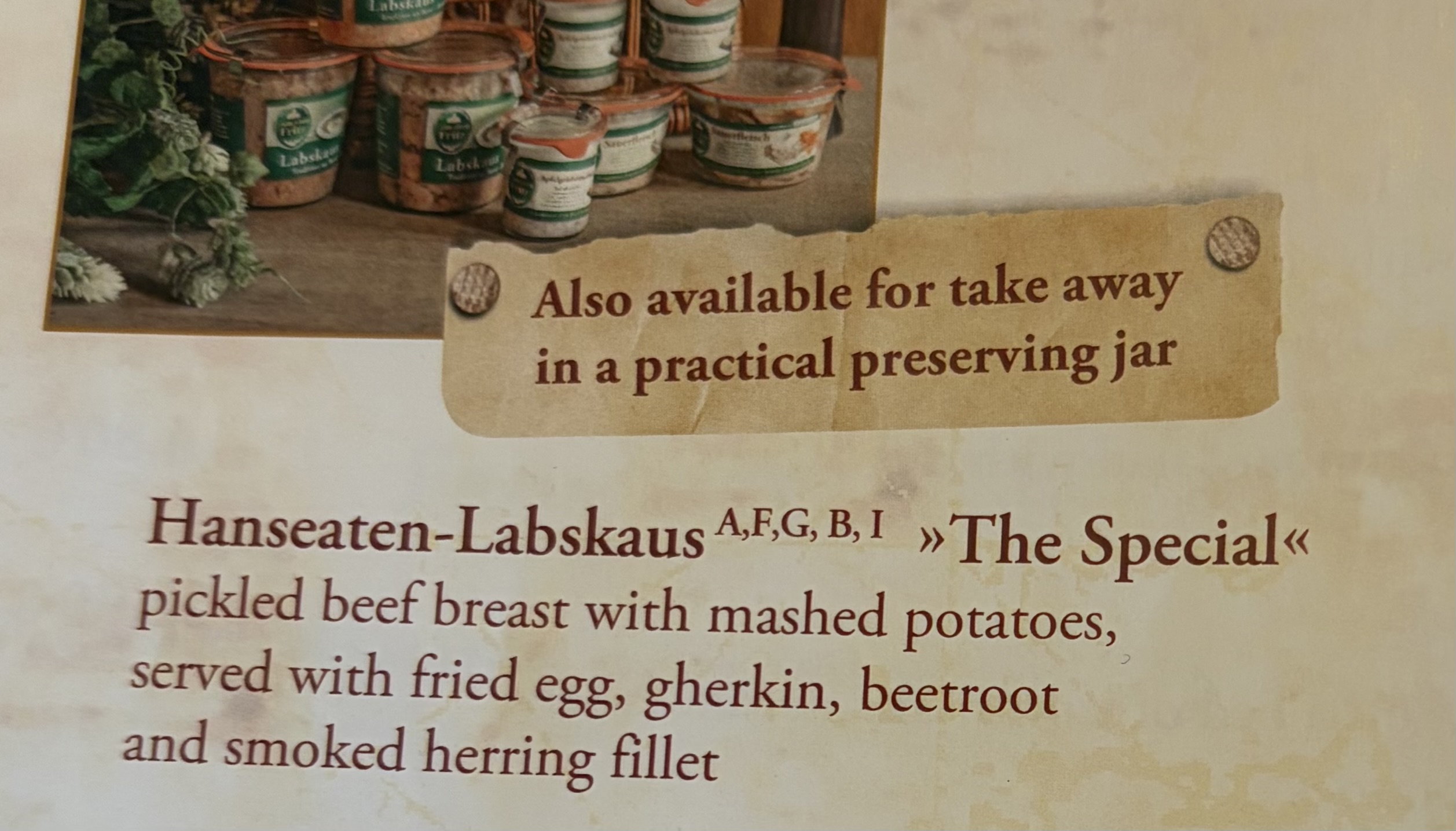
Food, glorious food, from the Baltic! Kathy is in heaven! She loves herring, and it comes in many forms. One particular dish is called Labskaus—a sailor’s food. It is made with smoked herring and pickled beef, along with beets, mashed potatoes, and gherkins, all topped with an over-easy egg. These are all favorite foods of hers, and here they are, all on one plate! All of us have enjoyed various fried fish and other delights.
We all agreed that Schwerin and the surrounding area is a wonderful way to start our East and North German adventure, and God blessed us with delightful weather.
WEG
HIDDEN GEMS
September 17-20, 2026
Kathy and I have traveled through Frankfurt, Germany, via air and land many times, but we have never been to Frankfurt until this adventure. We were surprised with the many hidden gems we discovered in the city and surrounding area.
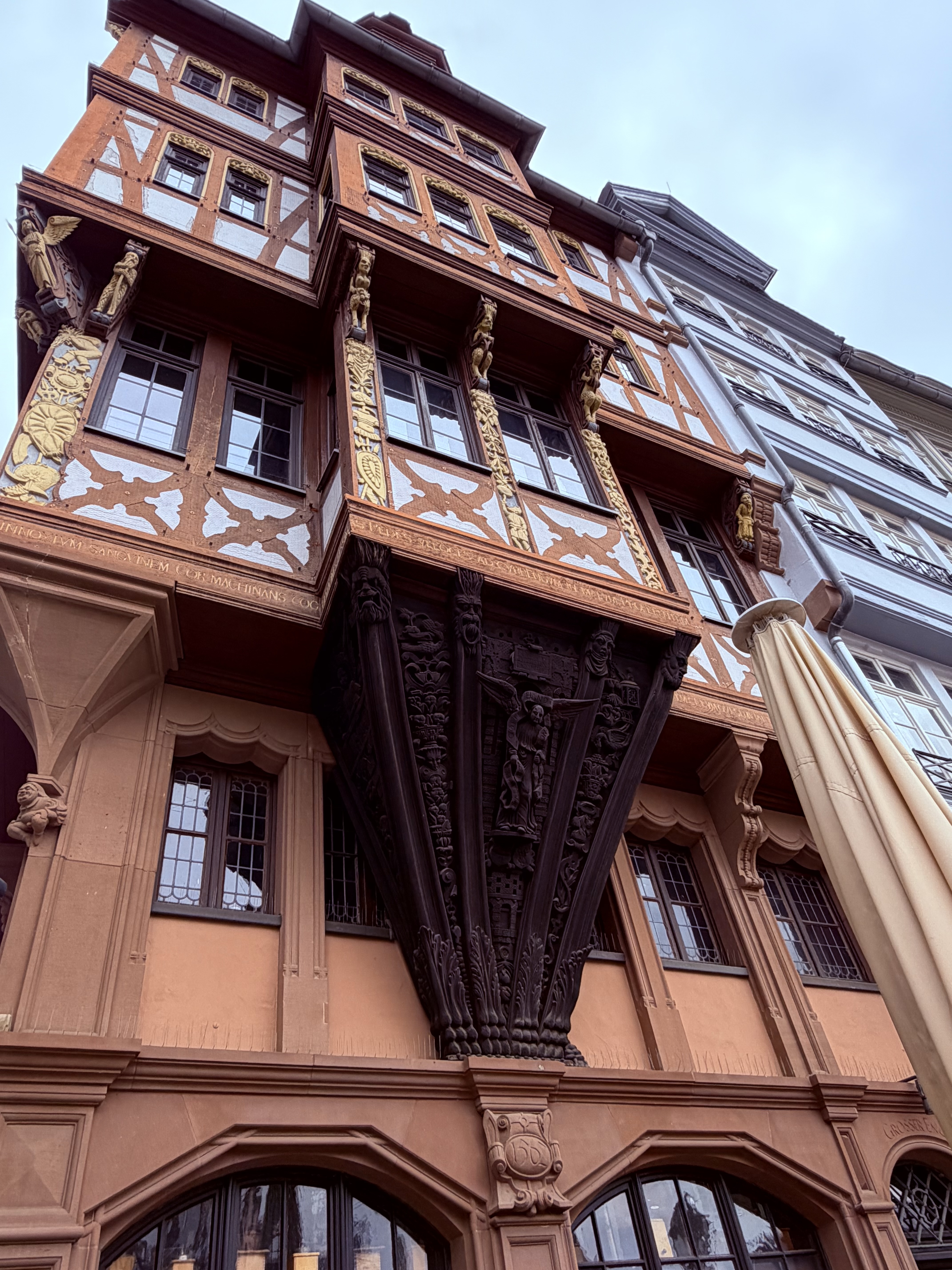
Frankfurt is an important center of commerce and banking and a major transportation hub for Europe. After it was destroyed by allied bombing in World War II, the city leaders decided to not recreate the old but instead build the new. As a result, the city has a skyline defined by skyscrapers, earning it the nickname, “Mainhattan,” since the River Main runs through the city. Several years ago, the population, nostalgic for the beauty of the past, pressured the city leaders to recreate a several block area as it would have looked before the war. Called the Römerberg, this cobblestoned space, filled with half-timbered buildings, quaint and/or majestic churches and restaurants, is now a major gathering place for locals and tourists. Our wonderful hotel was situated nearby and I enjoyed walking the area in the crisp and sunny weather.
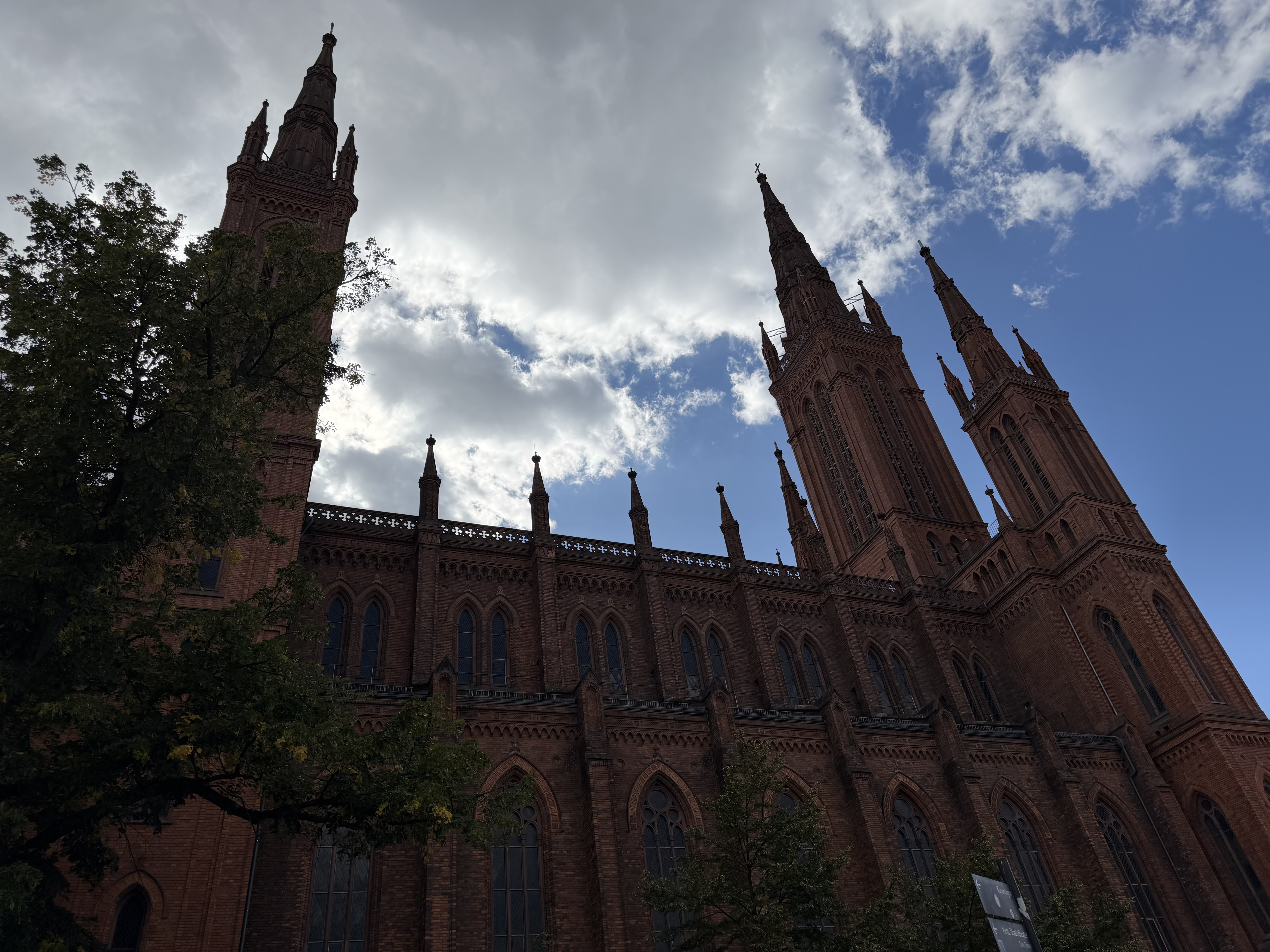
We took day trips to nearby Wiesbaden and Idstein. Wiesbaden is one of Germany’s famous spa cities. Its casino is well known and its thermal baths refreshing. We enjoyed ambling around the attractive buildings and enjoying the beautiful weather. The five-spired (some 300 feet) Lutheran Cathedral was imposing. We were on a mission, however, to find a necklace for Kathy. Her father, long decreased, had traveled to Germany 74 years ago and thought Wiesbaden his favorite city. While there, he bought Kathy’s mother a necklace. Kathy remembered it from childhood and had an image of it in her mind. It was a stone mined in the area. Alas, although we found the long established family store that once mined the stone, the mine had closed a decade ago, and the stone was no longer available. At least we tried.
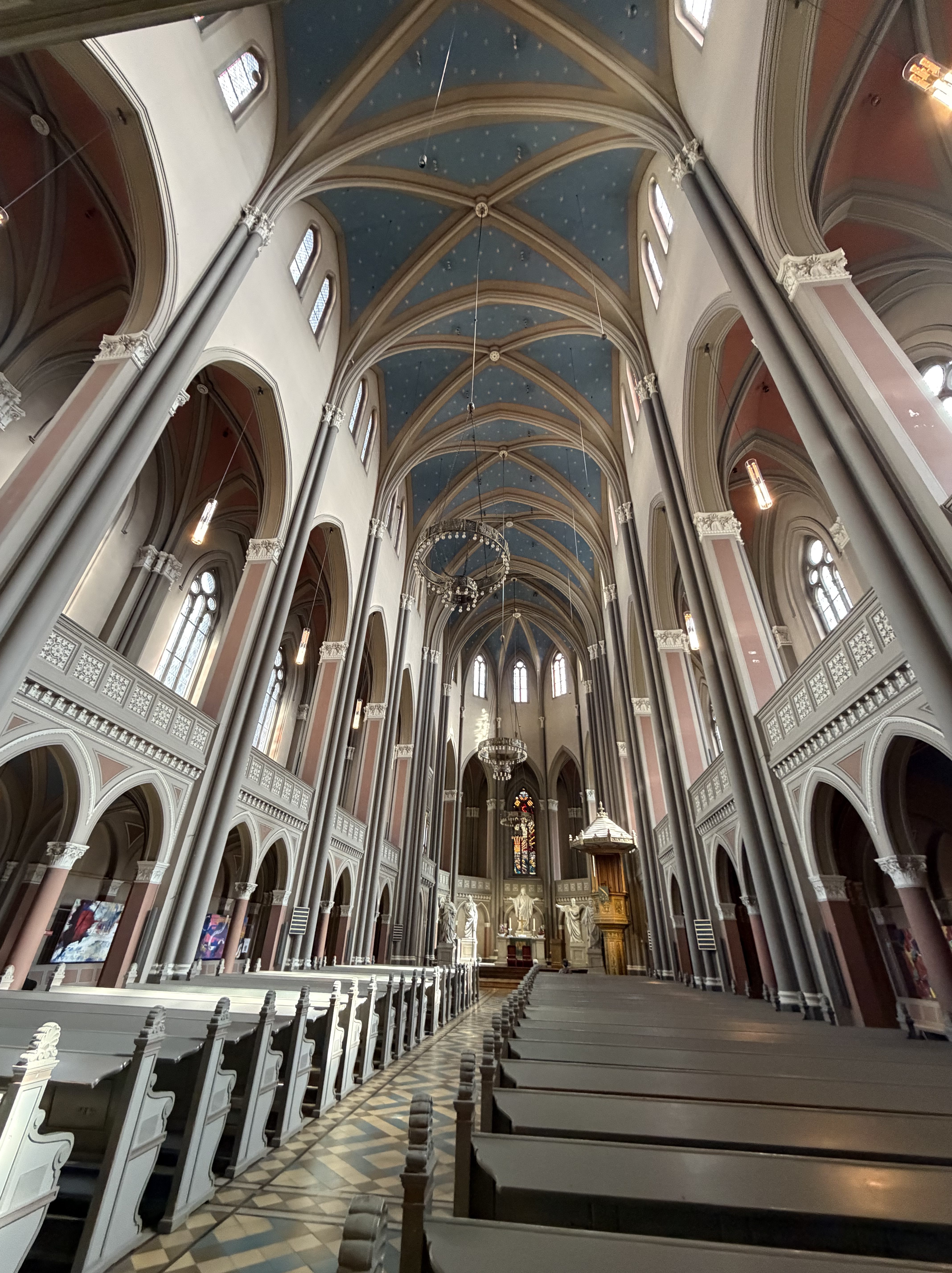
Idstein has not yet been discovered by tourists. Its altstadt (old town) is more than quaint. Beautiful hand carved and ornamented wood buildings, colorfully painted and half-timbered, lined the area. It had an upper and a lower village with stone-arched walking bridges.The highlight of the village is the amazing Unionskirche (Lutheran Church). A nondescript exterior hid the overwhelming interior, known locally as the German Sistine Chapel. Large frescoes of Biblical scenes covered the ceilings and walls. One’s eyes didn’t know where to focus. Breath-taking is apropos.


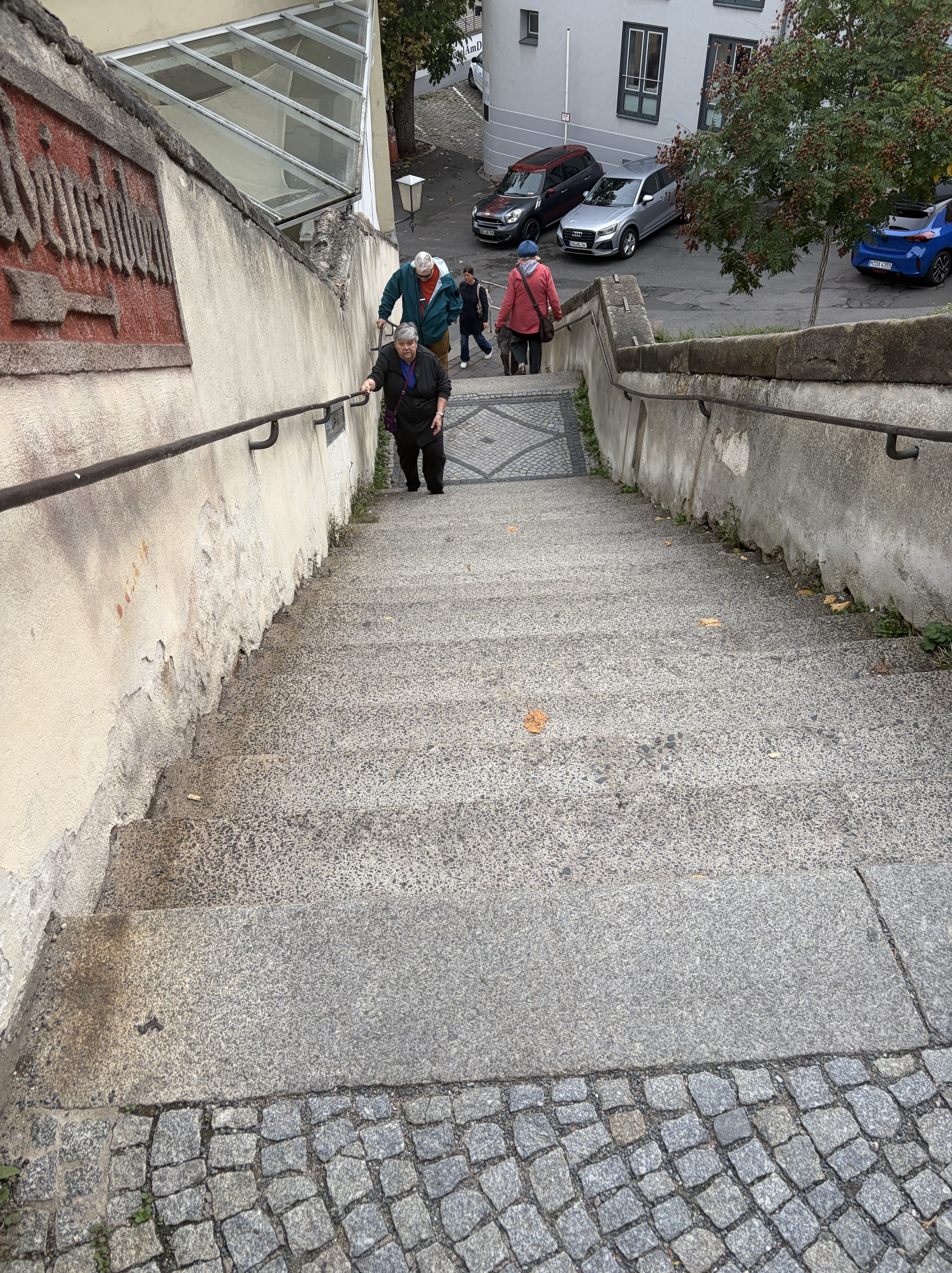
Germany is in a major overhaul of its train system and it bit us on our way back to Frankfurt from Idstein. The village is down hill from the train station that is now closed for renovation. I reminded Kathy if we go down, we’ll have to go back up! We left the village early to make the trek back up. I was so winded that I was walking like a “drunken sailor” on the steep upward trudge! Finally, we made it with 20 minutes to spare. Yea—Not YEA! We inquired of an attendant how to get to platform 2 from where the train was to arrive. He smiled and said, “If you walk very fast, you can make it???” We could see the platform, and we had 20 minutes. He said there was only one way to reach platform 2 since the simple and easy way was closed during the remodeling. He pointed, “Walk that way until you see a bridge, cross it, and on the other side come back toward the station and then over to platform 2.” I kid you not—the bridge was over a quarter of a mile away and when we approached it, we saw no way to ascend to the bridge until a young man ran past us and climbed a hidden stair case. Yes, cut into the earth and reaching up to the bridge was a rough hewn three-tiered stone stairway. I was now deliriously tired! Across the bridge I stumbled as Kathy, spry as ever, urged me onward. On the other side, we had to walk quite a distance to a pedestrian street that ran parallel to the tracks. Younger folks scooted past us. Figuring correctly they were rushing to the platform, we followed. Finally, all the way back, Kathy pointed to the walkway leading to the platform. I knew the train had to be close, so I told Kathy to go ahead. People were now running past me! Oh, no. There was a descending walkway towards a tunnel. As I headed down, the train was pulling up. Once inside the tunnel, I encountered a multitude of people descending a long staircase as they scurried from the train. Gasping for air, I pulled myself up the final 32 steps as I heard the conductor’s whistle blow, signifying the train was pulling out. NO!!!!!!!! On my final step, I looked up to see two angelic passengers forcing the train doors to remain open as Kathy bid me on. Once onboard, the doors slammed behind me and the train pulled out. I collapsed into a seat, thankful to God that I had made it…indeed, thankful that even after two knee replacements and a multiple myeloma cancer diagnosis and treatment, I could still experience these hidden gems of travel.
The next morning, we met our friends, Tom and Nancy, at the Frankfurt Hauptbahnhof (main train station) after their flight into the Frankfurt airport. Together, we departed Frankfurt by train to meet our friends, Randy and Melisa, who had arrived earlier in Schwerin, Germany. We rejoiced as our autumn adventures together in northern Germany begin. WEG
Held Captive in a Cab
August 30-September 10, 2025
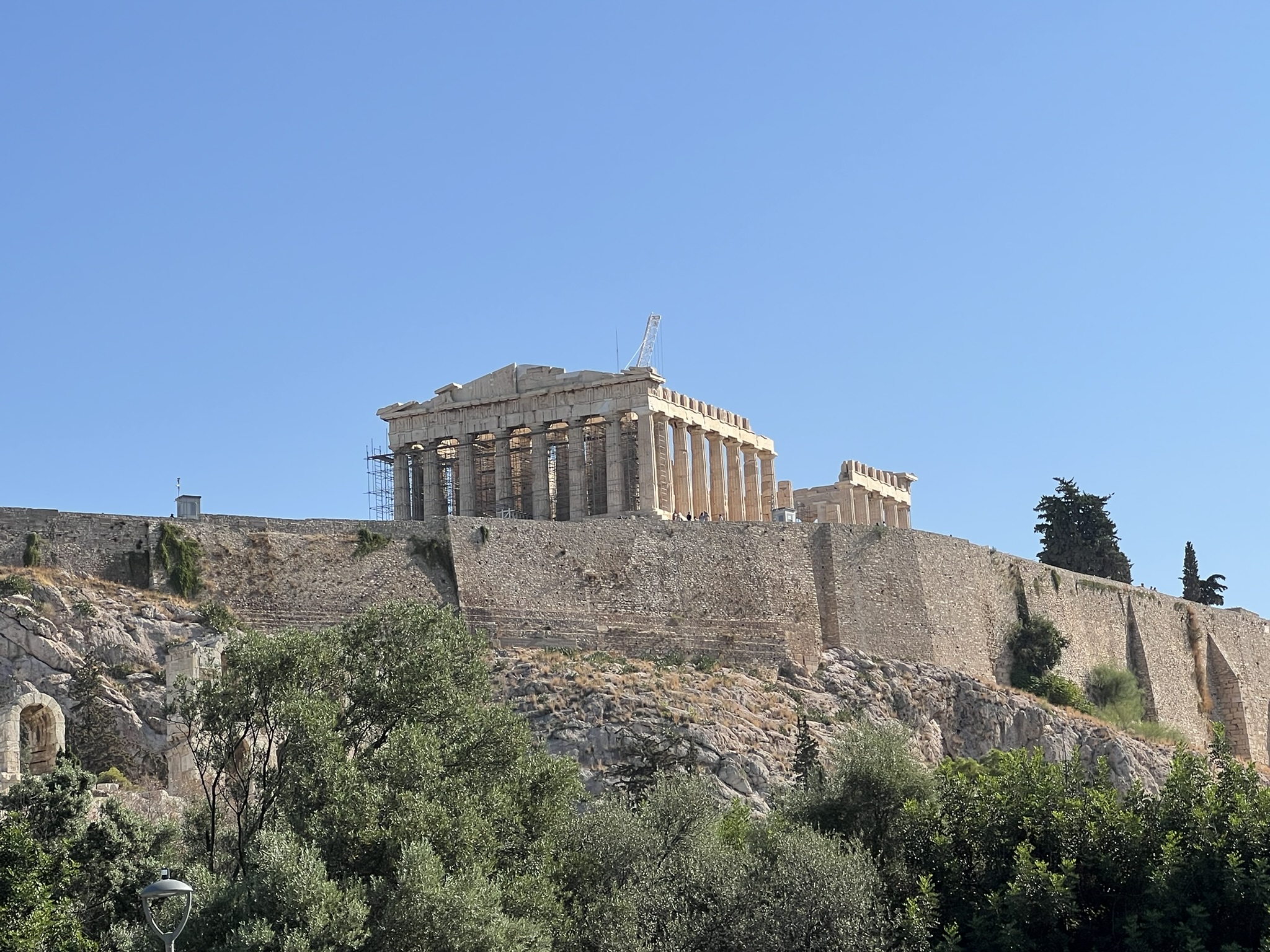
Athens, the cradle of western civilization and democratic principles, is sprawling and, in most places, nondescript as far as architecture is concerned. The historic sites, such as the Acropolis, are awesome. To think that many of the greats of history walked these areas is humbling. Prior to leaving for Greece, I had a day of infusions for my multiple myeloma and I slept little on the flight over. Even arriving two days early so that we could tour the historic sites before boarding our cruise, I was “out of it.” Thankfully, we had been to these sites several years before. Still, I powered forward as long as I could. Eventually, I told Kathy, “I’m done,” and got an Uber back to our hotel. She stayed with our travel friends at my encouragement. Upon arrival at the hotel I began to exit the Uber cab and the driver said, “You have to pay!” I replied, “I have paid on the Uber app.” He said, “NO—this is a cash only cab,” and he would not accept that I had paid through Uber. He finally said that Uber would have to refund me. I had no cash—I had left it with Kathy. The stand-off began! I was so tired I wanted to just lay down and sleep in the cab. On the narrow street in front on the hotel, cars began to line up and honk. My brain was in a fog! I should have said, “Let’s call the police and have them settle this,” but did’t even think of that. Finally, the cash cab became a credit card cab, and I paid for my ride a second time at a rate higher than what I had already paid to Uber. I needed to sleep and, once in the hotel room, collapsed on the bed, not even removing my shoes to sleep, sleep, sleep!

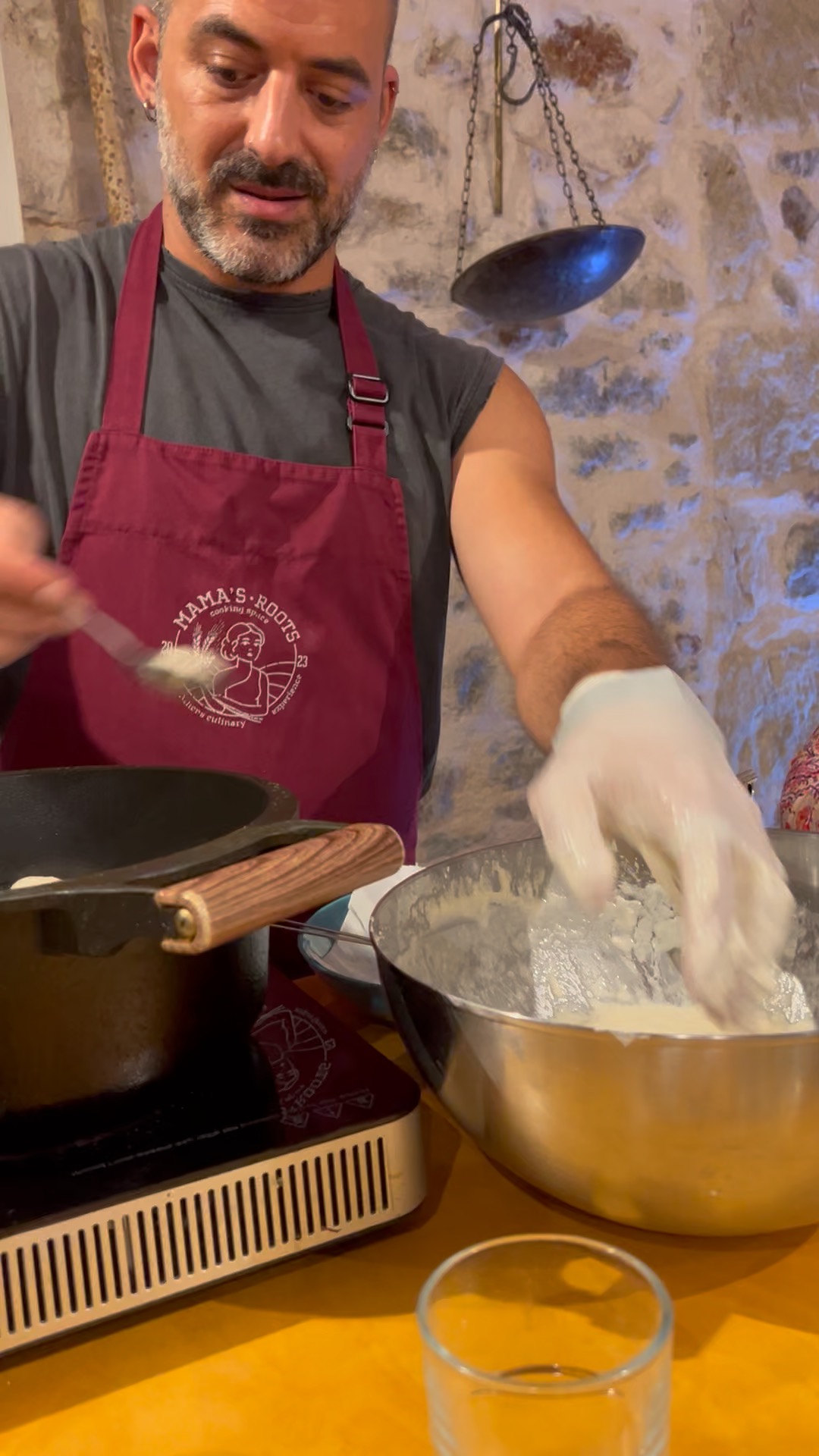
Greek cooking class—six courses—was wonderful. I cannot spell nor pronounce the foods we prepared. Twelve of our travel friends had a fun time eating the foods we prepared. Friend Melisa was excited to try the Greek dessert donuts we had prepared. The lead chef placed a bowl of fried donut hole shaped delicacies covered in honey and cinnamon in front of me. Melisa rushed over to grab one. As she pushed one into her mouth, I cried, “Melisa, they are raw!” Her eyes widened in fear; her mouth froze, and her hand instinctively went to her mouth. I started laughing hysterically, and she realized I was kidding. Still days later, she has not talked to me :-).
One evening meal, we walked to a highly recommended restaurant near our hotel. My whole squid—tentacles and all—stuffed with feta and tomatoes was supremely delicious.
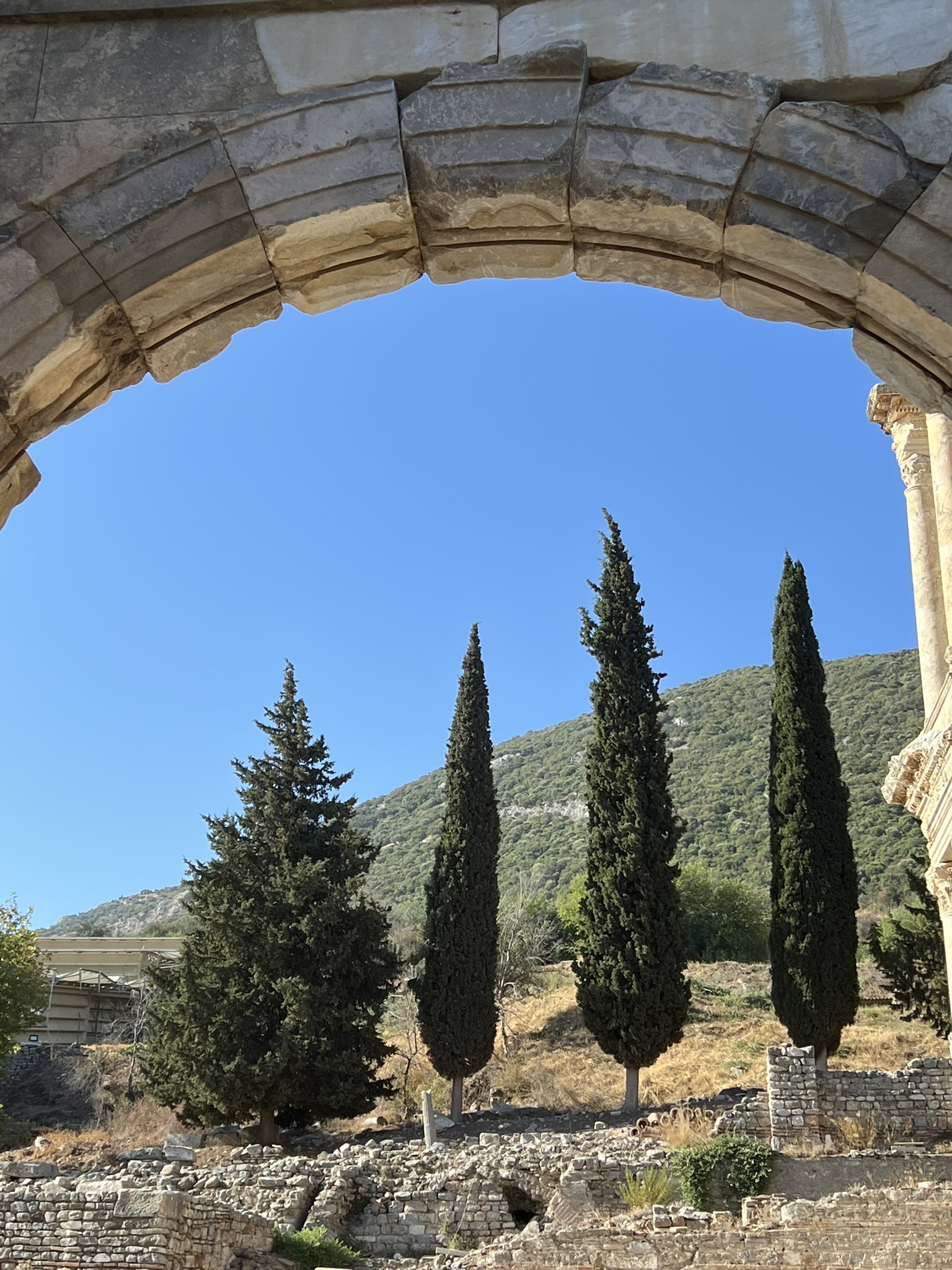
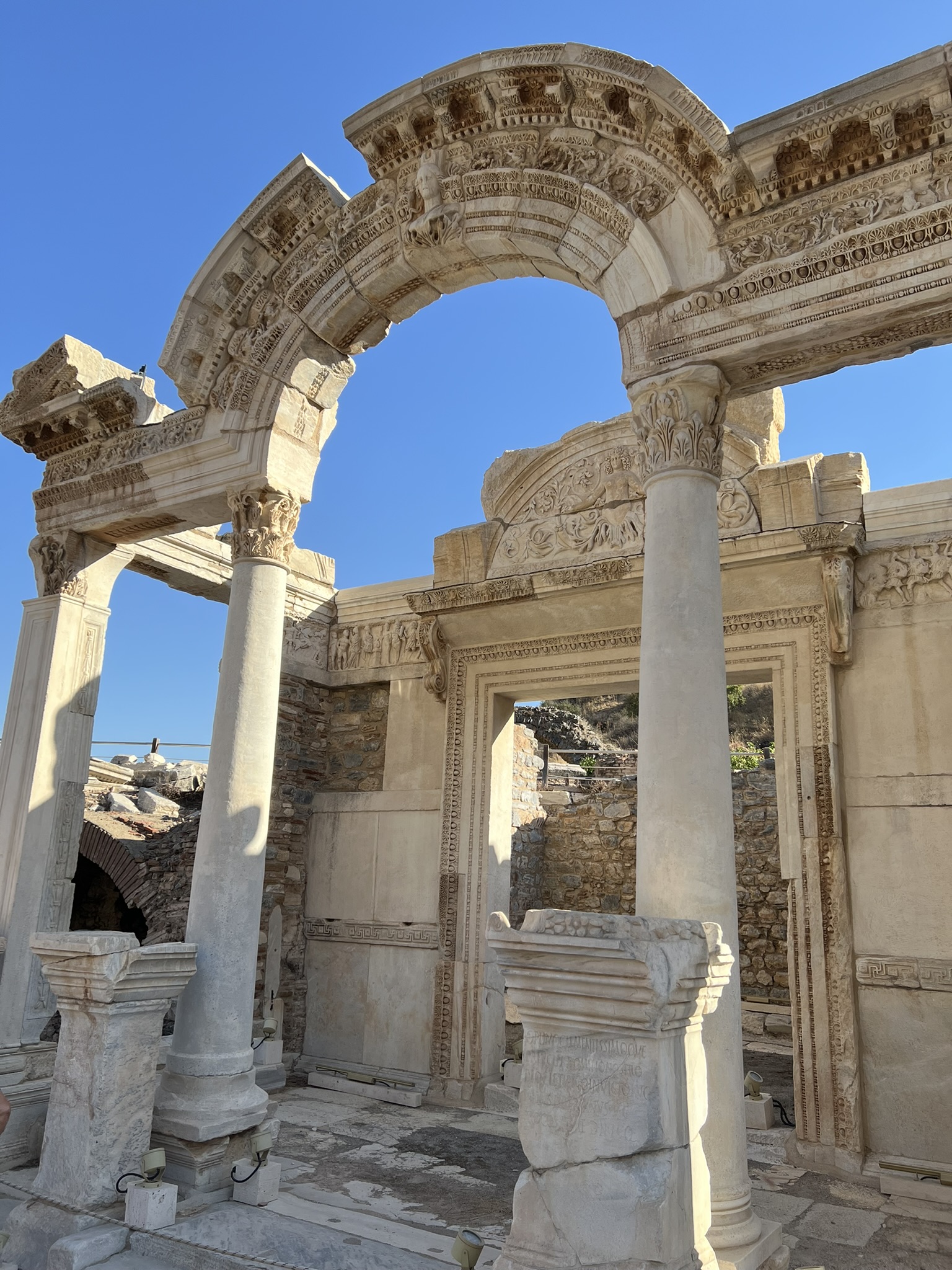

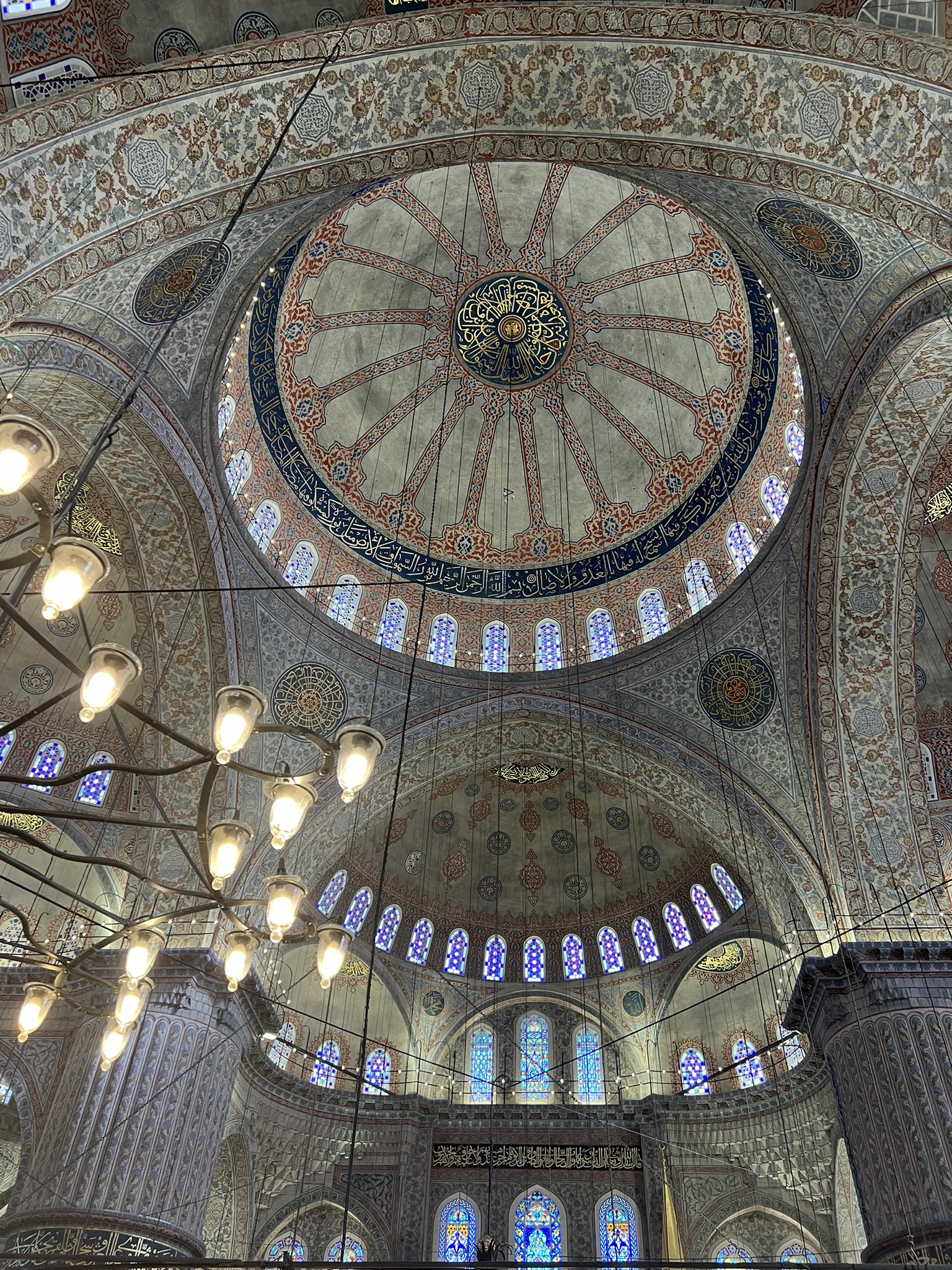
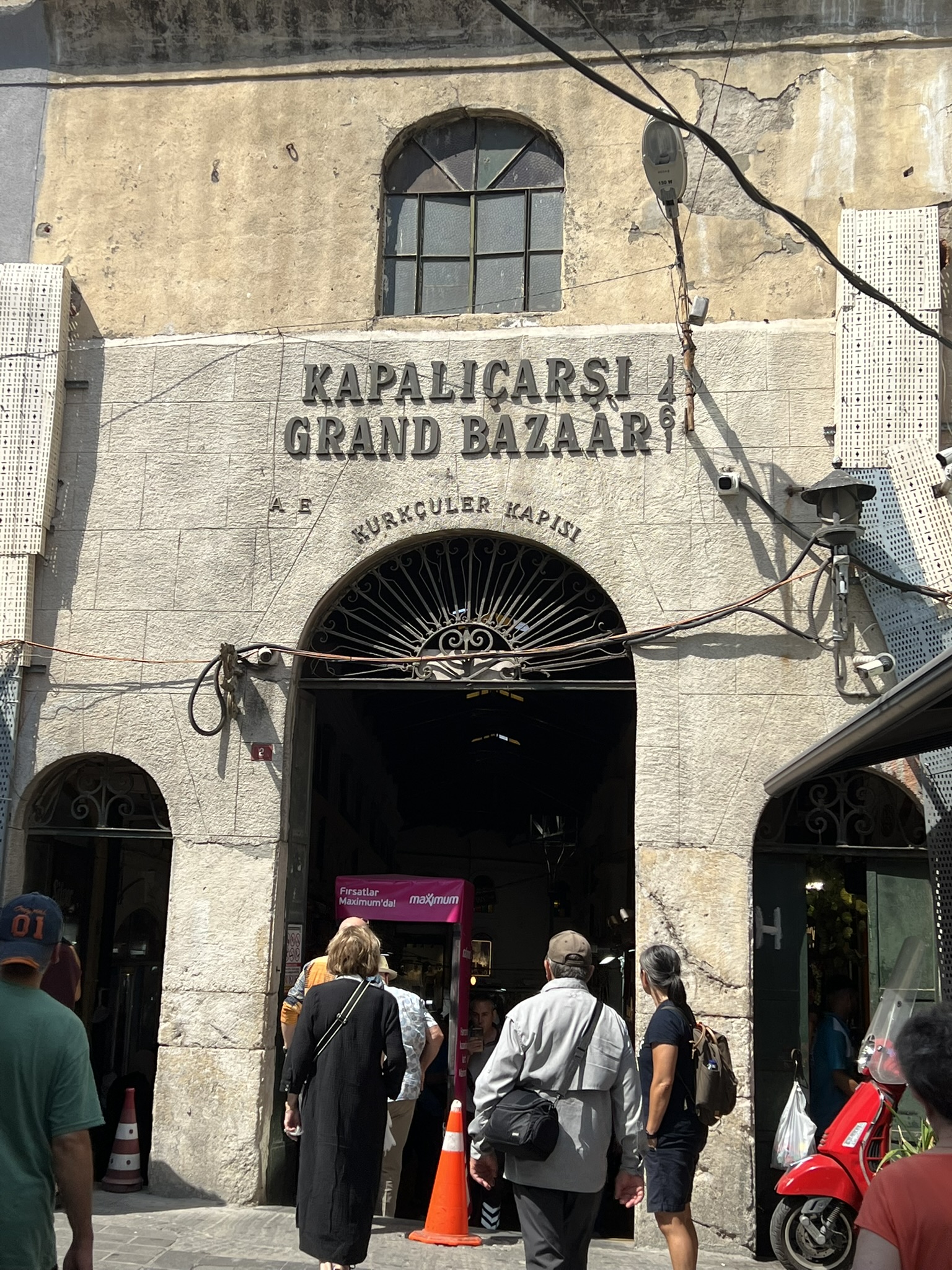
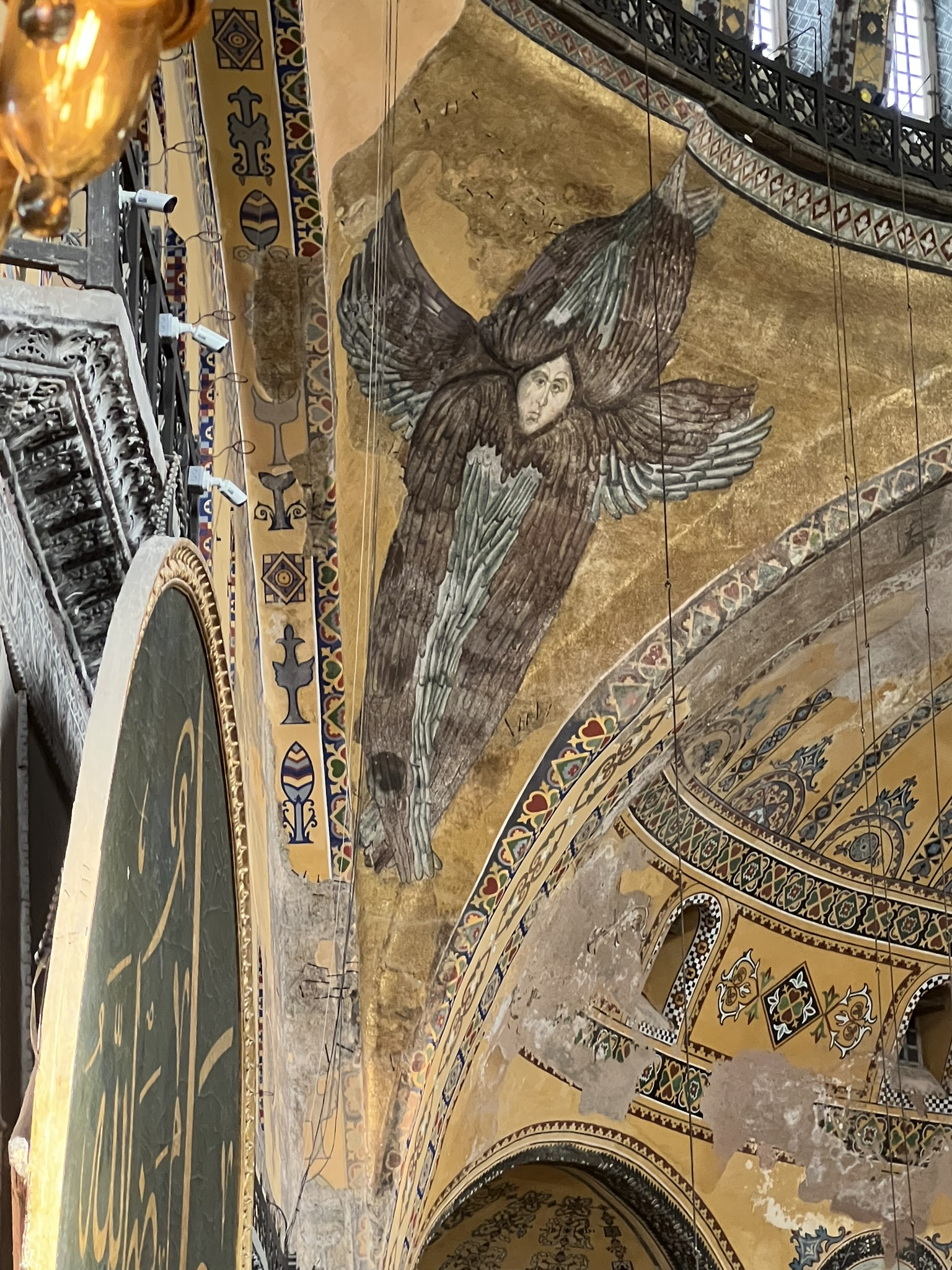
Our cruise of the Greek Isles and Istanbul (two days) and Ephesus in Turkey has been delightful. The white (lime) washed cities, often lining the mountainous cliffs overlooking the clear blue and turquoise waters below, were enchanting. Blue-domed Greek Orthodox churches dotted the heights and old Greek windmills added a unique aura as we walked the hand-laid smooth stone lanes. Istanbul was impressive, and our group of friends frequently commented on how clean and “beating expectations” it was. The Blue Mosque, however, was less than I expected. Still, the intricate blue tiles were beautiful. The Hagia Sophia, the ancient and magnificent Christian Church, was faded glory since so much of it is covered over inside. It is now a mosque and any mosaics with human images that can be seen by worshipers are covered over since Islam forbids such imagery in worship spaces. Ancient Ephesus, where the Apostle Paul was persecuted and where an early Christian congregation was founded, has magnificent ruins. Stone columns line the 3000 year old stone street that leads the way to the proudly standing tall Library of Celsus. Two amphitheaters, one seating 25,000, draw attention. It is hard to believe that 80% of the city has yet to be excavated.


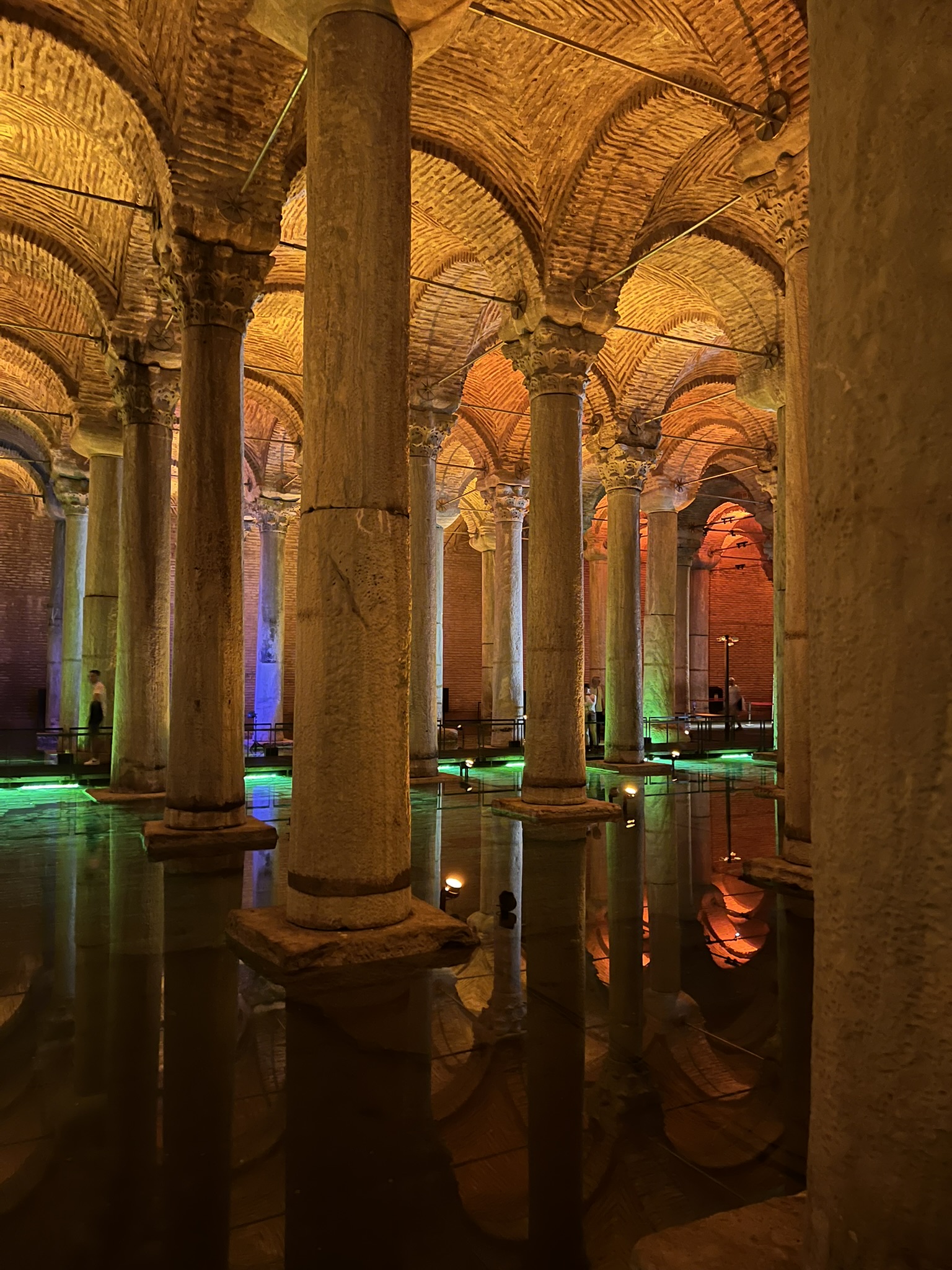
The fan favorite port of our travel buddies is Rhodes. Santorini and Mykonos were wonderful, but Rhodes was not only accessible, but architecturally different, since it contained many Byzantine elements including the stone walls and round towers that ringed the city. The port where the mighty Colossus of Rhodes (one of the ancient world’s seven wonders) once stood still beckons with its clear waters.


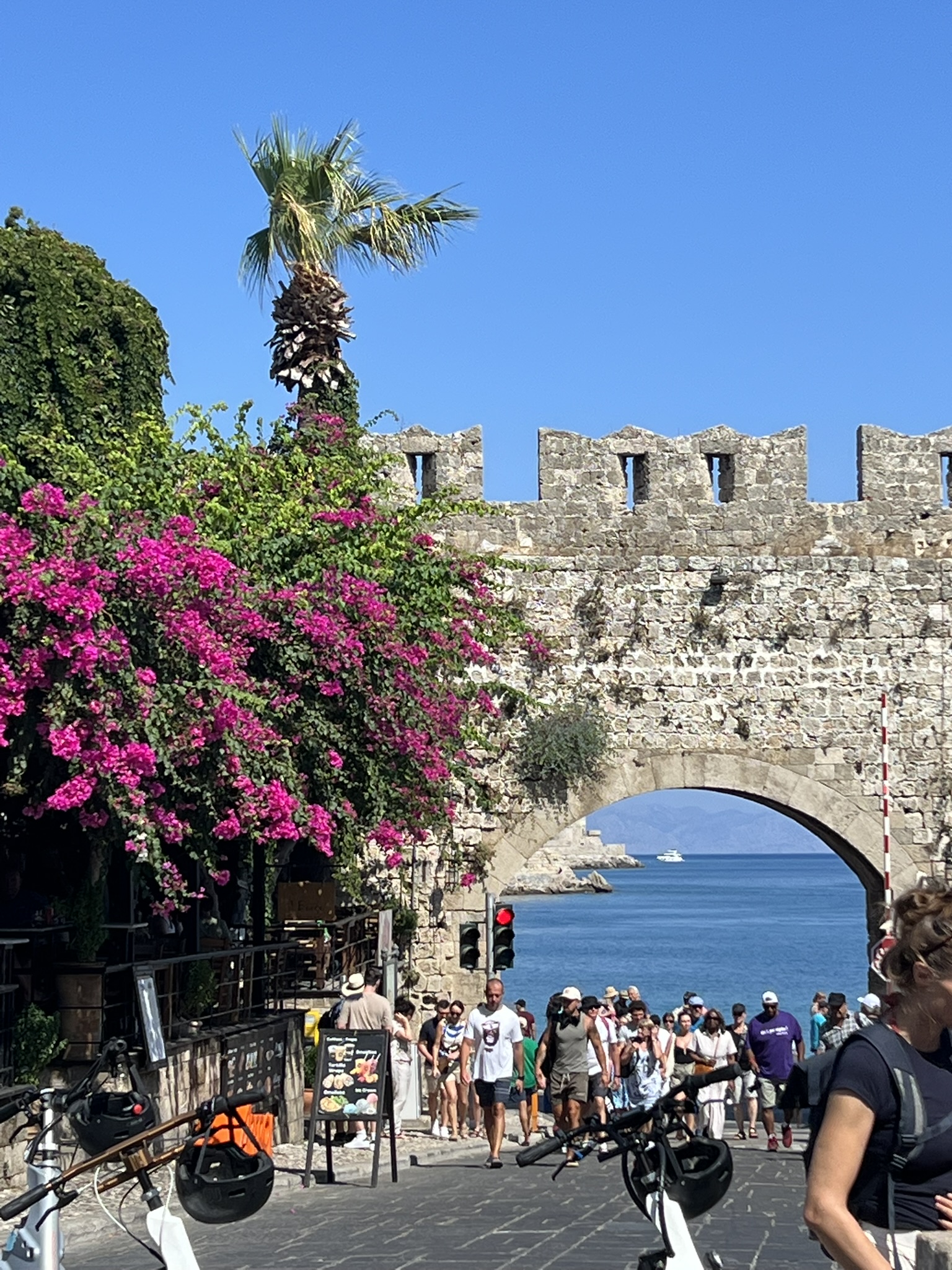
There were nineteen in our friends’ group that traveled this far; fourteen of us will continue on to Milan tomorrow.
WEG
The Doomed Cathedral of Beauvais
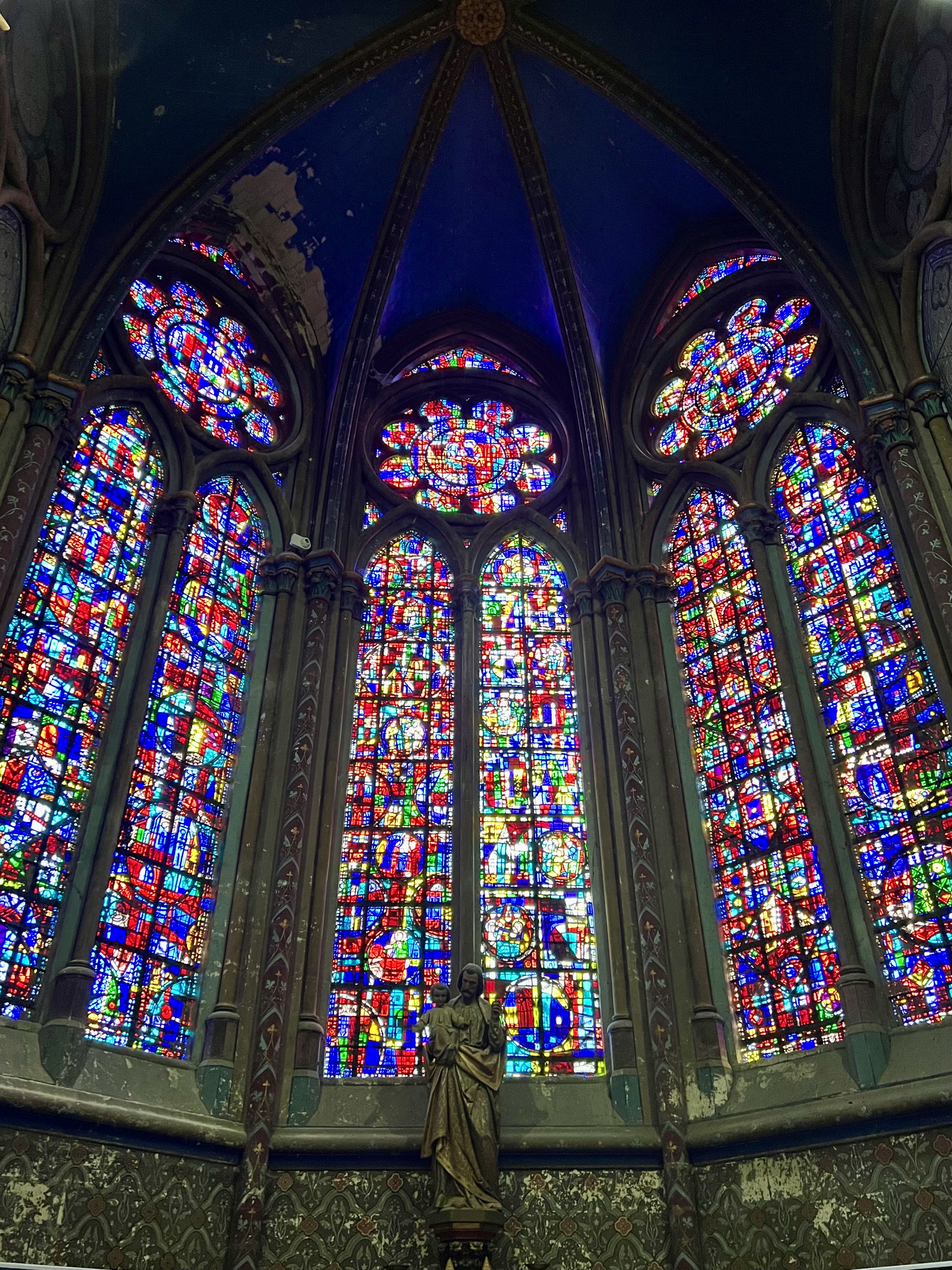
I was somewhat in trepidation walking into the Roman Catholic Cathedral in Beauvais, France. One could see how a patchwork of bracing keeps what remains standing. The cathedral is both imposing and sad. The vision was to build the largest cathedral in France, possibly even the world, back in the 13th Century. Construction began quickly and effectively and soon a transept and the choir (altar and music area) arose. It was majestic–the highest interior height (still to this day) achieved in the gothic form. Then, one by one, calamities struck. Part of the 154 foot high vaulting over the choir collapsed and repair work took needed funds from other projects. The nave was never to be built because of a fateful decision to build the highest spire ever conceived over the altar before construction on the nave began. Sure enough, reaching 492 feet in height, the spire made the cathedral the tallest building in the world until it began to move and finally collapsed in 1537. If the nave had been built first, as originally planned, it is highly possible the spire would not have fallen. Wars, especially the 100 Years War, came and went, and funds dried up. Then, during the French Revolution, anti-clerical elements destroyed the statuary that was a hallmark of the exterior, and interior treasures in the cathedral were hauled away. Later, the Beauvais Cathedral became a patchwork as efforts were made to conserve what remained.
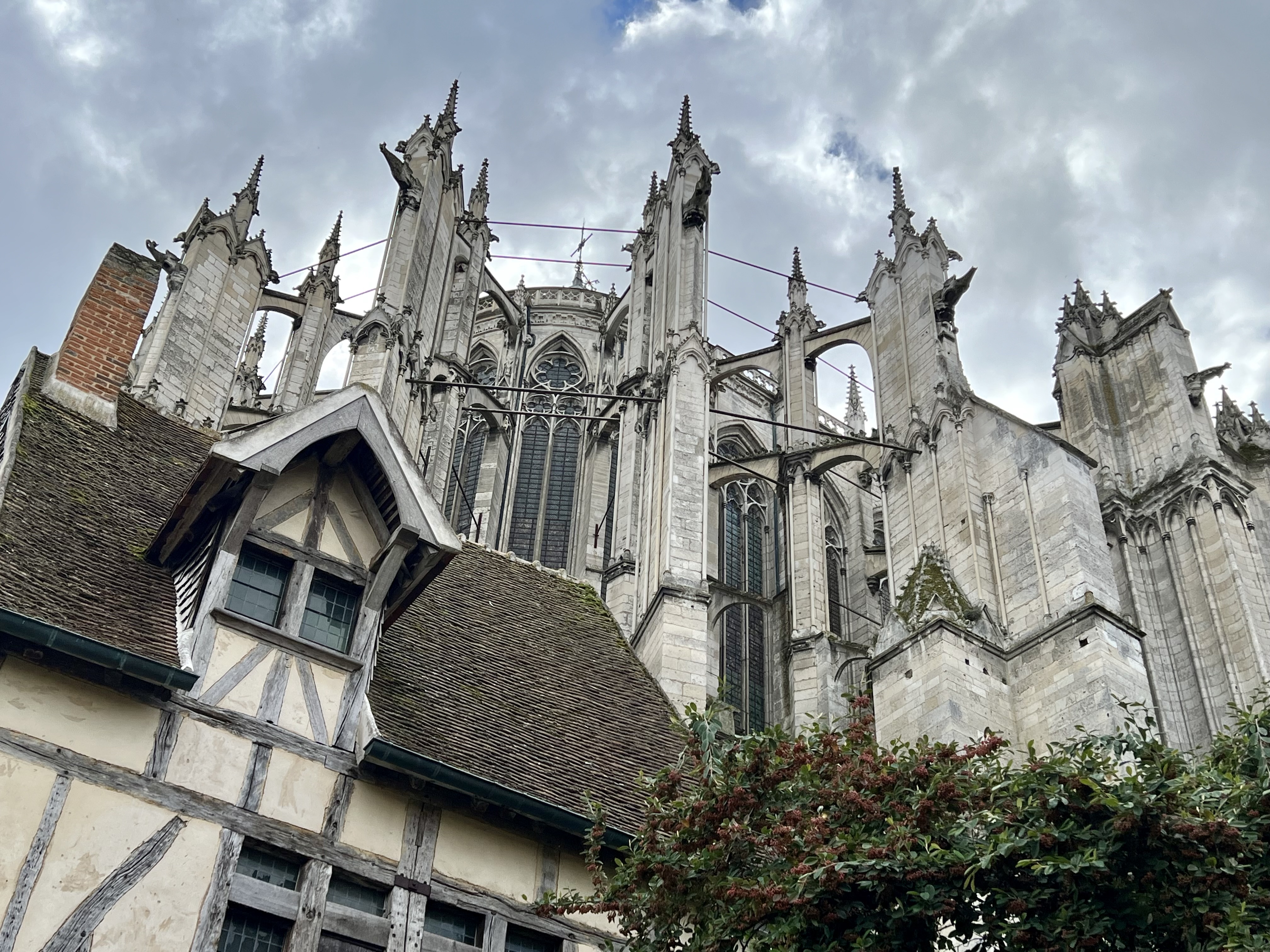


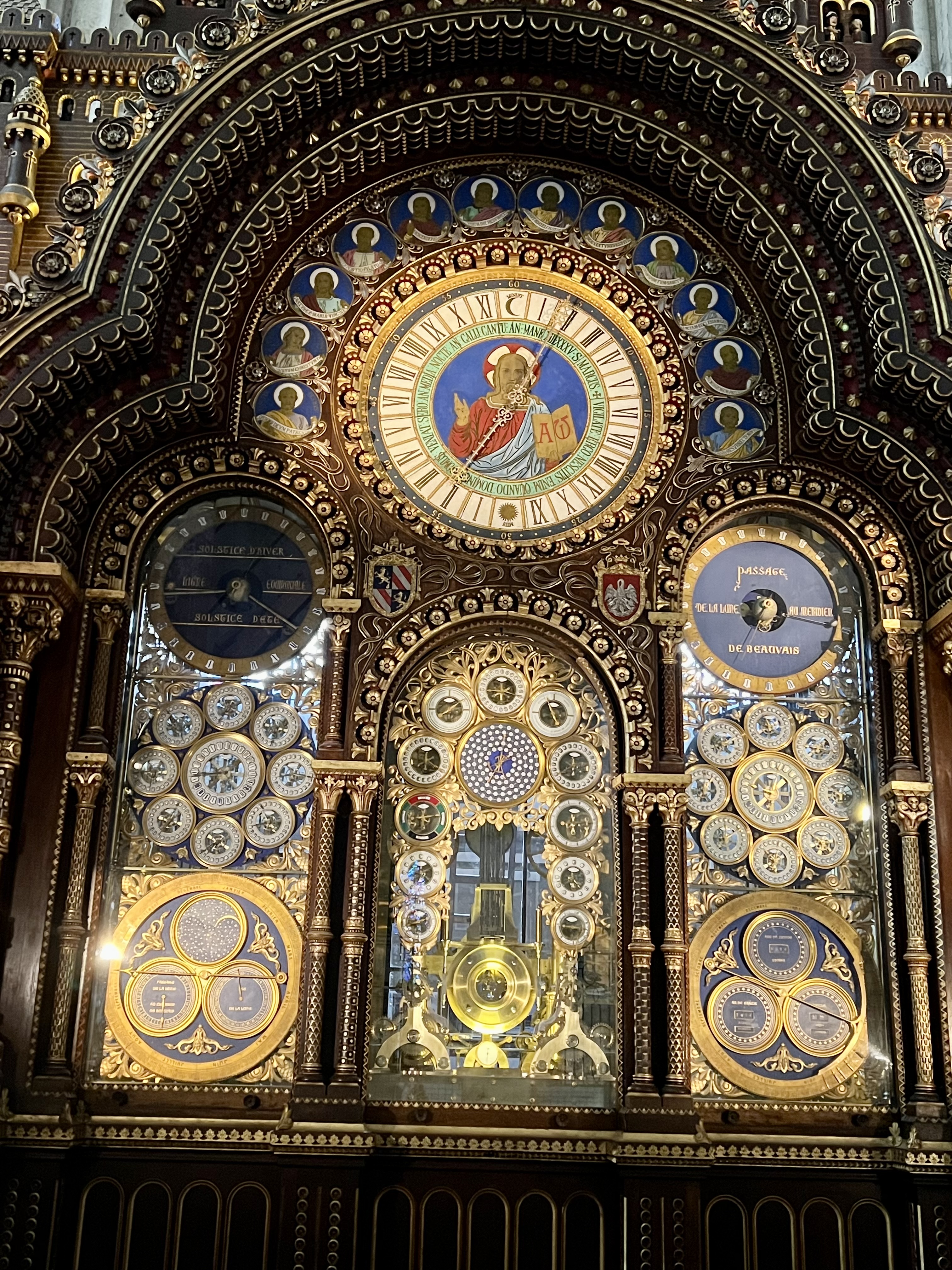
What remains is still imposing! The one transept and the choir are immense and show how glorious the entire cathedral would have been. We took time to view the cathedral’s beautiful astronomical clock containing 90,000 components and 50 moving figurines including numerous functions it can fulfill. It played and chimed and figures danced as we watched.




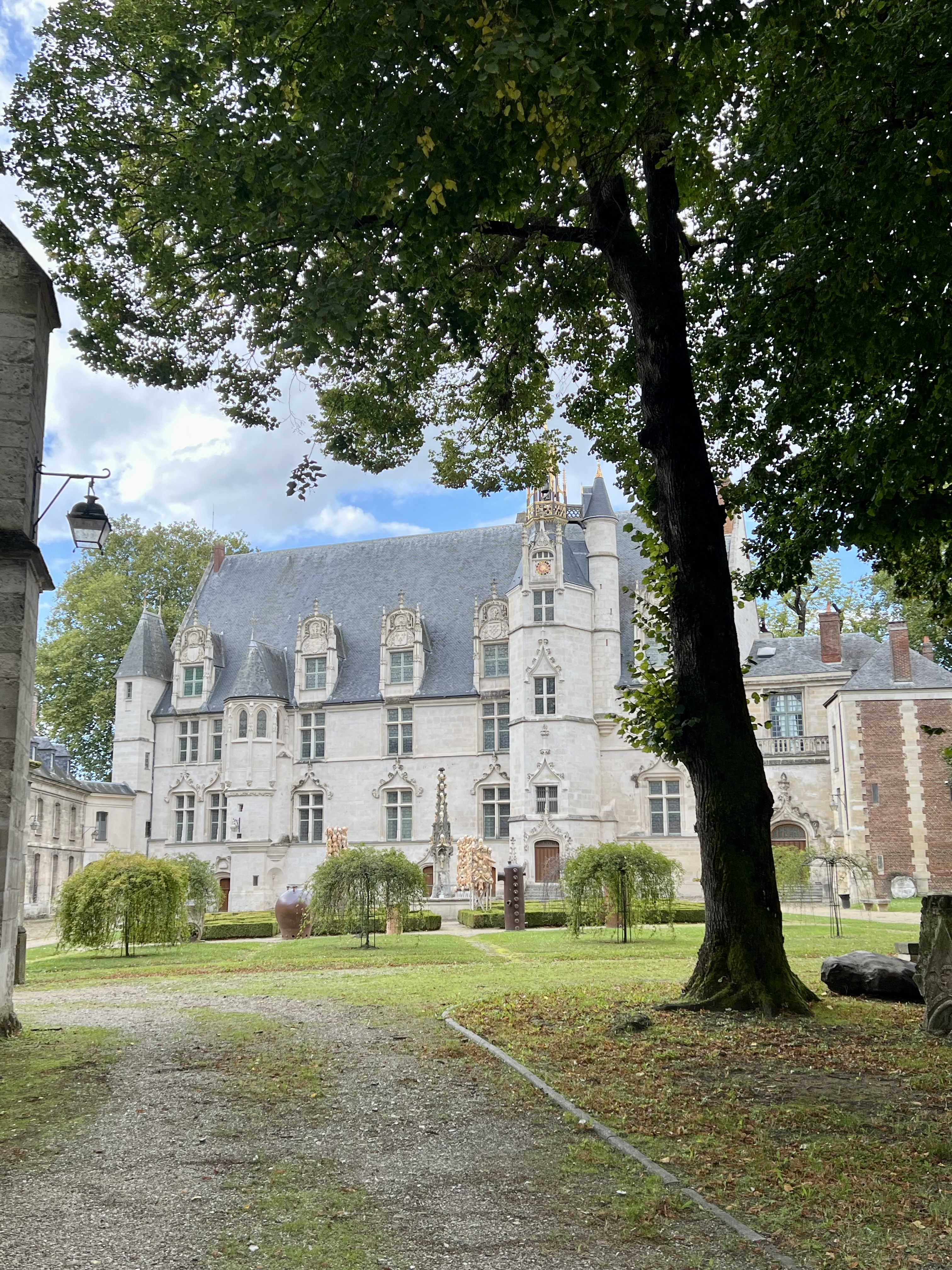
The rest of Beauvais is small city France, and we enjoyed walking the streets and finding patisseries. Tomorrow, we train to Paris’s Charles de Gaulle airport (less than an hour away) for an EasyJet flight to Copenhagen and the next day a flight home. We have thoroughly enjoyed our trip and yet, we are happy to return home, God willing, to our family and friends!


 kgraumann
 wgraumann
