
Home » Adventure (Page 3)
Category Archives: Adventure
TRAVELIN’
Today was an experiential travel day for us because you cannot fly from Quito to Cotacachi, Ecuador, and I had made no prior arrangements for the two plus hours of travel to reach Cotacachi from Quito. The folks at our Quito Hostal (hotel) were more than helpful. They made arrangements for the hotel taxi to take us to a bus station where we could buy tickets to Otavalo, which is a short distance from Cotacachi. Upon arriving in Otavalo, we could board another bus that would take us to Cotacachi, where our lodging for the next six nights was located.
We were impressed with our Quito hotel. It is family owned, and every employee is a family member. They were more than solicitous–we received first class treatment. The colonial home had been remodeled into a small hotel. Everything was modern and tastefully appointed, while retaining the charm of the original colonial home. I will nearly always choose this kind of establishment in an old town area over a modern chain hotel and rarely have I been disappointed.


The hotel taxi was cool–new, with embroidered headrests bearing the hotel name. The ride to the north bus terminal was about 30 minutes and the cost $10. The driver parked and took me to the ticket counter to make sure I purchased the correct ticket. He then took Kathy and me to the bus with our luggage and made sure it was safely packed and we were on the correct bus. Amazing! I gave him a generous tip, and he was overjoyed. The terminal was large, with buses coming in and out continually. Wonderful food stalls and shops lined the walkways. The bus was amazing. I admit, I haven’t been on a public bus in a while, but this bus had beautiful, comfortable seats; a built-in large screen TV showing American movies; a driver, accompanied by a “conductor” who received pre-paid tickets and/or cash for ticket purchases. Along the way, people would flag the bus, and it would make a quick rolling stop to pick them up, and then move on. Several times along the way, people in uniform would come on the bus selling drinks, ice cream, sandwiches, etc. The majestic scenery along the way was mesmerizing; the two hours passed quickly. Up and down the mountain side we traversed. Deep ravines with rushing water deep in the earth caught our attention, sometimes because the road ran right along side these deep cuts in the earth. All along the way the trees and flowers were in beautiful bloom.
We arrived in beautiful Otavalo, impressed with the cleanliness and well kept traditional Ecuadorian homes. Once off the bus, the conductor was waiting for us to give us our luggage, and he pointed me to the Cotacachi bus. We walked up, the luggage was secured below by the conductor, and as we stepped aboard, the bus was on its way. Did I tell you that our combined cost for the first bus tickets was $5.75 for the two-hour trip and our second tickets 75 cents for a thirty minute ride?


Cotacachi is a charming small city nestled, at 8,000 feet, between two volcanoes. It is one of Ecuador’s eternal spring cities. It is 75F by day and 55F at night year round. Palm trees grow in the city’s squares. The streets are pavered, not paved, and the sidewalks are bricked. Our hotel is wonderful–another family-owned establishment–and our lodging comfortable and roomy. The owner already took Kathy to tour the gardens, visible from our room. Many fruit trees, vegetables, and herbs will provide for our morning breakfasts. We ate at a nearby restaurant for dinner, and my T-bone with fried plantain, French fries, avocado and pickled salad was really delicious–all for $11.50. No wonder so many American and German expatriates retire here. WEG

Raw Beauty
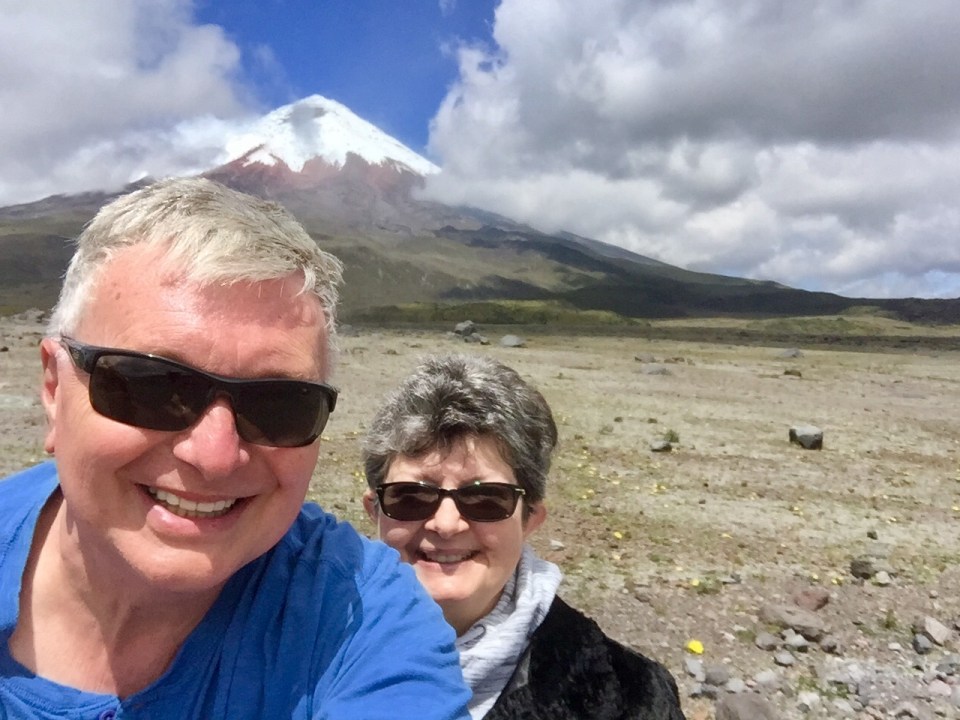
Wayne and Kathy Graumann below Cotopaxi Volcano, Ecuador, May 28, 2017
In all of our world travels, we have not had a day like today. Our long day was spent exploring Cotopaxi National Park. Mighty Cotopaxi, at 19,342 feet, is the second highest active volcano in the world. As such, climbing on the glacier to the top is forbidden. However, we were able to get to about 14,000 feet, close to the base of the ice. Doing so, however, was an ordeal, well worth the energy expended. The drive out of Quito was great with views of the Andes everywhere. It was a bright and clear day. As we began to climb higher towards Cotopaxi, we traversed changing ecological climates. First, were the eucalyptus trees; then, the pine with various pampas grasses; then, succulents and desert-like plants with no trees; then, wind-swept plains with yellow, then purple, and then orange flowers; and finally, nothing but volcanic landscape. The conical snow-covered peak of Cotopaxi was in clear view, a blessing not always available to visitors. As our day tour bus ascended higher, many cars were stalled out and most were turning around. The road consisted of hairpin turns on volcanic sand and rock with gulleys and ruts everywhere. We were told to hold onto our seats or we could be shaken out. Our guide mused that we were receiving a “Cotopaxi massage!” Once we arrived at the final stop up the volcano, we were given the opportunity to climb another 500 feet higher to a look-out point, the Jose Rivas Shelter.

Wildflowers in Cotopaxi National Park, Ecuador
Kathy and I were the seniors on this day tour; most were in their 20’s and 30’s, but we were game. We donned our sock hats and sun glasses, jackets and gloves. But when we stepped out of the bus, the wind was so strong we were almost blown over. Our tour guide said the gusts reached 60 mph. However, never to say never, we trudged upward. The wind was picking up volcanic sand and pebbles and hurling them into our faces. Some people were knocked down. About 1/5 of the way up, we said, “Done!” Going back was harder than going up, since we could not lean into the wind, so small sideways step by step we went down. Some of the younguns eventually came back as well. Once back in the bus, we realized how out of breath we were. Sand was caked to our faces and grit was in our mouths, but we were out of the wind. Yet, mighty Cotopaxi remained in clear view! It is an experience we will never forget!

Kathy Graumann, resting on the ascent to the Cotopaxi Volcano Shelter, May 28, 2017
On this day, we were able to look down the Avenue of the Volcanoes and see four volcanoes in clear view. Our guide said this is almost never to occur. As we stopped on the way down at Limpiopungo Lagoon, a clear mountain lake, we had clear views of the majesty of raw beauty all around us.

Wayne Graumann at Limpiopungo Lagoon, Cotopaxi National Park, Ecuador, May 28, 2017
As we left, we saw herds of wild horses and, amazingly, a large mountain fox, Zorro, trotted close to our bus. As foxes are quite reclusive, our guide declared, “We had a perfect day.” I agreed. Descending further, we entered a mountain climbers’ lodging establishment where we were treated to a delicious mountain trout dinner.


After almost ten hours of exploring, we arrived back at our hotel, content that we are still adventurous and enjoying the adventure, while also eager to relax and clean off the dirt. WEG


Exquisite

The weather is Quito is remarkably wonderful: 65-70F by day and 45-50F by night. Kathy and I stroll the streets past Ecuadorians in native dress and others in modern dress selling all sorts of items: plastic sleeves filled with apples or pears; lima beans in boxes; multi-colored shawls; bowler hats; ice cream and back scratchers, to name a few. The city is alive with people. Cars and buses vie with people in the narrow streets, the sidewalks being packed. El Centro is filled with colonial buildings, most in good repair and many quite handsome. Surprisingly, we do not find pharmacies or banks–which have been a constant presence in every country we have visited over the past several years.

The Church of the Society of Jesus, locally called, “la Compañía,” is our must-see for the day. To say that it is exquisite would be an understatement. Begun in the early 1600s, it is a baroque masterpiece. Considered one of the most beautiful churches in South America, its baroque splendor easily rivals its counterparts in Europe. Intricately carved and gold-leafed from floor to ceiling, with porcelain statuary adorning the altars, the church is a jaw-dropper. The ten side altars blend harmoniously into the whole, leading to the main altar. The gold ceiling reflects the light making a golden hue that gives a heavenly feel. We sit for a least an hour in silent contemplation of the faith that would produce such beauty.

We also amble through the Central Bank Museum, proof that banks do exist somewhere in Ecuador. It tells the story of coin minting, with artifacts, through the centuries in Ecuador.

Our hotel has pure hot water dispensers and anis tea. The tea helps with acclimating to the altitude and it works! Both Kathy and I are feeling good, maybe even exhilarated! Hmm, is it really anis tea? WEG
Altitude or Attitude
Going from the coastal plains of the Houston area to the Andean heights of Quito, in one fell swoop, was quite an amazing start to our Ecuador and Peru adventure. To paraphrase the Bible, “The attitude was willing, but the altitude makes one weak.” Thankfully, neither Kathy nor I have altitude sickness, but walking Quito’s rolling hills at 10,000 feet does work on the lung capacity.
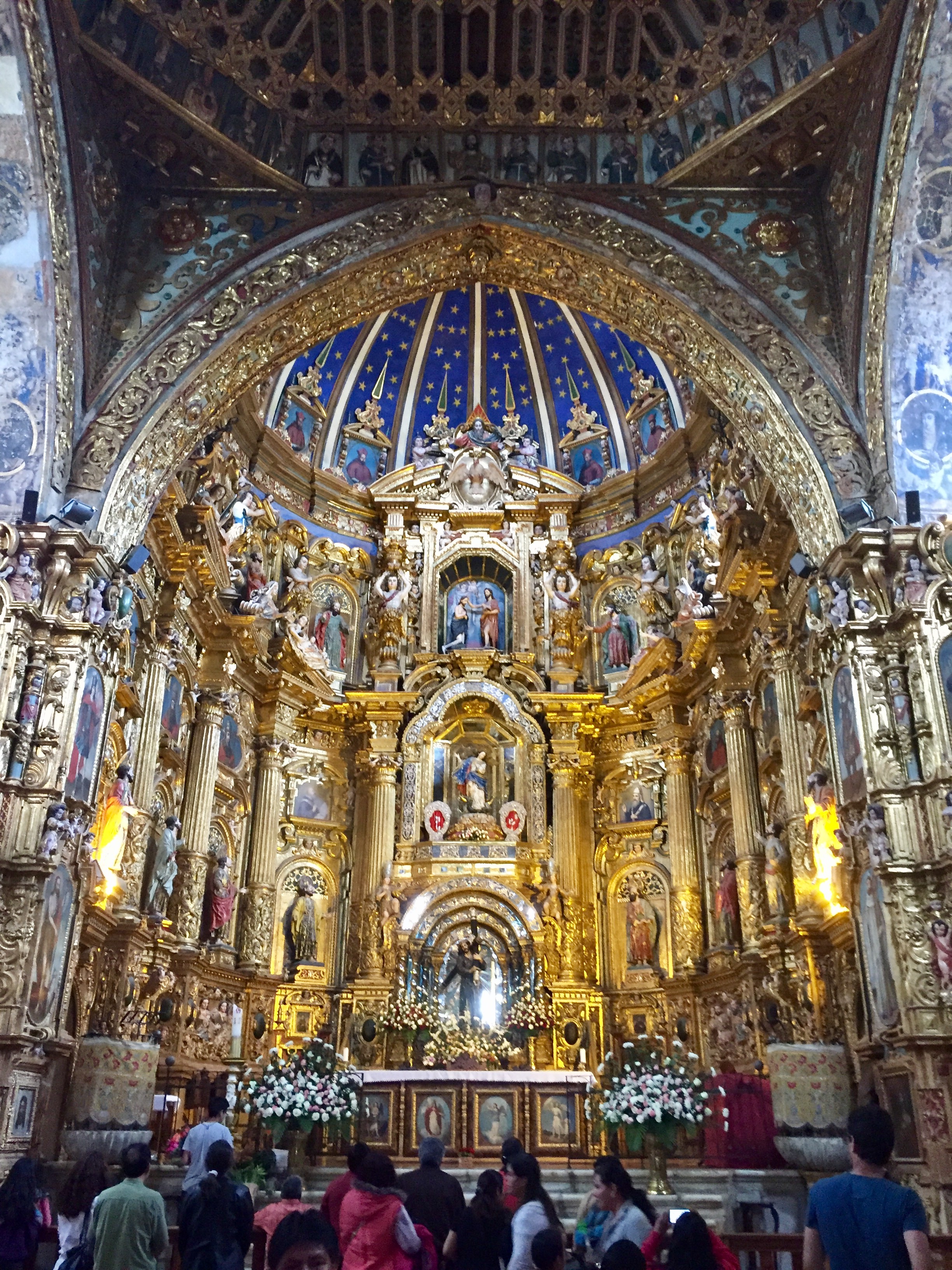
The Altar at the Church of San Francisco

The exterior of the Church of San Francisco, Quito, Ecuador
Quito is a wonderful city set between mountain vistas on all sides. Our day took us to some of the colonial gems of the El Centro, or historic center, of the city. We purposely made today a moseying kind of day to acclimate ourselves to the altitude. Two churches that stood out were Santo Domingo (right by our hotel) and San Francisco. Both were begun in the early 1500s and feature Baroque Spanish architecture–beautiful. On our walkabout, we happened upon several marching bands in a parade along one of Quito’s major shopping streets–an unexpected joy of travel.
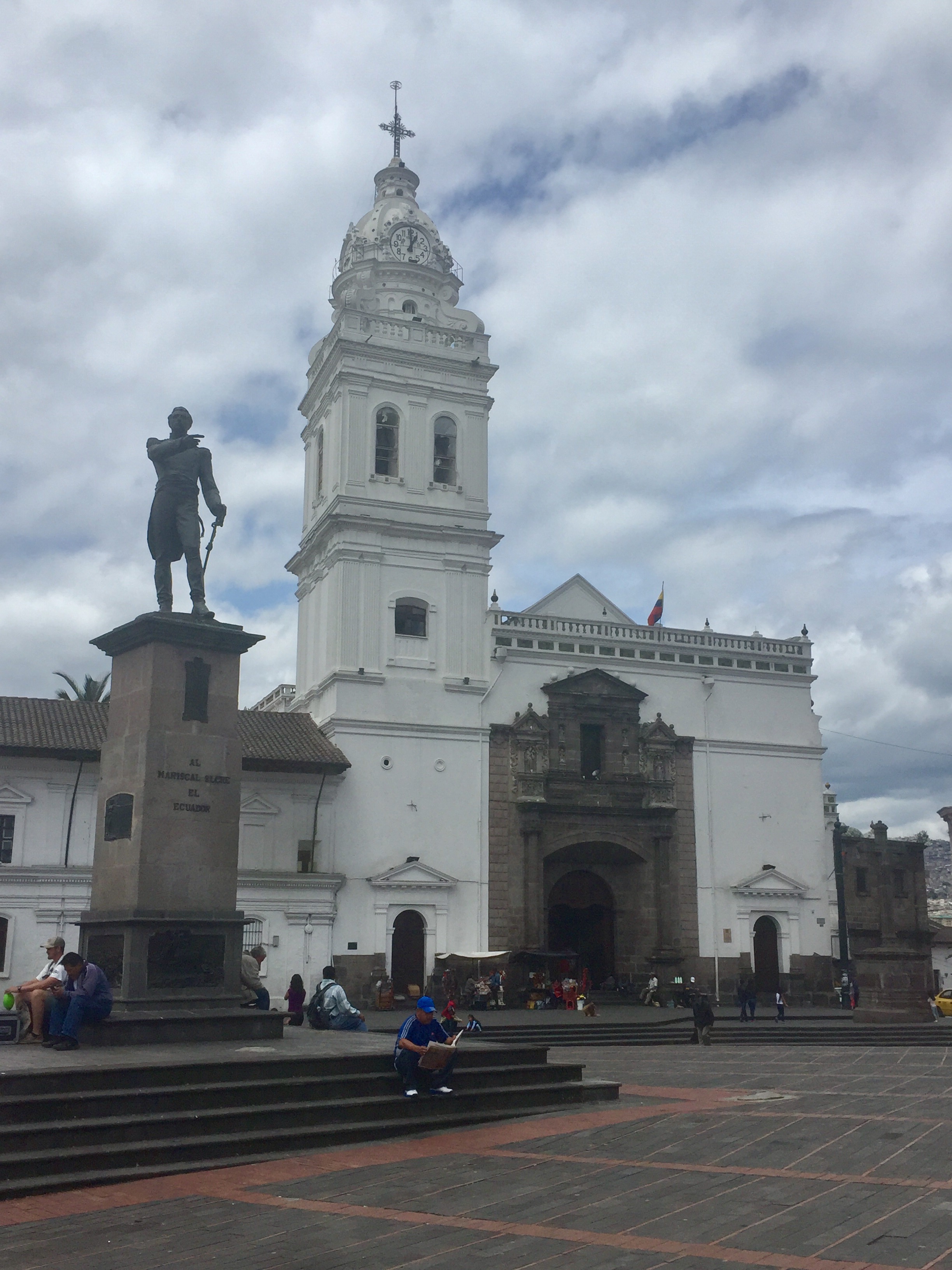
The Church of Santo Domingo

Breakfast room at Hostal Casa Montero, Quito, Ecuador, overlooking Legarda’s Virgin
Our hotel, a restored colonial house in the city’s historic center, has a breakfast room with expansive views of the surrounding hills, including Legarda’s (Ecuador’s famous artist) Virgin, a winged icon of the Virgin Mary overlooking the city. Later in the day, we tried Ecuadorian food, shrimp on fresh coconut with a mango sauce and hearts of palm. Tasty. But the Ecuadorian beer was the highlight for me. It was as good, or better, than any I have tasted anywhere. Really!
Hopefully, tomorrow’s attitude will easily overcome the altitude. If not, I know where the good beer is served. WEG
Autumn 2016 Travels in Europe: Up to Heaven
October 3, 2016


Up, up we went in a scaffolding elevator inside the beautiful and tall Karlskirche (St. Charles Church) in Vienna towards the dome painted with scenes of heaven. “We’re going to heaven today,” commented a fellow passenger. Petrified of heights and in an open elevator, I replied, “I just didn’t want to go today.” The scaffolding was in place so that the dome could be repaired and restored. Once we reached the dome level and stepped out onto the scaffolding, I froze, the scaffolding trembling and shaky. I saw a chair and asked Kathy to help me to it, somehow thinking that if I sat I would be safer. That is when I saw the narrow open scaffolding going further heavenward to the copula far above where they were restoring. Kathy said, “Let’s climb.” I said, “No way.” I could not believe they would let you, but they did. She insisted and said she was going. I said, “Go ahead.” She did. I cannot tell you how relieved I was when she returned from 236 feet above ground level, and we descended to the main floor of the beautiful church. What an experience!

Schoenbrunn Palace was the summer palace of the Habsburg dynasty, of first, the Holy Roman Empire and then the Austrian-Hungarian Empire. Grand it is! Imagine huge crystal chandeliers in gold and white rooms in room after room, and you get an idea of the grandeur. The grounds are also amazing with magnificent gardens and fountains and statuary.
We are staying in apartments in a historic building in Vienna within easy walking distance to the State Opera and other areas of significance. The apartments are wonderful. Wood floors, separate living rooms, one and a half bathrooms, kitchens, separate bedrooms. While each of our apartments is different they all have the same wonderful amenities. Huge and comfortable, we are quite pleased. We had intermittent rain today, but we managed to stay dry and we ate at a highly-rated cafe coffee house nearby. Rhonda and Allen, Sandra and Mike, Sherlene and Kathy and I say “hello” to all our family and friends. WEG
Autumn 2016 Travels in Europe: Chilled, Preserved, Displayed


September 30, 2016
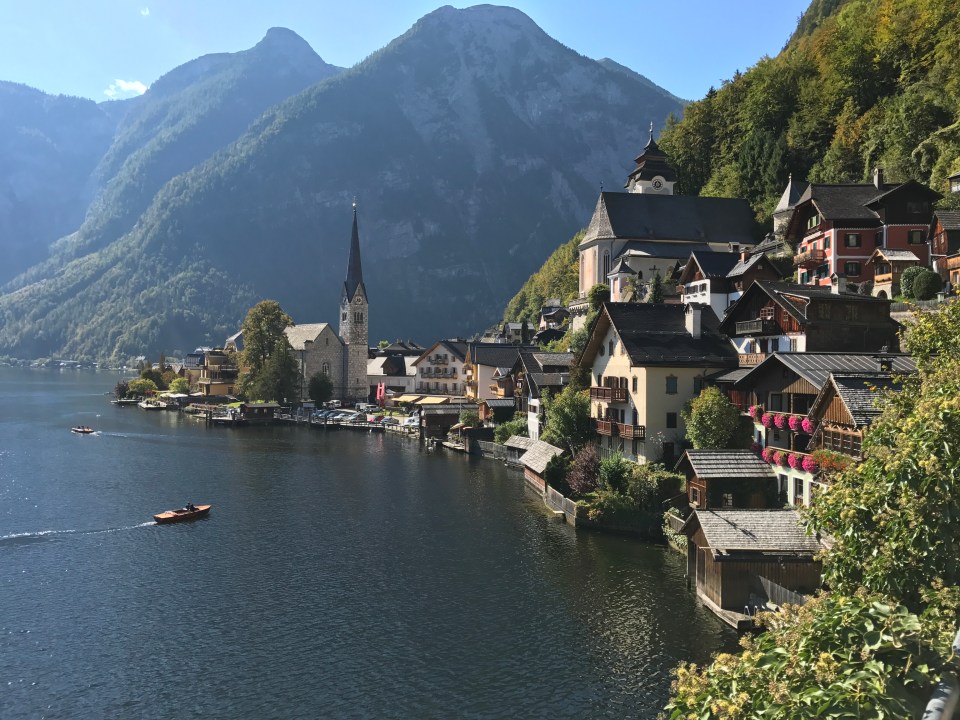
The Tyrolian village of Hallstatt draws one quickly into its charm. The narrow cobblestone streets reveal mountain gingerbread-style houses stacked above each other on the mountainside with the clear and clean lake shimmering on the other side. A waterfall falls in the middle of the city just above the cozy village square. A Lutheran church with a beautiful steeple commands the square, and a Catholic church sits majestically on the hill above. “Picturesque” does not describe the scene adequately enough.
Our group explored the city; yet, other activities also beckoned. Mike and Sandra went to the unique ice caves high above the mountain lake. Not only did they do the remaining strenuous climb after the bus dropped them off, but braved over 500 steps inside the cave to see the ice formations that were like stalactites and stalagmites in regular caves, but made of ice in this cave. Wayne and Kathy took the funicular (a cross between an elevator and cog train) up the mountain to the world’s oldest salt mine. 7,000 years of production have brought wealth through the ages to Hallstatt and still today, 300,000 tons of salt are produced annually. Riding a run-away salt mine train inside the cave and sliding down steep 100 yard slicker slides into the mine depths were exciting parts of the journey. We did not know we had bought tickets for amusement park rides, but in reality, these activities were a part of the miners’ everyday existence. Allen, Rhonda and Sherlene went to the Bone Museum, where they viewed old skulls, displayed with the name of each deceased carefully inscribed for public view. Because usable land is scarce in Hallstatt, those who have been dead the longest are dug up, the bones dried and sculls inscribed, in order to make room for new bodies in the grave site. Sherlene took one look and fled the site. Allen took pictures and Rhonda looked for long lost relatives.
It was a fascinating day in one of the prettiest places on this planet. WEG
Walking the Hill

The castle gate on Castle Hill, part of Budapest’s extensive World Heritage site, including the Turul statue, a mythical bird seen as the symbol of power, strength, & nobility, carrying the flaming sword of God

Matthias Church in Budapest on Castle Hill with King Saint Stephen’s sculpture in the foreground
Our hotel is located on the Pest side of the river, and so we spent the day walking the hill for which it is noted. We took a bus to the top and were amazed with the great transformation of the area since we were here about twelve years ago. Refurbishment had made everything appealing and clean. When we came to spend a week here years ago, Hungary was just being discovered again after years under the communist shadow. It has now definitely been discovered.
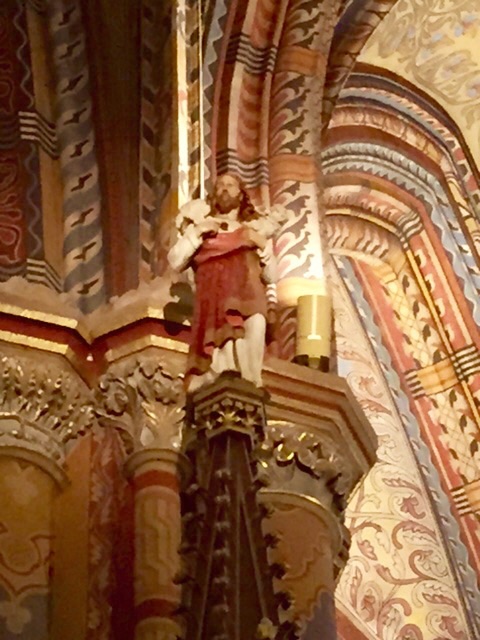
Interior of Matthias Church, founded in 1015 by King Saint Stephen
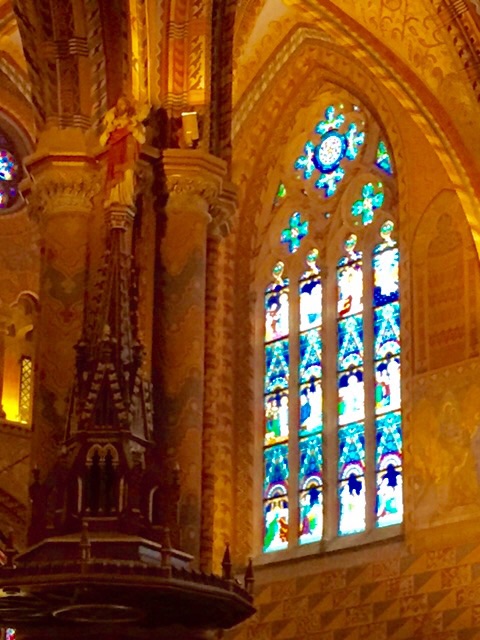
A stained glass window in Budapest’s Matthias Church
We spent major time around St. Matthias Church, the historic church of Budapest. Founded by King Saint Stephen in 1015, it has seen much destruction and renewal as the Mongolian hordes destroyed the city in the 1200s and later, in the 1500s, when the Turkish invasion turned the church into a mosque. The Muslims whitewashed the walls and destroyed most imagery, but walled up the Madonna statue, the Virgin Mary. It was forgotten until the Christian forces assaulted the hill in an effort to retake the city in 1686. As the Muslim leadership assembled in prayer, a powder arsenal accidentally exploded and shook the mosque so hard the wall crumbled, exposing the Madonna to the astonished praying Muslim Turks. That night, the hill fell back into Hungarian hands and the church reclaimed its heritage. Later, the church was badly damaged in both world wars, and then the Soviets turned it into a military vehicle storage facility and stable. The target of a terrorist bomb attack in the late 1990s by unknown assailants damaged some of the priceless stained glass windows. In spite of all these trials, today the church is a marvel of Art Nouveau style. It houses many treasures of the Hungarian heritage and is a testament to the Hungarian spirit.

Fishermen’s Bastion on Castle Hill – The entire Casstle District is a UNESCO World Heritage Site
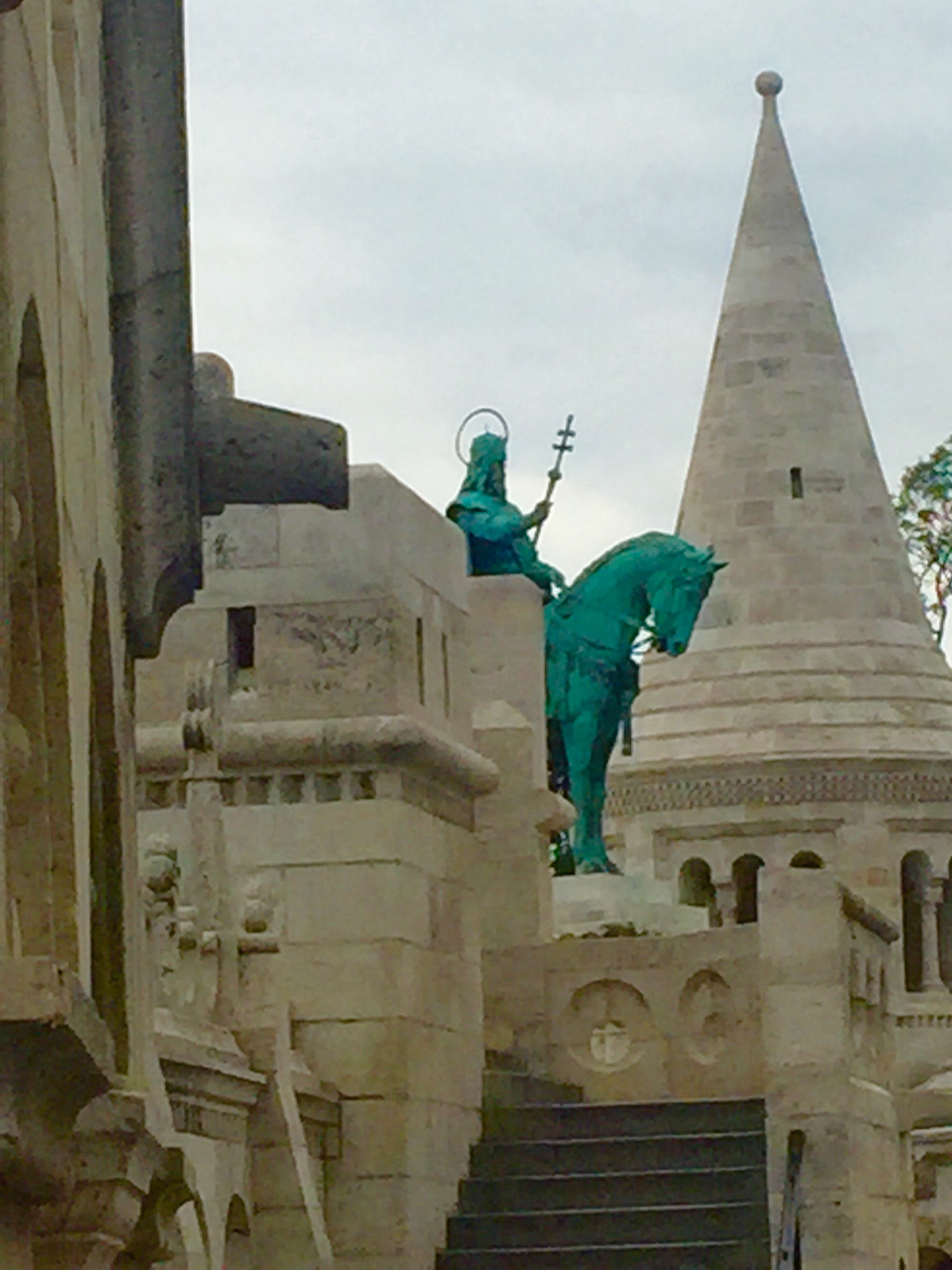
Budapest’s Fishermen’s Bastion, with seven white towers, was named for the guild of fishermen responsible for the defense of the city walls in the Middle Ages.
We walked to the Fishermen’s Bastion with its white stone buildings and beautiful monuments. The scenes from its terrace over the Danube give unforgettable views of the Hungarian Parliament building with its iconic red tiled roof and majestic spires standing out in regal beauty on the Buda side of the river. Then, we walked to the massive palace that gives the hill its name, “Castle Hill.” It has impressive statues and flower plantings.

A view from Castle Hill that includes St. Stephen’s Basilica across the Danube River
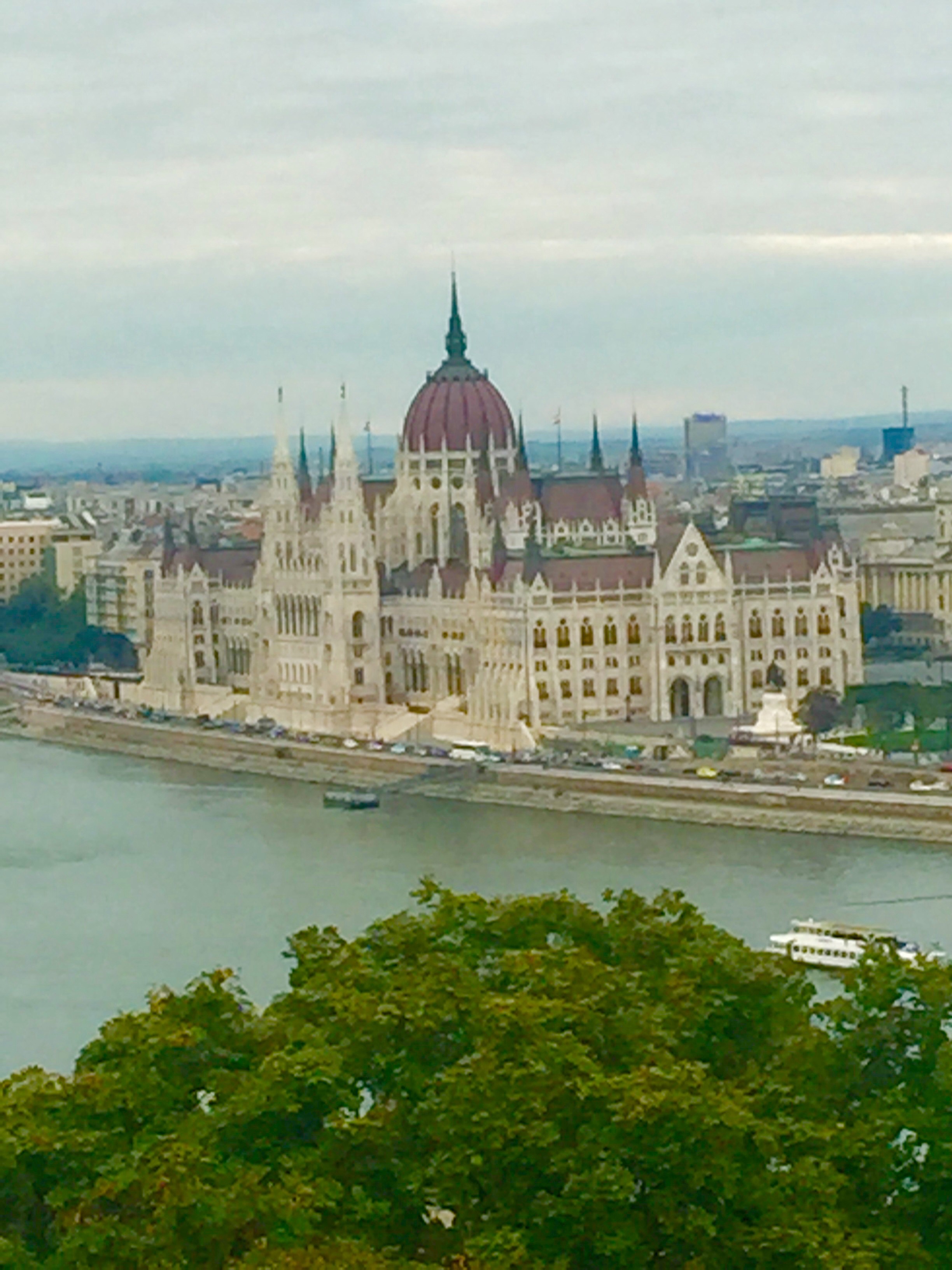
Another view across the Danube from Castle Hill
After some shopping, we got on the bus for the trip back down the hill where we spent a long relaxing meal time in a “cave” room with vaulted ceiling and stained glass windows of a great restaurant near our hotel. WEG – September 30, 2015
Surprising Bratislava

The Cathedral of St. Martin in Bratislava, Slovakia
The Stare Mesto (Old Town) is comfortable and quaint–you know you are in eastern Europe; everything is different and in a good way. But the food!

The view from our Bratislava apartment on the fifth floor of the Old Town (Stare Mesto) that includes the Bratislava Castle

View from Bratislava Main Square in Old Town
One of the joys of traveling is trying new foods, expanding your pallet and taking risks. I cannot imagine traveling this far and eating things I can get back home. Tonight we dined in a brewery that has a traditional Slovak restaurant attached. The starter was a home made crackling that was chopped and ham fat drippings added to make something like a pâté. Served with sautéed onions and soft rye bread–I would be hard pressed to think of a spread that I have ever had that was better. Did you say, “carbs?” I didn’t hear you–I was too busy chomping away–remember the adventurous food part! Kathy and I will take a walk when finished. Main course for me was crispy duck legs on a bed of stewed red cabbage with ham dumplings–scrumptious. Kathy had stewed beef in a pumpkin cream sauce with puffed bread dumplings–excellent. We shared sides of marinated tomatoes and creamed cucumbers.

The delicious traditional Slovakian meal we enjoyed
The Stare Mesto (Old Town) of Bratislava is charming. Church steeples abound. Mainly Roman Catholic, the city has a large share of Lutheran churches as well. The streets are thick cobblestone–really old time thick cobblestone. The narrow streets curve around so that you don’t end up where you thought you were going. But, that was ok, since where you went was pretty and interesting. I saw a big crystal beer mug, hand-cut and crafted in Slovakia, in a store window, and that is my main souvenir for the trip. Each ancient archway leads to a new street to search, and we walked hand in hand around the entire area. The castle fortress sits on the hill above the Stare Mesto and gives the area a majestic feel. So, as you can see, I walked enough to eat that pátê.
WEG – Monday, September 28, 2015
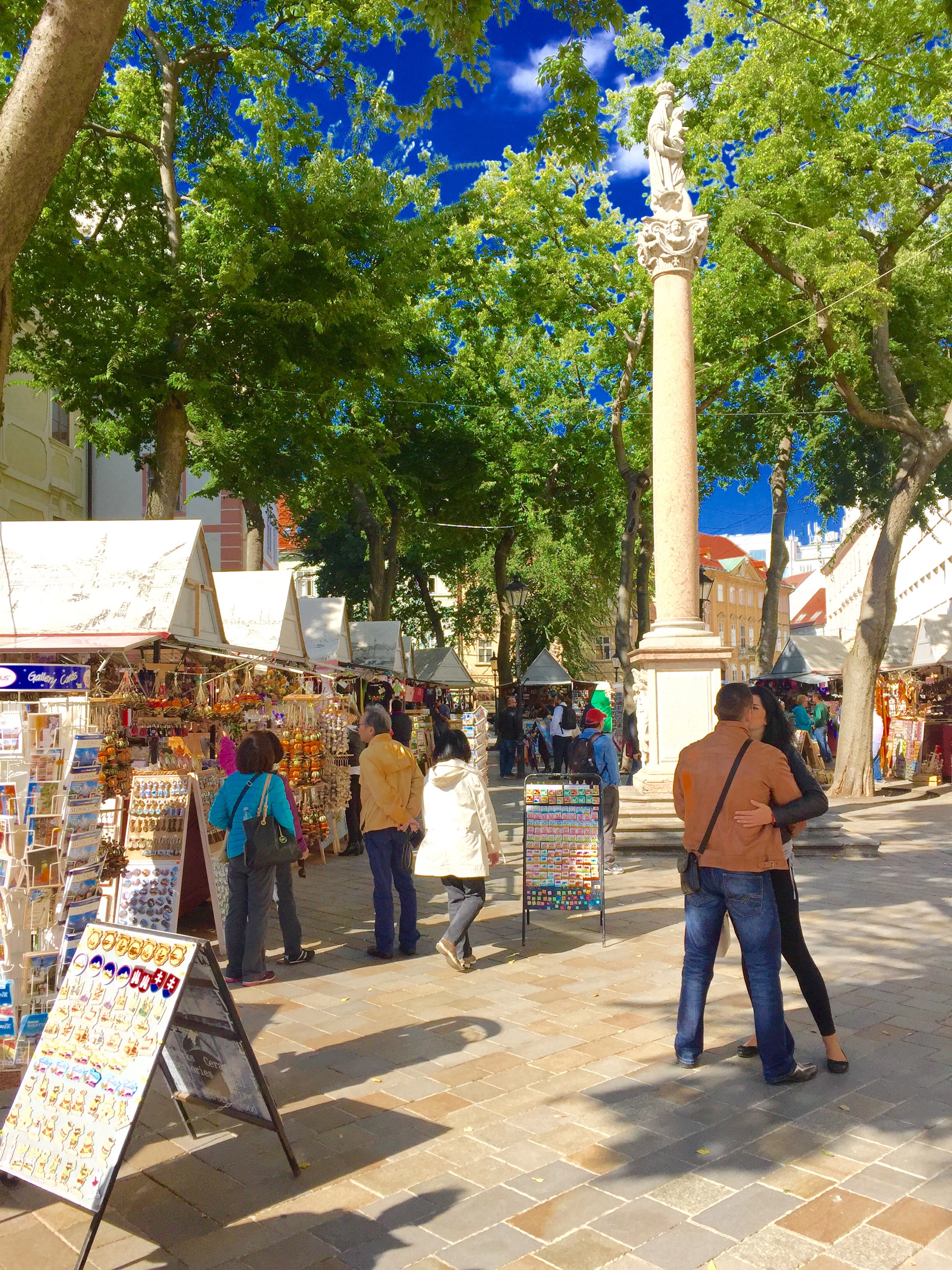
Outdoor market in Bratislava near thhe Main Square
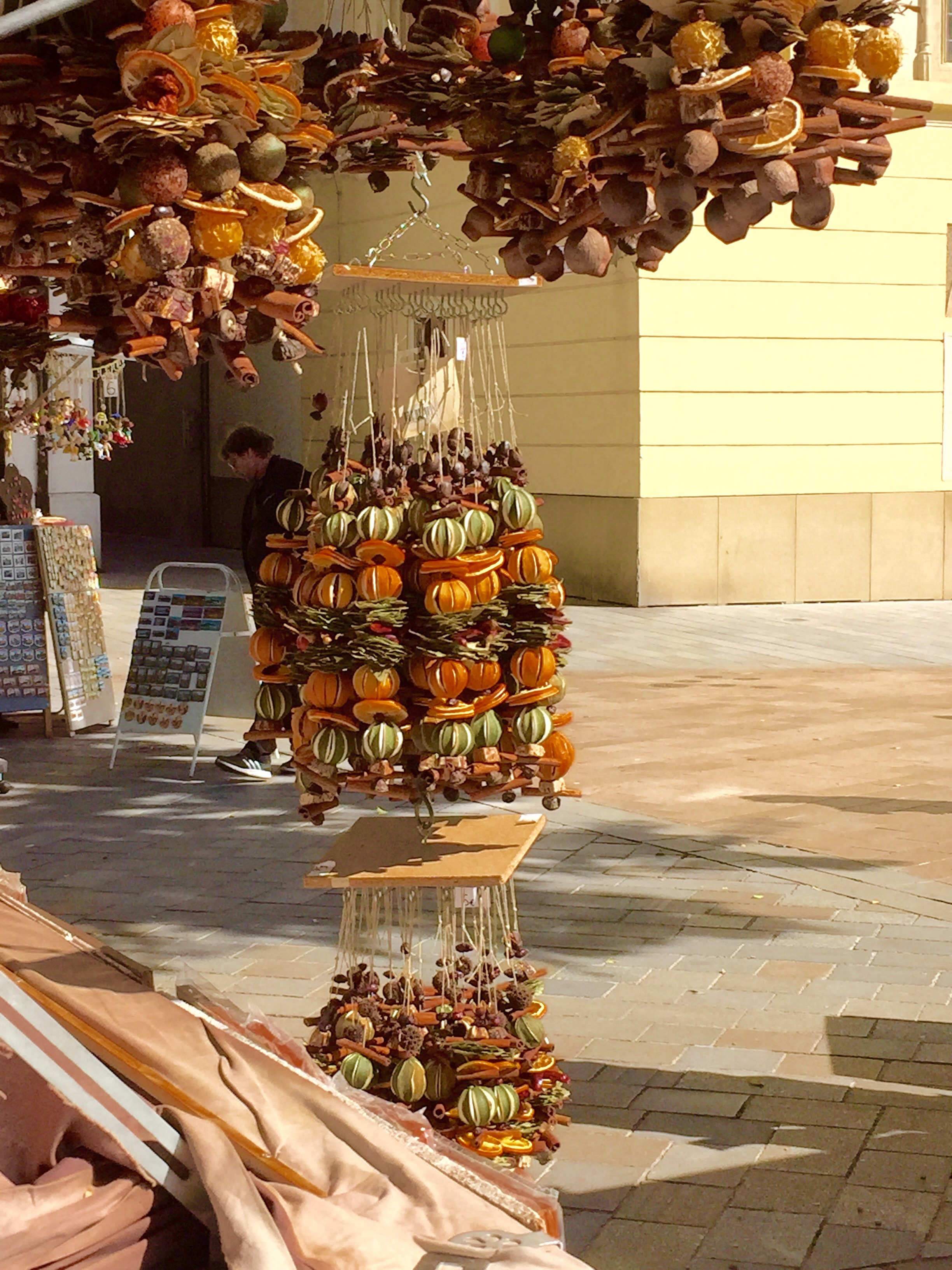
One of the items for sale at the market in Bratislava, Slovakia
Kathy’s post script: We are so pleased with public transportation in Europe and the ease of using it. We feel quite comfortable with the process and are performing quite well in our travels. Yesterday in Vienna, we looked at the map of the train routes and figured out (by ourselves) the plan to get to the train station the next day from our apartment, and we bought our tickets — for less than three euros. This morning we left our Vienna apartment, walked a block to catch the U6 tram, transferred at the appropriate stop to the U4 tram, then transferred to the U1 that brought us to the main hauptbahnhof in Vienna where we then boarded the train to Bratislava. Upon arrival in Bratislava, we paid less than two euros to take the x13 tram to our stop in Stare Mesto (the Old Town) where we met our apartment manager & settled in to an apartment in the Old Town.
Apartment living in Europe has been a positive experience for us. Our apartment in Bratislava is wonderful. For a mere 72 euros, we have a fully furnished apartment with a kitchen equipped with cooktop, microwave, dishwasher, refrigerator, coffeemaker, cookware, & dishes; two master bedrooms each with a king-sized bed; a couch & chair; dining room; bathroom with a shower & a washing machine; & two TVs with English channels (which we don’t have time to watch!) — and internet that works! It is beautiful. In our Vienna apartment, I was amazed to have use of a clothes washer/dryer combination that effectively performed both tasks.
Just wanted to share with you some of the details of travel in Europe with the Graumann’s.
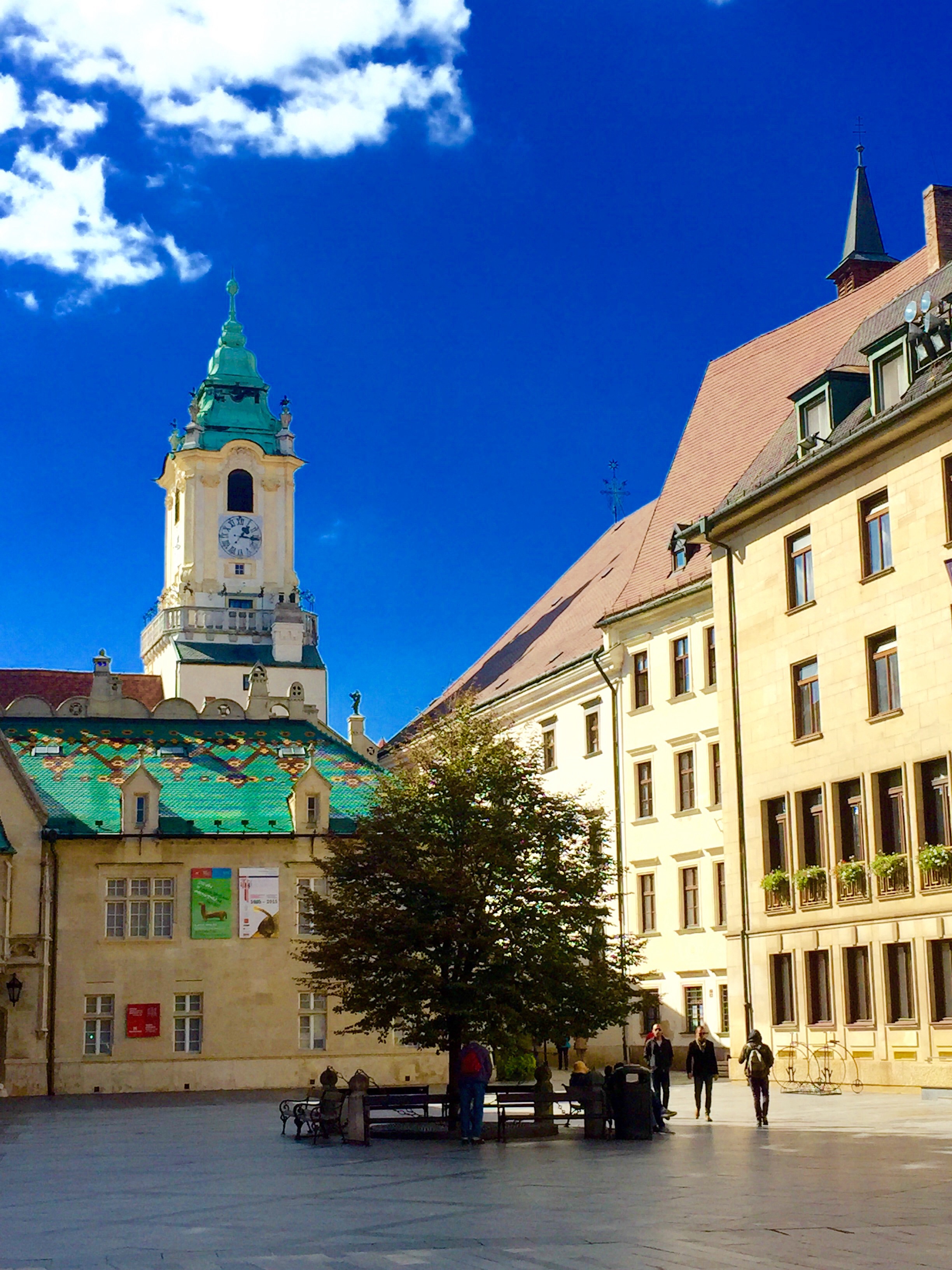
Bratislava, Slovakia
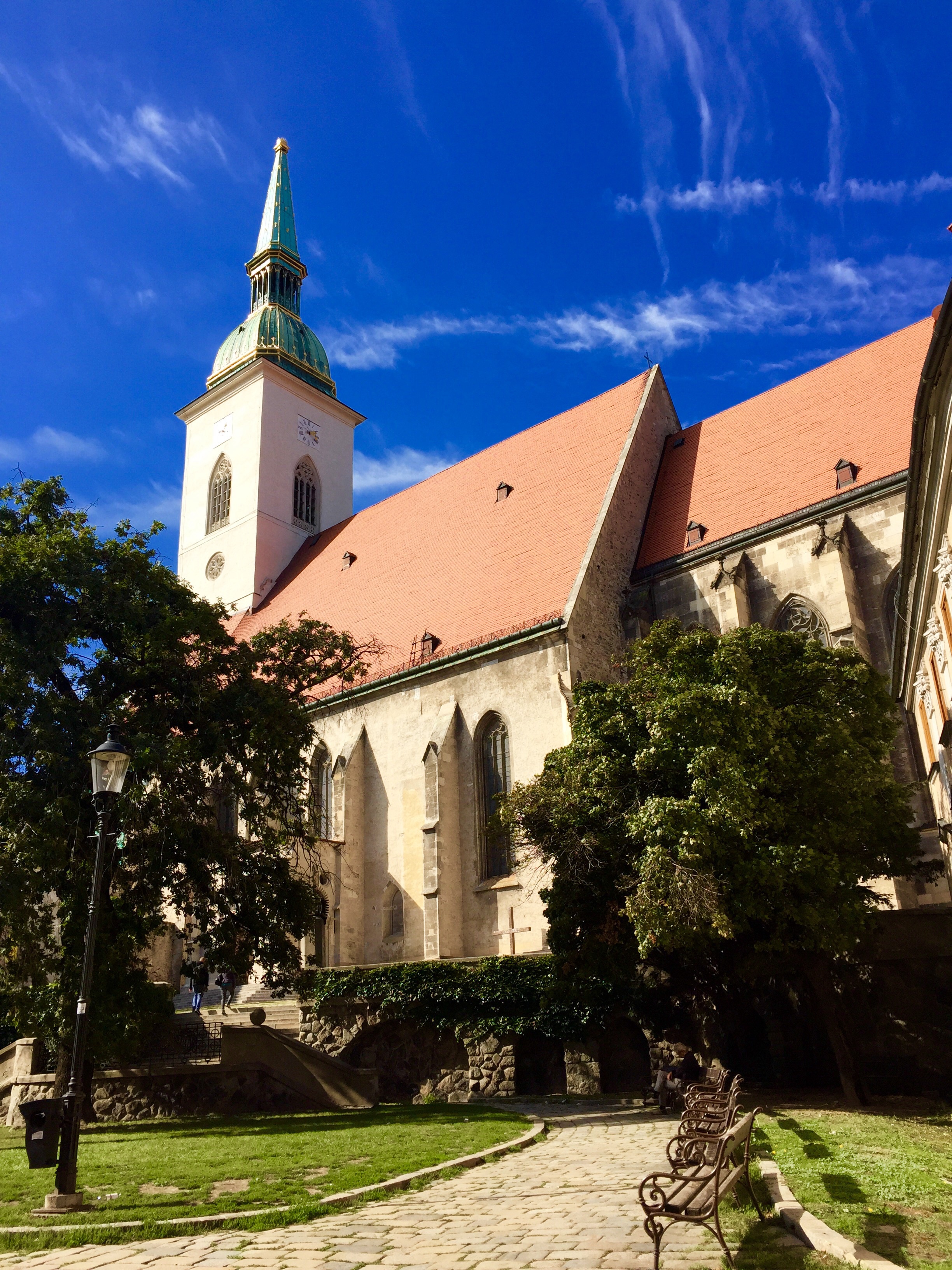
Another view of St. Martin’s Cathedral in Bratislava
Glory of a By-Gone Era

Vienna’s Schönbrunn Palace
The Royal Imperial Habsburg’s ruled the Holy Roman Empire and then the Austro-Hungarian Empire. They were industrious, hard working, generally frugal and duty-bound. Emperor Franz Joseph said, “When you have worked until you are exhausted, you have had a good day.” He practiced what he preached, waking at 4 AM for morning prayer and then working 16 hours straight. He slept in his grand palaces on a hard iron framed bed in simple circumstances.

Vienna’s Schönbrunn Palace
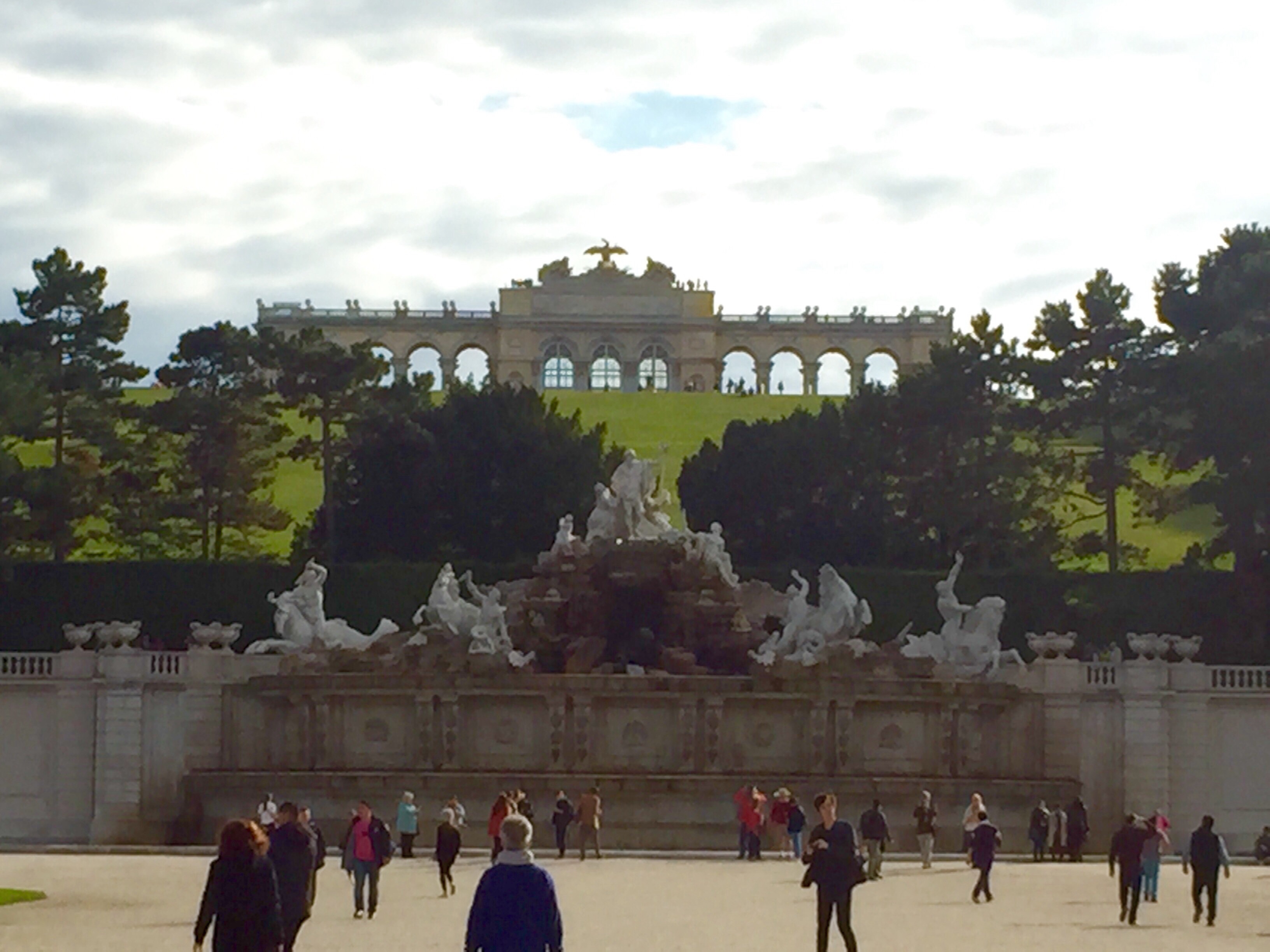
Vienna’s Glorietta in the gardens of the Schönbrunn Palace
As we toured the Schloss Schönbrunn, the Imperial Summer Palace, we walked through beauty and history. Gold and white rooms with huge chandeliers and porcelain fire stoves, with beautiful paintings of Habsburg historic events and family members went on without end. After all, there are over 1,400 rooms in the palace complex. Silk wall-coverings and Belgium tapestries adorned others. The magnificent ballroom with frescoed ceilings and crystal glass mirrors held many important world events, including the meeting of JFK and Premiere Khrushchev in the 1960s. Empress Maria Theresa married off her daughters to secure the Habsburg reign. One, Marie Antoinette, died at the guillotine during the French Revolution. The Empress said that she only hoped that the daughters would do their duty, take care of their husbands and save their souls–whether they were happy or not did not matter. The Habsburg reign came to an end at the conclusion of World War I, since the Empire was a part of the defeated Axis powers. All the palaces became state museums.
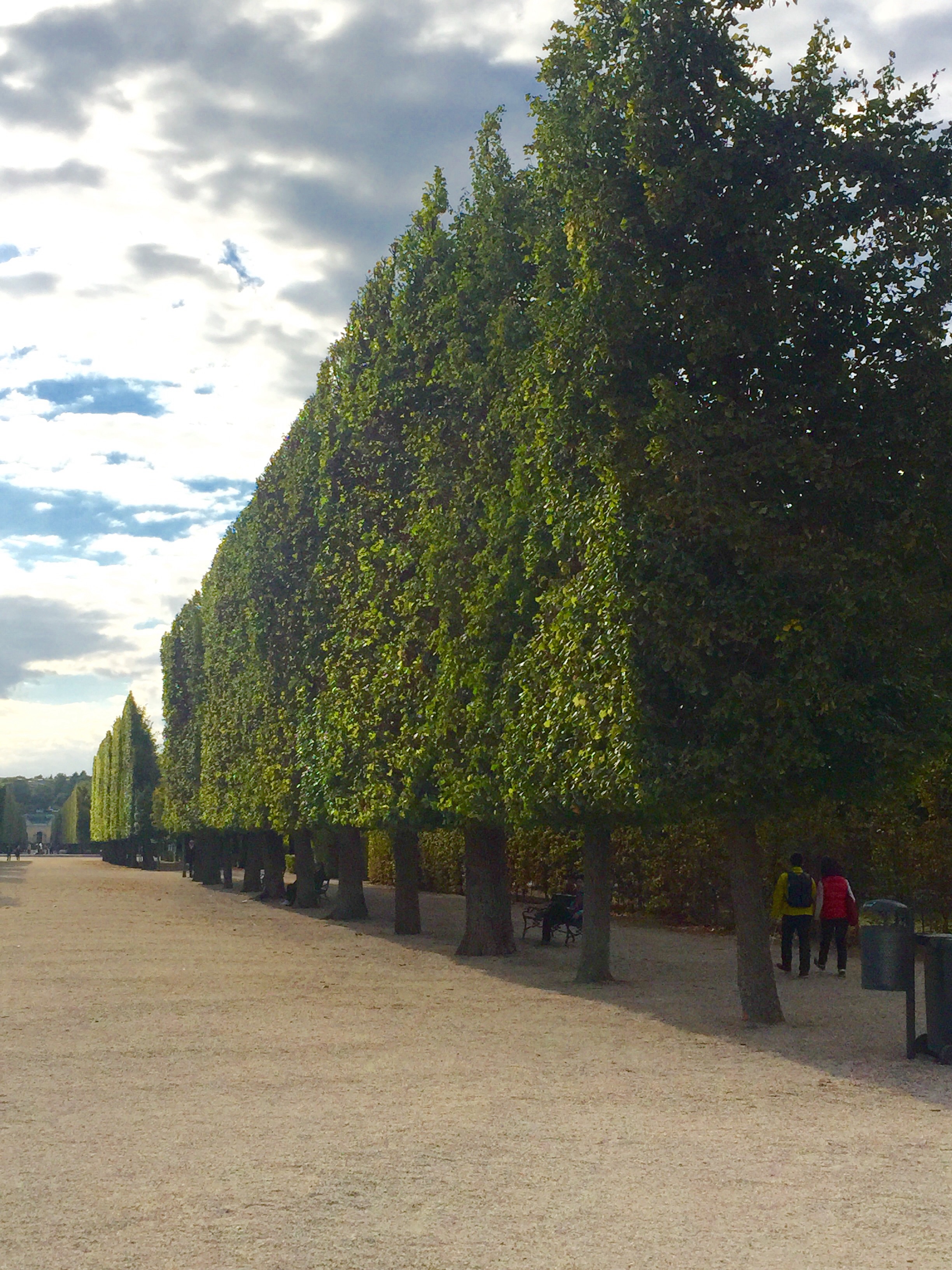
The gardens of the Schönbrunn Palace
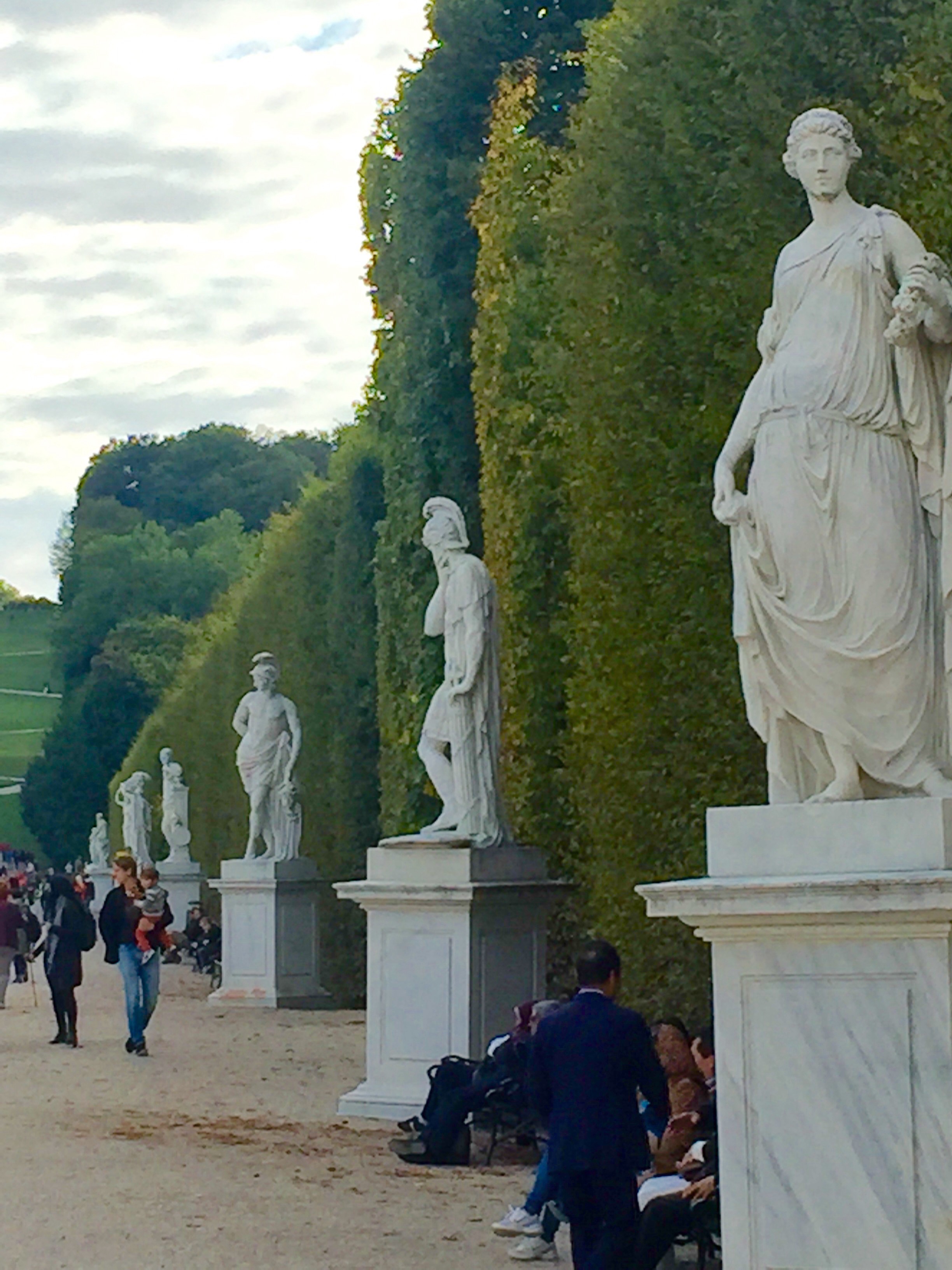
Statuary in the gardens of the Schönbrunn Palace
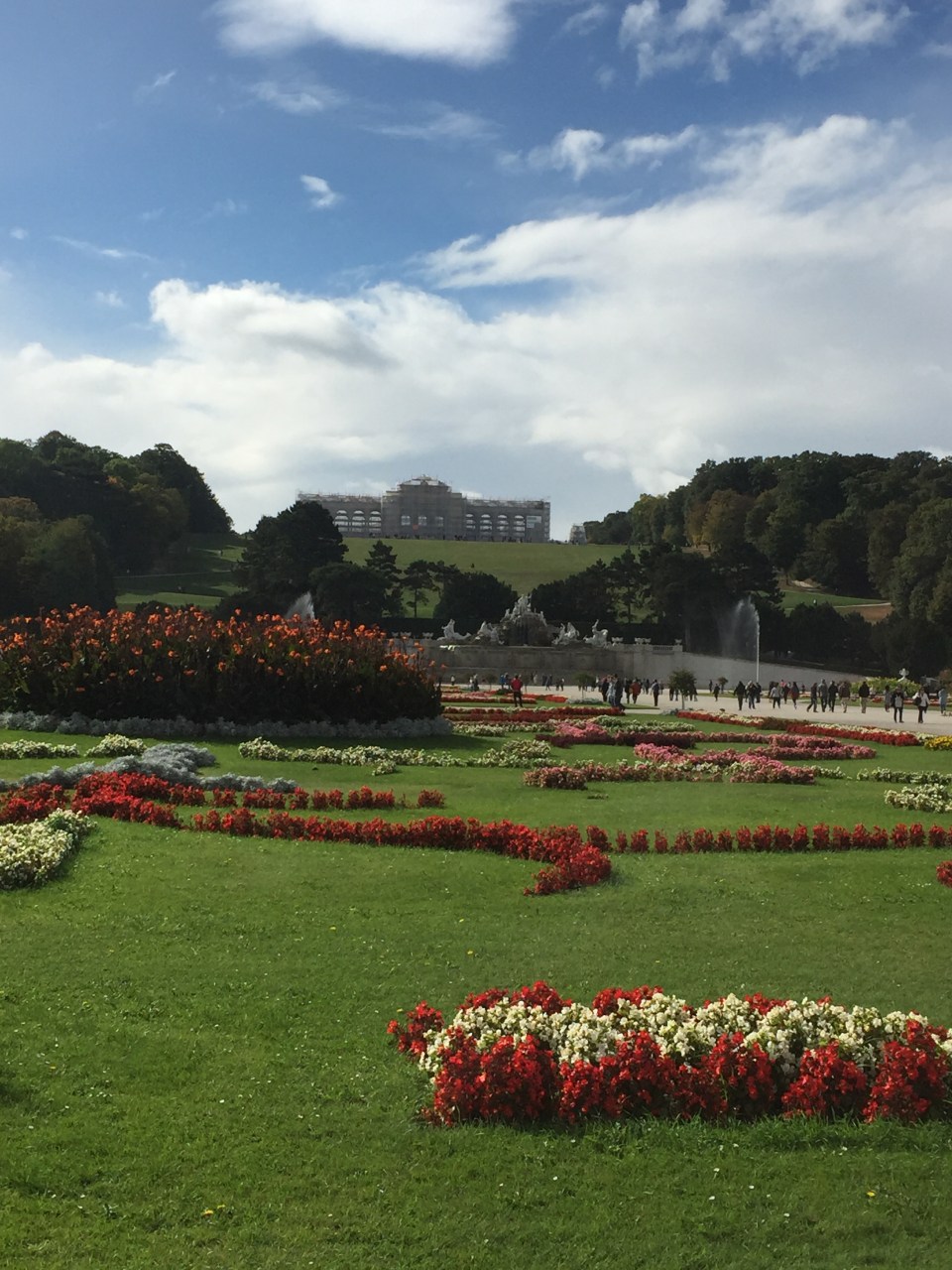
The exterior gardens of the Schönbrunn are gigantic and spectacular. A hedge and flower maze surrounded by a long arbor adorn one side of the palace while the opposite side hosts a rose arbor and garden with fountains. The rear gardens reveal magnificent flower design plantings lined with statuary and sheered hedges. Fountains dance in the gardens overseen by the amazing Gloriette, a white marble fountain with statuary at the base rising up to a masterful building silhouette on the hill above. Truly, this is one of the most wonderful gardens in the world.

Another view of the beautiful gardens of the Schönbrunn Palace in Austria
Kathy and I are proud of our ability to maneuver with public transportation. Today, without map or help, we moved through Vienna like pros.
WEG – Sunday, September 27, 2015
Refreshed and Inspired
We awoke to 34 degrees Fahrenheit and looked down from our hotel room balcony on a clear glassy blue lake whose shores licked the base of tall mountain peaks. Swans swam the shores. We got back under our warm down duvets and snoozed again. Eating a late breakfast, we determined to spend the day leisurely in Hallstatt and not slide down the shoots into the world’s oldest salt mine, or take the cable car up to see the peaks of the Tyrol and a mountain glacier or visit the skull cemetery, but rather just soak in the beauty of the town on the cliffs by the lake. And soak it up we did. God willing, we can return for the other activities another time.

Wayne and Kathy view the enchanting village of Hallstatt, Austria, from a hilltop overlooking the Lutheran church that ministers to the community in Word and deed.
I discovered Hallstatt by searching the internet about Europe’s prettiest villages or Top 10 things to see in Europe or Austria and such, and the name Hallstatt, Austria, appeared often. So onto the itinerary it went. We soon knew why so many love the city and the surrounding lake and mountains. While the main street is relatively flat as it runs along the lake, the village reaches up the cliffs for businesses and homes. Stone or wooden staircases cling to rock cliffs or tunnel into the rock for upward mobility. Homes and shops are built on solid rock foundations, and boulders protrude through some. The buildings and homes have thick wooden shingles and are painted in pastels. Gardens are planted wherever possible and flower boxes with flowers blooming profusely adorn almost every building. Thick green moss clings to walkways and railings and roof shingles. The “white gold” salt made the region wealthy, and while the mines are no longer major producers, salt in one form or another is found in most shops. Two beautiful churches adorn the city’s skyline, one Lutheran/Protestant and the other Roman Catholic. A waterfall drops into the mid- point of the city, and the lake and mountains are always in view. We walked the narrow lanes and dropped into shops that caught our attention. We watched a wood craftsman at work on his lathe. Later in the day, we dined in a lakeside restaurant under a huge tree whose leaves were now turning yellow as the fall approaches–lake fish soup and cheese dumpling soup, beef goulash with spaetzle and roast breast of duck with red cabbage and cranberries and, of course, the local beer. As usual, mine was weis (blond or light colored) and Kathy’s dunkel (dark). As they say, opposites attract.
As the evening approached we headed back to our hotel, relaxed and refreshed on a day when the sun shone brightly and the temperature was a mild 64F. WEG – Monday, September 21, 2015

A Hallstatt, Austria, scene with the Catholic church on the left and the Lutheran church on the right

The serene outdoor setting in which Wayne and Kathy lunched while spending the day in Hallstatt, Austria

A pear tree laden with fruit is pruned to grow functionally and attractively up the wall of a home in Hallstatt, Austria.
 kgraumann
 wgraumann
 gofarther.me