
A Day Not Known
It occurred to Kathy that we had not in our lives simply spent carefree days together. I’m a long range planner, and there was always something ahead to achieve. It is not that we did not take time to do fun and interesting things; we did. We traveled, and we had great adventures with our kids. Our daily existence was filled with good things. We had a wonderful and blessed life! But sitting on a park bench with no future plan, soaking in the surroundings just because it felt good–not so much.
Today was one of those days. We walked the gardens of the Saxon Summer Palace–Pillnitz–on the Elbe River just outside Dresden. It was a carefree day–just walk and sit and absorb. Such beauty in the trees and such refreshment in the air. No plan, just be. It was strange, but good. Maybe I can do this once or twice a year in the future–oh, that sounds like a plan, not too spontaneous. Maybe this was my once in a lifetime experience.
WEG

Front portal of the Pillnitz Castle on the Elbe River
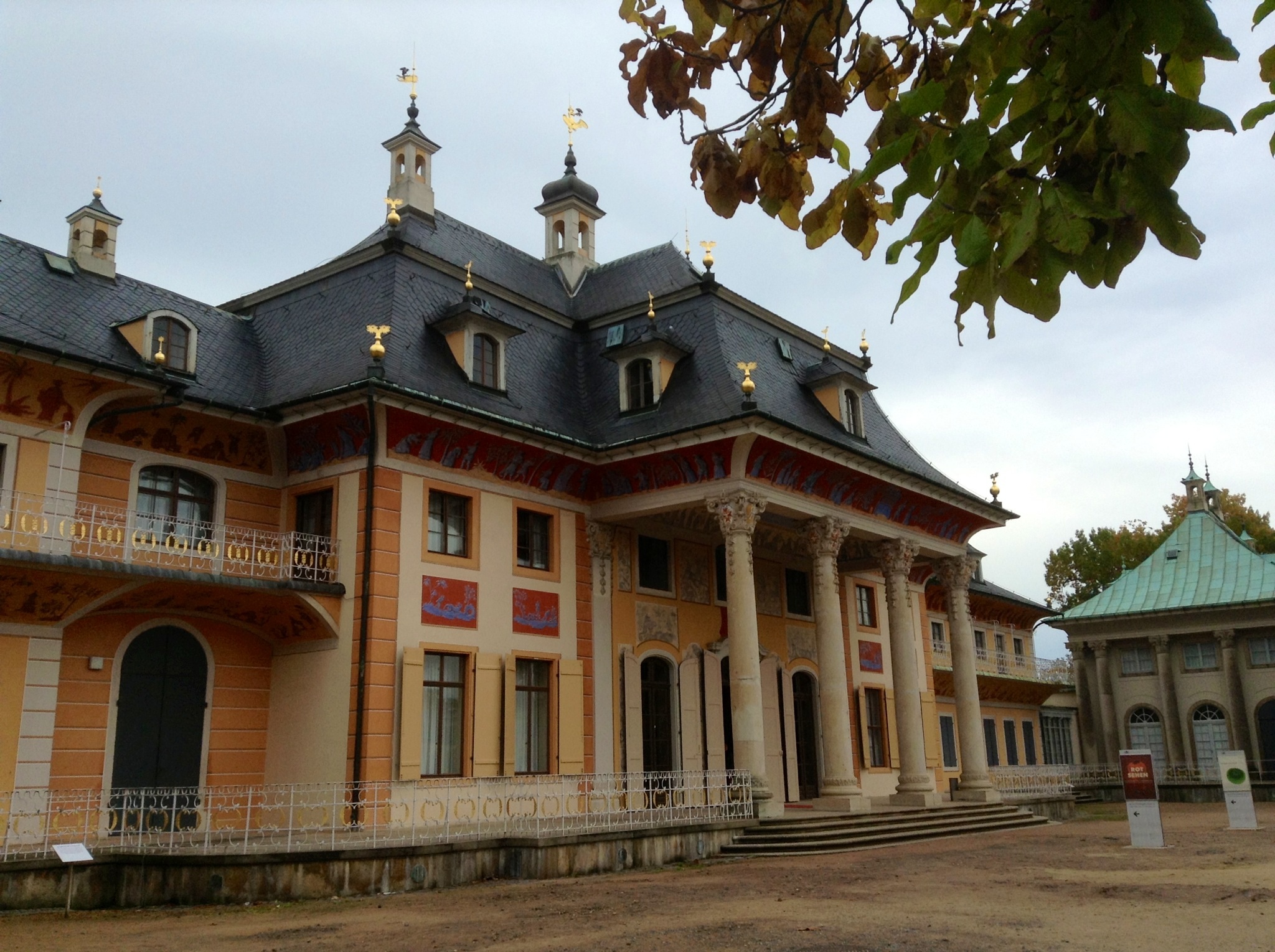
One wing of Pillnitz Castle on the central courtyard
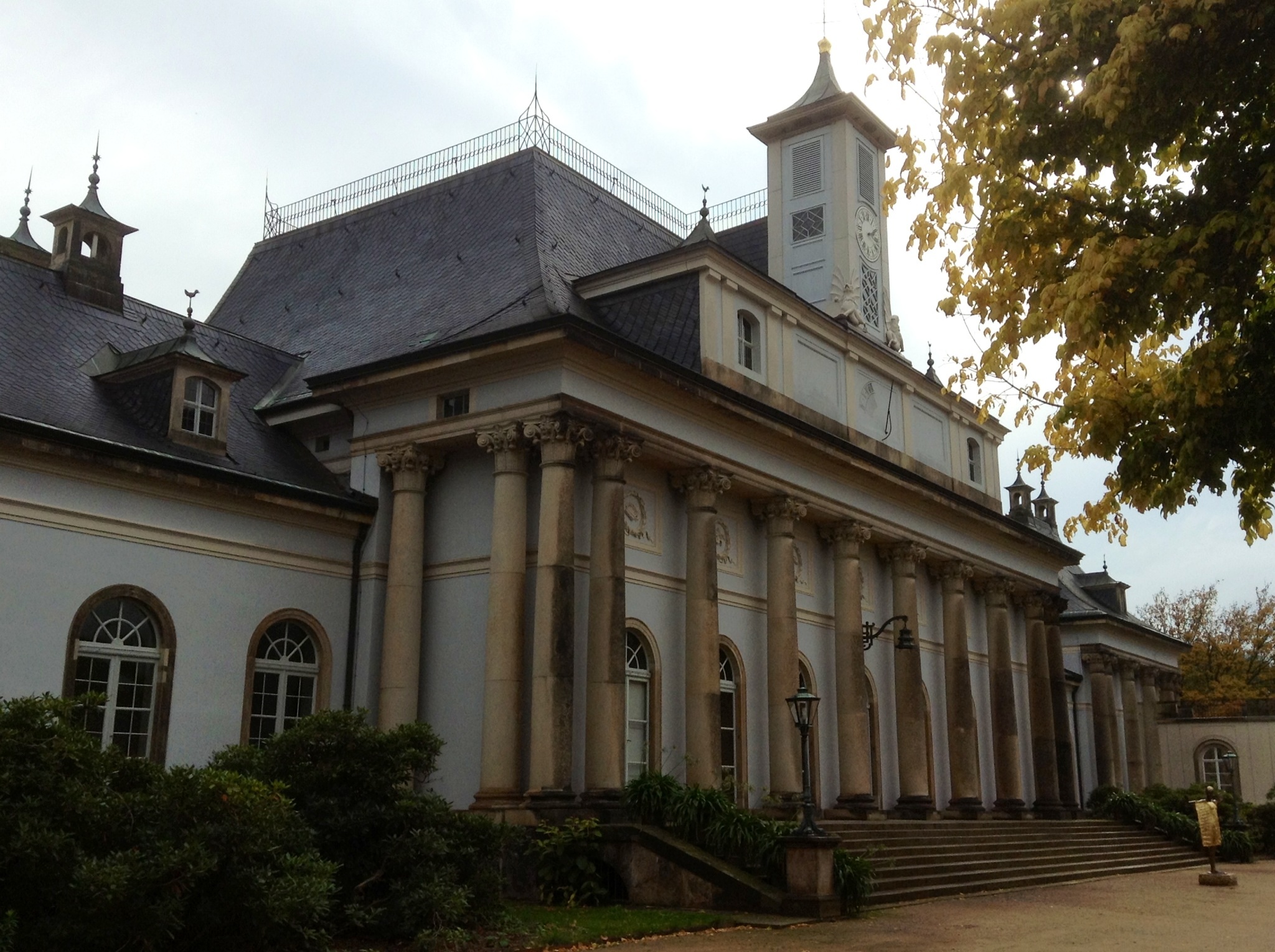
Another section of the Pillnitz Castle from the central courtyard
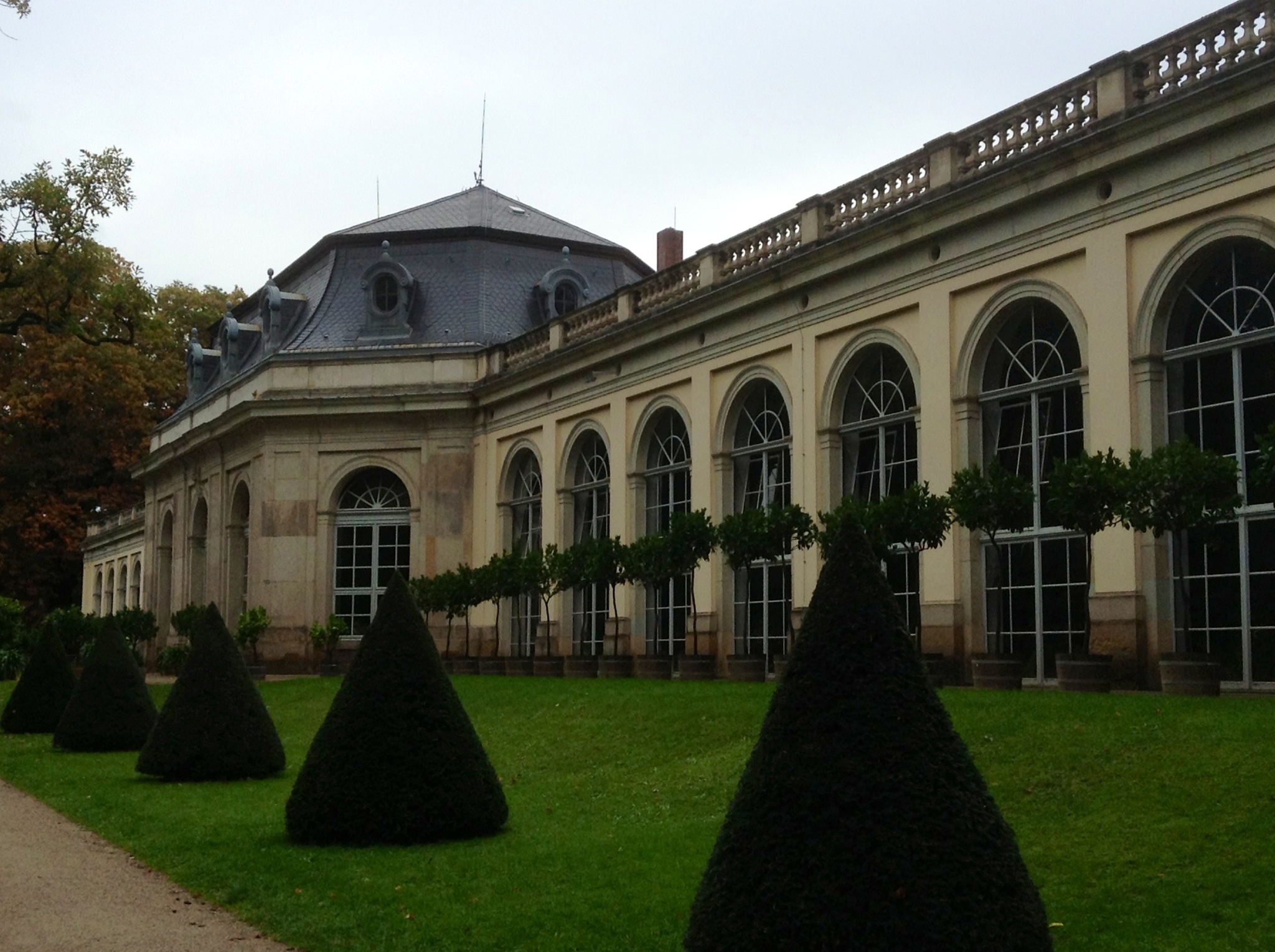
The Orangery in the Pillnitz Gardens
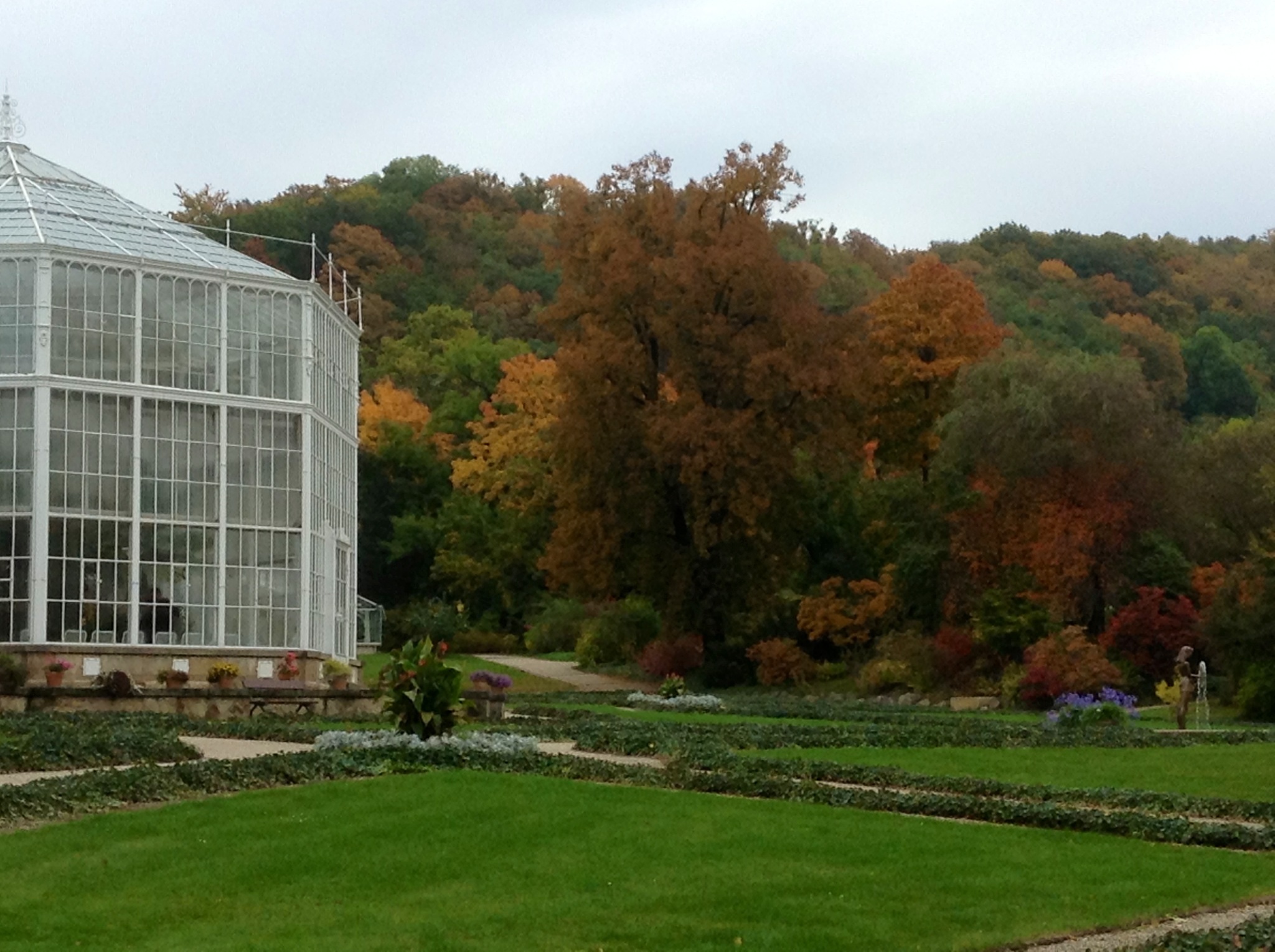
Chinese Pavilion in the gardens of the Pillnitz Castle
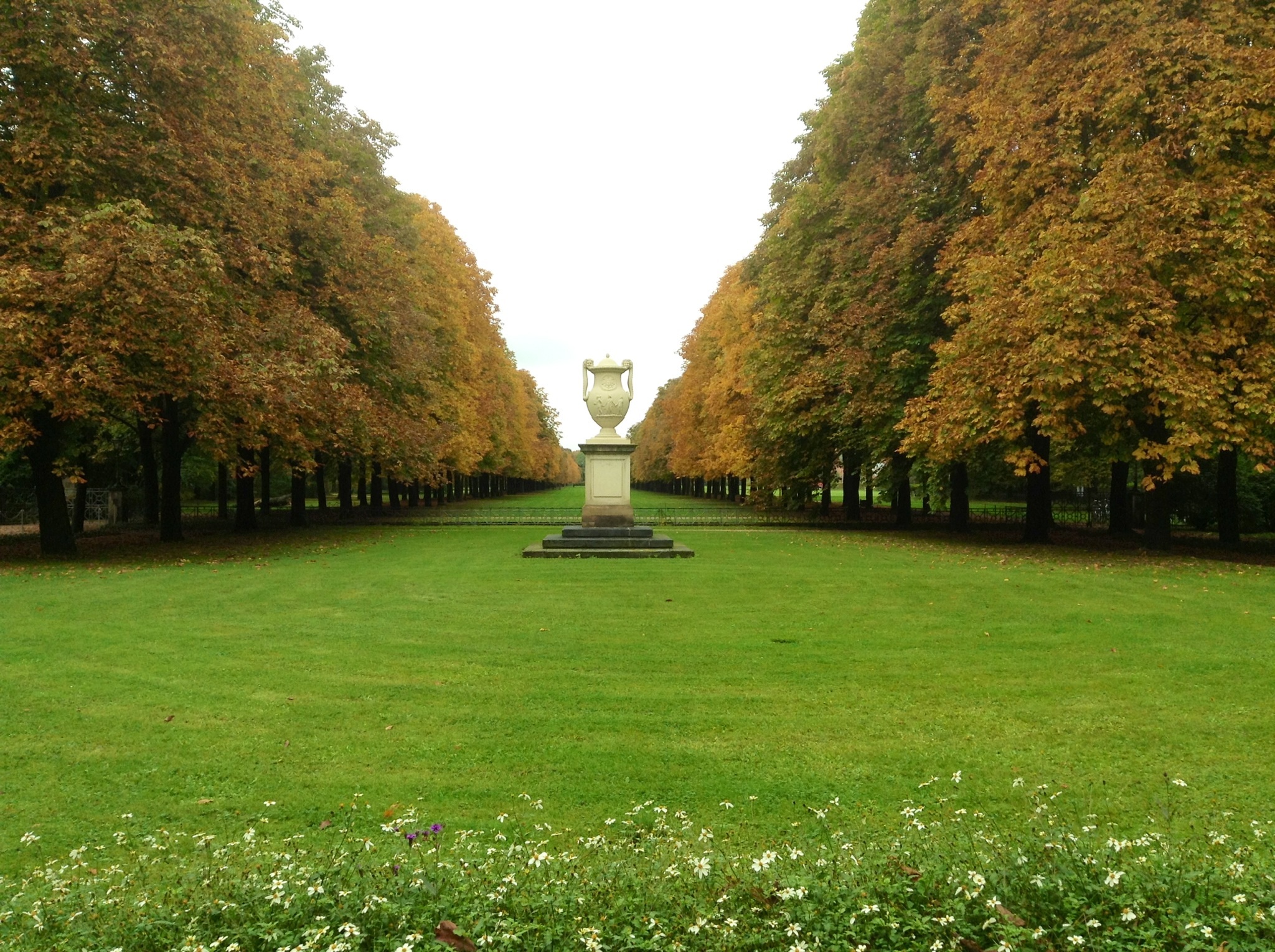
The chestnut tree-lined promenade in the gardens of the Pillnitz Castle
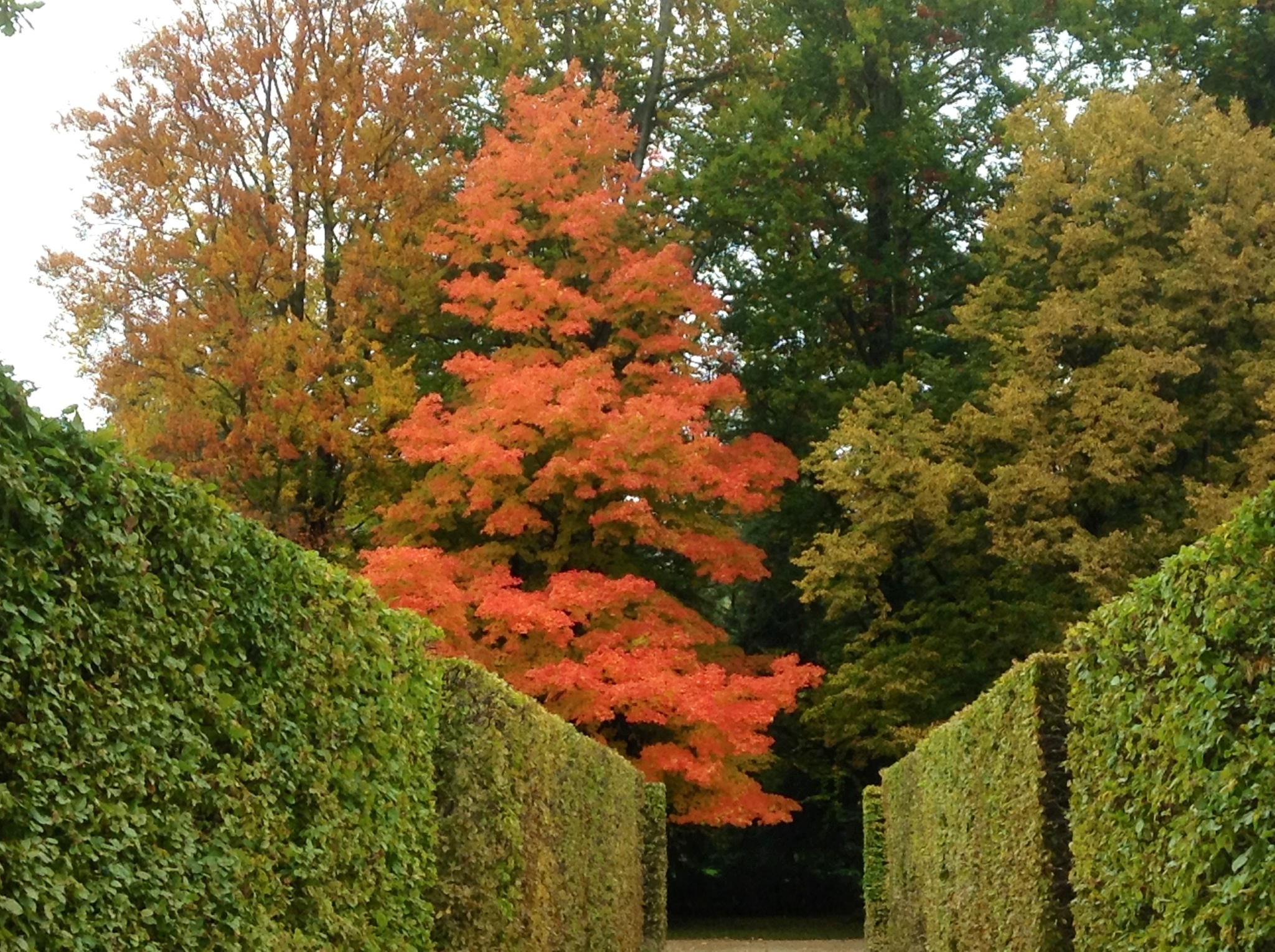
The hedge garden at the Pillnitz
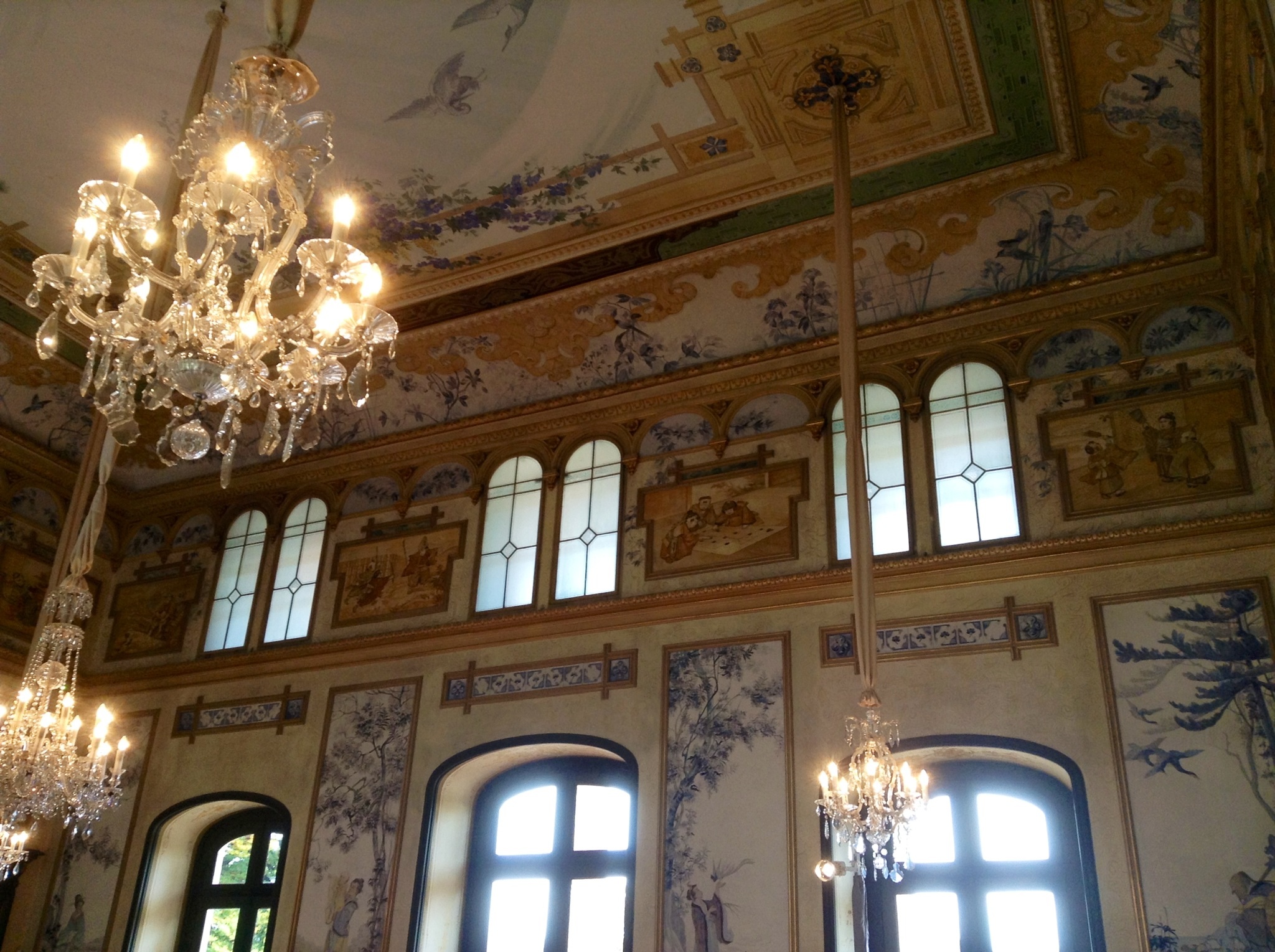
The Chinese room in the Pillnitz Castle
The Green Vault
It’s called the Green Vault because of the color of the stone used in the foundation and some supporting walls. It is a world class museum in Dresden; the first of its kind, royal family treasures opened to the public. And treasures they are! The rooms were built to totally integrate the treasures into the setting. Thus, the rooms themselves are masterpieces.
It is hard to describe the wonders Kathy and I saw. Rhinoceros horns, ostrich eggs and sea shells etched and polished and covered in gold and silver and precious jewels. Alabaster, mother of pearl and amber made into all kinds of objects and laden with gold and silver and jewels. Rock crystal made into goblets and serving containers, luminescent yet translucent, and once again trimmed in precious metals and jewels. Enamels made into paintings and serve ware and presentation boxes, some incorporating art pieces from antiquity into the design. Ivory, lots of ivory, made into amazing objects. Art ware made of glass molten with gold, mostly ruby in color. Bronze work acquired from around the world. And the jewels, the most complete collection in the world–stunning! It is not just the jewels, but the craftsmanship that accompanied them, such as buttons for the king’s robe that took the goldsmith years to construct making fine gold filigree by hand before the pearls and diamonds were attached. And jewels, lots of jewels–brilliant and shimmering in rings, necklaces, broaches, swords, walking canes, case after case of jewels.
August the Strong, Saxon Prince Elector and King of Poland and Lithuania was the mastermind behind the Green Vault contained in his palace in Dresden. The Green Vault is divided into two sections–the historic, or Historisches Grünes Gewölbe, and the new, or Neues Grünes Gewölbe. In addition, the Old Master’s Gallery is also housed in another palace, the massive Zwinger, just steps up the street.
During WWII, the Germans took the Green Vault treasures to a hiding place for safety. Thus, they were unharmed, although the wonderful rooms which were built for them sustained serious damage. The Russians, who occupied this part of Germany after the war, took the Green Vault to Russia and only over the last years have they been returned and the Green Vault rooms restored. Restoration from the war continues in the Schloss and, indeed, throughout Dresden. I am simply amazed at the art that fills this city and the determination of the people to restore the city to all its former glory. WEG
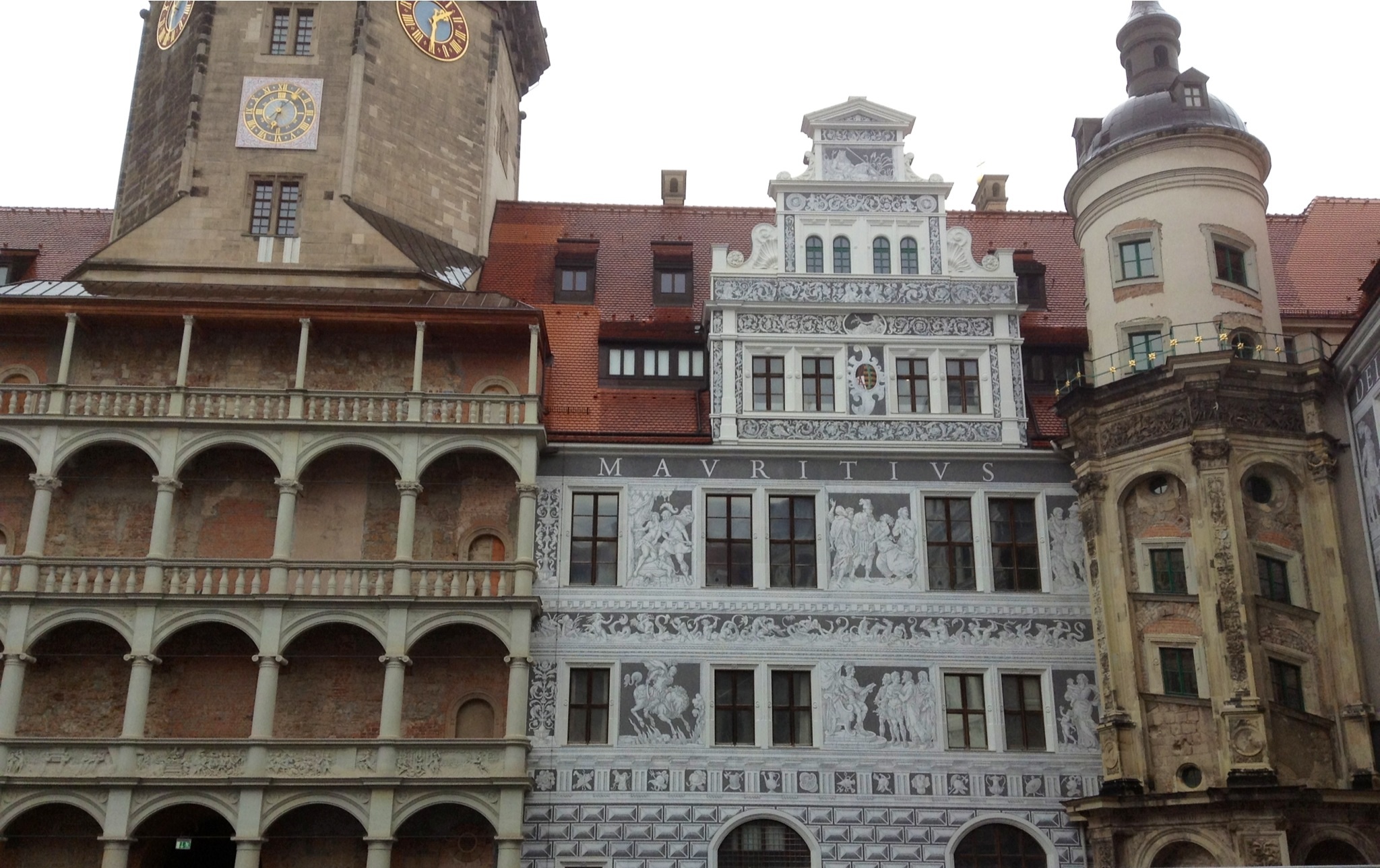
Ongoing Reconstruction at Dresden’s Schloss Palace, Home of the Historic Green Vault
Autumn and Porcelain
The Fall colors are deepening. Kathy and I spent the day out, walking in falling golden leaves. The hills are awash in orange gold and rust red with splashes of yellow and red. The air is cool and the breeze is refreshing. A light sweater is enough.

The city of Meissen, Germany, is awash in the brilliance of autumn colors. October 9, 2013
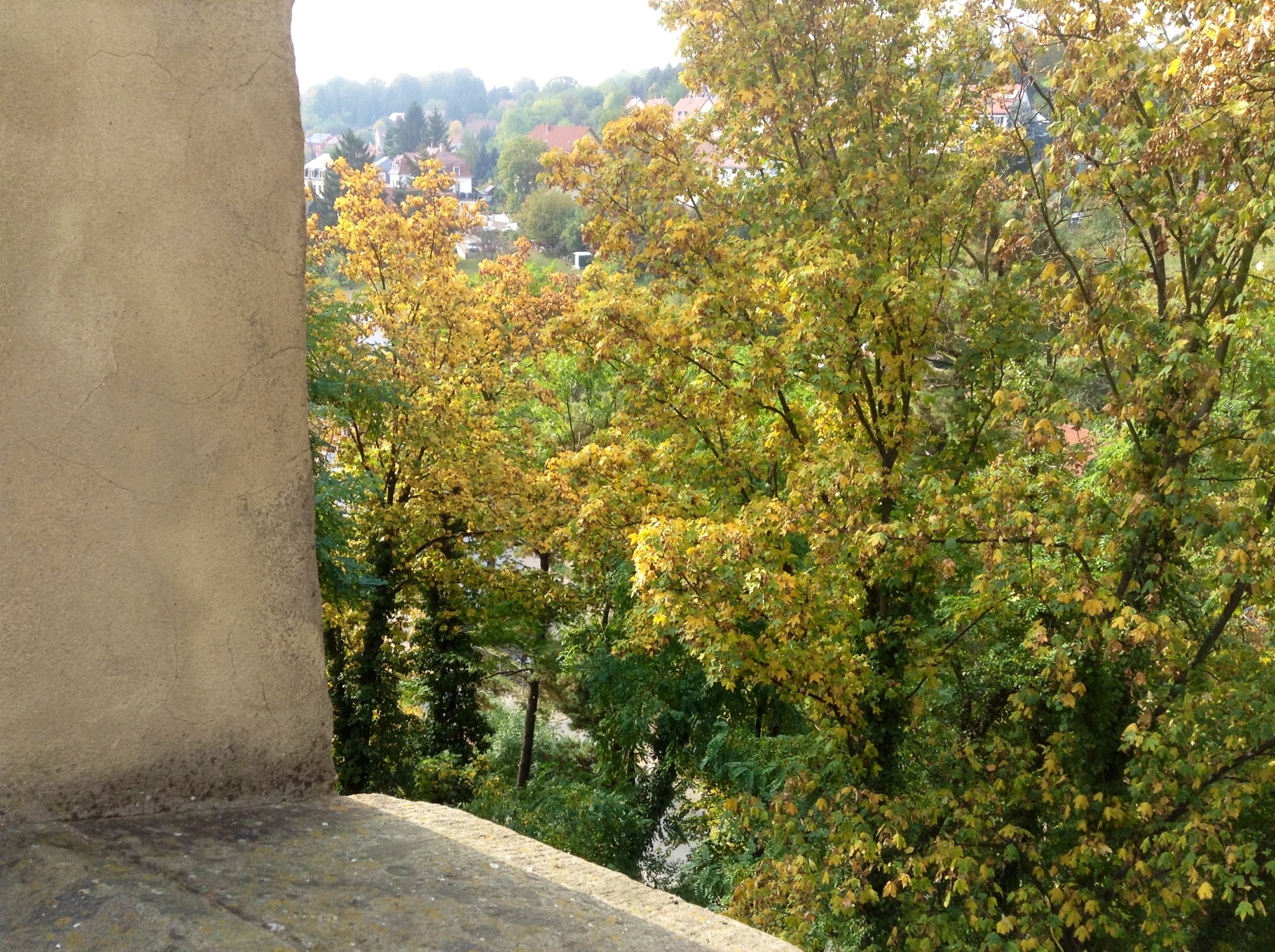
Autumn in Meissen, Germany – October 9, 2013

Autumn in Meissen, Germany – October 9, 2013
We did most of our walking in Meissen, where we spent the day. Meissen is synonymous with porcelain, being the first place in Europe to produce it. The crossed swords of the Meissen brand mean hand made quality and horrendous price. A new five piece place setting of a moderate version is about $2,750. Think about dropping one of those plates. We went on the tour to see porcelain production up close. Very interesting.
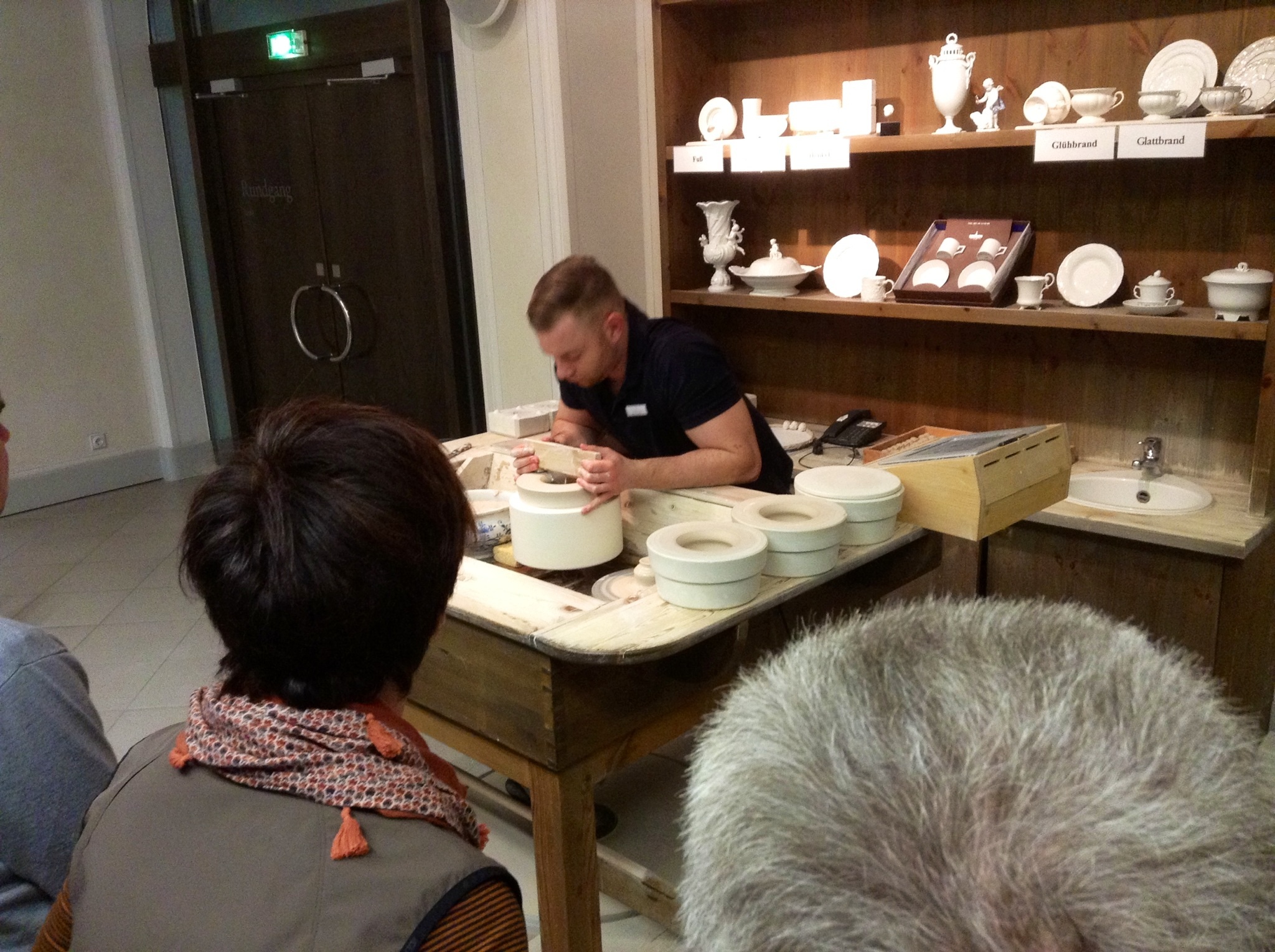
Each piece of Meissen porcelain is delicately handcrafted.
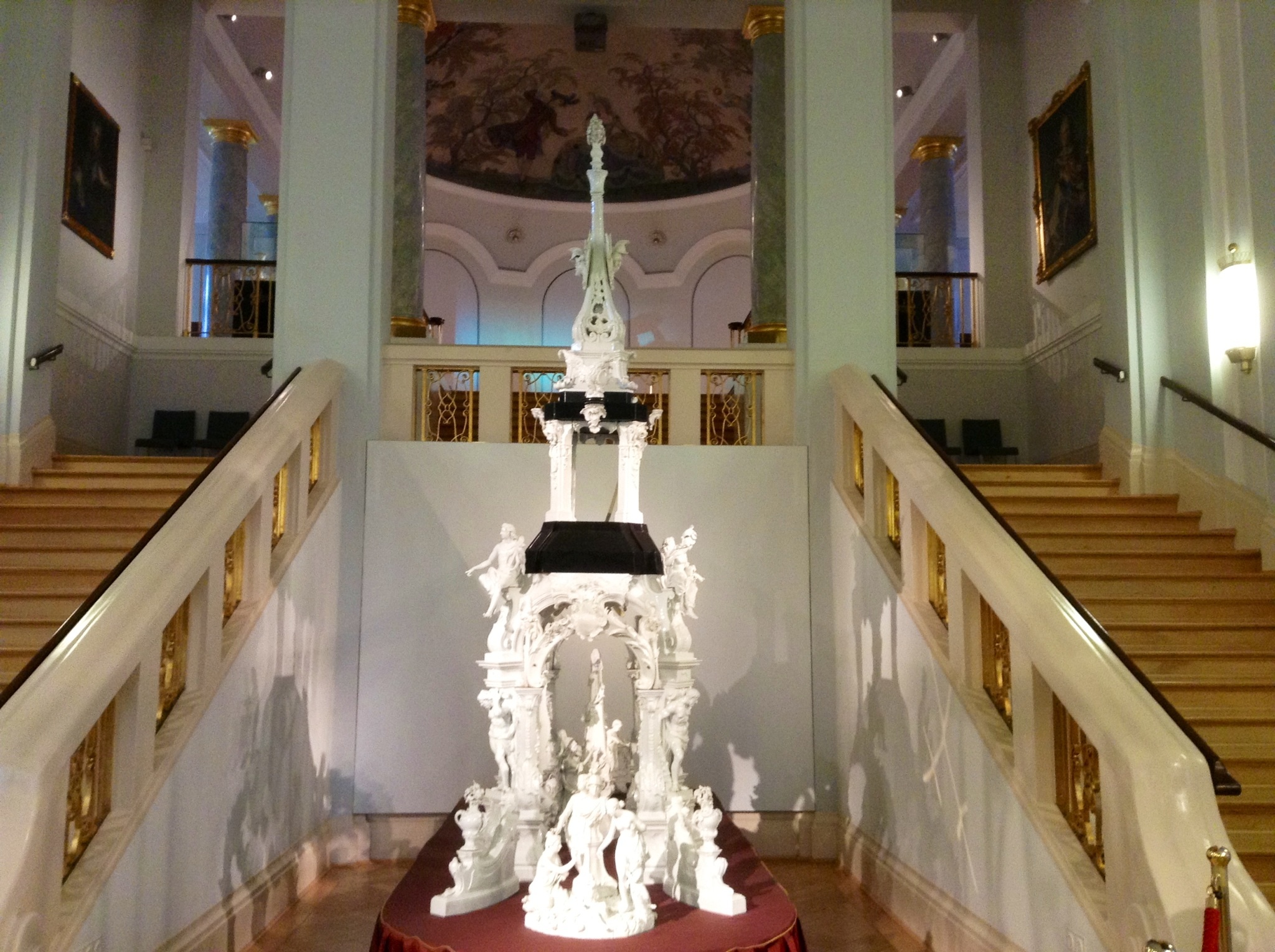
This was the largest porcelain piece produced in the 1700s.
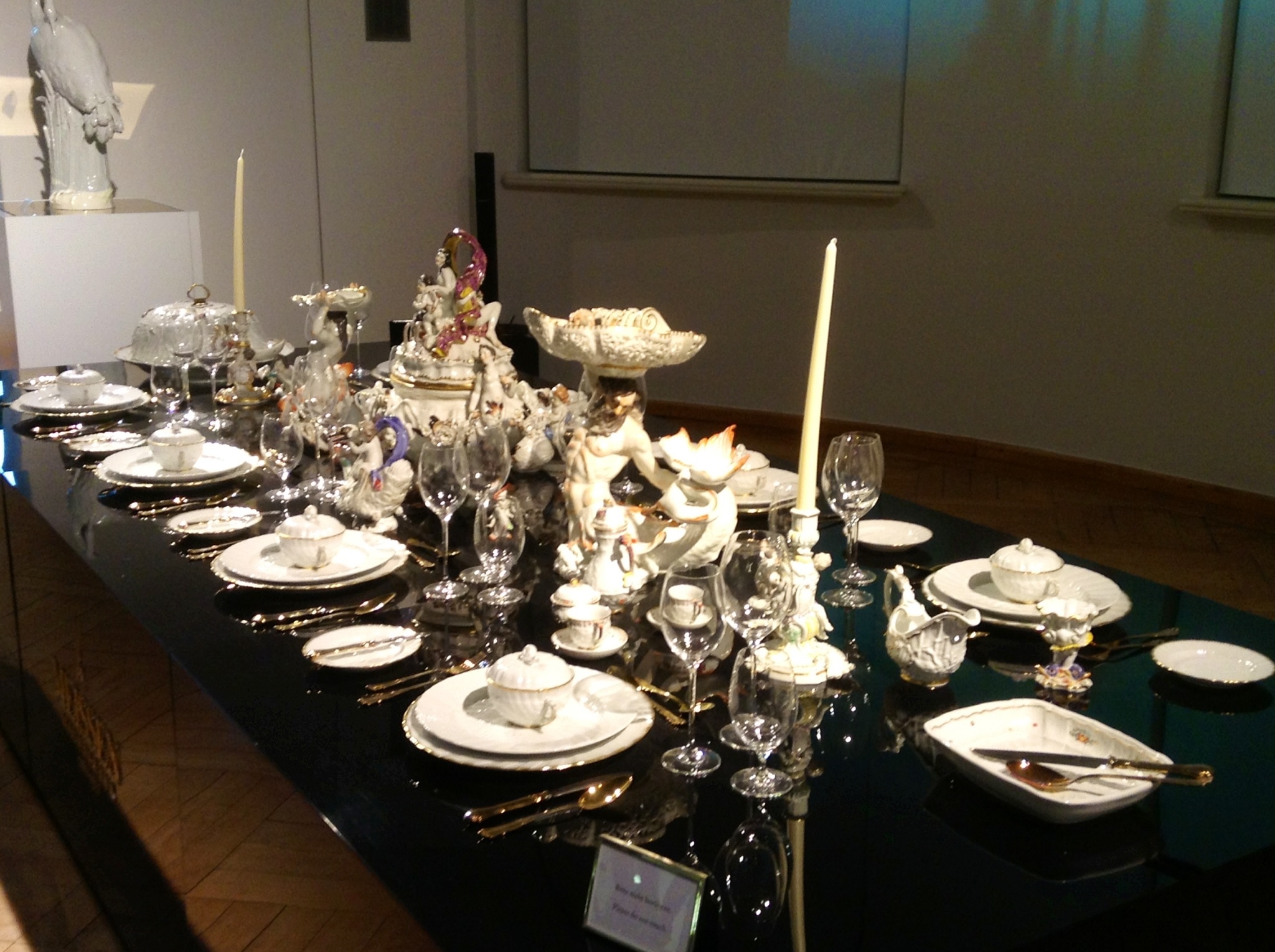
2,200 Meissen Swan Service table ware pieces created for German royalty

Meissen Porcelain
Meissen is also known for its Lutheran Cathedral and royal Wettin family Schloss that occupy the same high hill top above the city and Elbe River. The cathedral had a number of Martin Luther memorabilia on display. Looking out over the palace walls, we could see autumn unfolding before our eyes. We savored the time and took it all in. In the autumn of my life, autumn feels really good. WEG
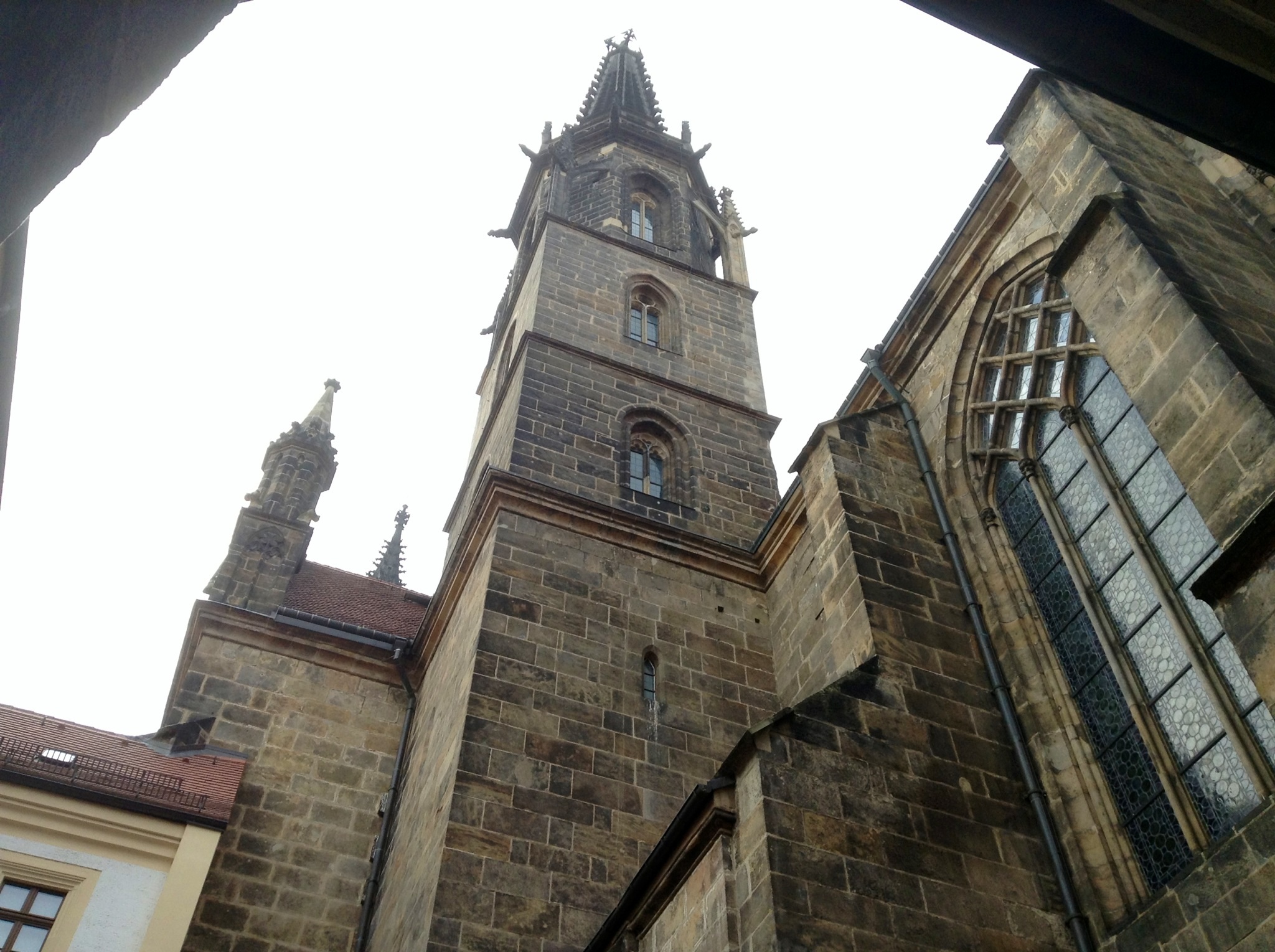
Lutheran Cathedral, Meissen, Germany

Bible translated into the German language by Martin Luther on display in the Cathedral Dom, Meissen, Germany
Church Bells
All across Europe, the church bells ring and indicate the time of day. It seems even more so here in Dresden. It is hard to describe the warm feeling that comes when the bell chimes come wafting through the air, and that is what they do. The sound is never harsh nor even loud. At six in the evening and before service on Sunday, they seem to ring longer and more bells are in on the action, so the ringing is more intricate. Through the night, a minor bell rings the hour in single gongs. It is reassuring; although, I have rarely been awake to hear them.
In Spain, the church bells sounded like clanking or dampened in sound, with very little resonance. In France, they are resonate and pealing. In Italy, they were symphonic. In Germany, they are deep and straightforward. In Telgte, Germany, Tomball’s sister city, they rang on and on at 6 A.M. as if to say, “Every industrious citizen should be up and at ’em.” And sure enough, when they finished, the streets were filled and workers were working! In Wittenberg, Germany, the bells started a good ten minutes before service, and you knew how much time you had to be there on time. When they rang the hour after the prelude bells, you knew that when the last gong sounded the service would begin. It is the six in the evening bells, however, that ring the longest. The day is done. Restaurants fill. The evening commences. Evening vespers in the churches commence. I also remember how in the old days of church in America, six o’clock in the evening was a time to stop for prayer, wherever you were. And Saturday, at six, was a time to reflect on your week and your worship of God the next morning.
Church bells carry such meaning deep in their ancient chimes. WEG

Church Bells in Europe
Ouch! My Aching Toe
It was a calm morning until my wife decided to break my little toe. How did it happen? It is still a mystery to me. All I know is that somehow the leg of the chair upon which she reposed ended up whacking my poor toe. I jumped around awhile on the good foot; it hurt too much to touch the other. I put my foot up and rested and then we needed to get out on a few errands for the day–we had planned the day for rest and errands.
All was well, pain, but bearable, and then may wife said, “Let’s cross the street,” unaware that a bicycle was coming down that street at a rather high speed. Yes, of course, we walked straight in front of it. How is it that the only thing that got damaged was that same toe??? The young fellow on the bike, other than yelling in fright that he had just plowed into two older Americans, made the sign of the cross and drove off. I was hopping around on one foot again, and I thought the first injury hurt! Yes, of course, it was pedestrian only, no cab to hail, and I had to limp to our apartment hotel. Yes, of course, it was uneven cobblestone all the way.
My purple toe is now somewhat pain free, after extra strength pain killers and after deciding to stay ten feet away from my wife. It has not popped/cracked in the past few hours. I cannot feel the toe but, God willing, it will be better tomorrow. WEG
Facades

Wittenberg, Germany
Square showing facade of the Town Church where Martin Luther preached and taught
October 5, 2013
This morning, from our hotel window in Wittenberg, I noticed older folks working in about 1/5 acre flower and garden plots with small houses on the property. There were probably about 50 such plots. I have noticed them from the train as we traveled across Germany. I decided to venture over and find out what they were doing. I didn’t think anyone would speak English, since English was not taught when the Russians controlled East Germany after World War II. I was right. I decided to cast caution aside, take down any facade, so I called out, “Hallo.” (This is not a typo,) and the woman closest to me responded in German. I told her I spoke little German and asked if she spoke English. “Nein.” It is amazing how you can communicate even when you cannot speak the same language. I asked, “Was ist Das?” as I pointed to the gardens. She told me they were summer gardens, and this particular section had been there for over 20 years. The small efficiency homes were only for an overnight when someone had come in from another town to work their garden or, if local, working and eating lunch and working in the garden again and taking a nap and working again and then going home. What a wonderful way to have a community garden! She picked an apple off her tree and offered it to me and I said, “Danke,” and waved goodbye. It was a delicious apple, made all the more so by our wonderful visit.
Kathy and I also spoke with a young German woman who was bicycling across East Germany. She told us how well marked the bike highways are and how she had prearranged her trip so that her luggage was always delivered to her next hotel before she arrived on her bike. That is common practice here. I told her if I was younger, I would do that for sure, and she winked at me and said there were electric bicycles available. Next trip, that will be on my agenda 🙂
For our evening meal, we ate at a local Brauhaus. We had made reservations, since it is a packed-out place. What a wonderful atmosphere, with German decor all around and archways and the brewery copper kettles right in the middle. The beer that is made there is unfiltered and has no preservatives–super good. Then, as the meal ended, our cute and perky waitress put a clear liquid in front of me and said it was made in house. The first sip was pure lightning. I whispered to Kathy that if I drank it all, it would put me under the table. Did you know that German wooden tables are fastened with wood nails? Just kidding, they are metal. I did leave a big tip, however.
During the day, I took a number of pictures of interesting building facades. That is one of the joys of traveling in Europe; the old building facades are still intact and enchanting. The city of Wittenberg is old and, as the center of the Reformation and home to Luther for most of his life, is in major restoration mode as it prepares for the 500th anniversary in 2017 of the nailing of the 95 Theses on the Castle Church door. We worshiped in the Castle Church in English this evening. It was inspirational singing, “A Mighty Fortress,” in the place it was first sung. WEG

A beautiful facade in Wittenberg, Germany
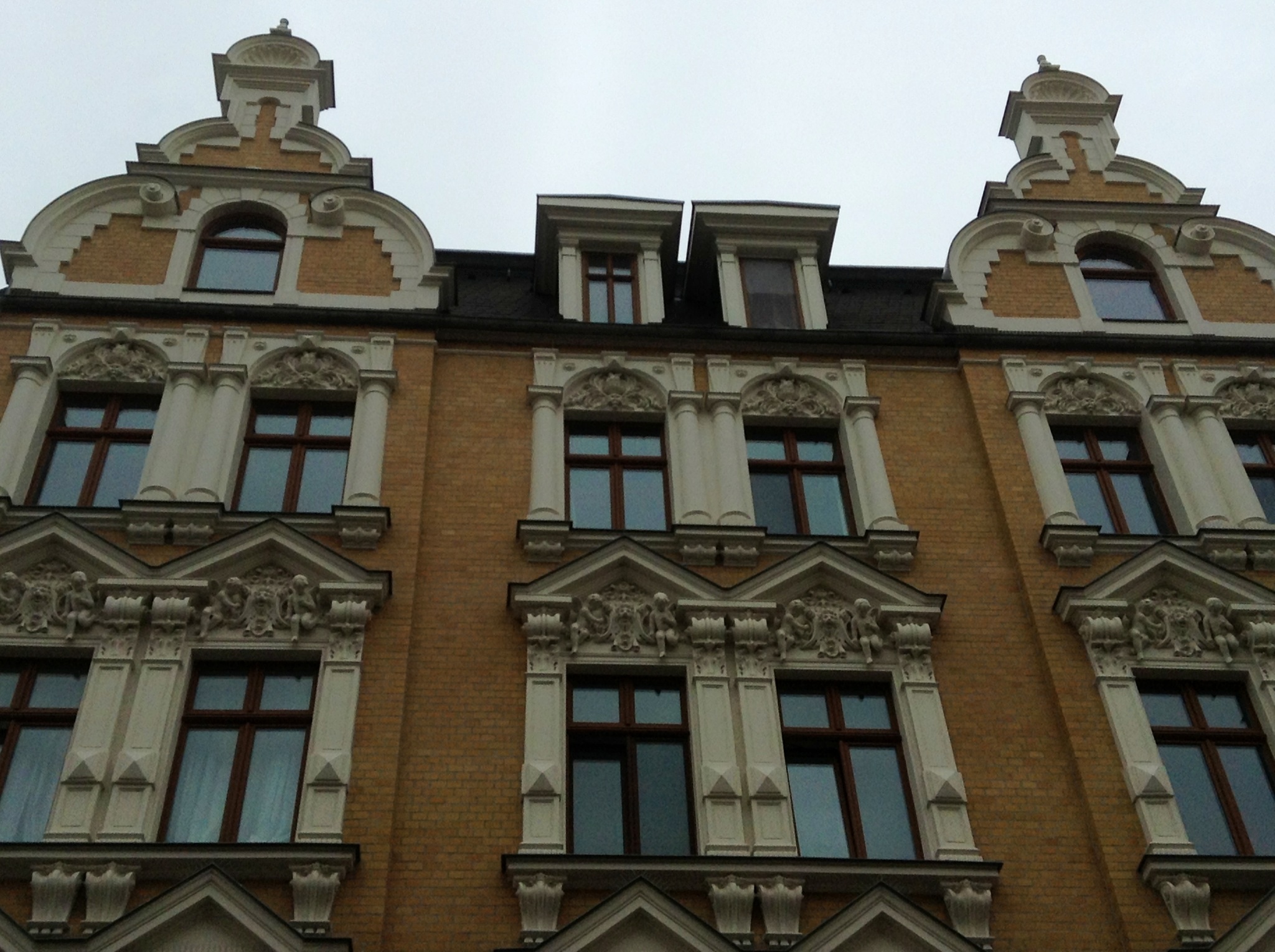
Another facade in Wittenberg, Germany
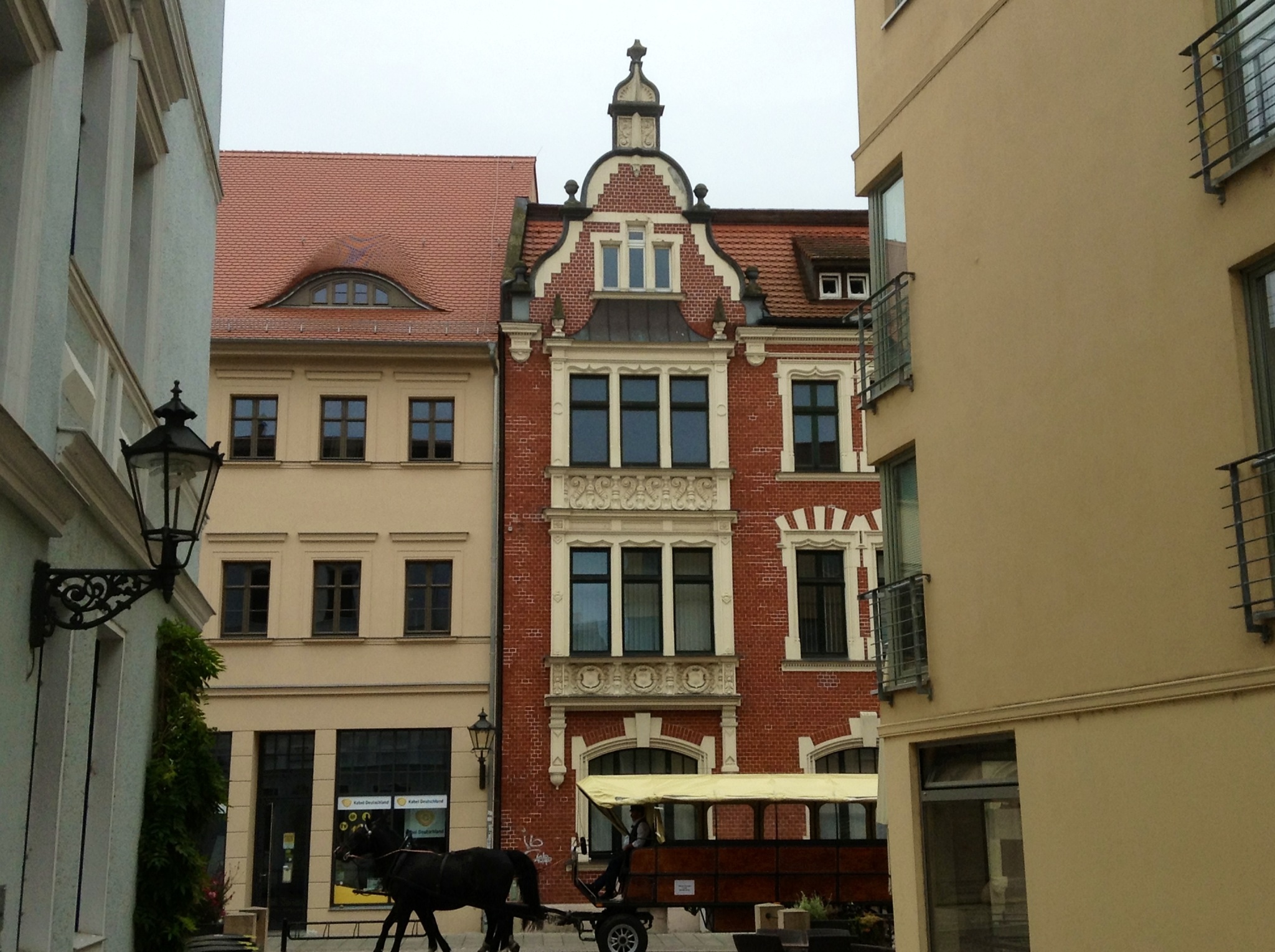
A facade in Wittenberg, Germany

Autumn facade
Wittenberg, Germany
October 5, 2013
A Difficult Choice
We could do one or the other, not both. We were in Leipzig heading for Wittenberg.
1) Attend a choir and organ concert, late in the evening, at St. Thomas Lutheran Church in Leipzig featuring some of Bach’s famous works. St. Thomas is where J.S. Bach, arguably the world’s greatest composer, worked as cantor and composer for almost 30 years. It is also the home of the 800 year old Thomaschor or boys’ choir. Bach led it during his tenure in Leipzig. In addition to Bach, Mendelssohn, Mozart, and Reger also played on the organ here.
OR
2) Attend English worship at the Castle Church–Lutheran, in Wittenberg, the place where Martin Luther nailed the 95 theses starting the Protestant Reformation, one of the world’s historic turning points. It is also the church from which Luther often preached from the pulpit. As the mother church, so to speak, of worldwide Lutheranism, the Castle Church played an important part in history.
Events made the impossible choice for us. There were no trains from Leipzig to Wittenberg after the Thomaskirche concert, and we had a hotel reservation in Wittenberg that could not be canceled. We also doubted that there would be hotel rooms in Leipzig since the city fall market was in full swing. And so, Castle Church it is.
Leipzig is a wonderful city. The train station is also a major shopping mall, well designed. The Old Town is huge, with imposing buildings and many elegant shopping arcades. The Fall Market (Herbstfest) was scattered all along the major pedestrian streets offering a wonderful array of fall goods, i.e., fresh honey with the hives, woven corn stalks with fall flowers or garlic, wood carving booths, new wine sold from large glass containers, fall handmade clothing, etc. We purchased our lunch here and ate foods we have never eaten before, Leipzig specialities, made with fried dough and cheese. Very tasty! Now, we are headed to Lutherstadt Wittenberg on a comfortable train.
By the way, we left most of our travel belongings in our apartment hotel in Dresden and will return there. The train stations have convenient lockers for bags, and we left our one travel duffel bag there while we toured Leipzig. Handy and efficient. More importantly, God gave me a Thomaskirche gift. We could not stay for the concert; however, an organist played one of, and perhaps my most, favorite compositions, “The Pilgrims’ Chorus” from Wagner’s Tannhauser Opera. Magnificent! WEG
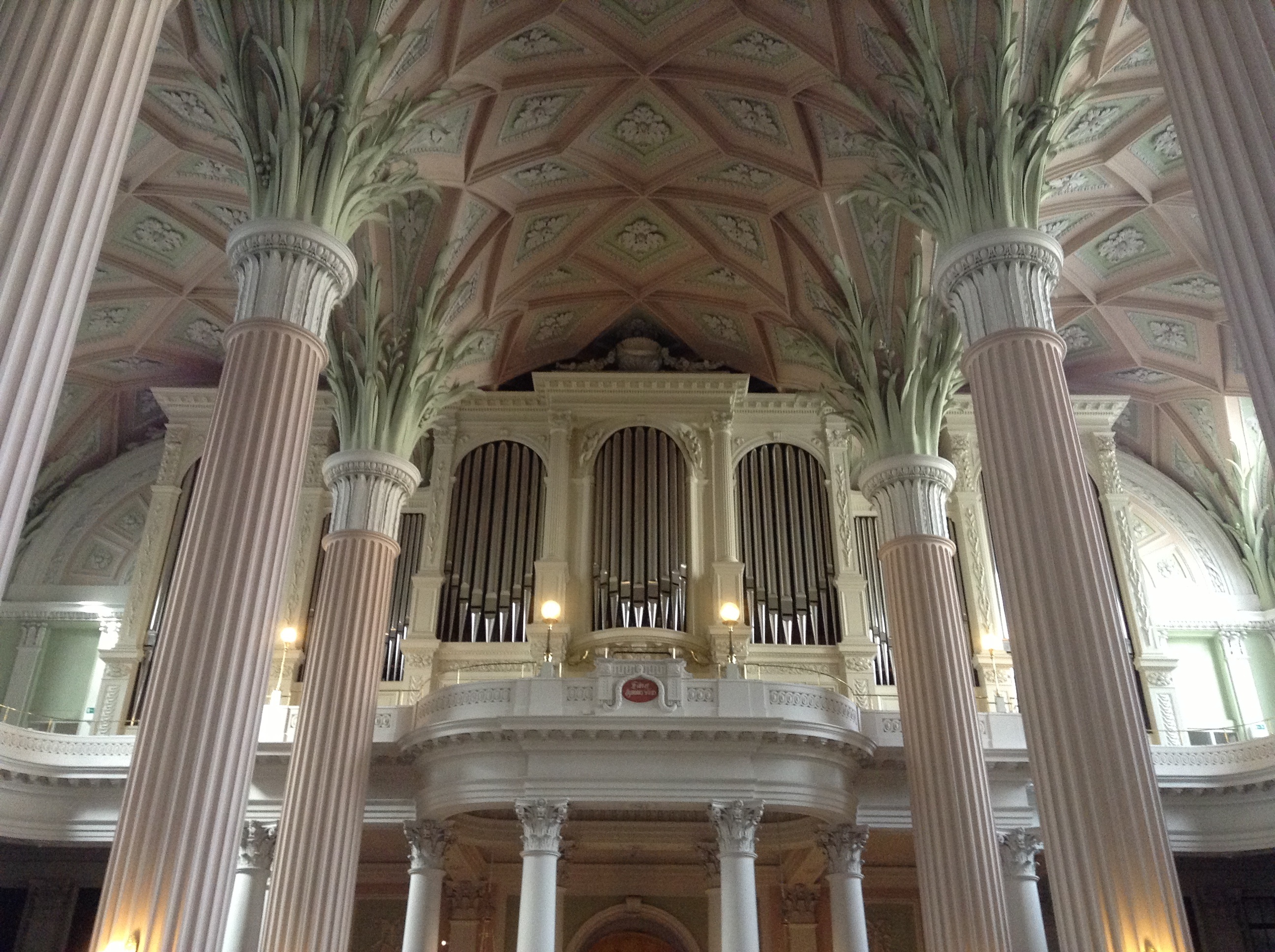
St. Nicholas Lutheran Church, Leipzig, Germany
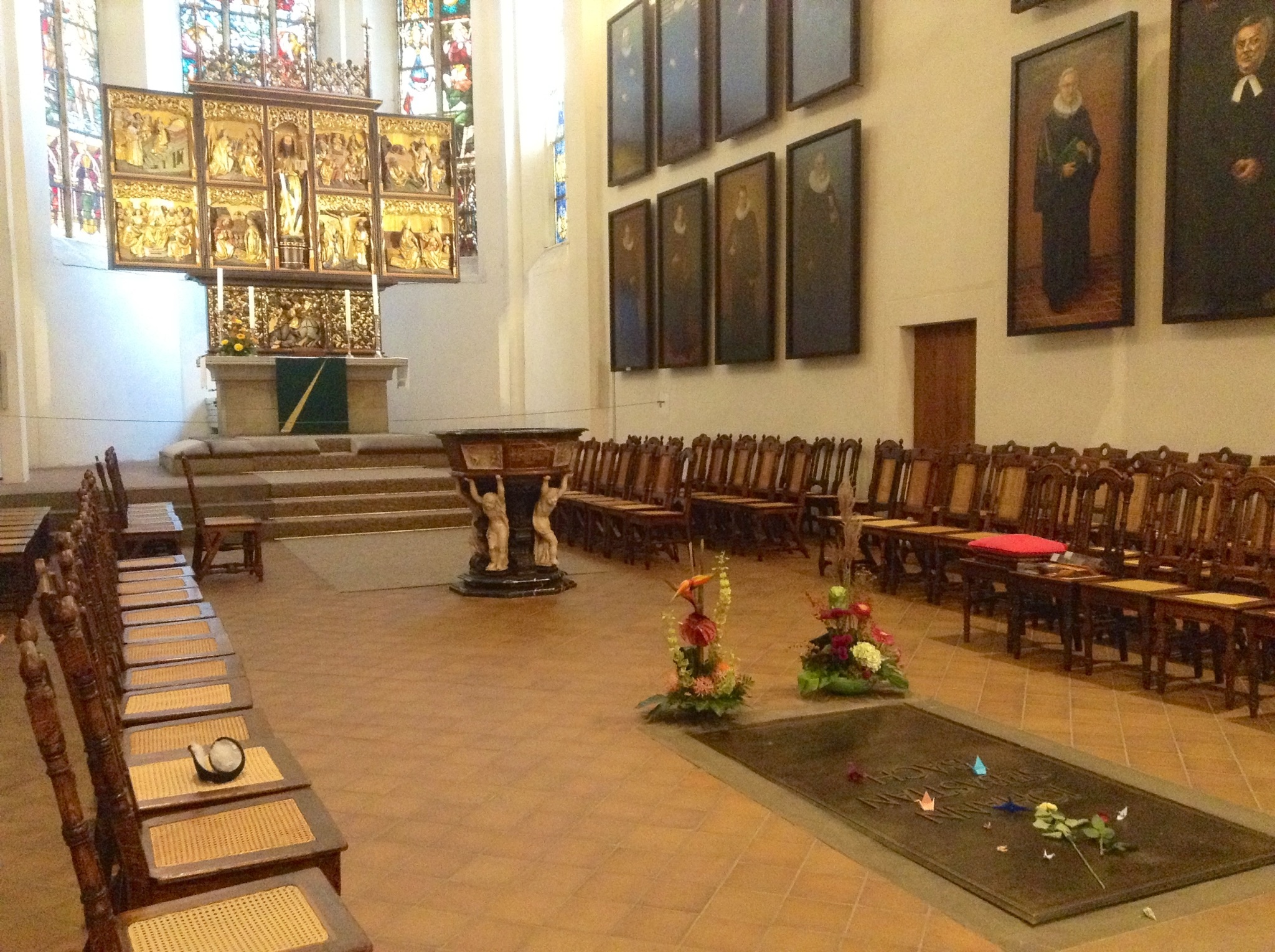
St. Thomas Lutheran Church, Leipzig, Germany – Altar & Burial Site of Johann Sebastian Bach

Martin Luther Window in St. Thomas Church, Leipzig, Germany
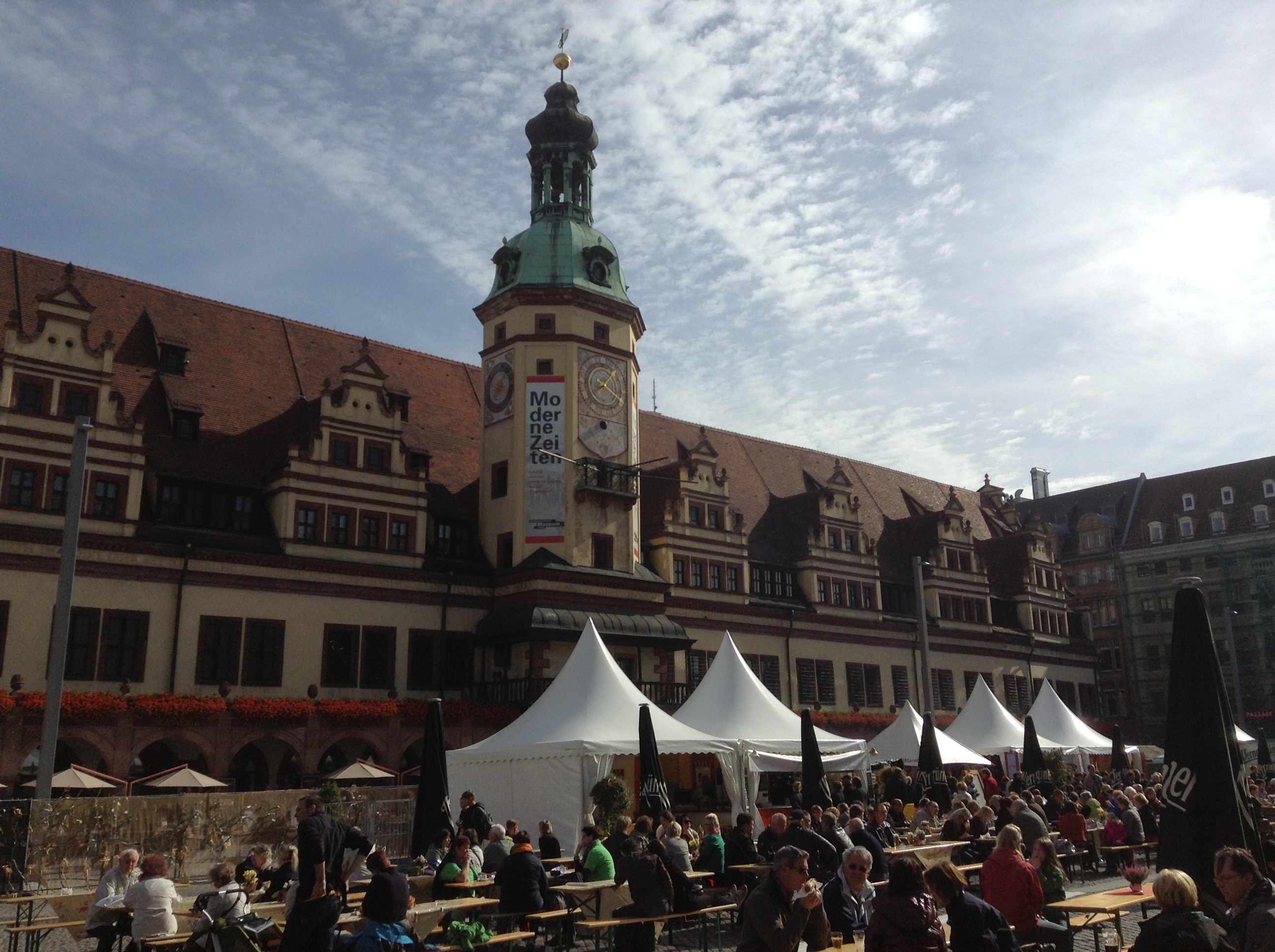
Herbstfest, Leipzig, Germany
A Discovery
It was a restful day on purpose, since Kathy crawled into bed the night before at 2:30 A.M. I used to work late hours and so staying up late is not so hard on me, but my wife is an “early to bed, early to rise” type of person, and so I walked softly in the morning and let her sleep. We had stayed up late due to the organ concert lasting until midnight and then going to a German restaurant for early morning beer. We really like this restaurant on our street. It is so German feeling with wood floors and wide-planked wood and plaster walls and wood beam ceilings with cozy eating areas around an old-fashioned bar with ancient beer taps for dunkel, rot, and weiss beer. It is quiet; Germans speak in soft tones, even in a beer hall.

Our favorite restaurant, the Kutscherschanke, just outside our apartment door on the River Elbe
The street where our apartment hotel is located is the oldest street in Dresden. The old city grew up around it. It is narrow and cobblestoned and ten restaurants with outdoor seating areas covered with canopies and outdoor heating make the passageway even narrower. The street runs from the Elbe River Promenade to the Frauenkirche, only about 200 feet. It is a favorite walkway for tourist groups and locals because of its good eating and drinking establishments, and so it is crowded from morning until early morning. The doorway to our apartment is right in the middle. The outside street singers are really good and, if we want to hear them, we only need open our windows. So far, it has been opera, country/western, and broadway for singing and classical for the brass and string ensemble. I told Kathy that we don’t need radio and there are no commercials.
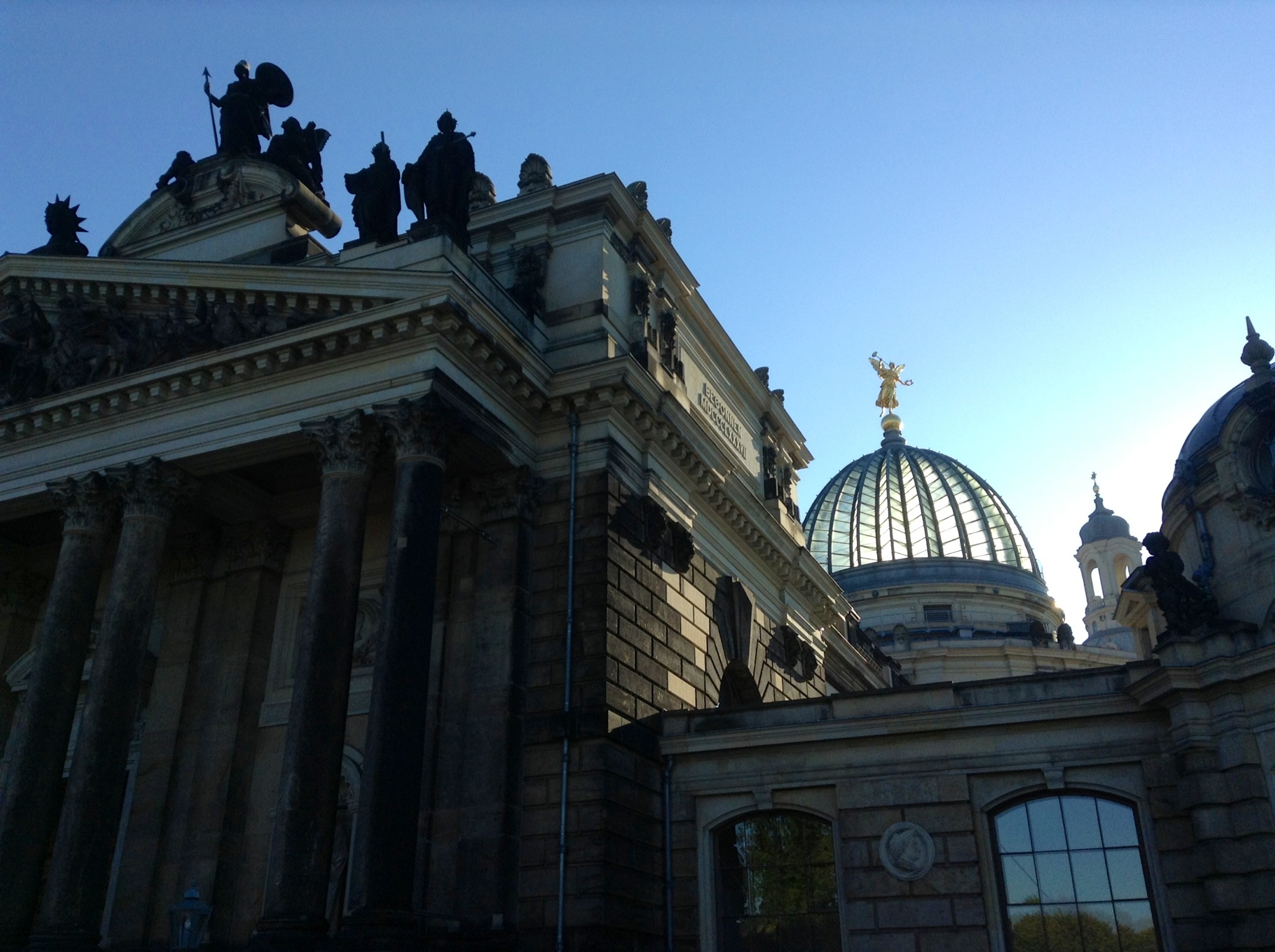
A building on the River Elbe promenade around the corner from our apartment

The frescoed dome of the Frauenkirche just steps from our apartment
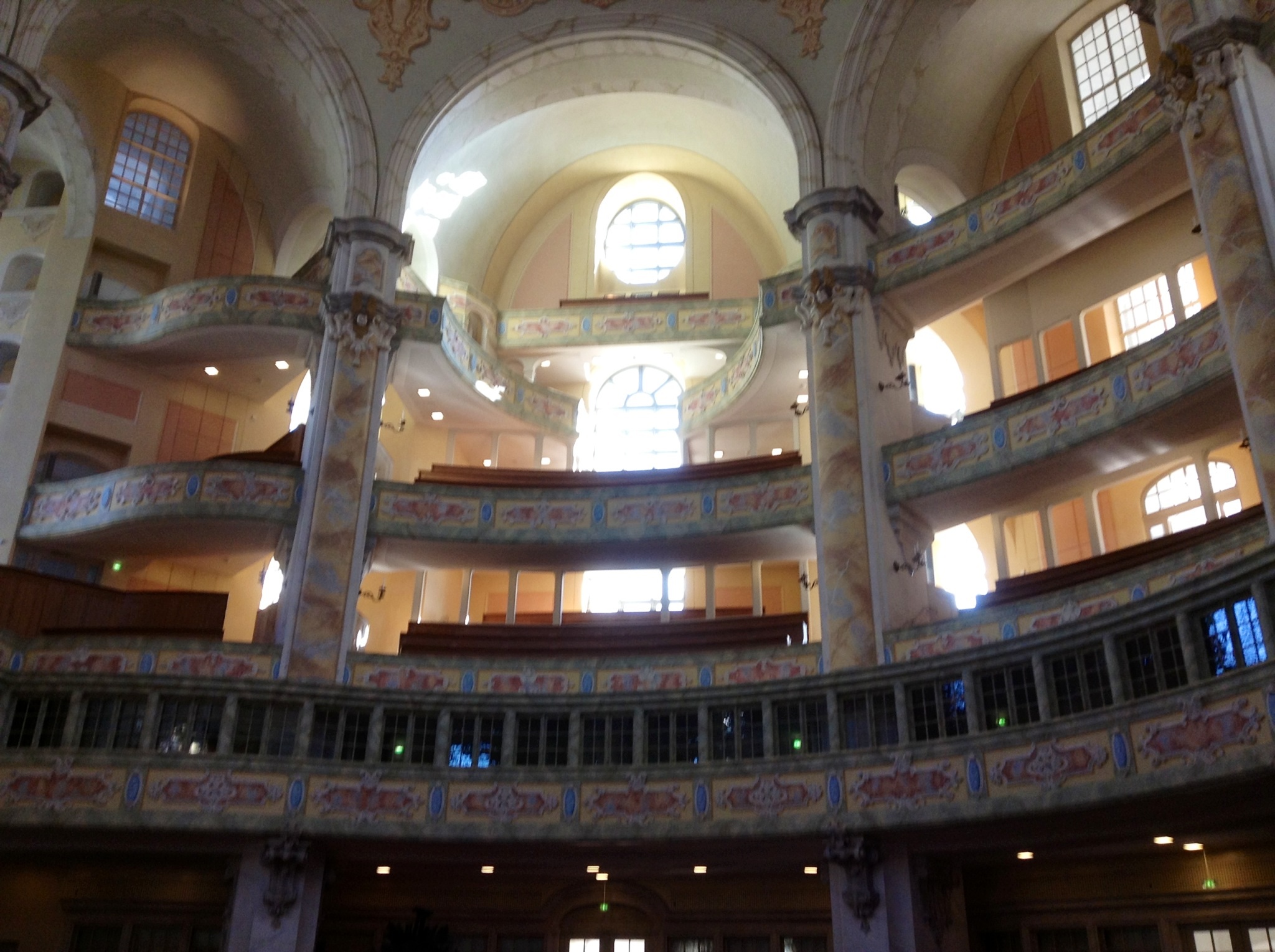
One section of the tiered balconies of the Frauenkirche
This afternoon we happened upon a recent excavation in the Old Town, on the square of the Frauenkirche. Old photos before WWII showed a cluster of housing. After the Allied firebombing shortly before the end of the war that killed over 40,000 civilians, this area was covered over. Now it is being excavated and has uncovered well preserved foundations and walls. Most such sites are meticulously restored, but no decision on this site has been determined. It gives pause to think that so long after the war, restoration is still continuing. WEG

Excavation site
A Day of Culture
Dresden is one of the art capitals of Europe. Its buildings are impressive, even stunning. Each square in the Old Town is powerful, and the expanse allows the buildings, fountains, and statuary to stand out. The architecture is Baroque, outside and inside, and so, the Old Town is quite unified in design. The stones are dark with age and some from the firebombing of World War II; however, gold pediments and crosses stand atop stately palaces and churches.
Today, Kathy and I viewed the Old Masters’ Gallery in the Zwinger Palace. The Palace itself is a work of art, built symmetrically in the Baroque style around a massive square, but today, we were interested in the paintings of Cranach, Durer, Tintoretto, Raphael, El Greco, Titian, Van Eyck, Vermeer, Van Dyke, and Caravaggio that filled the museum.

Dresden’s Zwinger Palace Complex
In the evening, we attended a progressive organ concert held in the Frauenkirche (Church of Our Lady–Lutheran), the Kreuzkirke (Church of the Cross–Lutheran), and the Dresdener Kathedral (Catholic). If you like organ music played in beautiful churches on large pipe organs, and I do, it was three hours of bliss.
While both the Kreuzkirke and the Kathedral are large and impressive on the exterior with tall Baroque towers, it is the Frauenkirche that is the emblem of Dresden, and for good reason. It is a massive Baroque dome with an equally impressive Baroque interior of pink, white and gold. It has seven levels for seating with intricate balconies and a painted and layered dome. It was built by a staunch Lutheran populace to show their Catholic monarch that they could.
I’m not saying that I am “arted out” as we go way past the midnight hour, but I am definitely “worn out.” We are ending our day in a quaint German restaurant with a glass of dunkel (dark–Kathy) and weisse (light/white–Wayne) beer. WEG
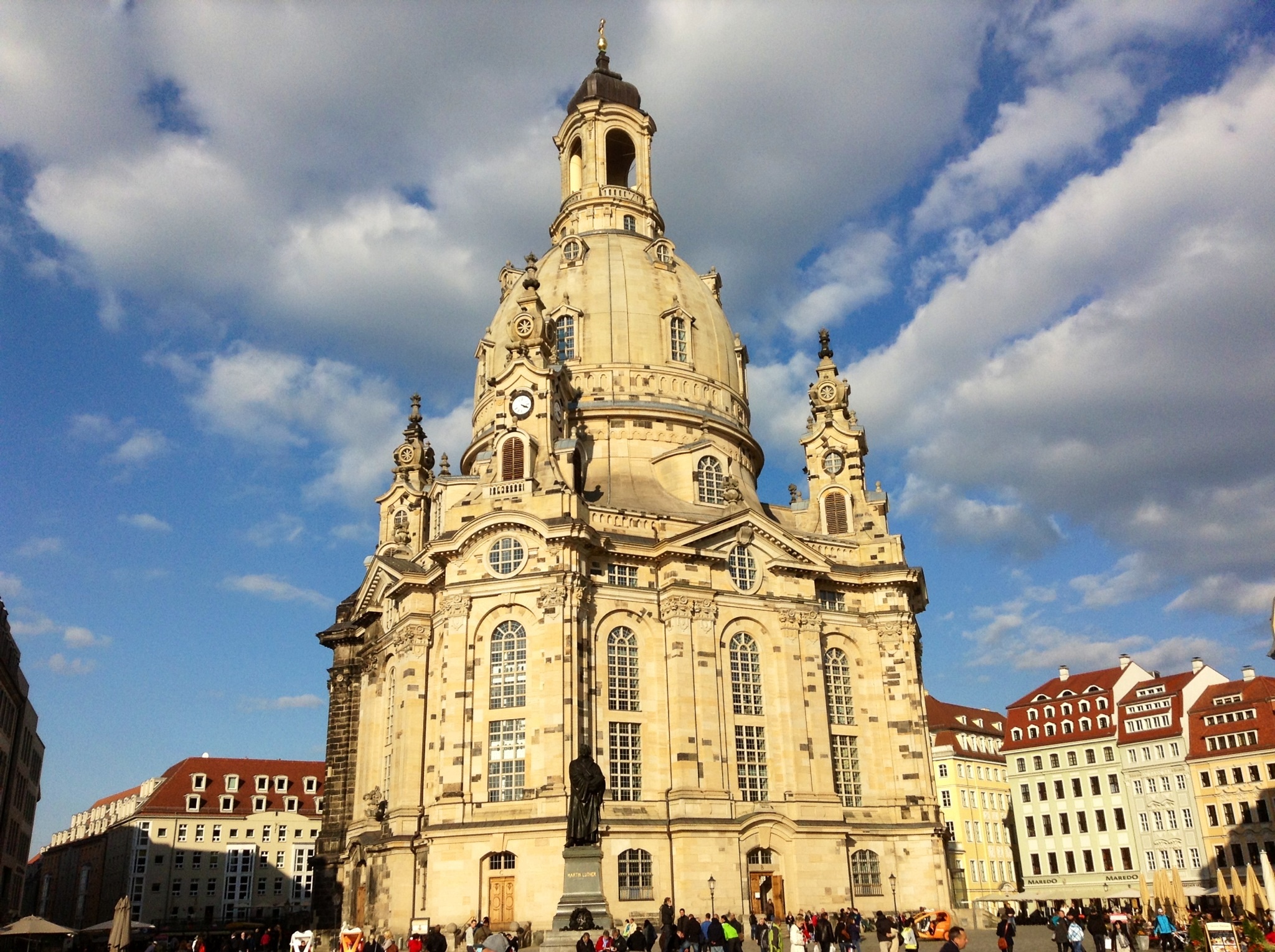
Dresden’s Frauenkirche (Lutheran Church)
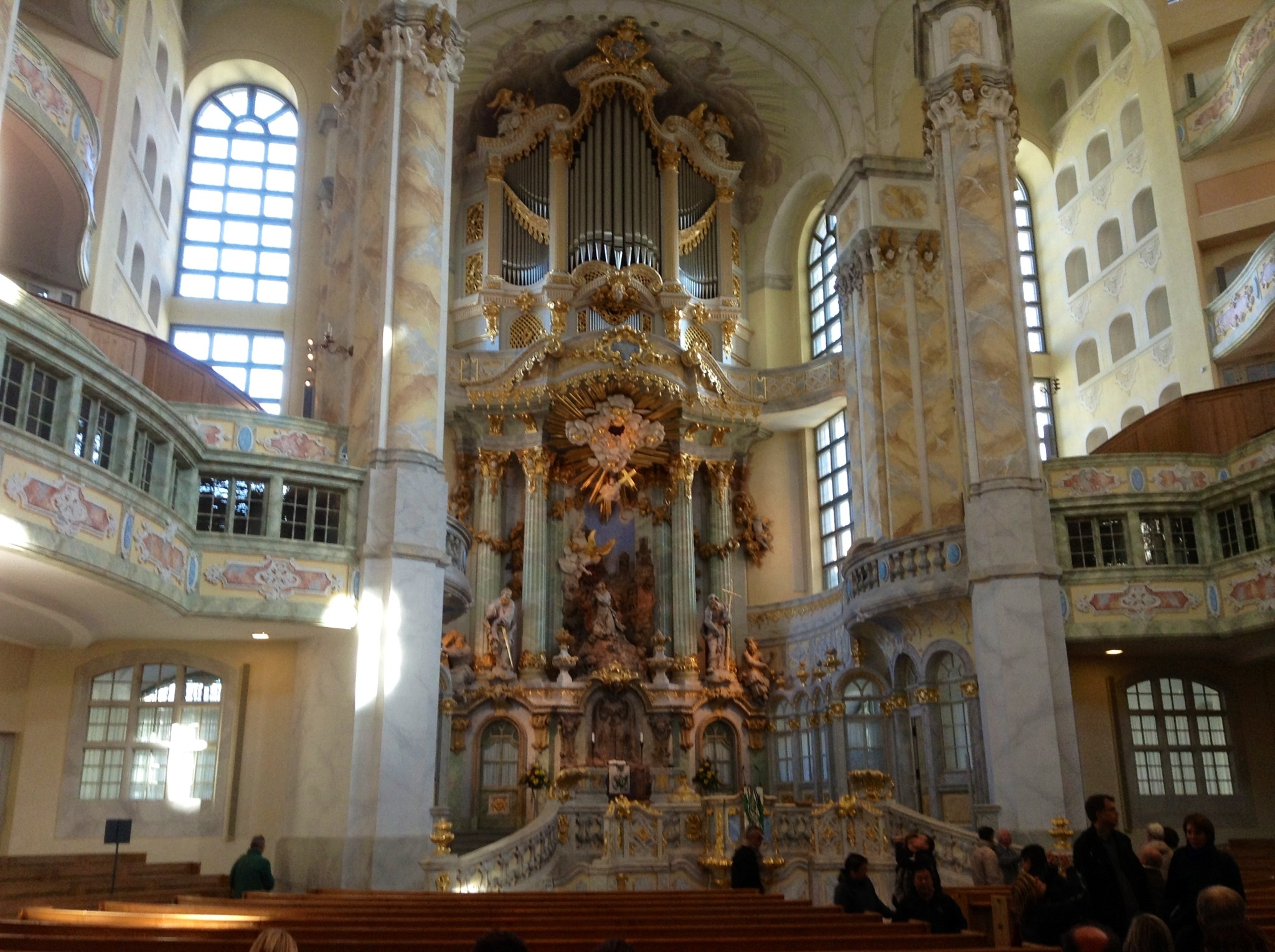
Altar of Dresden’s Frauenkirche

Altar of Dresden’s Catholic Church
Why Trains?
It is a perfect fall day. Kathy and I took a morning walk to see the Festspielhaus, the Wagner Opera Hall and Grounds in Bayreuth. Inspiring! Although he lived before Nazi German history, Hitler claimed Wagner as his favorite composer and used his music to glorify the Nazi vision. Unfortunately, some of the Wagner heirs were sympathetic to the Nazi cause, and the Festspielhaus became part of the Nazi propaganda machine resulting in the oppression of Jewish musicians, in particular. Today, in the beautiful gardens that surround the Festspielhaus, large memorial plaques with pictures and script tell the story of each individual musician who had a tie to the Festspielhaus, who was persecuted,exiled, or murdered in a Nazi camp. There were many. It is amazing that a small city like Bayreuth has two of the world’s most important music halls, the other being the Margravial Opera Haus, a Unesco World Heritage Building.
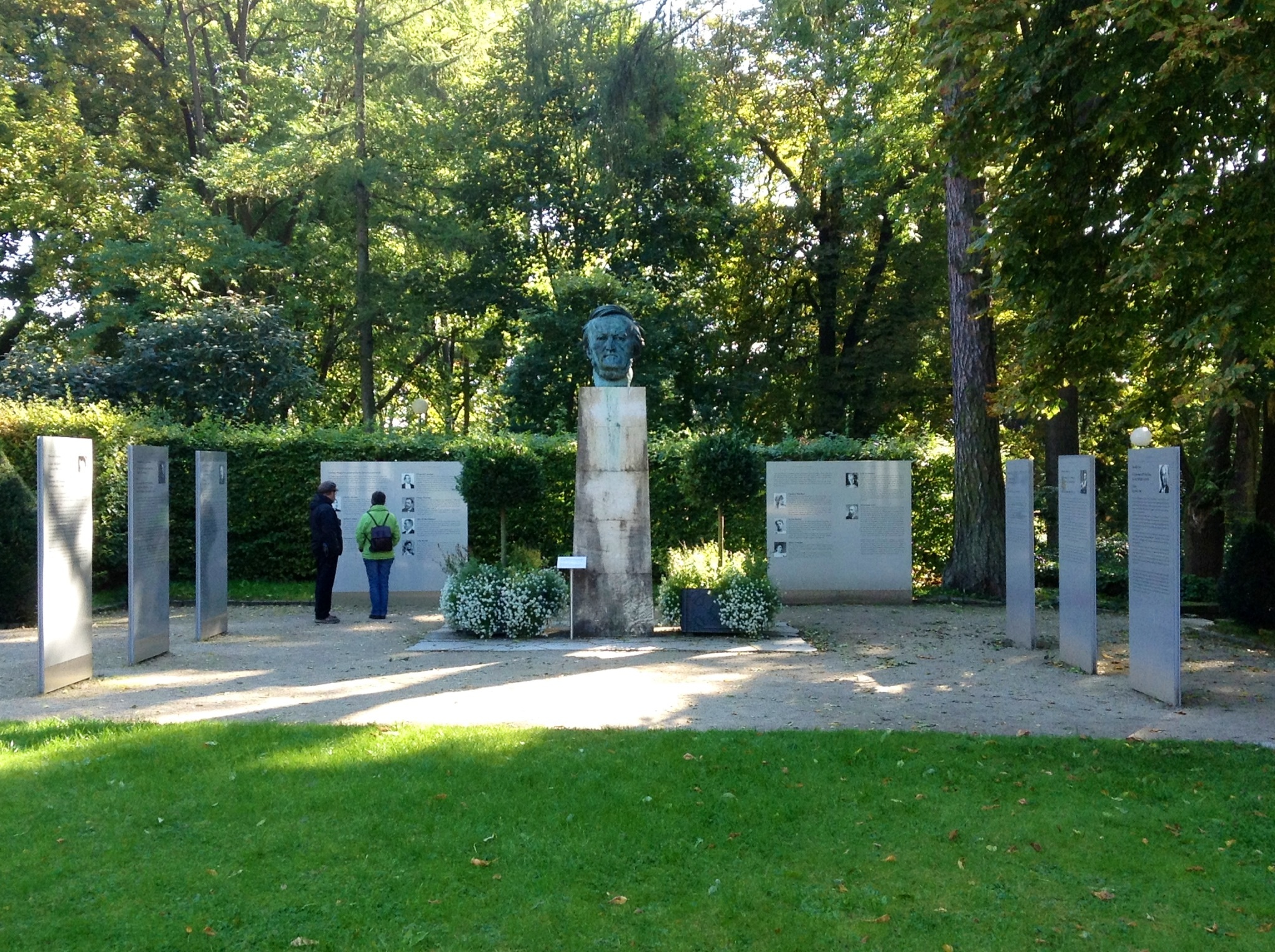
Bust of Wagner in Garden of Festspielhaus, Bayreuth, Germany
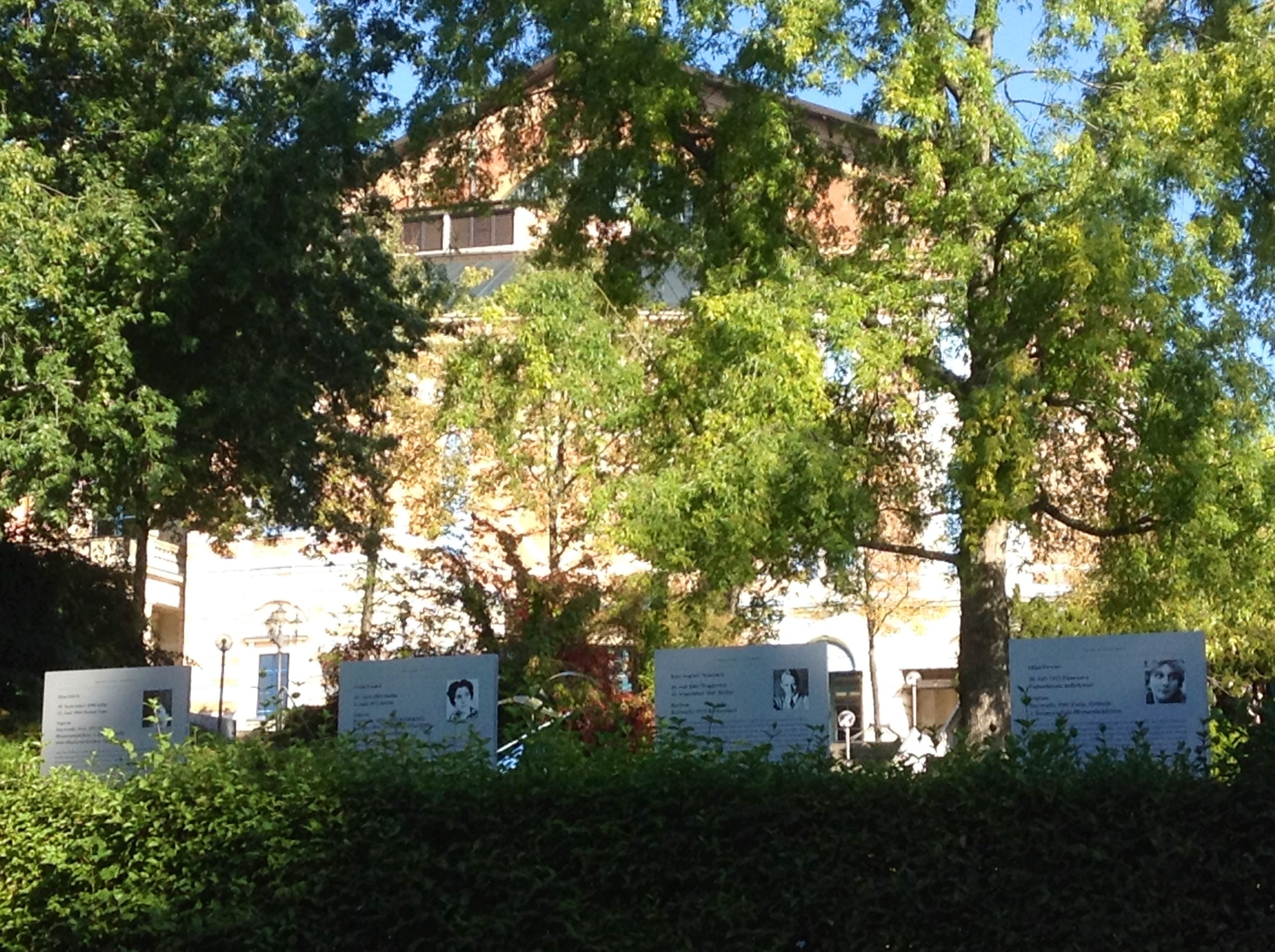
Memorial in Festspielhaus Garden to Bayreuth Festival artists who were victims of Nazi policies

Wagner Opera House in Bayreuth, Germany

Beautiful Festspielhaus Garden in Bayreuth, Germany
Our walk was delightful. It was a cool crisp morning with bright sunlight. We walked along tree-filled spaces, with autumn colors taking hold. We then boarded our train to Dresden.
Trains are wonderful in Germany, indeed, in Europe. This train ride was a three and a half hour direct trip to our destination, with only a few short stops. We headed deeper east into Germany. Austria is to the south, and Poland and the Czech Republic are further east. This train goes through fields and at the ridge of hills. Corn fields are so close that the wind generated by the passing train causes the leaves to flutter. Farmers on tractors are laying down silage. It makes bright green rows. Other land has been filled, and the rich dark soil stands in sharp contrast to the green fields and forests that surround it. Suddenly, the train climbs altitude, and from my window seat I can look directly down into the sweeping valley below. The train is hugging the ridge of the hill. I feel isolated, yet, peaceful. We go by barns, many vine-covered, the vines turning bright red in the autumn air, and through small villages. Usually, trains are in proximity to highways. Not so on this line. The forests surround us, then rolling hills and farm lands. Horses and cattle seem content in the green fields on this sunny and cool day. WEG
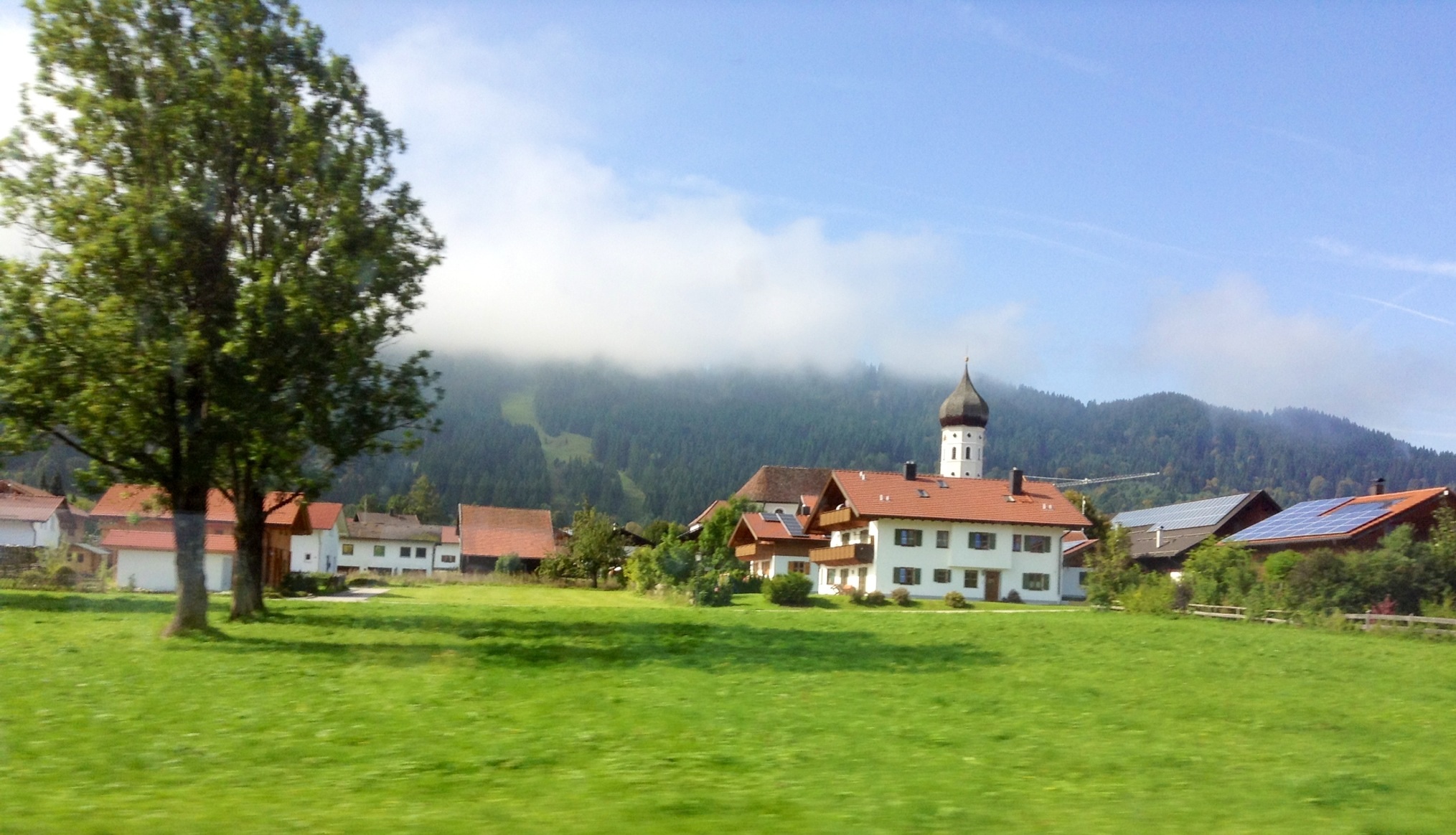
Scenes from a train in Germany

Scene from a train in Germany

Scene from a train in Germany

Scene from a train in Germany
 kgraumann
 wgraumann
 gofarther.me