
Home » Uncategorized (Page 10)
Category Archives: Uncategorized
Ob der Tauber
Rothenburg ob der Tauber (on the Tauber river) is a charming and romantic city that time forgot. Never destroyed by war, the beautiful buildings inside the fairy tale walls and towers exude German quaintness to the max. That it was beautifully decorated for the Christmas, all the better.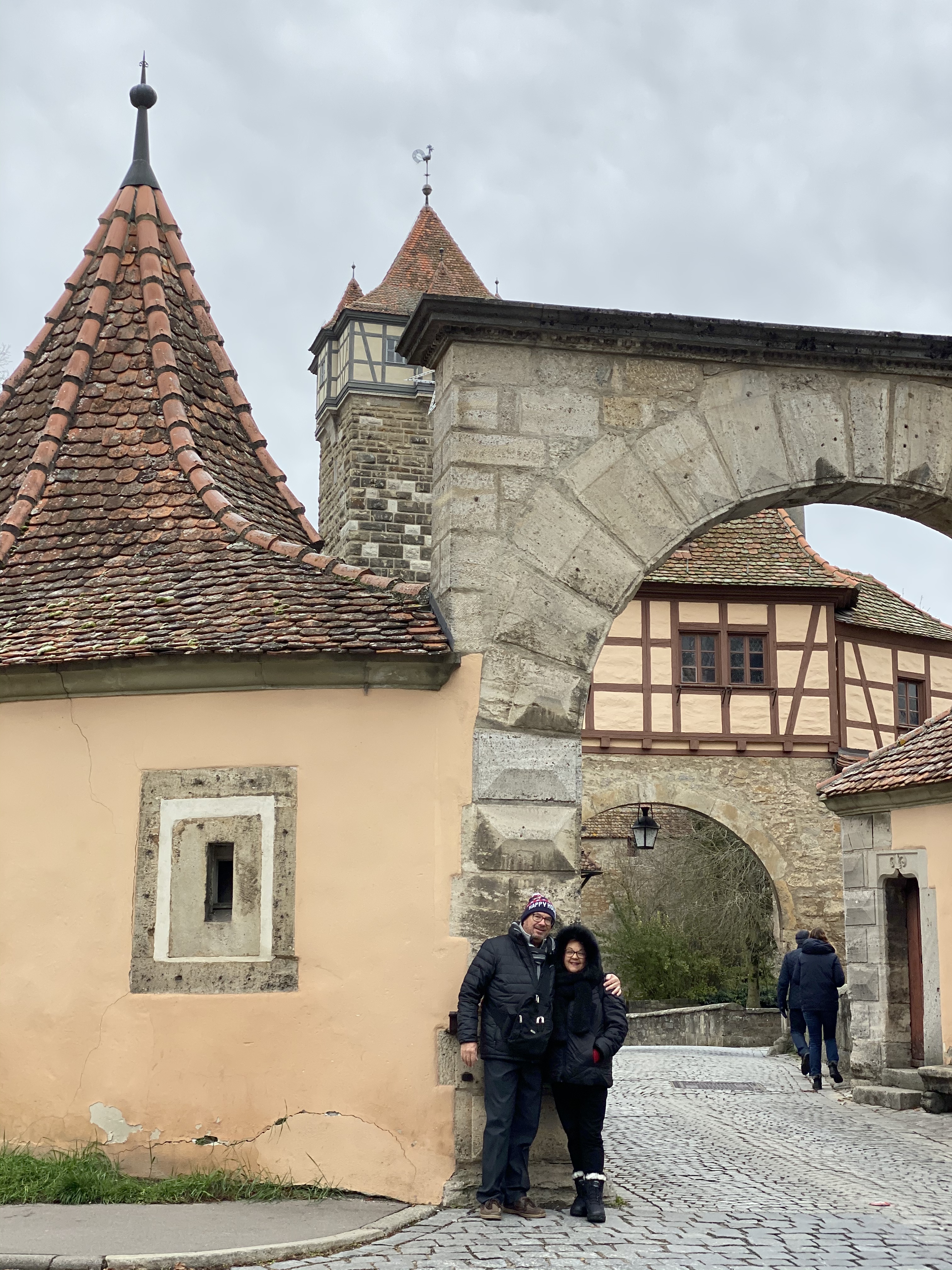
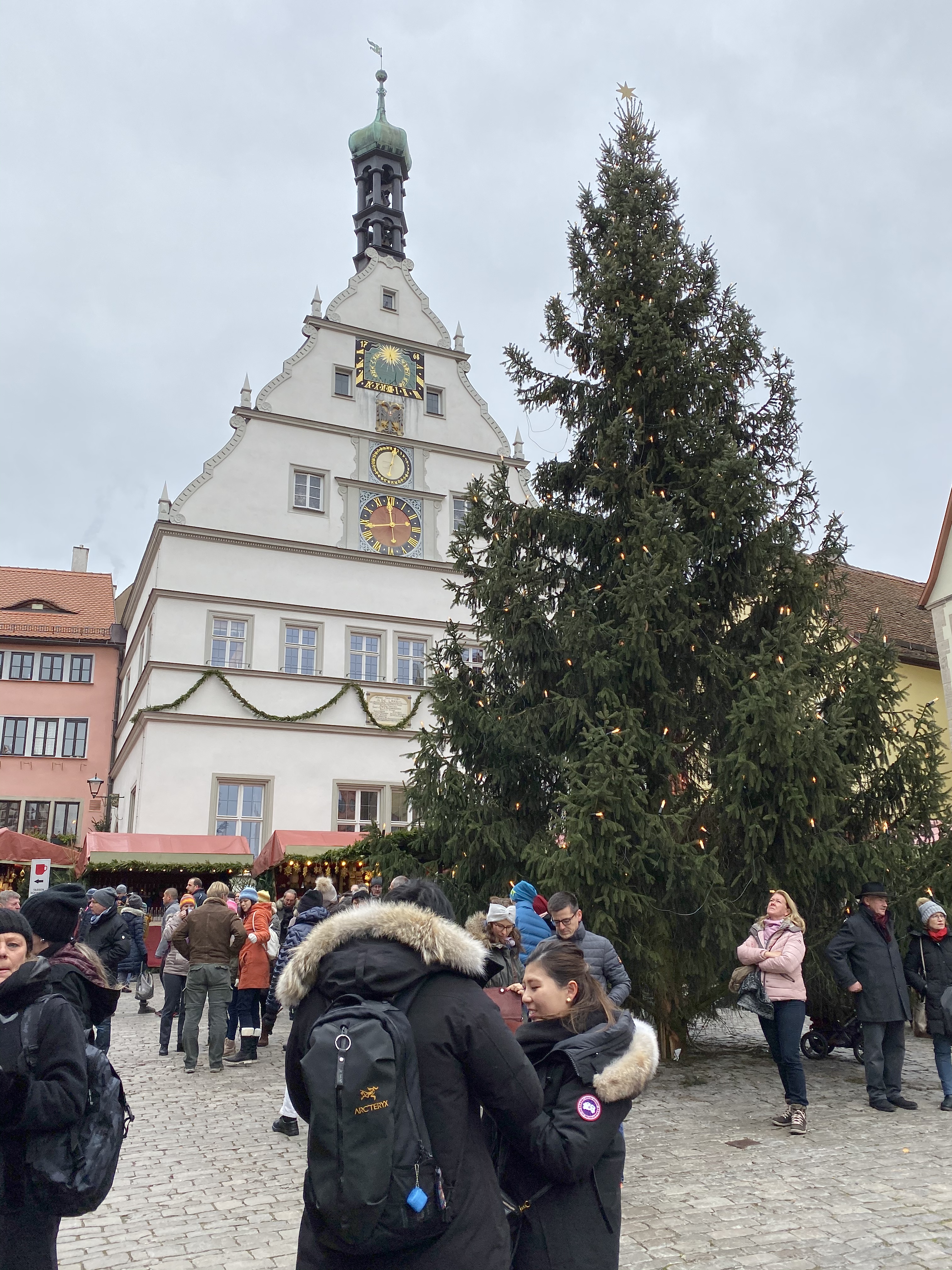
It was obvious the city markets were ready for the crowds. There was live outdoor music of various kinds with regularity. We meandered the outdoor streets and admired the wondrous creativity that captured the architecture of the city. Every street was picture perfect. We stopped to eat in a wonderful restaurant overlooking the St. Jacob Church. It was classy and the food excellent. I had veal in cream sauce and root vegetables.
Our long lunch concluded, we stopped into the St. Jacob Lutheran Church with its two grand towers which houses amongst its precious art, the famous Riemanschneider Altar, which contains a vile of blood, traditionally considered from Christ at the Crucifixion. Because of this, the church has always been one of the most important on the pilgrimage route. Once we entered, we noticed that the church was packed. An Advent service was in progress. We were allowed entrance and marveled at the adult choir, the children’s choir, the orchestra, the pipe organ and recorder choir. We were blessed!
Once outside it was cold and we were glad we had dressed warmly. We went to more Christmas Market and then to the flagship Kathe Wolfarte Christmas store. Housed in classic Rothenburg style, it was overwhelming. Christmas items, artfully displayed on end! Randy and Melisa tried valiantly to buy a hand crafted/carved wooden Christmas tree; unfortunately, in the end, it was unavailable until next year. Oh, did I forget to say, Randy was wearing a Christmas stocking hat that had lights!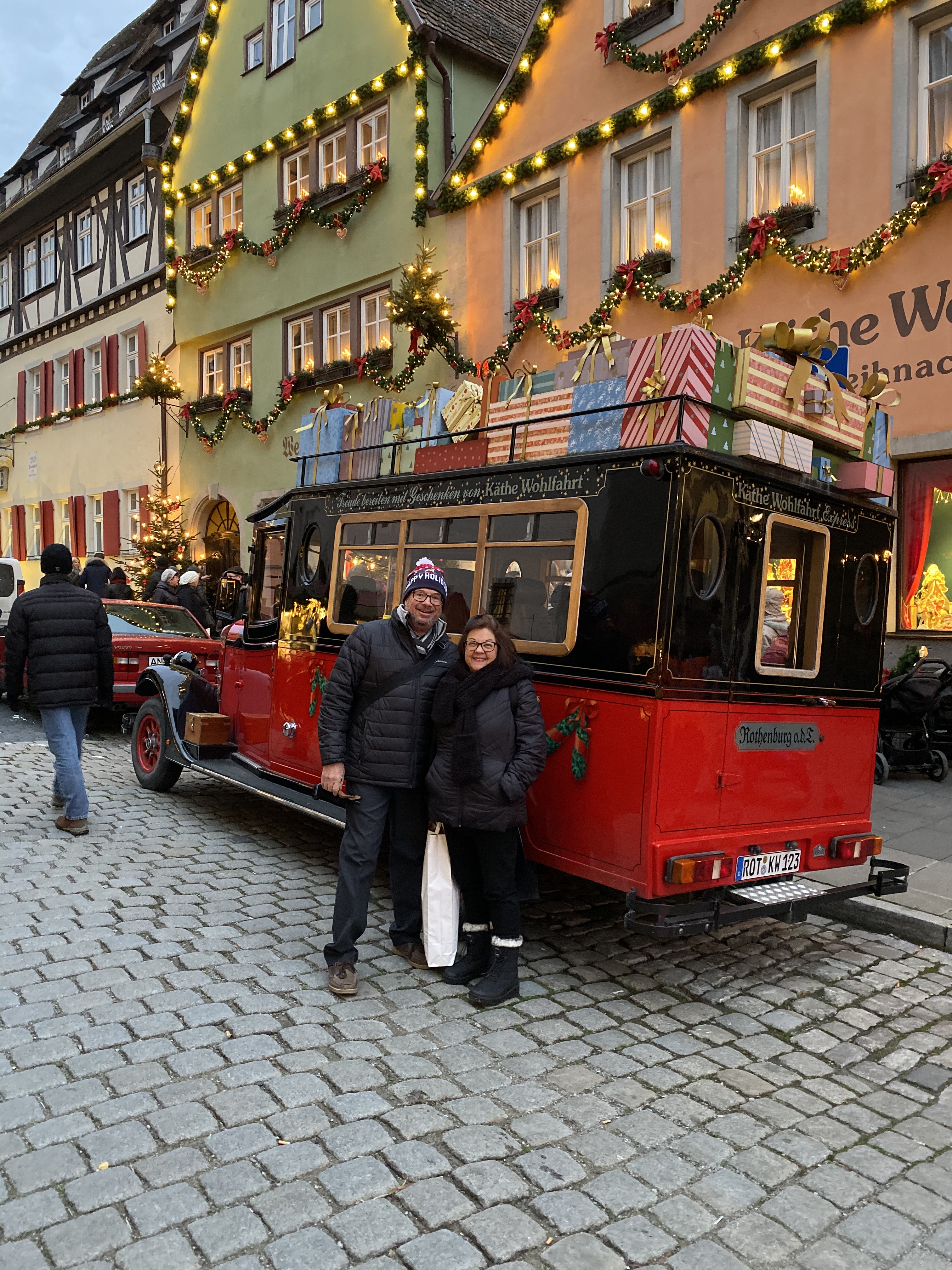
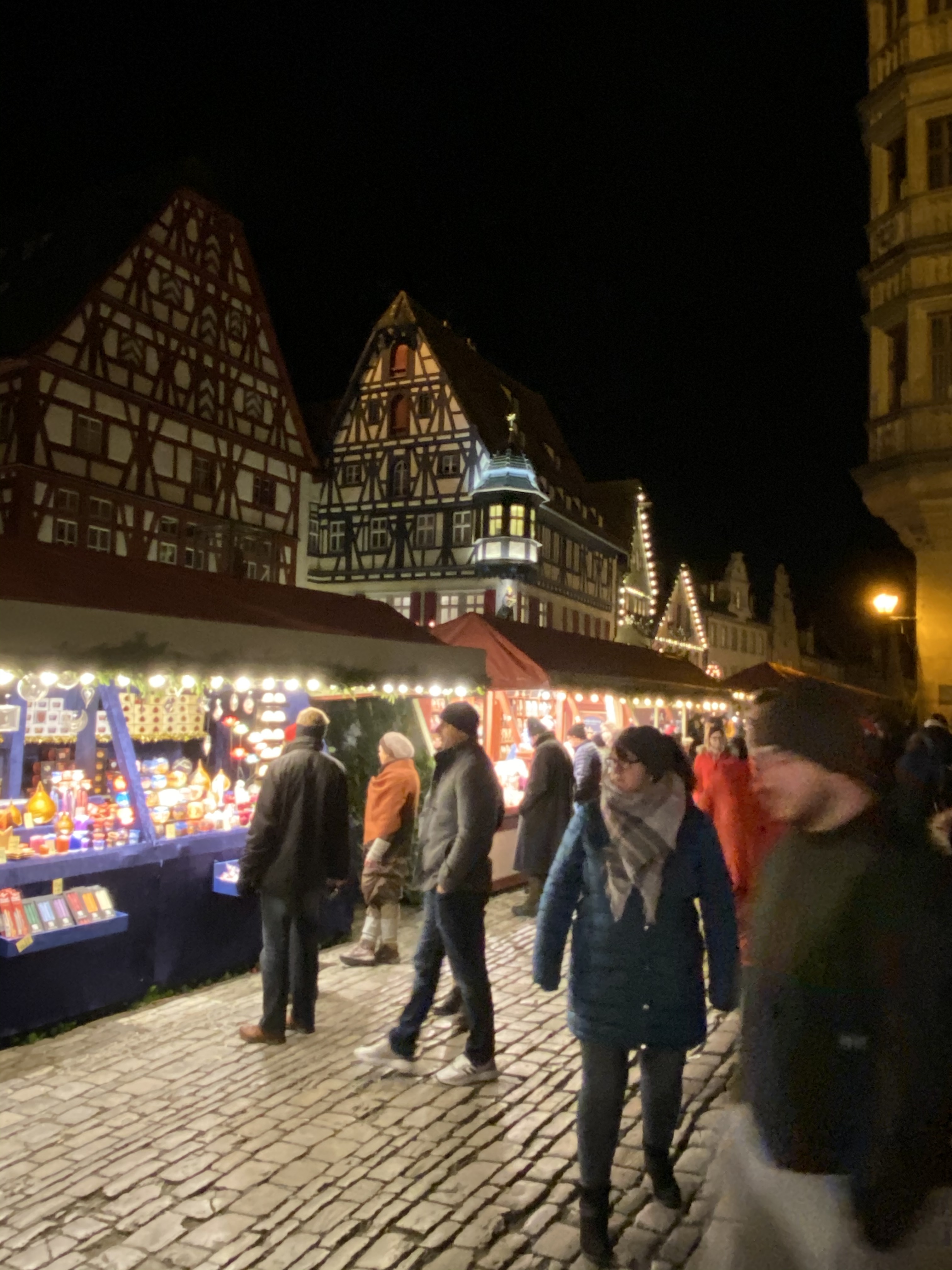
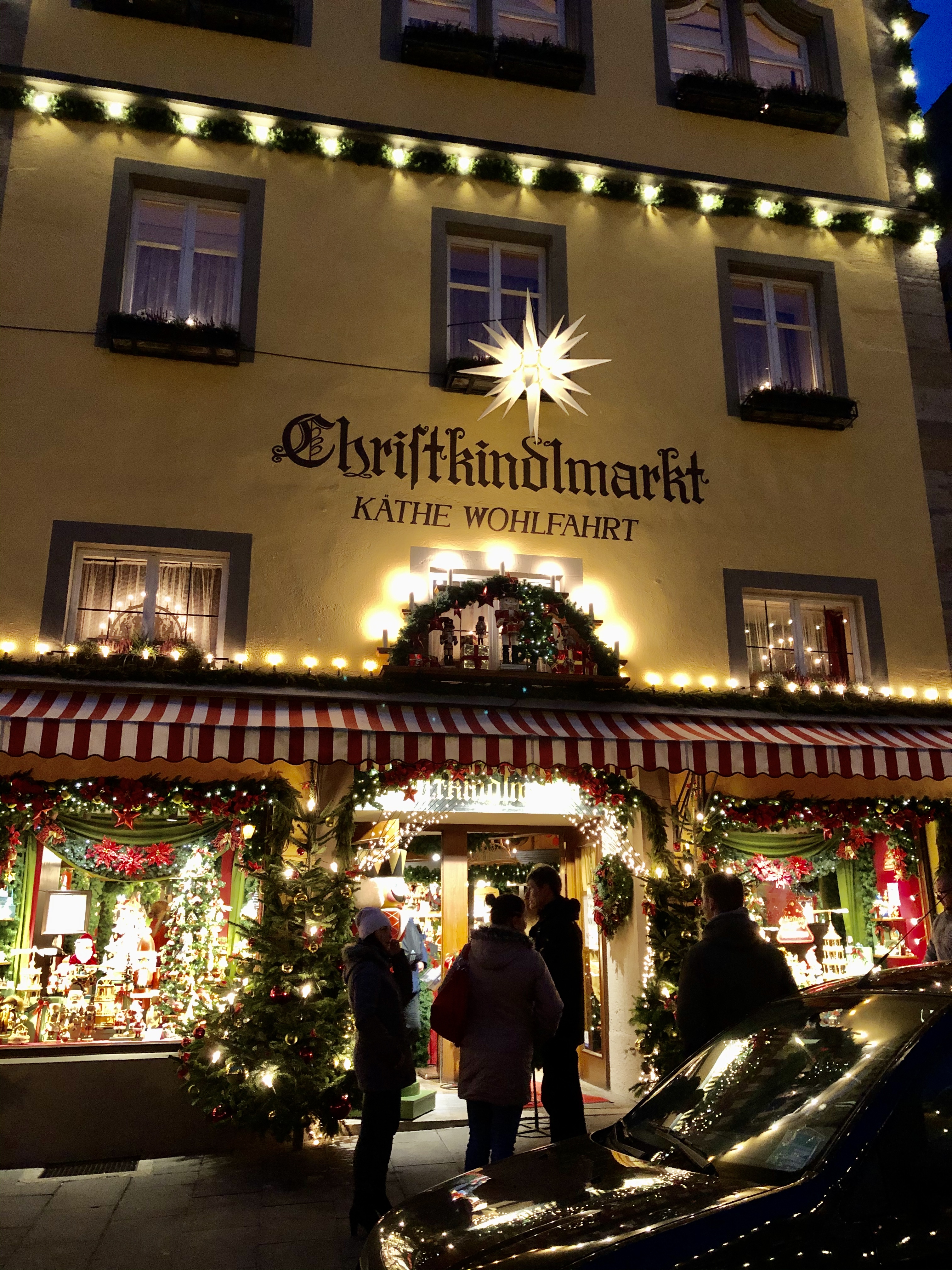 As evening fell, so did the temperatures and we headed back to our apartment in Nuremberg. We had one hitch in that a train was delayed. Randy and Kathy had time for a break and went to the station food and facilities area. Randy, unfortunately, forgot to bring me the coke light he was supposed to buy. He acted like he didn’t remember as the Christmas lights on his head blinked. We are having a grand time. WEG
Christmas/Weihnachten
It was another moving day with a deep Christmas meaning. Randy and Melisa spent the morning at the Documentation Center in Nuremberg while Kathy and I browsed the markets.
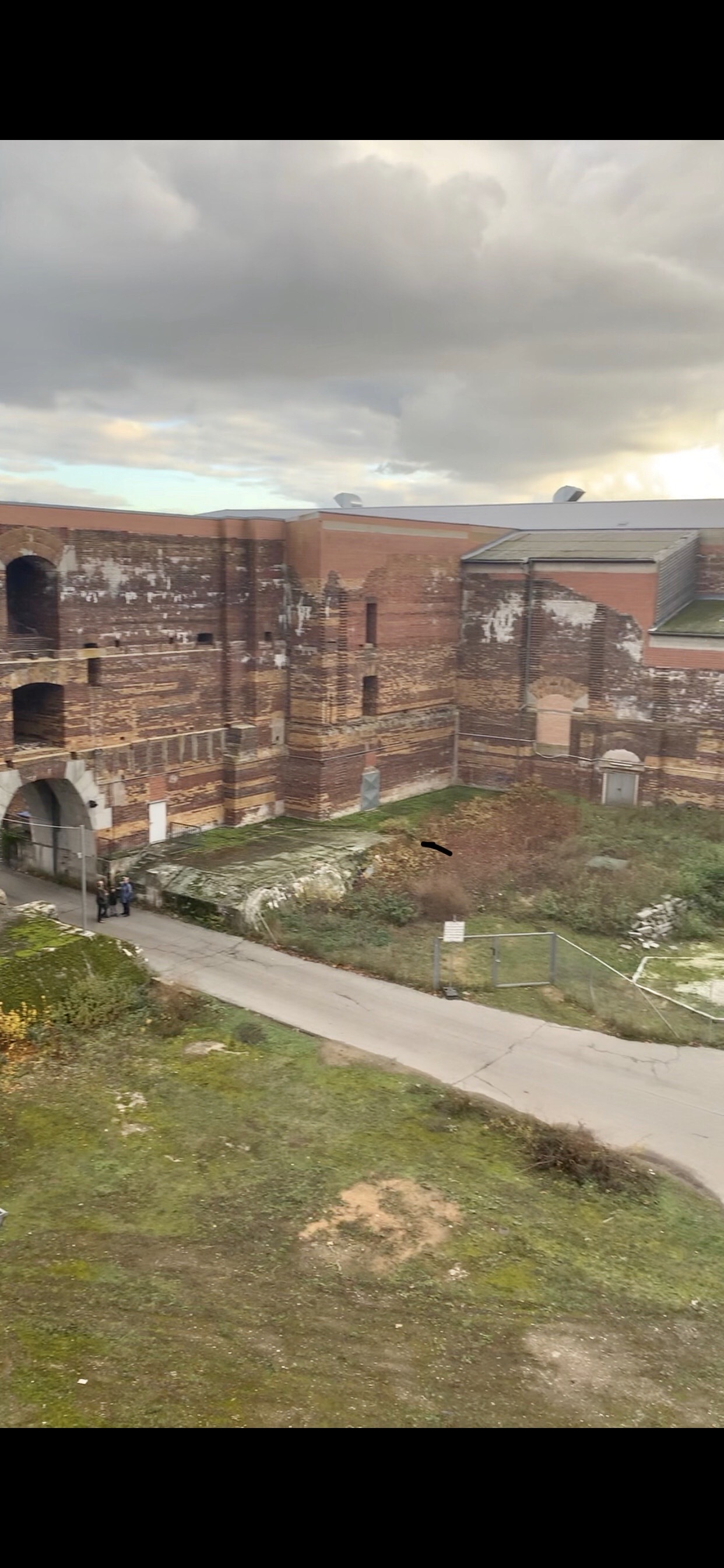
Documentation Center, Nürnberg
The Documentation Center records the rise and fall of Adolf Hitler and the National Socialist (Nazi) Party and its deathly affect on the world and ultimately Germany. It records the evil perpetuated, especially during the Holocaust. As you wind your way through all the displays and watch the vivid movies of the period, you finally end up high above the massive rally grounds where the Nazis held their spectacular events as Hitler egged them on to a false glory. You stand there, in a glass promontory above the exact spot at which Hitler spoke. It is eerie and sad. You leave realizing evil is real and mesmerizing.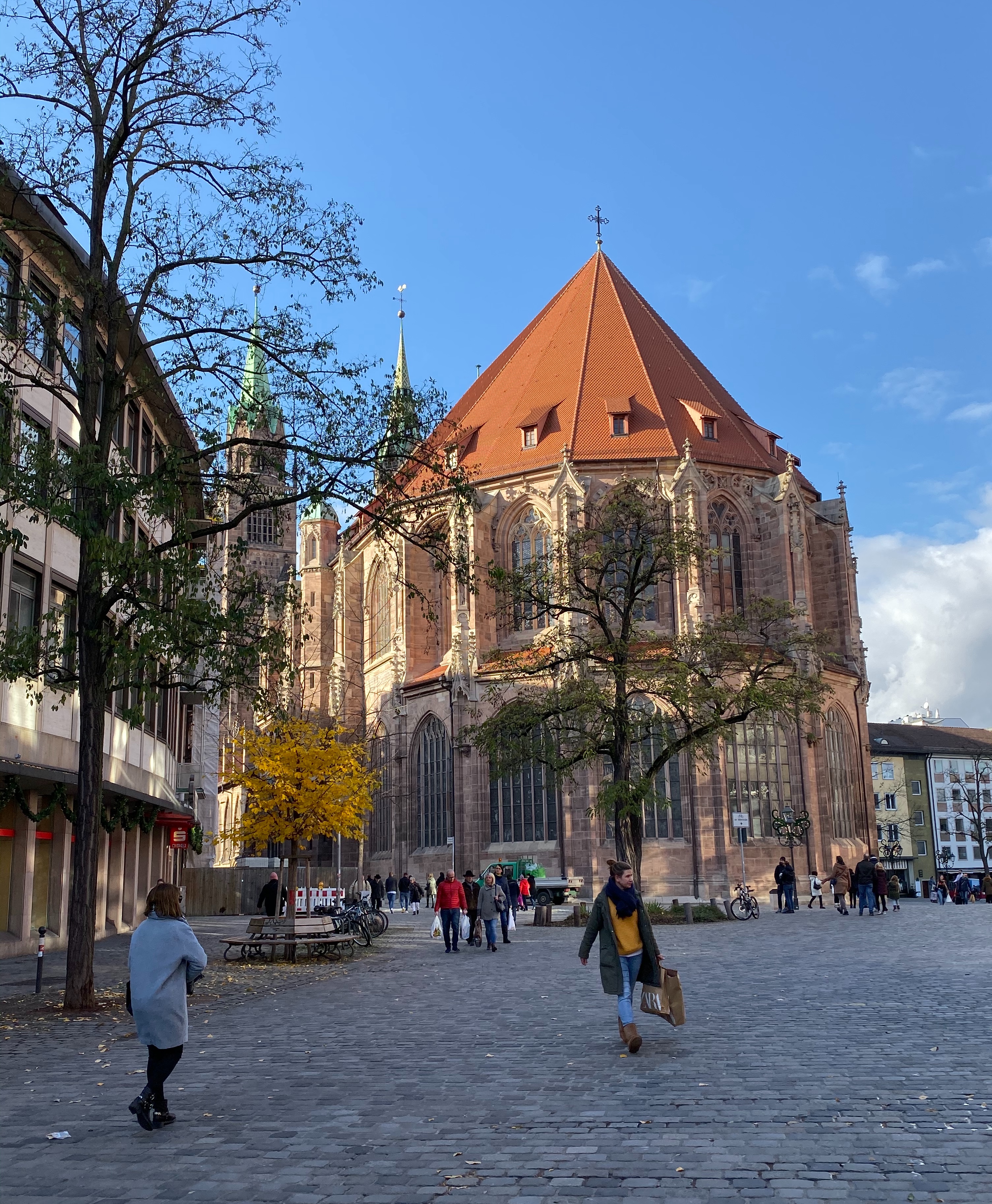

Kathy and I enjoyed the Christmas markets. Lebkuchen, a type of ginger cookie, is a specialty of Nuremburg and is on display in a multitude of ways. Children were singing and brass was playing. We enjoyed the Nuremburg sausage, a centuries old protected recipe.
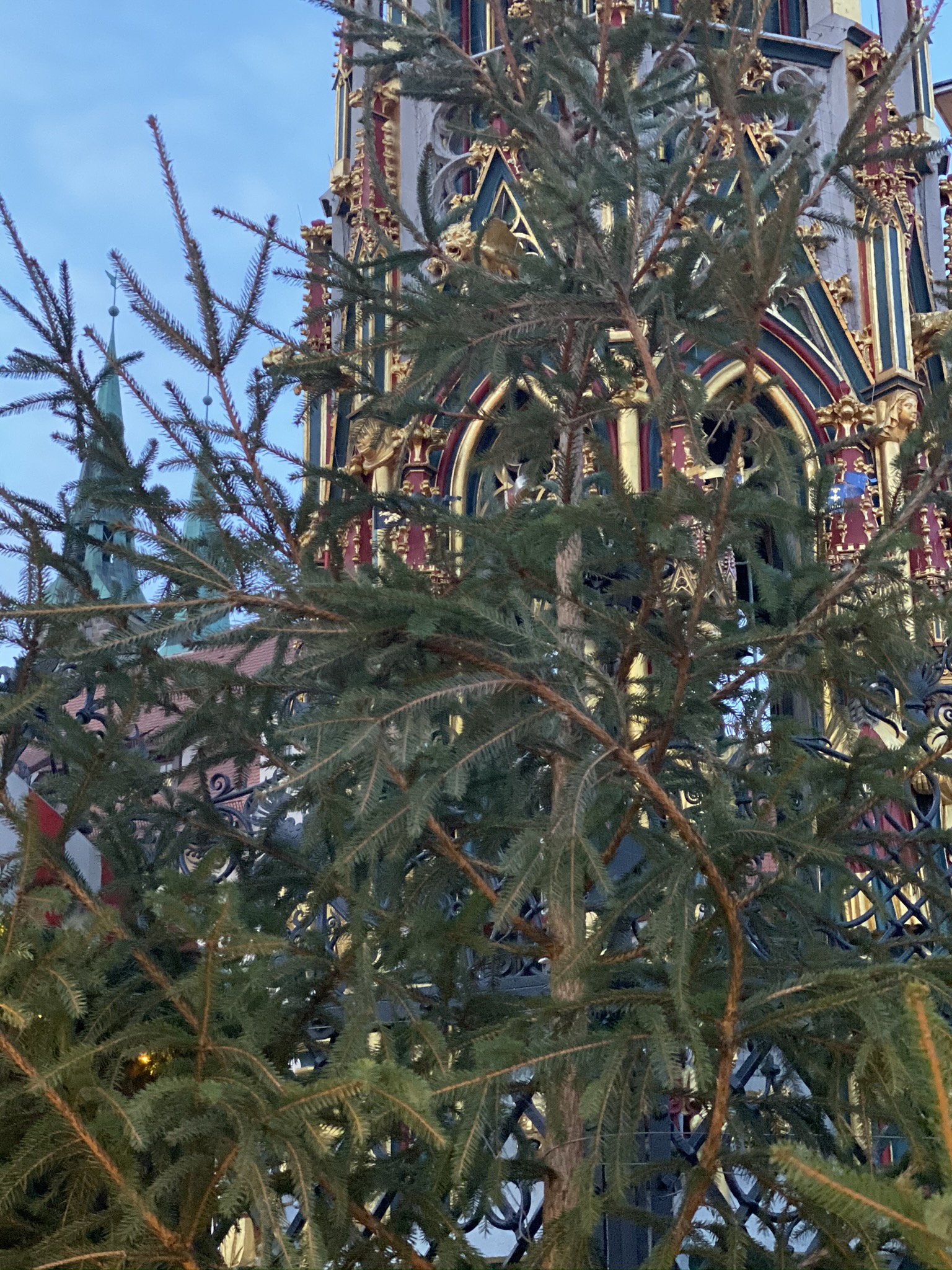
As we visited the important St. Sebald Lutheran Church we noticed that a large brass choir was assembling. A concert! We contacted Randy and Melisa and gave the “get here now” text. St. Sebald is the most important church in Nuremburg since it houses the remains of an important eighth century saint, Sebald, and was the church of the leading musician of his day, Johann Pachelbel. Randy and Melisa used his music, the Canon in D, for their wedding.
The brass choir was outstanding. The Advent and Christmas music filled the magnificent church to the delight of the large crowd. It was a “pinch me, is this real, and am I really here” moment. 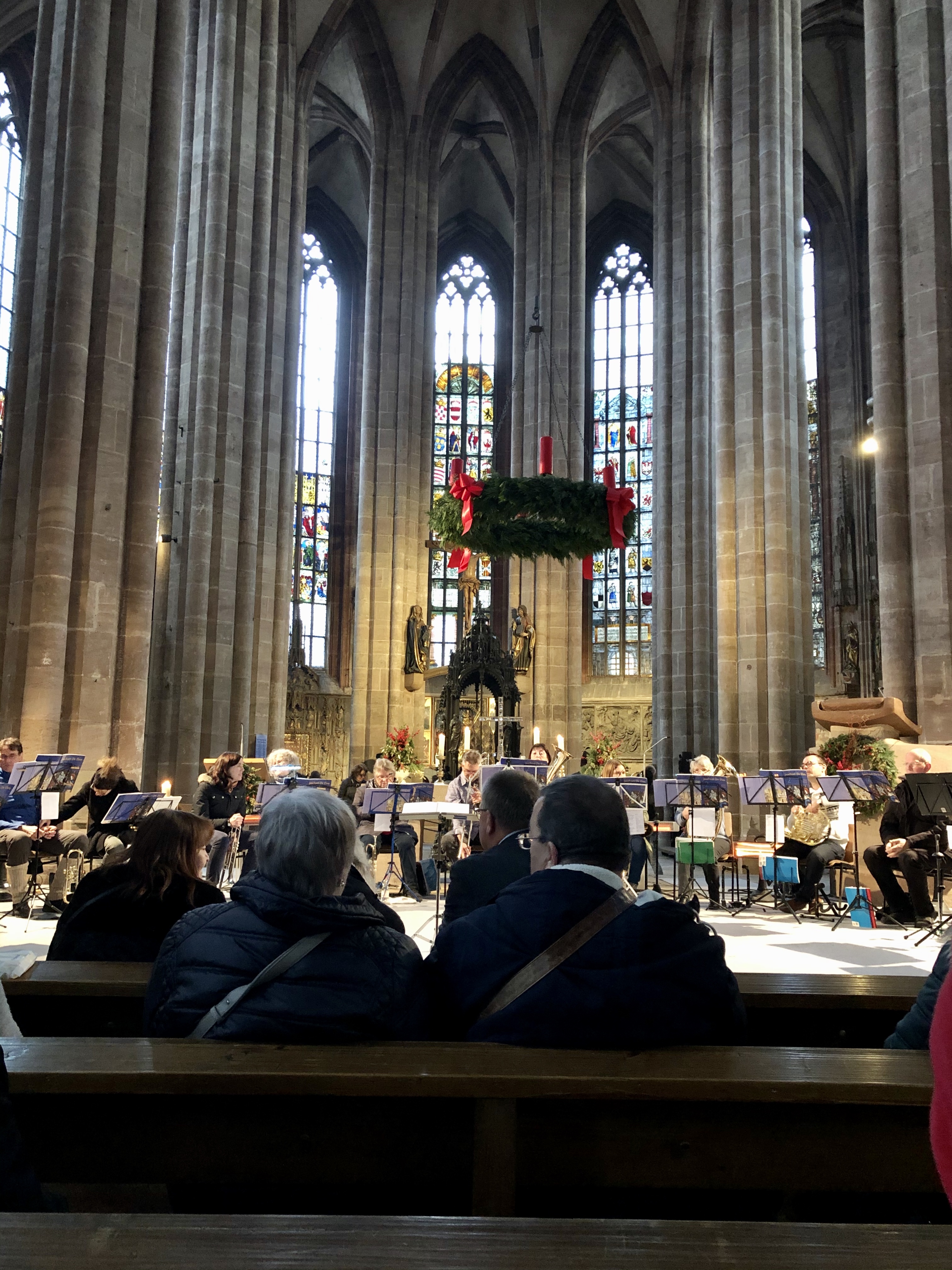
Our evening meal was in a very nice, atmospheric German restaurant. The food: sauerbraten, rouladen, beef roast—all with different sauces (one gingerbread), red cabbage with apples, sauerkraut with caraway and bay leaves, potato dumplings, and dumpling soup with parsley and a dessert with apple strudel, cream torte and ice cream. We were satisfied for our walk back to the apartment just on the outskirts of the old town. WEG 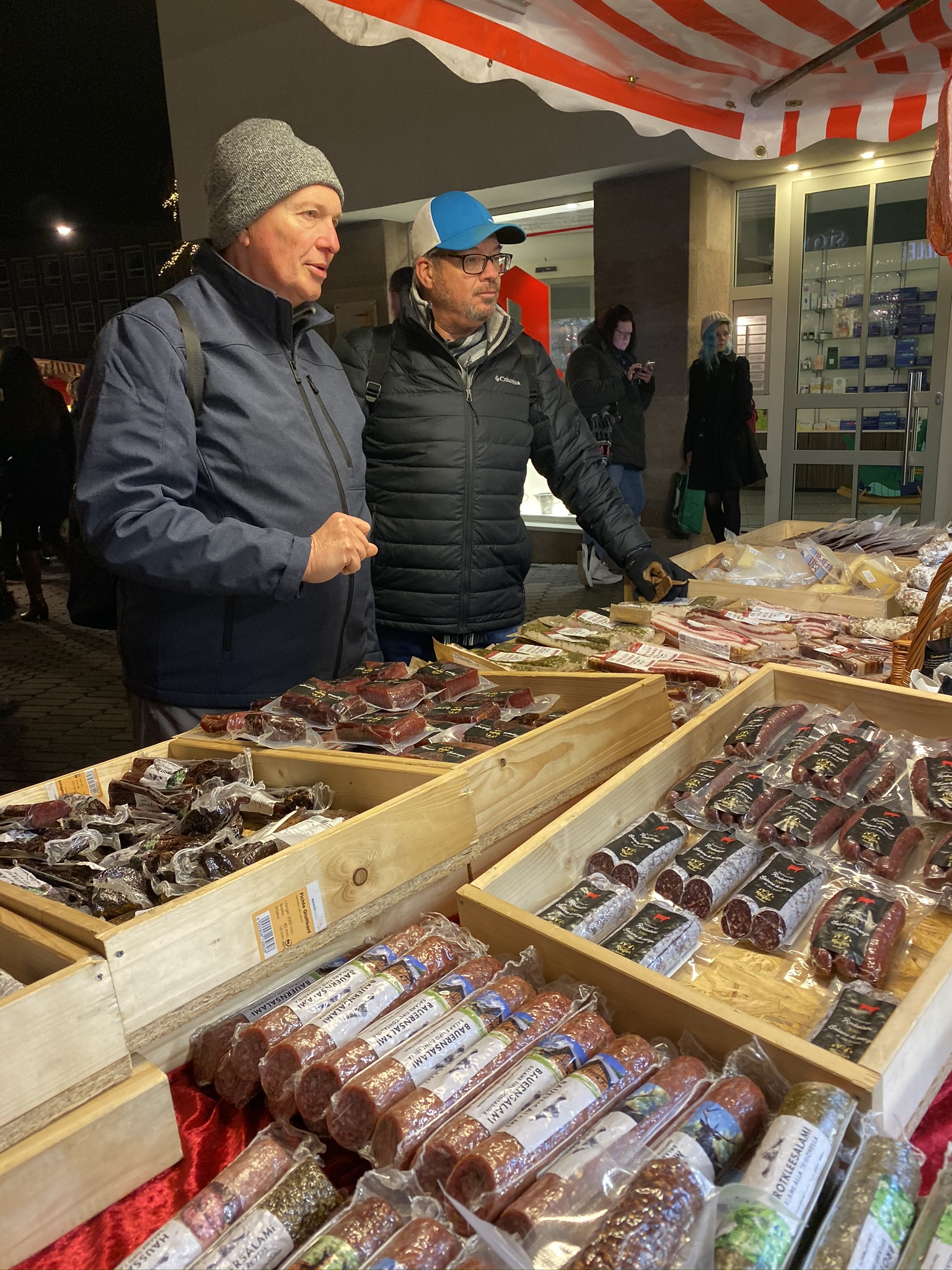

Wafting Sound
Our train trip to Nuremberg, Germany, from Strasbourg, France, was smooth as we glided through fields green with winter crops. We found our apartment near the main train station, unpacked quickly, and headed out to eat at a Franconian (a region of Bavaria) restaurant. Melisa had her first sauerbraten and Randy his first pork shank. Potato dumplings were also a first for both. The meal was satisfying all around. The beer is great: German beer is unfiltered, has no chemicals and is not pasteurized.

 We headed to the old town where the main Christmas Market, the Chriskindlesmarkt, is located. So did the rest of the world, it seemed, as we were greeted with a crush of crowds! News media was out in full force for this first day of one of–if not the most–popular markets in Europe. Eventually, we decided to go to the organ and choir concert at the amazing St. Lorenz Lutheran Church. Along the way we stopped in to a great little place selling light desserts and drinks. It was warm inside in contrast to the upper 30s outside.
 The concert at St. Lorenz was nothing short of spectacular! The huge church was overflowing. People sat on the floor or leaned against the giant pillars that divided the church into three aisles. Thankfully, we found seats in the side aisle but with good sight lines. Unbelievably, a family behind us spoke excellent English and two of the boys had just graduated from the boys’ choir that was singing that night. We received so much wonderful information! The choir consists of 100 boys who go to a special school to allow them to practice, get private voice lessons, travel in concert, and get a regular education, without being in the general population. Talk about first class sound! Heavenly! The church reverberated with the voices wafting through the high ceilings of the church. The Lutheran Church pays for half the costs, and sponsors make up the rest. Since this was an Advent/Christmas Service, the church’s massive organ was also played. We soaked up the sounds and will long remember it. Kathy and I commented that it took us back to our childhood when we had children’s Christmas programs. The Advent/Christmas music we memorized formed some of the content of the service/concert. The boys’ choir sang underneath the Angelic Salutation adornment by Veit Stoss and beside the stone tabernacle by Adam Kraft (over 90 feet tall and carved from one stone). Both are artistic treasures, but not the only ones in this richly adorned church. It was a first class and spiritually enriching experience. Our Christmas spirit was elevated for all the right reasons. WEG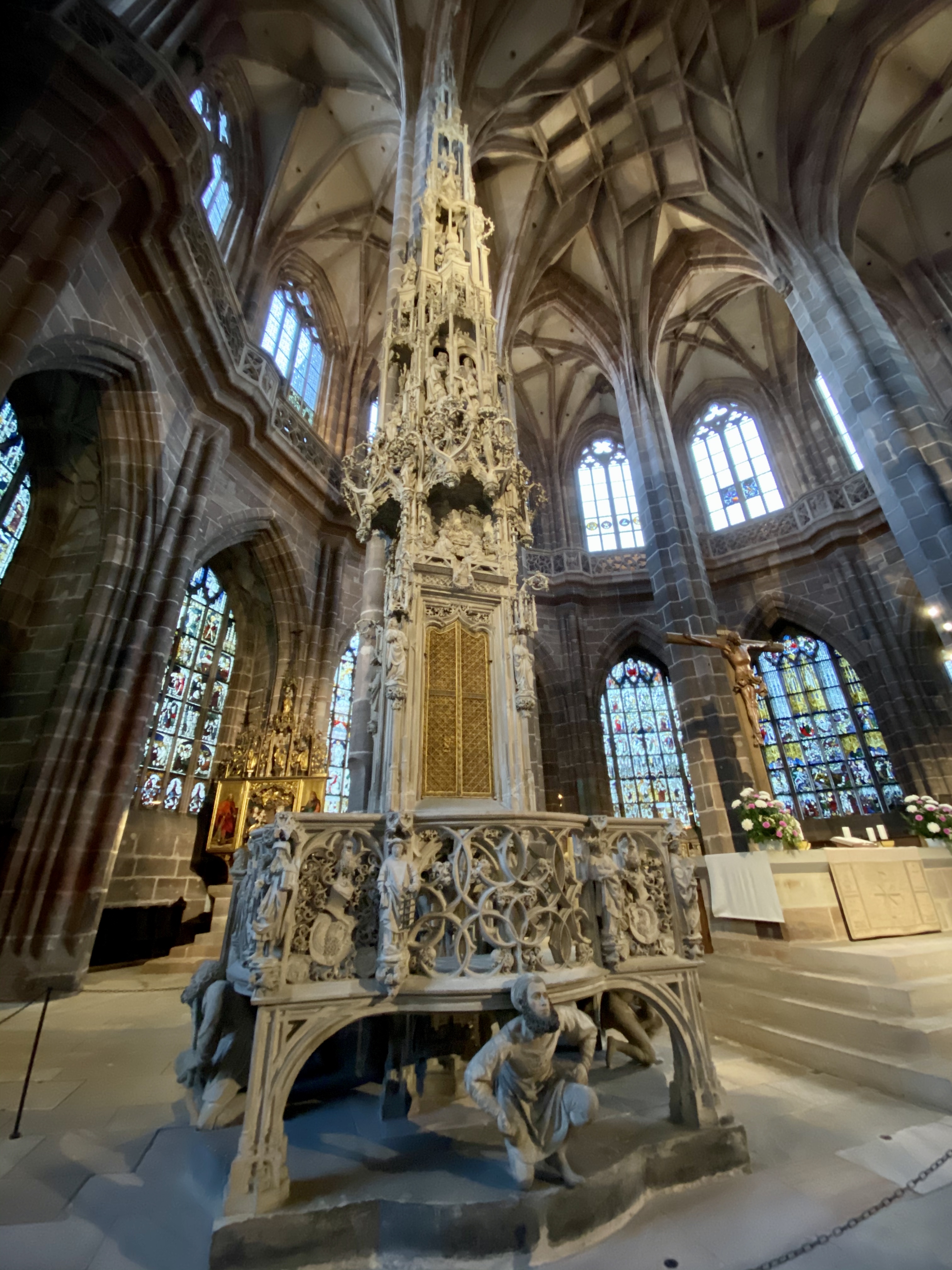

Thanksgiving in Strasbourg
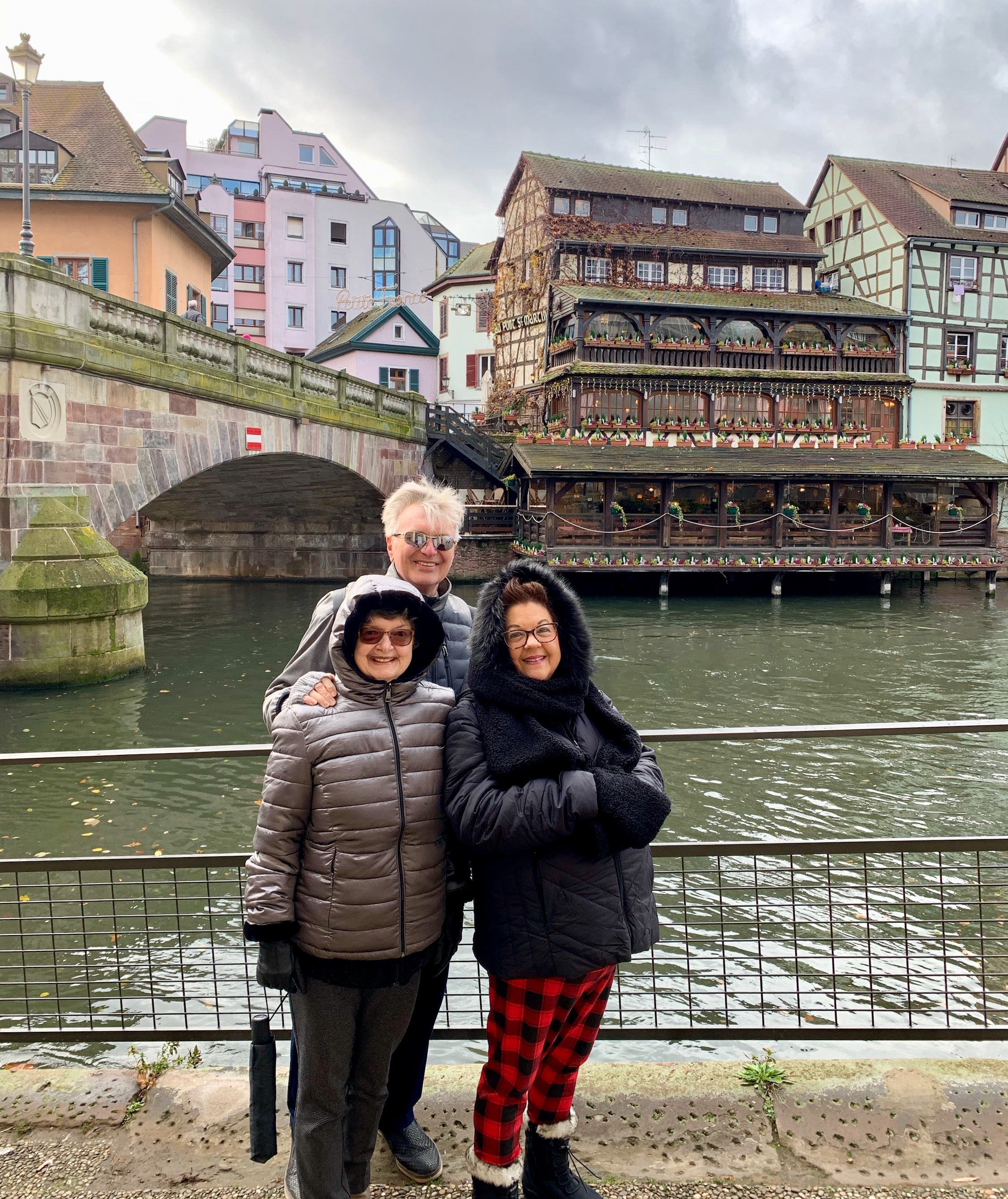
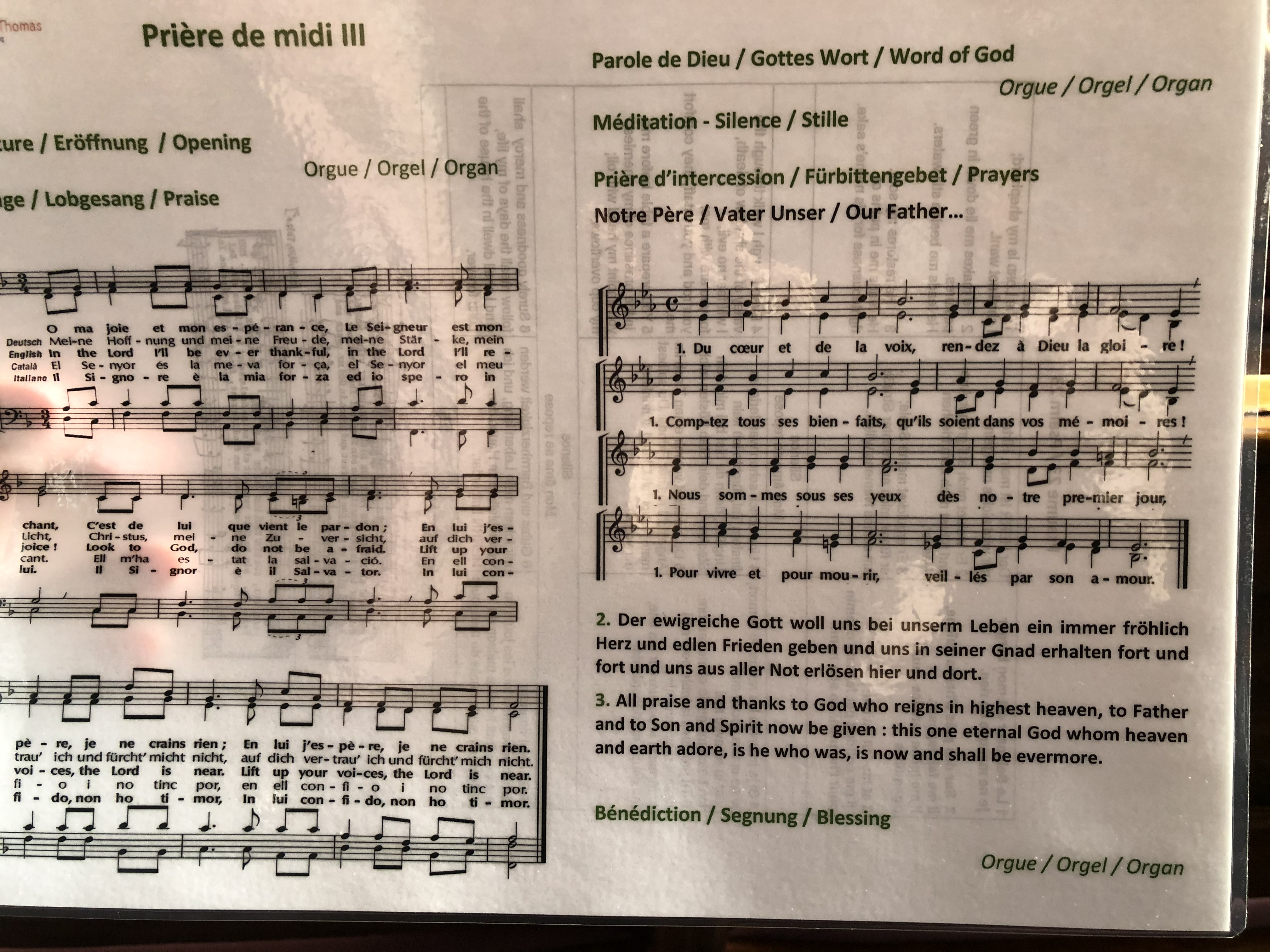 We walked into the Petite France section of Strasbourg along the river. Half timbered buildings mingled with traditional French and German architecture. Strasbourg is along the German border, and the Alsace region of present day France was part of Germany for long periods of its history. There are still Lutheran/Protestant churches in the city, and one of them, St. Thomas, had a noon day scripture and music devotional. The church was begun in the 700s and is very large. Its pipe organ was built by Silberman, the great pipe organ builder. Albert Schweitzer played on the instrument. The music was meditative and the pastor had chosen hymns that were definitely Thanksgiving in character. How appropriate for us! We were able to sing along since some sang in French, some in German, and some in English as the words of each language were printed out. It was a good moment in time as we thought of family and friends back home. We were thankful to God for our many blessings.
Our Thanksgiving meal was eaten in a striking restaurant all decked out for Christmas and in a quaint half-timbered building set along the river. Everything was quite French. I believe my Camembert fried in a sesame cream and Randy’s meat dish in a French pastry won the prize for great French cuisine. Not a typical Thanksgiving meal, but it was for us a memorable one. The local beer was also quite good.
.
It is a grey day with intermittent rain, but the Christmas lights are bright and cheery. In the mid-afternoon Kathy and I returned to the apartment for a short rest while Randy and Melisa went on exploring. They returned to the apartment to fetch us because they had found the largest Christmas market in Strasbourg. It is one we had not visited. Lights and stalls abounded. It seems as if stores compete to see which can have the most festive display. All of this in a beautiful old town on its own right, festooned with Christmas joy. It is an almost surreal experience.
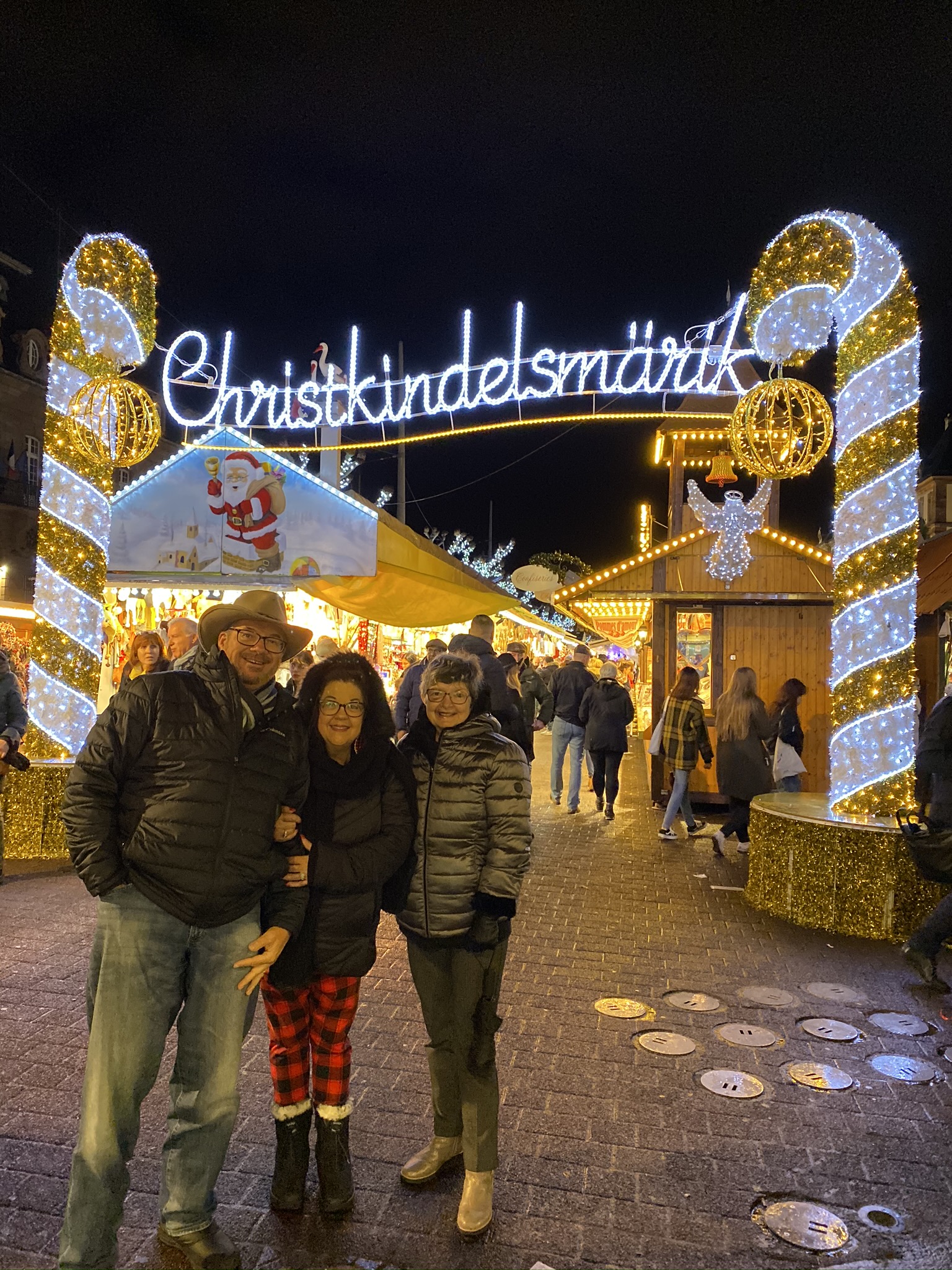


We ended our day with traditional gluhwein (a liquor and hot wine concoction) and a huge white bratwurst. We also called family to say, as I do to you, “Happy and blessed Thanksgiving.” WEG
A Day Off

Randy & Melisa in Colmar, France
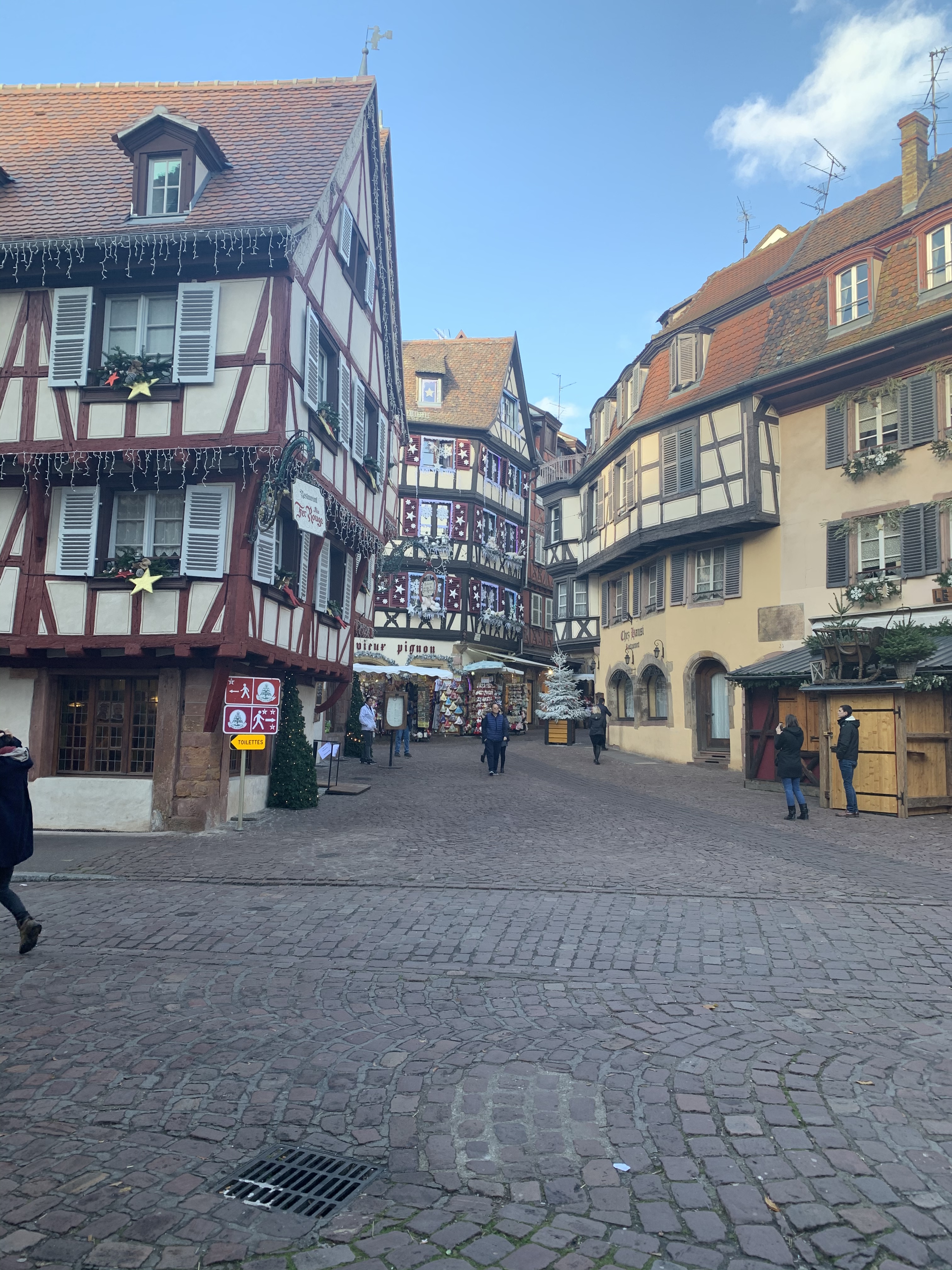
Randy and Melisa had a wonderful day in Colmar and Riquewihr, France. Both are medieval villages in the Vosges Mountain area of eastern France not far from Strasbourg. They are in a wine growing region known for their white wines, especially Riesling and Pinot Noir. A part of the Alsace province, they are quaint and filled with half-timbered houses and buildings.
Colmar is filled with canals and hosts a popular Christmas Market (actually the word Christmas Market usually means several different markets in various parts of the city). You are transported back in time in Colmar. Randy and Melisa hit every market during their stay. They went on to Riquewihr for the mid-afternoon and were quite impressed with its beauty and massive city gates. A smaller village, Riquewihr sits on the wine road of France, built on the side of a mountain. Randy and Melisa were blessed to find a cab driver who took very good care of them, driving them to take pictures of the area and coming back later to pick them up and bring them to the train station in Colmar.


Kathy and I took the day off. Kathy had suffered a fall in the Basel, Switzerland, train station two days ago. The station was in remodeling and we were routed outside in the dark to get to our platform. The incline toward the station in the dark rolling her luggage caused her to fall hard—breaking her glasses (thankfully, she brought an extra pair). She now sports a black and blue face. I had become exhausted after all our travels with no real break or sleep time. We decided we needed a break day and so we rested and slept the day away. It was a wise decision. WEG
Desert or Dessert
We arose early for our long journey back to Israel. Our exciting experience along the way was time on a Jeep ride—pickups with built-in seats in the bed—into the Wadi Rum, the south Jordan desert. The movie, The Martian, and portions of both Star Wars and Transformers were filmed in the desolate, sandy, rock mount area. The sand is reddish brown and fine. The rock formations that jut up through it are intriguing—towers, shards and rounded boulders mixed together. We stopped along the way to climb a sand dune. We took off our shoes and sank deep. With absolutely no moisture, the sand does not cling. The day was wonderfully cool and the bright sunshine made it bearable. 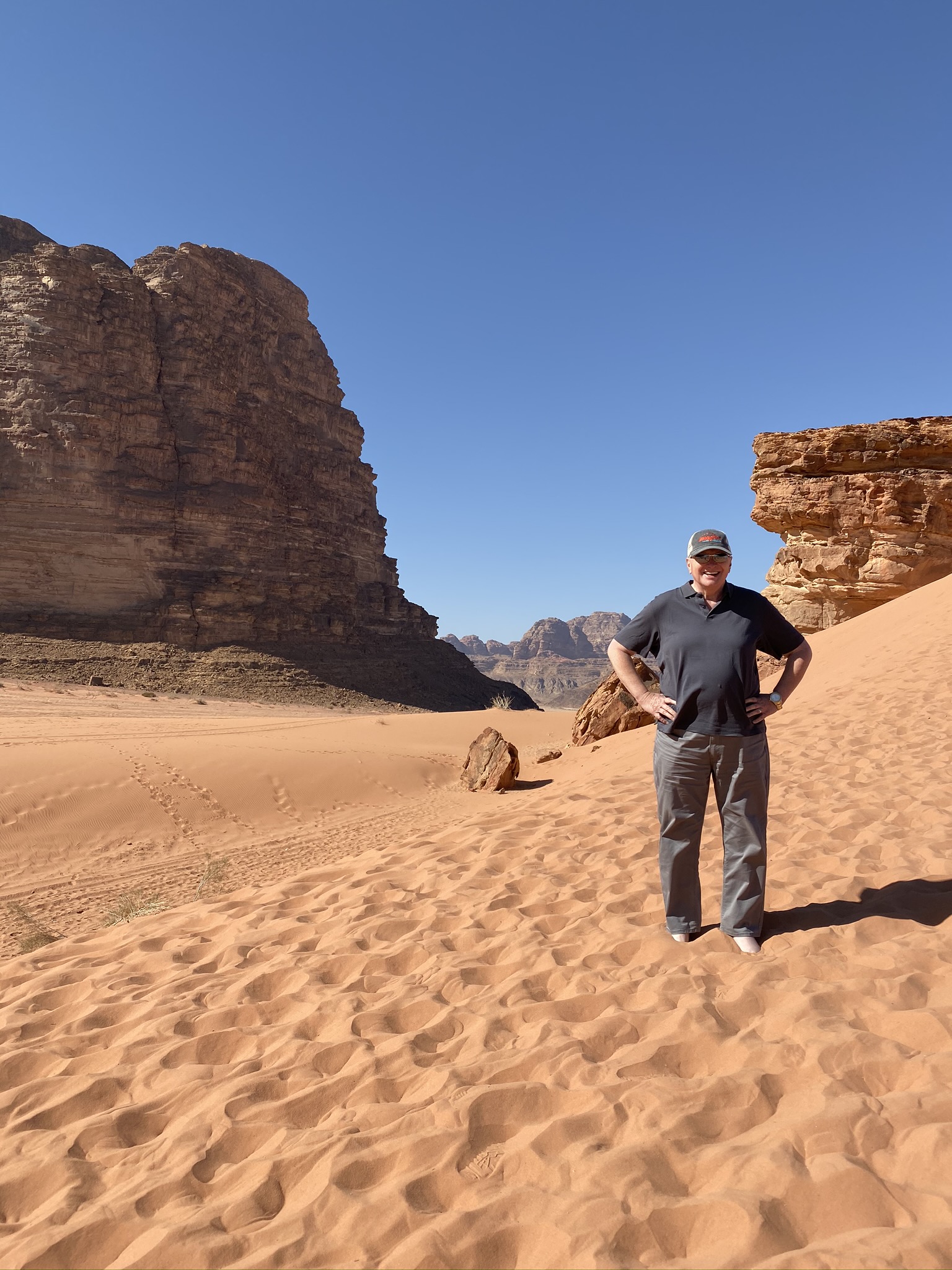
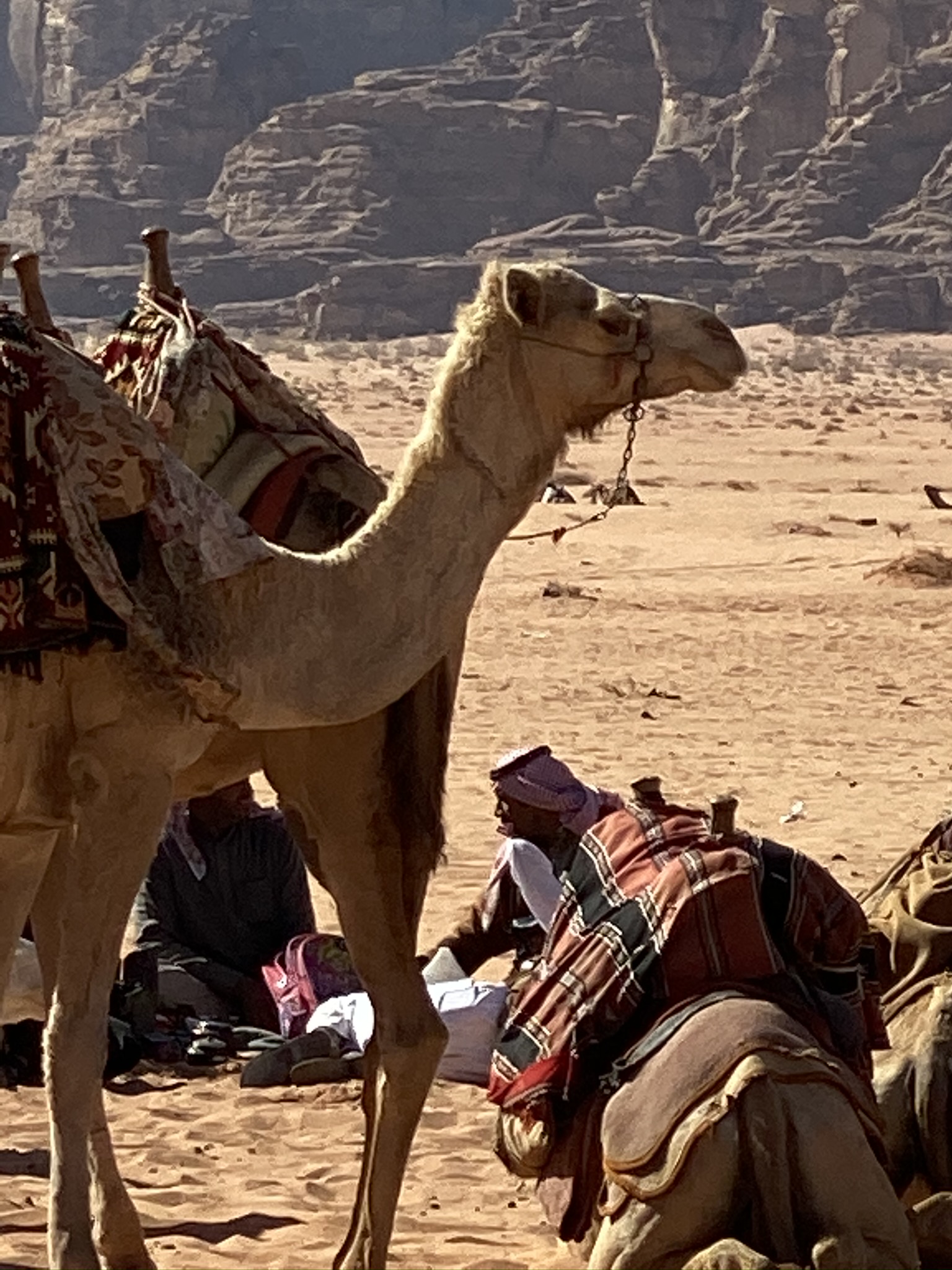
The ambience was absolutely Arabic. Men in traditional long dress with head coverings riding camels. We had an informative presentation of making strong coffee the Middle Eastern way—hint: boil for 30 minutes and add cardamom, filtering twice. We were instructed on the importance of coffee manners. For instance, to fill a person’s cup is a polite way of telling them it is time for them to leave. 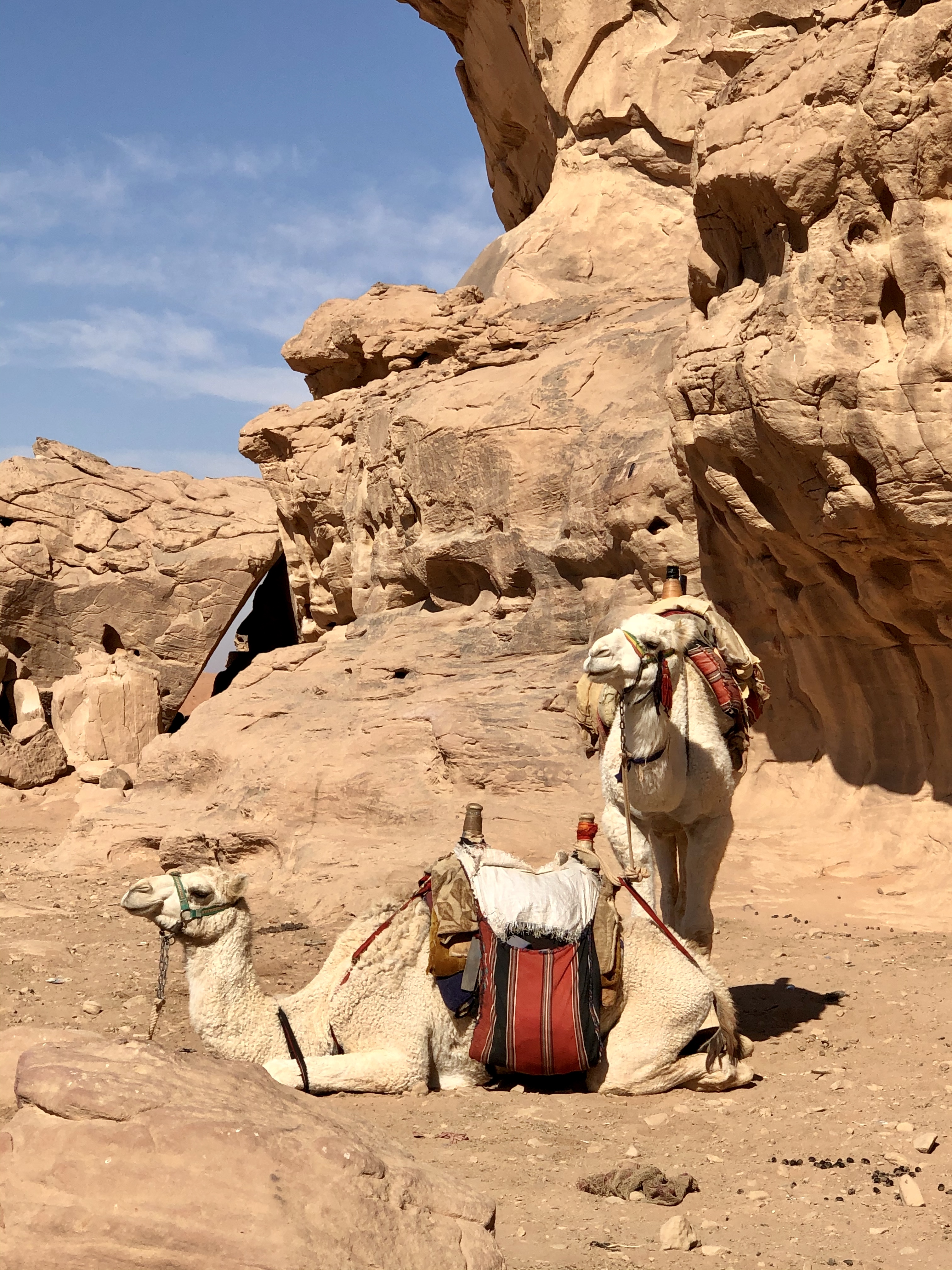
I’ve said little about our food. I really like it. Some common examples are: Eggplant fixed in numerous ways—all good. Hummus is like their butter. It is always available. Meat balls in pepper or cream sauces; cucumber mixed with many different vegetables for a cold salad; mixed vegetables stir fried in olive oil; chicken with saffron rice; cabbage and more cabbage in different sauces are staples. One food we have in common is okra in a tomato sauce. The flat bread is baked in a brick oven and toasted on the outside, very soft on the inside. One dessert that is particularly tasty is a cream cheese mixture with honey and cinnamon topped with a crushed nut and spun honey topping. The food is served in abundance. We have loved learning and experiencing a life that in outward forms is far different from ours. WEG
Two Ruins—Two Days
We drove through the desert of Israel and then Jordan. It was up hill and down hill the entire way. Entry into Jordan takes time, about one and a half hours, but soon we were on our way through the arid and rocky hills of Jordan. Jordan is the third water restricted country in the world. Its green valley would look like a drought area anywhere else, with no hope of ever getting greener. The wealth of the Kingdom of Jordan comes from the export of phosphate and tourism. The tourists flock to Jarash and Petra.
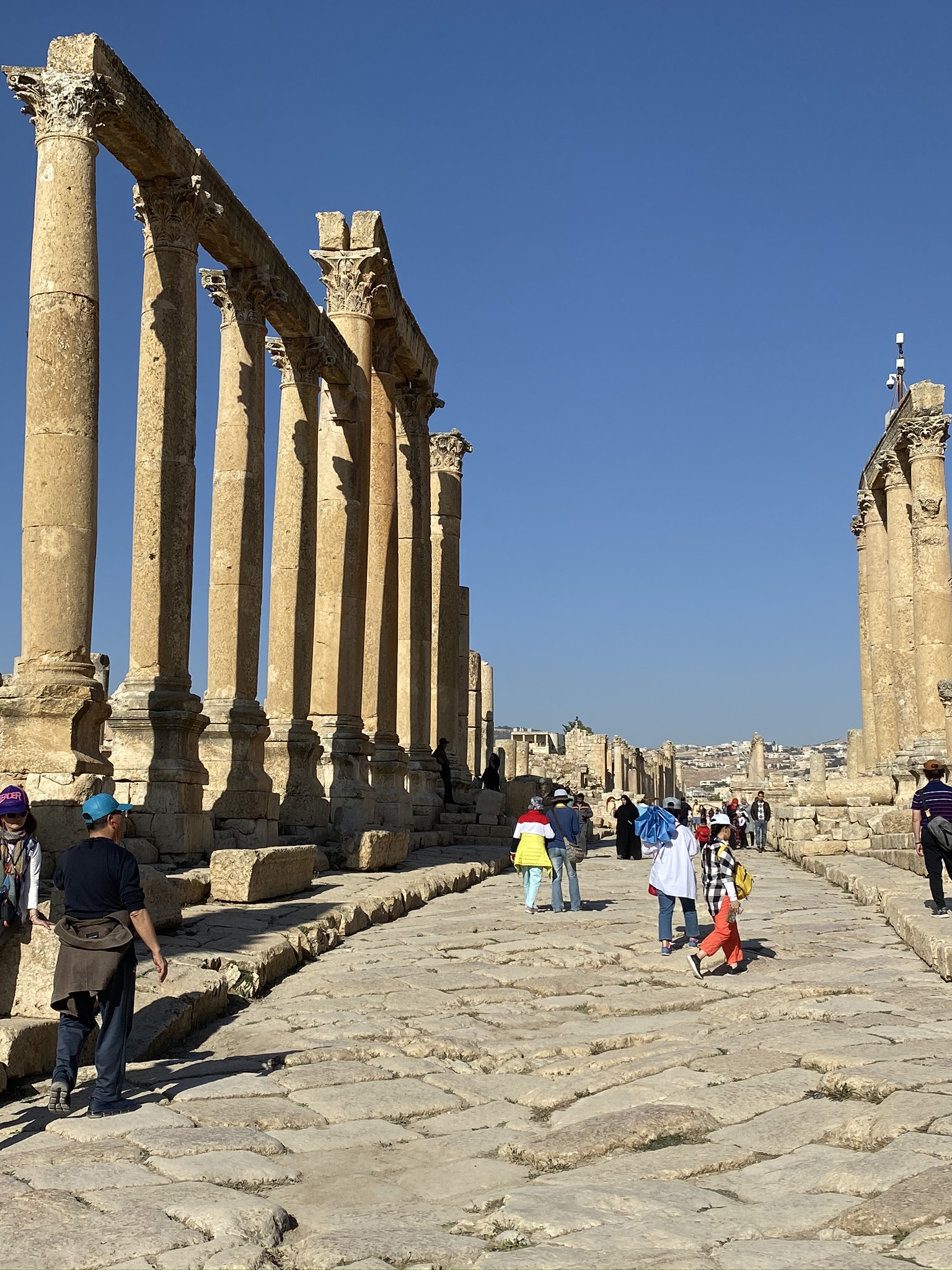
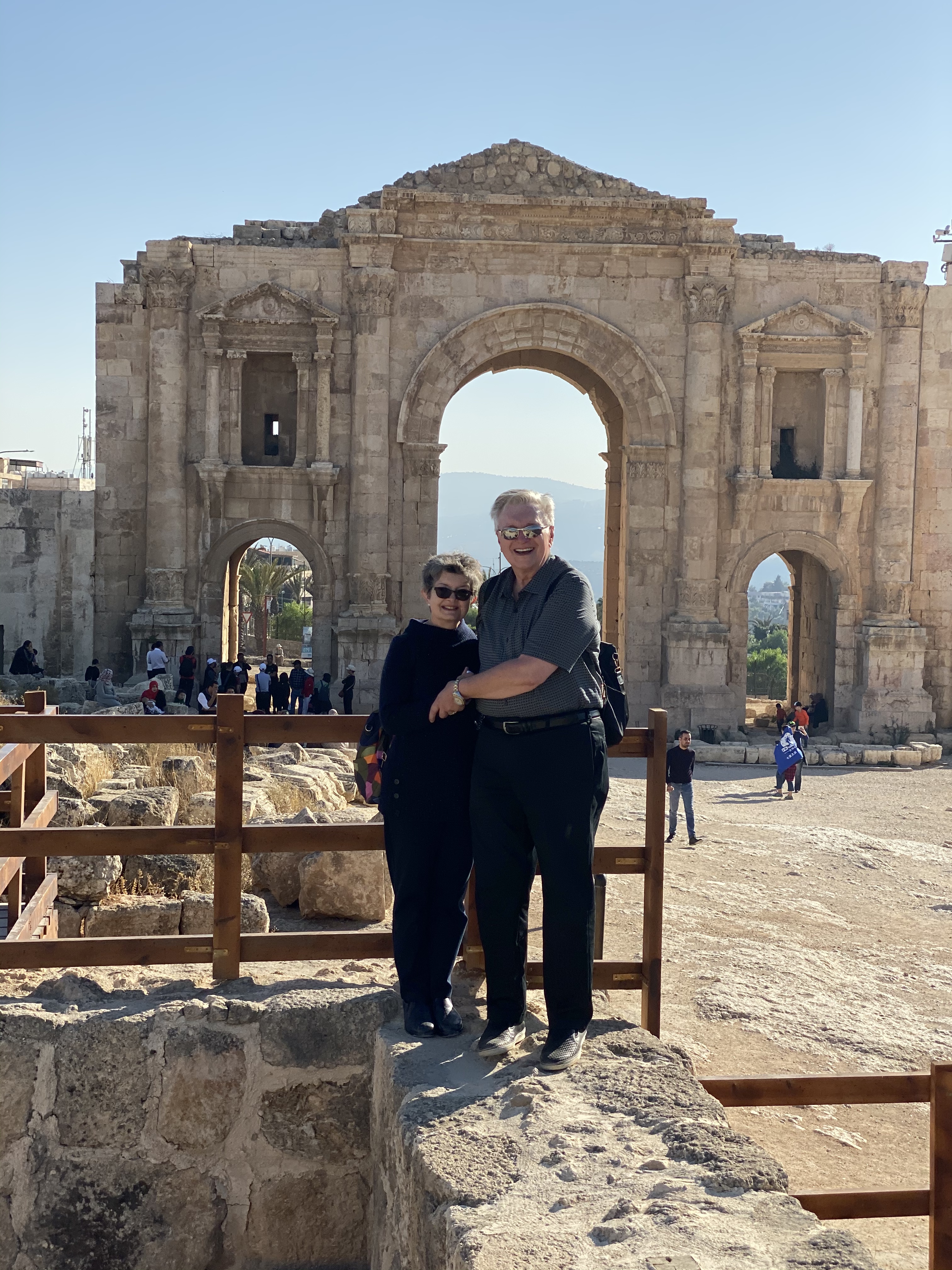
On Friday, we went directly to Jarash, the largest Roman ruin outside Italy. Hadrian’s Gate, the northern entry to the city, is impressive. We did not see much to impress us as we passed through the gate, but then, wow! The ancient city ruin grew and grew as we walked. The hippodrome (horse races), the theatre, the cardo (Main Street from which we get the word for heart)—lined as far as the eye could see with columns, the central gate, the city plaza lined with columns, the southern gate and numerous buildings and more columns… it was amazing! 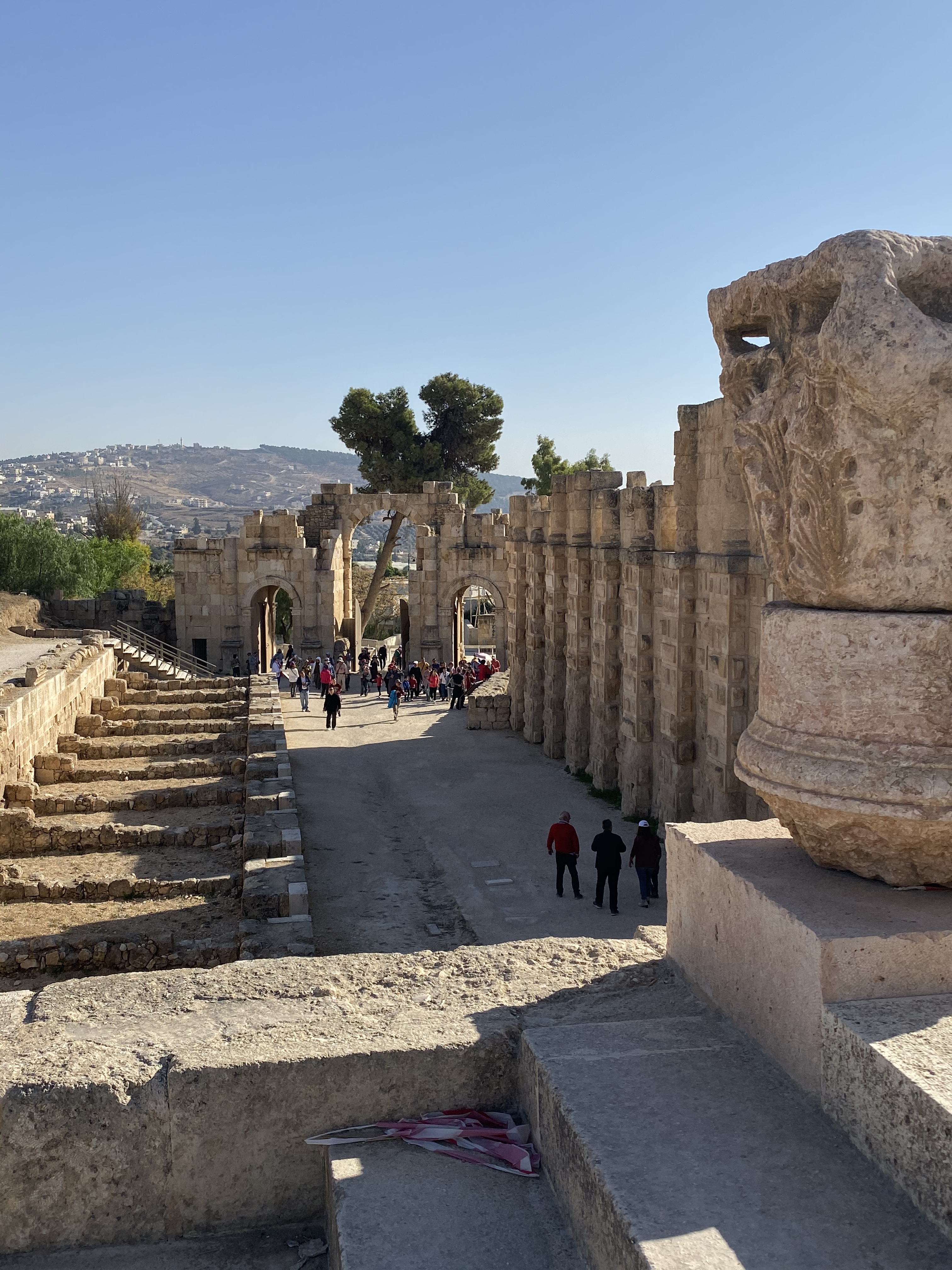

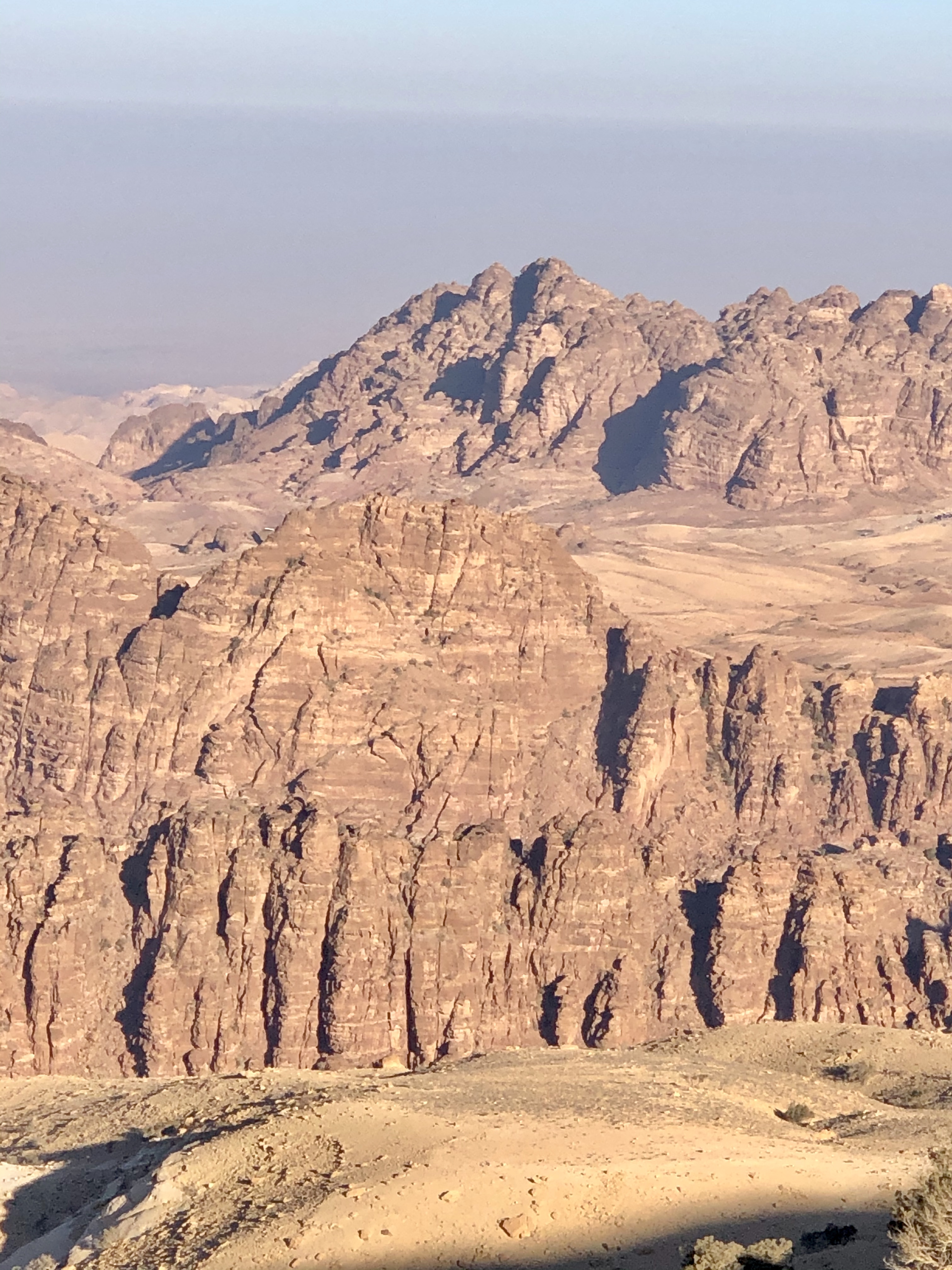
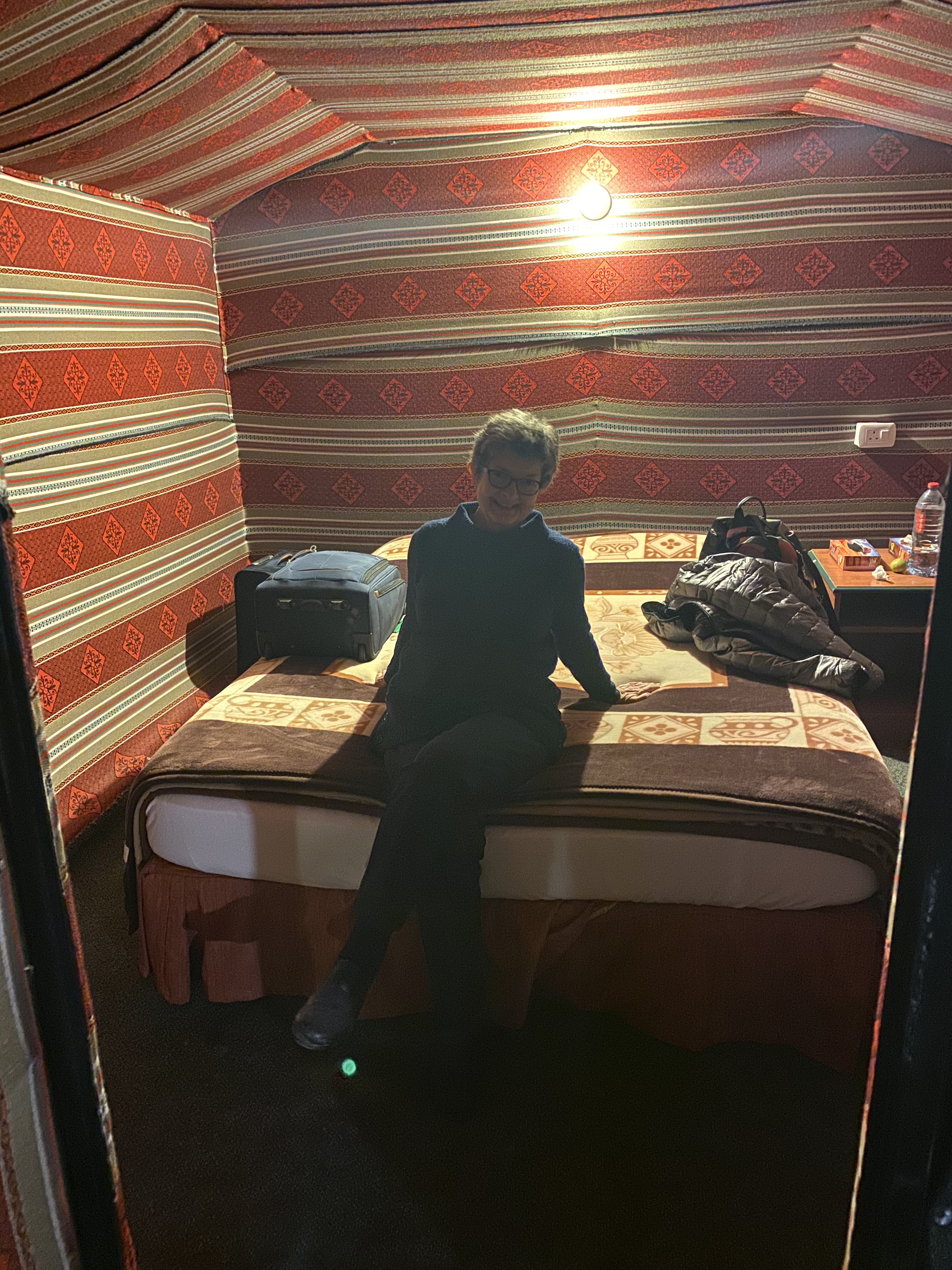
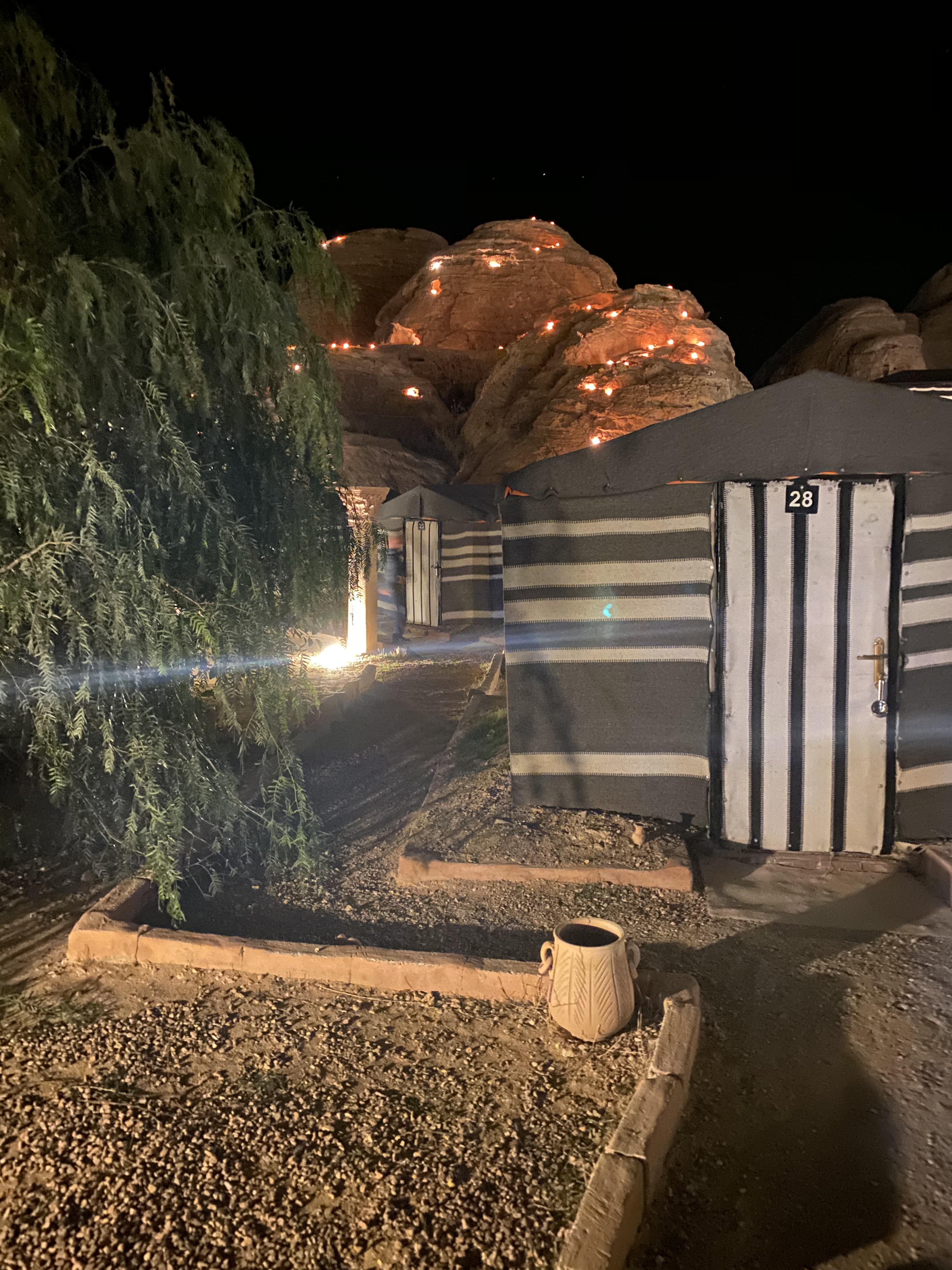
We continued our journey southward and wonderful mountains appeared around Amman, the capital of the Kingdom. Driving further south, the mountains became barren, yet hauntingly beautiful with rounded tops, something like camel humps. As darkness fell, we saw the mountains adorned with lantern lights from top to bottom. What a welcome to our Bedouin Camp where we were to sleep for the night! We had entered another world. Desert tents in brown and white stripes and rock pathways lined with lanterns led to our evening abode. It was simple pleasure, experiencing what for centuries was everyday life for many in the Middle East. There was no wi-if, and electricity went off at midnight. Our king-sized bed was covered with six blankets to keep us warm in the cold desert air. Our restroom was close by but not in the tent. The small room was colorful, red design cloth over canvas. A durable rug covered the rocky surface below. We closed our eyes in restful sleep, hoping we did not awake in order to go to the restroom. No such luck. 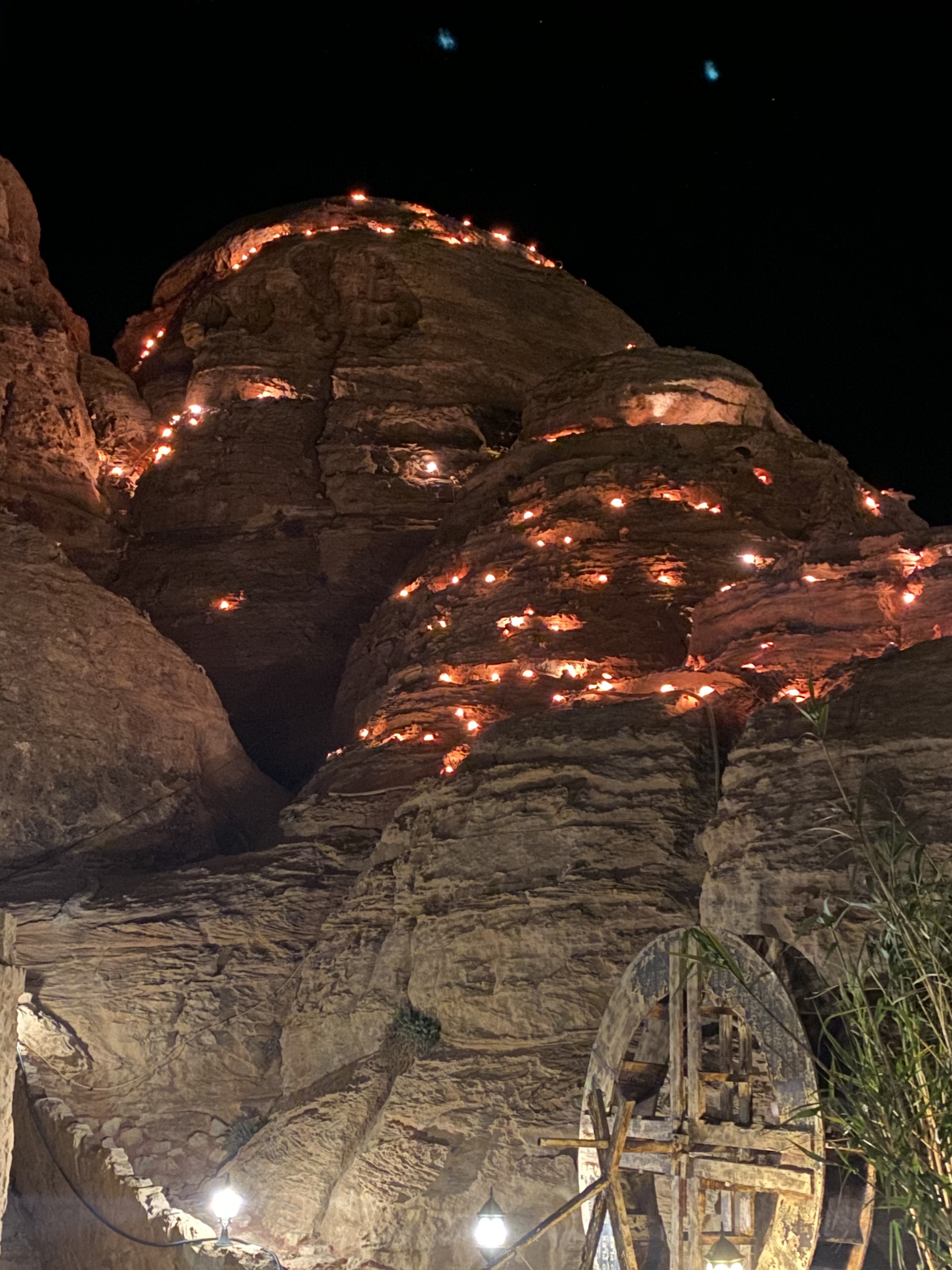
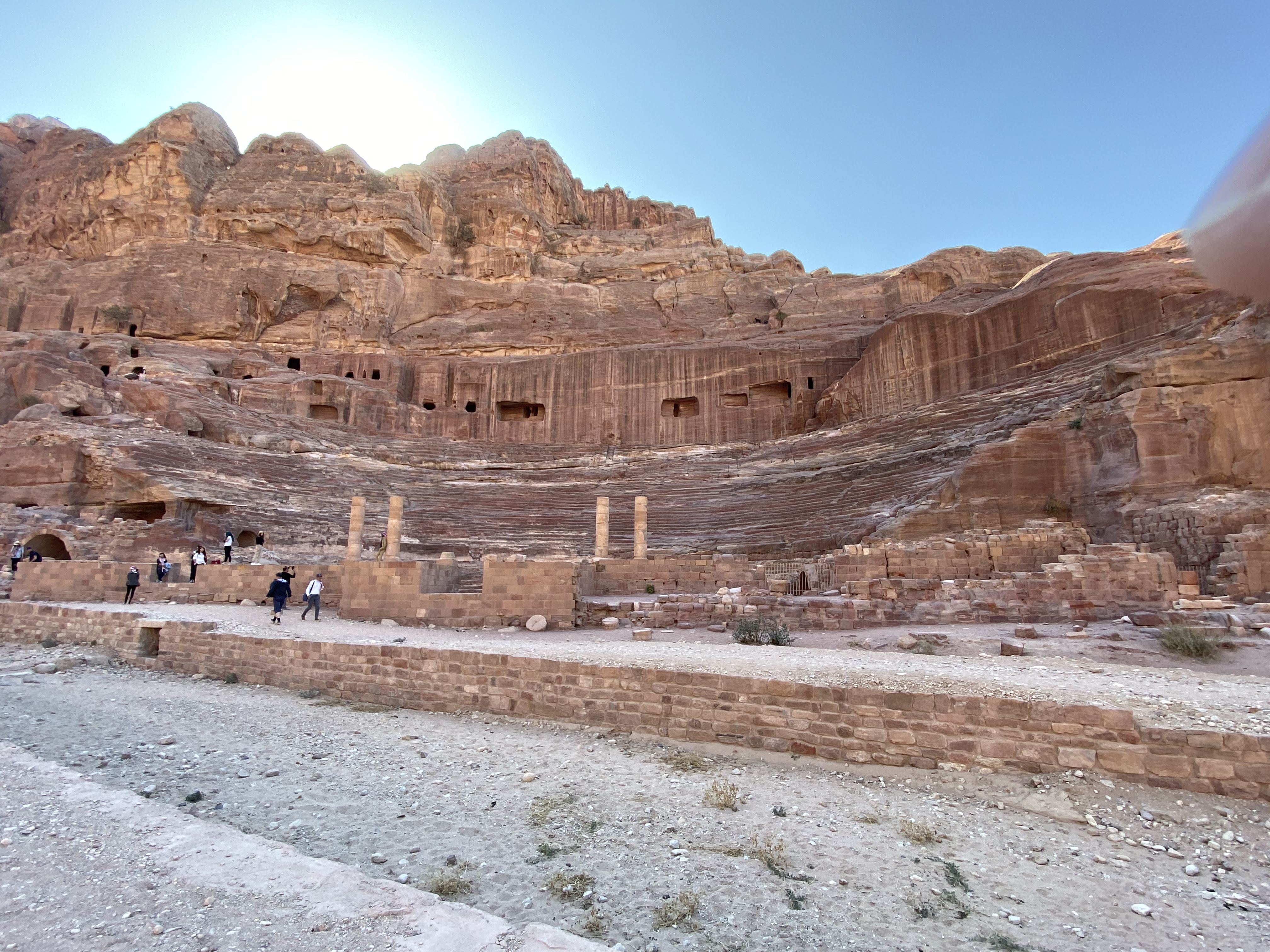
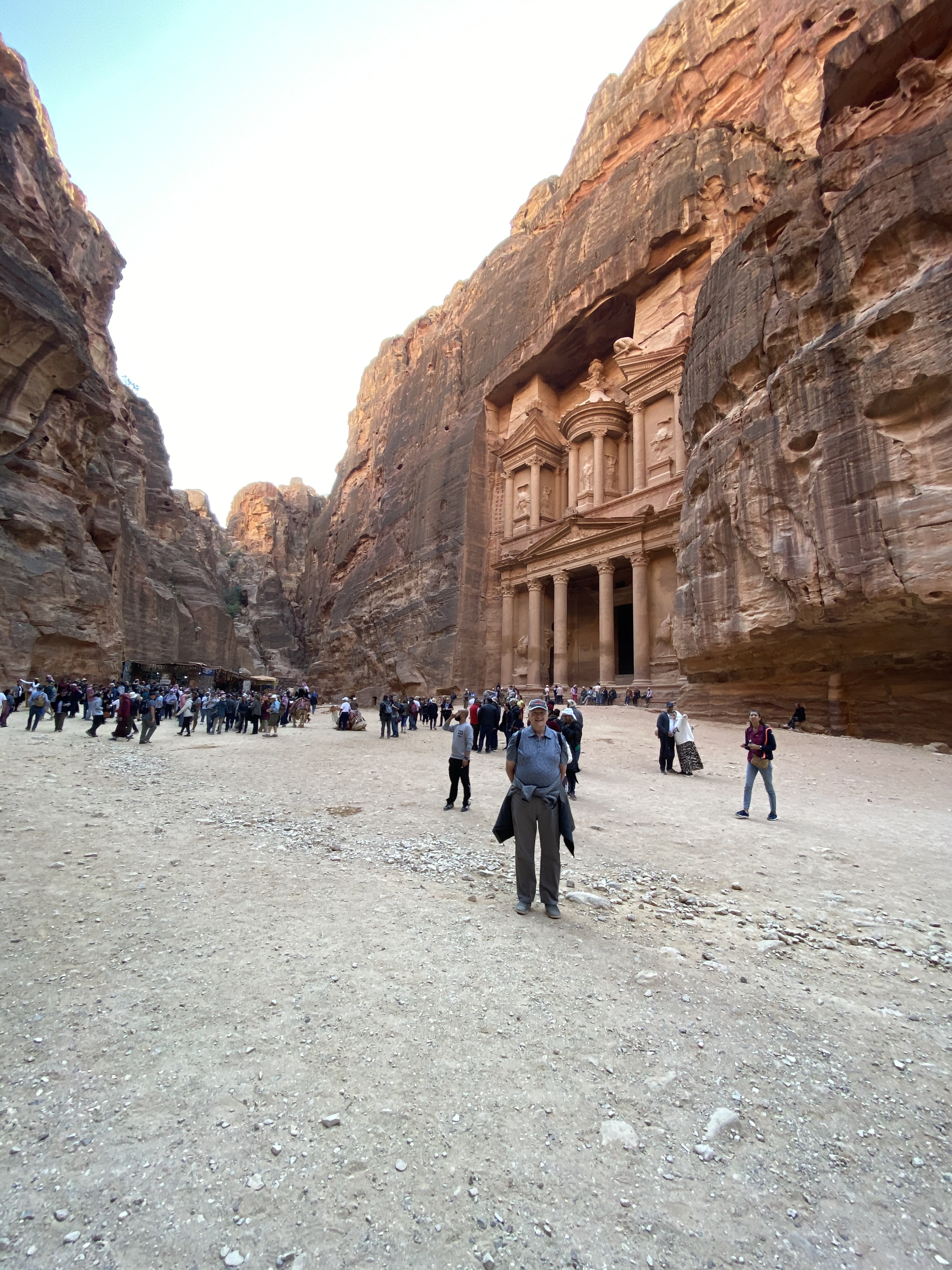
Saturday found us awake by 6 am and a trip to the restroom area to prepare for the day. Only cold water in the morning. We dressed quickly and went for breakfast. On to Petra for the entire day! Petra is much more than the famous Treasury, a UNESCO World Heritage site and one of the Seven Wonders of the Modern World. If Jarash was more than impressive, Petra was over the top! It was worth the six miles we walked to see this capital of the Nabataean Empire, and we did not see it all. The Sig, a narrow passage way through the mountains, was colorful and wonderful, with burial tombs and pagan worship nitches along the way. The rocks swirled with red, brown and grey colors. Then, through the narrow passage ahead we caught a glimpse of the Treasury. The heart pounds! The closer we came, the more immense this multi-tiered cut into the stone face of the cliff building became. We sat for some time taking it in. Designed to welcome people to the heart of the city, the Treasury reflected Egyptian, Greek, Roman and Nabataean architectural styles. Walking further, we observed the city buildings carved into the rock. It was wow after wow! Amazingly, the Nabataean culture left nothing of the homes, but much about the tombs. This is because they did not value as highly this life as they did the hereafter. So they built elaborate tombs hoping to take it all with them. 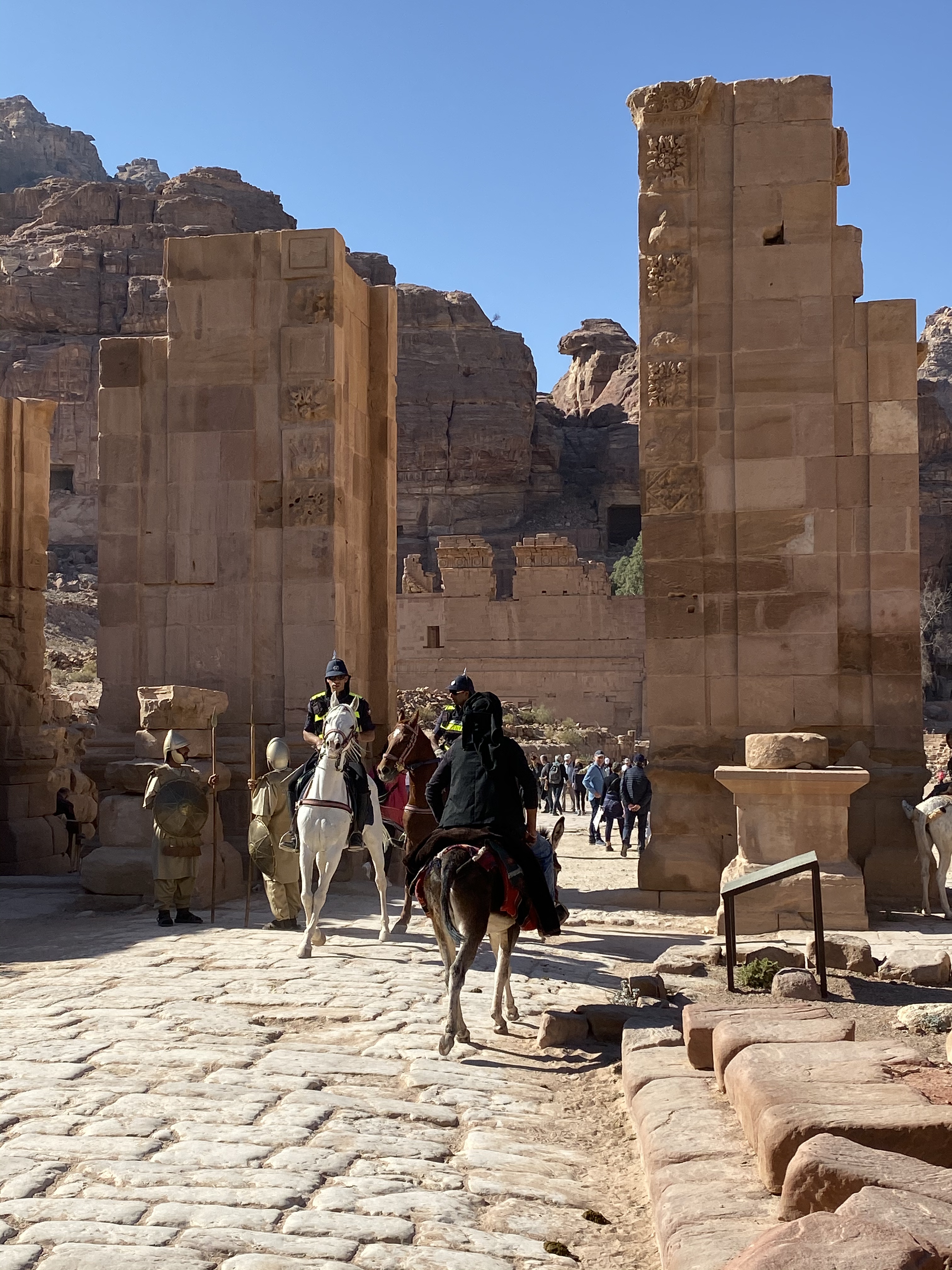
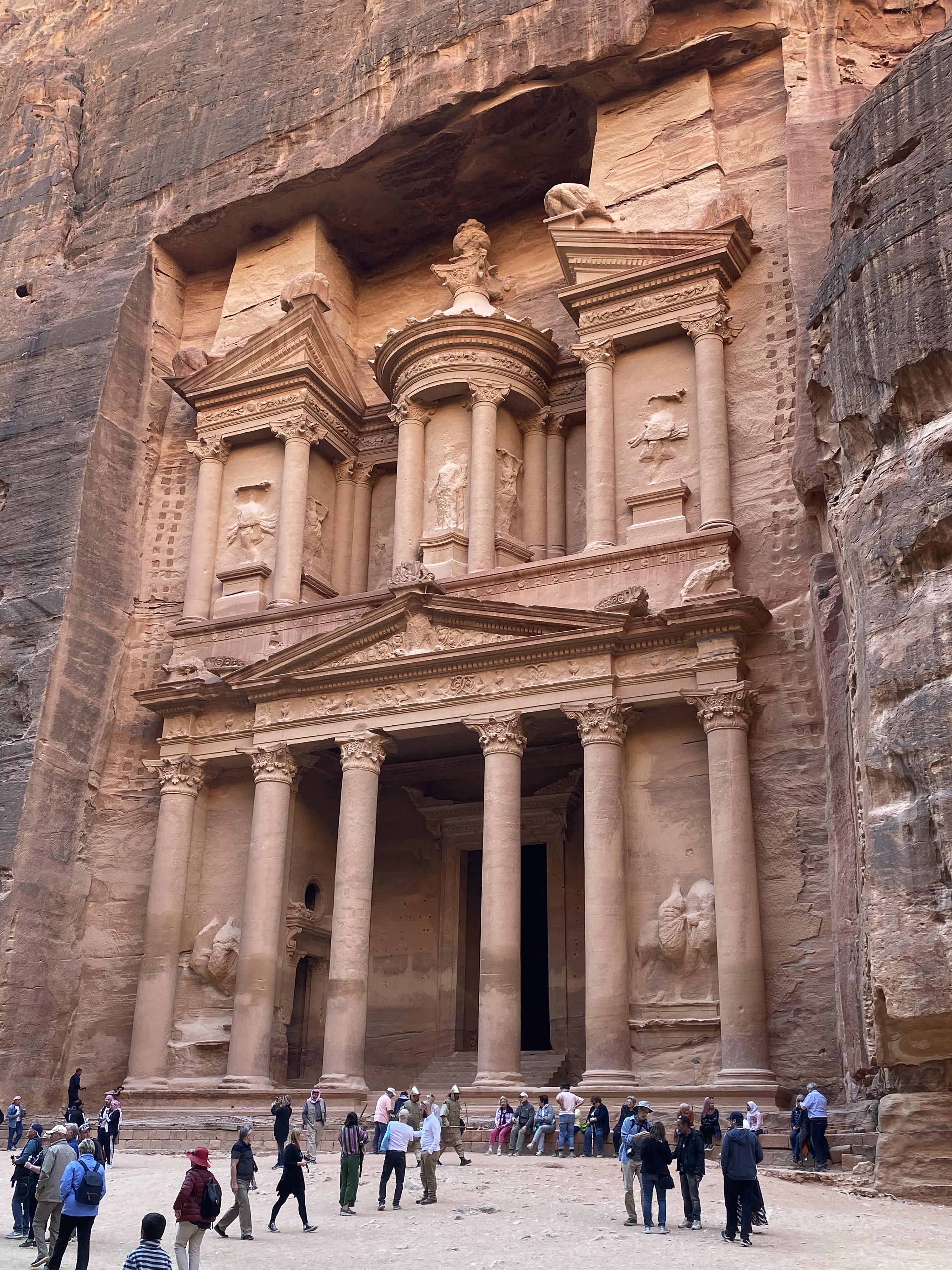

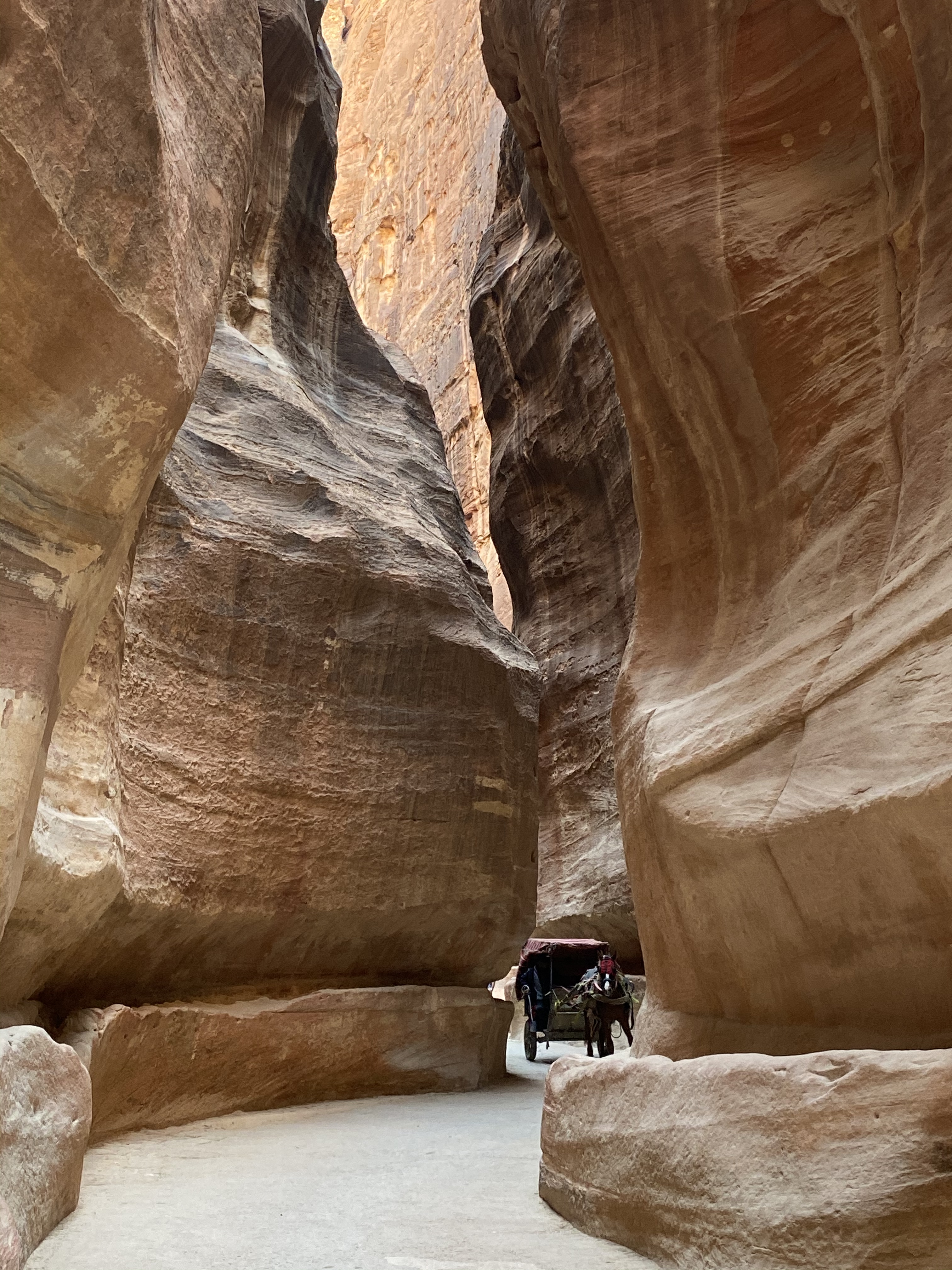
We have been historically refreshed this day, feeling blessed beyond measure to have experienced this day—honestly, every day is a gift of God! Now to our tent! WEG
Betrayest Thou Me With a Kiss

Overlooking Jerusalem
The Mount of Olives is a very beautiful, peaceful place perched on a hillside overlooking the Temple Mount and Jerusalem’s strong stone walls. Jesus was on the Mount of Olives three times during the last week of His life, which we call Passion Week. In the Garden of Gethsemane on the Mt. of Olives, Jesus gathered His disciples and separated Himself to pray as He prepared for the cruel death He knew He must endure because of His love for the people of the world. We had reserved a portion of the Mount for our own personal prayer time amongst the olive trees with Jerusalem spread out beneath us—some of the best prayer time I have had. As we walked in the larger Mount of Olives area, we passed twisted and gnarled olive trees with massive trunks that were well over 2,000 years old. In other words, they were there when Jesus prayed. Touching!

Mount of Olives
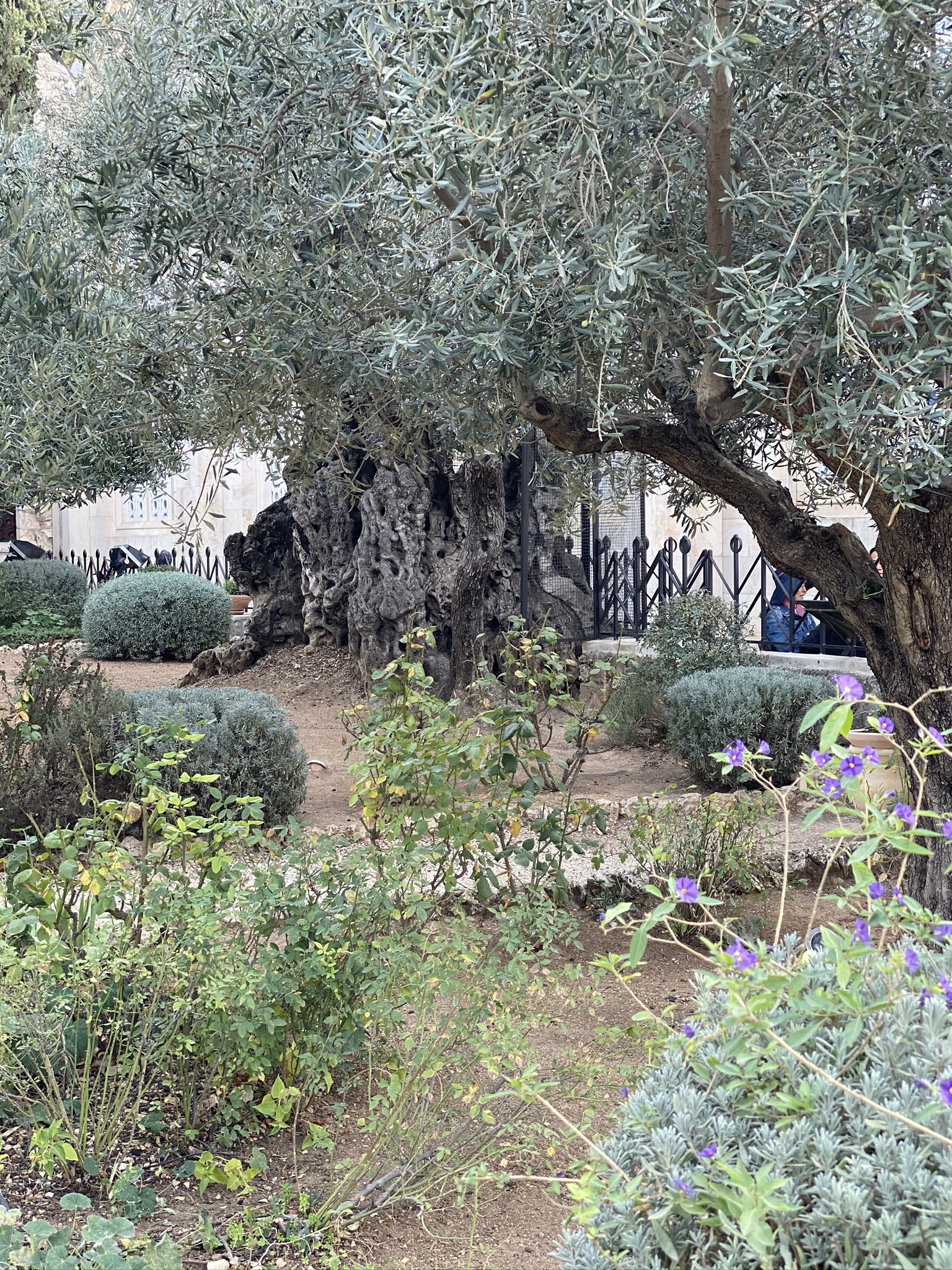
Mount of Olives
Jesus was arrested in the Garden of Gethsemane on the Mount of Olives when one of His disciples, Judas, betrayed Him with a kiss for 30 pieces of silver.

Church of All Nations
The Church of All Nations is particularly striking with its twelve domes and beautiful mosaic work. It commemorates that dark day when Jesus prayed and was arrested. It houses the stone on which some believe Jesus leaned against to pray.

Mosaic, Church of All Nations

Ceiling, Church of All Nations
From there we headed to the Food Market filled with spices and fruits, meat, fish and small restaurants. Fun! Then, we headed for more Jerusalem ambiance at the pedestrian mall—music, outside cafes and shops of all kinds. More fun! And then, just like that, our journey was coming to an end. Our evening banquet was filled with joy and thank you’s, especially for our guide and driver who were both awesome!
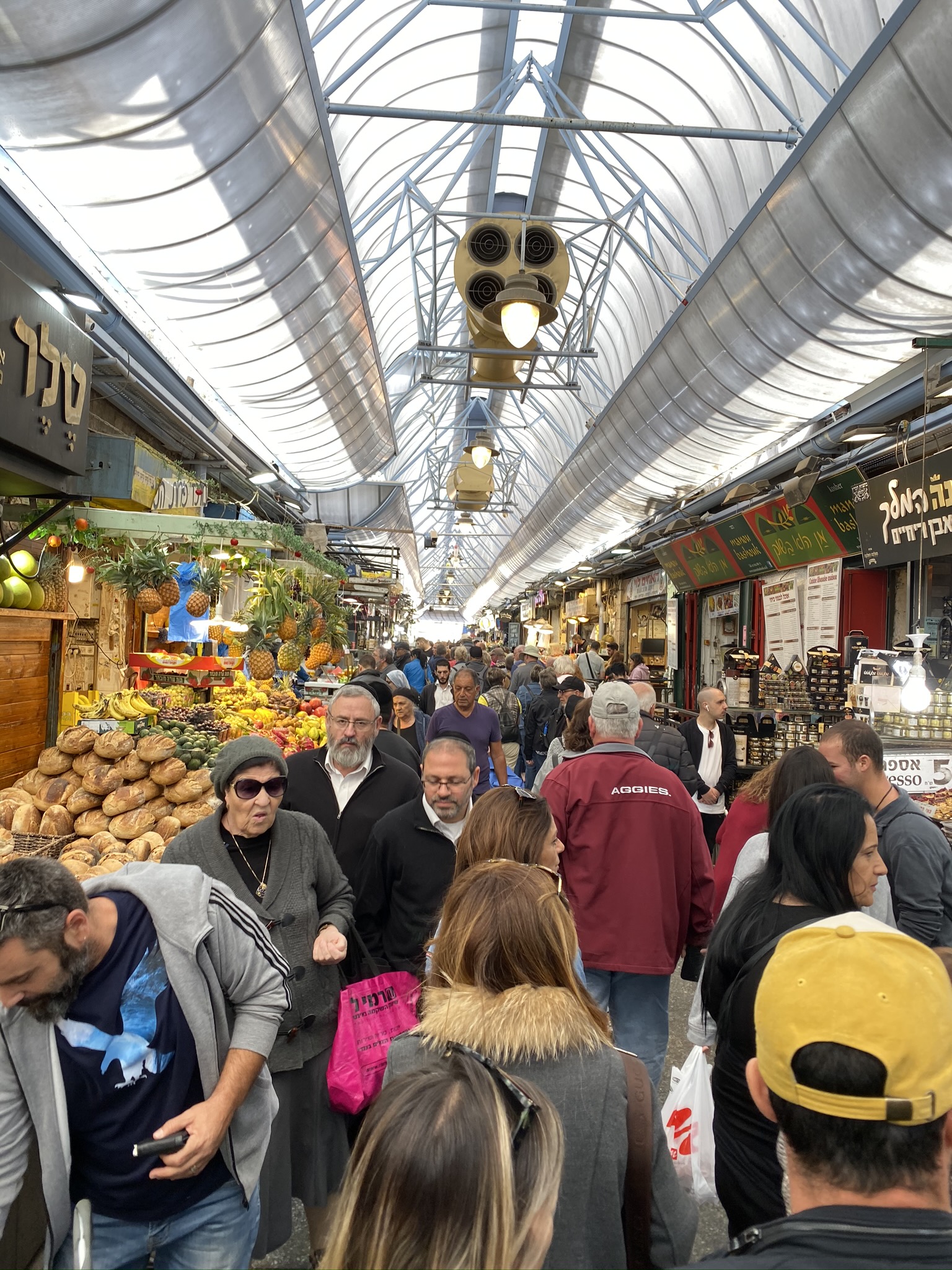
Jerusalem Street Market
In the end, this truly was not a trip or tour, certainly not a vacation. It was a pilgrimage. God was good! WEG
Walking on Water
Hezekiah knew the Assyrian army was marching toward Jerusalem. He had to act quickly to safeguard the city’s water supply. Deploying two huge crews of workers, he instructed one crew to dig from point A to point B and the other crew to dig from point C to point B. Working from opposite directions they met in the middle. When finished they had dug a water channel 300 feet below the surface to connect the Gihon Spring in the Kidron Valley to the Pool of Siloam in the middle of the city. It was a major feat but it guaranteed that Jerusalem would have an adequate and defensible source of water. Today, one could walk the tunnel still flowing with water and, as they say, “Walk on Water.” Those who did not prefer to get wet could walk the “dry tunnel,” dug by the Jebusites over 300 years earlier. This tunnel was found by General Joab who invaded the Jebusite city on the instructions of King David. Overpowering the Jebusite city, King David named the city Jerusalem—the City of David—and began a large building program. We saw remnants of David’s palace and government offices. Recent discoveries of letters with the official signite have contained names and events recorded in the Bible, thus authenticating the Scripture. Remarkable!

Jerusalem
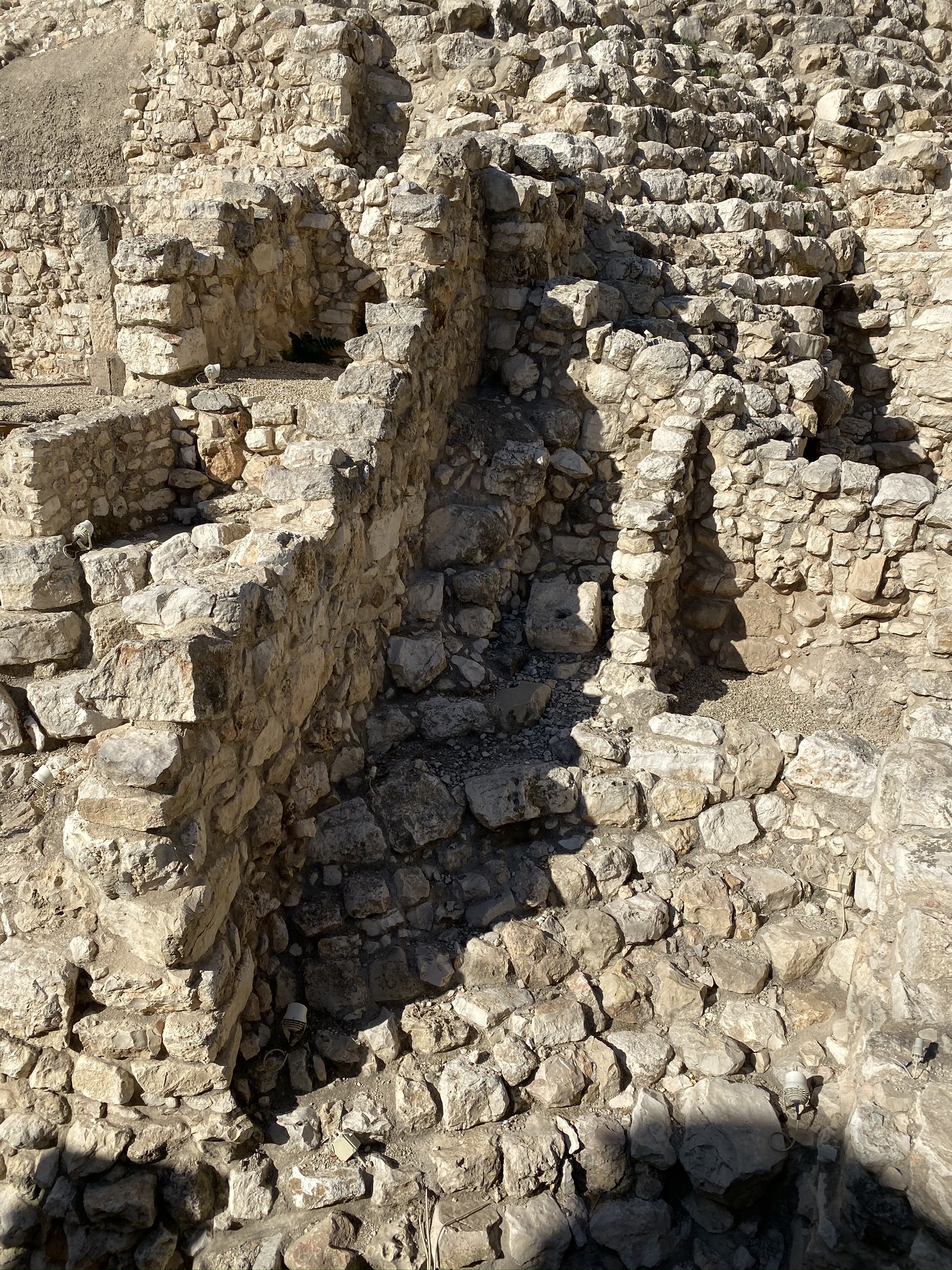
Remnants of King David’s Palace
The Israelis Museum is a marvel, containing among other items, a 1/50 scale model of Jerusalem at the time of Jesus. It was a tremendous visual. So was the view from a special platform of present day Jerusalem. Our guide pointed out the movement of Jesus during Passion Week—arrest, trial, crucifixion, burial and resurrection. It was amazing to see all the Biblical accounts spring to life and realize the close proximity of all these events.

Model of Jerusalem at Jesus’ Time
Visiting the Church of St. Peter in Gallicantu, we stood in the courtyard where Peter denied Jesus. The church was built on the site of the home of temple high priest, Caiphas, where Jesus was tried, mocked and imprisoned. We stood in the jail cell and viewed the steps down toward the city on which Jesus walked after the trial as He made His way to Pontius Pilate who would allow Jesus to be crucified. Touching to say the least.

St. Peter Gallicantu
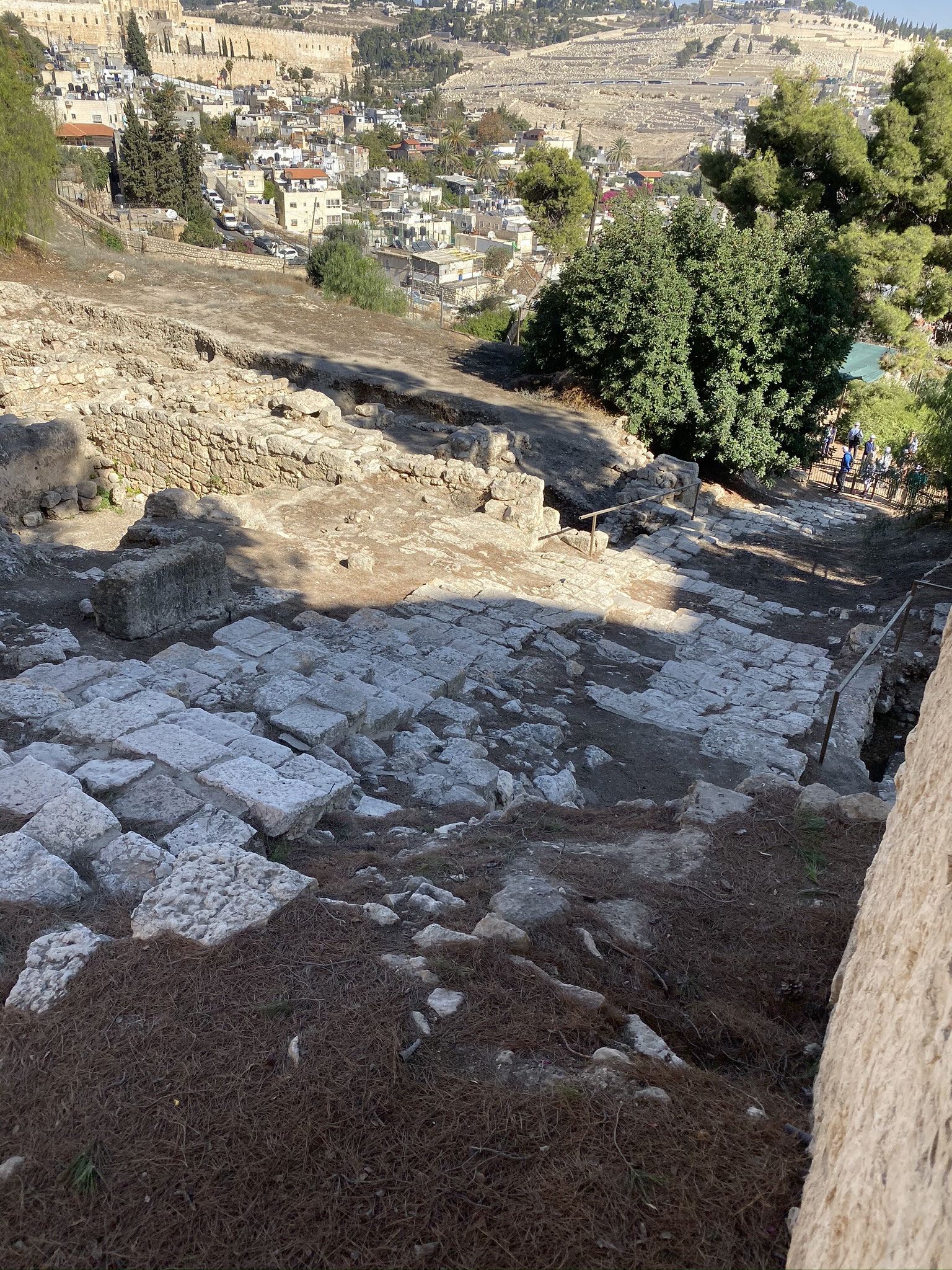
Steps Jesus took going from Caiphas to Pontius Pilate
Our day ended at the the Place of the Skull, where scripture says Jesus was crucified. The rocks in the cliff actually have a formation that looks like a skull, with sunken eyes, no less. Nearby is a cave that served as the grave of a wealthy family. The Bible says that Joseph of Arimathea, a wealthy man, took Jesus’ body and interred it in his burial cave. Scholars debate which of two places is the actually place of crucifixion, but this site seemed so authentic to me. Our group had a very moving communion service in an outdoor chapel in the cool early evening air in a spot between the Place of the Skull and the burial cave. Tears were shed and hearts were touched! He died for me, and He lives for me. WEG

Worship Service with Holy Communion at the Garden Tomb

Garden Tomb
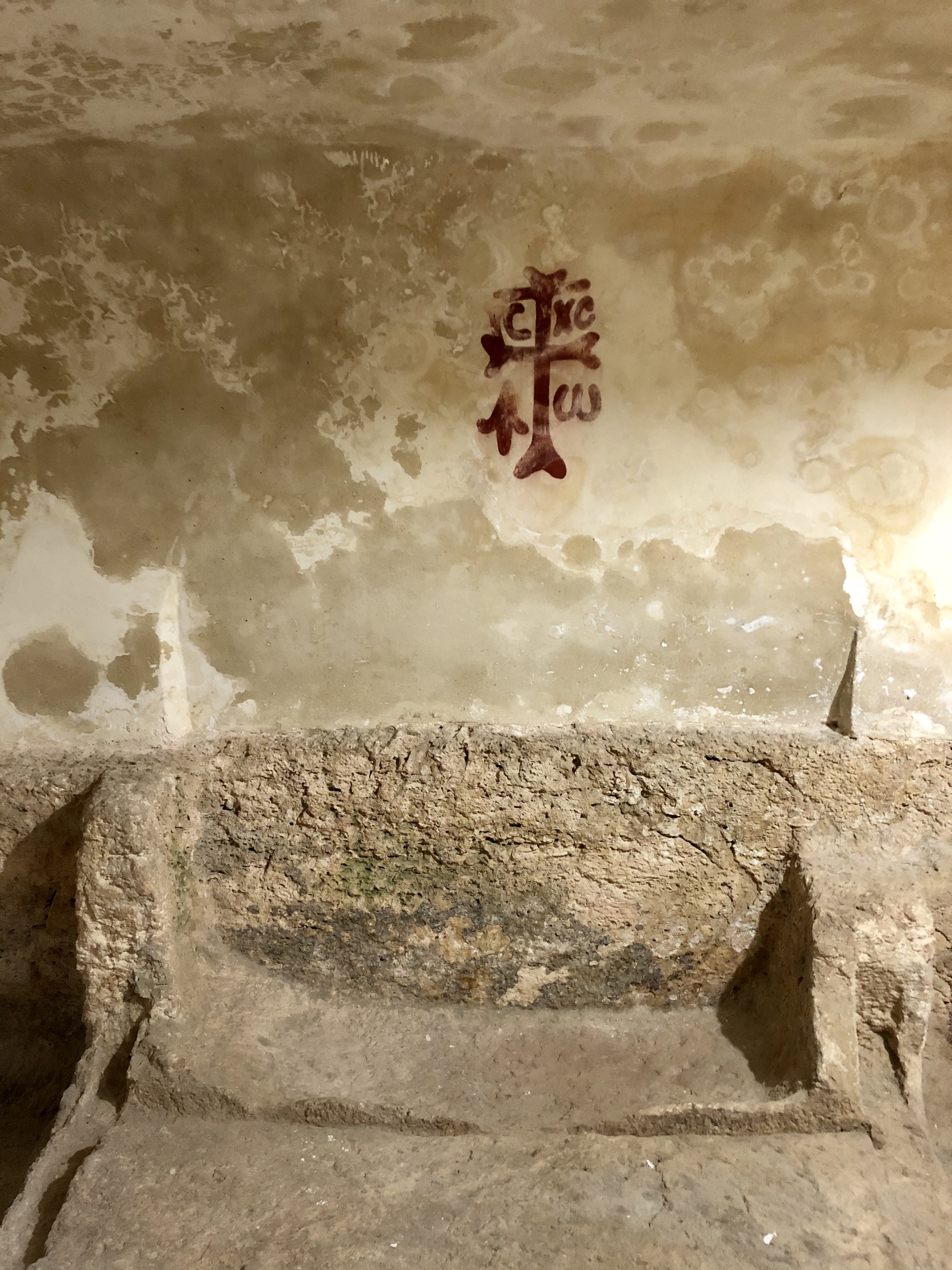
Possible burial site
A Soul-Refreshing Day
Each day of our journey has had a different feel, each unique in a special way. Yesterday was definitely spiritually intense, pilgrimaging to the birth place and death place of Jesus. Today was a soul refresher, an oasis in the desert, the great salt sea at the lowest elevation on planet earth, and an enlightening visit to the cave area where the important ancient scrolls were discovered.
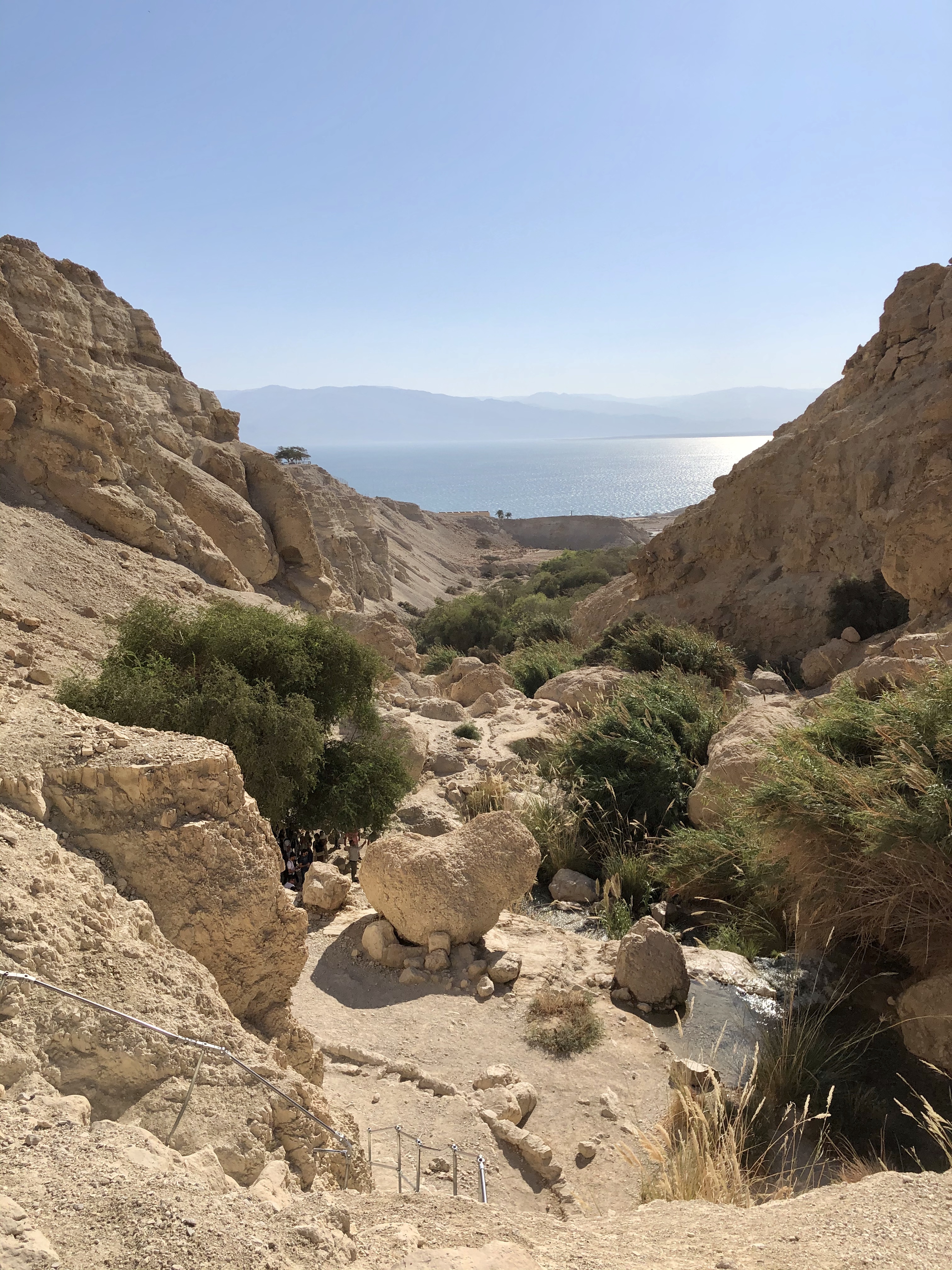
Ein Gedi Desert
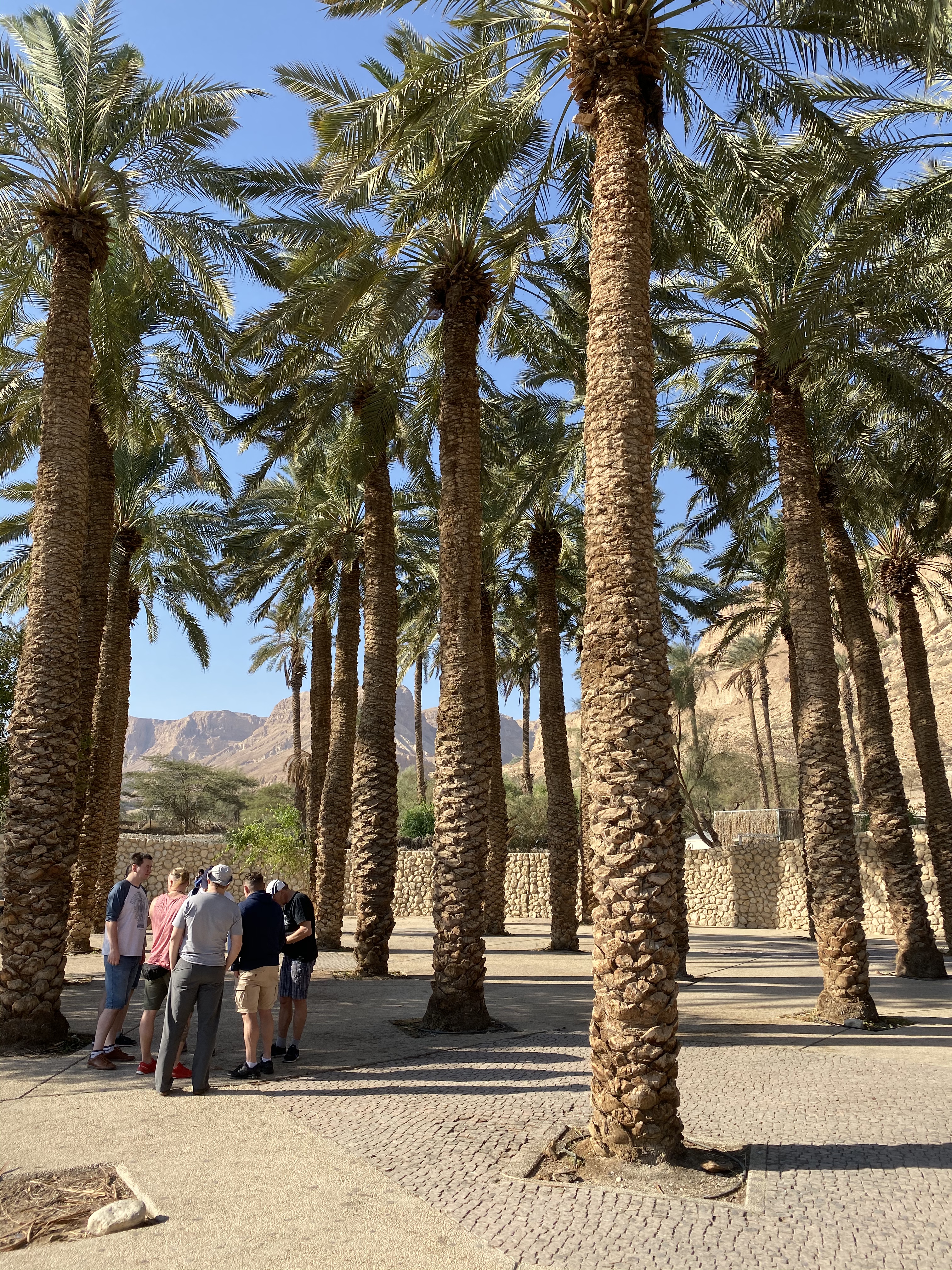
Date palms in Ein Gedi Desert

Waterfall in Ein Gedi
Date palms as far as the eye could see in every direction and a wonderful cool refreshing breeze greeted us at Ein Gedi, the desert oasis south of Jerusalem. Rolling barren, yet hauntingly beautiful, cliff-laden hills suddenly turned to palm trees, scrub brush, low growing trees and beautiful flowers. A rushing stream brought life-giving water to the area. Ein Gedi is the oasis, hidden in the desert, to which young David fled when jealous and suspicious King Saul tried to have him killed. The caves in which he and his men hid in the cliffs are clearly visible from the oasis. Walking the trail, one encountered Ibex, a type of mountain goat, and desert rats. The trail’s upward climb led to rushing water and beautiful waterfalls. For the first time in my life, I understood, experientially, how one feels when you come out of the desert into a refreshing oasis in life. The sound of rushing water, the gentle breeze, trees to shade your path, the calm. Life can be hectic and yet, God provides an oasis to bring us relief. I now have a reassuring mental picture to hold onto.
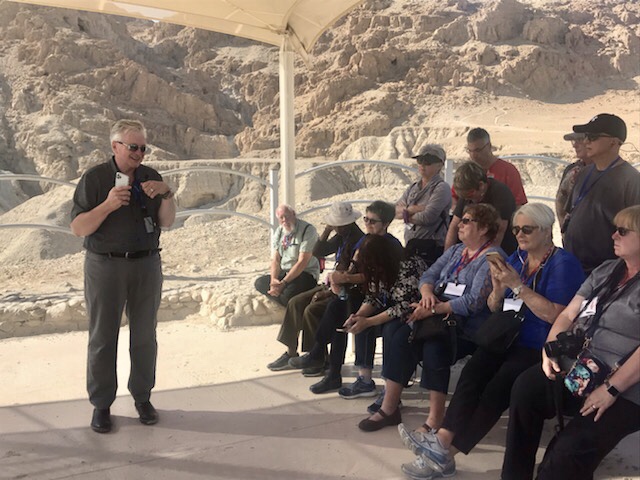
Wayne teaching in Qumran
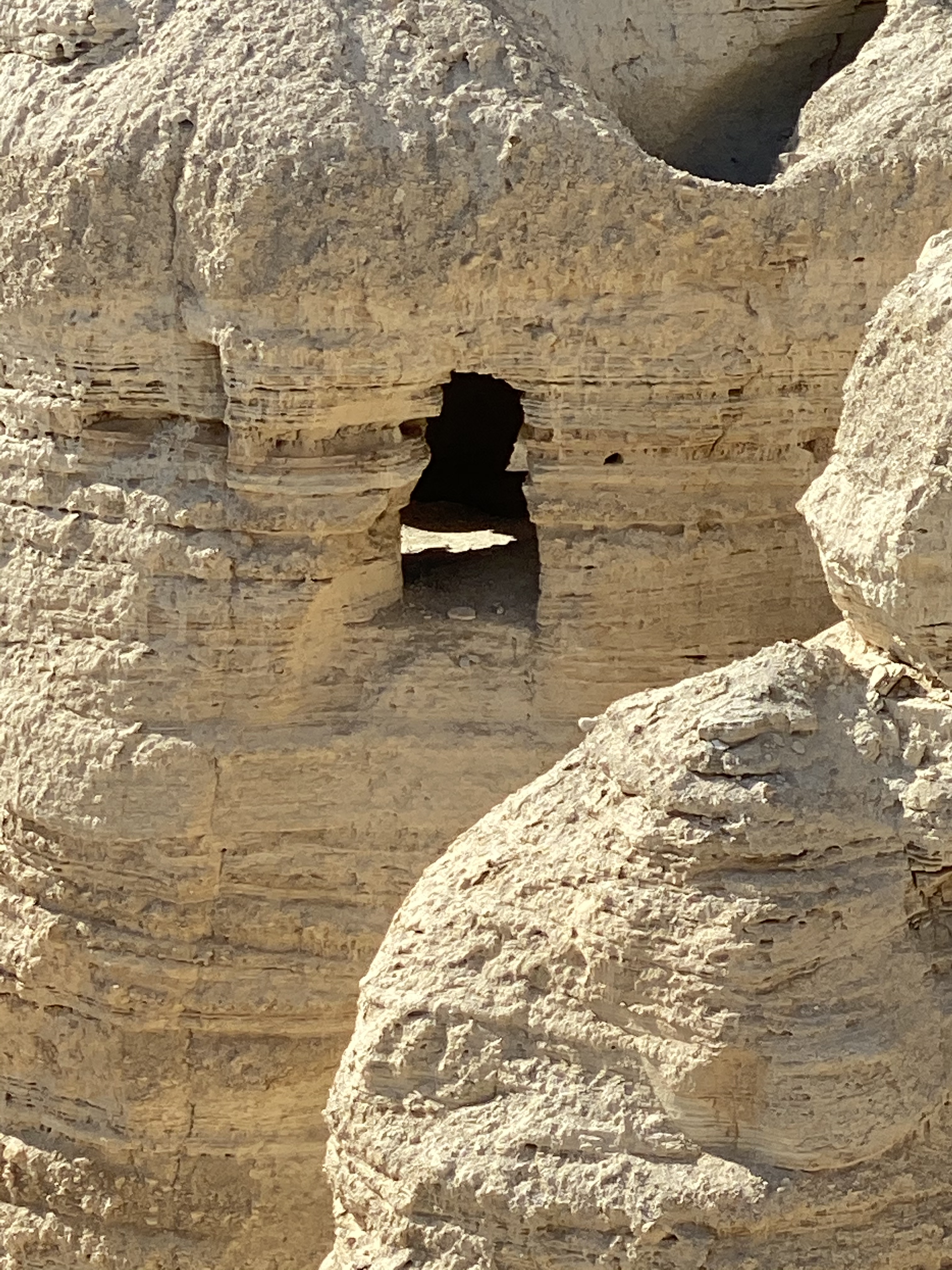
Cave in Qumran
After lunch, we headed over to Qumran, a barren area where, in ancient times, an ascetic sect of Jews founded a community to separate themselves from the wiles of the world and lead a peaceful and communal existence. They built canals to direct flood rains that came from far away Jerusalem and that rushed through the rock canyons nearby into a vast system of cisterns where overflows were directed to their ceremonial ritual baths which they used daily for spiritual purposes. In this way, they had the water necessary to survive in an otherwise uninhabitable place. What makes Qumran so important, however, is that they were deeply committed Biblical (Old Testament) scholars intent on preserving the Old Testament manuscripts. As such they rigorously, 24 hours a day, had teams whose purpose was to copy and check Biblical manuscripts for errors, for preservation in that dry, warm climate near the Dead Sea. When Israel was decimated in the first century A.D. by retaliating Romans after their rebellion against Roman occupation, the community disappeared. Fortunately, the scrolls had been hidden away in caves in clay jars, left to be discovered by a shepherd boy in 1947. The discovery caused a world-wide sensation. What impact would these ancient Biblical scrolls have on the authenticity of the then known text? Amazingly, although older than other known manuscripts and kept hidden and independent from other Jewish sources, the Dead Sea Scrolls, were the same as other Jewish manuscripts. The Old Testament was authentic–no changes were made over the centuries. We can be sure that the Old Testament we hold in our hands is the same that Jesus held in His hands and the same that the prophets of old wrote under inspiration from God. Refreshing indeed!
We ended the day at the Dead Sea, the lowest elevation on earth–1,400 feet below sea level. The Dead Sea is also the saltiest water on earth. One’s body naturally floats, no exertion necessary, on the surface of the water! No life exists in the water and none can. Yet, the water is an unbelievably inviting blue, especially against the white/beige cliffs that surround it. Dead Sea salts and minerals are valuable commodities. A warm breeze refreshed us during our leisurely time by the waters. Yes, it was a refreshing day! WEG
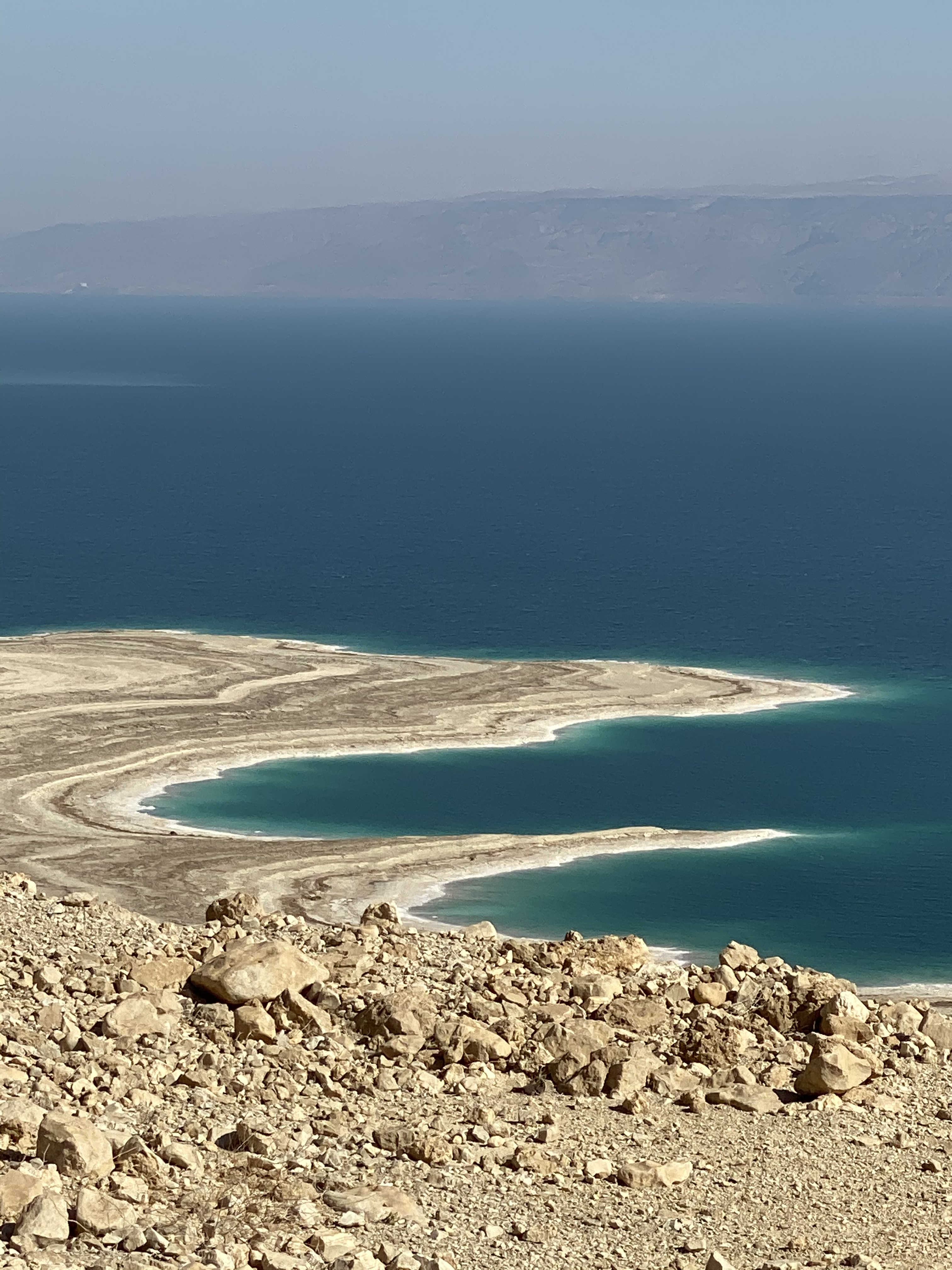
Dead Sea
 kgraumann
 wgraumann
