
Home » Posts tagged 'Germany'
Tag Archives: Germany
Disaster Turned to Delight—Randy Strikes Again
October 2-5, 2026
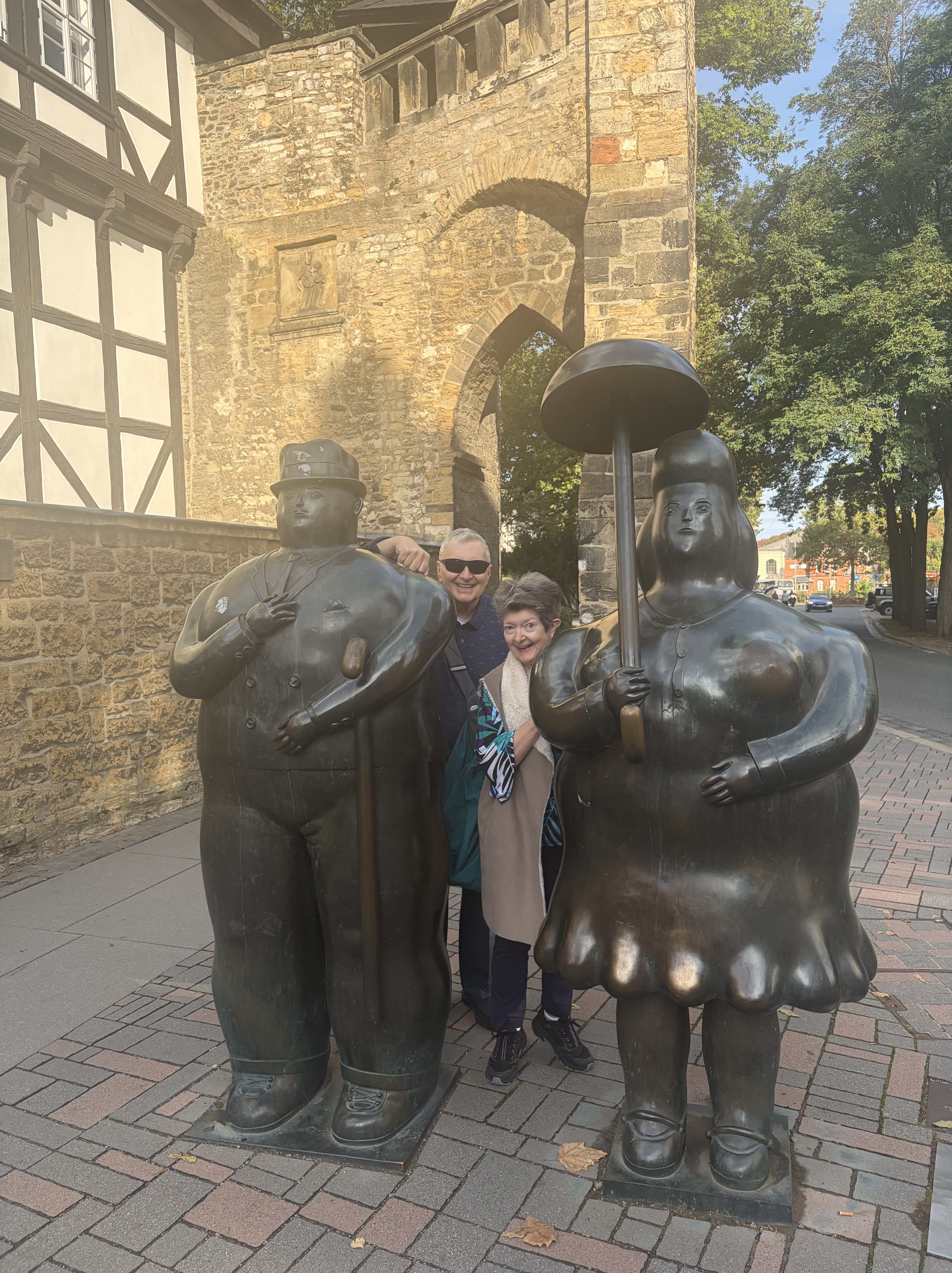
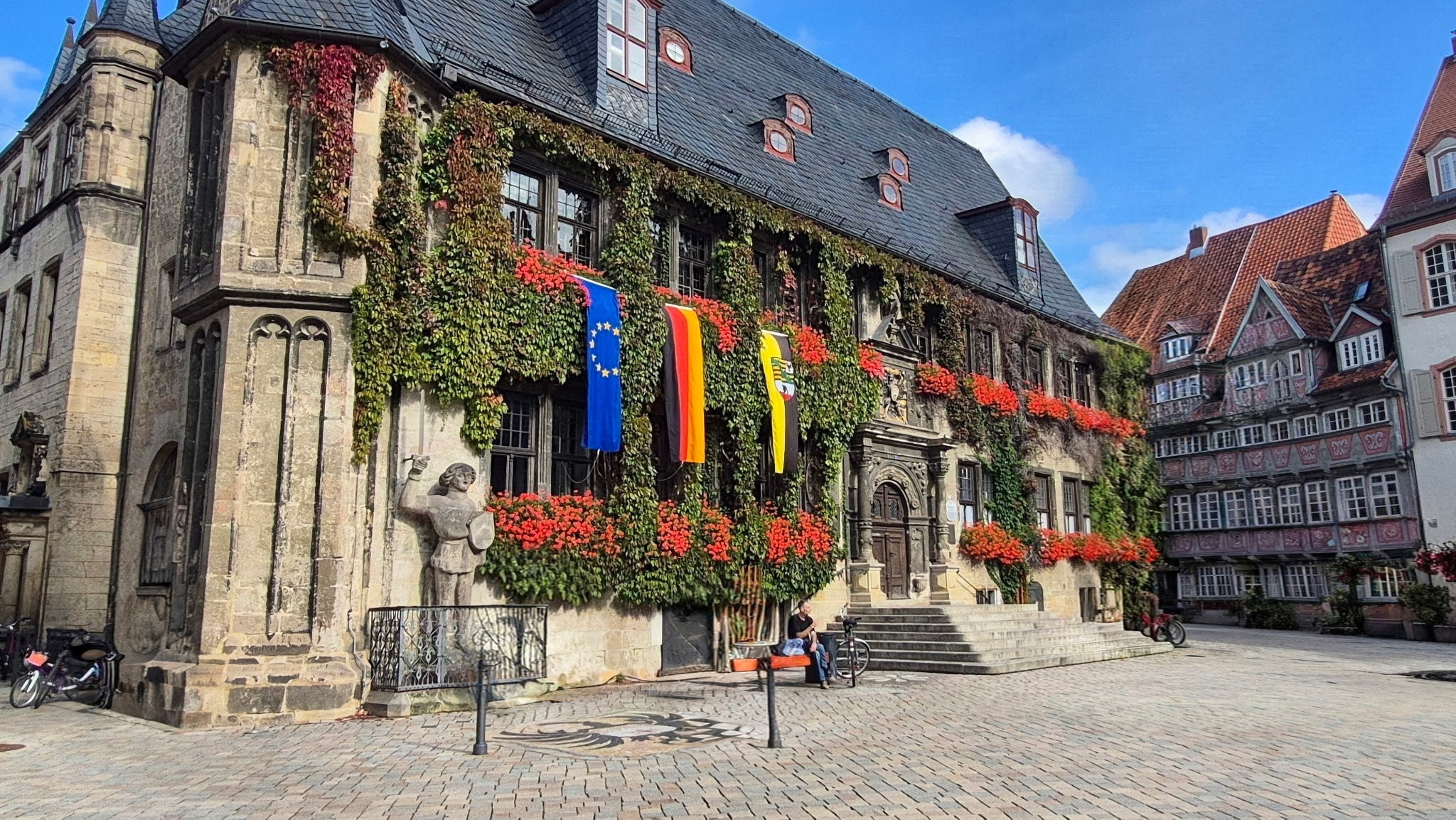
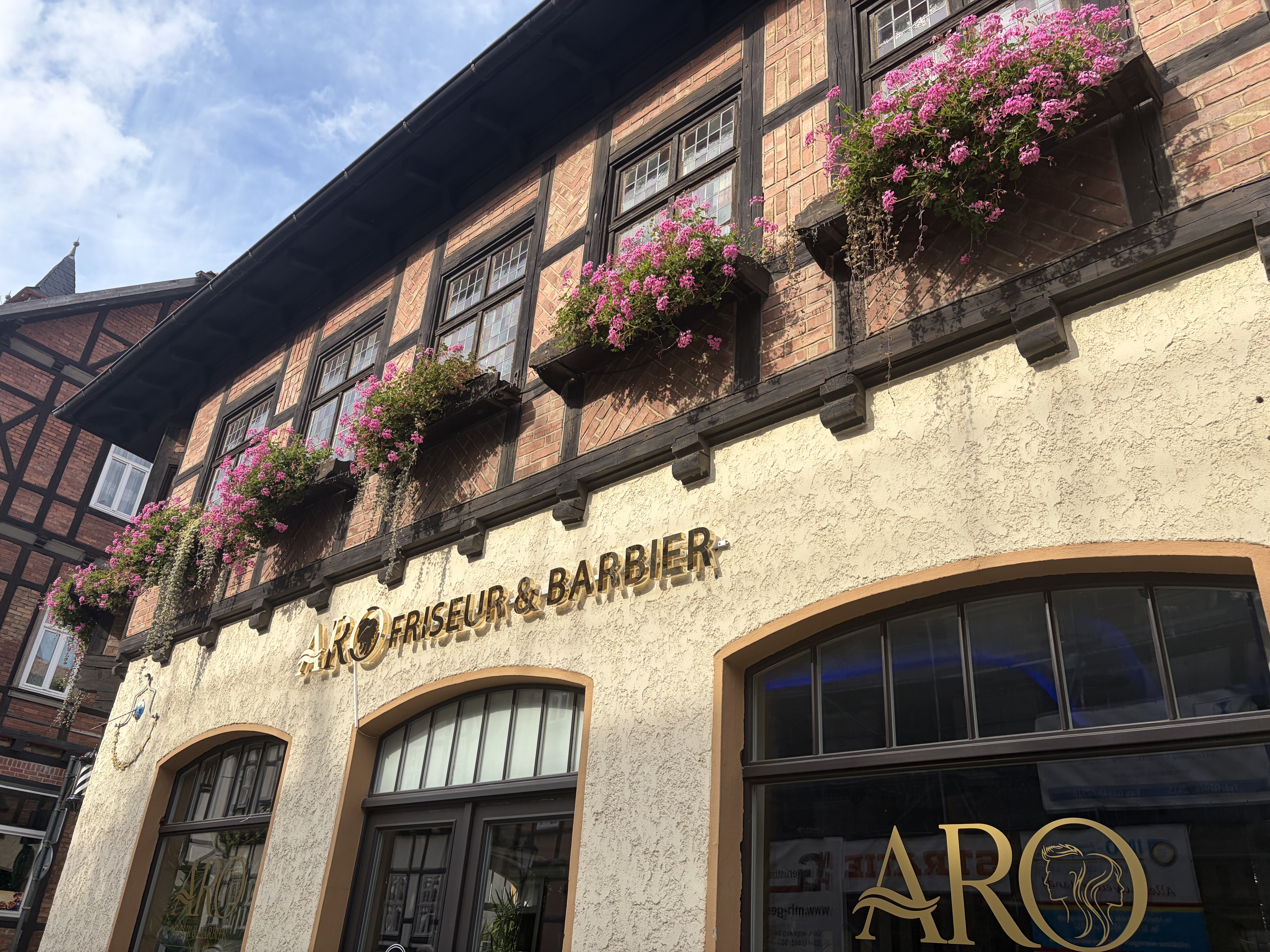
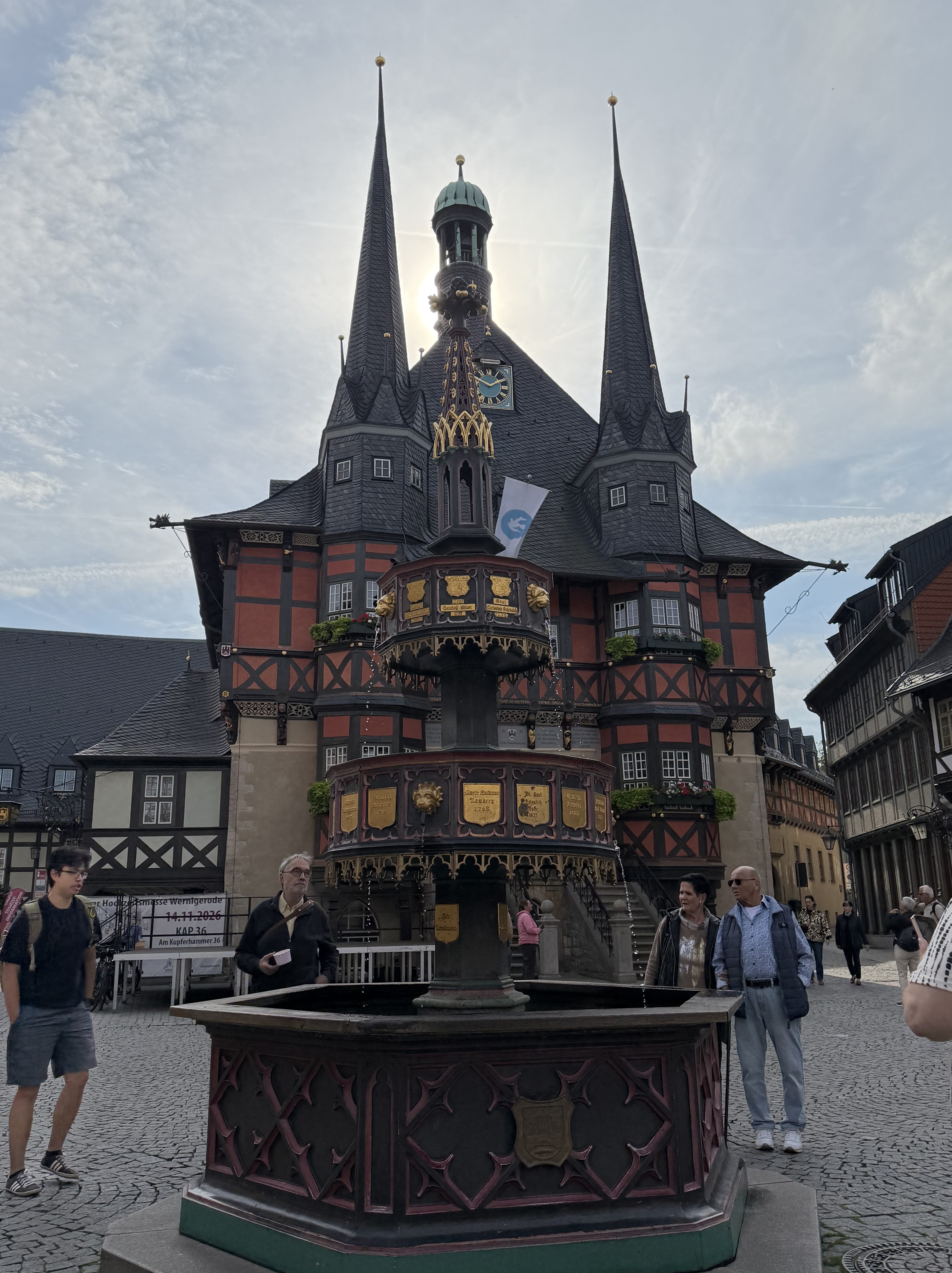
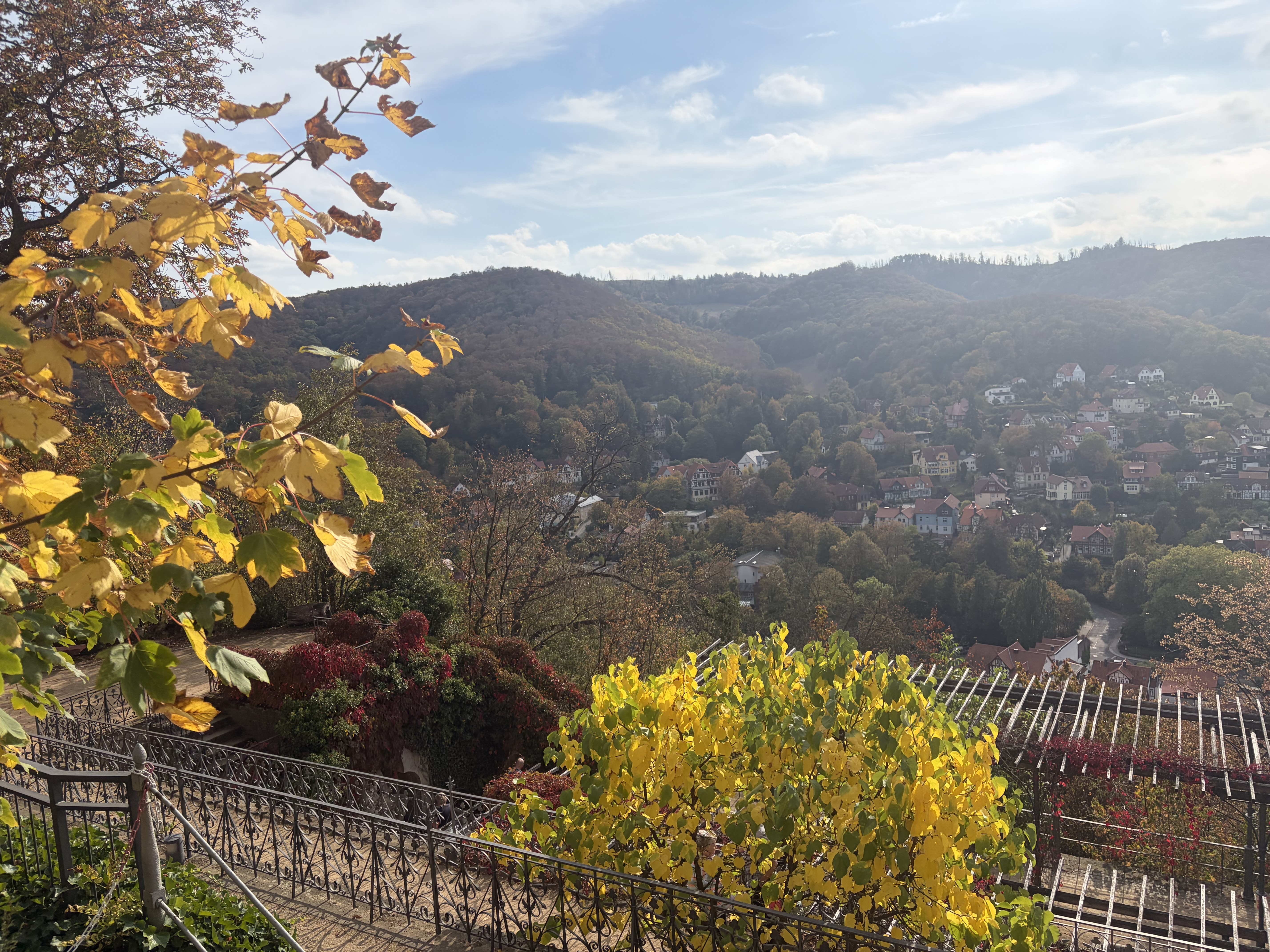
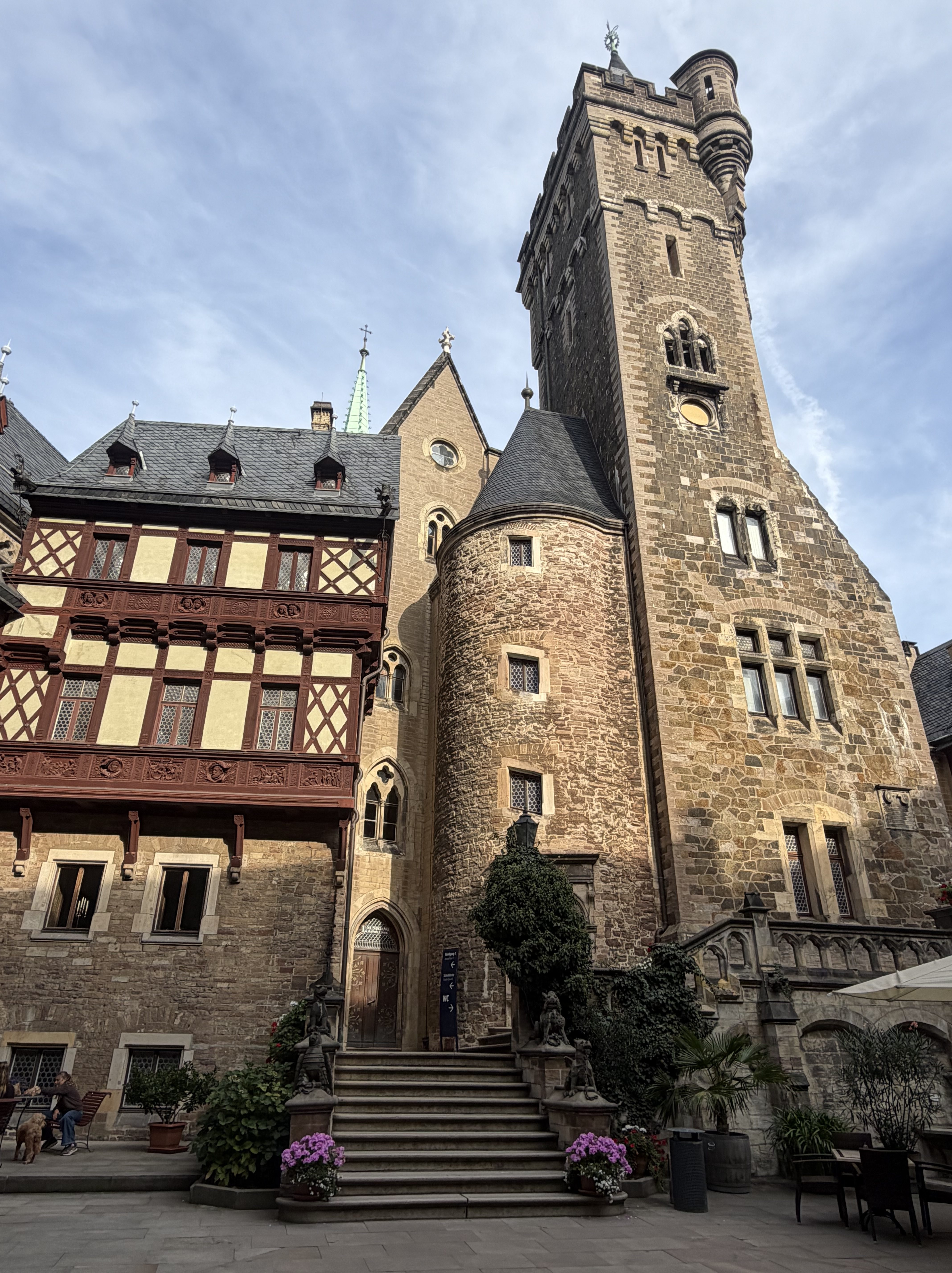
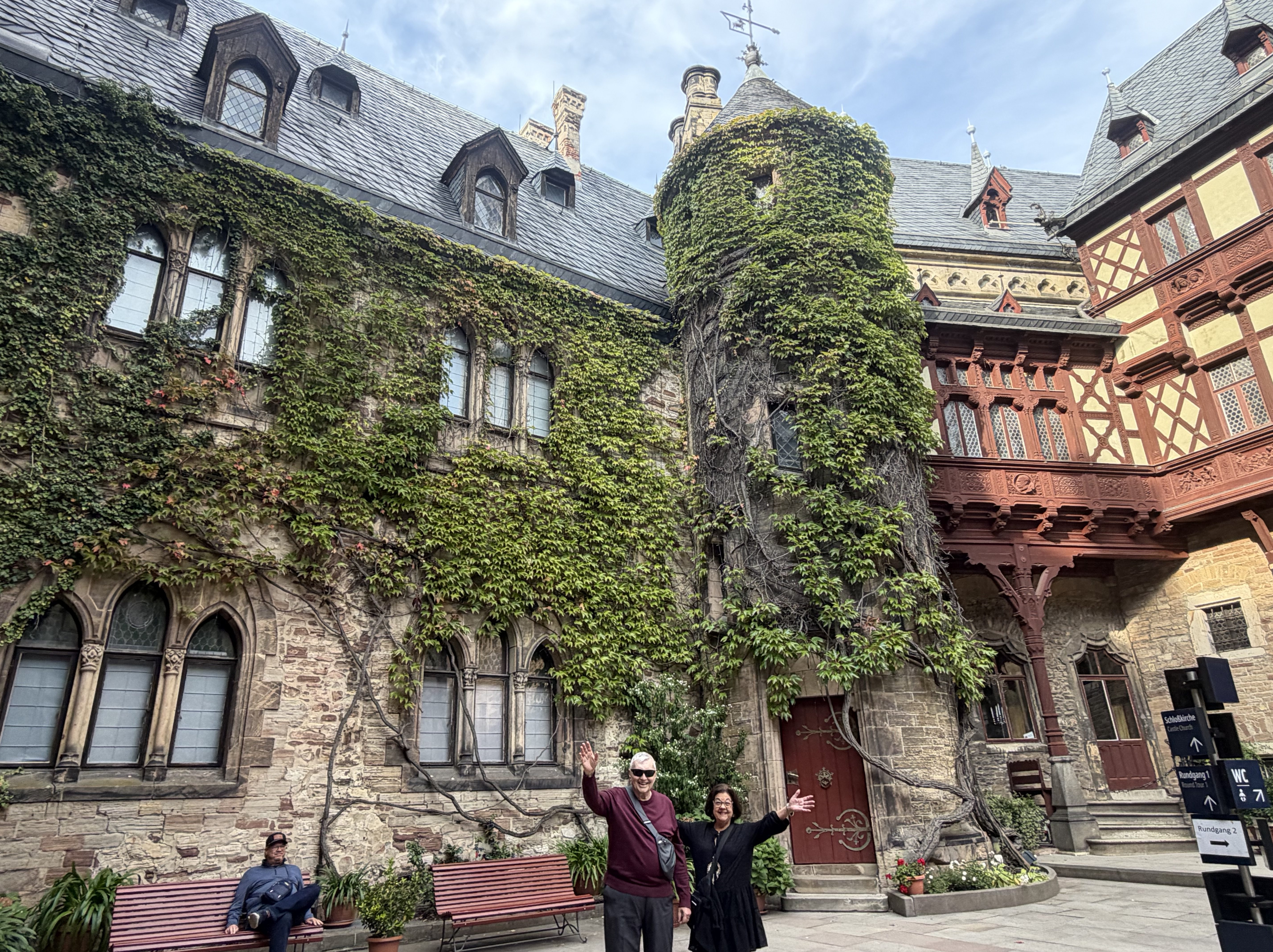
Fall came to the Harz Mountains of North Central Germany while we were there—yellows, golds, and reds began to appear with increasing density. The cities of Quedlinburg and Wernigerode and Goslar, where we headquartered, were our reason for visiting the Harz. All three cities are half-timbered treasures—UNESCO says so, and they are! Goslar was once the seat of government of the Holy Roman Empire, and a palace remains there. Quedlinburg has more half-timbered buildings, over 2000, than almost any other place. Wernigerode is picture postcard perfect with a fairy tale castle looming over the pristine half-timbered lanes.
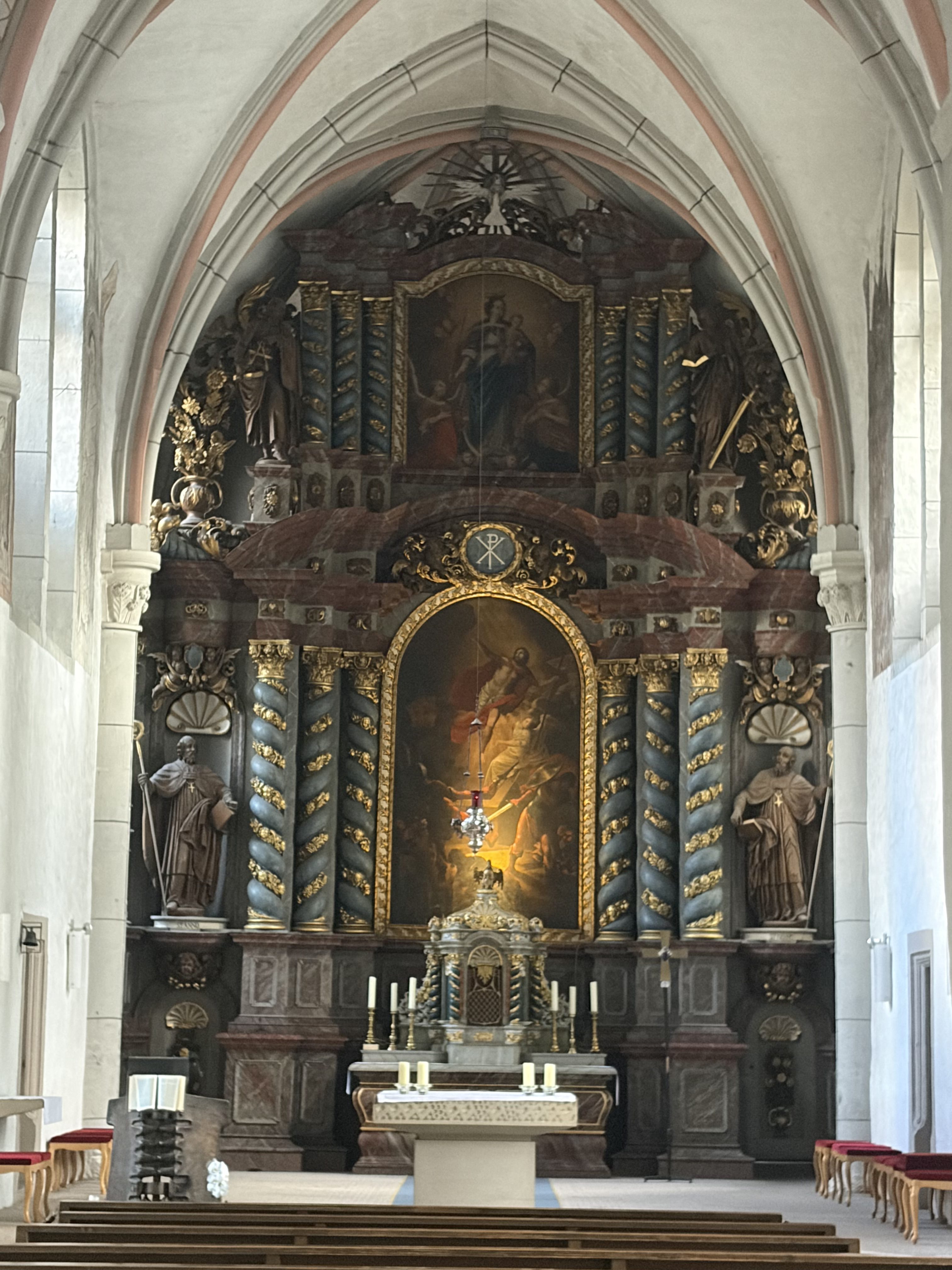
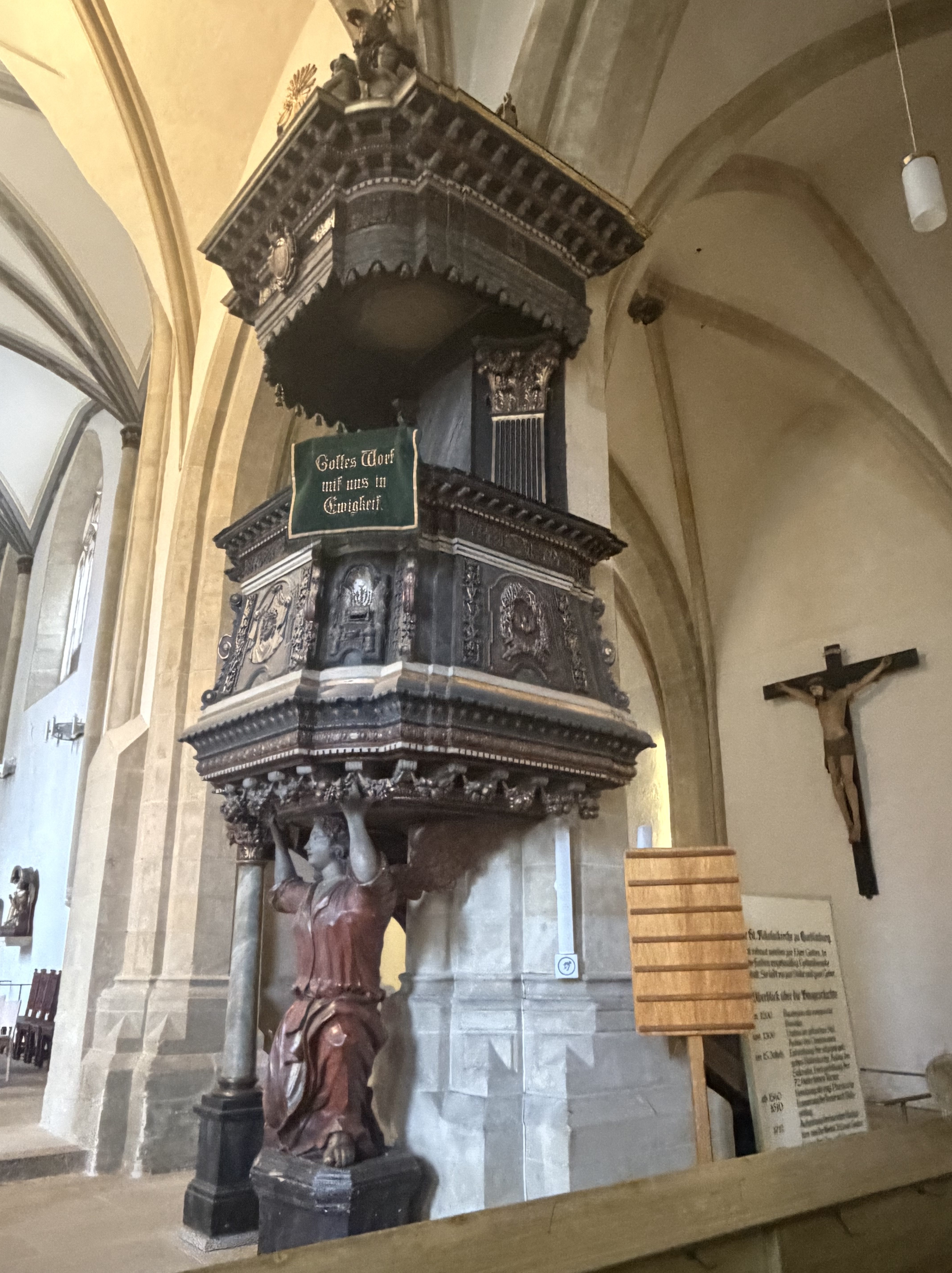
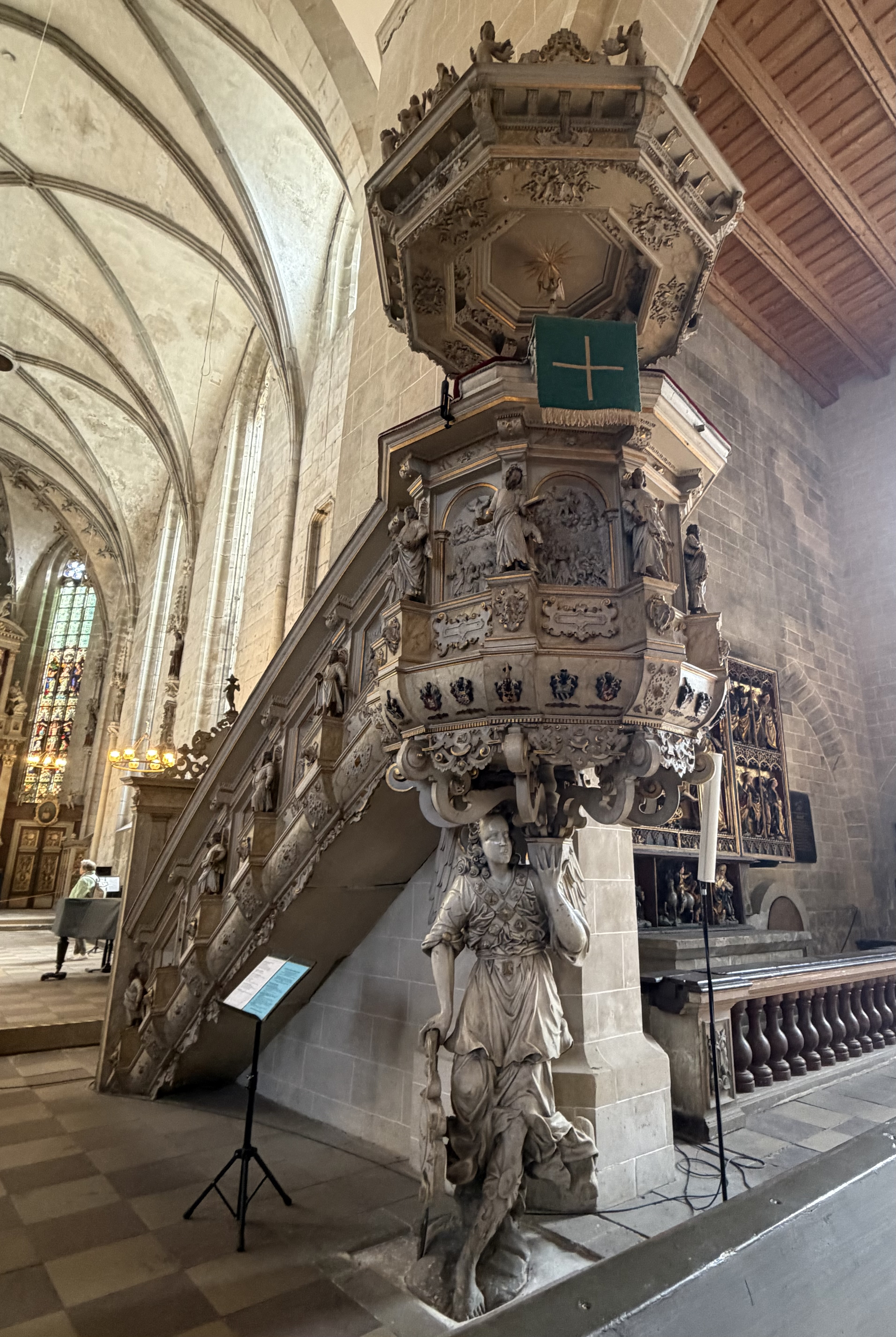
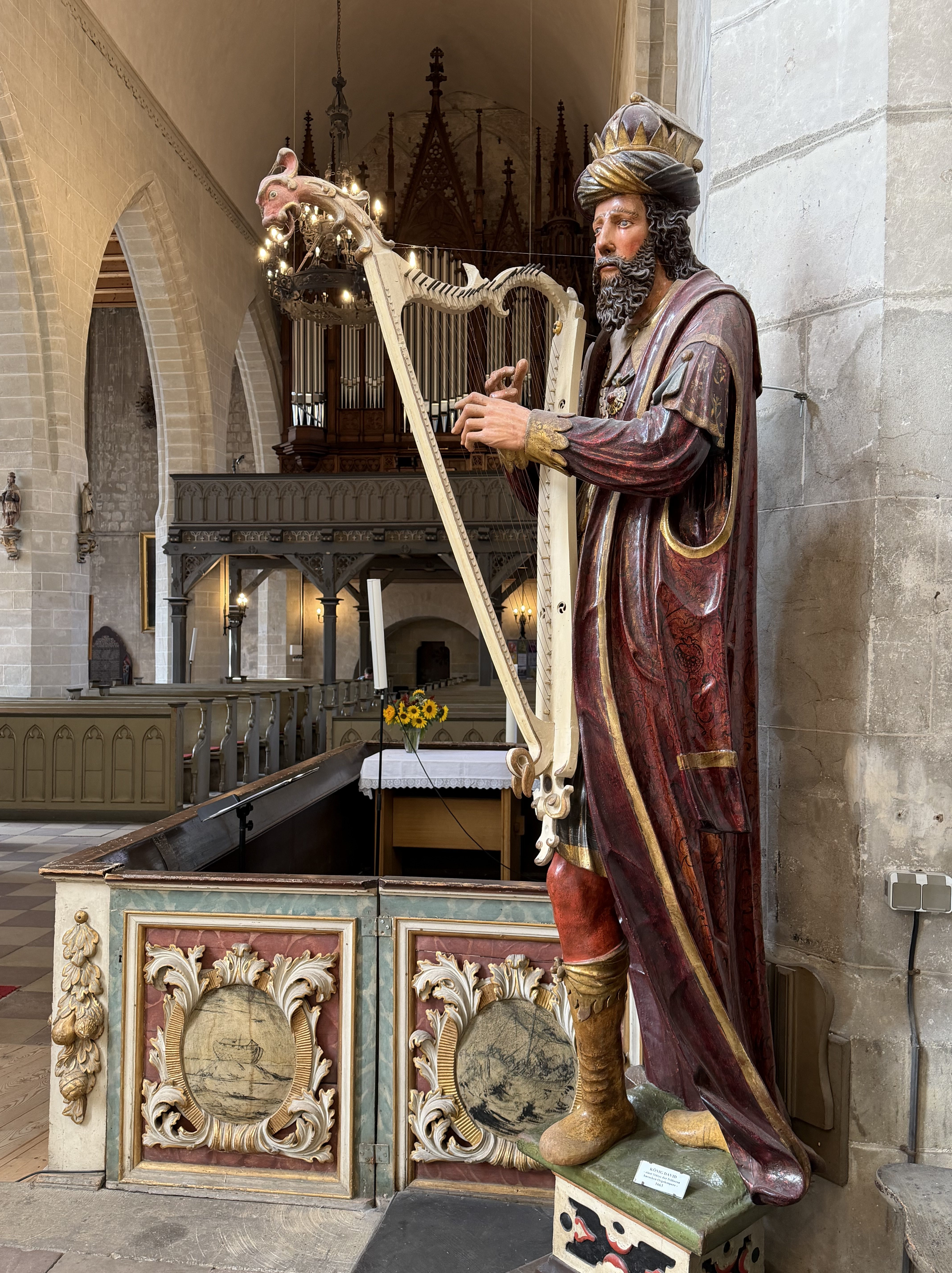
We were fortunate as a medieval festival was being held in Goslar while we were there. Fun! Folks in medieval costume walked the streets as live madrigal played on stage and acrobats performed. Food stalls were period-themed and the items offered were the same. I was especially drawn to the salmon being smoked, held on wooden planks slanted to catch the smoke rising from the open fire. This entire area of Germany is predominantly Lutheran. While churches here were not as large as other places we have been, they were still imposing and each had wonderfully carved pulpits with Biblical scenes carved into spiral staircases that rose upward. The pulpits were often held aloft with huge angels, and the pulpit crowns (wood-carved coverings above the pulpit) were often painted in jewelled tones. Altars were equally as beautiful, and baptismal fonts were striking, some with such heavy coverings that required built-in hoists to remove them for baptisms.
We all enjoyed our time here, and the weather matched the beautiful mountains and villages. On our venture to Wernigerode from Goslar on a day trip, Randy sought out a bus to take us from the bahnhof (train station) to the Altstadt (old town). Nancy commented, “Why are we sending the least German person (Randy) to speak to the German-speaking bus driver?” She was wise! Randy assured us this was the right bus. All aboard… and then Randy soon came over excitedly to me—“Here is where we are supposed to be going (as he pointed to his phone’s map) and here is where we are.” We were headed in the opposite direction and soon out into the country. We had no idea where we were headed, and more importantly, how to get back to Wernigerode. Oh yes, we were on an adventure! The bus began to wind its way up the mountains and soon highways turned into lanes as the forests closed in on us. The bus slowed to a crawl to make sharp turns. IT WAS BEAUTIFUL with lakes and colorful trees. I told Randy, “Put your phone away,” as he was frantic to find us a way back to Wernigerode, “and enjoy the serendipitous adventure.” An English-speaking German traveler came to our rescue. He told us the bus would stop in a city near the bahnhof that had a train back to Wernigerode. Yes! As we alighted the bus, Kathy noticed that a bus on the other side of the street was headed to Wernigerode—we quickly hopped on that bus and reversed our beautiful journey. Amazingly, the bus had a stop right at the entry to the Wernigerode Altstadt. And off we went, thankful for having taken the wrong bus!
After several days of wonderment in the Harz Mountains, we are now off today for several days in Bamburg in far north Bavaria, north enough to be in central Germany. WEG
BAROQUE AND BUSY
September 24 – 28, 2026
Hamburg is Germany’s second largest city; it is a very busy place! Though majorly destroyed in World War II, it has renewed and rebuilt, mainly without its former historic beauty. What is today’s Hamburg is a fine modern city. Here and there, beautiful historic buildings are visible.
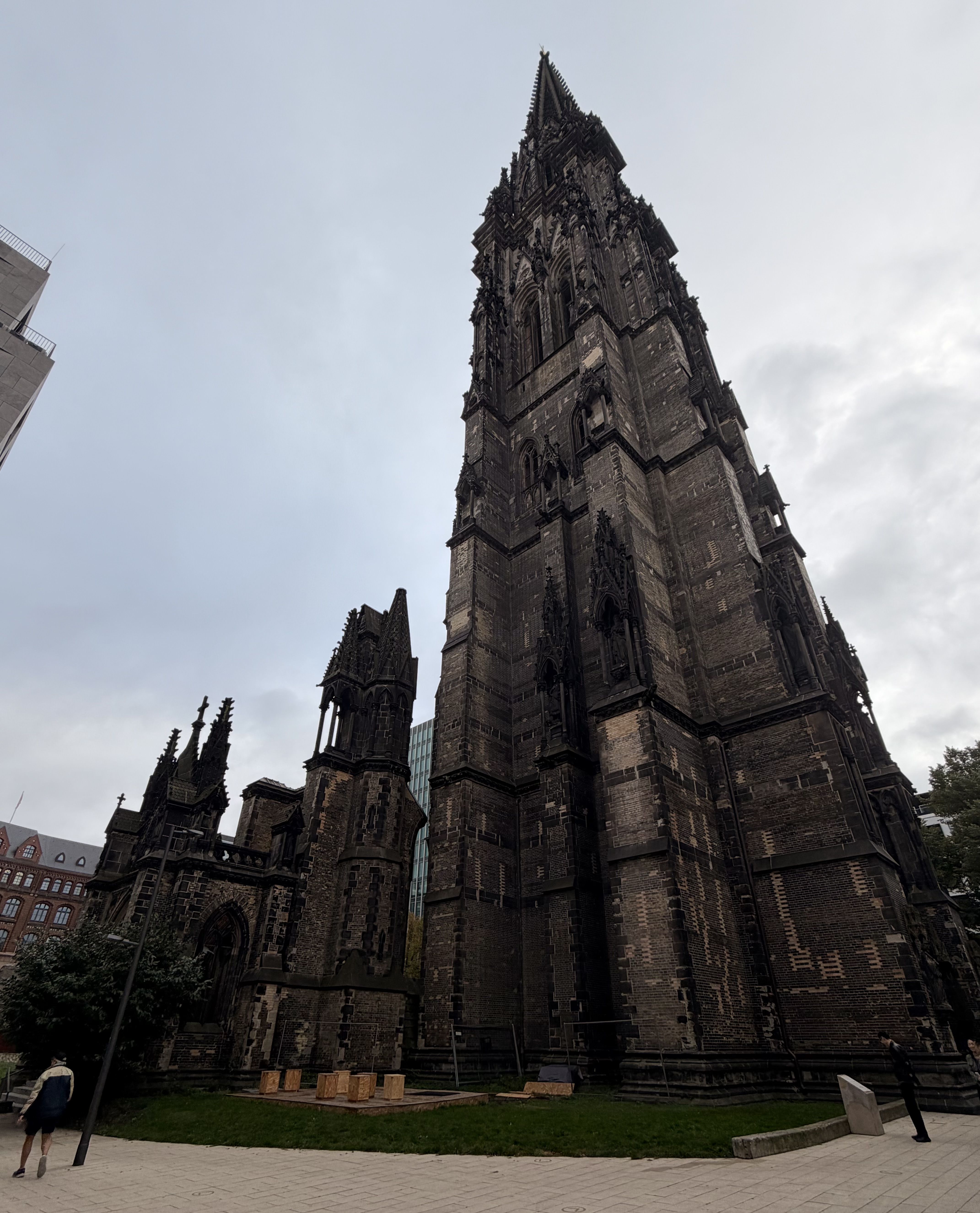
Our first site off the tram from our hotel was a view of the remains of St. Nicholas Lutheran Church with its 483 foot tower reaching heavenward. It is still one of the tallest church towers in the world, although all that remains of the huge church are remnants of walls and blackened sculptures.
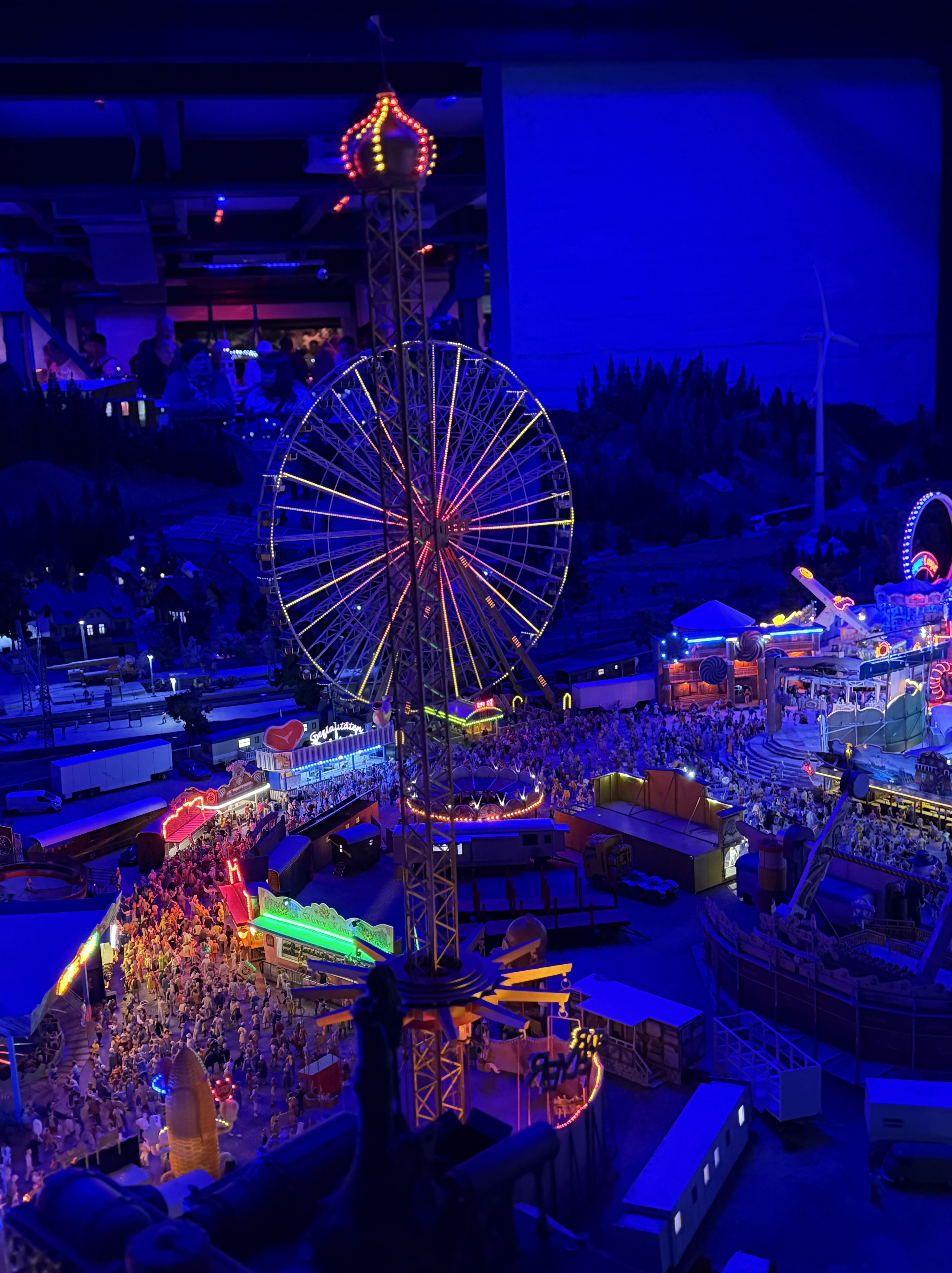
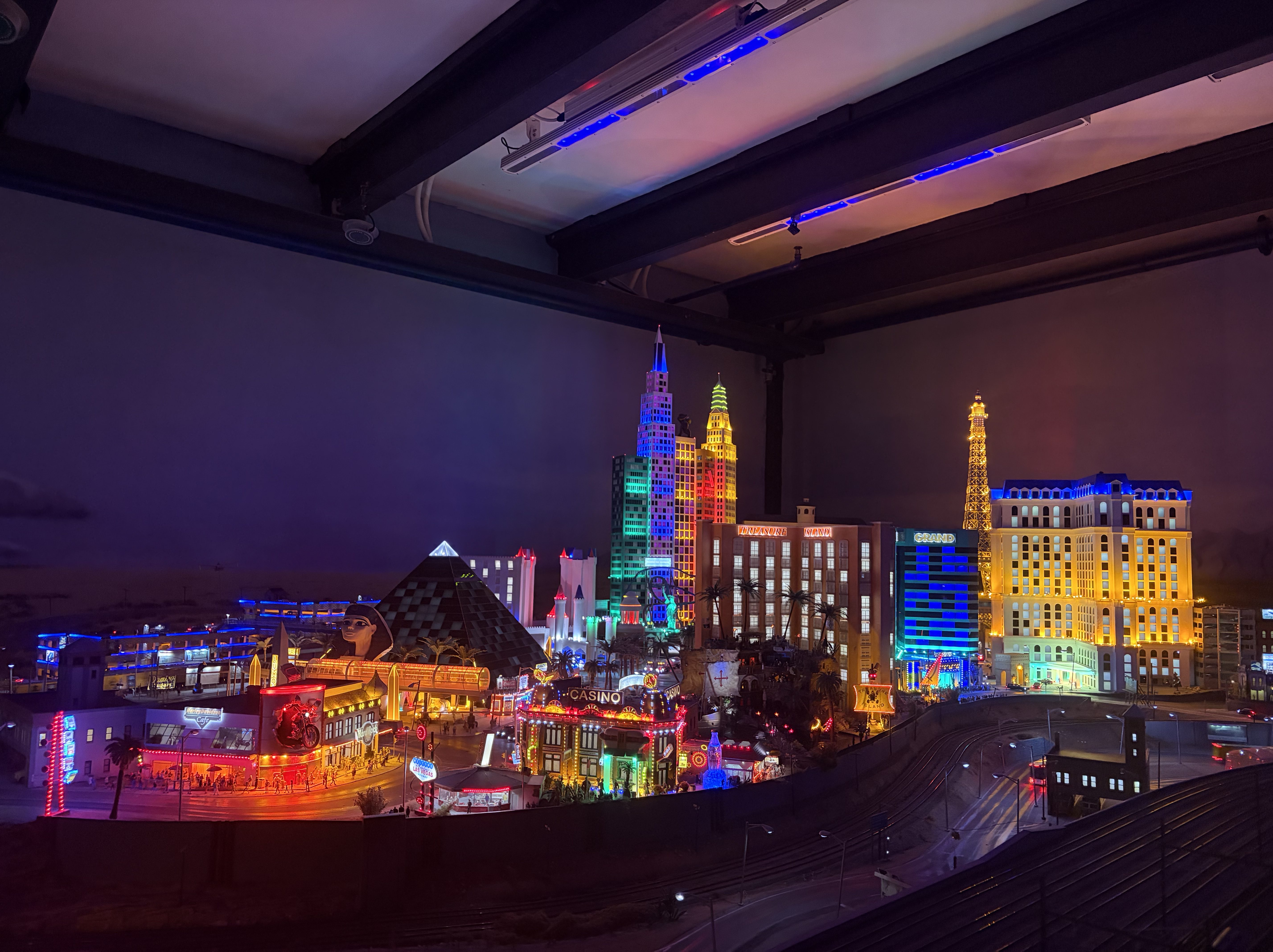
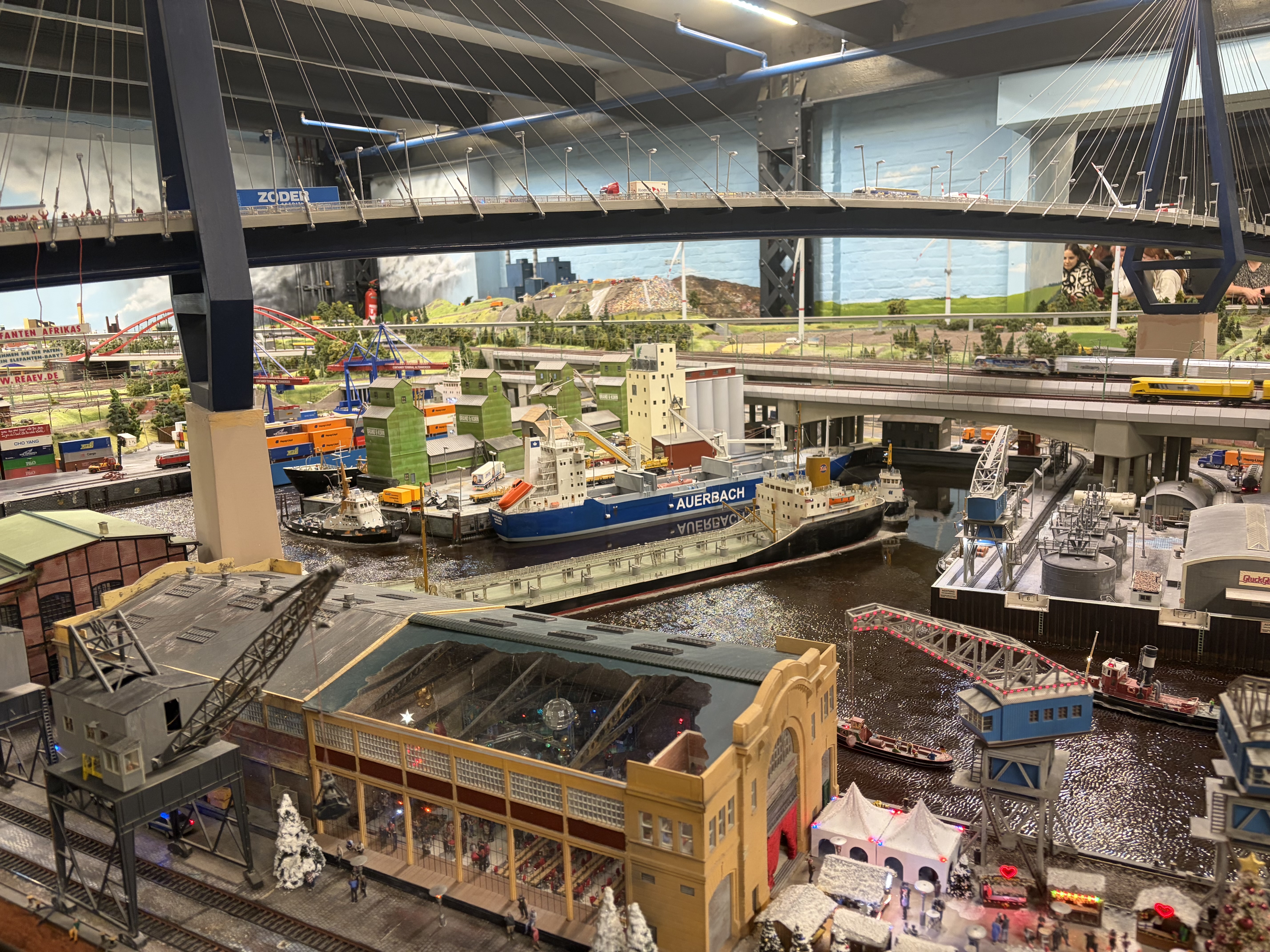
Our afternoon goal was to tour Miniature Wonderland, Hamburg’s major attraction down the street from the Memorial Church. It is filled with sets/scenes from around the world, each handcrafted with precision. We are talking about stadiums filled with 50,000 spectators, each so small (1/87th actual size) and yet so precise–each and everything hand made. Ocean vessels sailing the seas; Alpine mountains and villages with trains, cars, and trucks all moving. The airport caught everyone’s attention as planes took off and landed, and police cars and baggage handlers moved along the runway. Glaciers calved; the lights of Las Vegas blinked. One could spot TVs glowing through apartment windows and billboards displaying changing ads. Throughout the displays, daylight changed to night as city and country lights glowed, and then daylight returned. The several hours of amazement just didn’t provide enough time. Had we had more time, our friend Tommy would have returned for another visit as his various life experiences were on living display.
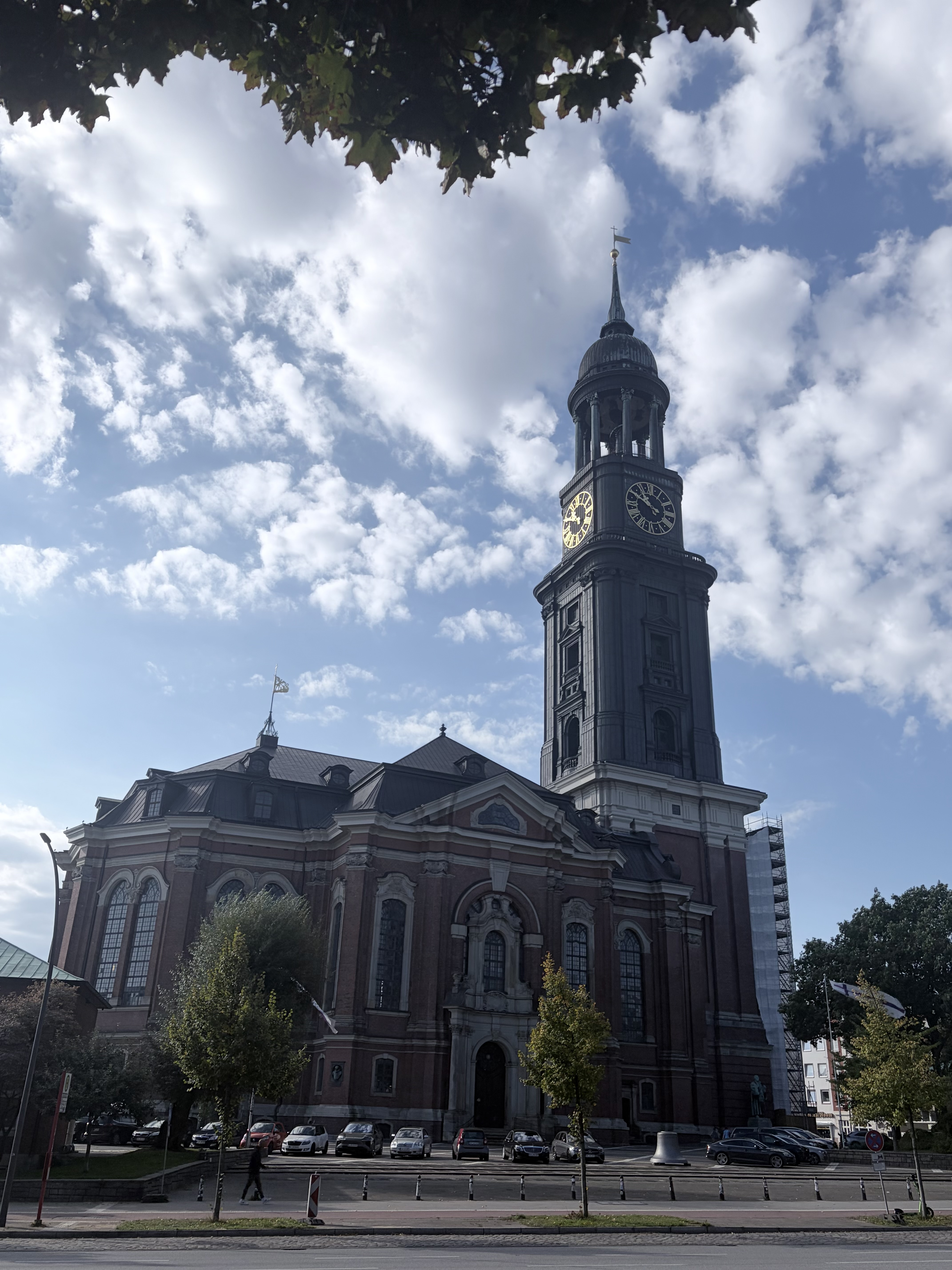
Our Sunday was a glorious day! We attended noon devotions with an organ recital at the beautiful St. Michael’s Lutheran Church, a stately baroque masterpiece. Since the service was in German, we only understood the invocation, Lord’s Prayer, and benediction. The organ music was both peaceful and meditative, then majestically powerful. The church’s interior is gleaming white with balconies and gold baroque accents, five pipe organs, and a 66-foot stunning marble altar, the centerpiece of which is a glass mosaic of the risen Christ. White sculptured angels peeked out at each corner of the interior, almost missed due to the beauty all around.
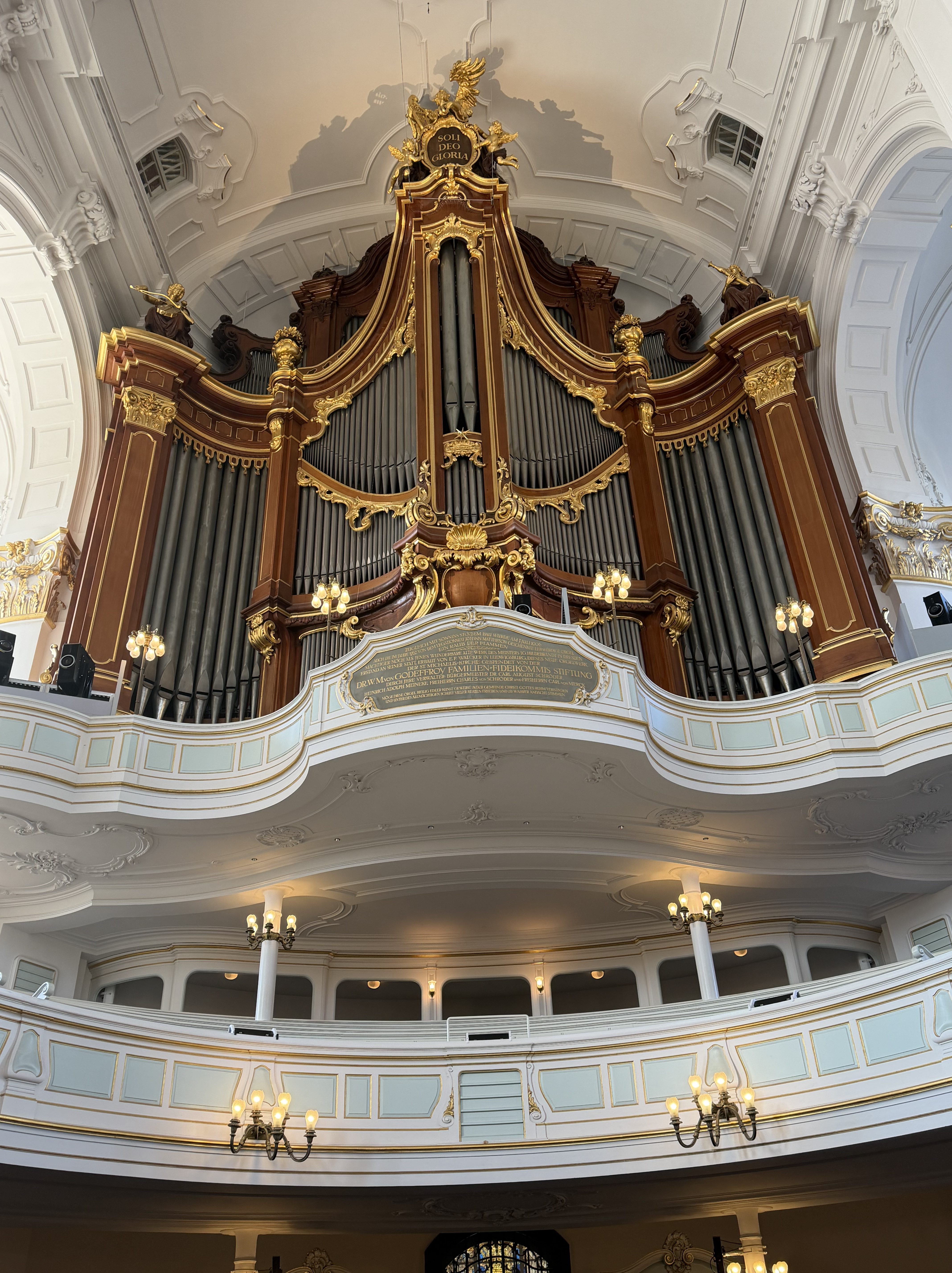
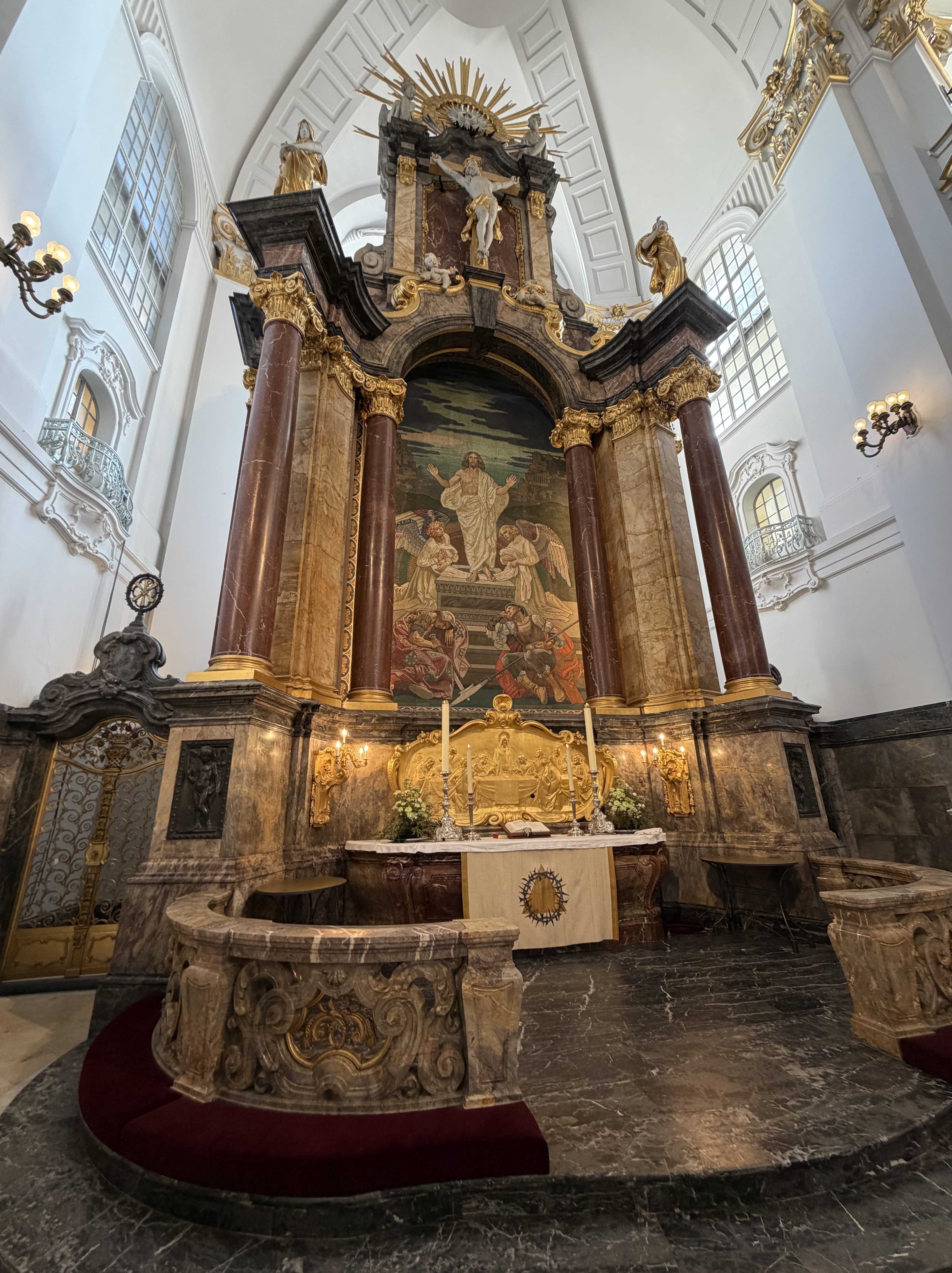
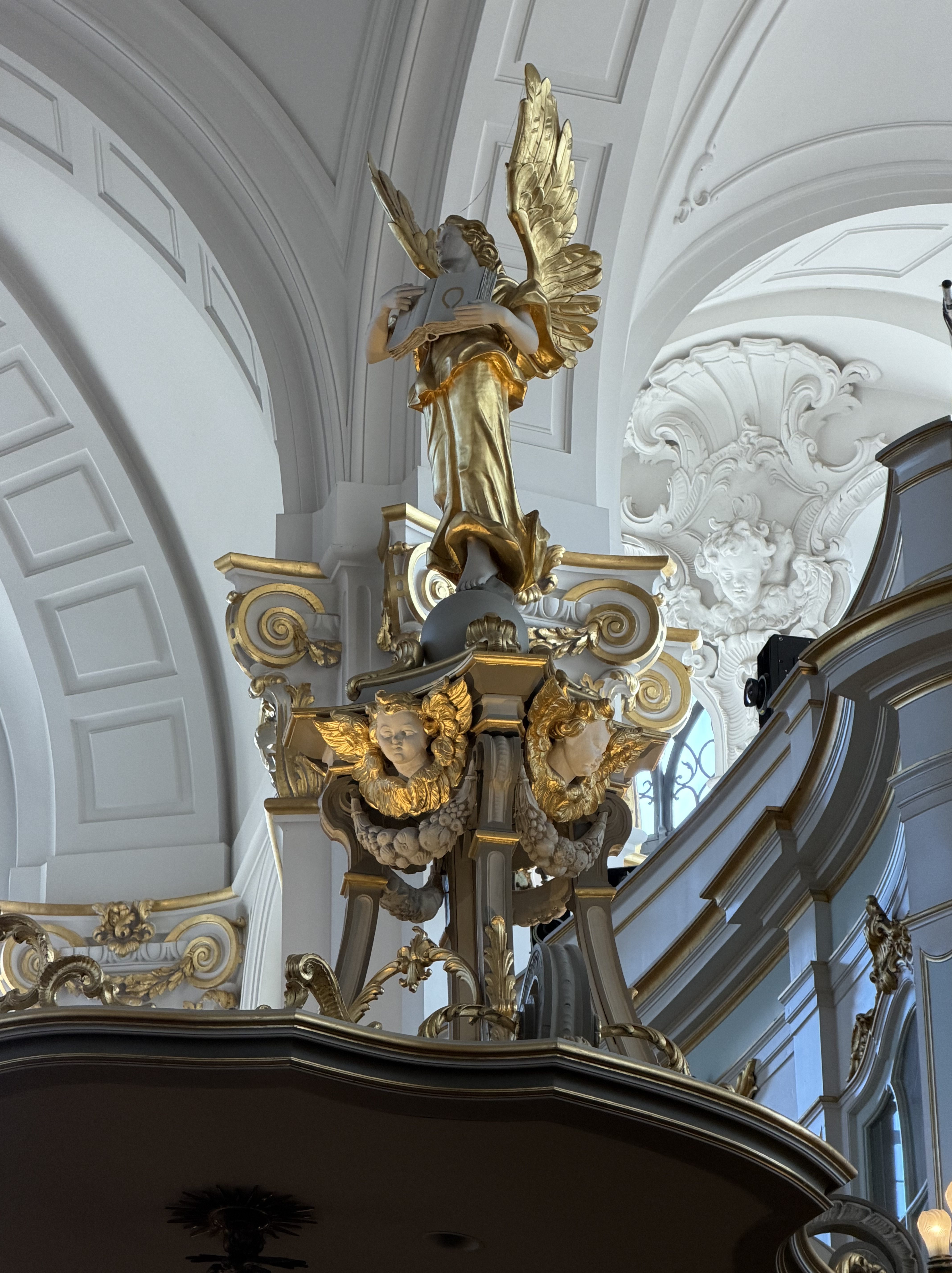
Later in the afternoon we attended a music concert of Vivaldi’s Four Seasons at the Laeiszhalle (Hamburg’s old concert hall). That event was a wow many times over! The young violinist, featured at center stage, had his whole body in motion as he played. We agreed he is indeed a rising virtuoso. Standing ovations and bravos echoed throughout his performance. In the evening we all enjoyed a harbor cruise on the port of Hamburg experiencing the charm of the historic Speicherstadt, the old red-brick warehouse district built on a wooden foundation in the canals. The Elbphilharmonie, the new glass concert hall with its top mimicking the waves of the sea towered above us. We cruised right up alongside a massive cargo ship as cranes were loading it with thousands of cargo containers. It was a long, yet memorable day.
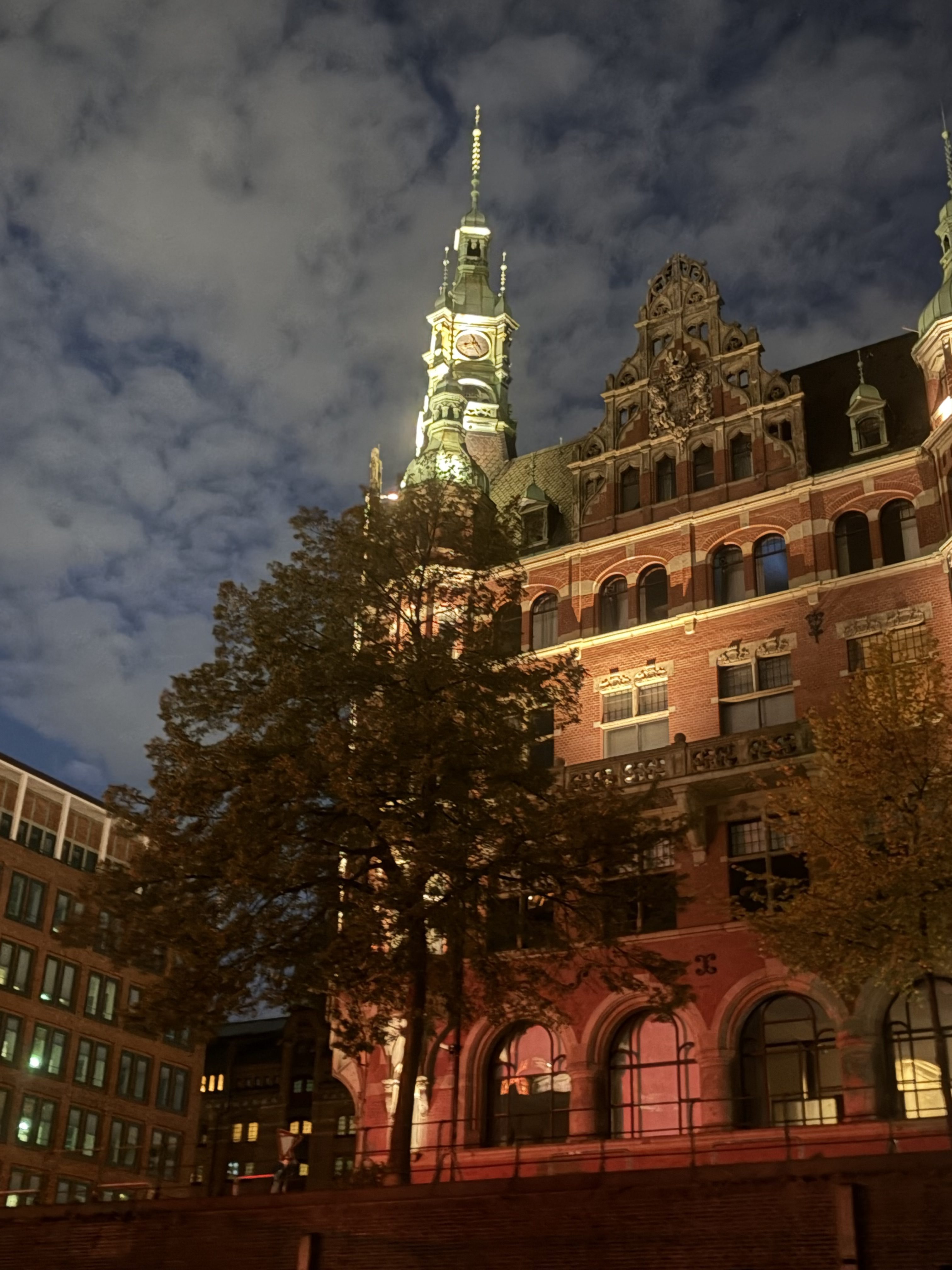
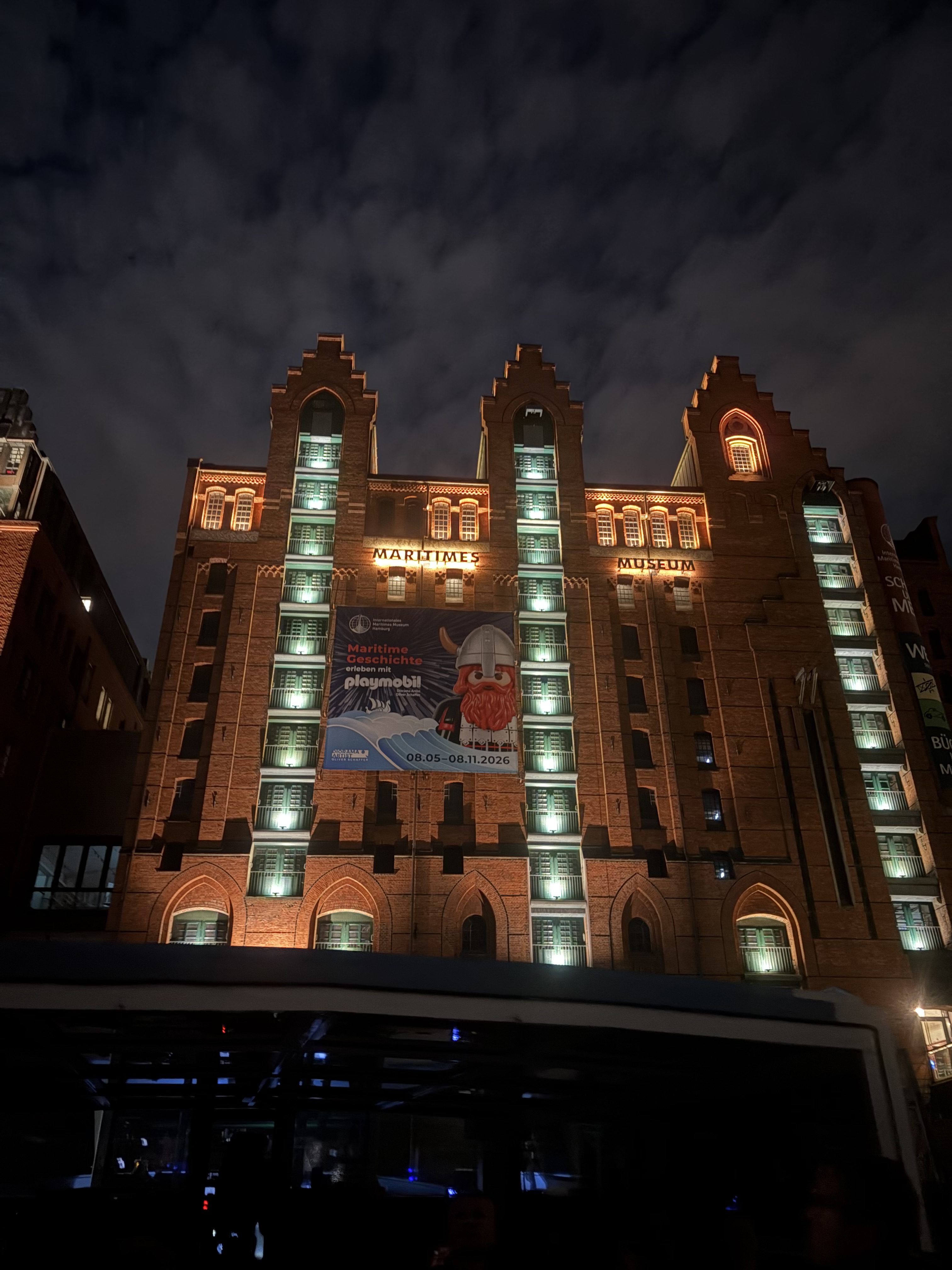
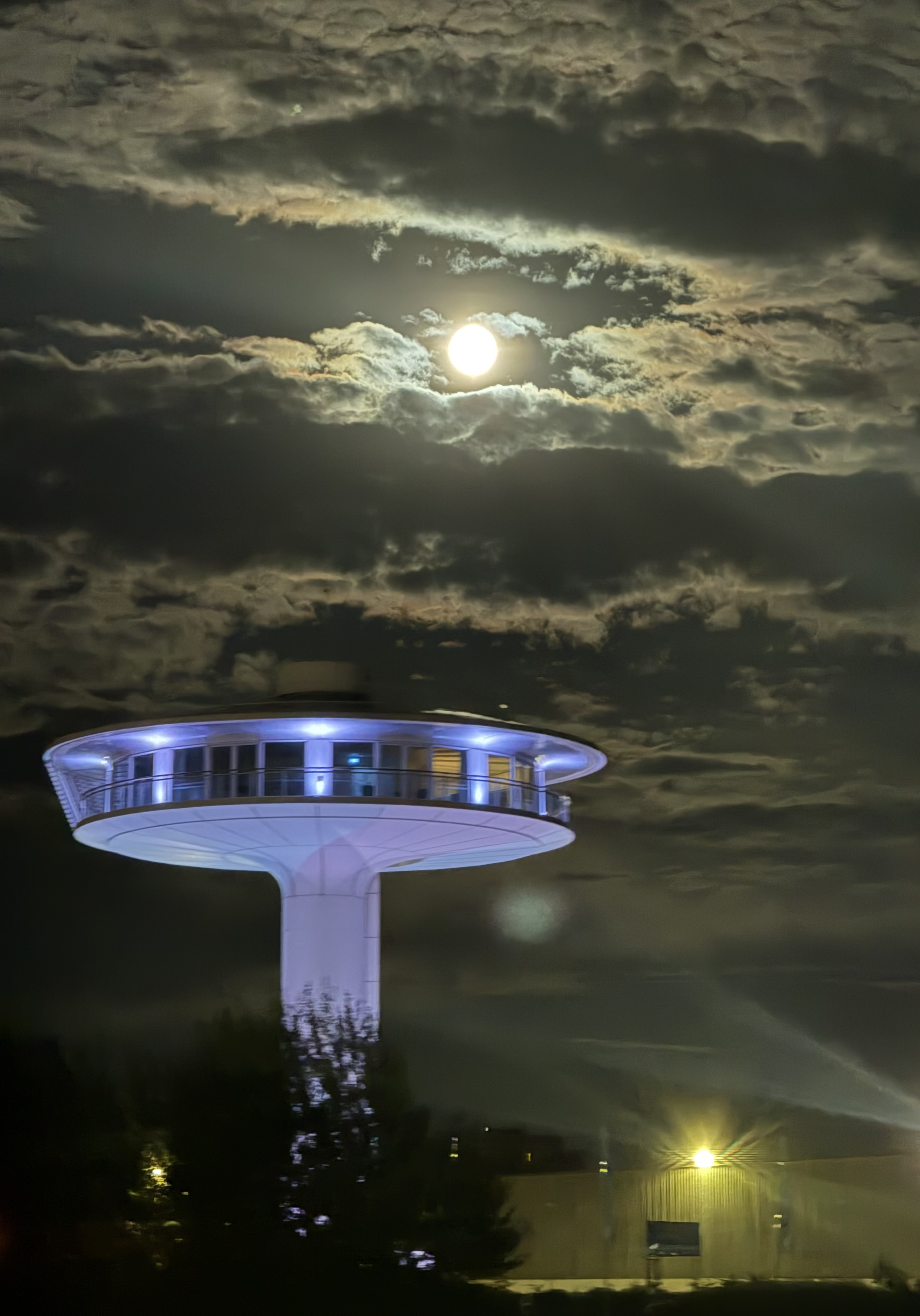
Our days in Hamburg were interspersed with day trips to Lubeck and Luneberg. Both cities well represent the red brick architecture that exemplifies North Germany. Both were important to the Hanseatic League, a coalition of free cities that banded together to trade around the world. This brought wealth to the cities.
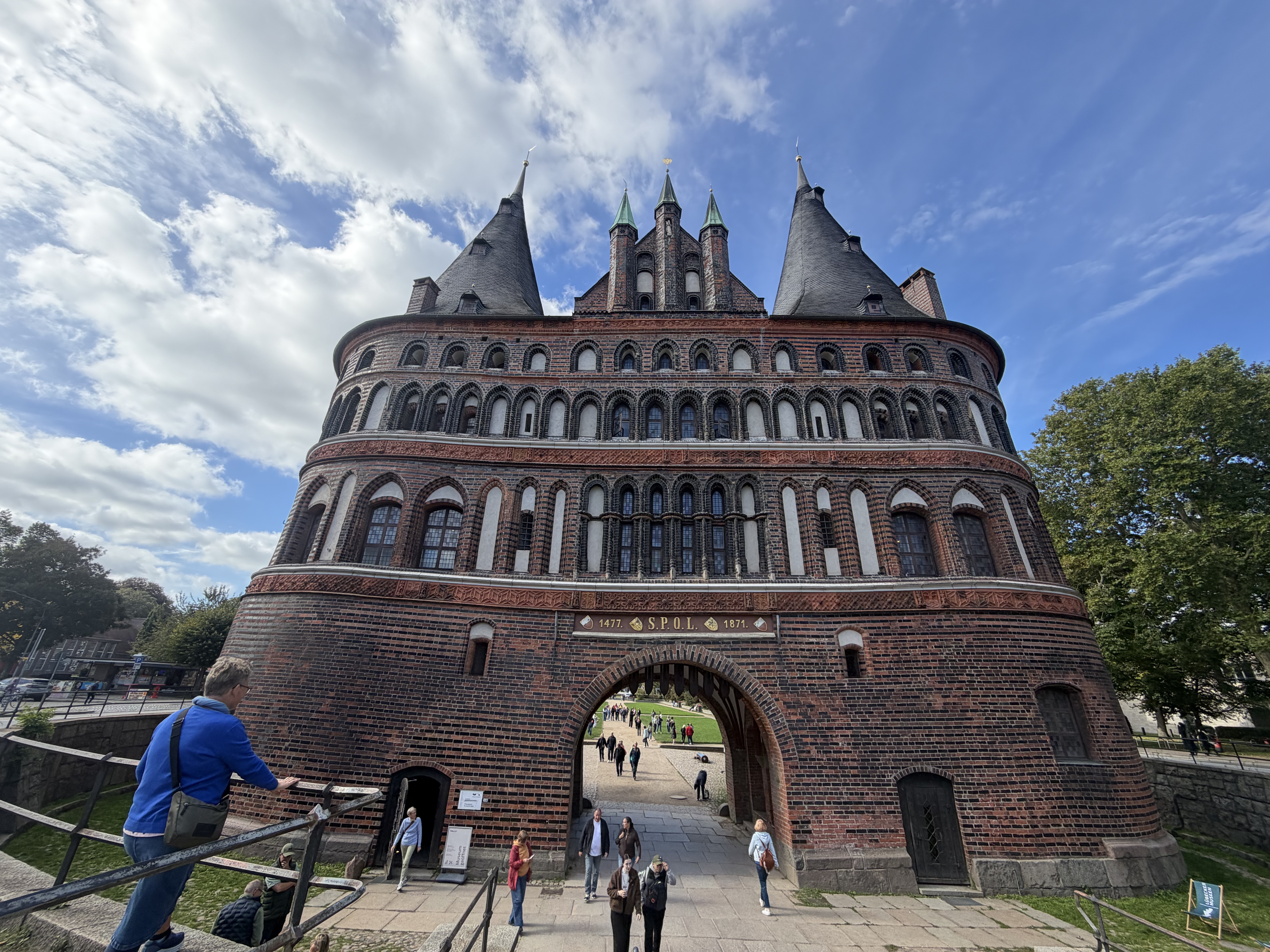
Lubeck’s Holstentor is the iconic twin-towered 1478 brick town gate and the first site we approached upon our arrival to the city by train. We walked to the Lutheran Marienkirche, the largest brick church in the world considered the “mother” of Gothic brick churches as it became a model for more than 70 churches throughout the Baltic region. Inside is an astronomical clock and the lengthy “Dance of Death” fresco depicting a stream of people of both high and low stations in life greeted by a death figure signifying death awaits us all.
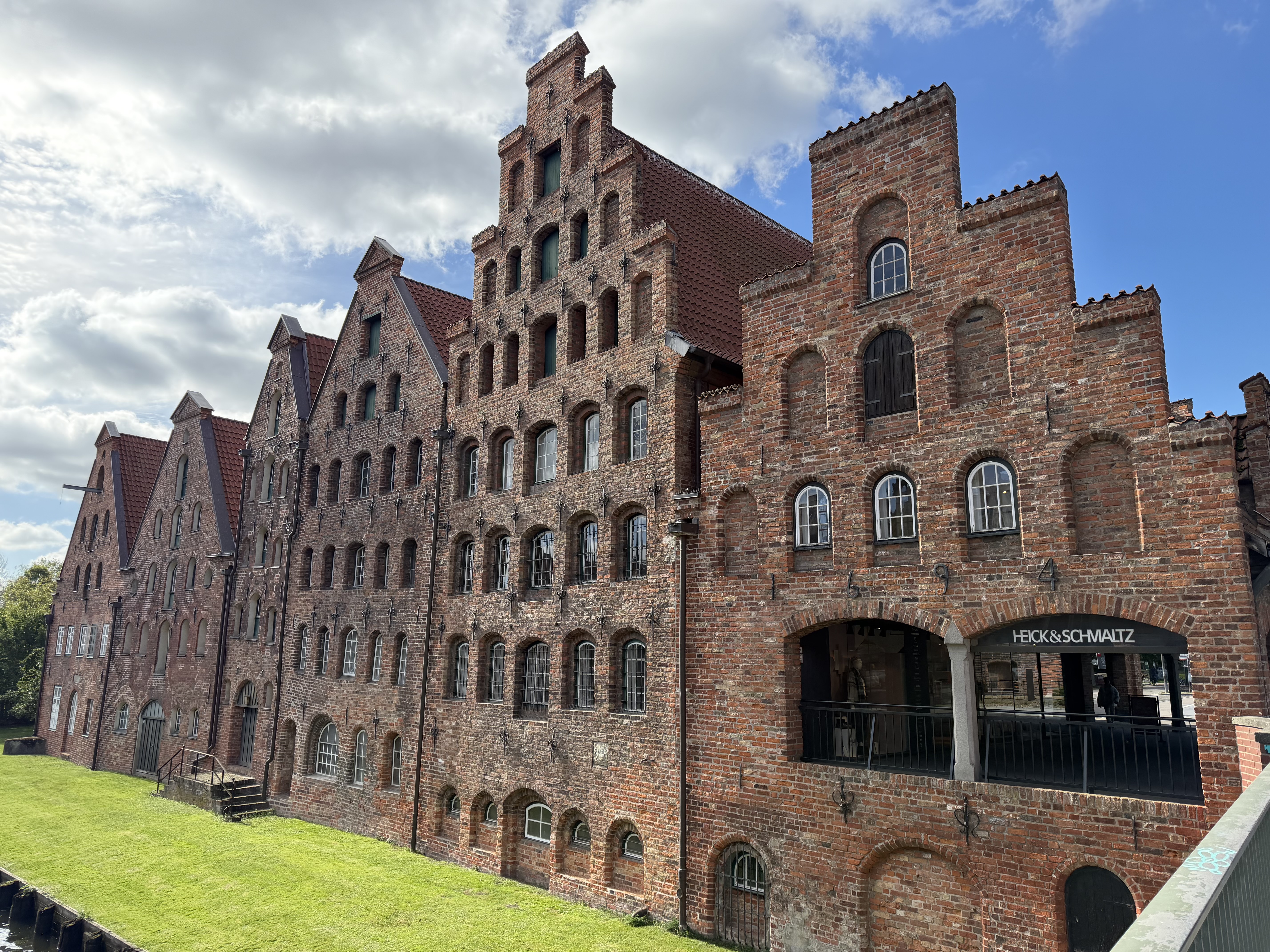
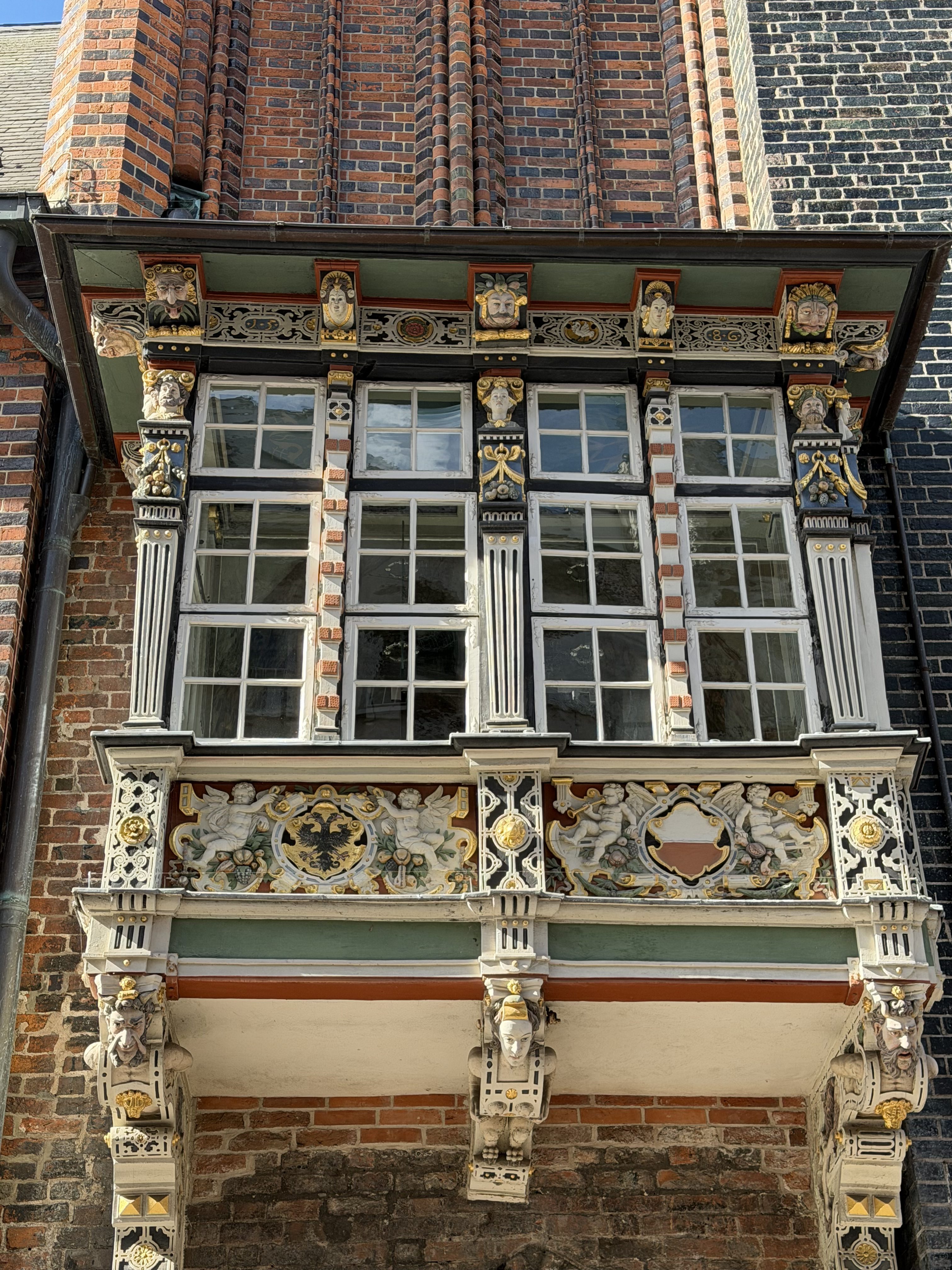
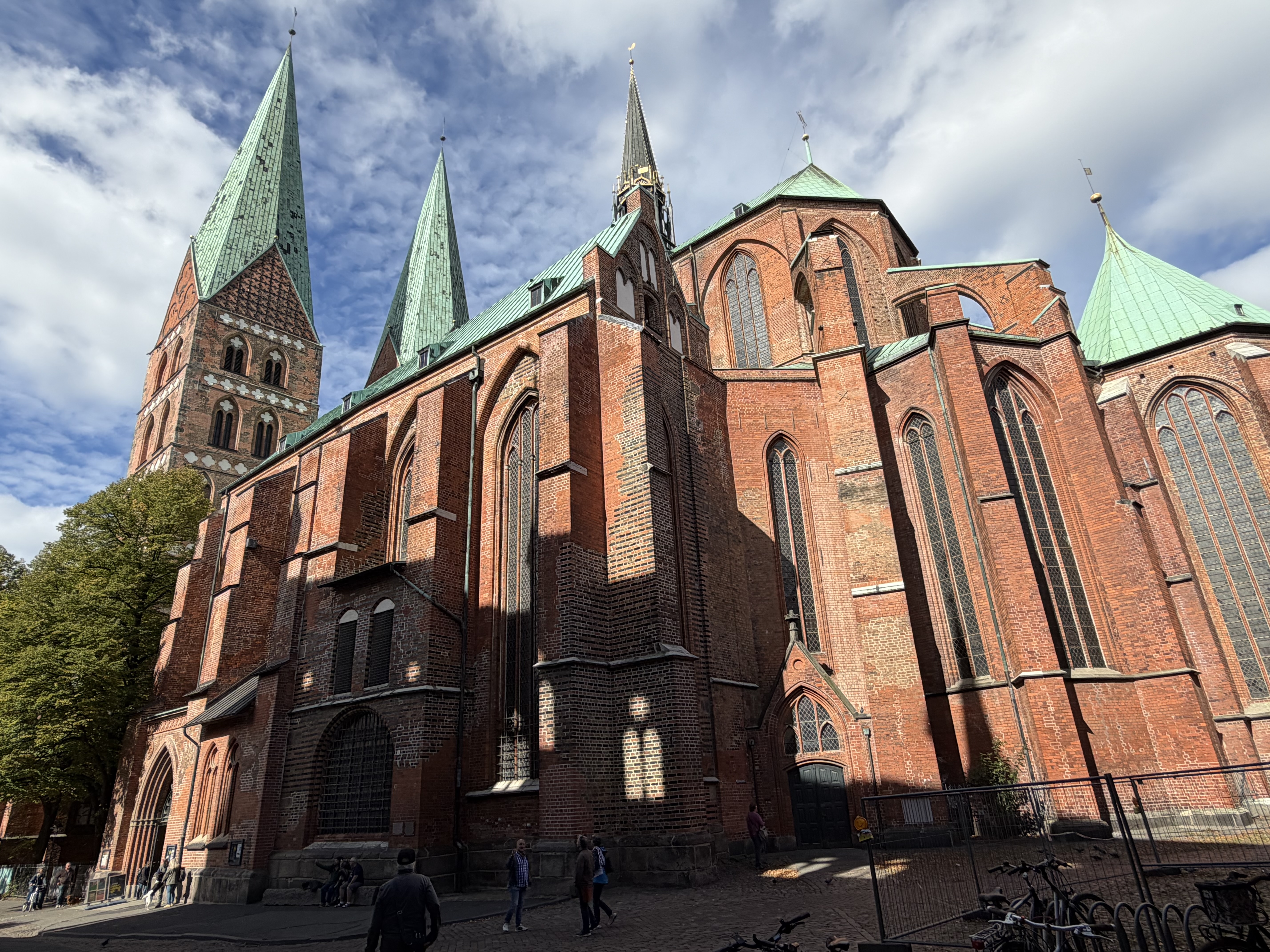
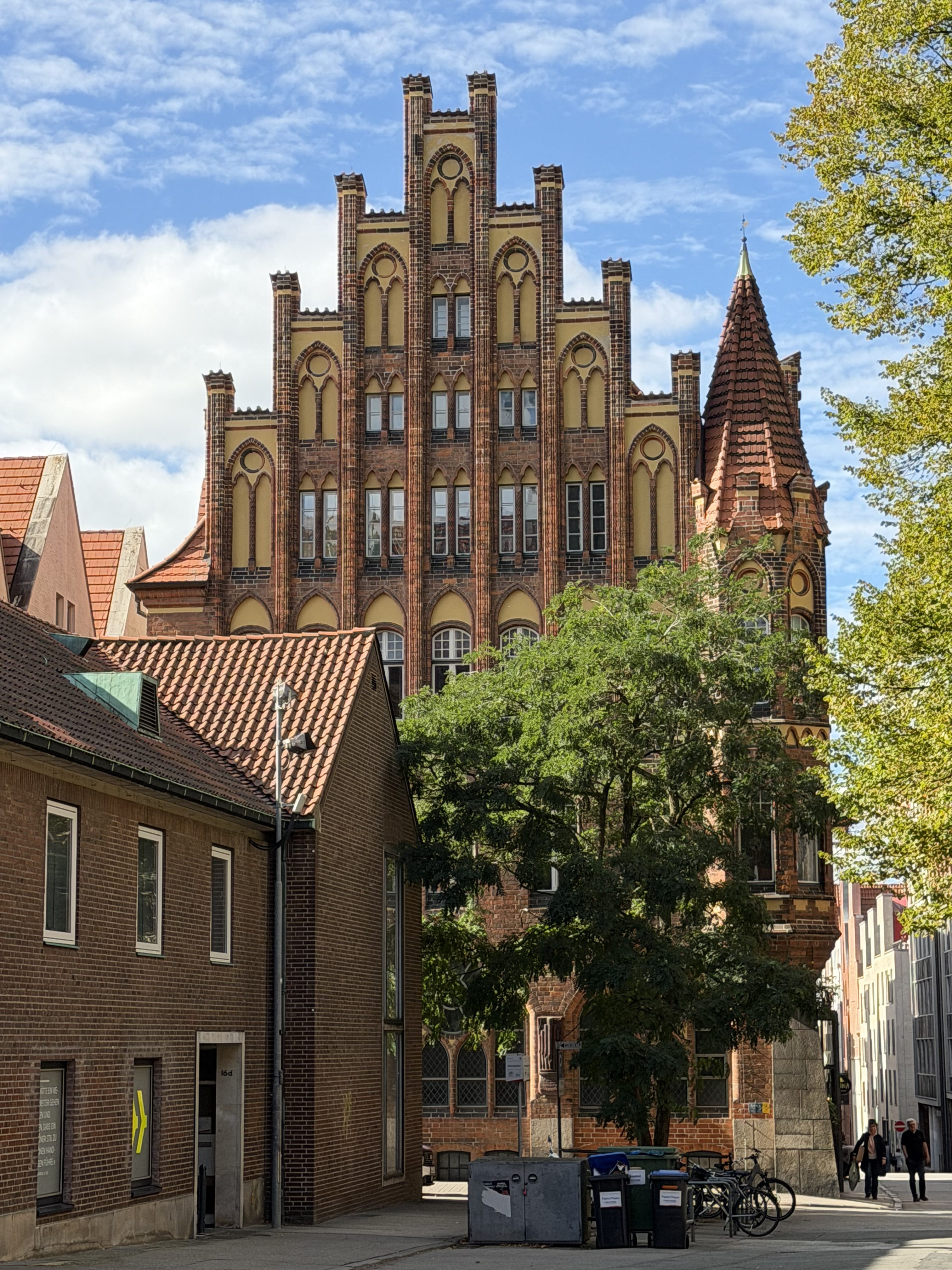
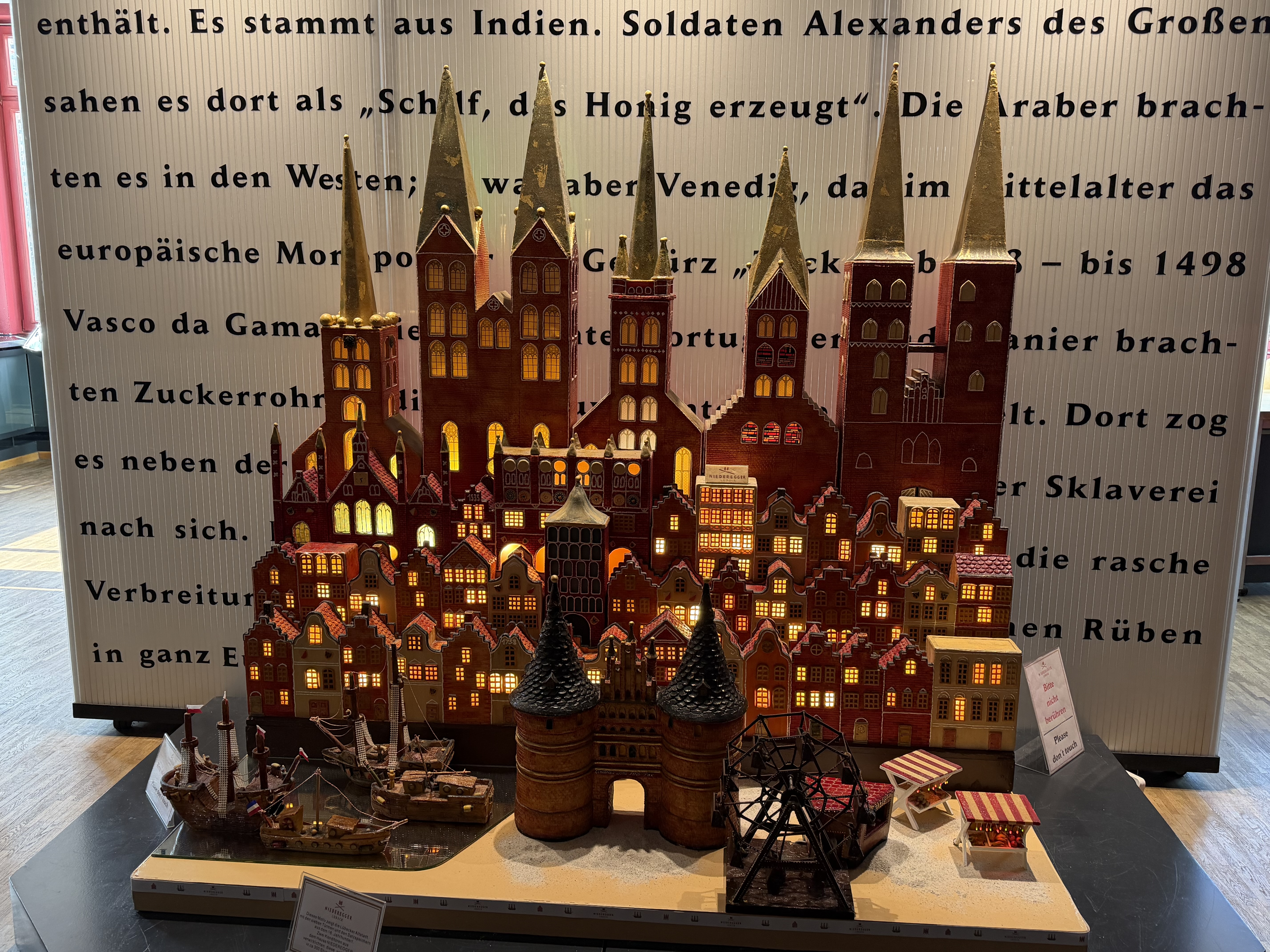
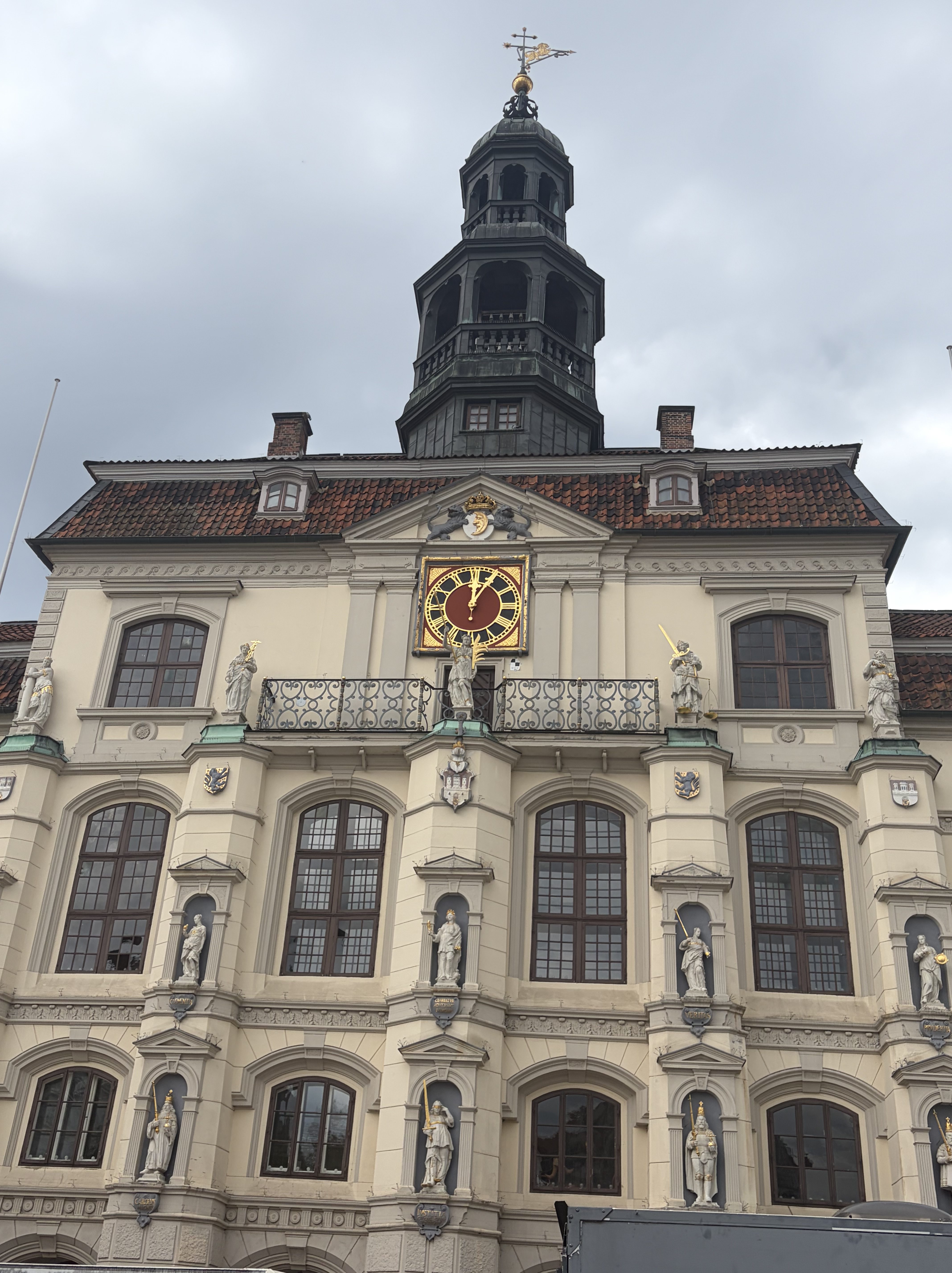
Lubeck’s many-spired Rathaus (town hall) is in one of Germany’s finest Gothic civic centers. We could not miss Niedereggers, the famous marzipan shop, and its museum telling the story of the renowned almond paste.
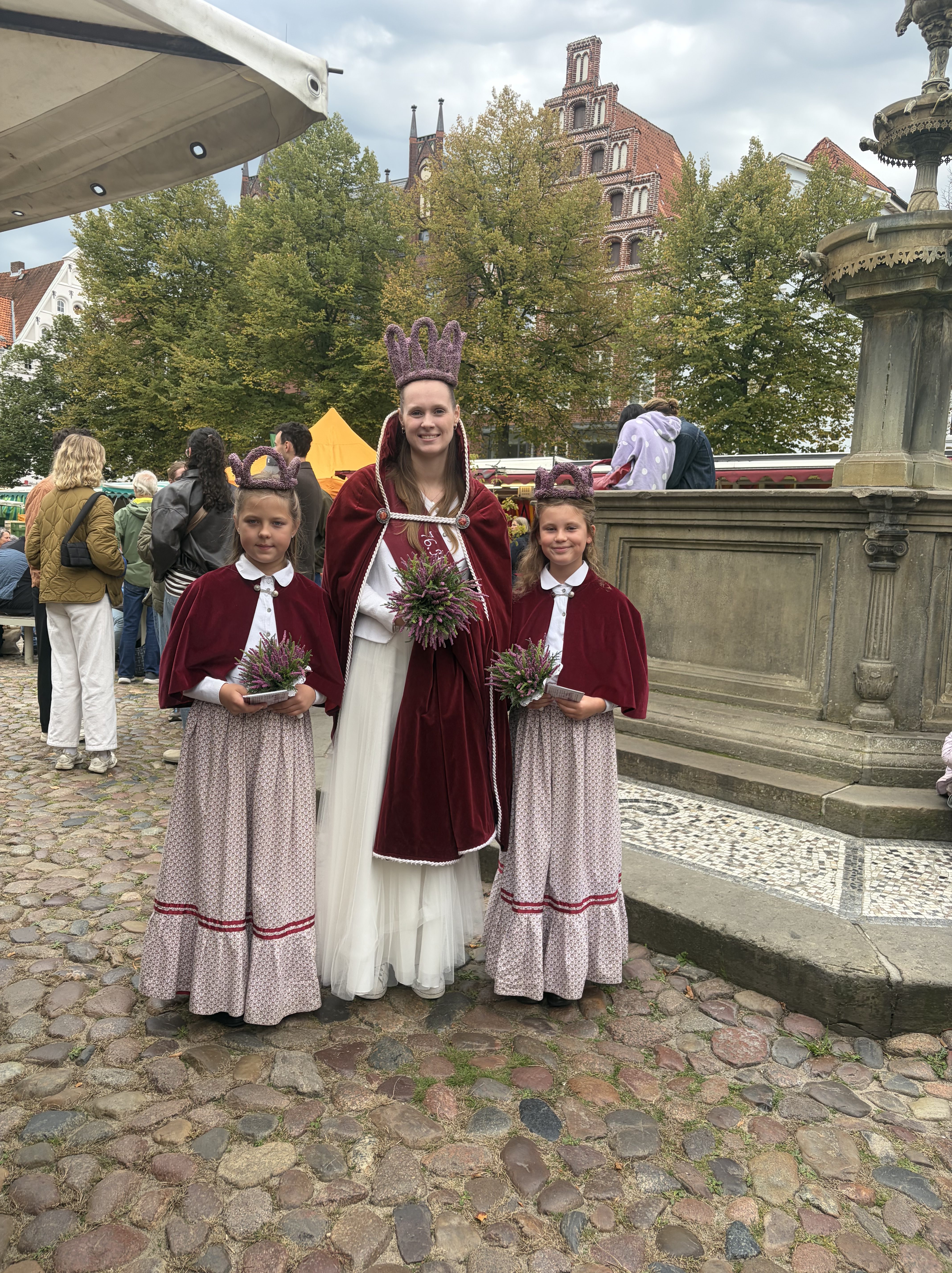
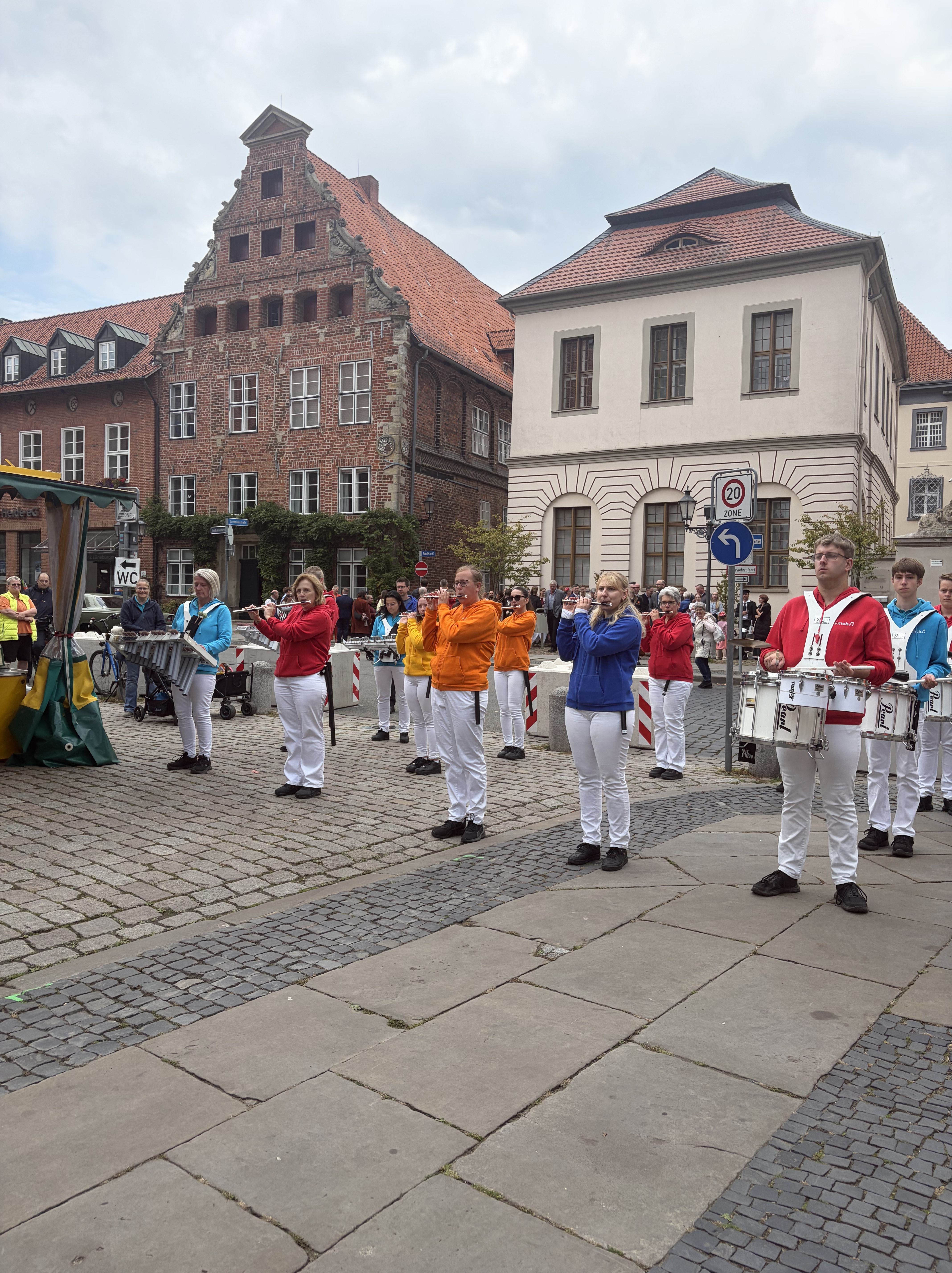
Luneberg was a delight! We arrived on market day as a children’s festival was being celebrated. Girls dressed in ceremonial garb meandered through the crowds, and a band paraded as we strolled the streets admiring the beautiful brick architecture and the abundant garden products available for purchase.
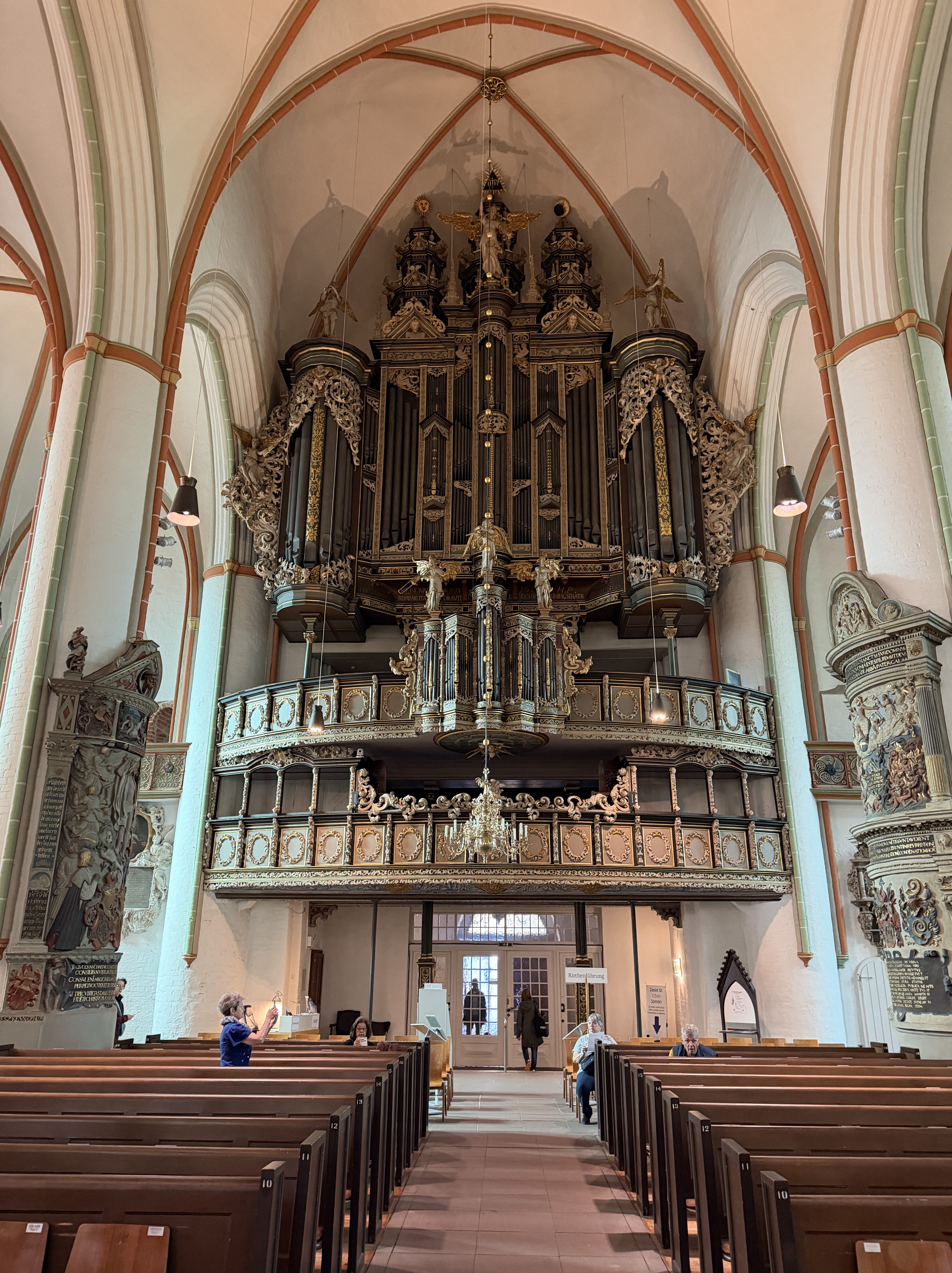
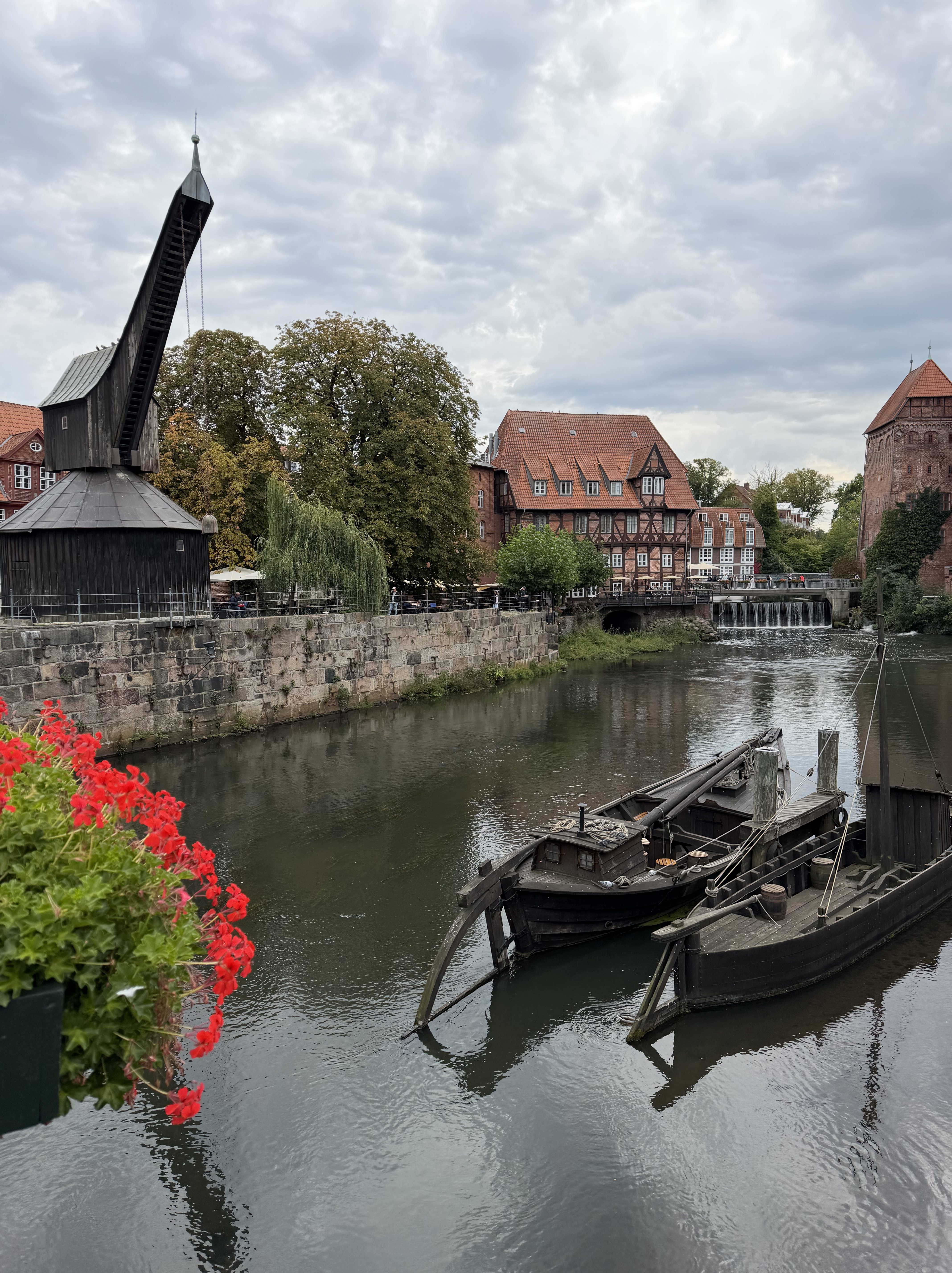
The St. Johannis Lutheran Church dominated the entrance to the city square. The Wasserviertel –the old water canal district with crooked half-timbered buildings and its Alter Kran (Old Crane) –captivated our attention. This wooden tread wheel crane standing over sixty feet high is the only one remaining in the world. It loaded salt onto boats and made Luneberg rich.
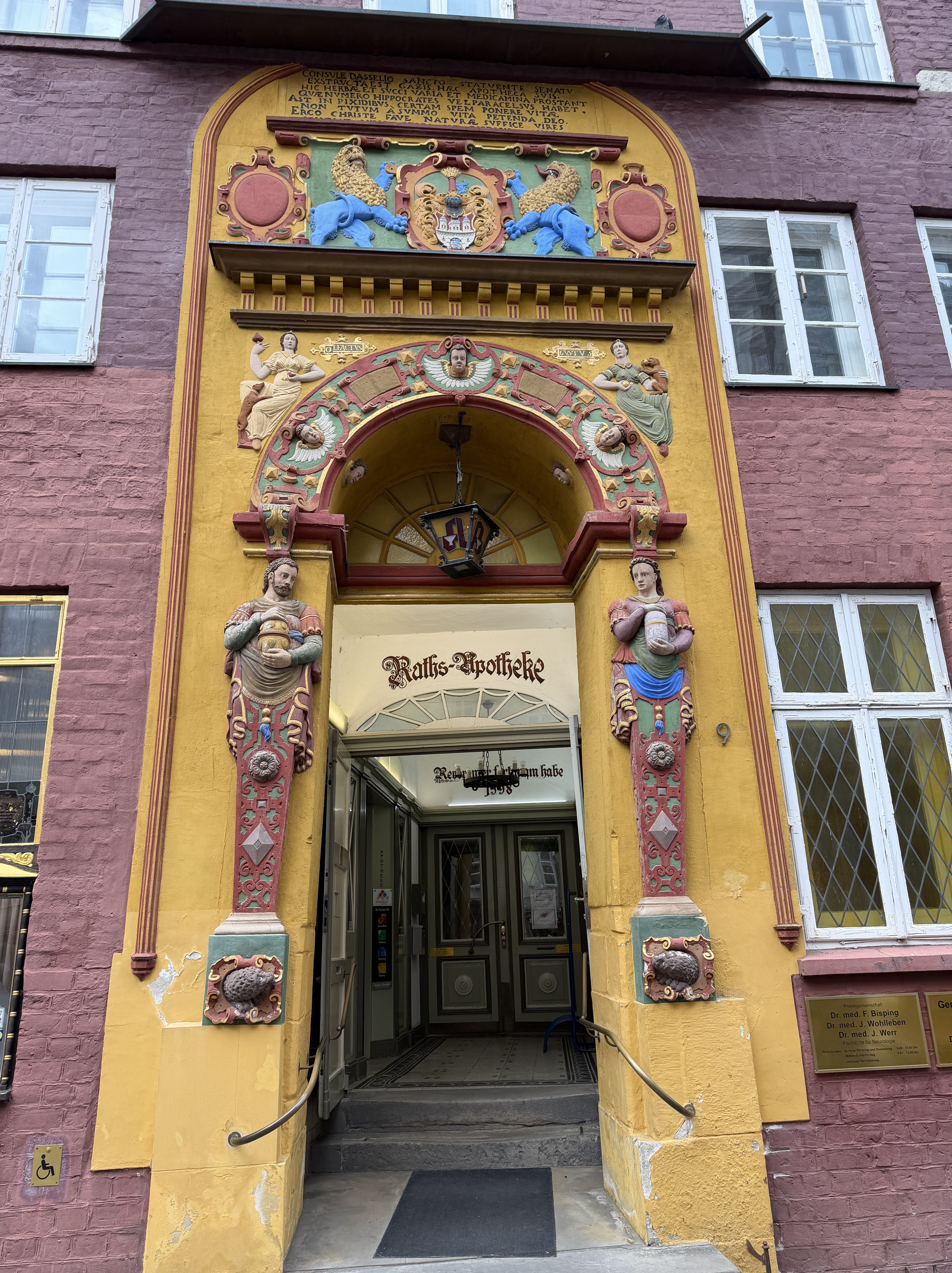
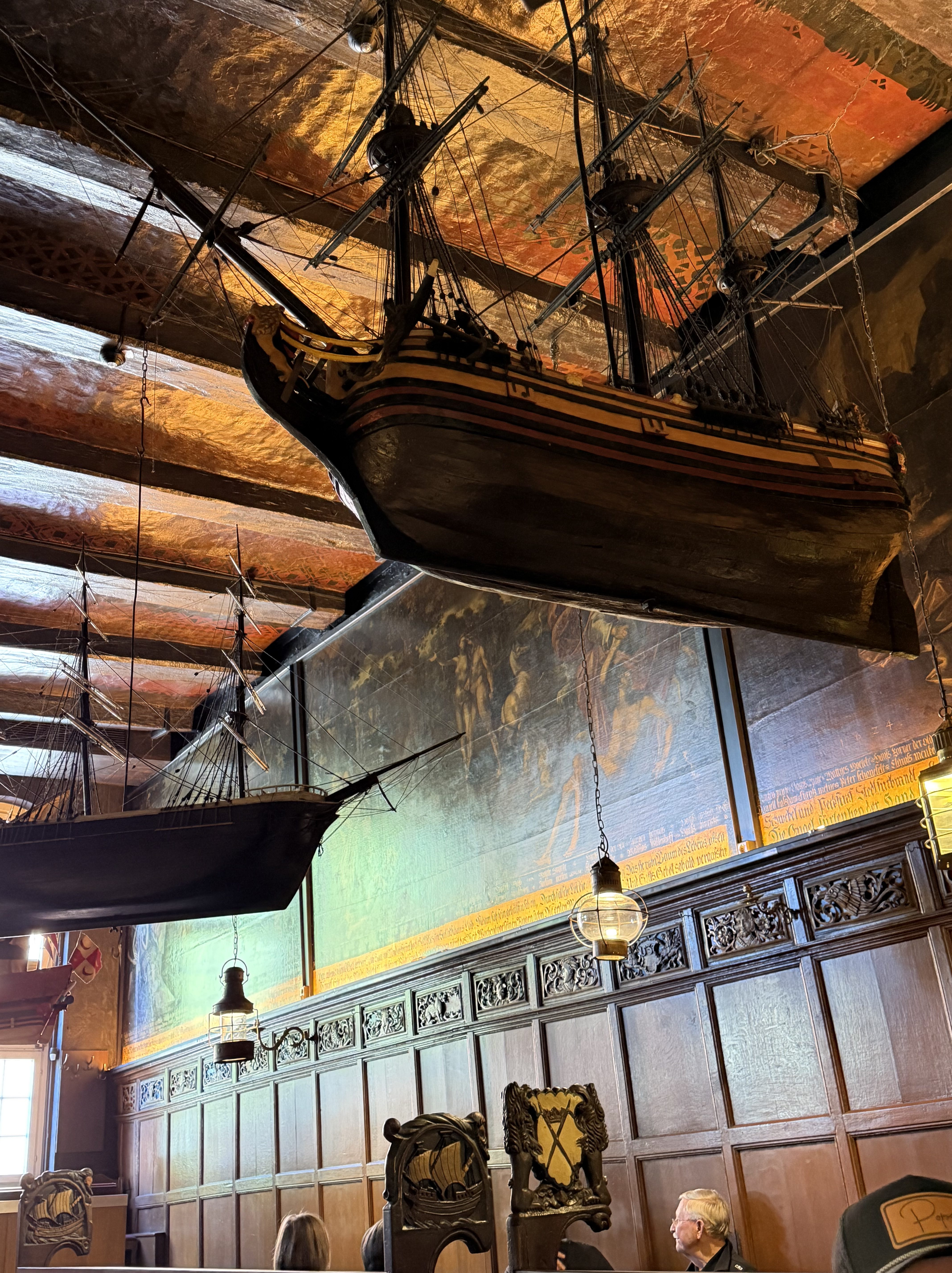
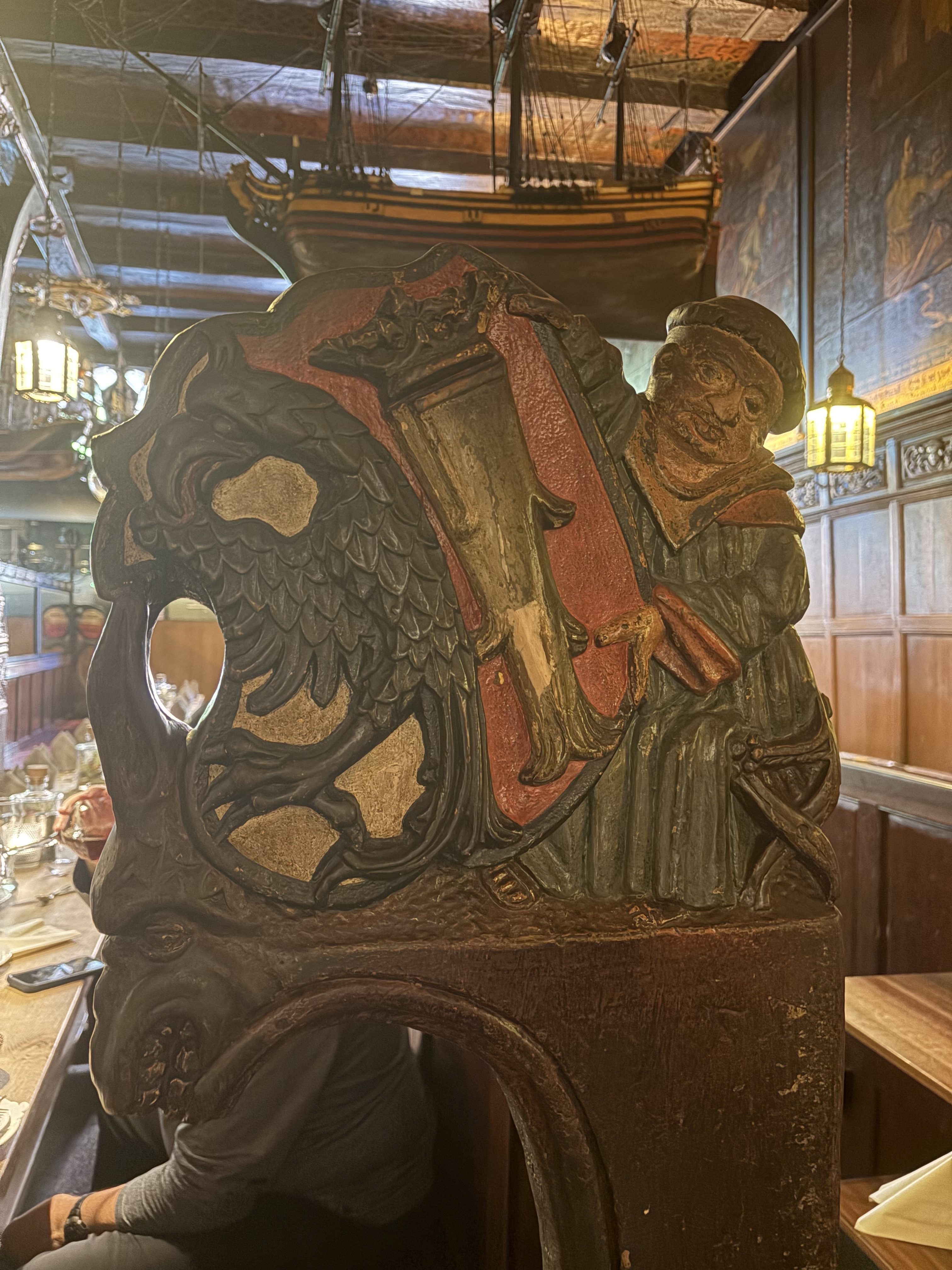
Did we eat! One memorable meal was at the Schiffergessellschaft, Lubeck’s historic restaurant that is now government-protected. Its rich interior is adorned with wood carvings and stained glass with wooden ships hanging from the intricately painted ceilings.
Lubeck, Germany
Our visit in Hamburg, Lubeck, and Luneberg was beautiful, busy, and filled with Baroque grandeur.
HIDDEN GEMS
September 17-20, 2026
Kathy and I have traveled through Frankfurt, Germany, via air and land many times, but we have never been to Frankfurt until this adventure. We were surprised with the many hidden gems we discovered in the city and surrounding area.
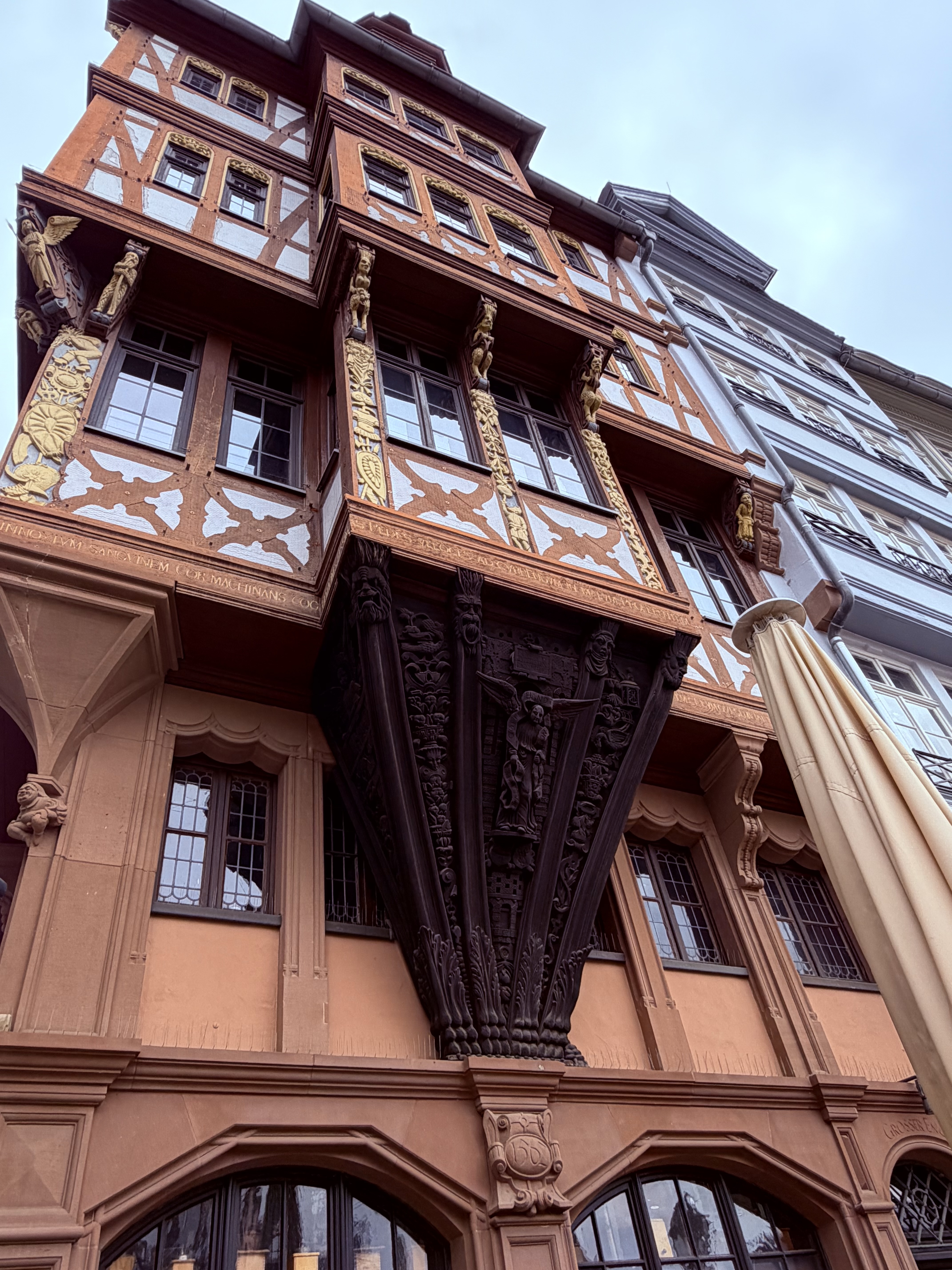
Frankfurt is an important center of commerce and banking and a major transportation hub for Europe. After it was destroyed by allied bombing in World War II, the city leaders decided to not recreate the old but instead build the new. As a result, the city has a skyline defined by skyscrapers, earning it the nickname, “Mainhattan,” since the River Main runs through the city. Several years ago, the population, nostalgic for the beauty of the past, pressured the city leaders to recreate a several block area as it would have looked before the war. Called the Römerberg, this cobblestoned space, filled with half-timbered buildings, quaint and/or majestic churches and restaurants, is now a major gathering place for locals and tourists. Our wonderful hotel was situated nearby and I enjoyed walking the area in the crisp and sunny weather.
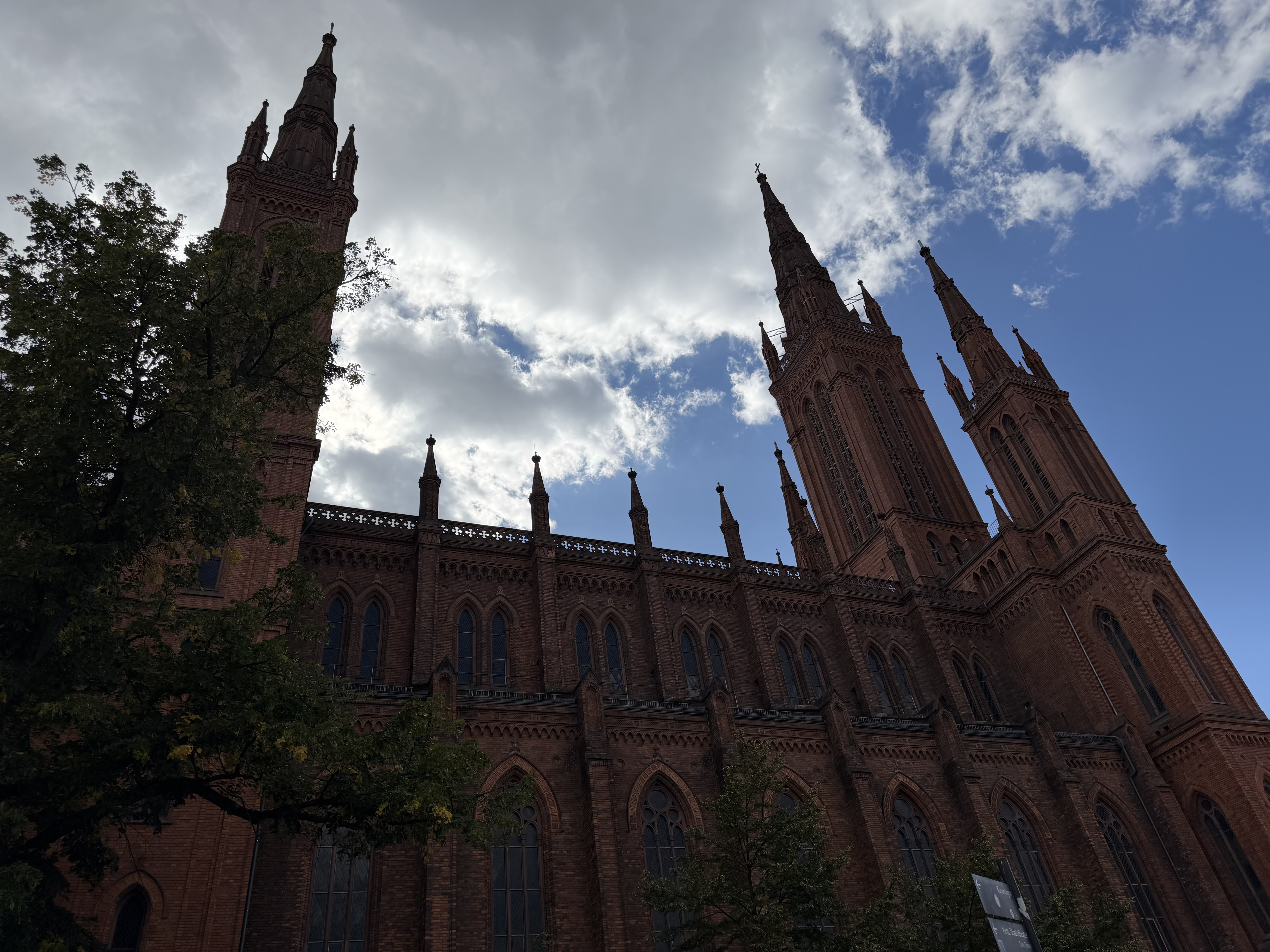
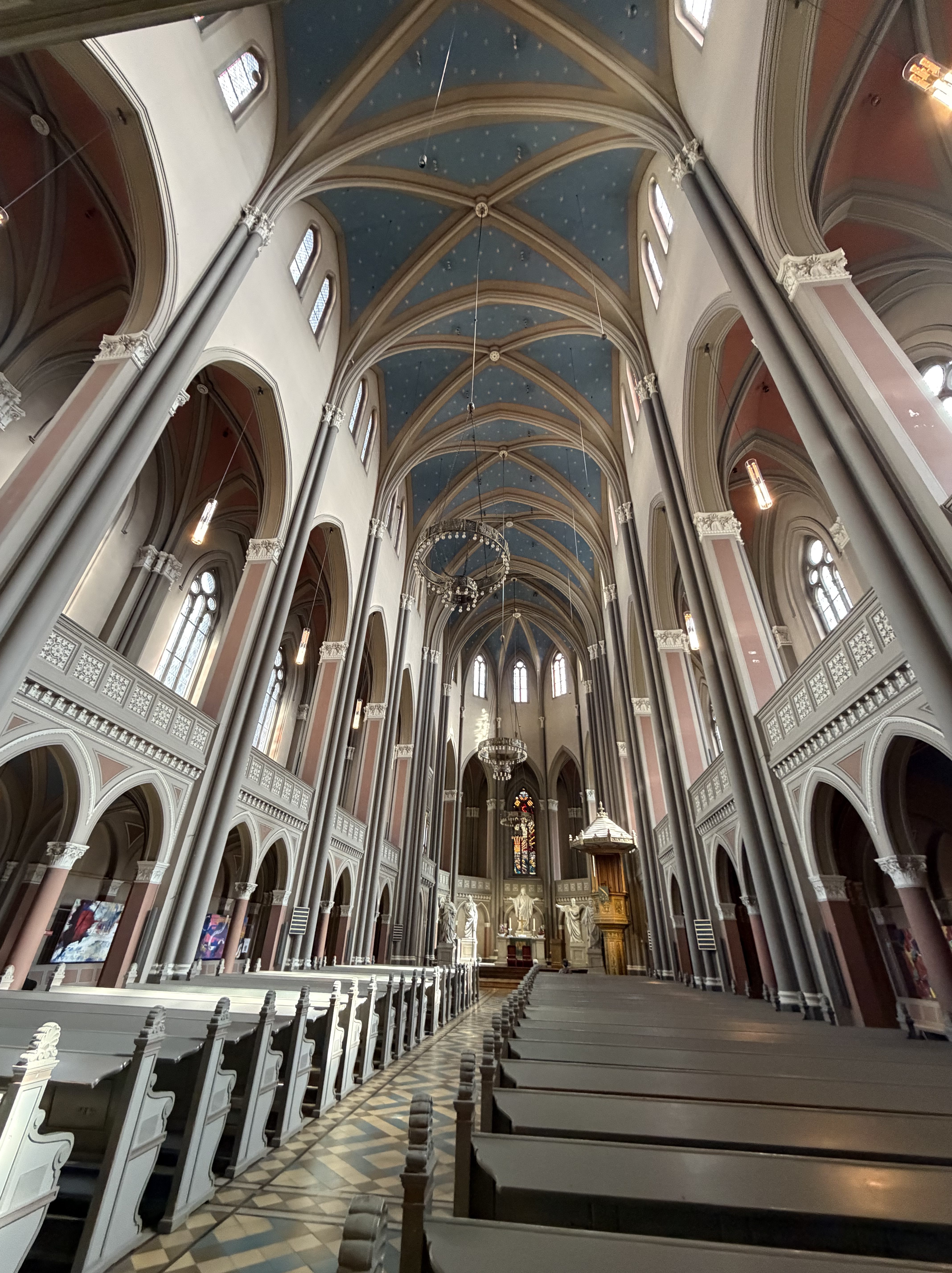
We took day trips to nearby Wiesbaden and Idstein. Wiesbaden is one of Germany’s famous spa cities. Its casino is well known and its thermal baths refreshing. We enjoyed ambling around the attractive buildings and enjoying the beautiful weather. The five-spired (some 300 feet) Lutheran Cathedral was imposing. We were on a mission, however, to find a necklace for Kathy. Her father, long decreased, had traveled to Germany 74 years ago and thought Wiesbaden his favorite city. While there, he bought Kathy’s mother a necklace. Kathy remembered it from childhood and had an image of it in her mind. It was a stone mined in the area. Alas, although we found the long established family store that once mined the stone, the mine had closed a decade ago, and the stone was no longer available. At least we tried.
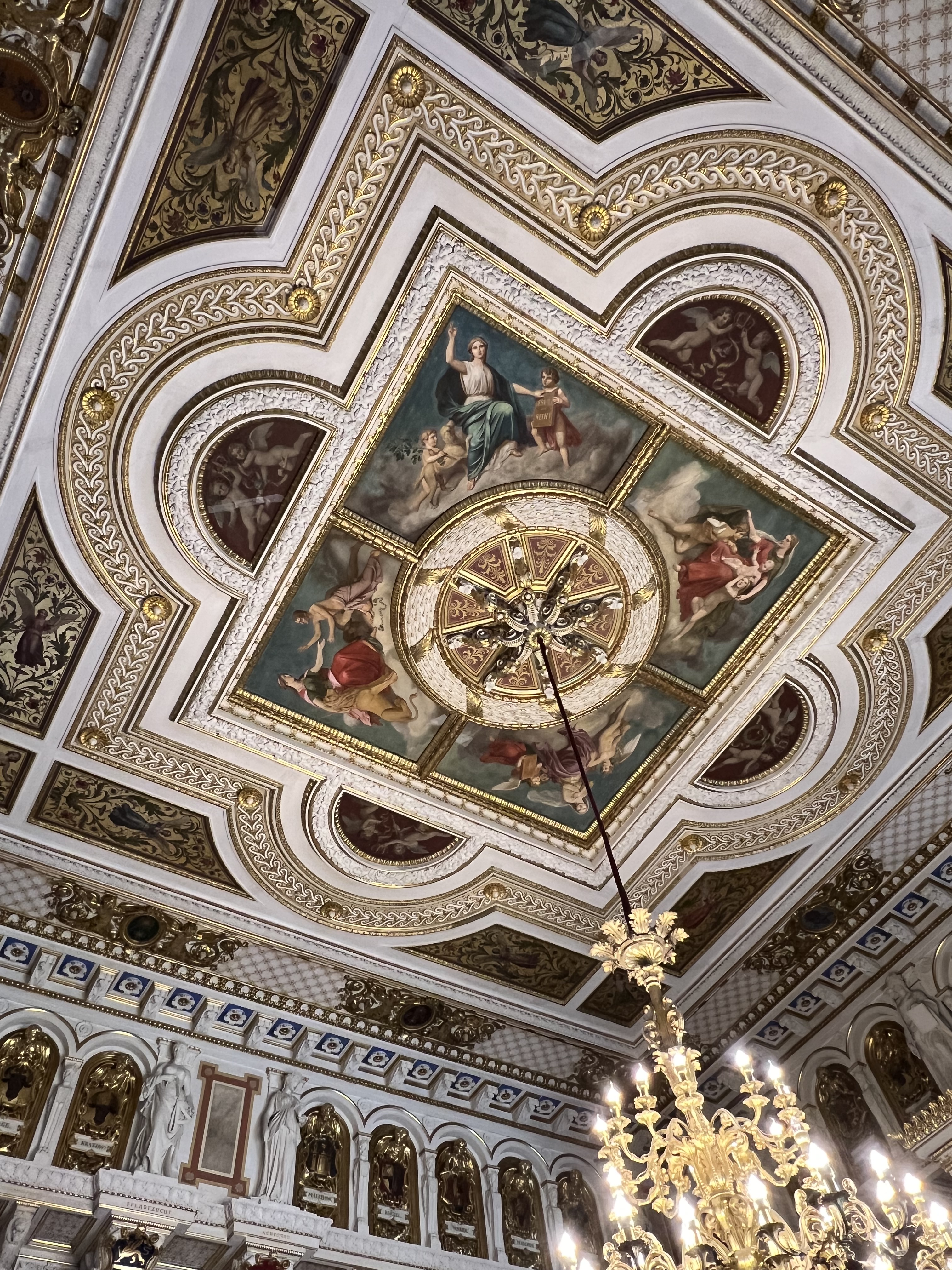
Idstein has not yet been discovered by tourists. Its altstadt (old town) is more than quaint. Beautiful hand carved and ornamented wood buildings, colorfully painted and half-timbered, lined the area. It had an upper and a lower village with stone-arched walking bridges.The highlight of the village is the amazing Unionskirche (Lutheran Church). A nondescript exterior hid the overwhelming interior, known locally as the German Sistine Chapel. Large frescoes of Biblical scenes covered the ceilings and walls. One’s eyes didn’t know where to focus. Breath-taking is apropos.


Germany is in a major overhaul of its train system and it bit us on our way back to Frankfurt from Idstein. The village is down hill from the train station that is now closed for renovation. I reminded Kathy if we go down, we’ll have to go back up! We left the village early to make the trek back up. I was so winded that I was walking like a “drunken sailor” on the steep upward trudge! Finally, we made it with 20 minutes to spare. Yea—Not YEA! We inquired of an attendant how to get to platform 2 from where the train was to arrive. He smiled and said, “If you walk very fast, you can make it???” We could see the platform, and we had 20 minutes. He said there was only one way to reach platform 2 since the simple and easy way was closed during the remodeling. He pointed, “Walk that way until you see a bridge, cross it, and on the other side come back toward the station and then over to platform 2.” I kid you not—the bridge was over a quarter of a mile away and when we approached it, we saw no way to ascend to the bridge until a young man ran past us and climbed a hidden stair case. Yes, cut into the earth and reaching up to the bridge was a rough hewn three-tiered stone stairway. I was now deliriously tired! Across the bridge I stumbled as Kathy, spry as ever, urged me onward. On the other side, we had to walk quite a distance to a pedestrian street that ran parallel to the tracks. Younger folks scooted past us. Figuring correctly they were rushing to the platform, we followed. Finally, all the way back, Kathy pointed to the walkway leading to the platform. I knew the train had to be close, so I told Kathy to go ahead. People were now running past me! Oh, no. There was a descending walkway towards a tunnel. As I headed down, the train was pulling up. Once inside the tunnel, I encountered a multitude of people descending a long staircase as they scurried from the train. Gasping for air, I pulled myself up the final 32 steps as I heard the conductor’s whistle blow, signifying the train was pulling out. NO!!!!!!!! On my final step, I looked up to see two angelic passengers forcing the train doors to remain open as Kathy bid me on. Once onboard, the doors slammed behind me and the train pulled out. I collapsed into a seat, thankful to God that I had made it…indeed, thankful that even after two knee replacements and a multiple myeloma cancer diagnosis and treatment, I could still experience these hidden gems of travel.
The next morning, we met our friends, Tom and Nancy, at the Frankfurt Hauptbahnhof (main train station) after their flight into the Frankfurt airport. Together, we departed Frankfurt by train to meet our friends, Randy and Melisa, who had arrived earlier in Schwerin, Germany. We rejoiced as our autumn adventures together in northern Germany begin. WEG
A Fairy-Tale Castle and a Reunion


Who knew that one of the most beautiful castles anywhere rises from a lake island in far north Germany? The Dukes of Mecklenburg over centuries constructed what became one of the most important architectural accomplishments in the Romantic style. Located in the city of Schwerin, the castle has over 900 rooms and is topped with a black and gold dome. Imposing indeed! The gardens surrounding the castle were in bloom in yellow and purple and every angle of viewing as one circled the castle giving differing glimpses of the many pinnacles that arose from the structure. Interestingly, the castle houses the first Lutheran Church edifice constructed after the Reformation. A devastating fire in the castle did much damage, but reconstruction has restored the building, although today, the Great Hall has been refurbished to house the Mecklenburg-West Pomerania State Assembly, and one wing is now devoted to state government offices. The wood decorative flooring and ceiling work are outstanding features of the castle as are the beautifully decorated Ducal Apartments.
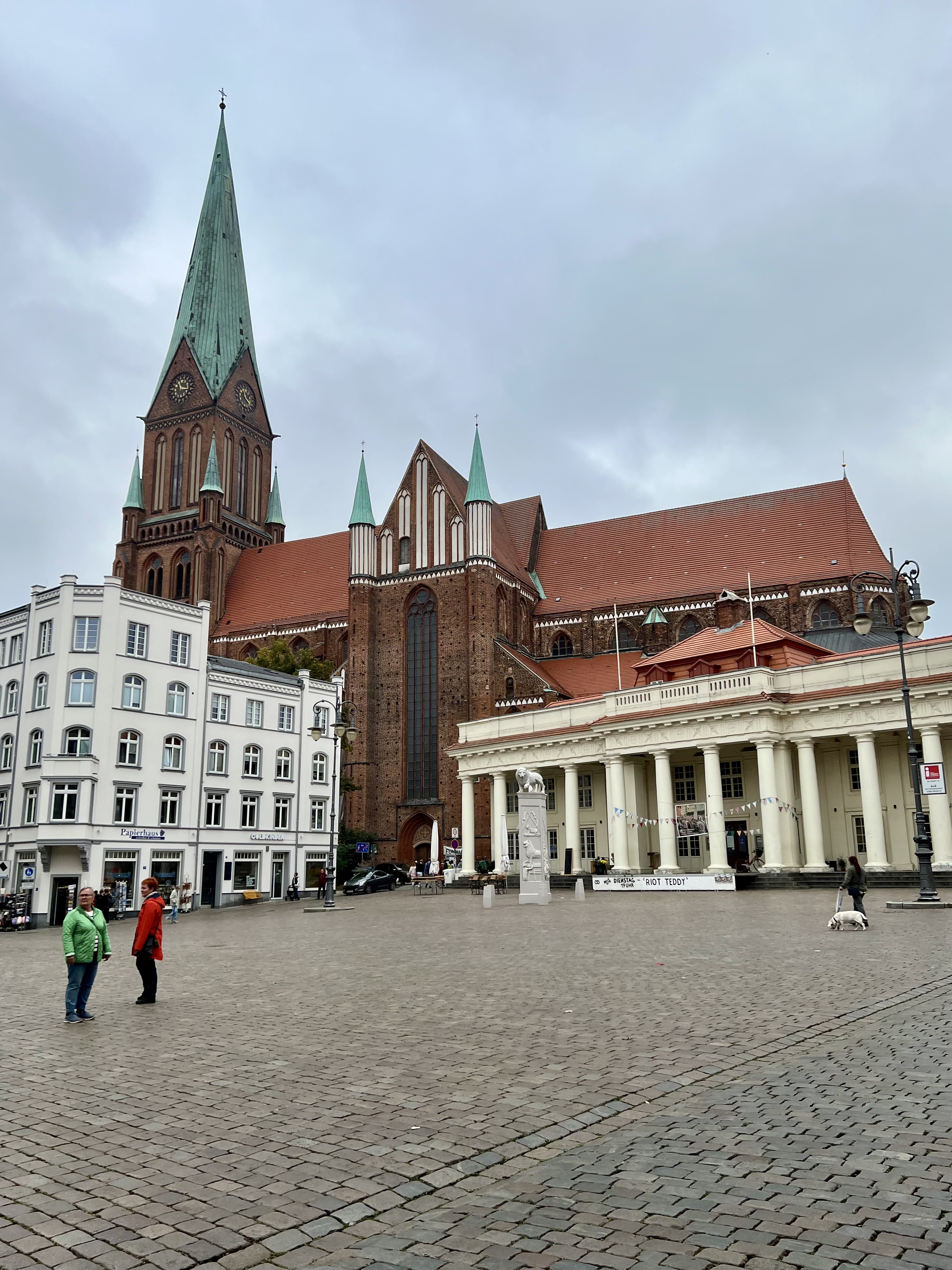
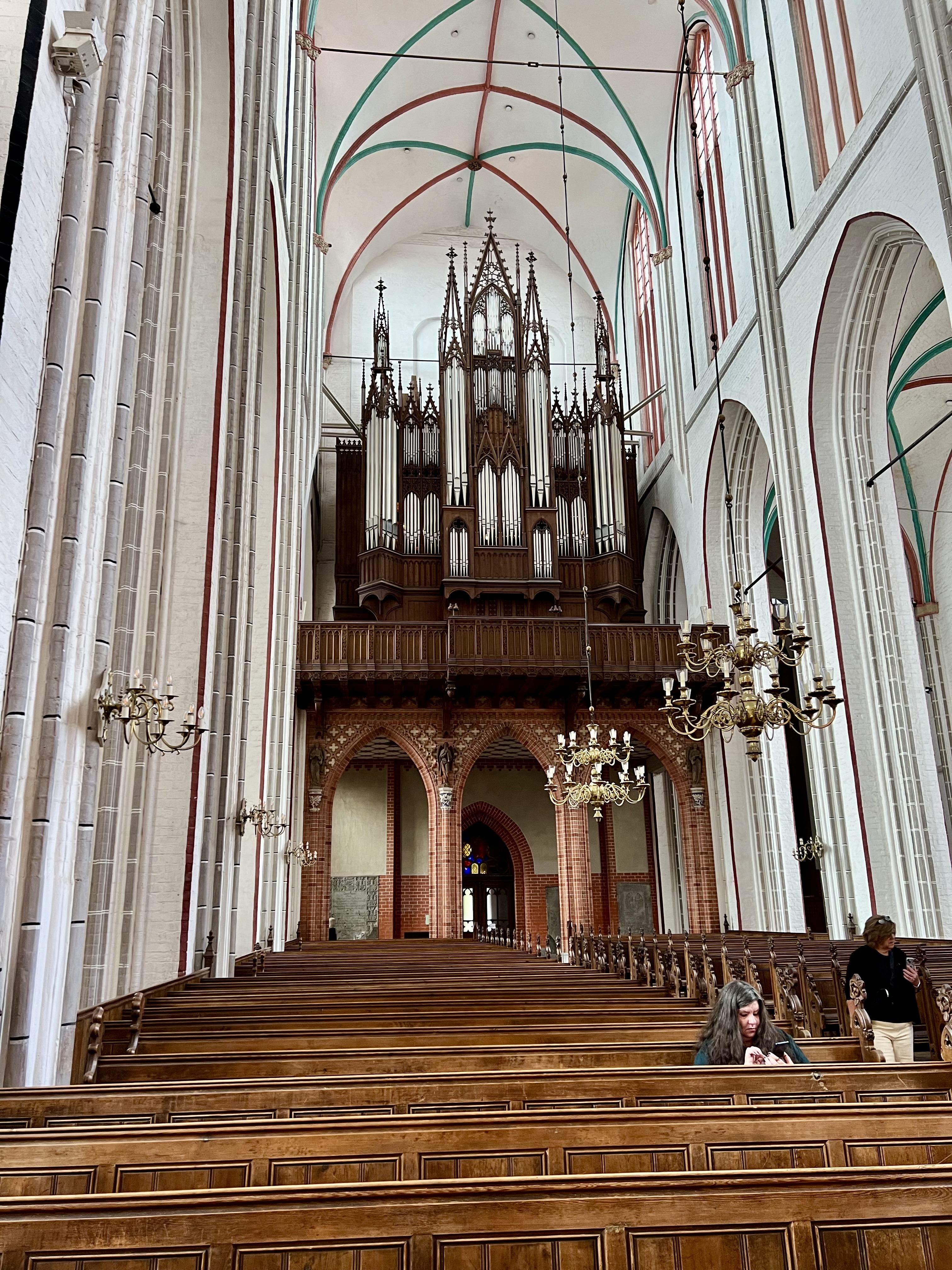
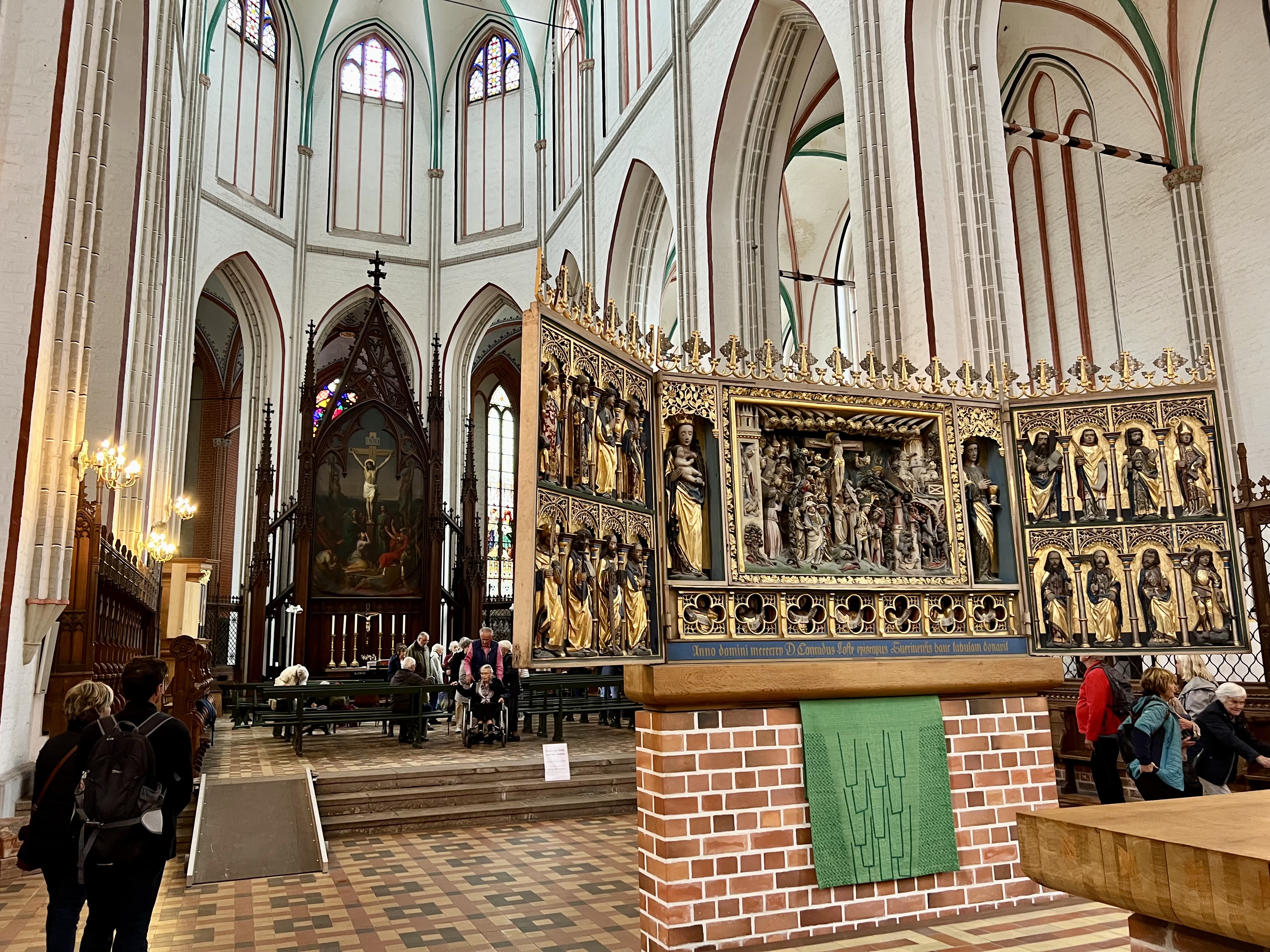

We ambled into the beautiful city of Schwerin which was close by. Fresh and “clean as a whistle,” the cobblestoned streets lead past soft pastel and white renaissance and romantic style buildings. We found a German pastry shop filled with tempting treats. Our hearts leapt when we saw poppyseed pie. We both love and enjoy baking poppyseed desserts; this one did not disappoint. On the way back to the ship, our tour director informed us that Mecklenburg-West Pomerania produces more energy from solar and wind than it can use. Energy export and an efficient power grid are issues not yet solved. Along the way, for about three miles, we saw multiple thousands of solar panels neatly tucked into hillsides and valleys as 150 wind turbines arose from the hilltops in this one energy installation.

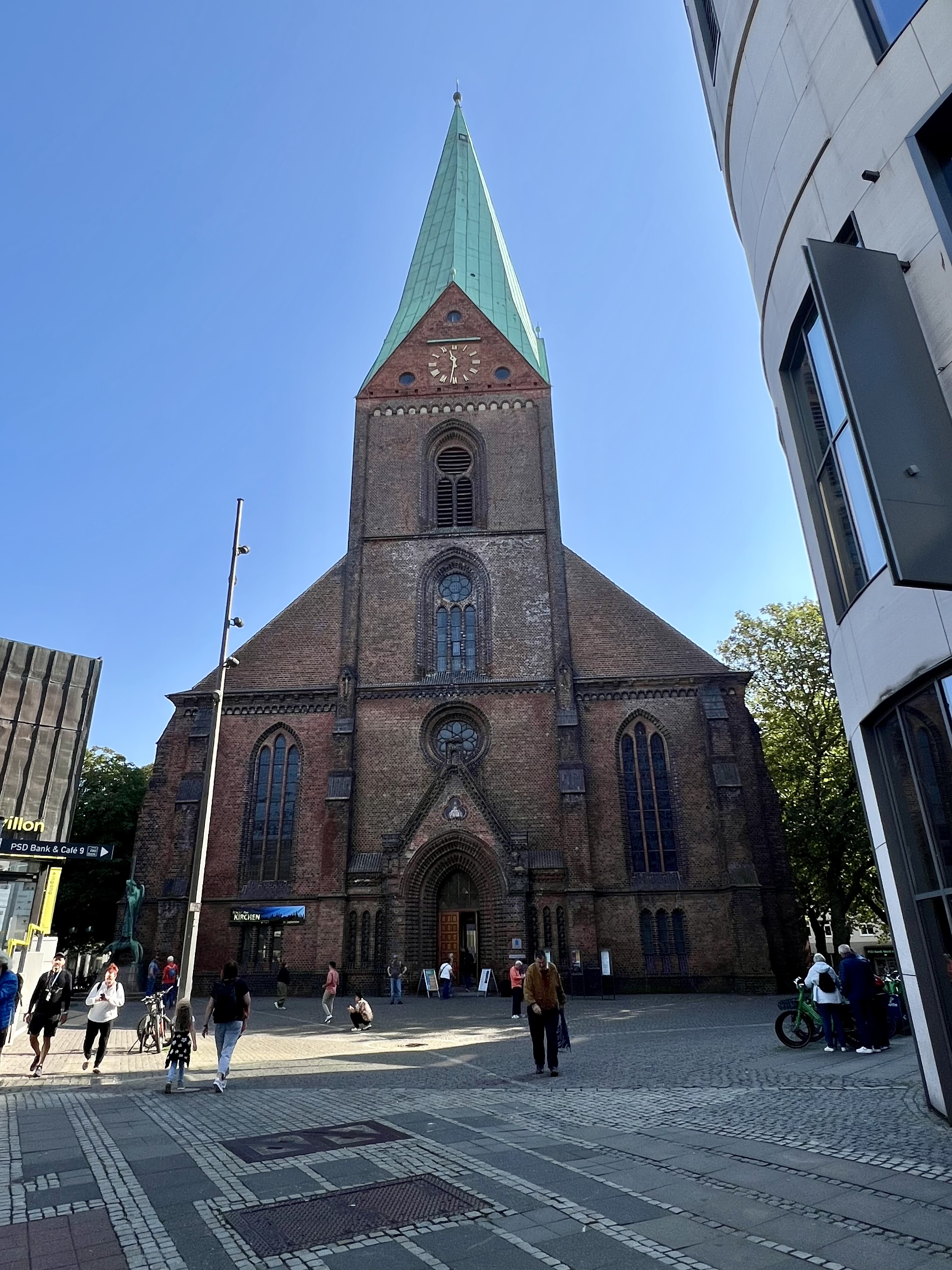
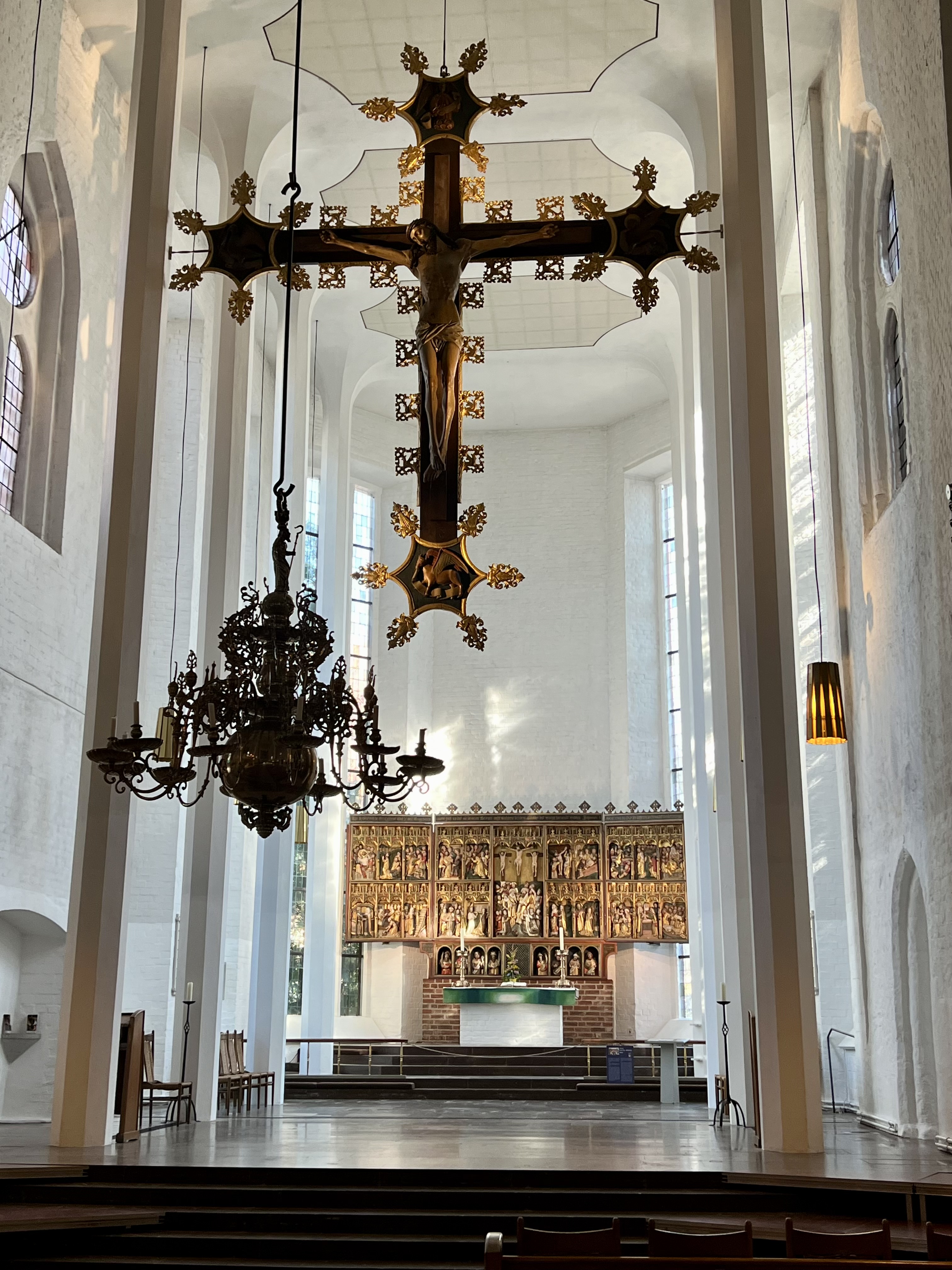
Yesterday, September 20, we docked in Kiel, Germany, a port city near Hamburg. We were excited to meet up with friends, Chris and Lula Tiews, whom we had not seen in fifteen years. Chris is a pastor/missionary/professor who is both brilliant and passionate about his ministry. Fluent in multiple languages, most recently Farsi, the language of Iran, Chris has a significant ministry to the Iranian immigrants in Germany. He spoke excitedly of the multiple thousands of conversions to Christianity in this population. Our day progressed too quickly! We caught up on family and friends, current events, hopes and dreams; it seemed like we had never been apart all these years. For those you from Tomball, Chris was very instrumental in developing the sister city relationship with Telgte, Germany, that recently celebrated its 25th anniversary. We enjoyed our long lunch of German food. Happily, I got my favorite German meal of crisped pork knuckle with bread dumplings and red cabbage. On our way back to the ship, we stopped to view the Lutheran Cathedral which had beautiful artistry, but its huge crucifix hanging before the masterfully wood-carved altar typtich caught my eye–stunning and deeply moving! Wonderfully, an organist was playing the pipe organ as we walked reflectively in this spiritual space. A sign outside the cathedral read, “This is the place to come back home!” Indeed, may it be so!


.
 kgraumann
 wgraumann
