
Home » Posts tagged 'European Adventures 2015' (Page 2)
Tag Archives: European Adventures 2015
The Agony and the Ecstasy
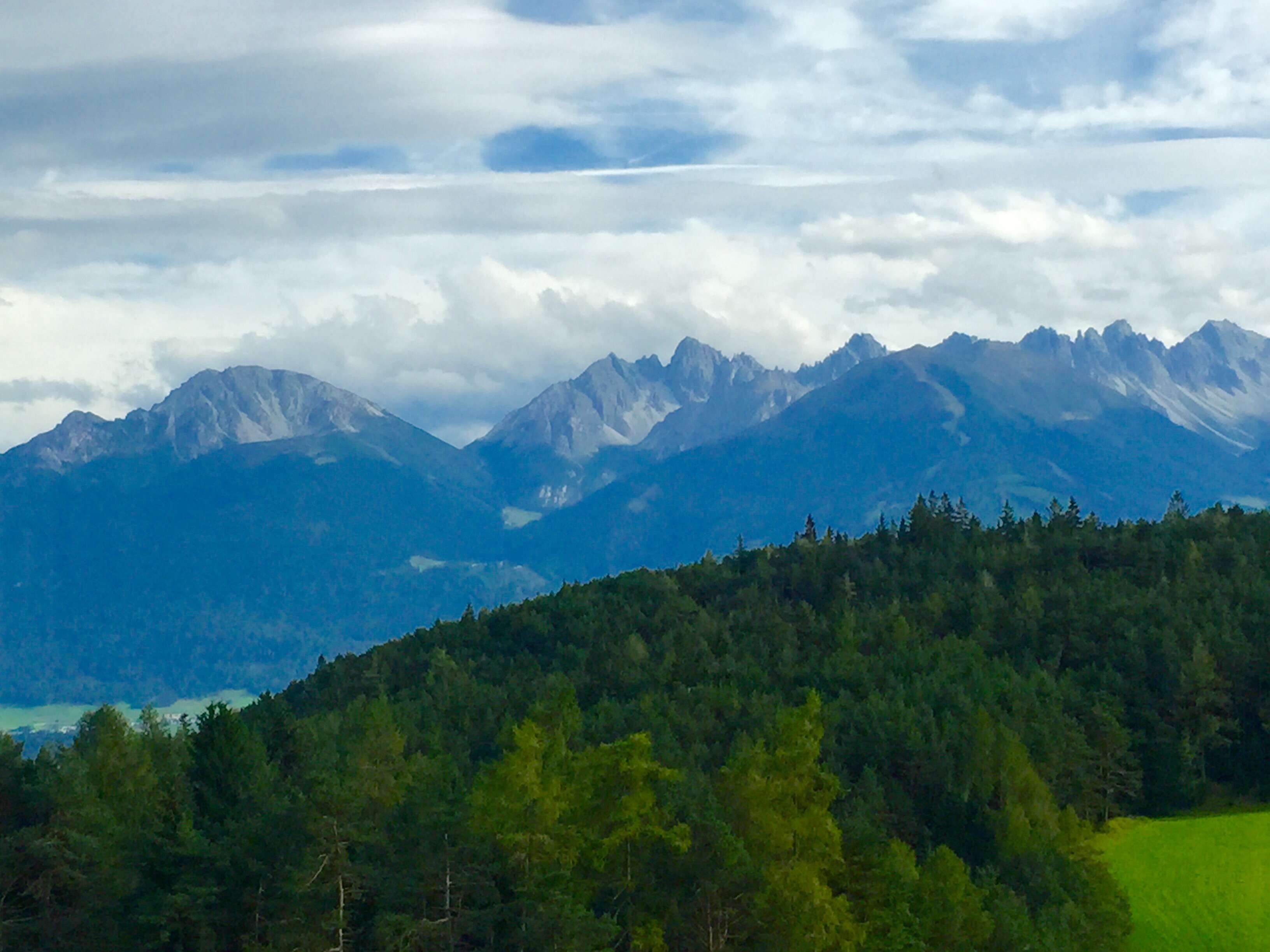
View from the train that carried us from Innsbruck to Mittenwald
A day trip to Mittenwald, Germany proved to be a grand experience. The train trip through the Austrian Tyrol into the German Alps was amazing. Breathtaking mountain vistas were everywhere. It was clear and cool and every turn of the railroad track brought new mountain peaks into view. Waterfalls fell from the sky and deep canyons divided mountain ranges. Verdant green high mountain hills nursed cattle, sheep and horses.
We arrived to the wonderful mountain “painted” village of Mittenwald. Picture postcard perfect, the village beckoned with its painted building, exquisite painted church, fountains and flower gardens. Throughout the village, water flowed through the streets in flower-lined narrow and shallow canals. We ate a late lunch in a restaurant that shouted German–dark wood carved paneling, shaded lamps and painted ceiling–oh, and every beer, including the Oktoberfest beer, was on tap and each beer had its own glass or mug peculiar to that beer. On a side note–German beer is chemical/preservative free and non pasteurized, meaning it is fresh and when it is best, cloudy. Even the same brands cannot be purchased this way in America and thus lose their excellent taste.
Rhonda and Charlotte opted to shop in Innsbruck and chill out, and Allen wanted to stay in since he did not feel well. Since this was a free unscheduled day, everyone could do as they pleased. God knew we needed that free day since Allen’s health deteriorated in the afternoon and he needed to go to the doctor/hospital. Rhonda took him since we were still in Mittenwald. After finding only German-speaking people at the hospital, they finally found a dentist who could speak English and helped them to the urologist who did a thorough job of running tests to diagnose Allen’s prostate infection. Later, we were off to the pharmacy to get the five prescriptions necessary to get Allen back to health. Please pray for his complete recovery. WEG – September 15, 2015

A view from the train that carried us from Innsbruck, Austria, to Mittenwald, Germany, for a pleasant day trip

Beautiful Mittenwald, Germany
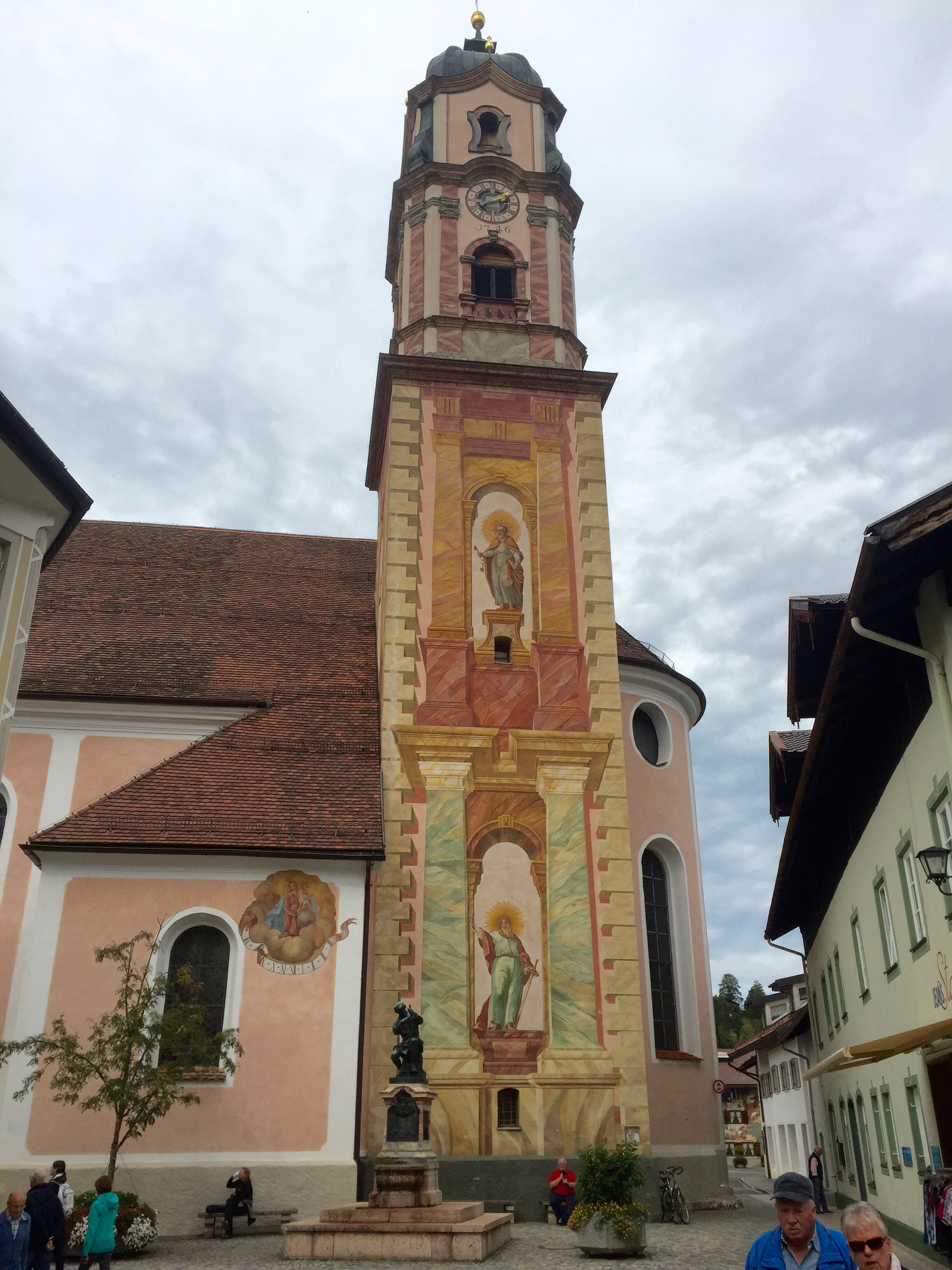
Colorful Mittenwald, Germany
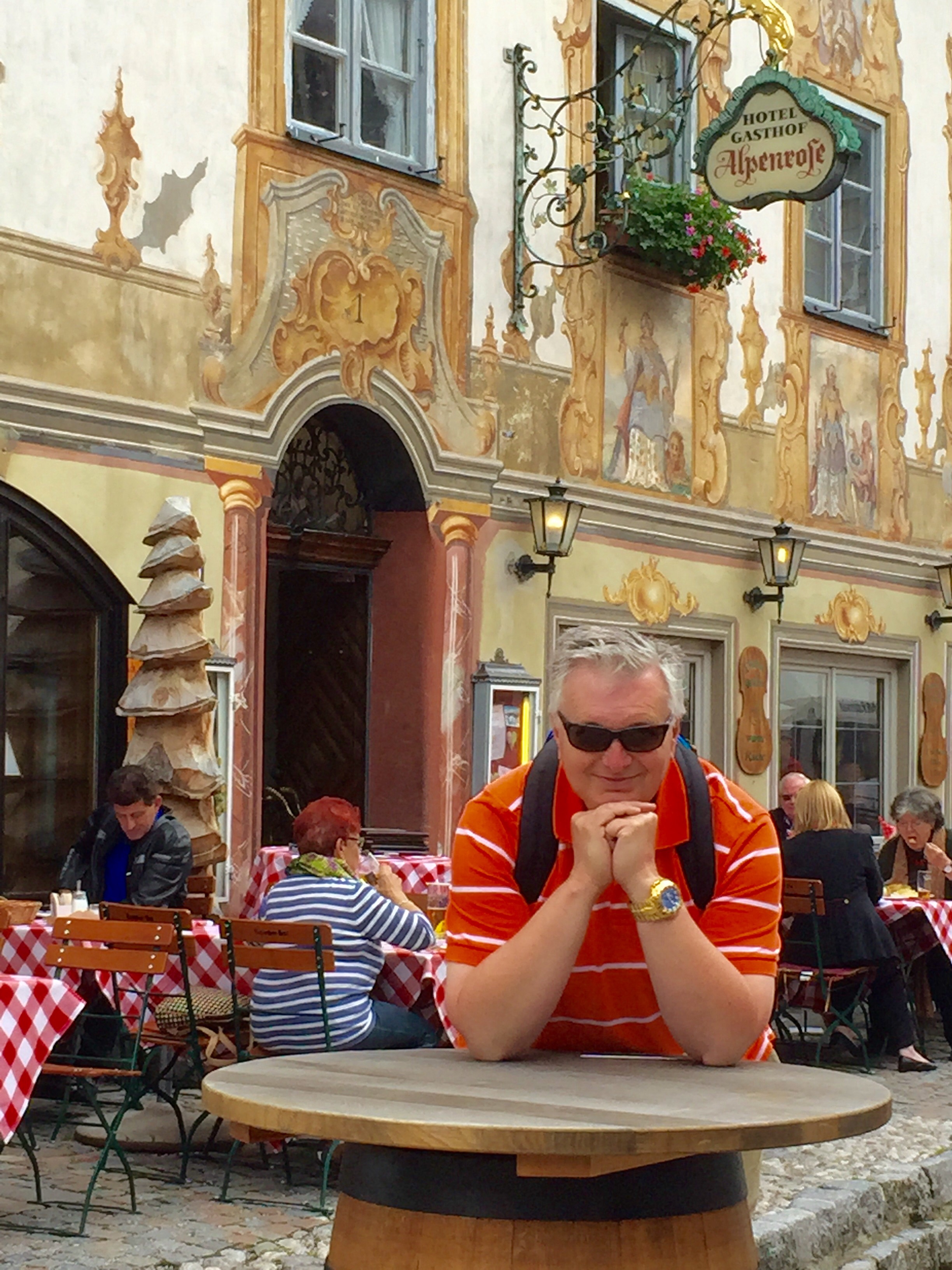
Enjoying the afternoon in beautiful Mittenwald, Germany
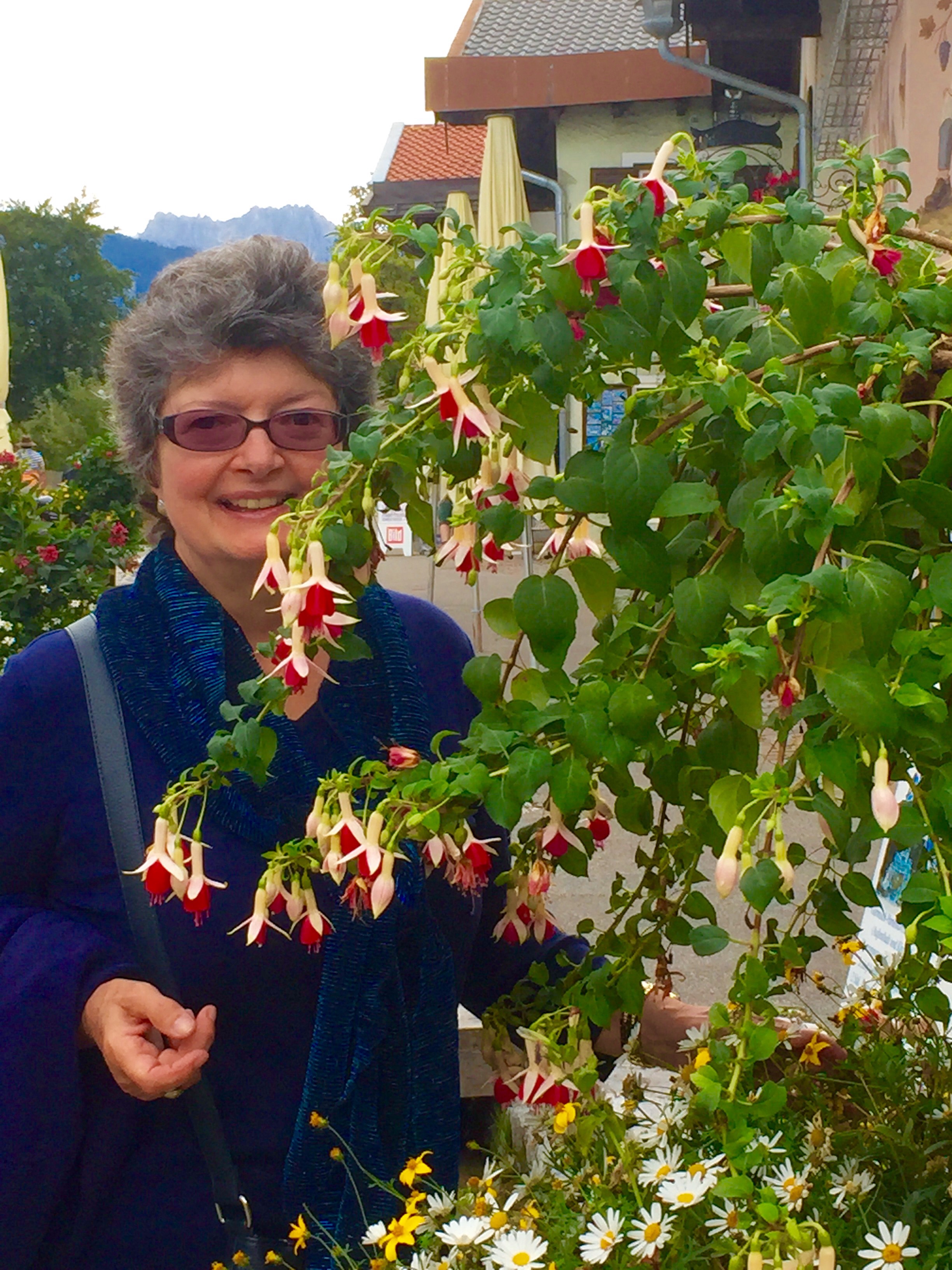
Appreciating the abundance of floral beauty in Mittenwald, Germany

We return in early evening to our lodging in Innsbruck after an enjoyable afternoon in Mttenwald
Rain in Innsbruck

The Golden Roof, a landmark of Innsbruck from the reign of Kaiser Maximilian 1
Innsbruck is the regional capitol of the Tyrol in Austria. It is a beautiful city ringed by the Tyrollean Alps and dotted with baroque architecture that is noted by its ornate scroll work and use of figures in the plaster. The buildings in the Old Town are colorful, many with intricate paintings, usually of a religious nature. The churches have onion-topped steeples. One church just down the street from our hotel is pink and white with thick wooden doors and large oval iron handles. The interior is white and gold in the baroque style. Just to the side of our hotel is the triumphant arch topped with statuary of horsemen in full charge.
We traveled to Innsbruck via the train over the Brenner Pass, one of Europe’s highest. We passed acres of orchards filled with apples nearing harvest time as well as vineyards. Along the way large castles or churches commanded hilltop locations underneath the Alpine vista. It was a wonderful trip.
Innsbruck train station is a wonderful experience in itself (as are most train stations in Europe). Filled with shops of many kinds, we noticed the large sausage store and a grocery store that had a large selection of lunch items in glass cases. We decided to eat our lunch here since there was also comfortable seating. It was a good choice.
It was sprinkling when we decided to walk to our hotel–a straight shot several blocks up the street in the Old Town. Unfortunately, as we walked, it started to rain. We had rain gear and it came in handy, but we still got wet. The Alps were covered in clouds, and so we could not see them. When the rain stopped and the clouds lifted in the evening, the sight of the Alps was majestic.
We were able to walk part of the Old Town and see the St. Jacob Cathedral. It is a beautiful baroque church with painted ceilings and a wonderful golden pipe organ. Here we viewed the grave of Kaiser Maximilian I under whose tenure in the late middle ages the city gained its prominence and its landmark Golden Roof. Built with a deep slant, the roof was a symbol of the city’s wealth and influence and gleams golden to this day. Surrounded by baroque and painted buildings, with the Alps looming overhead, it is a beautiful sight.
Our day ended with traditional Austrian foods–wienerschnitzel; saurkraut; fresh rolled noodles in melted cheese; goulash (nothing at all like the goulash you might know in America); fried potatoes with meat and fried eggs; marinated cabbage; roast pork and Tyrolean dumplings. We are now in beer country, and it is good. WEG – September 14, 2015

Some of the ornate baroque and painted buildings in Innsbruck’s Old Town

Innsbruck’s beautiful Old Town
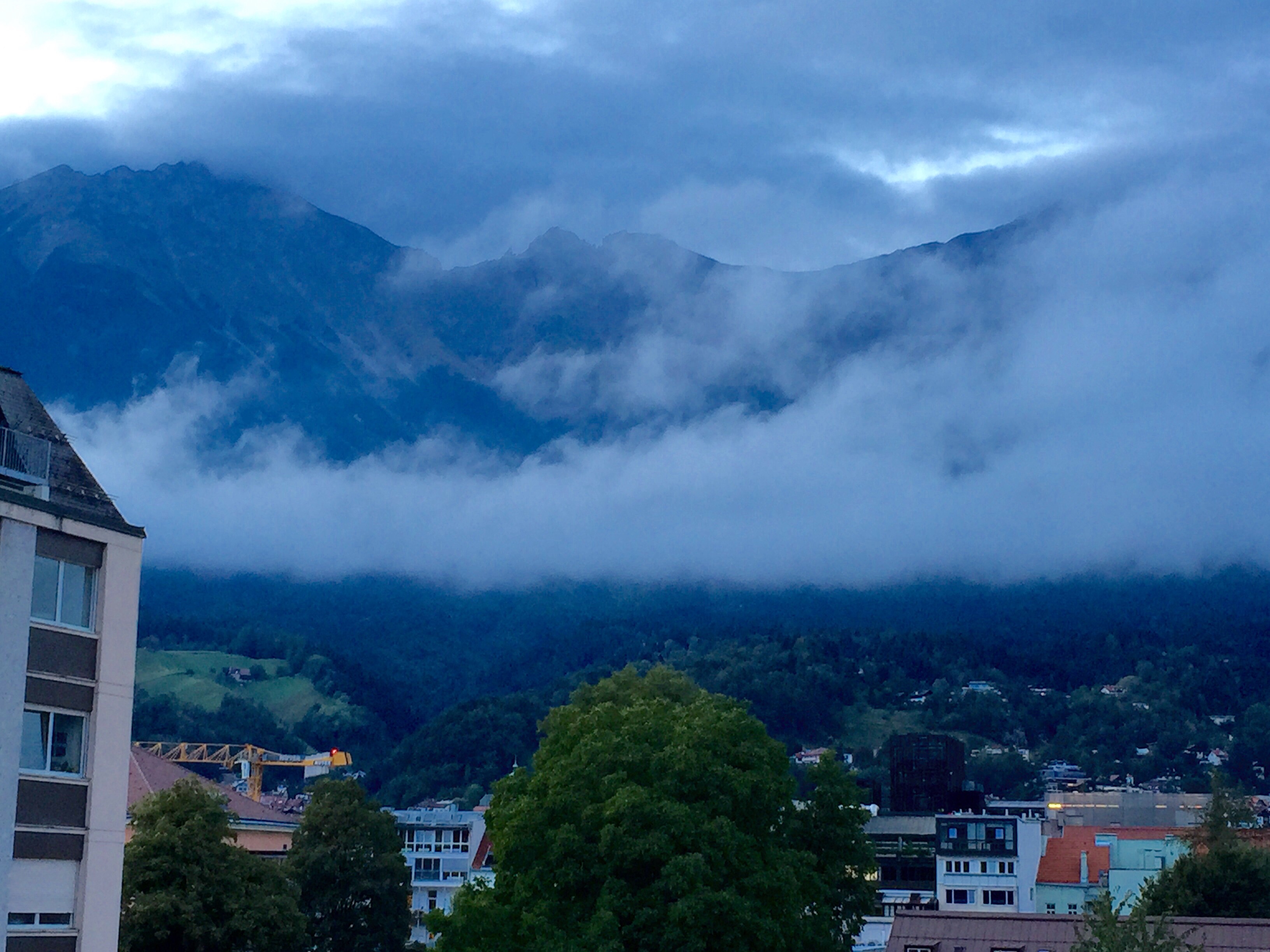
An evening view of the Austrian Alps from our hotel room
Worth the Effort
Arriving in Bozen/Balzano in the South Tyrol is difficult on a weekend when you want to rent a car. This is a different place for many reasons. Time moves more slowly here and German is predominant, even though this is Italy. Being a weekend, the car rental agencies close by 3:30 on Friday and do not open again until Monday morning. This is a traditional place and weekends are for family. Since we arrived by train, we needed to quickly hop a taxi to the regional airport, since this is the only place where a car can be rented. That meant we needed to find a place to garage the cars (we needed two–no large cars or minivans or SUV’s–for our Sunday drive). Furthermore, since this was the weekend of a large bicycle tour/race, spaces were limited. We managed to get everything done, with some effort.
It was worth it! Our drive into the Dolomites was relaxing, and the scenery was “lovely and dramatic.” The kelly green hills reached up to heavy forests which pushed up against jagged mountain peaks. The Dolomites are noted for these jagged peaks and are a UNESCO world heritage site. Small mountain villages with gabled tile roofs abounding, with yellow and white plaster buildings–some painted with imagery–were situated on sloping hillsides underneath those jagged peaks. But it is the flowers and the church buildings and steeples that steal the attention. Flowers were everywhere, in window boxes, in gardens, in street pottery and hanging from antique light posts. There were bridges with cascading flowers. Round abouts had centers with huge carved wooden imagery and flowers, flowers, flowers. Reds, yellows, purples everywhere. What a refreshing sight! The church steeples were tall and slender or onion-domed. Some had decorative tile roofs. All in all, it was more than the eyes could capture, but the overall effect was magical, especially when the clouds and midsts blew in between those jagged peaks on this cool late summer day. WEG – Sunday, September 13, 2015
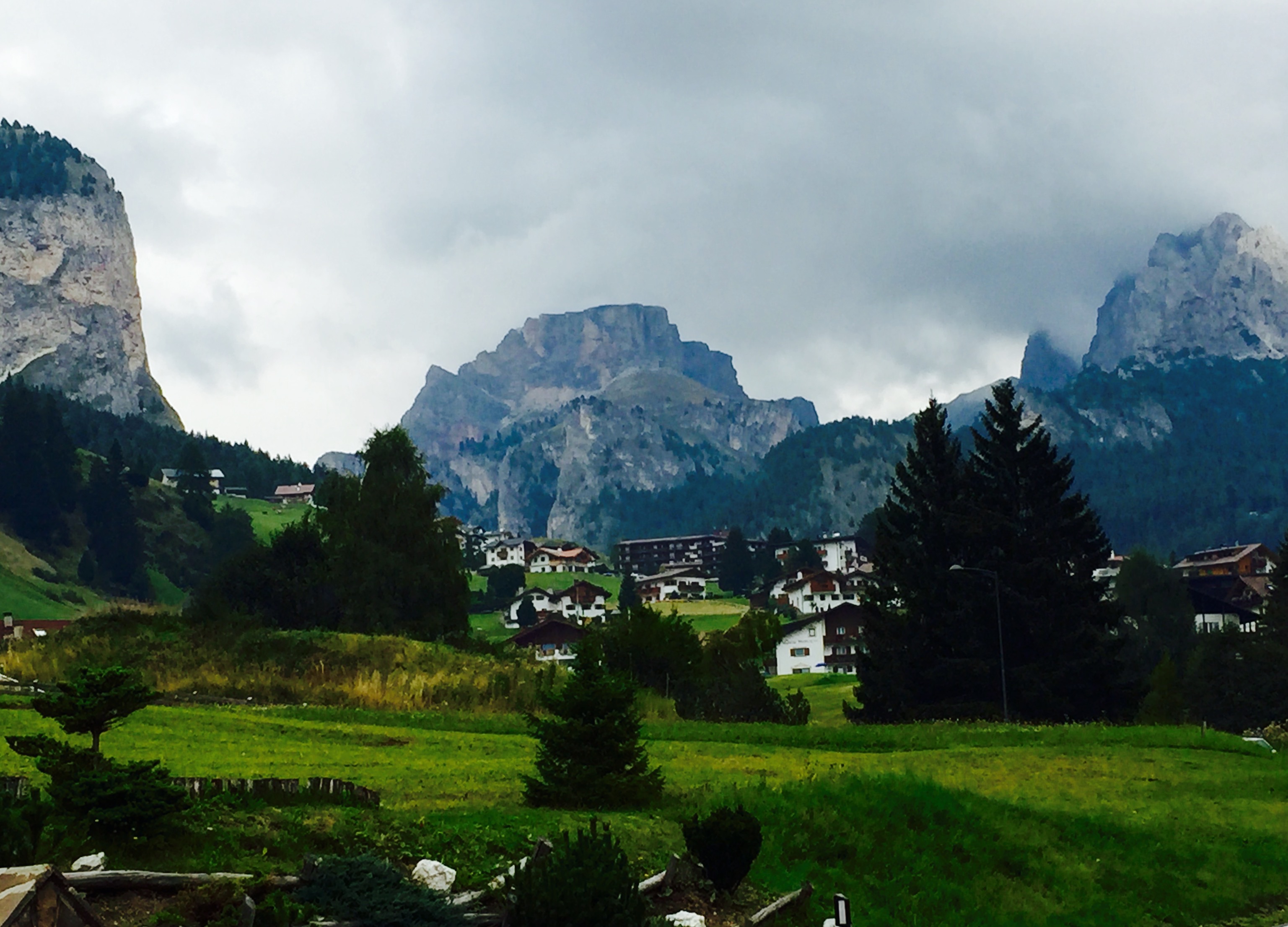
The Dolomites, a UNESCO World Heritage site
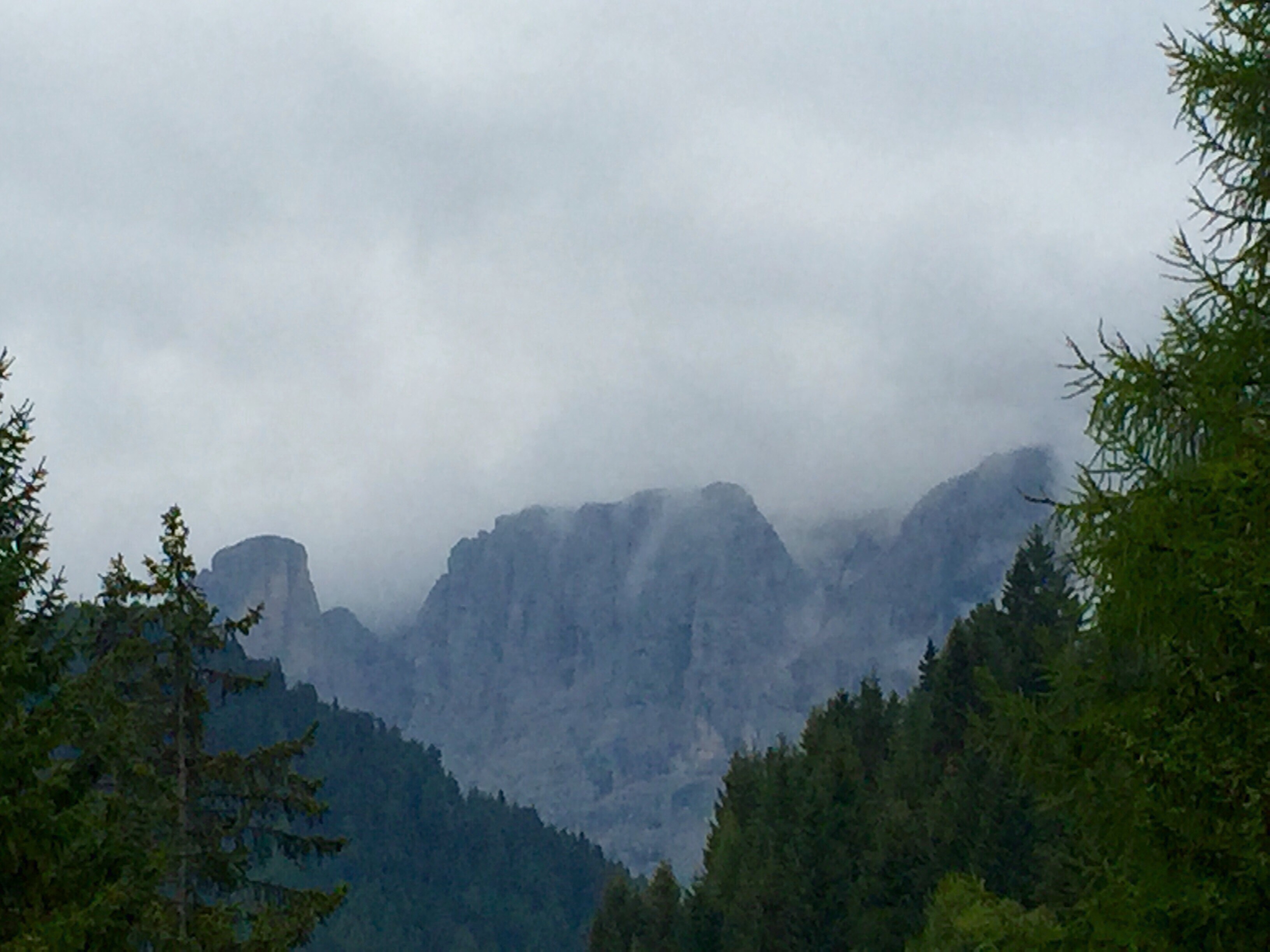
The Dolomites, a World Heritage site
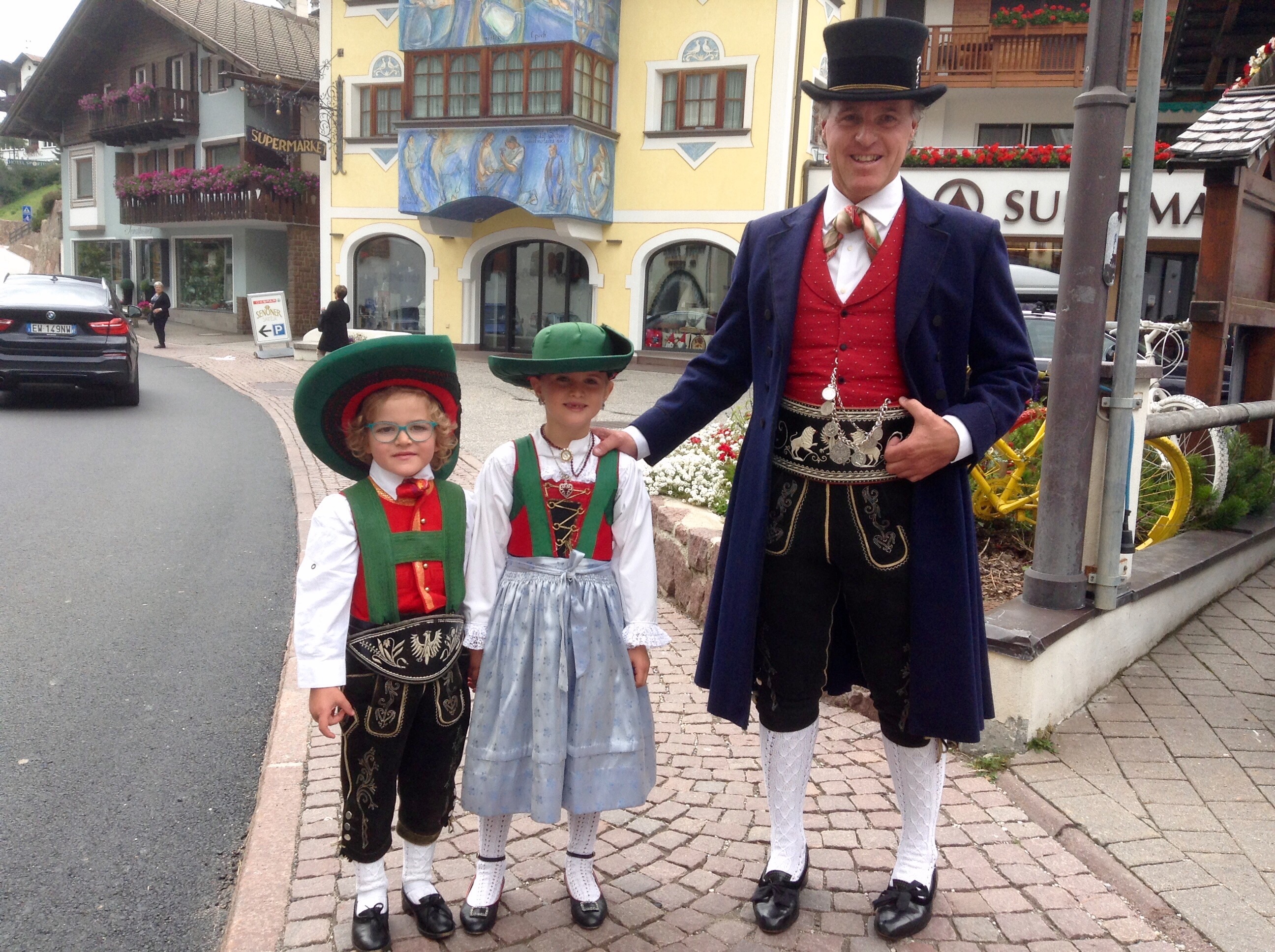
A Sunday afternoon family mountain stroll in the Dolomites
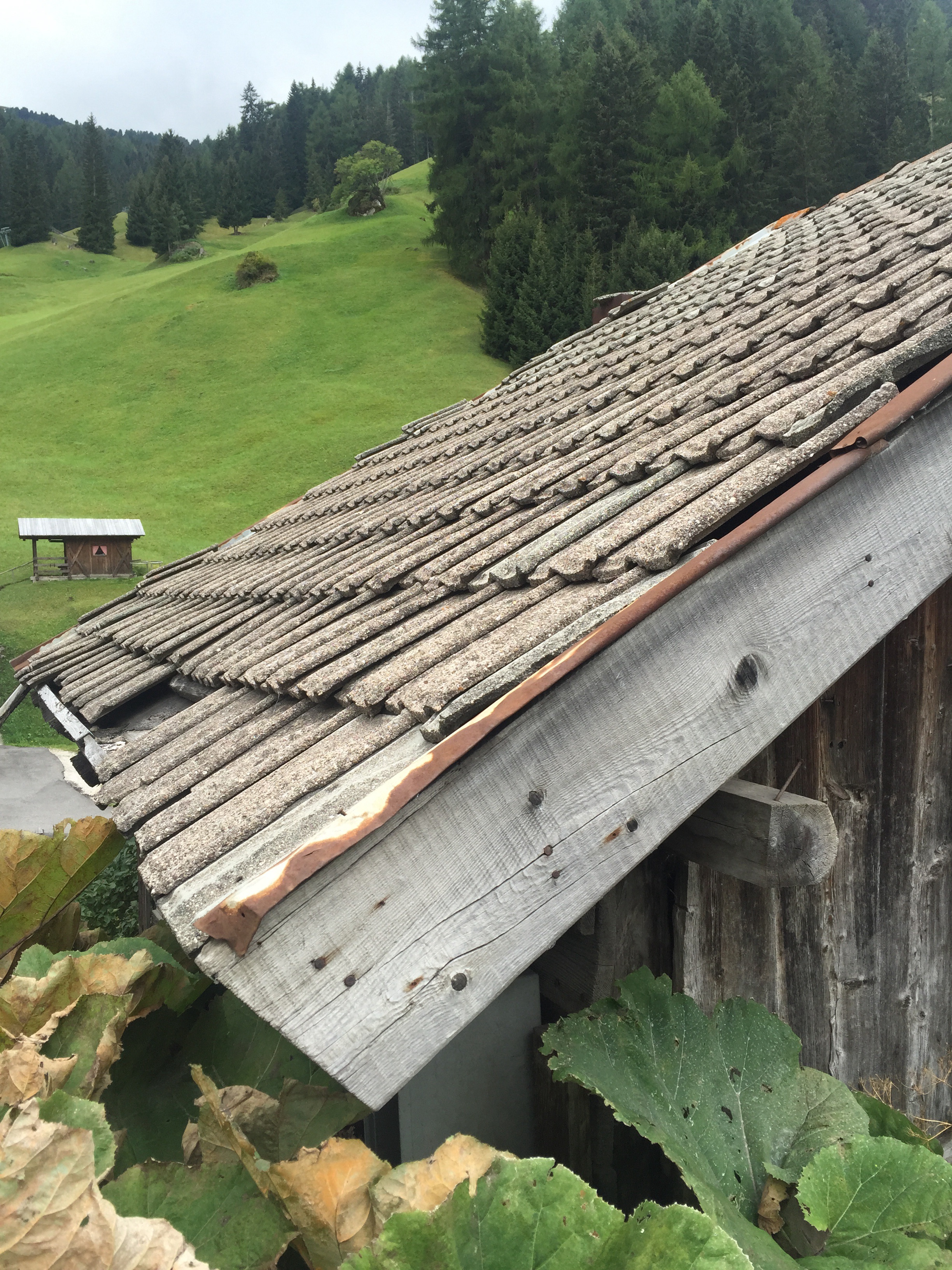
A scene in the Dolomites

Pausing along our leisurely drive through the Dolomites

Rhonda & Allen enjoying the beauty of the communities within the Dolomites
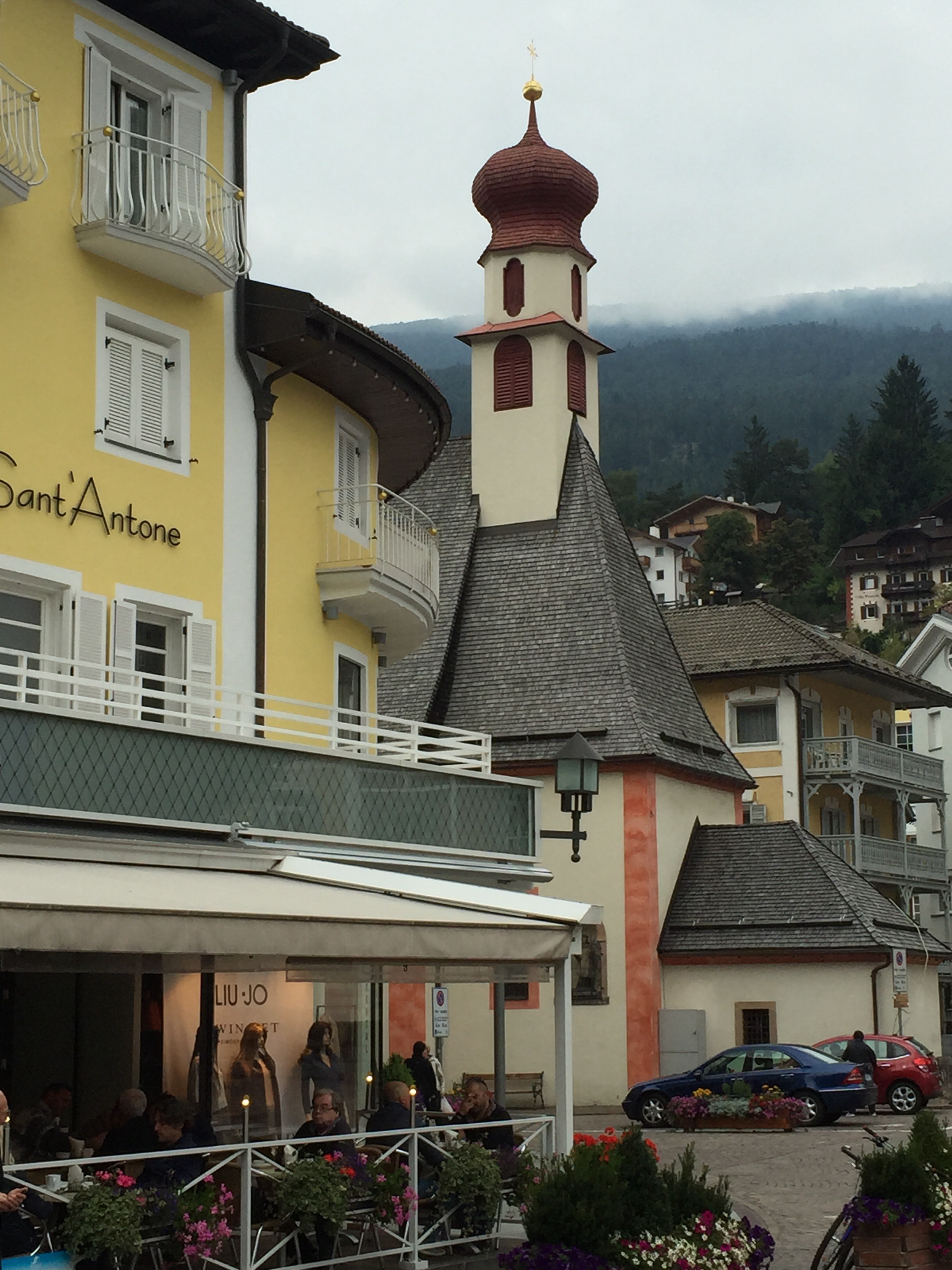
Village beauty in the Dolomites
Charlotte’s Shoes & the South Tyrolean Bands

Charlotte’s fashionable Italian shoes
Leaving the beautiful Italian lake country behind, we trained to “Fair Verona” for a stroll through the streets to see the Arena, the second largest Roman amphitheater after Rome’s Coliseum. I have seen the arena on television many times since it is featured in musical and theater productions frequently. It is not, therefore, a ruin, since it is in rather good shape after these thousands of years of use. Verona is a very nice city, clean, easy to navigate and with many historical sites. Of course, we had to go by Juliet’s balcony made famous by Shakespeare in his soliloquy for Juliet on that balcony–“Romeo, Romeo, wherefore art thou, Romeo.” Naturally, the tourist balcony is not the real one; however, thousands flock to it and leave love messages on the walls around it. While in the city, Charlotte could not pass up a pair of Italian shoes that she spotted in a shop window. Dan thought that she had brought along enough pairs of shoes–totally missing the point, that these were Italian shoes, and this was a special vacation purchase. Everyone cheered Charlotte on to buy the shoes, which she beautifully wore the rest of the day.
We then trained on to Bozen (German) / Bolzano (Italian) in Italy’s South Tyrol, formerly a part of Austria. Most people here still speak German, and the region has a unique atmosphere with distinctive foods and architecture–not Italian and yet, not quite Austrian either. We were surprised that, as we strolled the wonderful streets in the crisp air, we heard the strains of music. Happily, this evening a concert of several bands was playing in the Walther Platz (piazza/square). With South Tyrollean Alps looming overhead and the cathedral bells pealing, we sat to eat in an outdoor cafe where we could both see and hear the bands play. Dressed in native South Tyrollean dress as they marched and played, we experienced a true unexpected travel experience. I approached a band member who spoke English, and he explained that each valley in the region has similar unique traditional clothing with important distinctions that characterize each region; each region also supports a band. How blessed we were for this great evening of fine music! WEG – September 12, 2015

The Arena in Verona, Italy
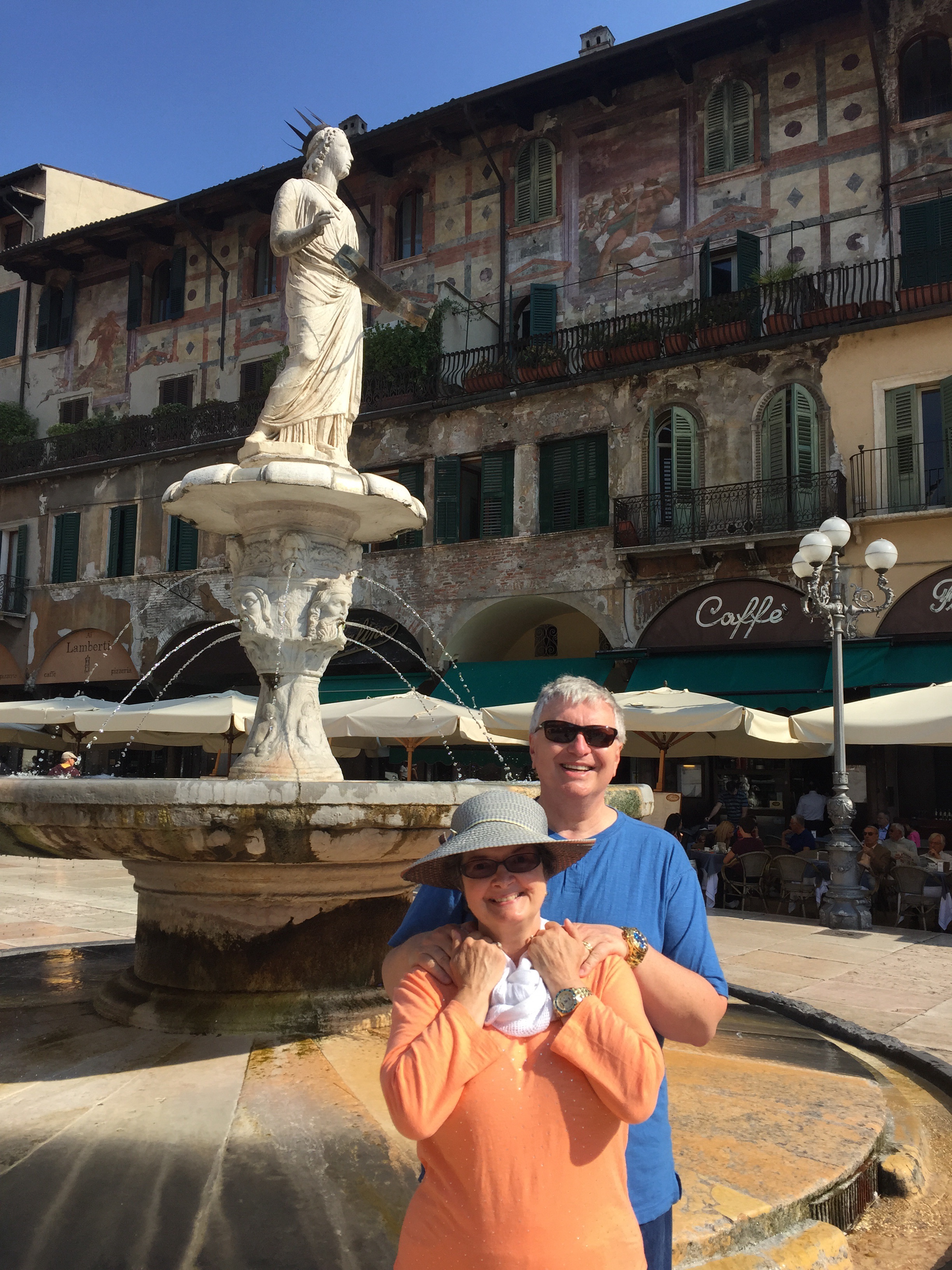
Wayne & Kathy in Shakespeare’s “fair Verona”
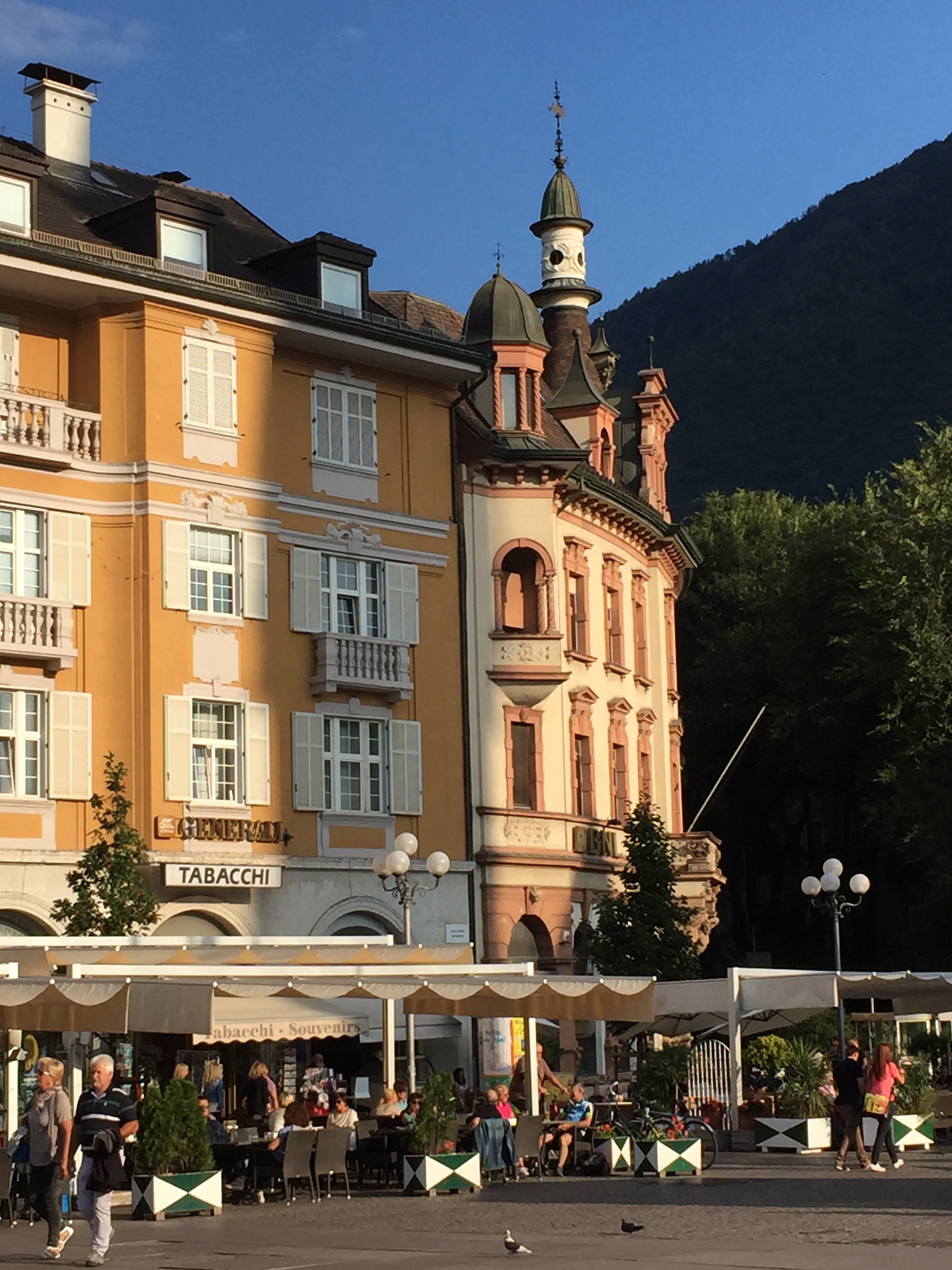
Balzano/Bozen, Italy
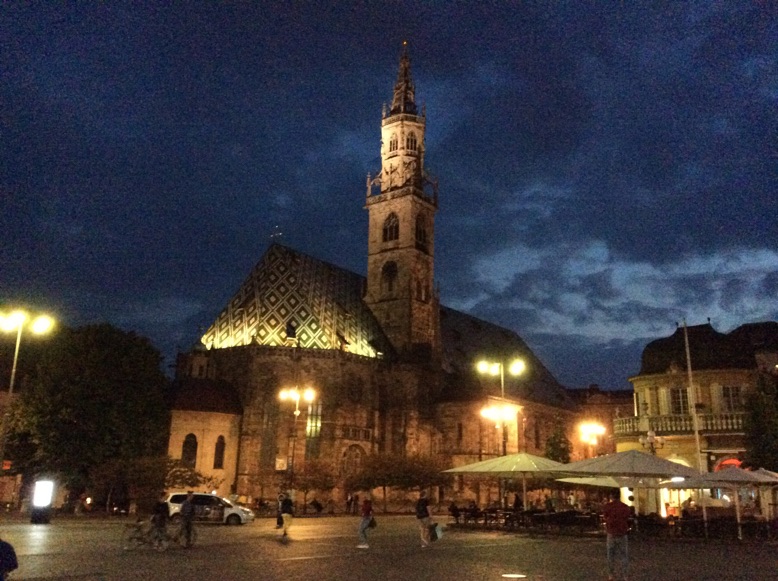
Bolzano/Bozen, Italy (photographed by Allen Krahn)
On Top of Old Baldo

Charlotte Berg at lunch in Limone overlooking Lake Garda
Allen and Rhonda hung back for a relaxing day in Sirmione. They explored the third century Roman villa ruins (built upon ruins from the BC period) that overlooked Lake Garda. The home of a very wealthy unknown family, the huge ruin is known for its grotto bathhouse that had heated water by running water over a marble floor with fires built underneath.
The rest of us headed out for a day on the lake. The waters were calm as our “fast” boats, one a hydrofoil, sailed from one beautiful lake town to another. Most had castles and tall steepled churches with wide walking promonades and sail or wooden boats bobbing in the harbors.
Dan and I debarked at Malcesine for our trek up Mt. Baldo. We rode the cable car up. It is the only cable car in the world that rotates as it ascends, giving everyone a wonderful view of the lake and mountains below and beyond. Once at the top, we did some hiking toward the hang-glide departure point. We watched as the riders ran forward until the wind caught their sails and up they swooped and then out over the edge of the mountain and over the lake about 10,000 feet below. Such a wondrous sight as one after another went over the edge sporting brightly colored sails.
While we did our mountain climb day, Charlotte and Kathy went on to Limone, a picturesque lake town that is narrow and long since the cliffs of the mountain behind it left no room but for several streets. Strewn with flowers and fountains, Limone is know for the enormous lemons that grow in orchards on the slopes of the mountains around it. It is especially known for its limoncello liqueur sold in bottles of every shape and size imaginable.
Allen and Rhonda met us at the Sirmione port, and we shared stories of the day over another wonderful meal. We all pronounced our various adventures “just right.” WEG – September 11, 2015
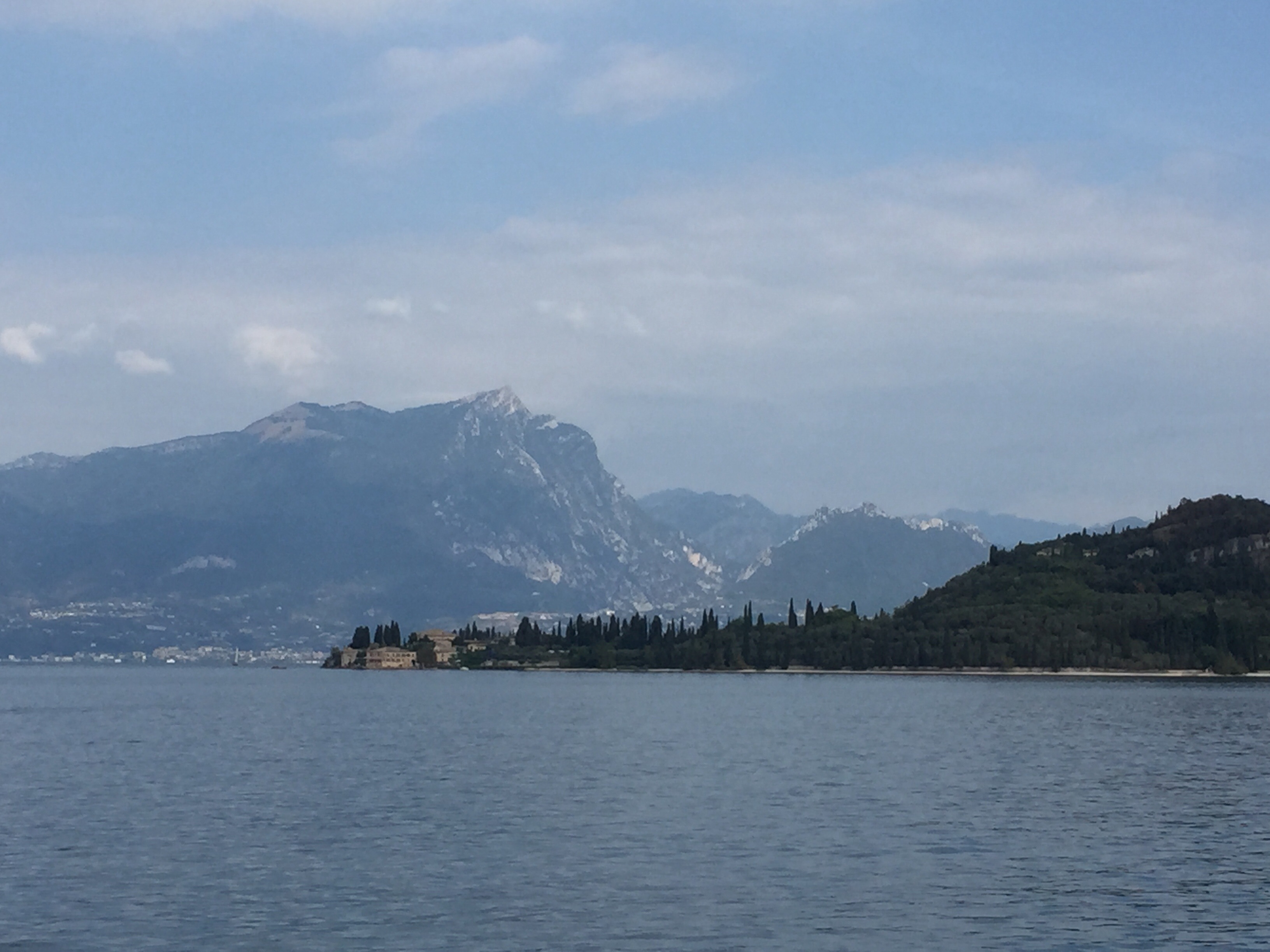
On Lake Garda

Scene on Lake Garda, Italy

From atop Mount Baldo overlooking Lake Garda in Italy
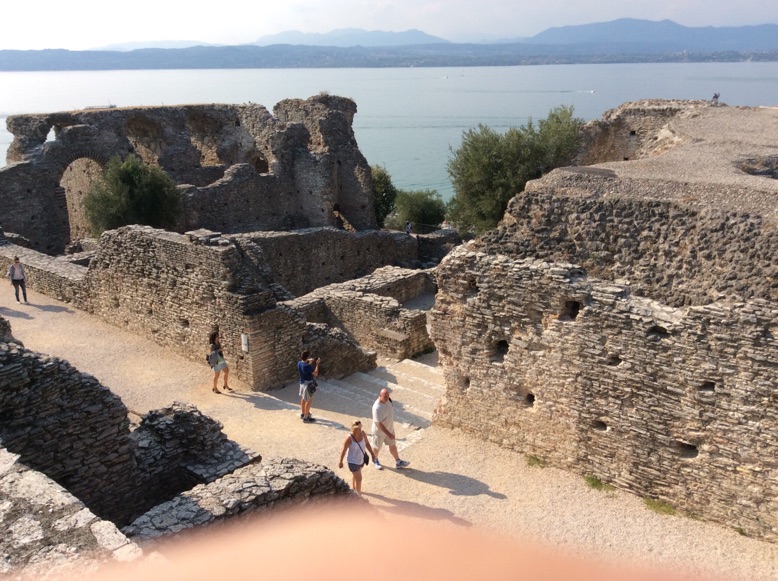
Third century Roman ruins found in Sirmione, Italy
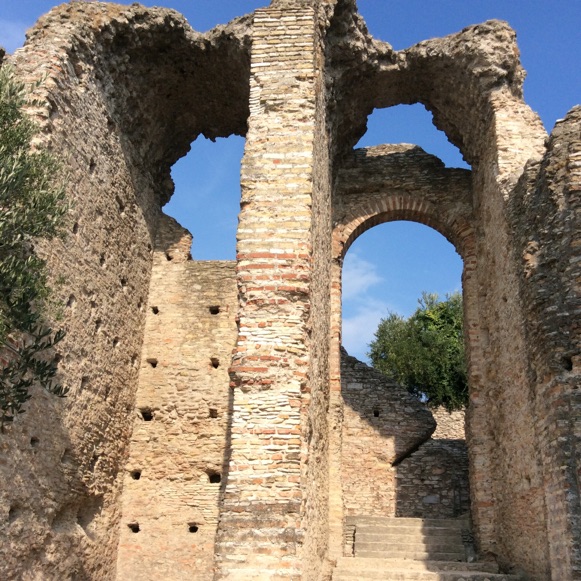
Third century Roman ruins in Sirmione, Italy
The Lake
I sit outside in 60 degree Fahrenheit temperature with a light breeze on a balcony outside our hotel room looking out over Lake Garda in Italy’s north lake district. This is Italy’s largest lake, and it stretches from a flat plain to the Italian Alps. The water is light blue and clear. We stayed the day in Sirmione, known as the Pearl of the Italian Lakes. It lies on a narrow peninsula on the southern part of the lake and is surrounded on three sides with water. Entry into the town is through the gates of a medieval castle.
Since Sirmione is a pedestrian zone, we walk the streets easily. They are cobblestoned and narrow. Lining the streets are blue, orange and yellow plaster-coated buildings interspersed with stone buildings. Archways and pergolas abound. Bouganvillas are in bloom and climb walls and arbors. Other flowers fill flower boxes. Marble piazzas break the pattern of the narrow streets and church bell peals bounce from wall to wall. The lake is easily in view from either direction and small boats and sail boats slowly ply the waters. Ducks meander in the streets near the water. It is a refreshing and relaxing day in this cozy beauty as we go from one unique shop to another. Organic and natural are key words here.
Once again, our evening ends with a meal–this time on the piazza looking out at the castle. Food choices include parma ham and melon, salmon and sautéed spinach, pumpkin and sage ravioli, grilled white fish with grilled vegetables and fried calamari, sardines and shrimp. A good red wine from the region added depth and richness. With the sun setting, we “moseyed” home, and I walked out onto the balcony to write this blog. WEG – Thursday, September 10, 2015

Sirmione, Italy
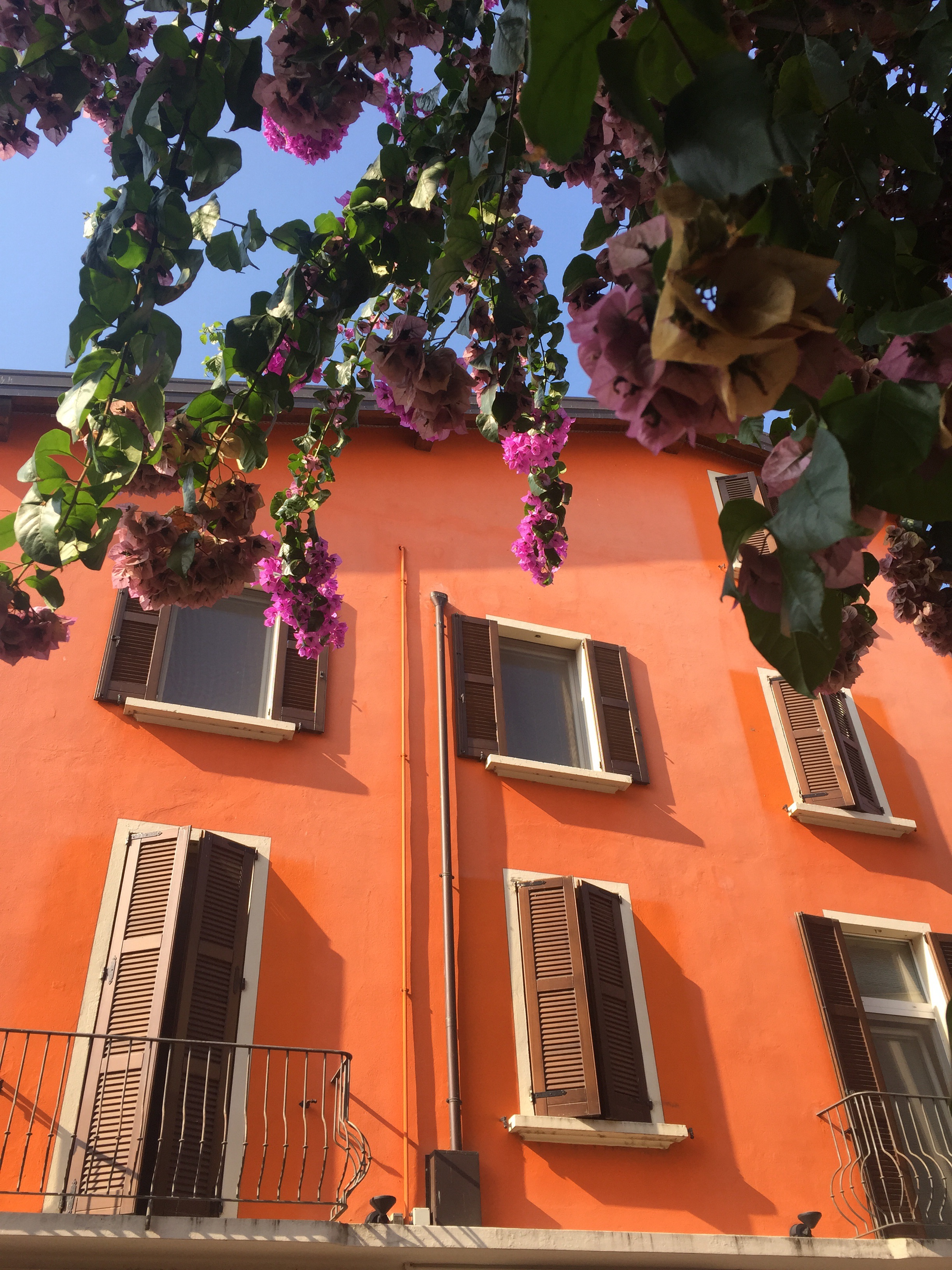
Sirmione, Italy

Sirmione, Italy – one of the many store windows
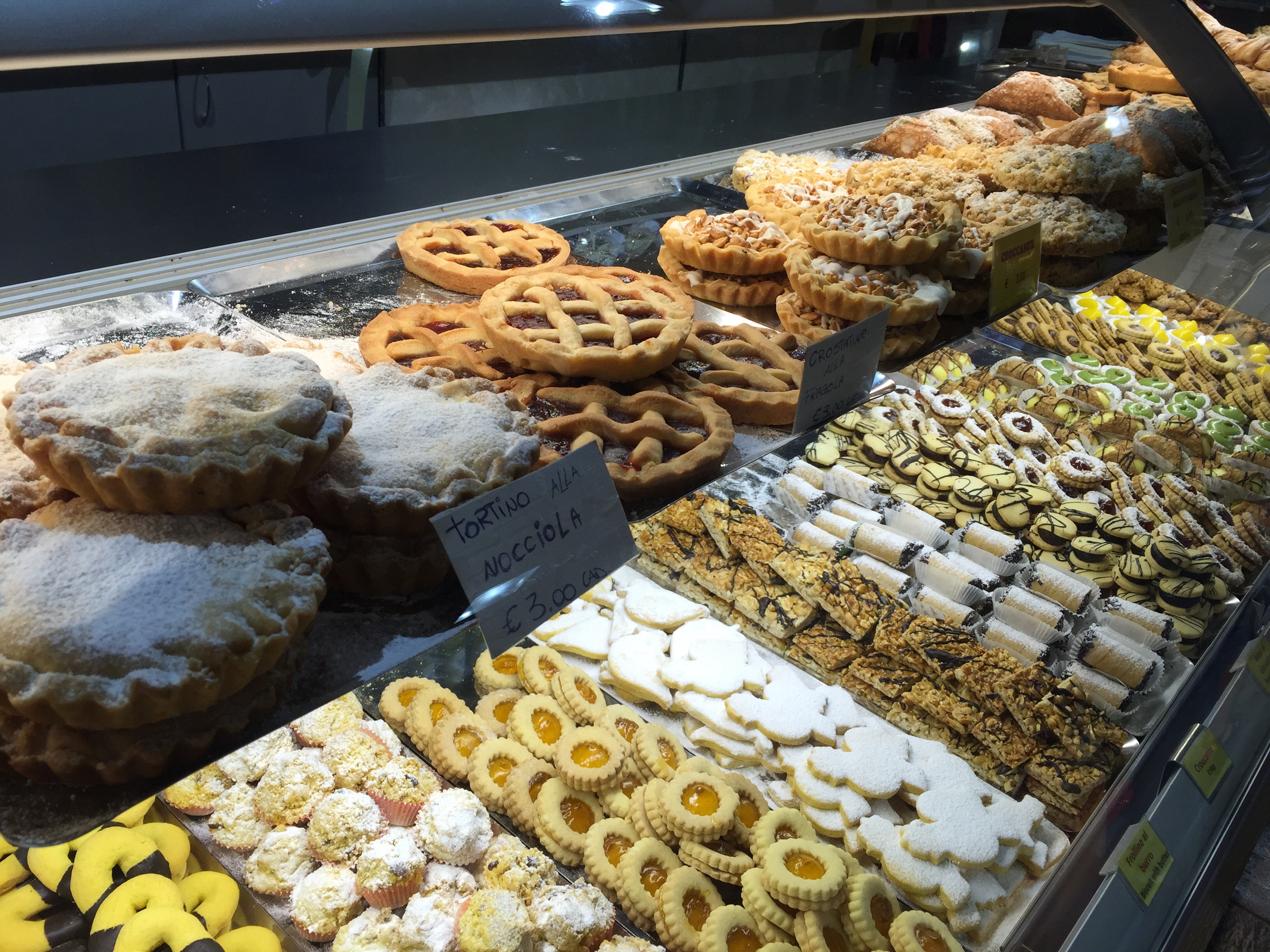
Some of the delectable pastries available in Sirmione, Italy
A Wild Goose Chase
Dan Berg has been looking forward to visiting the Beretta Gun Show Room in Milan for months. I took pains to make sure we could work it into our schedule. “Beretta is the oldest gun manufacturer,” said Dan. Since Dan hunts and has a gun collection, he knew that Italy contained some of the finest and most expensive weapons manufacturers in the world. Today, we set aside the morning for the guys to go to Beretta and the gals to go to the original, as in centuries old, galleria close by. Dan had made sure to have the directions, having looked on the internet prior to leaving Texas and reaffirming the location with our hotel clerks. We took the Metro from our hotel to the area close to the show room. Off we went since Allen had the location pinned on GPS–how could this be the wrong direction? The GPS signals were confused by the buildings. Back we went. Around we went. Down we went, and up we went. City map out–compare it to the GPS. Dan did not write down the address. Dan did not have the directions from the hotel clerk. Scratch heads–walk further. All of the sudden, Dan said the location looked like what he had seen on the internet. Yeah–a Beretta sign. At last! WHAT, where are the guns? This is a woman’s fashion center in a fashionable part of town. “Dan, did you verify on the internet that this was a gun show room?” “No, I saw Beretta Gallery and assumed it was guns.” “YOU WHAT!?” We had walked almost two miles searching for a Beretta gown not gun. We made Dan purchase some “fufu” for his guns. Later, we verified with the tourist center that there has never been a Beretta gun show room in the city in Milan’s 2400 year history.
The afternoon was spent in Milan’s majestic high Gothic Duomo (cathedral). Soaring and many spired, clad in marble, the Duomo is the fourth largest Christian church building in the world. The interior is breathtaking and can hold 60,000 people. The stained glass tell the Bible stories, both Old and New Testament. Since most people were illiterate during this time, the stained glass was their Bible. Over 50 massive and image-carved marble columns reach upward to a ceiling that is filigreed in an intricate design. A beautiful high altar and canopy point heavenward. Encased high above is one of the nails used at Christ’s crucifixion. Brought from Jerusalem in the 300s, it is one of the better authenticated relics found in churches throughout Europe. Only twice a year is the nail brought down to observe. Near the entrance of the Duomo, a thin gold line crosses the floor the width of the cathedral. From noon to 1pm each day, the sun light shines through a hole purposely built into the wall, and the rays fall on the day of the year on that gold line. Amazing.
The visit to the famous Teatro alla Scala (La Scala opera house) was a treat. The opera house has near perfect acoustics, and we stood in the highest level “pigeon” boxes (every seat and every box has an unobstructed view) and looked down on the golden room and upon the world’s largest production stage.
Later in the afternoon/early evening, we were privileged to view Leonardo da Vinci’s masterpiece, “The Lord’s Supper.” Painted on the wall of a Dominican monastery in the late 1490s and located just off the city’s old town, we first had to go through two decontamination rooms before entering to see the massive and fragile wall painting. The painting barely survived World War II, since a bomb blast shattered the entire building, but left the painting intact and in the open air until the building around it could be reconstructed. We learned some interesting facts–the painting was conceived to portray the moment Jesus said that one of the disciples would betray him, as, of course, Judas would do. Da Vinci painted Peter with a knife in his hand ready to kill anyone who would try to harm Jesus. Judas has a pouch in his hand that contained the 30 pieces of silver. The great artist used a girl’s face as a model for John because John was a teenaged disciple and not yet a man. What an inspirational joy those short 15 minutes were!
The evening found us at an outdoor restaurant enjoying some of the culinary specialties for which the city is known. My risotto with parmesan and white truffle sauce was very good! WEG – Wednesday, September 9, 2015
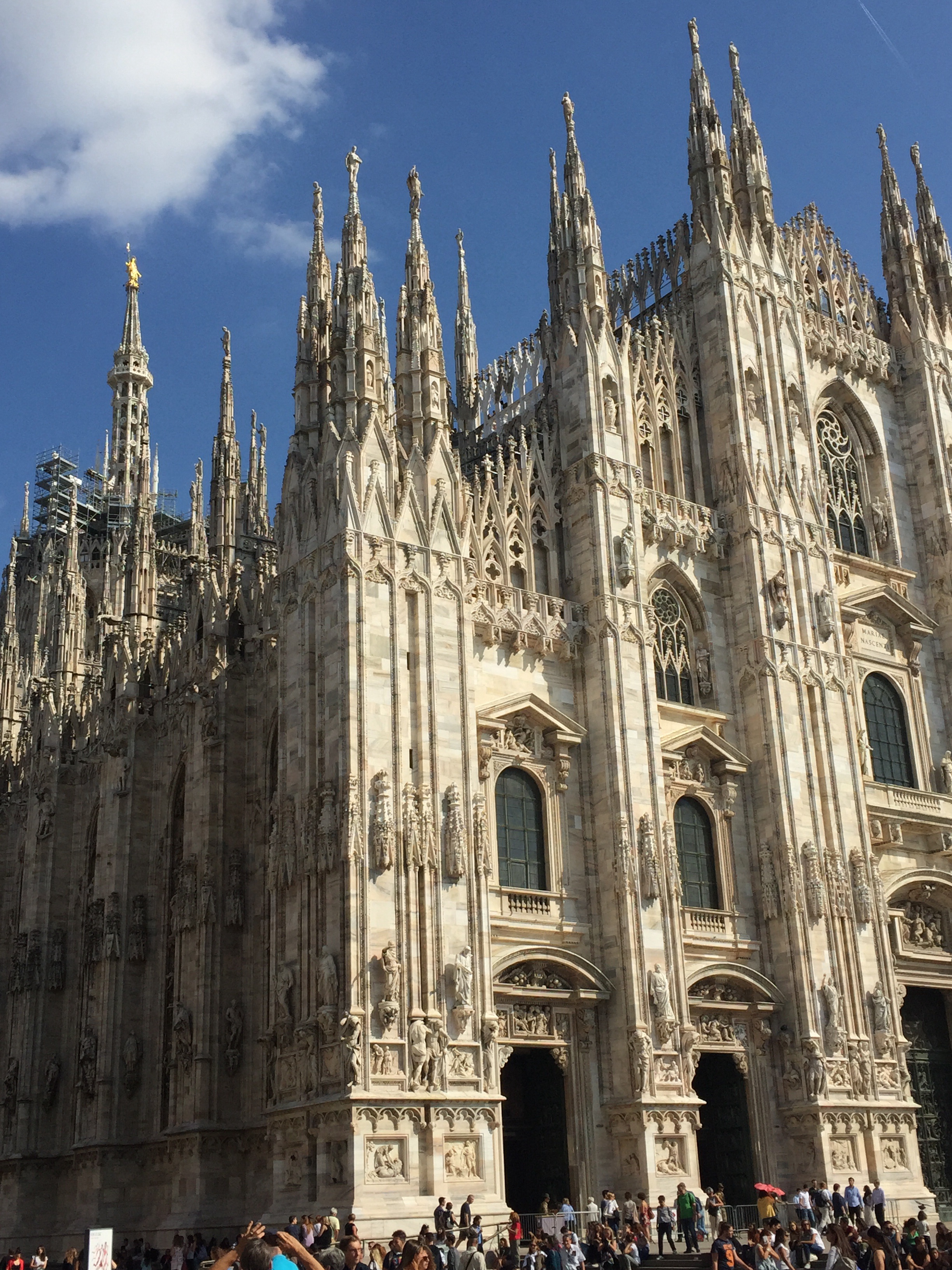
Milan’s Duomo

Milan’s renowned Galleria housing elaborate fashions of Prada, Versace, Louis Vuitton, Gucci, and others

One of the stained glass windows in Milan’s Duomo portraying in pictures the stories from the Bible intended to instruct those who were illiterate in the message of salvation through Christ
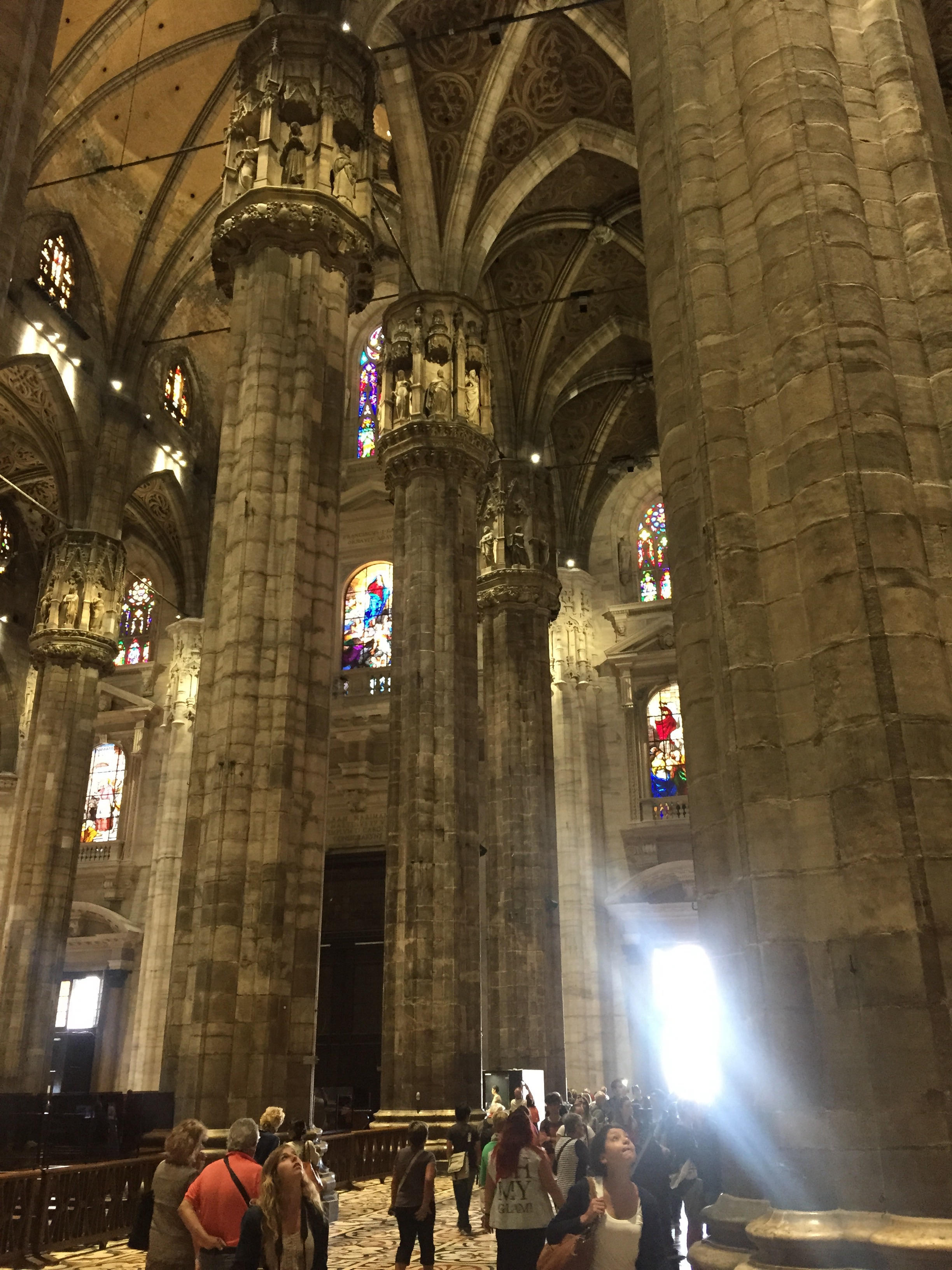
Marble columns in Milan’s Duomo
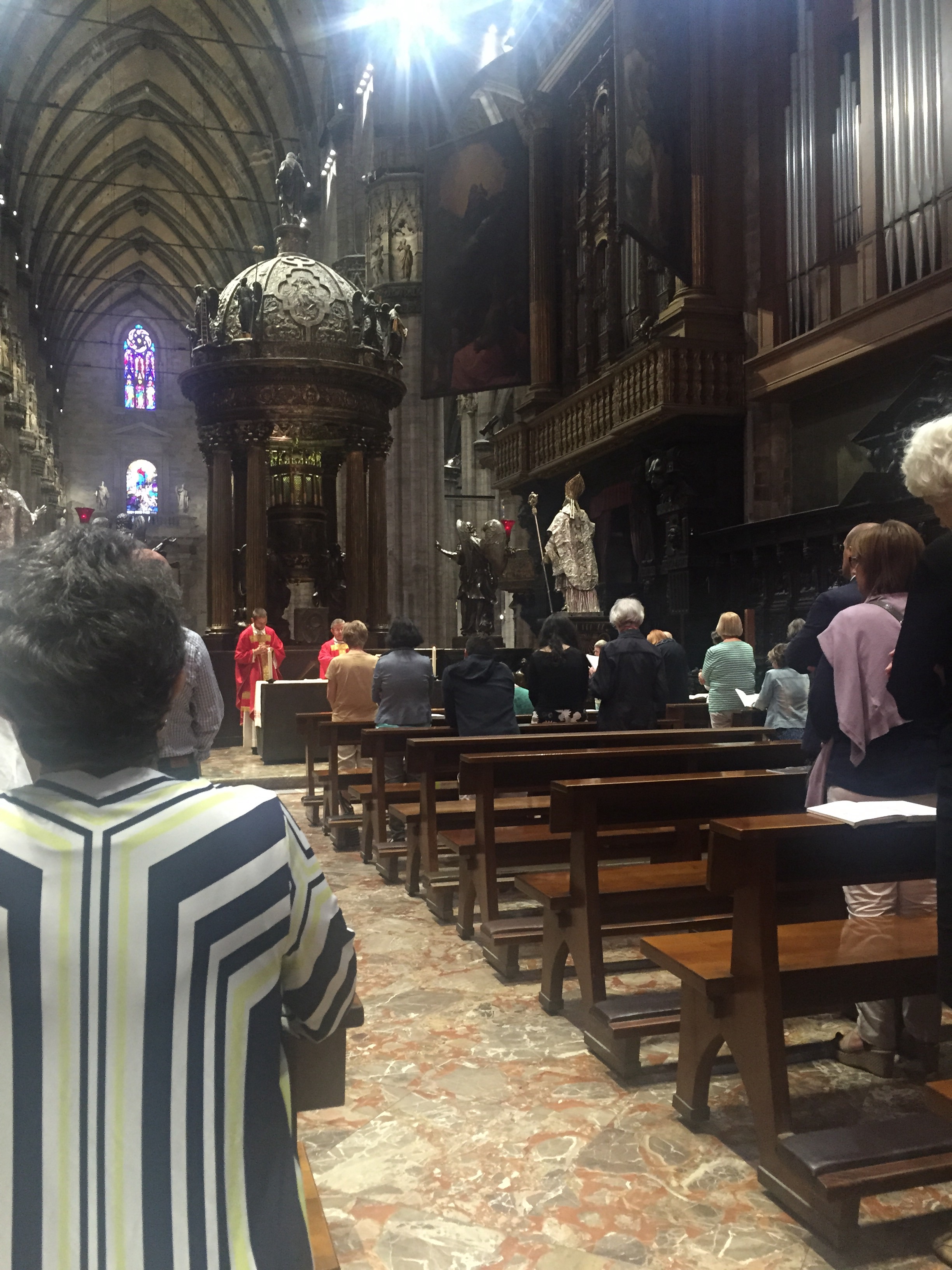
We had the opportunity to experience worship in the Milan cathedral.

Inside the Milan cathedral

Tuning the Steinway inside the museum of La Scala opera house, the very piano of Franz Listz

A visit to Milan’s Sforza Castle

Evening scene in Milan viewing the Sforza Castle from our outdoor restaurant
Expo 15 – Milan, Italy
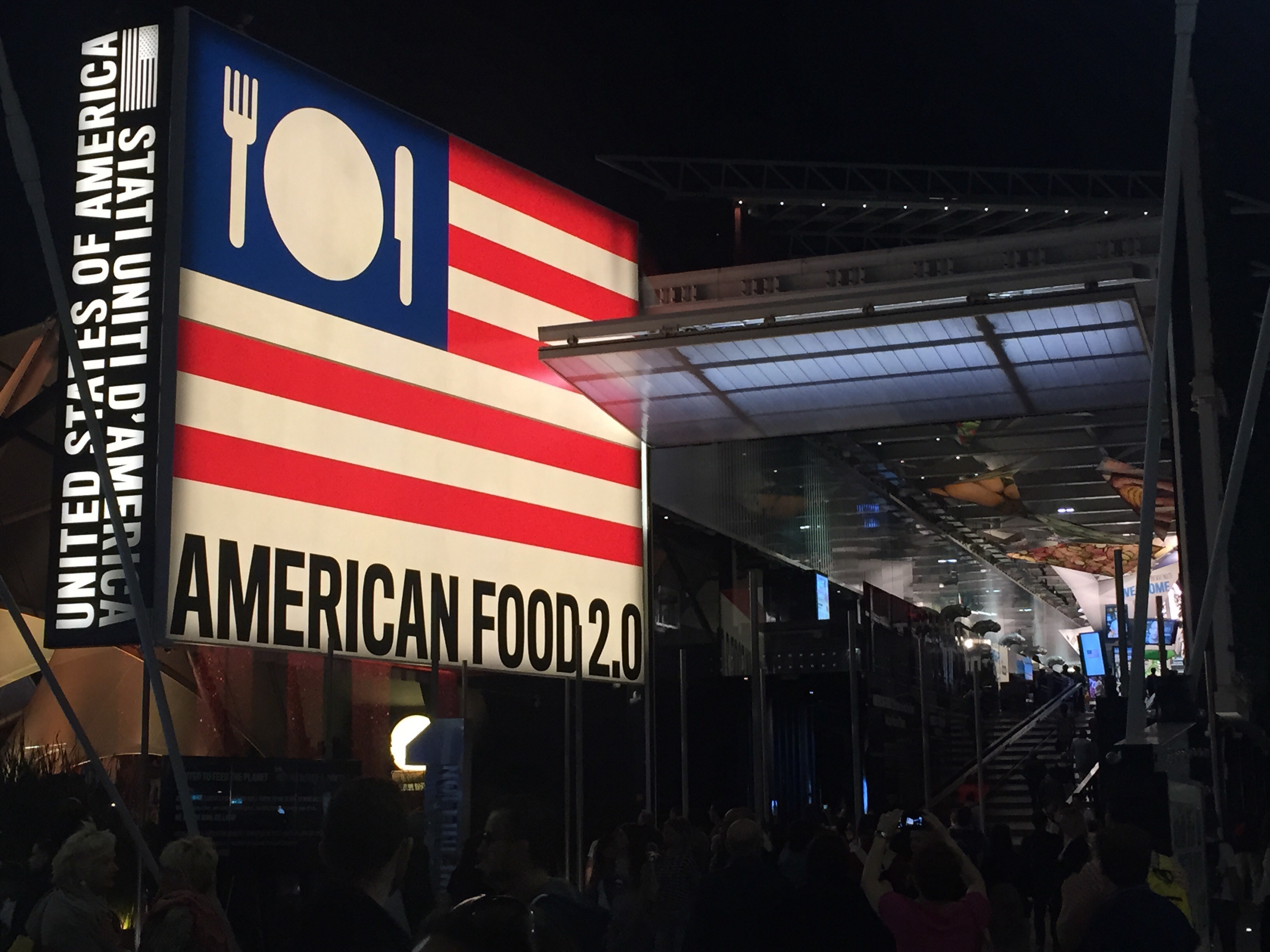
The United States exhibit at Expo 15 in Milan, Italy
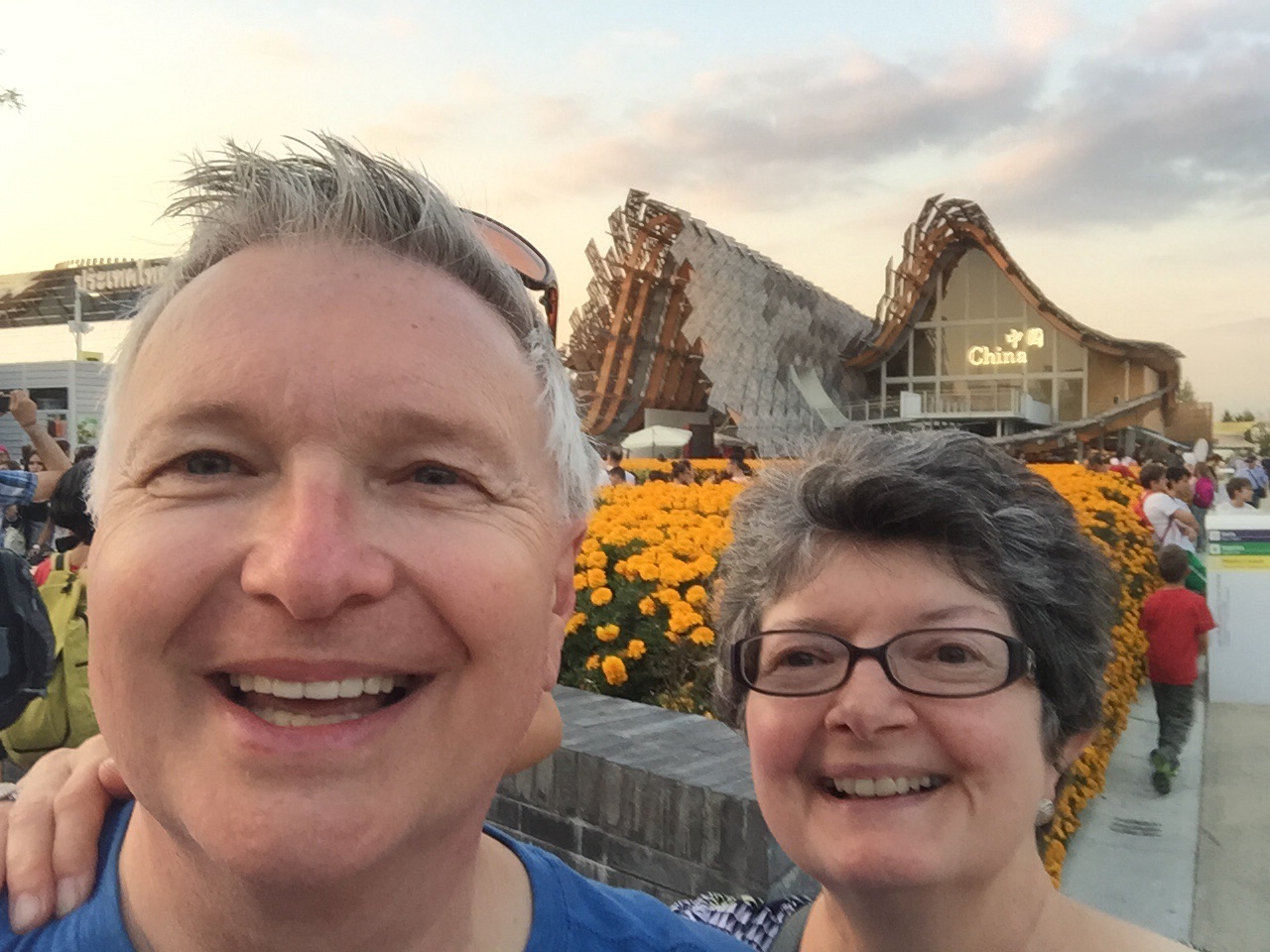
A selfie at Expo 15 in Milan, Italy – Wayne & Kathy were there!
Today was World’s Fair Day as we trained to Milan. Milan is noticeably upscale and fashionable. It is Italy’s banking and commercial heart, and it is known worldwide as a fashion and design center. Expo 15 is a huge attraction to the city with countries from Angola to Zaire participating by hosting beautiful and unique event buildings at the Expo site.
The theme of the Expo is food production and sustainability. Kathy and I are on stimulation overload. The site is quite well-organized, and the layout is simple and easy to navigate in spite of the large crowds of people from around the world. However, the lights, the sounds, the fountains, the sculptures and the buildings are amazing. Besides the nations that are participating, many corporations involved in food production, as well as Italian corporations, have inviting displays and buildings. Almost every country has food that is indicative of that country, as well as flowers and plants. Products, mainly related to food, are for sale.
Just a few random sites or observations: Ten high fashion models using the main concourse (that stretches about half a mile) as a runway; every state/region of Italy hosting a restaurant in the Italy section offering food for which they are known; Israel having a slanted roof on their building on which were planted the crops grown in that country; large screens, worthy of Times Square, featuring food from around the world; countries in which coffee is a major export grouped together and each offering it to drink; interesting and large light sculptures in the central site piazza; the magnitude and scope of the displays; the variety of building designs quilted together to make a whole; Vatican City’s “Give us our daily bread” quote on the entry and the huge plexiglas, “Rebuild Nepal,” offering box filled with generous monetary donations.
I have never been to a world’s fair and may never again, but I am glad Kathy and I were able to spend time at this one. WEG – Tuesday, September 8, 2015

Expo 15 – Milan, Italy
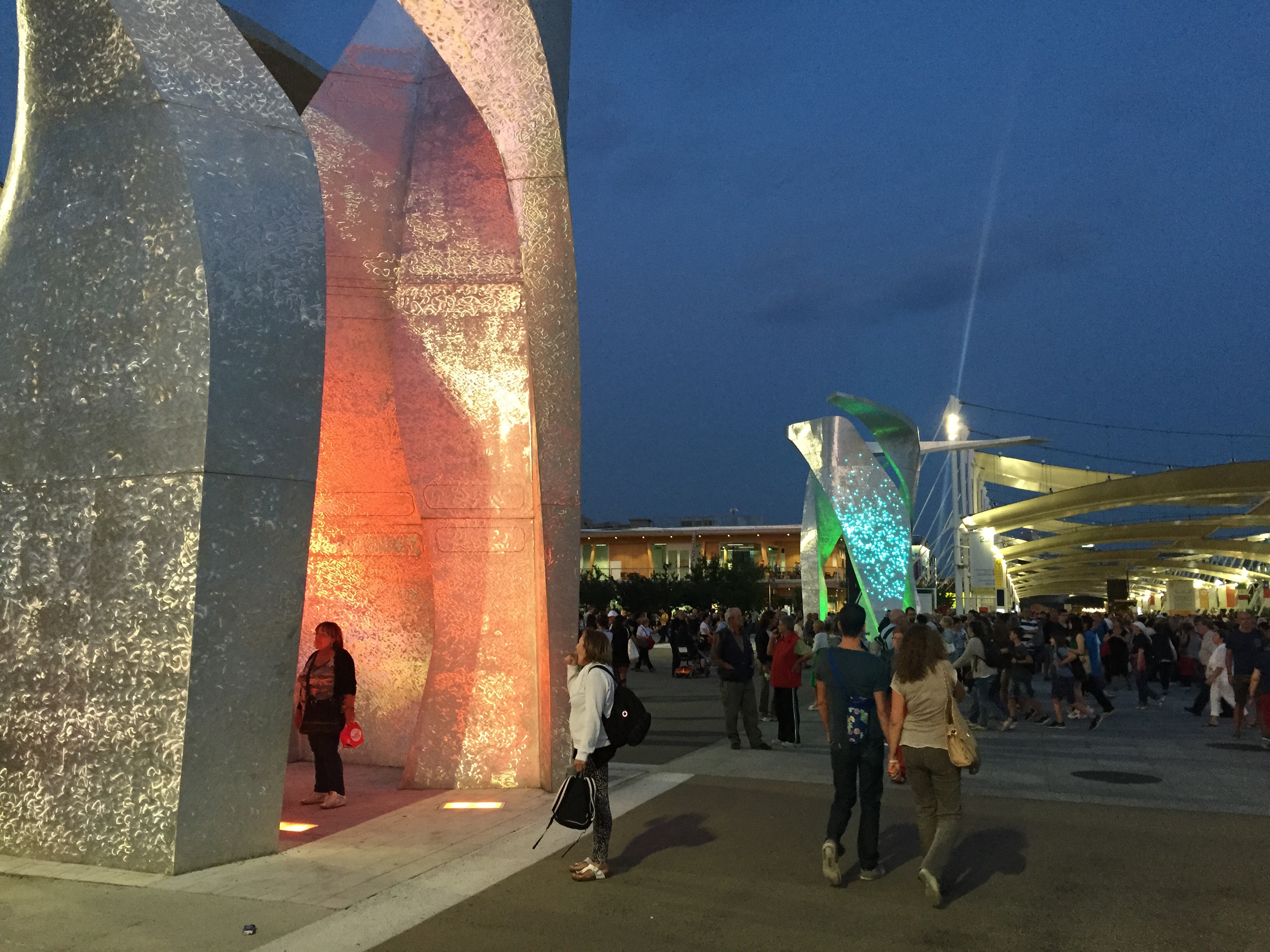
Expo 15 – Milan, Italy
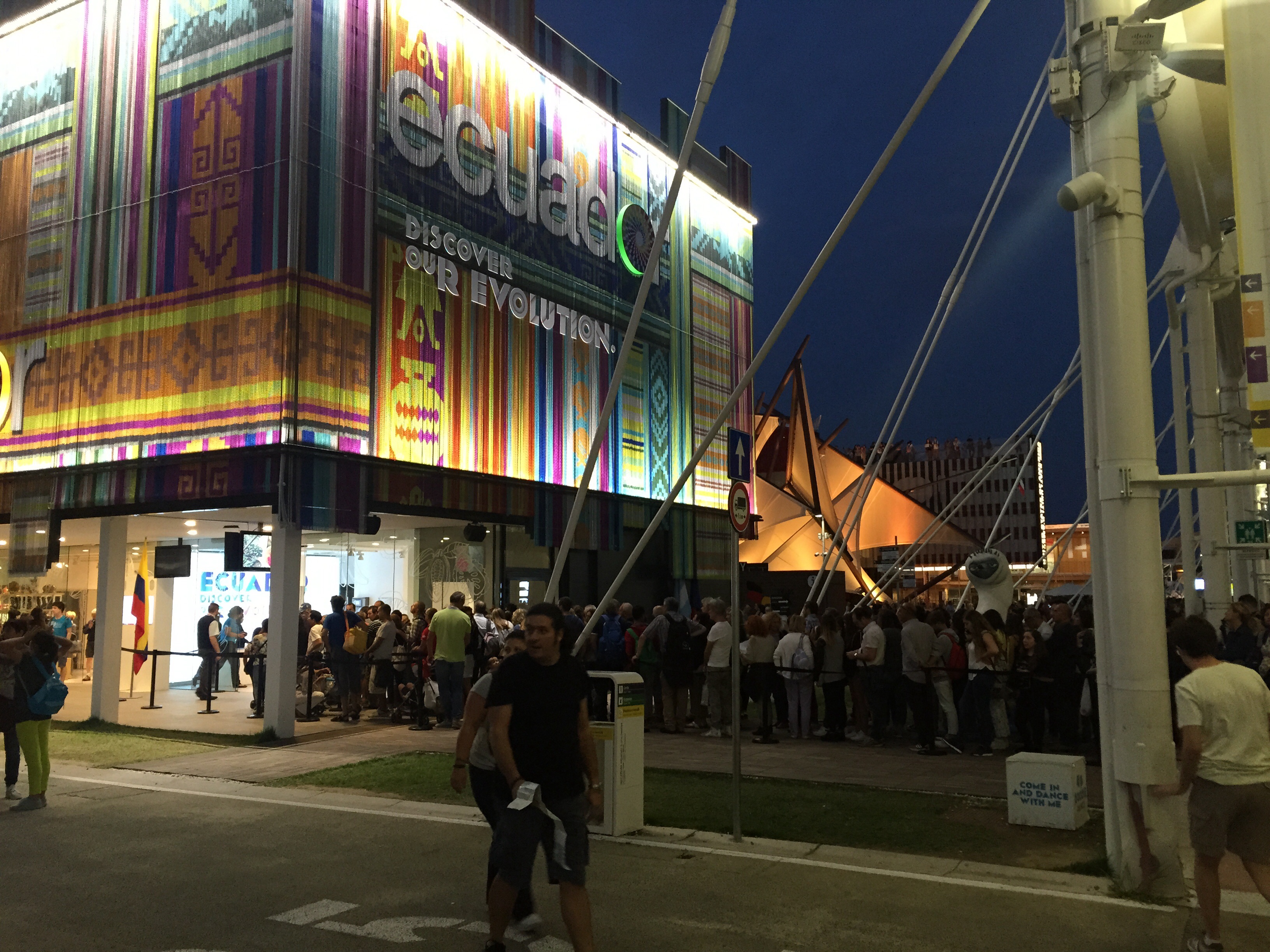
Expo 15 – Milan, Italy

Expo 15 – Milan, Italy
Sylvester Stallone by Raphael
It was truly amazing. Right in the middle of the world class Raphael rooms in the Vatican, one’s eye gazed upon a 15th century Sylvester Stallone painted by the great Renaissance painter, Raphael. It looks as if the American actor had posed for the painting. The rooms, painted by Raphael, are masterpieces. His, “The School of Athens,” depicting all the great thinkers of history until that time, but represented by Raphael’s contemporaries, is considered Raphael’s greatest work. To stand and gaze upon it was an ethereal experience. Right after the Raphael rooms, one entered the Sistine Chapel, painted by the rival of Raphael, Michelangelo. Our guide had done a good job of educating us about the chapel before we entered, as no speaking is allowed in the room. Numerous policemen enforced the rule, as well as no exposed knees or bare shoulders allowed. The study of Scripture — the chapel frescoes are all Bible stories or great Christian personages; for example, knowing from Scripture that Moses could not look upon the face of God, Michelangelo painted that panel showing only the backside of God; the understanding of anatomy — in the panel of the creation of Adam, God is enclosed in the outline of a human brain; and the depth of skill for someone who had not painted in fresco before makes this chapel among the most cherished and recognized works of art in history. Room after room of the Vatican museum contained priceless works of art set in fabulous display. It was overwhelming.
Vatican City is its own independent country. The central feature of the Vatican is St. Peter’s Square and the Basilica of St. Peter. The Basilica is the largest Christian Church in the world. Michelangelo’s Pieta, depicting Mary holding the crucified Jesus, is near the entrance. The Basilica is stunning and beautiful and, to my eye, made personal by Bernini’s massive baldacchino, a mostly bronze art-piece towering over the altar and pointing to the massive dome of the basilica. St. Peter, the disciple, is buried beneath the altar.
We visited the other three major basilicas of Rome. My favorite, St. Paul’s, contained the burial site of the Apostle. Recent independent scientific and forensic studies have verified that the bones are of a first century male whose missing head — the Apostle was said to have been beheaded — had been severed with a sword, which was the form of beheading used by the Romans. Outside was an Egyptian obelisk that was over 6,000 years old. It was used in the early centuries to guide pilgrims to the church. St. John Lateran, the mother church of Christendom, was commissioned by the first Christian Emperor, Constantine, in the early 300s and served as the main church of Rome and of Christianity for over 1,200 years, before the building of the more modern St. Peter’s Basilica in the 1400-1500s. The ancient door to the church, commissioned by Julius Caesar, is over 2,000 years old.
What a day!
WEG – August 31, 2015
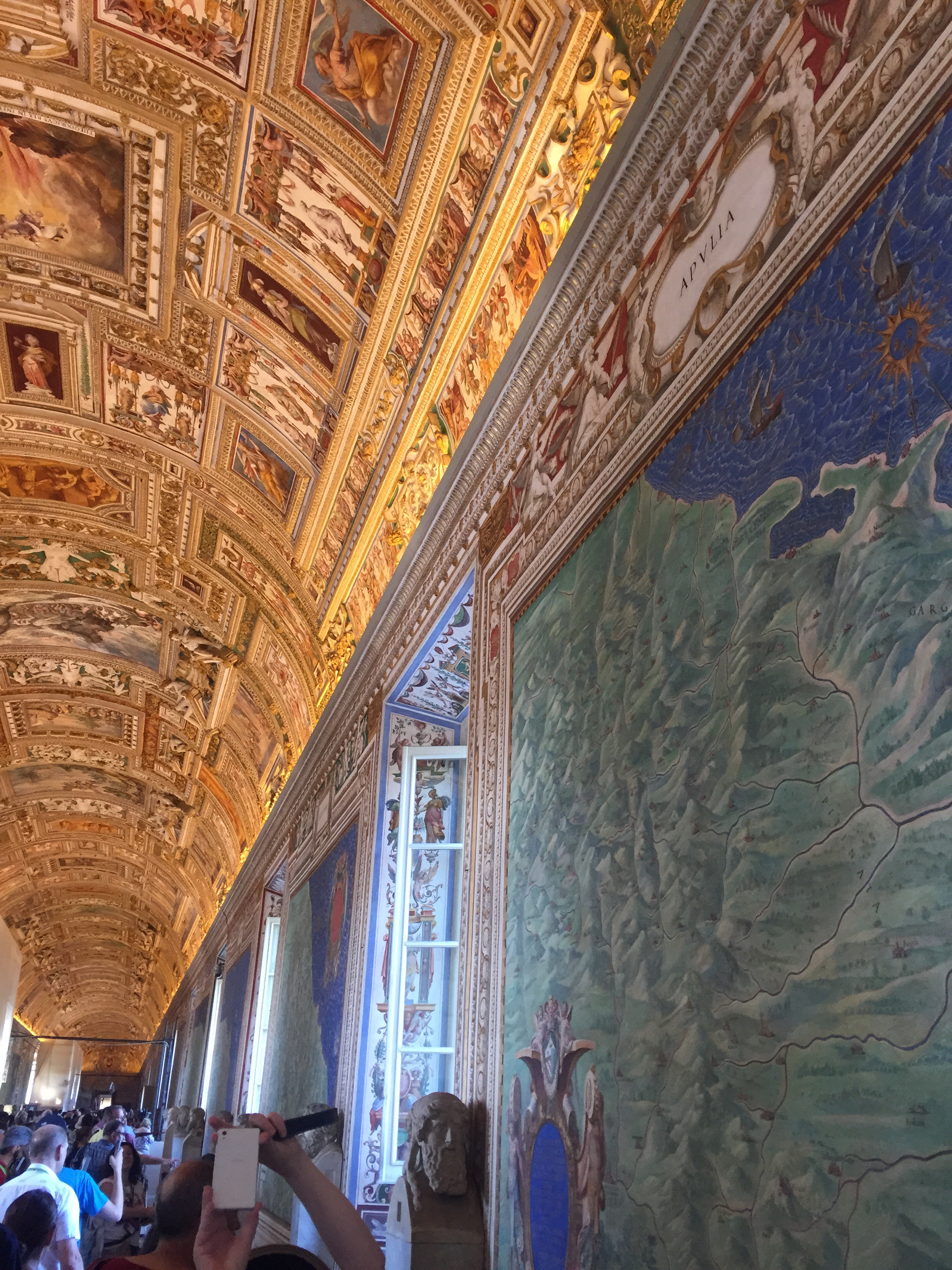
Gallery of Maps in the Vatican Museum

A portion of an entire room fresco by Raphael known as The School of Athens

The Sistine Chapel ceiling of Michelangelo – Note the panels of the creation of Adam, the creation of Eve, and the casting from the Garden
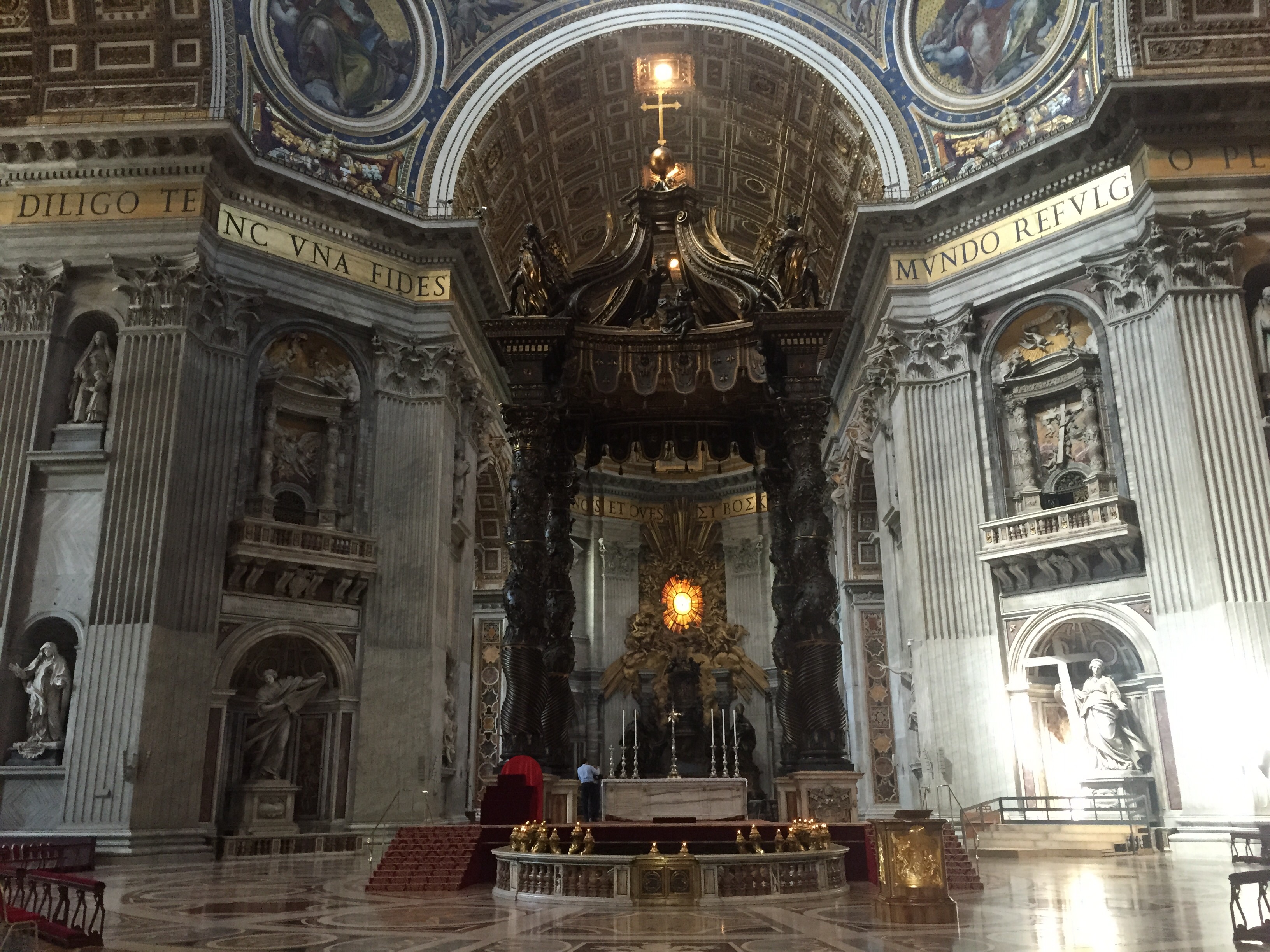
St. Peter’s Basilica

The Vatican
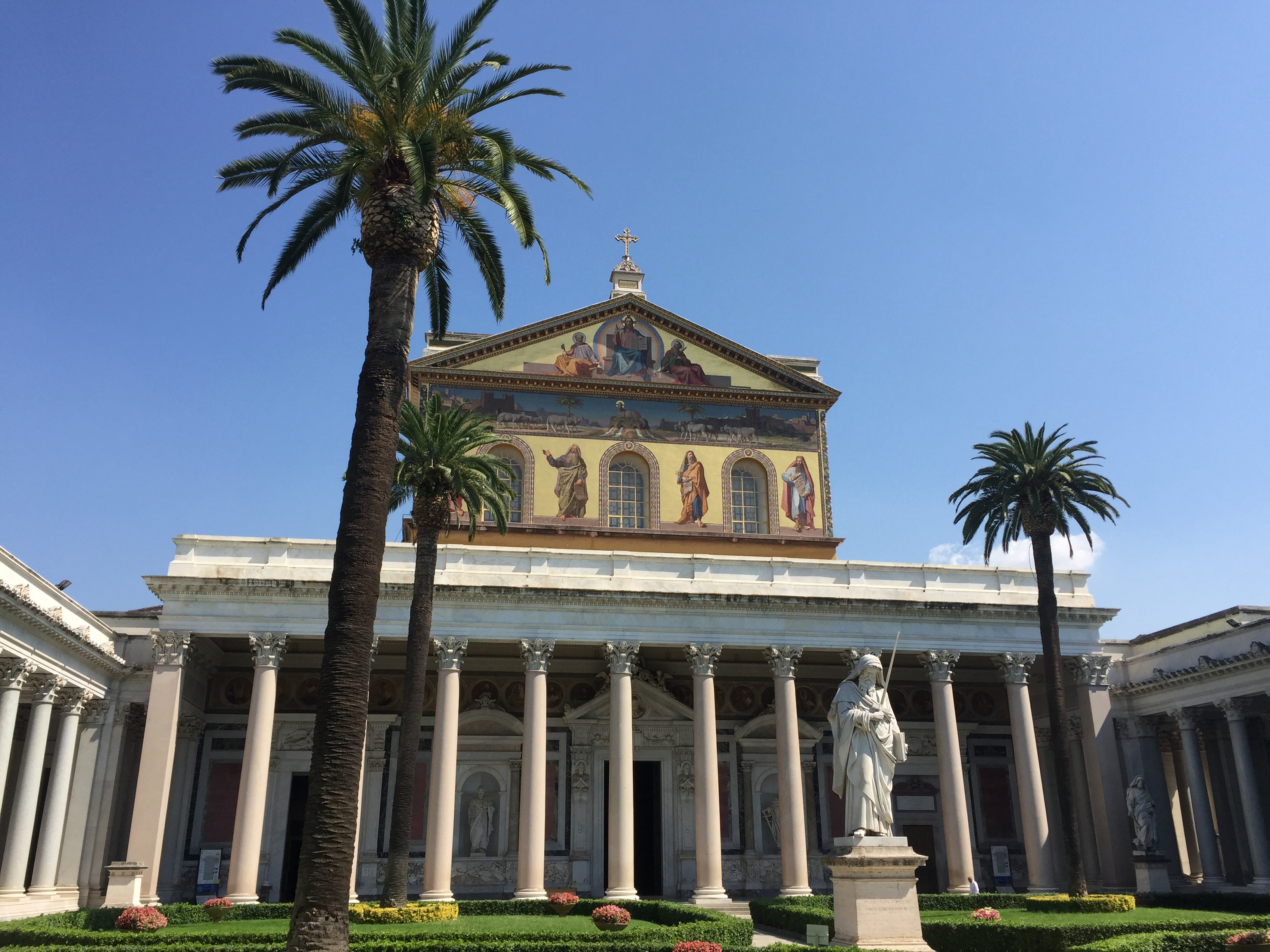
St. Paul’s Basilica – the burial place of St. Paul

The sarcophagus, or burial place, of St. Paul within the Basilica of St. Paul

The door at St. Paul’s Basilica commissioned by Julius Caesar over 2,000 years ago
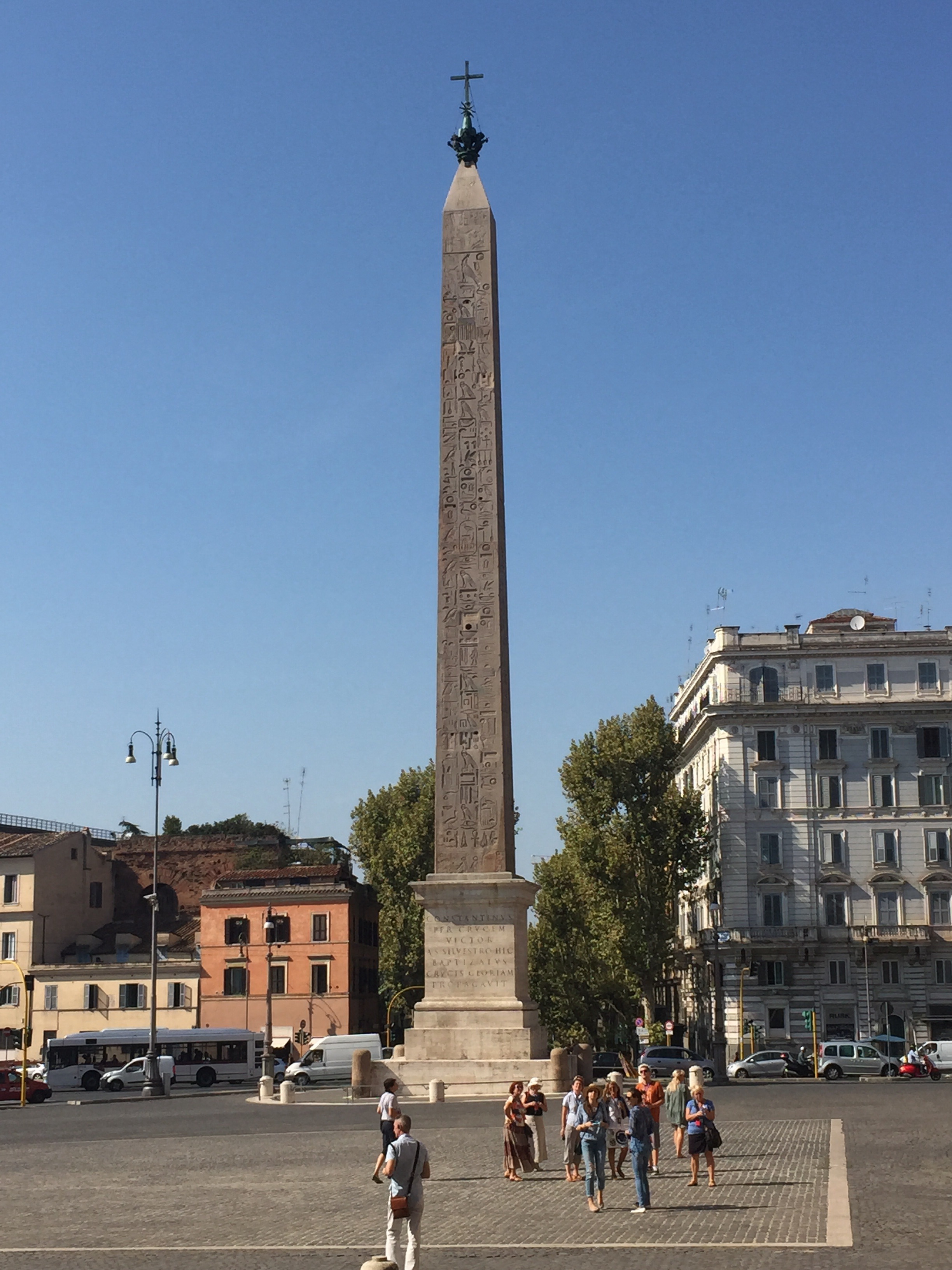
The obelisk from Egypt that marked the way for pilgrims at the St. Paul Basilica

The Holy Stairway climbed by Christ on his way to sentencing brought in its entirety from Jerusalem by Helen, mother of Constantine
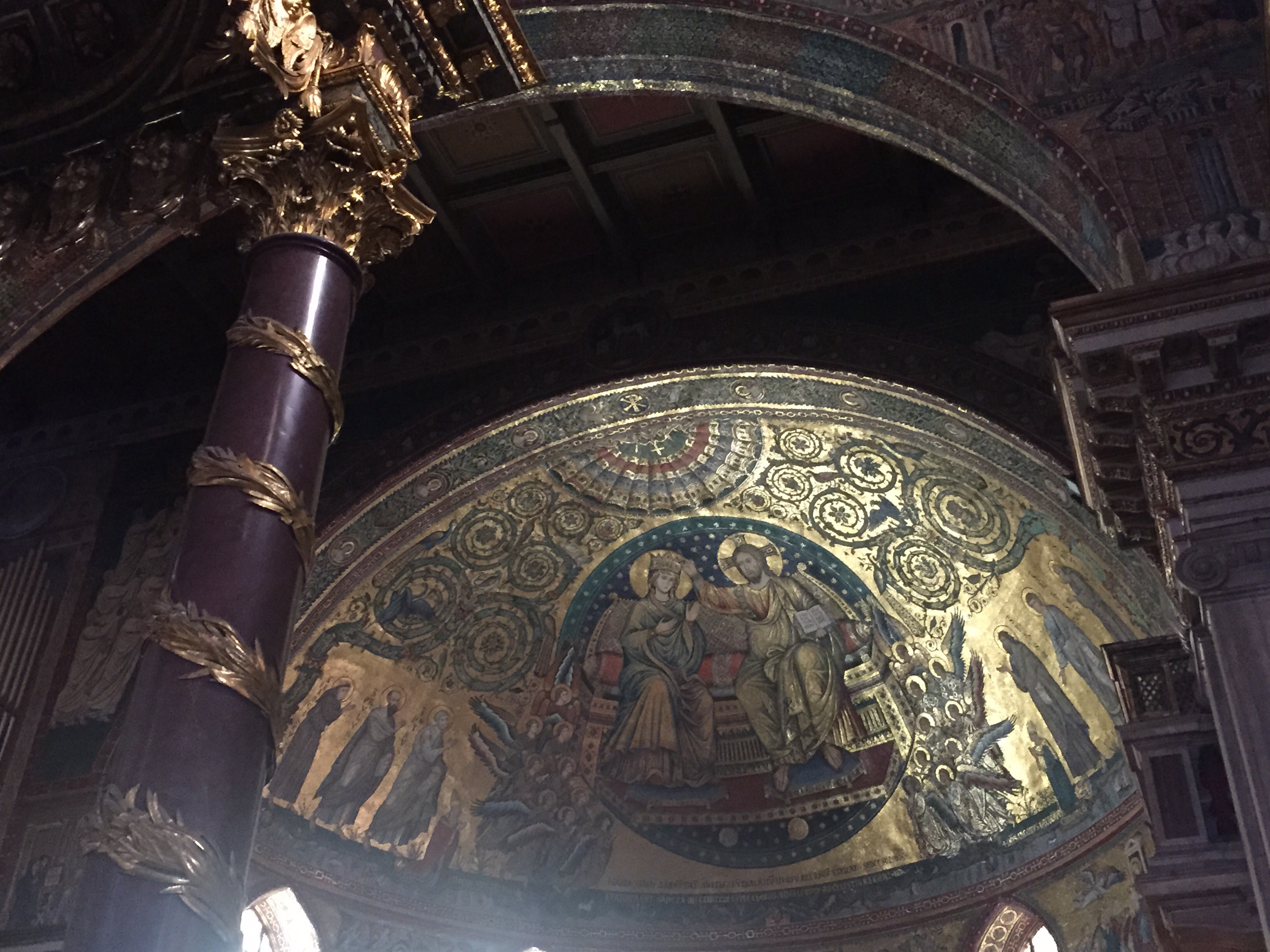
Altar fresco at St. John Latern
Hell and Back
To say that it was hot inside the Colosseum and on top of the Palatine Hill today is quite an understatement. Water consumption could not keep up with water depletion. Someone could have made a fortune mining natural salt today. As Rhonda, our friend, said at the completion of the tour, “We’ve been to hell and back!”
All that aside, the day was glorious. One stood in awe of the accomplishments of the Roman civilization dating from 2000 to 2800 years ago. The Colosseum, a nickname derived from the giant colossus of Emperor Nero which stood outside, is a marvel of engineering and construction that seated 75,000 and where half a million gladiators and criminals died by one another’s hand or by wild animals. One factoid–we have the thumbs up and down all wrong. Thumbs up meant “send the defeated gladiator to heaven” and thumbs down meant “put away your sword and let him live.”
The Forum was the center of the Roman empire, the place where huge celebrations in honor of victories in battle were held, where the Roman Senate met and where Caesar spoke. All around us stood archways and ancient streets, massive columns and pagan temples. We saw the spot of which it is said, “All roads lead to Rome”; where Mark Anthony spoke after the murder of Julius Caesar; where victorious armies marched–history came alive!
Palatine Hill was the highest point of Rome and the place where the huge palace (the name derived from Palatine) of Caesar was constructed. Today it is mostly a ruin, but the immensity of the palace can be detected. Completely clad in varied colored marble, the home contained its own stadium so that Caesar could watch chariot races without mixing with the 250,000 who were watching the same thing at the hippodrome.
Later in the afternoon our tour continued at the Spanish Steps, Trevi Fountain (scaffolding down after an extensive repair but water not yet returned), the Pantheon (the most complete building remaining from antiquity) and St. Ignatius Church with its amazing false cupola.
A lot of water, some tea, a little beer and a decent amount of gelato made the heat go away at the end of a great day. – August 30, 2015 – WEG

Dan & Charllotte Berg at the Roman Colosseum August 30, 2015
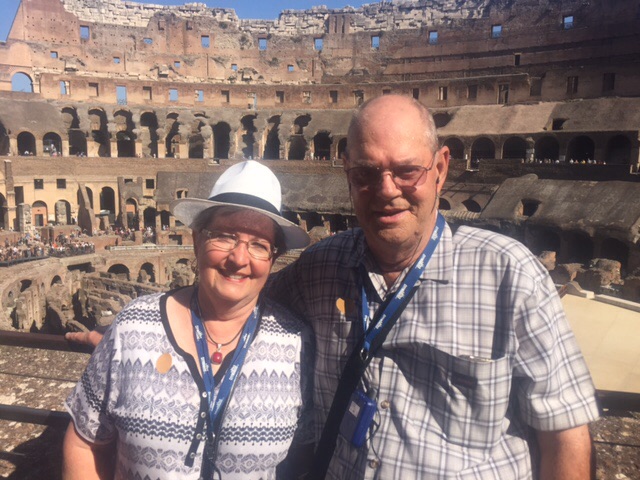
Rhonda & Allen Krahn at the Roman Colosseum August 30, 2015

Wayne & Kathy Graumann at the Roman Colosseum August 30, 2015

St. Ignatius – Saw an open door and walked in to a beautiful surprise – Rome, Italy – August 30, 2015
 kgraumann
 wgraumann
 gofarther.me