
Home » Lake Titicaca, Peru
Category Archives: Lake Titicaca, Peru
Best to Last


We had no idea what would lie in store for us today on Lake Titicaca, South America’s largest lake that lies between Bolivia and Peru. The lake is beautiful with reeds growing in the shallows along the shore and ringed with low lying hills. At 12,500 feet above sea level, Lake Titicaca is the highest navigable lake in the world. It is 103 miles in length and 27 miles in width and its deepest point is almost 900 feet. Big lake!


We took a boat ride on the lake from our hotel’s dock. We followed a channel cut through the reeds. Our destination was the floating islands of Lake Titicaca. We were immediately blown away when we approached the islands. They are indeed floating. In fact, they are anchored so that they will not float away into the deeper lake. When we got off our boat onto one of the islands, we were greeted by the inhabitants dressed in native dress and shouting out welcomes in the native language of the Uros people.


The best way to describe walking on the floating islands (there are many in close proximity) is to say it’s like walking on a soft mattress. Try doing that for several hours. The islands are covered in small homes built out of the reeds along the shore that our boat had passed through. Some have rounded and pitched roofs and others are “tepee” like. Everything is made of reeds–furniture, beds, flooring–even the island’s earth is of reeds. One of the women invited Kathy and me into her home where she insisted that Kathy try on some of her clothing. Fun! Kathy and I agreed that this was the most intriguing place we have ever visited in all our travels.


Why and how did these islands come about? Five hundred years ago the Incas were invading the lake’s native peoples in an attempt to bring them under the control of the empire. The people in this part of the lake realized that their future was threatened, and so they escaped by boat into the lake. After living in the boats and realizing they had no place to go, they noticed that mounds of tortora reed roots that had dried out in the dry season were floating in the lake. They tied the floating roots together and covered them with layers of reeds. Then, they constructed their housing on top using the reeds. This tradition has continued until today. However, maintaining the islands is labor intensive, and we were told that in the next twenty years, the islands will likely no longer be what we were able to experience today, since children are going to college never to return. The floating islands will probably become government maintained in the future with hired actors to welcome the tourists.


All of a sudden a large flock of flamingos flew overhead, portending the large migration of this bird from Chile to the lake. Lake Titicaca was an unexpected surprise that we enjoyed immensely. WEG
Sexy Woman


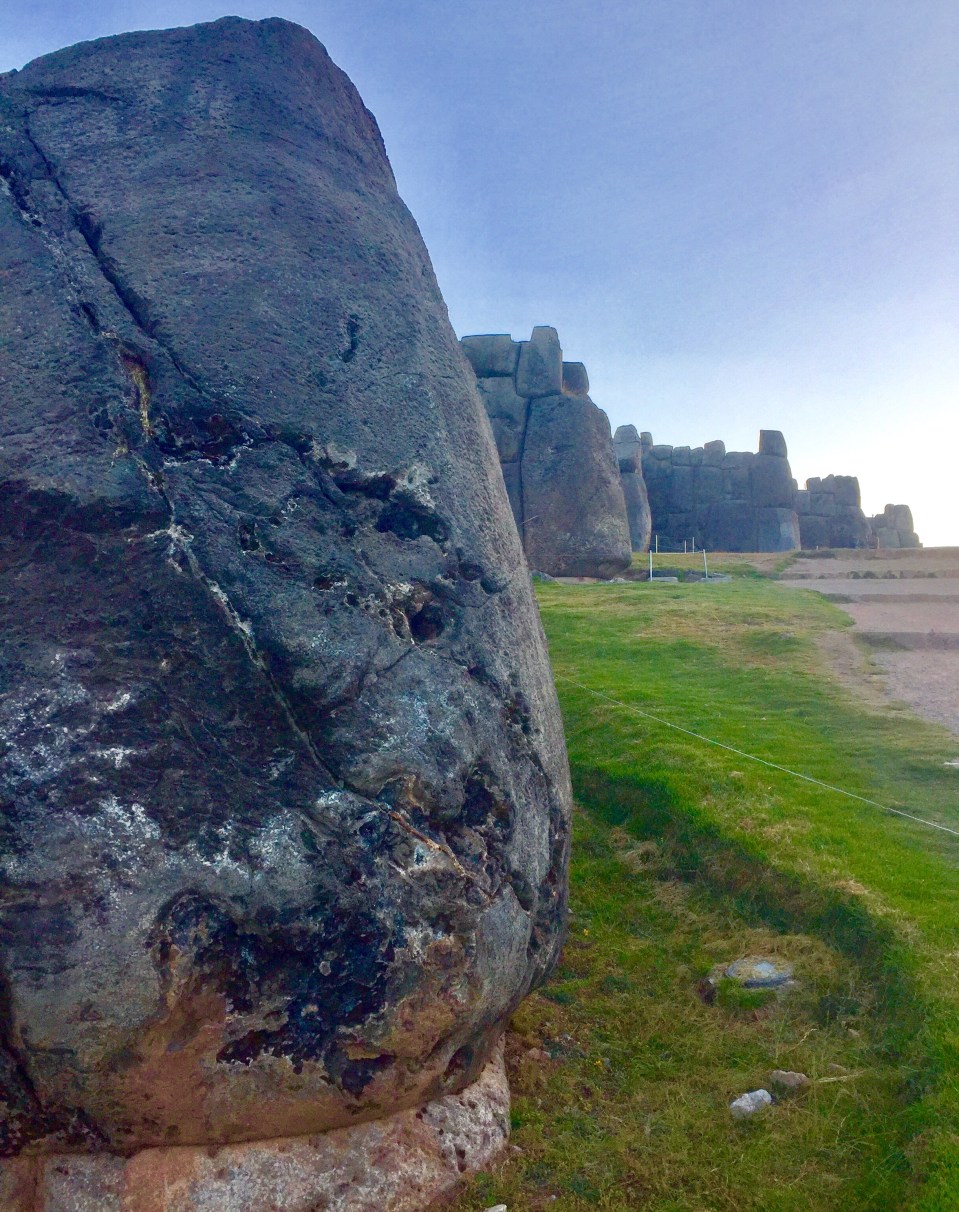
Sacsayhuaman Fortress, Cuzco, Peru


The day began with a Cusco city tour to the archeological site of the Temple of the Sun. Covered in pure gold, it was an instant attraction to the invading Spanish conquistadores, who took all the Inca gold (22 carat) and silver (pure) that they could find and had it shipped to Spain. The temples were often torn down to use the stones in other construction, and colonial cathedrals were built on top of the remains. An earthquake exposed the Temple of the Sun’s foundations, and now it is a protected site.


We arrived in Cusco on the major holiday in Peru, Corpus Christi. Huge parades had brought ornate, larger than life-sized statues of the Virgin Mary from churches in the area to the city cathedral. When we toured the cathedral, the statues were on display. We admired the altars clad in 22 carat gold. “Look, but don’t touch, and no pictures.” We gazed in wonderment at the massive painting of “The Lord’s Supper” by a Peruvian artist as he used the inspiration of Leonardo daVinci’s famous painting, but personalized it for a Peruvian audience using tortillas for the bread and roasted guinea pig for the meat in the Passover meal. Judas was portrayed as Fernando Pizarro, the invading Spanish conquistador.


Outside was a big party! Thousands of people–young and old–were parading in native Indian costume (do not think North American Indian–there is no comparison in dress or music) with bands playing native music. It was beautiful and an explosion of color. You really did want to dance along.


We had another evening of “dinner and a show.” Kathy and I had mountain trout, and we both thought is the best trout we have ever eaten–and we have eaten trout around the world! The music and dancers showcased the Peruvian art forms over time. It was fast-paced, colorful and entertaining.

Wayne and Kathy with the statue of Jesus as He watches over the people of Cuzco, Peru – June 16, 2017.
P.S. We could not post this blog yesterday. So, it is a day late. Today, we flew into Juliaca and then drove to Lake Titicaca, taking most of the day. This short note will suffice for today’s blog. There will be pictures and descriptions of the largest lake in South America and the highest navigable lake in the world in tomorrow’s blog as we get back on schedule.
 kgraumann
 wgraumann
 gofarther.me