
Home » Posts tagged 'Roman ruins'
Tag Archives: Roman ruins
Unexpected in Provence
The weather was unexpected as we headed into sunny Provence. It was fifteen degrees cooler than average and the winds made it feel even cooler. We had not packed heavily for cold weather, so I told Randy and Melisa, our traveling friends, that I hoped they would not tire of my limited selection of cool weather clothing. Thankfully, it was sunny during our three day sojourn in Avignon, and we were able to be out and about easily.

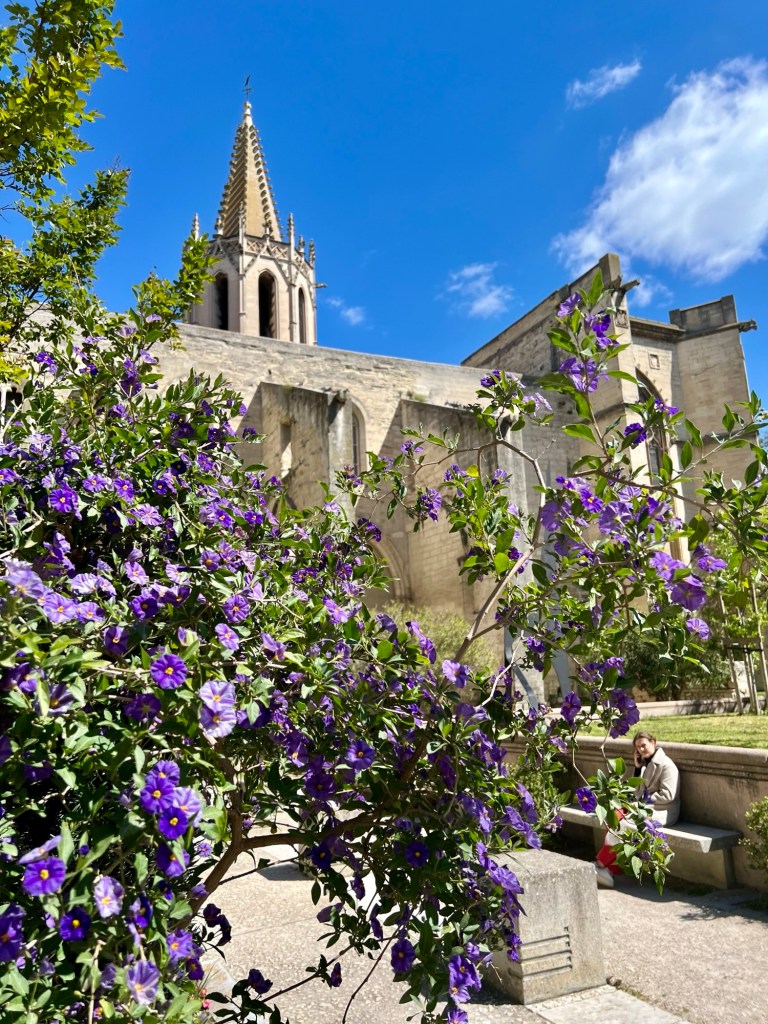


This legacy is seen in the massive Palais des Papes (the Popes’ Palace) in the city center surrounded by medieval stone ramparts.

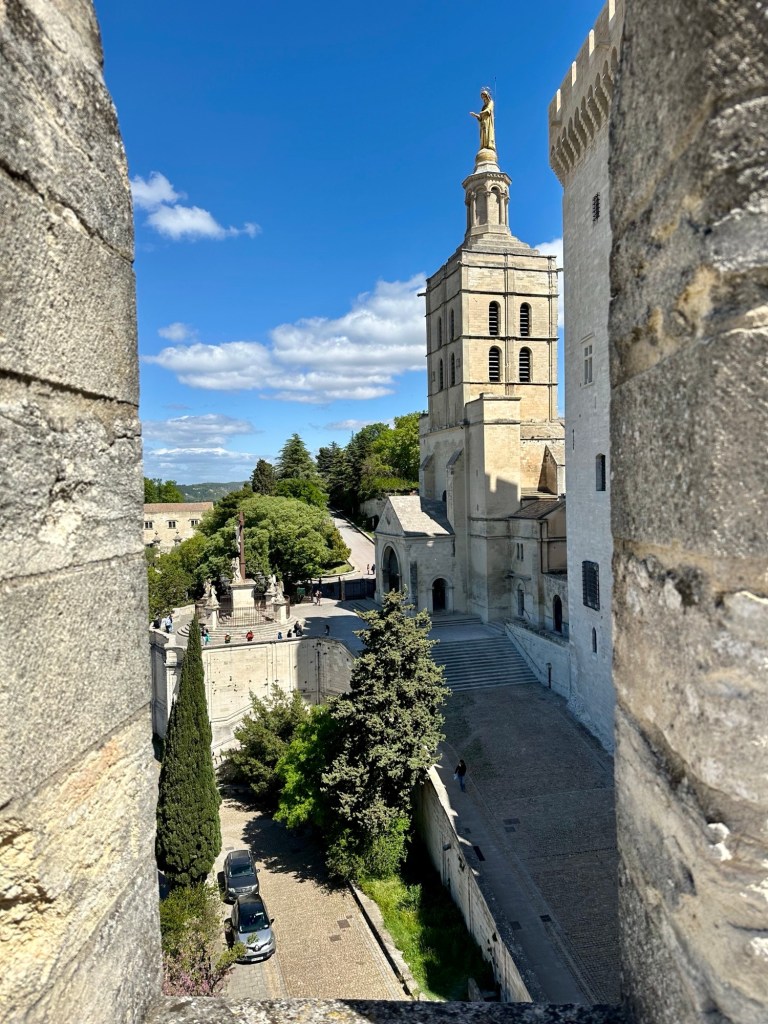

Avignon is a typical Provençal city, walled and old. It is noted for the almost 100 year home of the Roman Catholic Papacy in the 14th century. The Pope’s Palace in the heart of Avignon is massive. This was Kathy’s and my third visit to this appealing city, so while Randy and Melisa toured the palace, we lallygagged in the back streets and parks of the city. In the evening of April 19, we stumbled into a fantastic gastronomical experience. Only one table was still available for the evening, and we took it. Not cheap, but wow! It started out with a pre-appetizer that was explained as “one perfect bite.” Five layers thick–blood orange cream on the bottom, Greek feta on the top, and watercress in the middle–it was designed to clear the palate as one savored the taste combinations on the tongue. Each successive course was delectable. My roast duck was the best duck I have ever eaten. The ambiance of old world French elegance and impeccable service in a candle-lit vaulted room reminded us that unexpected experiences can be the best.


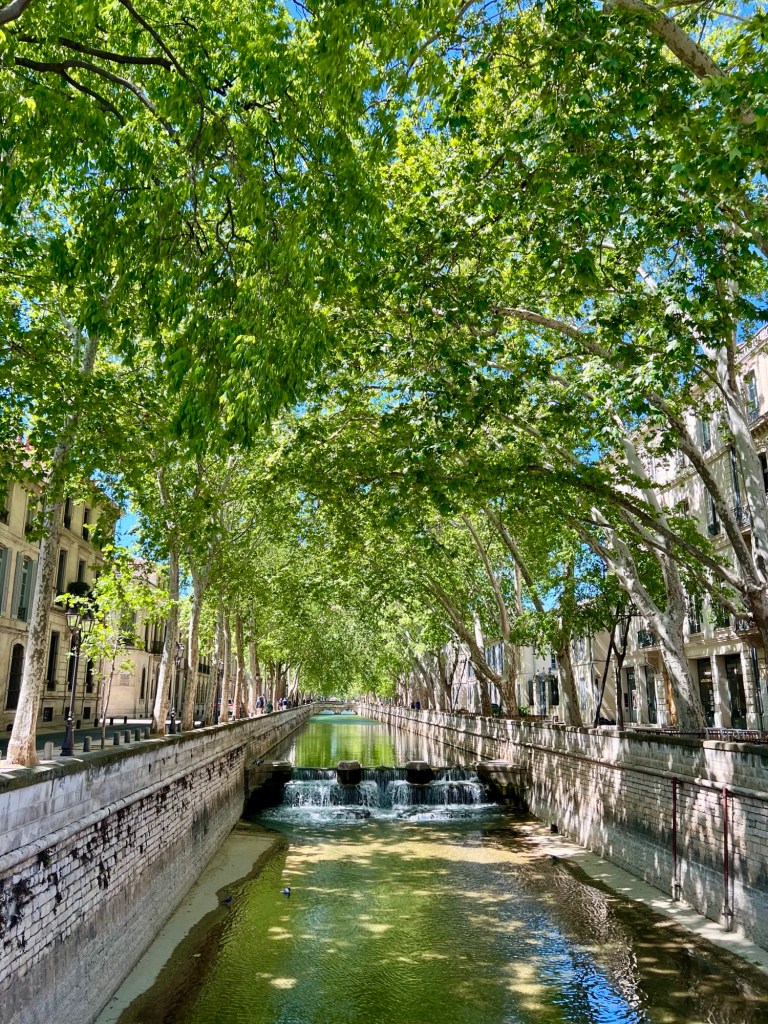
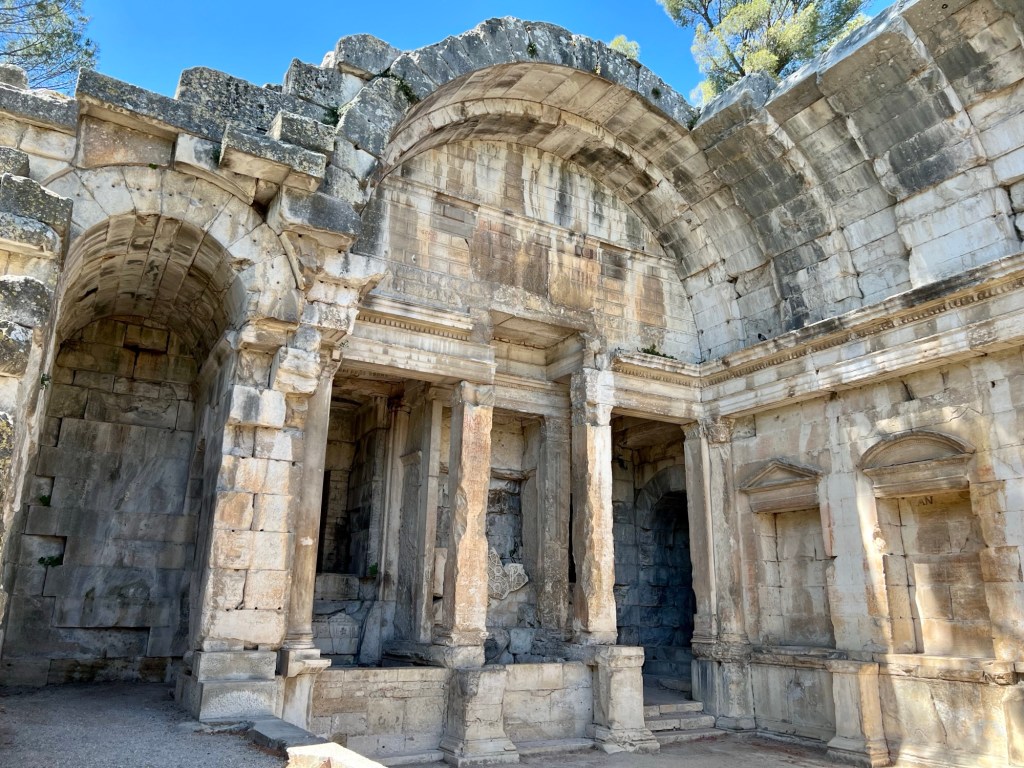
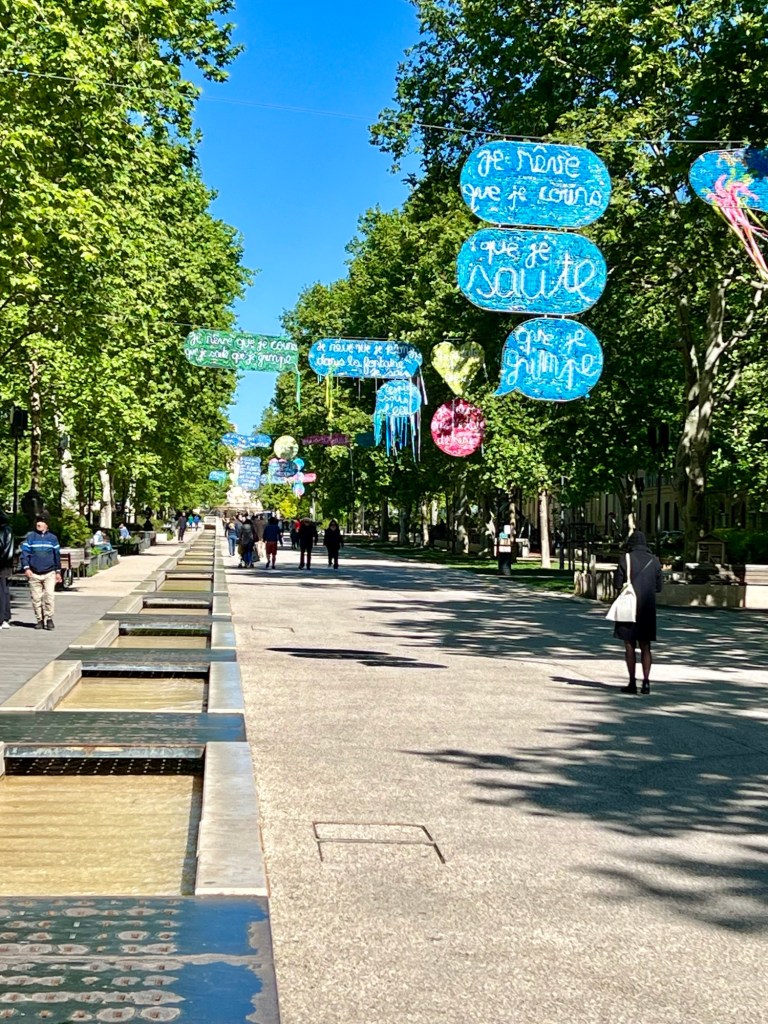
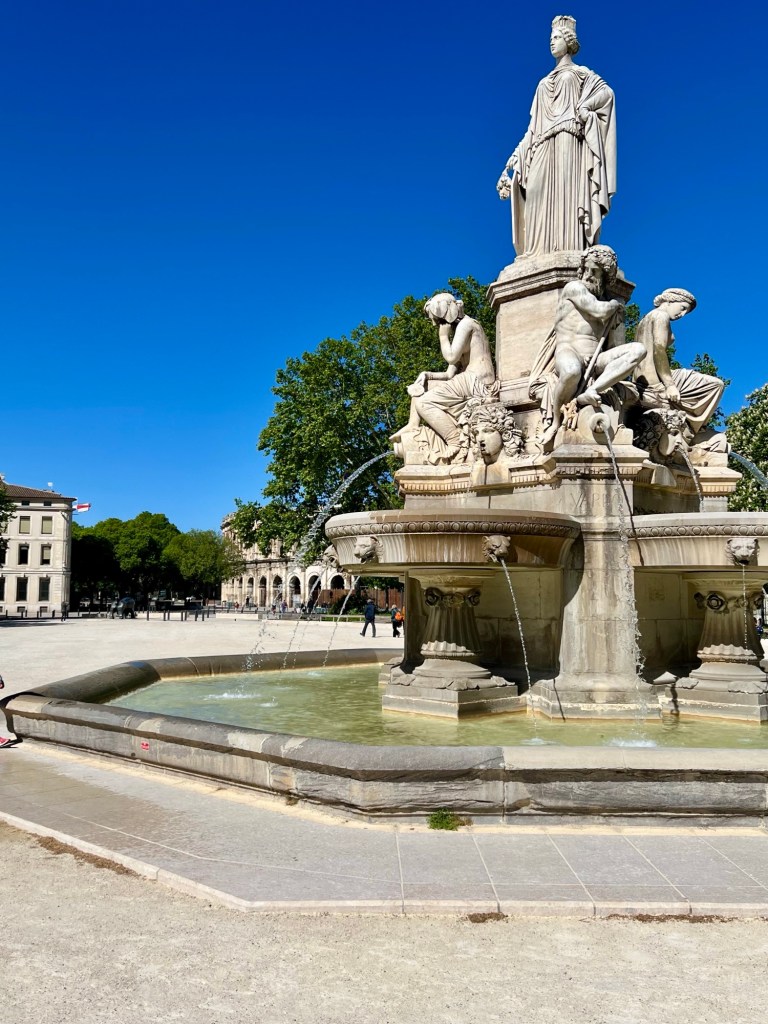
We had planned to go to Aix-en-Provence on April 21, but the transportation time did not work out for us, so we substituted Nimes in its place. Once again, an unexpected delight! Nimes has stately buildings set on tree-lined boulevards with controlled streams cascading over waterfalls running the length of the boulevards. An ancient Roman Empire outpost, the massive intact temples, colosseum and statuary gave the immaculately clean city an imposing feel. We enjoyed strolling a large city park, its house chestnuts in full bloom. The weather in Nimes was delightfully sunny and warm. We all agreed the day was awesome. Now, on to Toulouse.
located between the sea and the Cevennes hills.


.
SURPRISING SEGOVIA
October 14, 2022
During our time in Madrid, Kathy and I took a day trip to Segovia while the Krahn’s and Standly’s spent time in Madrid on a hop on-hop off tour. They also went to the oldest restaurant in Spain, “Sobrino de Botin.” They had seen it on “Somebody Feed Phil” which is a Net Flix serial. The restaurant specializes in suckling piglet. They raved about the experience.
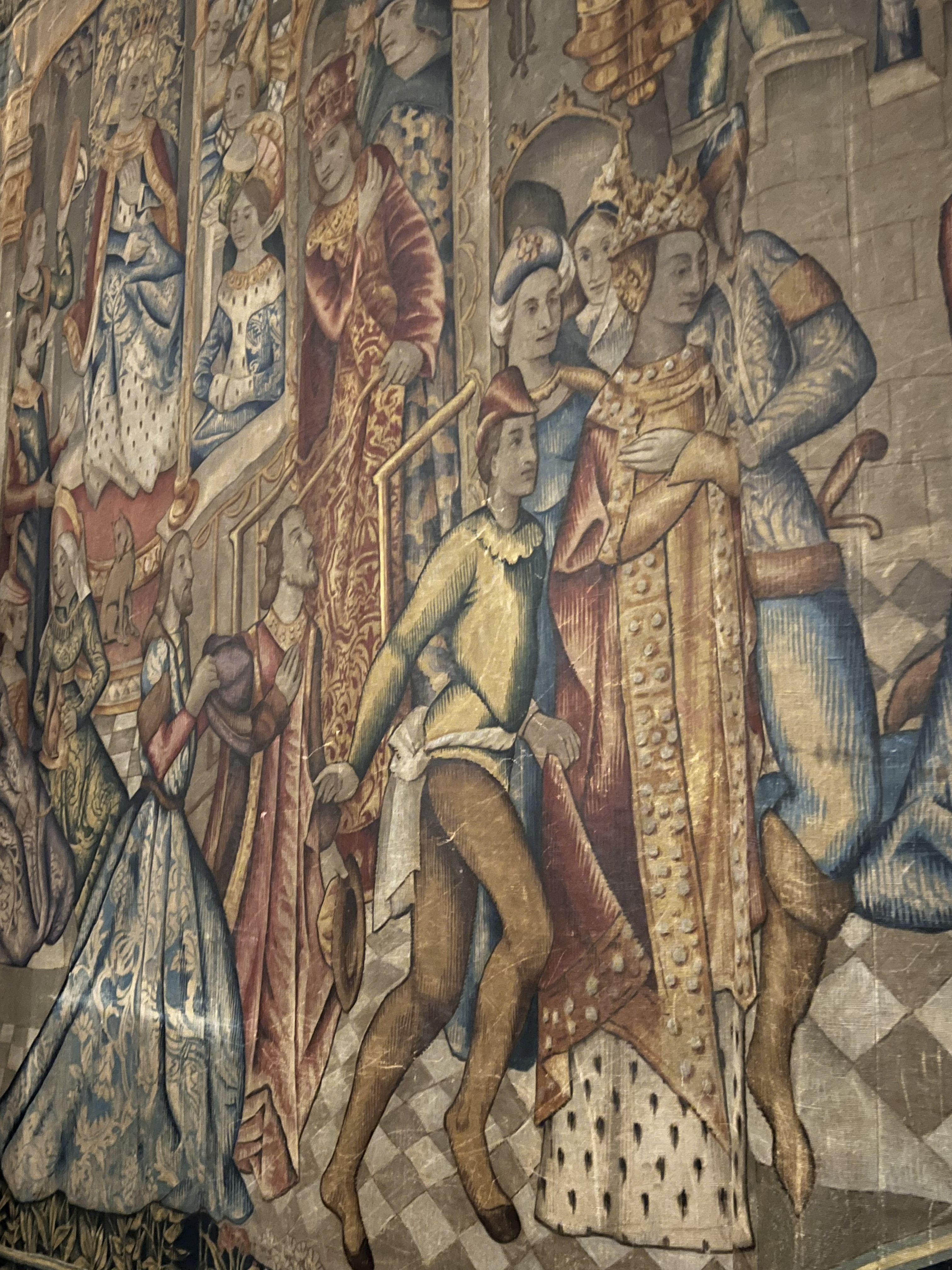
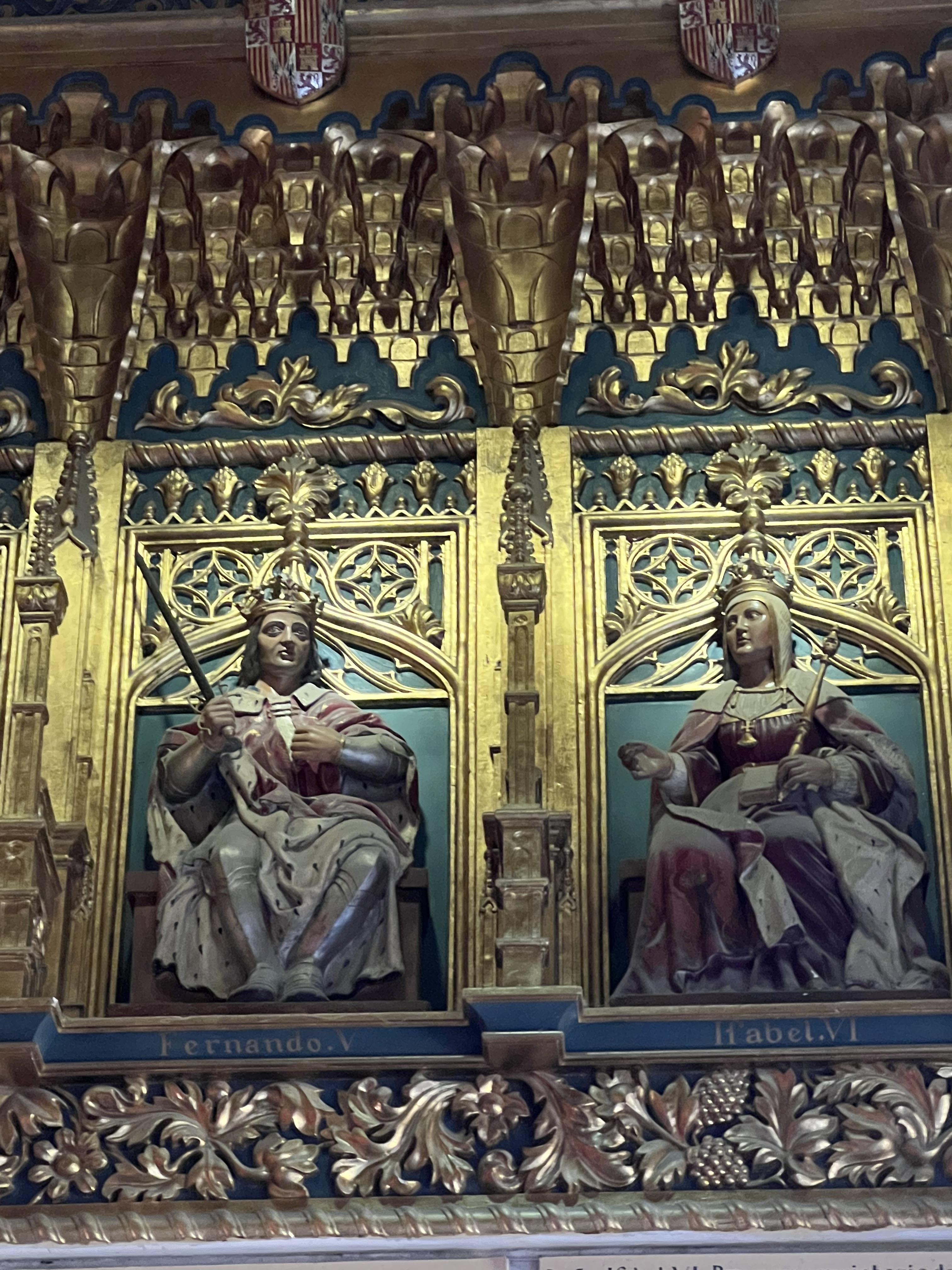
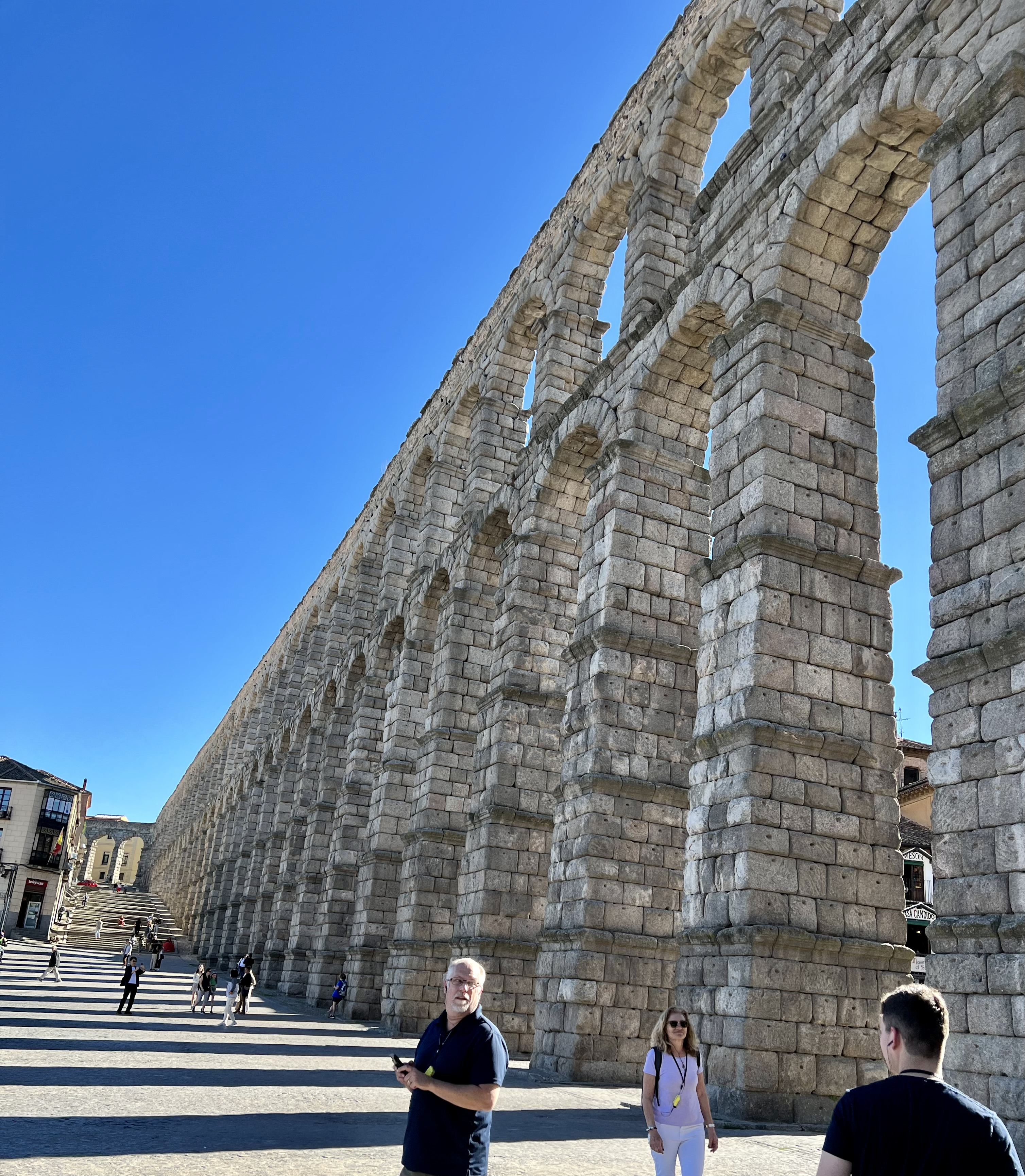
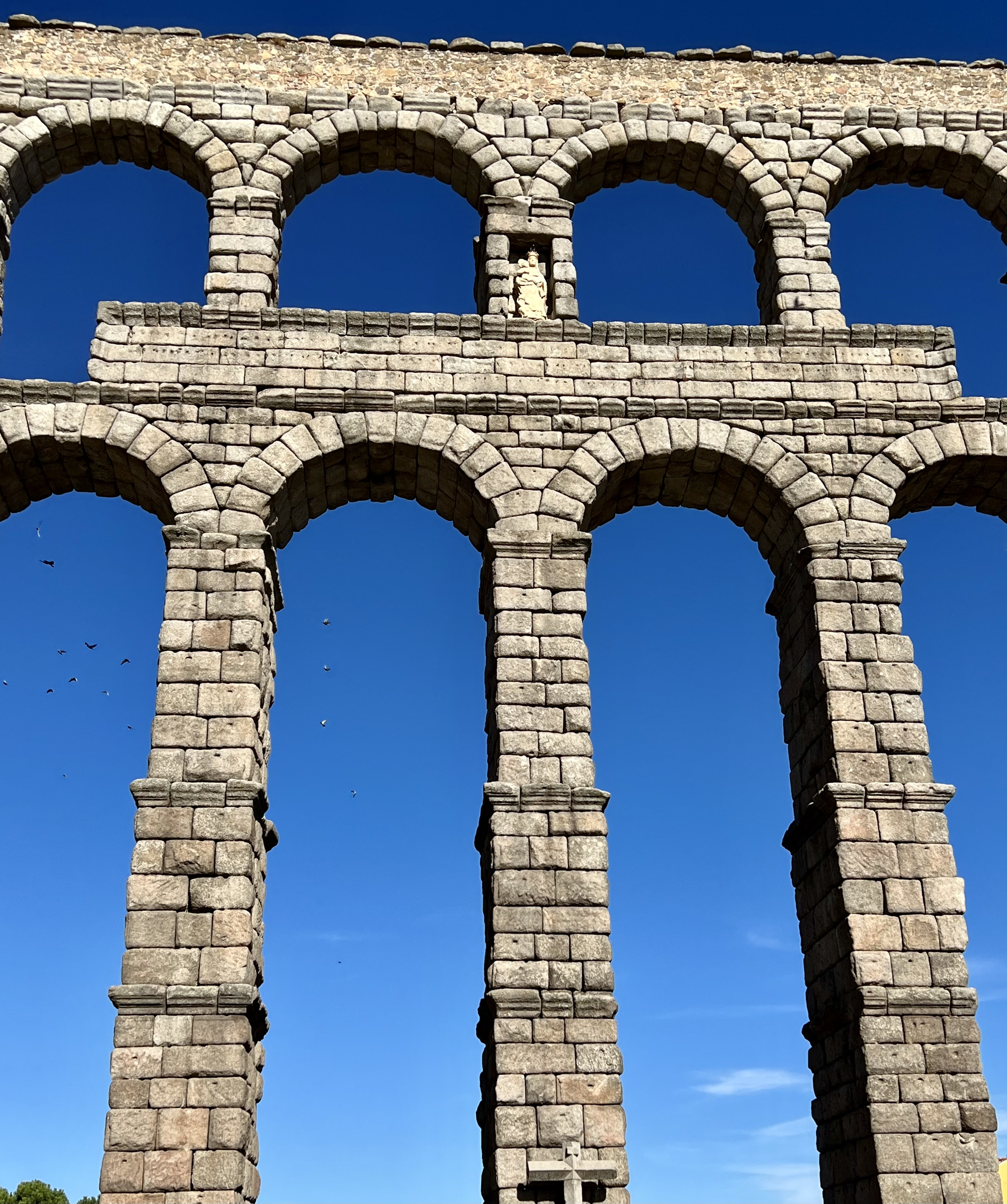
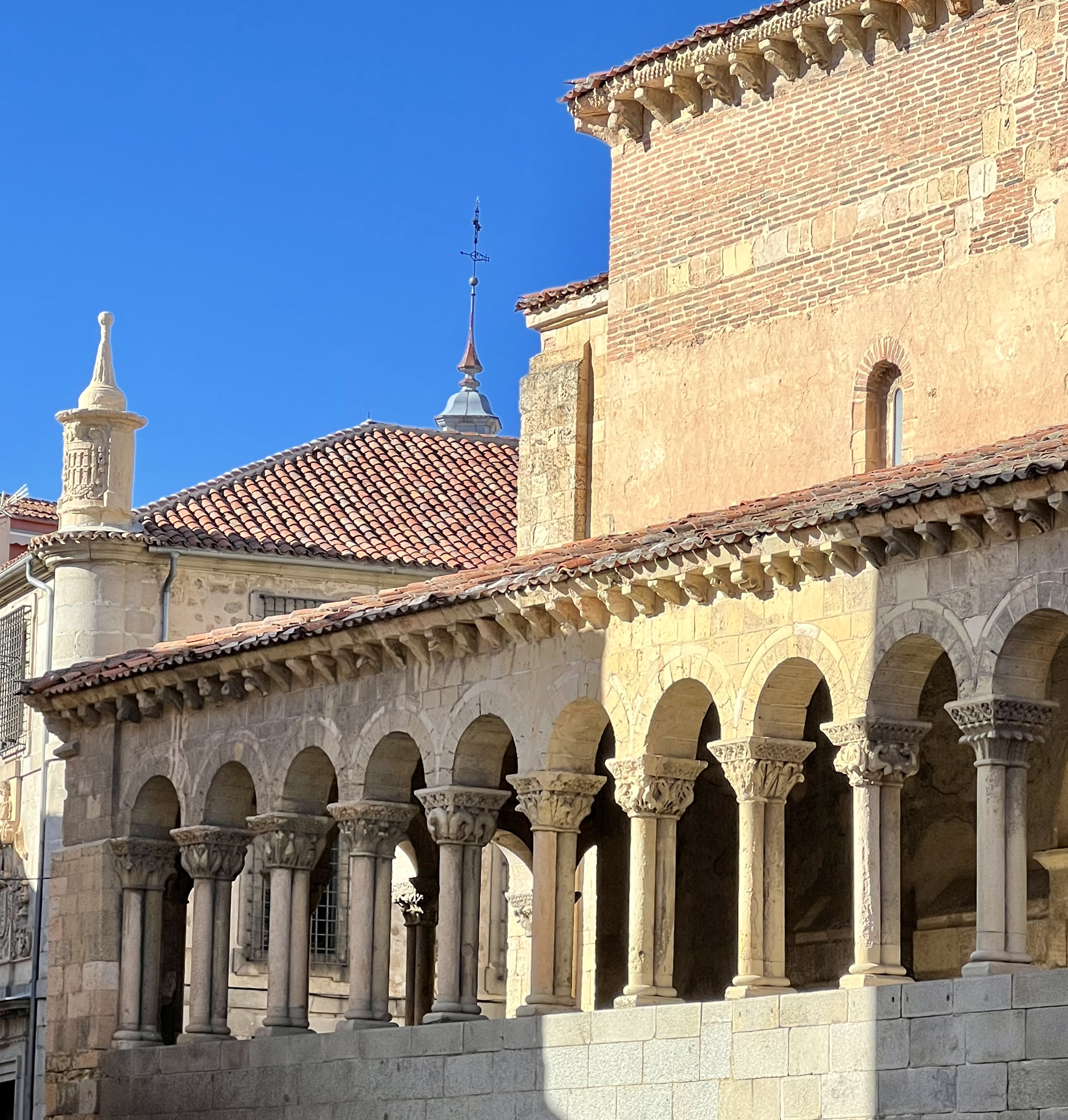
Segovia was a very rich surprise. It is home to the 1900 year old double-tiered Roman aqueduct. Built with no filler (such as concrete), the stones were so expertly laid that the aqueduct has stood the test of time. It is a very impressive sight as you enter the city. The home to a multitude of Spanish monarchs, Segovia has a central street known as the Royal Street. It is a narrow cobblestoned lane that goes up to a crest on the hill and then down again. Over the years, Nobles and the rich, wanting to be near the Royals, built palaces along the street. Tiles on the buildings are in various styles indicating what was in vogue as the years went along. At the top of the hill is the impressive cathedral. The original cathedral was destroyed in a revolt to the rule of Charles V, Holy Roman Emperor. Emperor Charles raised an army to defeat the rebels but, in so doing, the Segovia Cathedral lay in ruins. The people of the city were so distressed that they demanded a rebuilding, and in only 52 years, a record time, the new gothic edifice was consecrated. Further down the hill on a precipice overlooking a deep valley is the magnificent Alcazar. First, a nearly impregnable fortress built by the Moors, when the Spanish took over and under Bourbon influence, the citadel/palace was expanded and has a definite French appearance. It is beautiful. The mote around the palace has no water since the palace is built on a solid rock outcropping separated from the land with a very deep crevice. The interior is richly decorated and lavishly furnished. Encircling the ceiling, the Monarch’s Room has a statue of every monarch who served through the centuries. It was here that King Ferdinand and Queen Isabella granted Columbus the money to set sail westward. Wonderful history amidst such beauty.
The trip to Segovia took us through various terrain. Dry flatland, then scrub brush, sheep and cattle areas with rich walls and finally, ascending the mountains, pine forested highlands and then down again to dry land areas with rivers coursing through the area. We ended the day in our wonderful apartment with our friends eating pizza and other goodies from the bakery next door and reminiscing about our day’s experiences.





 kgraumann
 wgraumann
 gofarther.me