
Home » Posts tagged 'history'
Tag Archives: history
Held Captive in a Cab
August 30-September 10, 2025
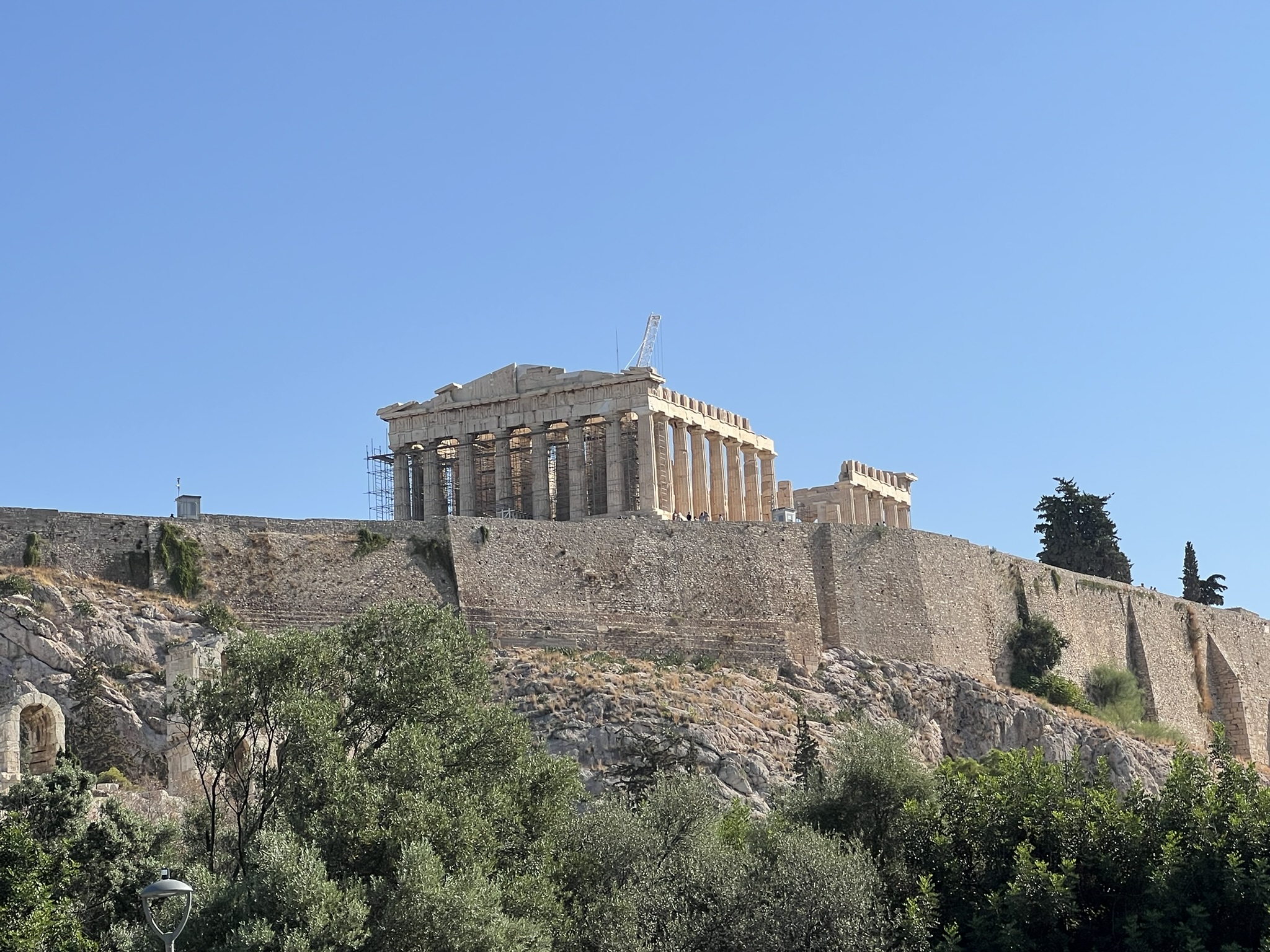
Athens, the cradle of western civilization and democratic principles, is sprawling and, in most places, nondescript as far as architecture is concerned. The historic sites, such as the Acropolis, are awesome. To think that many of the greats of history walked these areas is humbling. Prior to leaving for Greece, I had a day of infusions for my multiple myeloma and I slept little on the flight over. Even arriving two days early so that we could tour the historic sites before boarding our cruise, I was “out of it.” Thankfully, we had been to these sites several years before. Still, I powered forward as long as I could. Eventually, I told Kathy, “I’m done,” and got an Uber back to our hotel. She stayed with our travel friends at my encouragement. Upon arrival at the hotel I began to exit the Uber cab and the driver said, “You have to pay!” I replied, “I have paid on the Uber app.” He said, “NO—this is a cash only cab,” and he would not accept that I had paid through Uber. He finally said that Uber would have to refund me. I had no cash—I had left it with Kathy. The stand-off began! I was so tired I wanted to just lay down and sleep in the cab. On the narrow street in front on the hotel, cars began to line up and honk. My brain was in a fog! I should have said, “Let’s call the police and have them settle this,” but did’t even think of that. Finally, the cash cab became a credit card cab, and I paid for my ride a second time at a rate higher than what I had already paid to Uber. I needed to sleep and, once in the hotel room, collapsed on the bed, not even removing my shoes to sleep, sleep, sleep!

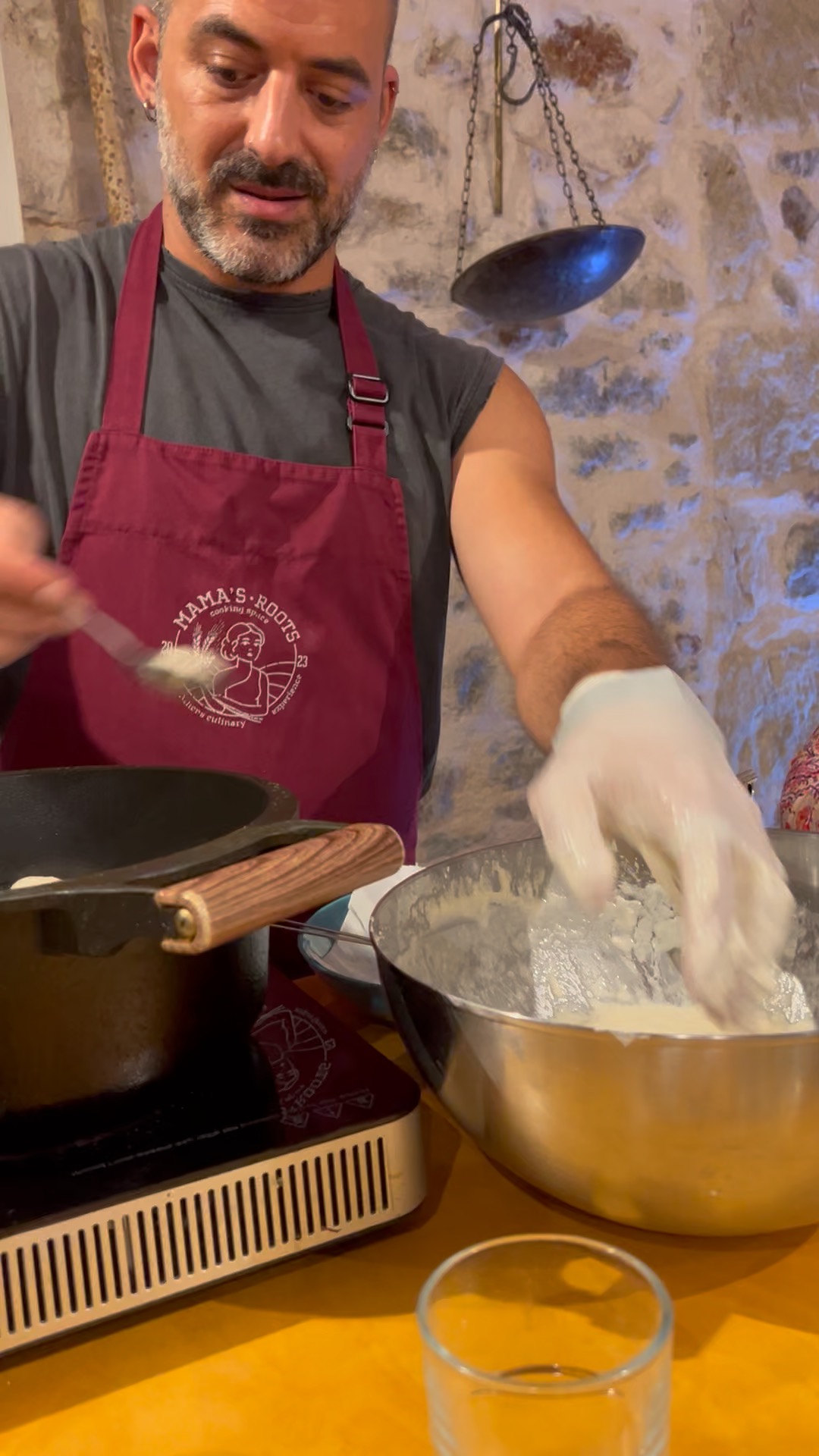
Greek cooking class—six courses—was wonderful. I cannot spell nor pronounce the foods we prepared. Twelve of our travel friends had a fun time eating the foods we prepared. Friend Melisa was excited to try the Greek dessert donuts we had prepared. The lead chef placed a bowl of fried donut hole shaped delicacies covered in honey and cinnamon in front of me. Melisa rushed over to grab one. As she pushed one into her mouth, I cried, “Melisa, they are raw!” Her eyes widened in fear; her mouth froze, and her hand instinctively went to her mouth. I started laughing hysterically, and she realized I was kidding. Still days later, she has not talked to me :-).
One evening meal, we walked to a highly recommended restaurant near our hotel. My whole squid—tentacles and all—stuffed with feta and tomatoes was supremely delicious.
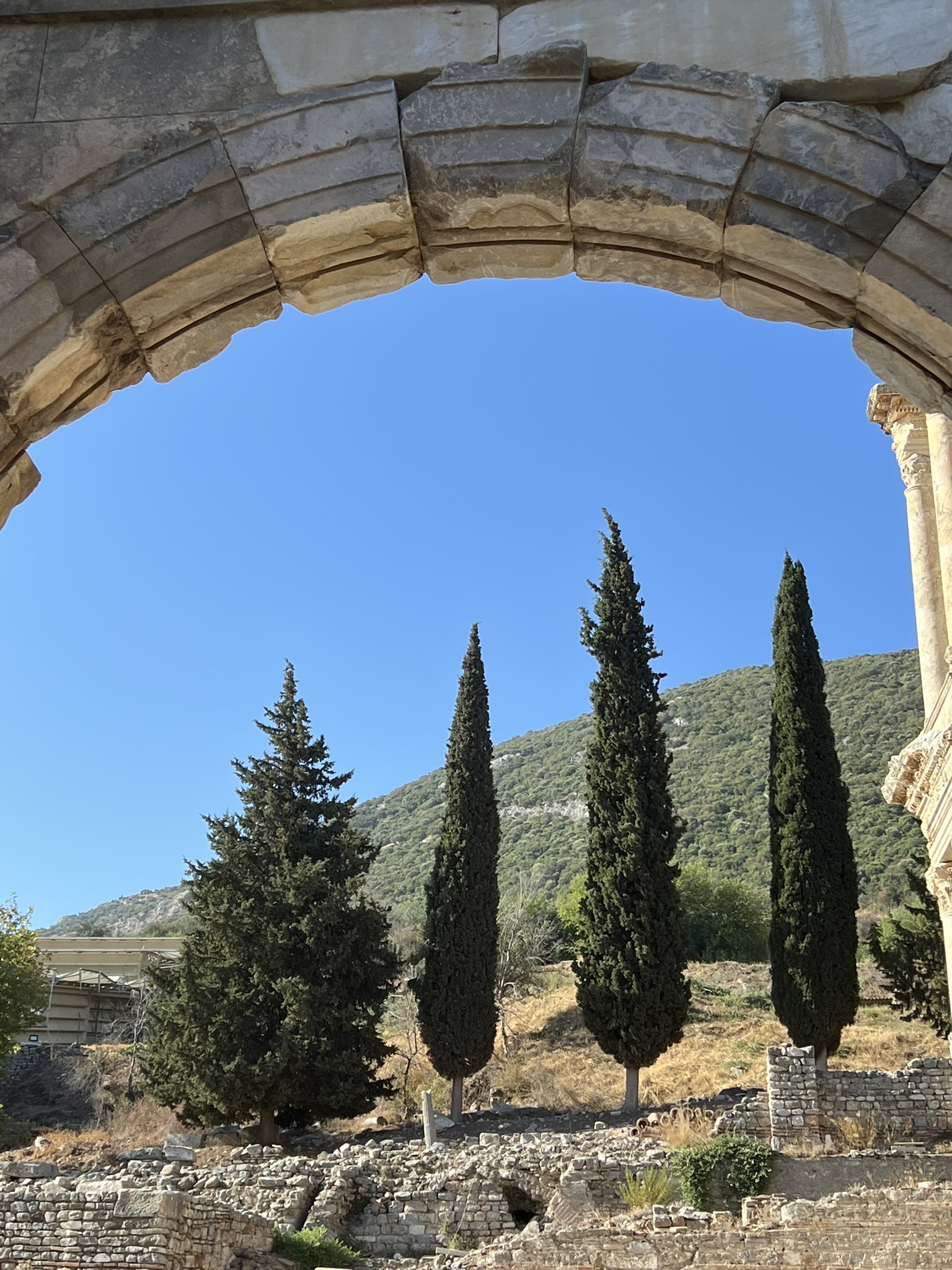
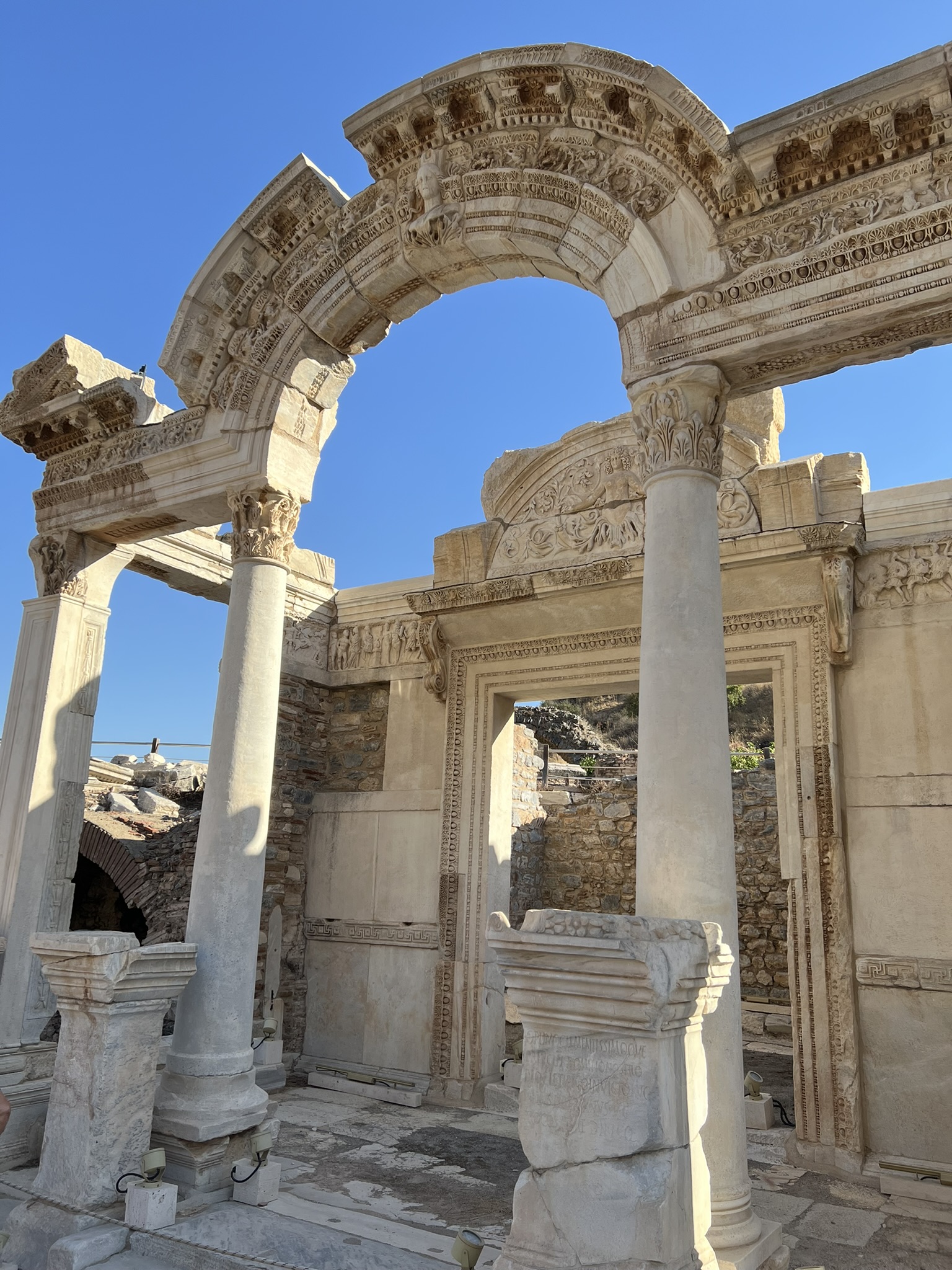

Our cruise of the Greek Isles and Istanbul (two days) and Ephesus in Turkey has been delightful. The white (lime) washed cities, often lining the mountainous cliffs overlooking the clear blue and turquoise waters below, were enchanting. Blue-domed Greek Orthodox churches dotted the heights and old Greek windmills added a unique aura as we walked the hand-laid smooth stone lanes. Istanbul was impressive, and our group of friends frequently commented on how clean and “beating expectations” it was. The Blue Mosque, however, was less than I expected. Still, the intricate blue tiles were beautiful. The Hagia Sophia, the ancient and magnificent Christian Church, was faded glory since so much of it is covered over inside. It is now a mosque and any mosaics with human images that can be seen by worshipers are covered over since Islam forbids such imagery in worship spaces. Ancient Ephesus, where the Apostle Paul was persecuted and where an early Christian congregation was founded, has magnificent ruins. Stone columns line the 3000 year old stone street that leads the way to the proudly standing tall Library of Celsus. Two amphitheaters, one seating 25,000, draw attention. It is hard to believe that 80% of the city has yet to be excavated.


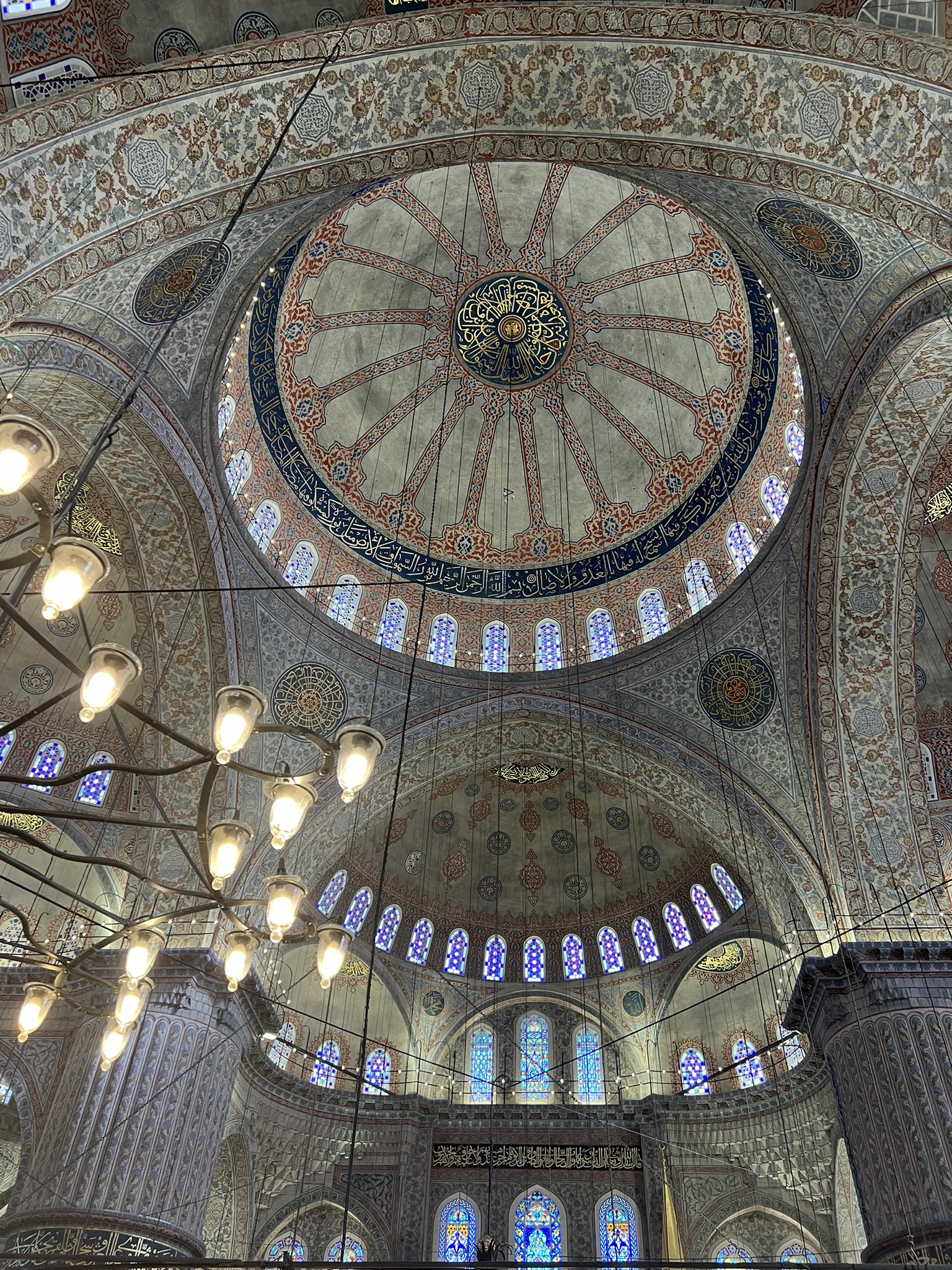
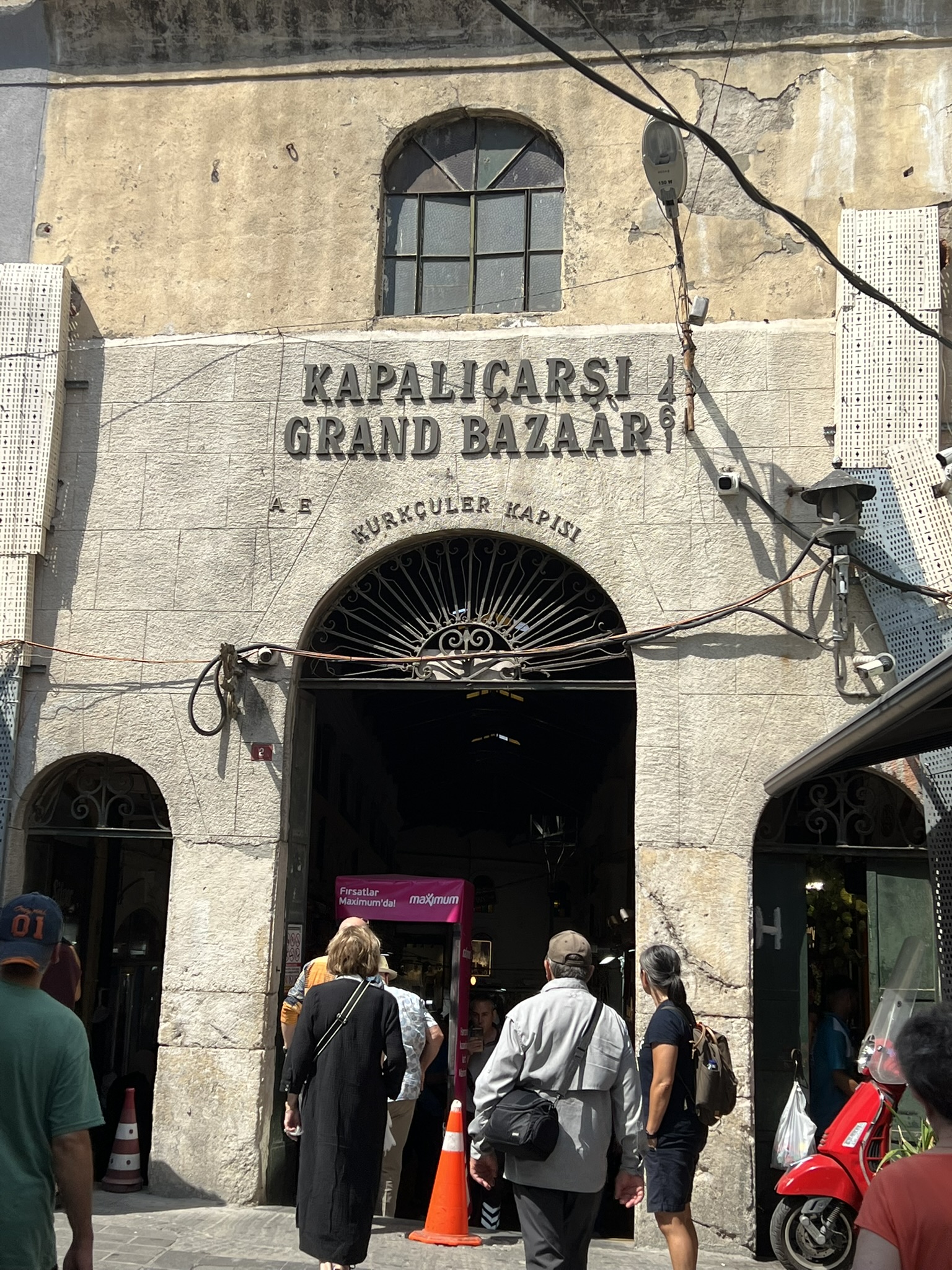
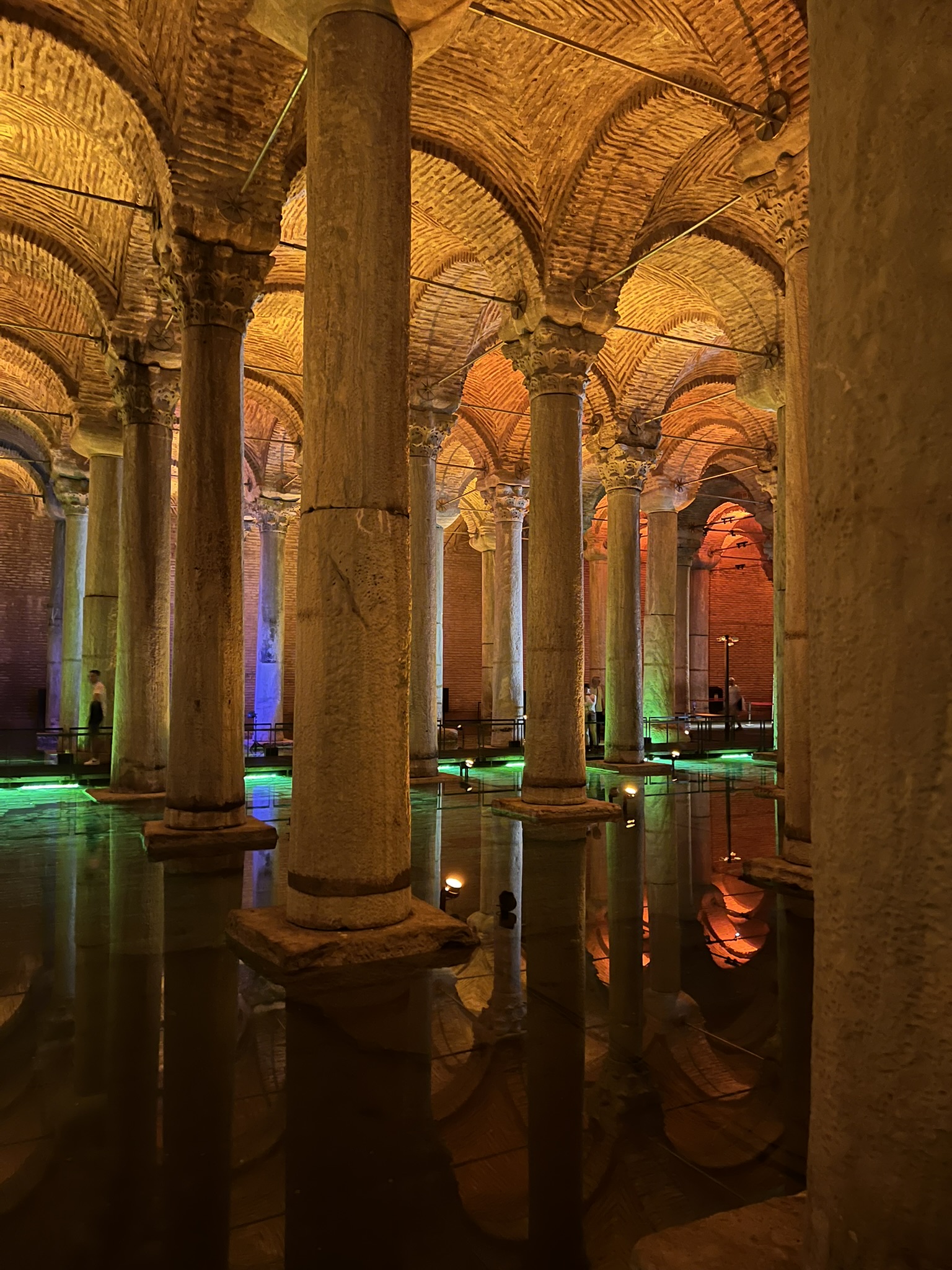
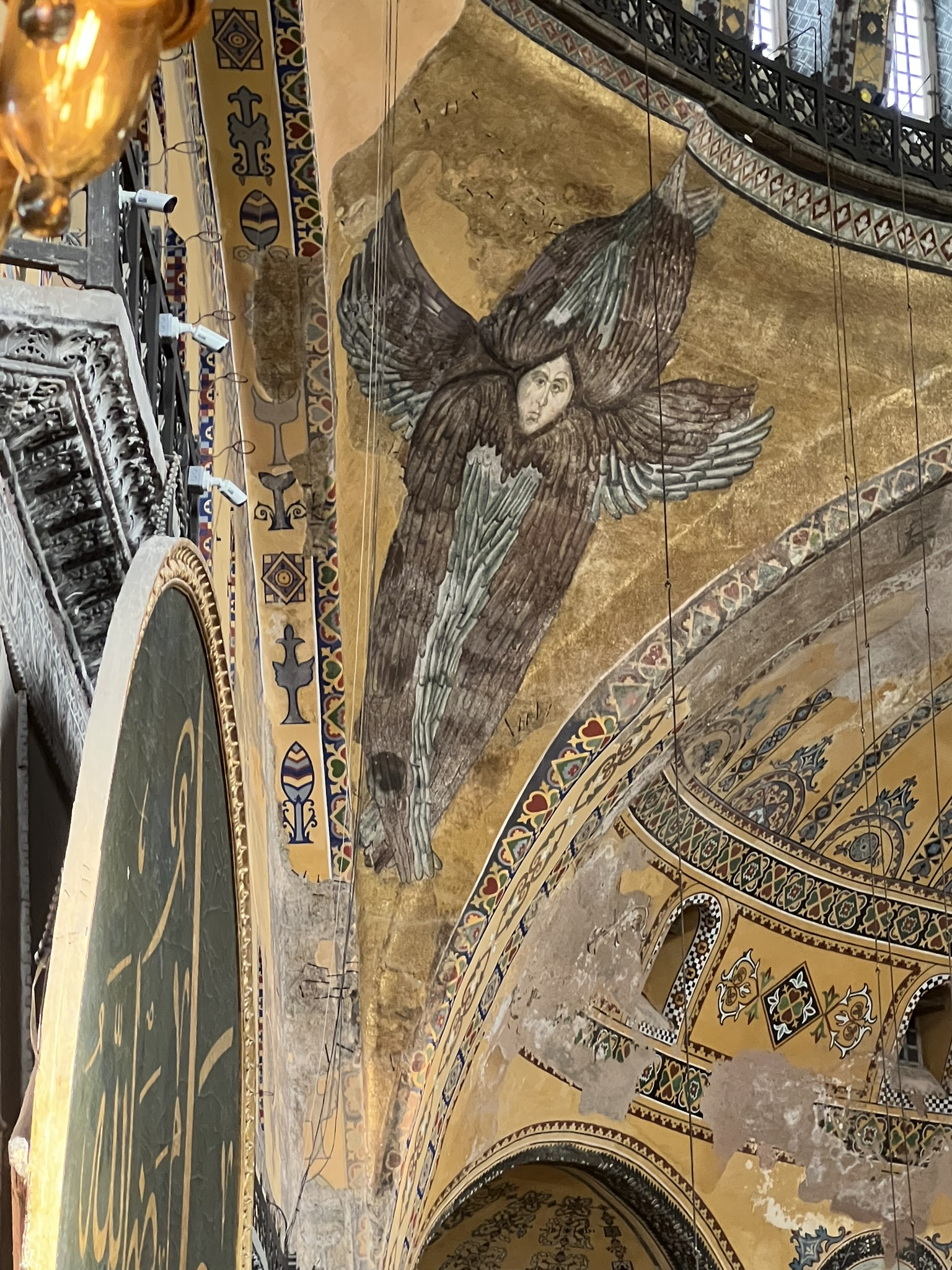
The fan favorite port of our travel buddies is Rhodes. Santorini and Mykonos were wonderful, but Rhodes was not only accessible, but architecturally different, since it contained many Byzantine elements including the stone walls and round towers that ringed the city. The port where the mighty Colossus of Rhodes (one of the ancient world’s seven wonders) once stood still beckons with its clear waters.


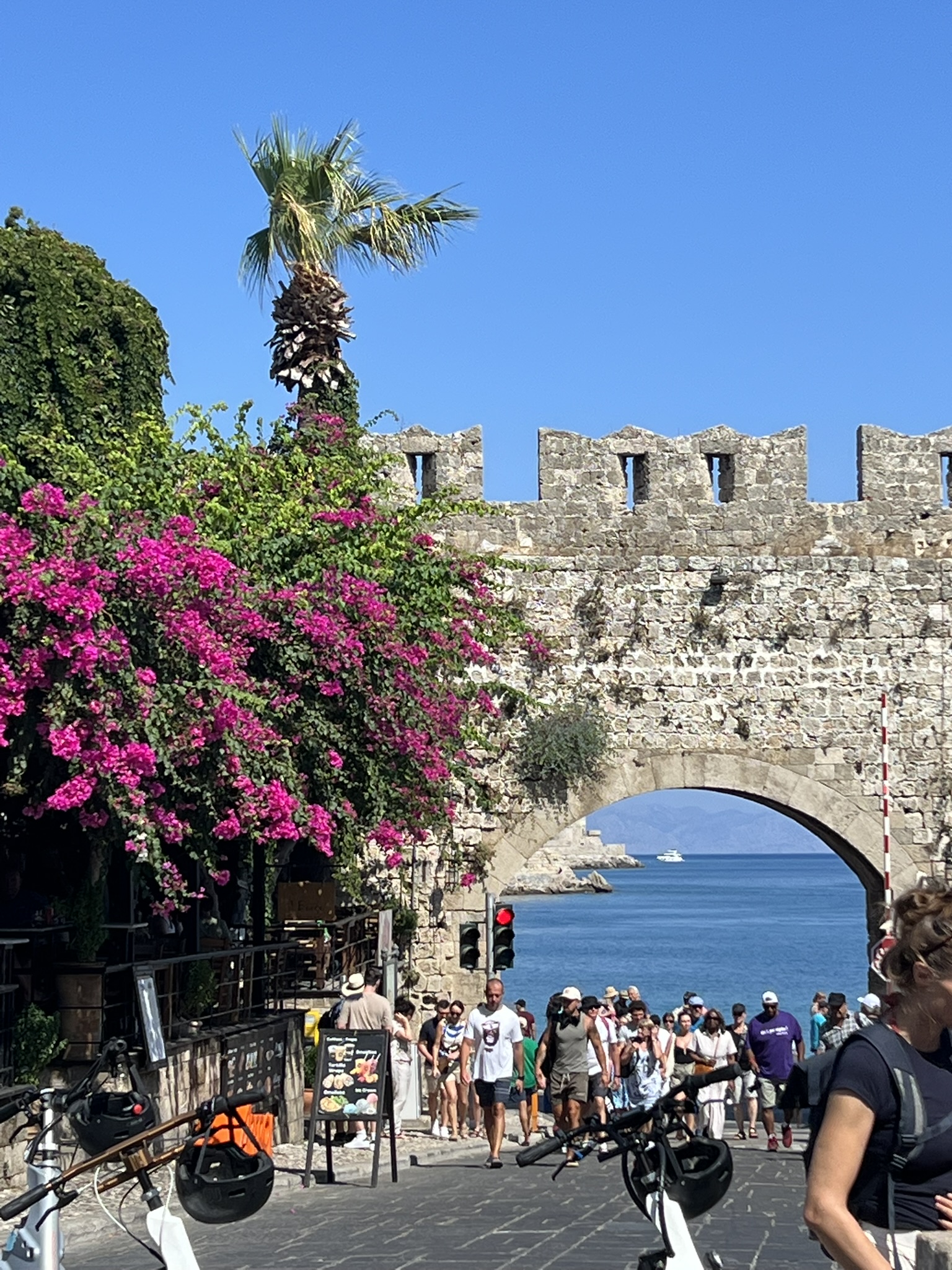
There were nineteen in our friends’ group that traveled this far; fourteen of us will continue on to Milan tomorrow.
WEG
The Doomed Cathedral of Beauvais
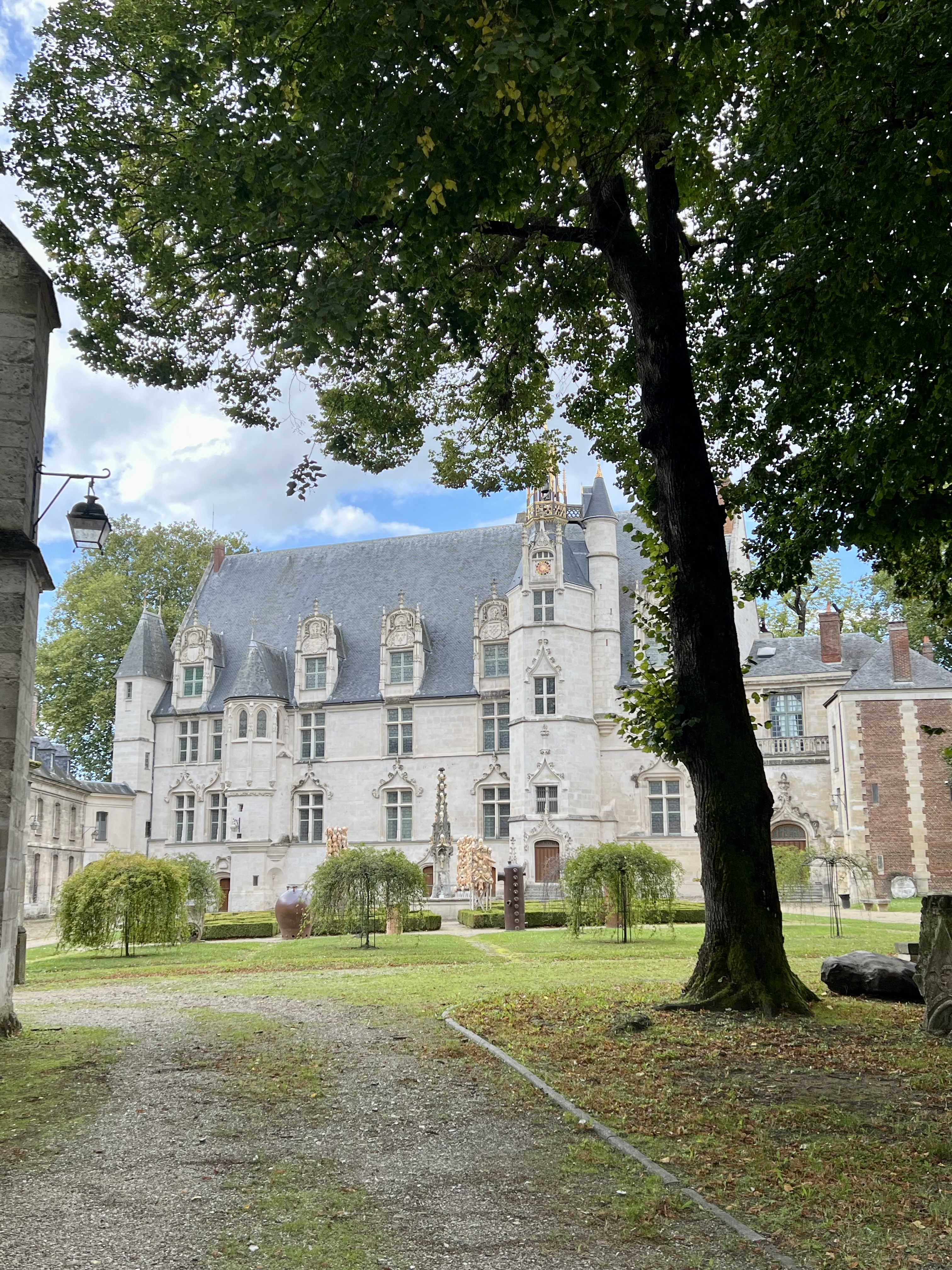
I was somewhat in trepidation walking into the Roman Catholic Cathedral in Beauvais, France. One could see how a patchwork of bracing keeps what remains standing. The cathedral is both imposing and sad. The vision was to build the largest cathedral in France, possibly even the world, back in the 13th Century. Construction began quickly and effectively and soon a transept and the choir (altar and music area) arose. It was majestic–the highest interior height (still to this day) achieved in the gothic form. Then, one by one, calamities struck. Part of the 154 foot high vaulting over the choir collapsed and repair work took needed funds from other projects. The nave was never to be built because of a fateful decision to build the highest spire ever conceived over the altar before construction on the nave began. Sure enough, reaching 492 feet in height, the spire made the cathedral the tallest building in the world until it began to move and finally collapsed in 1537. If the nave had been built first, as originally planned, it is highly possible the spire would not have fallen. Wars, especially the 100 Years War, came and went, and funds dried up. Then, during the French Revolution, anti-clerical elements destroyed the statuary that was a hallmark of the exterior, and interior treasures in the cathedral were hauled away. Later, the Beauvais Cathedral became a patchwork as efforts were made to conserve what remained.
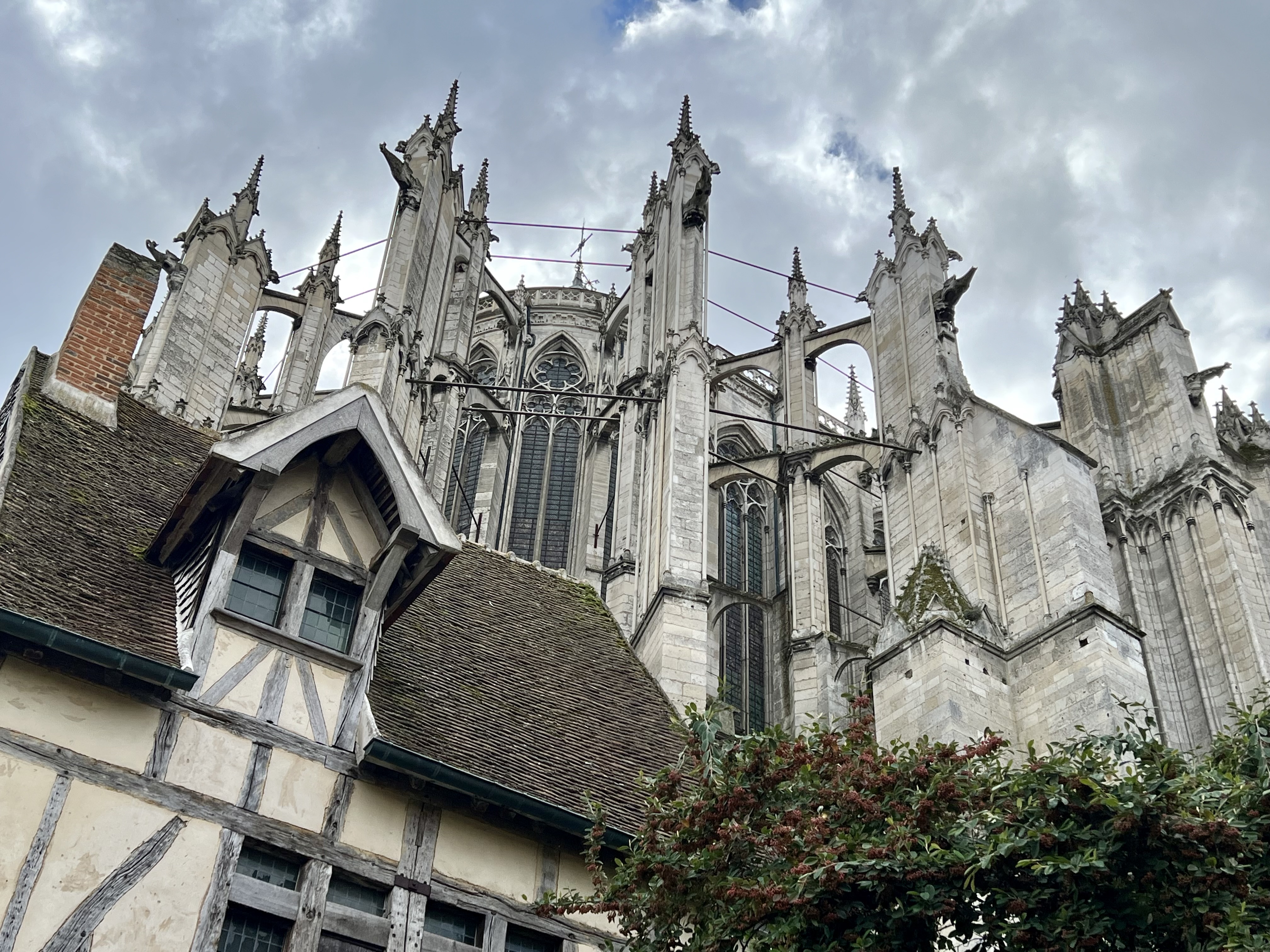


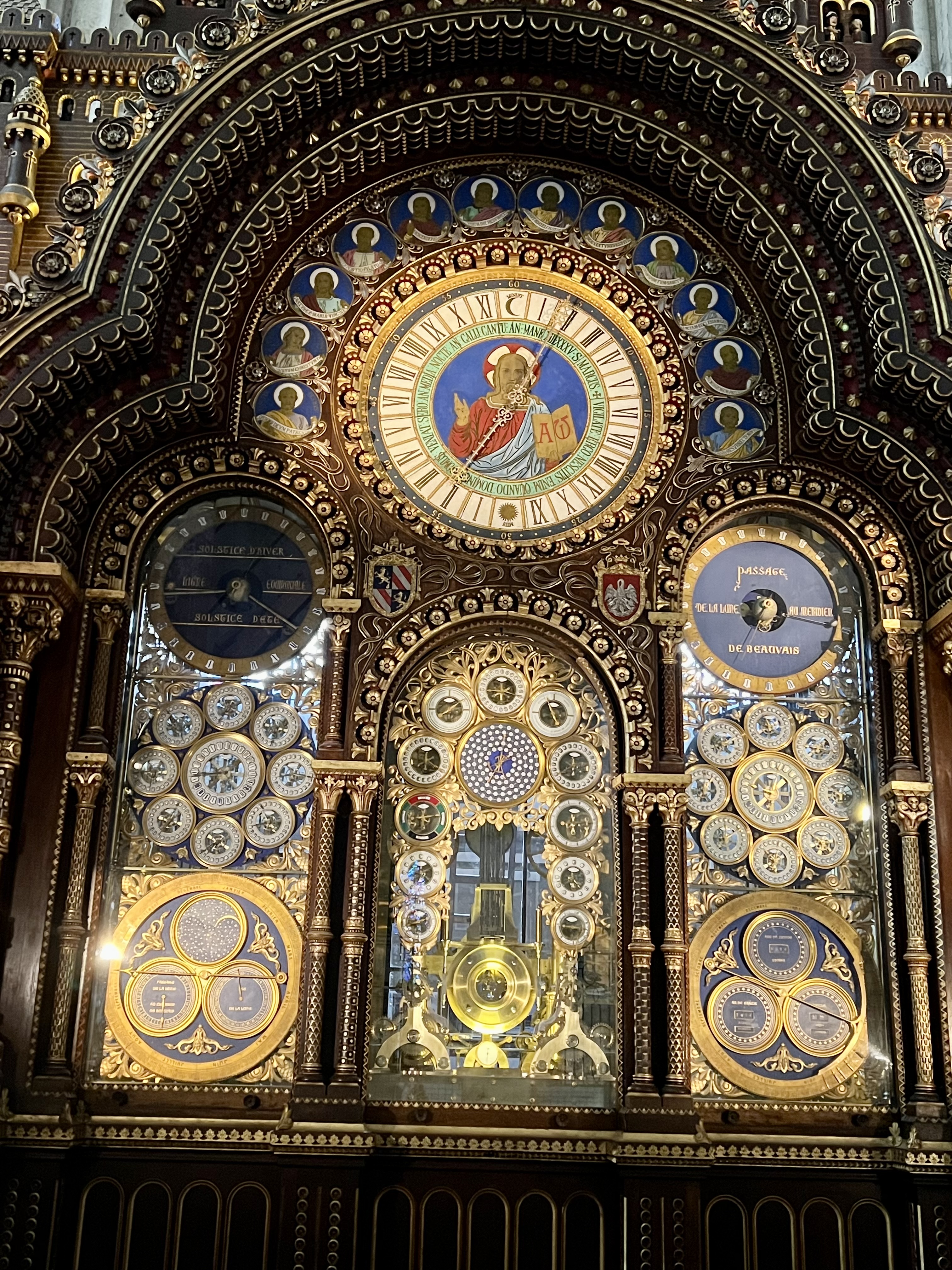
What remains is still imposing! The one transept and the choir are immense and show how glorious the entire cathedral would have been. We took time to view the cathedral’s beautiful astronomical clock containing 90,000 components and 50 moving figurines including numerous functions it can fulfill. It played and chimed and figures danced as we watched.


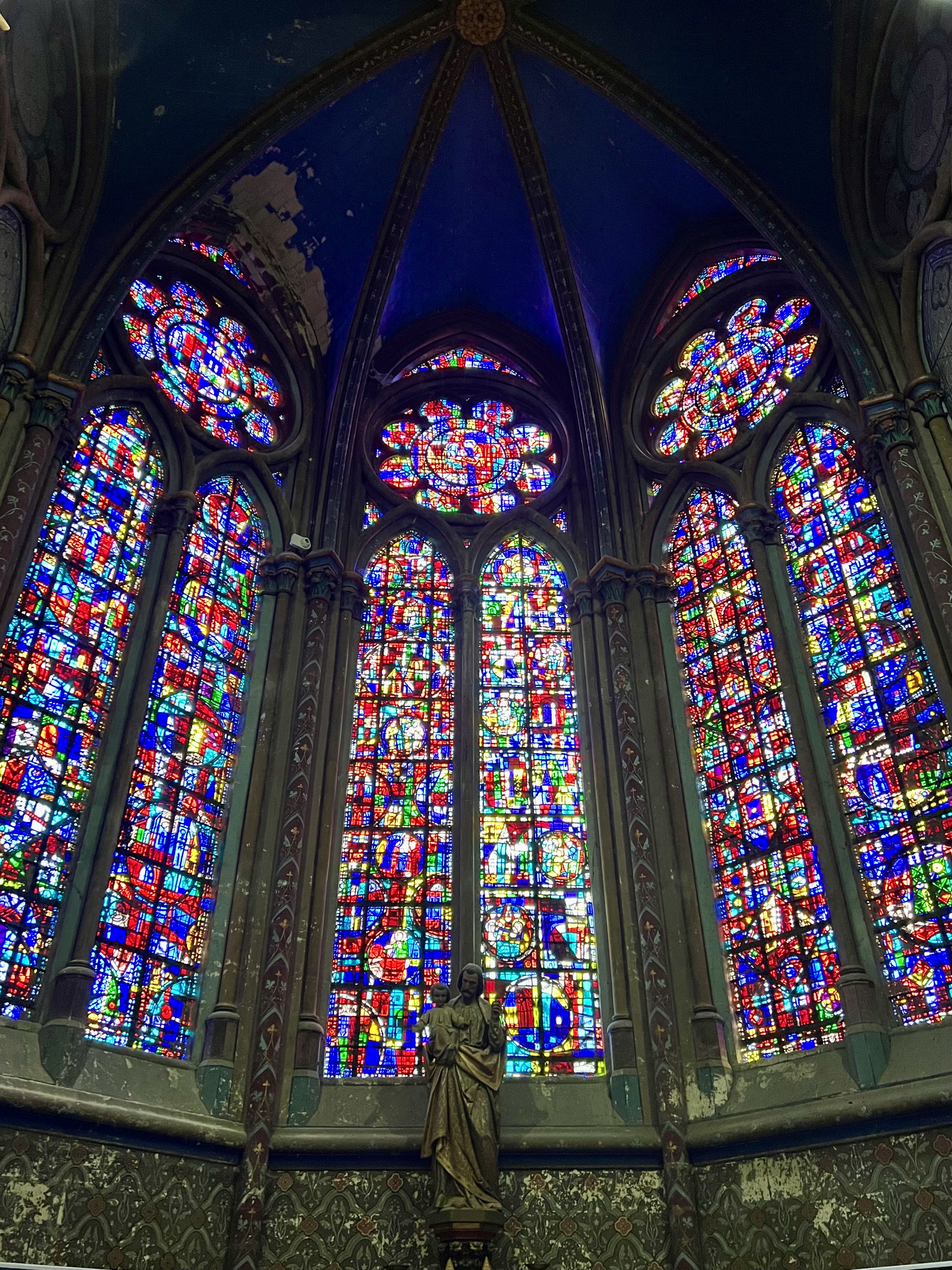


The rest of Beauvais is small city France, and we enjoyed walking the streets and finding patisseries. Tomorrow, we train to Paris’s Charles de Gaulle airport (less than an hour away) for an EasyJet flight to Copenhagen and the next day a flight home. We have thoroughly enjoyed our trip and yet, we are happy to return home, God willing, to our family and friends!


 kgraumann
 wgraumann
 gofarther.me