
Home » Art Nouveau
Category Archives: Art Nouveau
Up, Up and Away
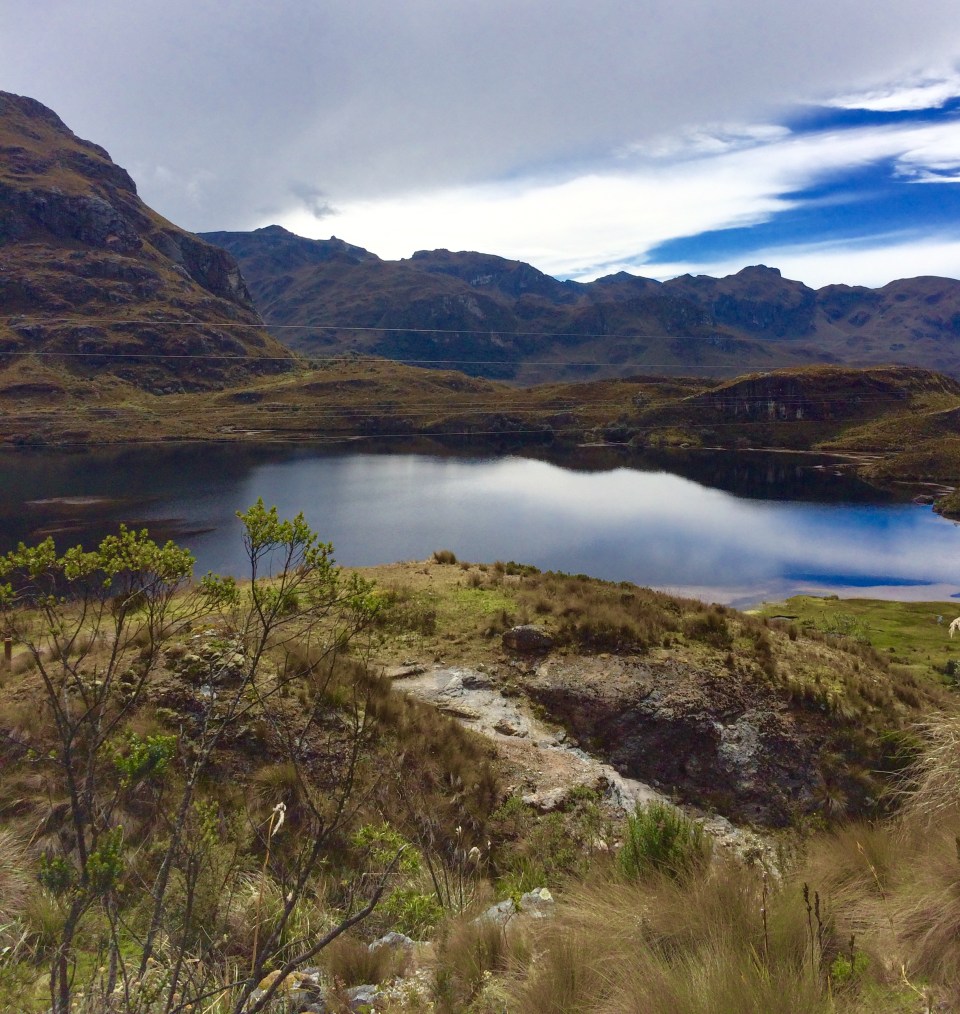
Cajas National Park, Cuenca, Ecuador
Did it! Climbed over 600 feet almost straight up to reach an altitude of 14,200+ feet above sea level. Still, the Andean peaks were another 1,000 feet higher in Cajas National Park, just outside Cuenca, Ecuador. The park contains over 1,000 lakes/lagoons, and I could see them in every direction from my vantage point. As our tour bus drove into the park, we were astounded by the sights—deep valleys cut between towering peaks, rivers flowing and waterfalls feeding the flow, pine forests and then grey green cliffs and mountain sides and, all along the way, small lakes to large lagoons.


Kathy and I felt guilty–our beautiful tour bus belonged to us! No other tourists had booked and so we had the bus, chauffeur and guide to ourselves. It turned out to be a private tour for the day, and it only cost $70 for the two of us. The majestic sights soon drove the guilt away! Our first stop was to the holiest place in Ecuador, Sanctuario de la Virgen del Cajas, an outdoor pilgrimage site where the Virgin Mary was said to have appeared to an indigenous woman. The setting was amazing, a valley running one direction and high peaks the other. A tall crucifix stood to one side with a mountain chapel with straw roof, and across from the chapel stood the rock upon which the apparition of the Virgin was said to have occurred. Our time here was both tranquil and uplifting.


We stopped at lagoons, and at the the “three crosses,” a short climb to a vantage point with three crosses where pilgrims place rocks in honor of those people who have died in the mountains. Of course, we also took “the climb” to the vantage point. Honestly, I was huffing and puffing at these high altitudes, but I was determined to see the sights. As the tour ended, we stopped at a restaurant in the lower park and had a wonderful traditional mountain meal of trout, lima beans, rice and marinated salad. We also got a glass of steaming hot agua de tipo, an indigenous drink made of medicinal mountain plants and drank to give energy for these 13,000-15,500 foot heights…all for the cost of $9 for the two of us.


Once we arrived back at the hotel, we were ready to put our feet up for awhile. We also thanked God for His beautiful creation and for blessing us with the opportunity to experience it! WEG


Walking the Hill

The castle gate on Castle Hill, part of Budapest’s extensive World Heritage site, including the Turul statue, a mythical bird seen as the symbol of power, strength, & nobility, carrying the flaming sword of God

Matthias Church in Budapest on Castle Hill with King Saint Stephen’s sculpture in the foreground
Our hotel is located on the Pest side of the river, and so we spent the day walking the hill for which it is noted. We took a bus to the top and were amazed with the great transformation of the area since we were here about twelve years ago. Refurbishment had made everything appealing and clean. When we came to spend a week here years ago, Hungary was just being discovered again after years under the communist shadow. It has now definitely been discovered.
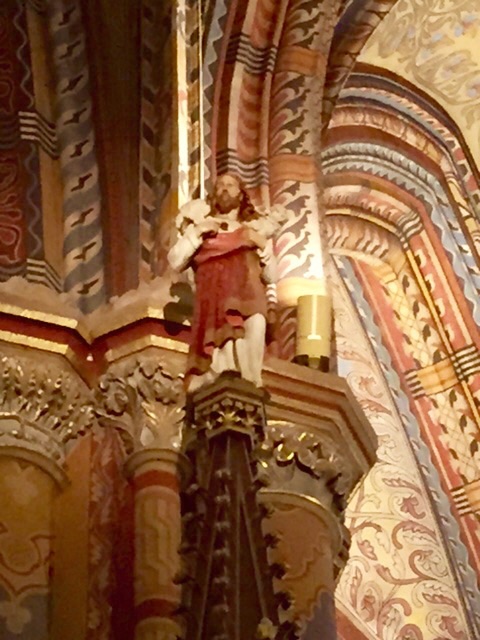
Interior of Matthias Church, founded in 1015 by King Saint Stephen
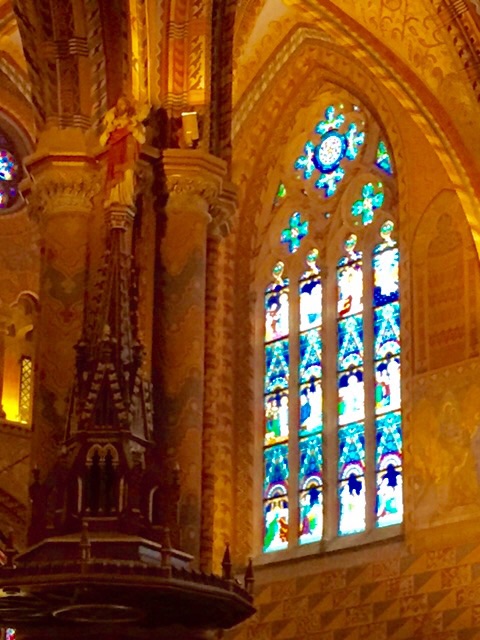
A stained glass window in Budapest’s Matthias Church
We spent major time around St. Matthias Church, the historic church of Budapest. Founded by King Saint Stephen in 1015, it has seen much destruction and renewal as the Mongolian hordes destroyed the city in the 1200s and later, in the 1500s, when the Turkish invasion turned the church into a mosque. The Muslims whitewashed the walls and destroyed most imagery, but walled up the Madonna statue, the Virgin Mary. It was forgotten until the Christian forces assaulted the hill in an effort to retake the city in 1686. As the Muslim leadership assembled in prayer, a powder arsenal accidentally exploded and shook the mosque so hard the wall crumbled, exposing the Madonna to the astonished praying Muslim Turks. That night, the hill fell back into Hungarian hands and the church reclaimed its heritage. Later, the church was badly damaged in both world wars, and then the Soviets turned it into a military vehicle storage facility and stable. The target of a terrorist bomb attack in the late 1990s by unknown assailants damaged some of the priceless stained glass windows. In spite of all these trials, today the church is a marvel of Art Nouveau style. It houses many treasures of the Hungarian heritage and is a testament to the Hungarian spirit.

Fishermen’s Bastion on Castle Hill – The entire Casstle District is a UNESCO World Heritage Site
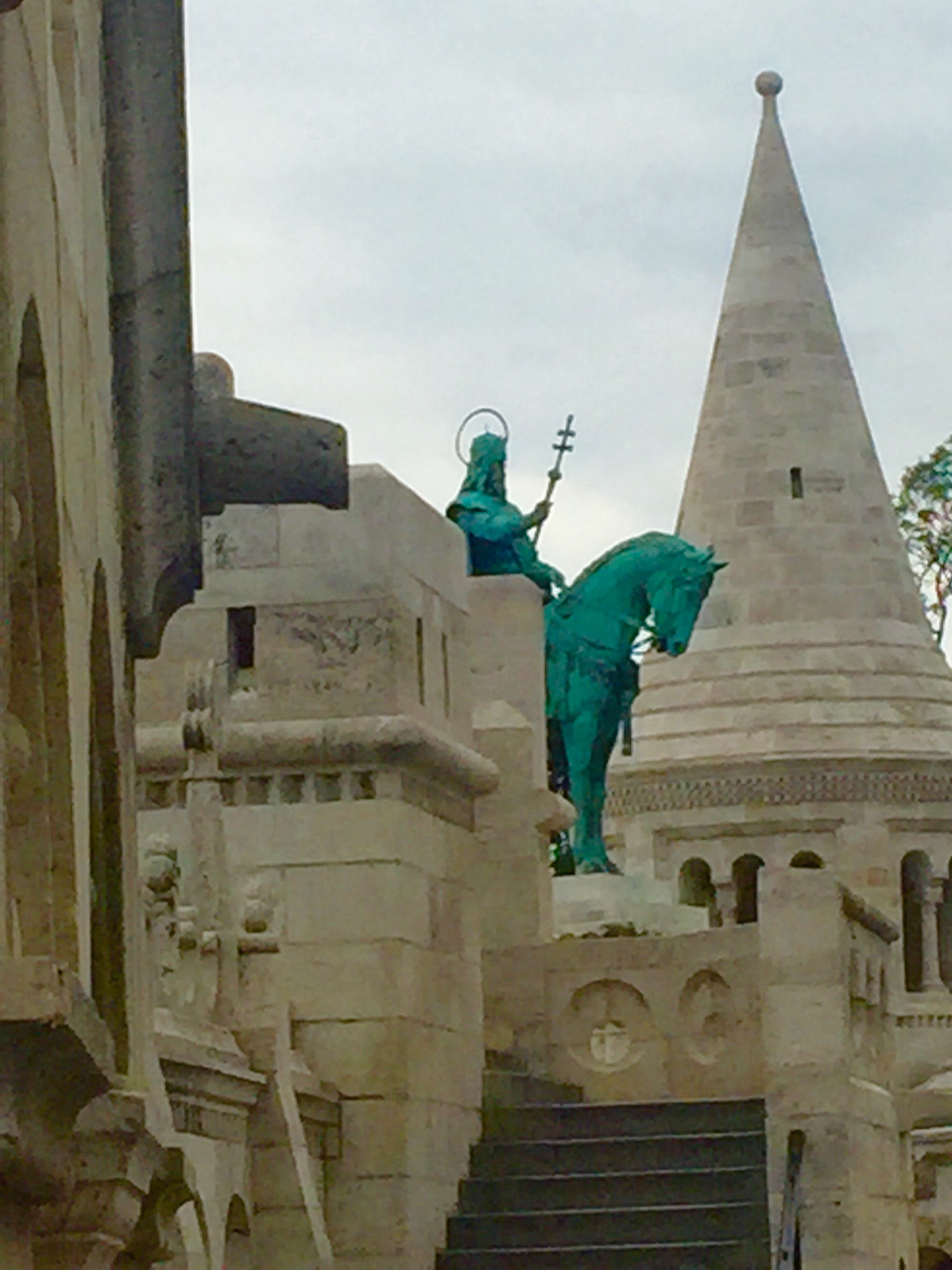
Budapest’s Fishermen’s Bastion, with seven white towers, was named for the guild of fishermen responsible for the defense of the city walls in the Middle Ages.
We walked to the Fishermen’s Bastion with its white stone buildings and beautiful monuments. The scenes from its terrace over the Danube give unforgettable views of the Hungarian Parliament building with its iconic red tiled roof and majestic spires standing out in regal beauty on the Buda side of the river. Then, we walked to the massive palace that gives the hill its name, “Castle Hill.” It has impressive statues and flower plantings.

A view from Castle Hill that includes St. Stephen’s Basilica across the Danube River
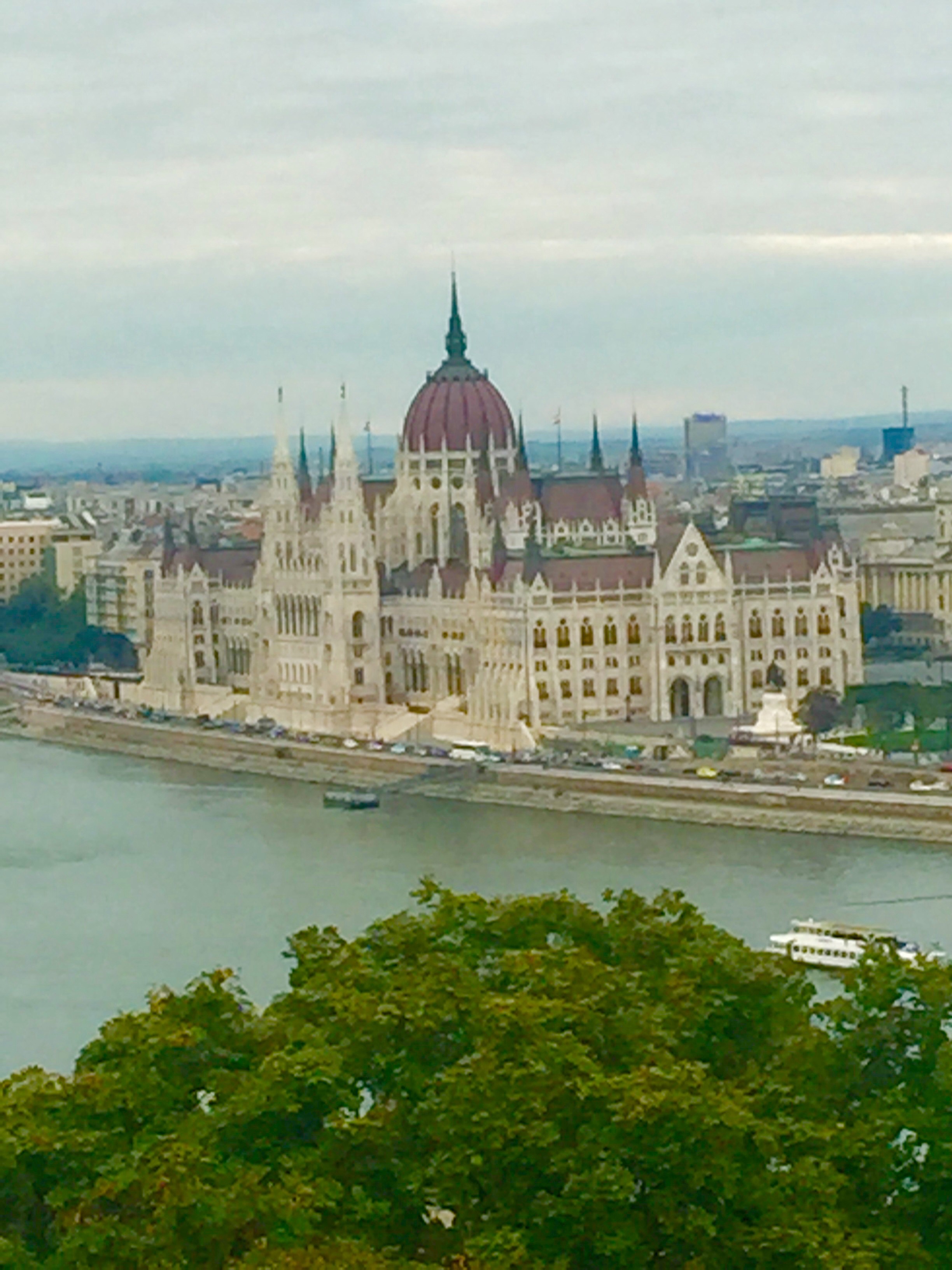
Another view across the Danube from Castle Hill
After some shopping, we got on the bus for the trip back down the hill where we spent a long relaxing meal time in a “cave” room with vaulted ceiling and stained glass windows of a great restaurant near our hotel. WEG – September 30, 2015
 kgraumann
 wgraumann
 gofarther.me