
A Fairy-Tale Castle and a Reunion


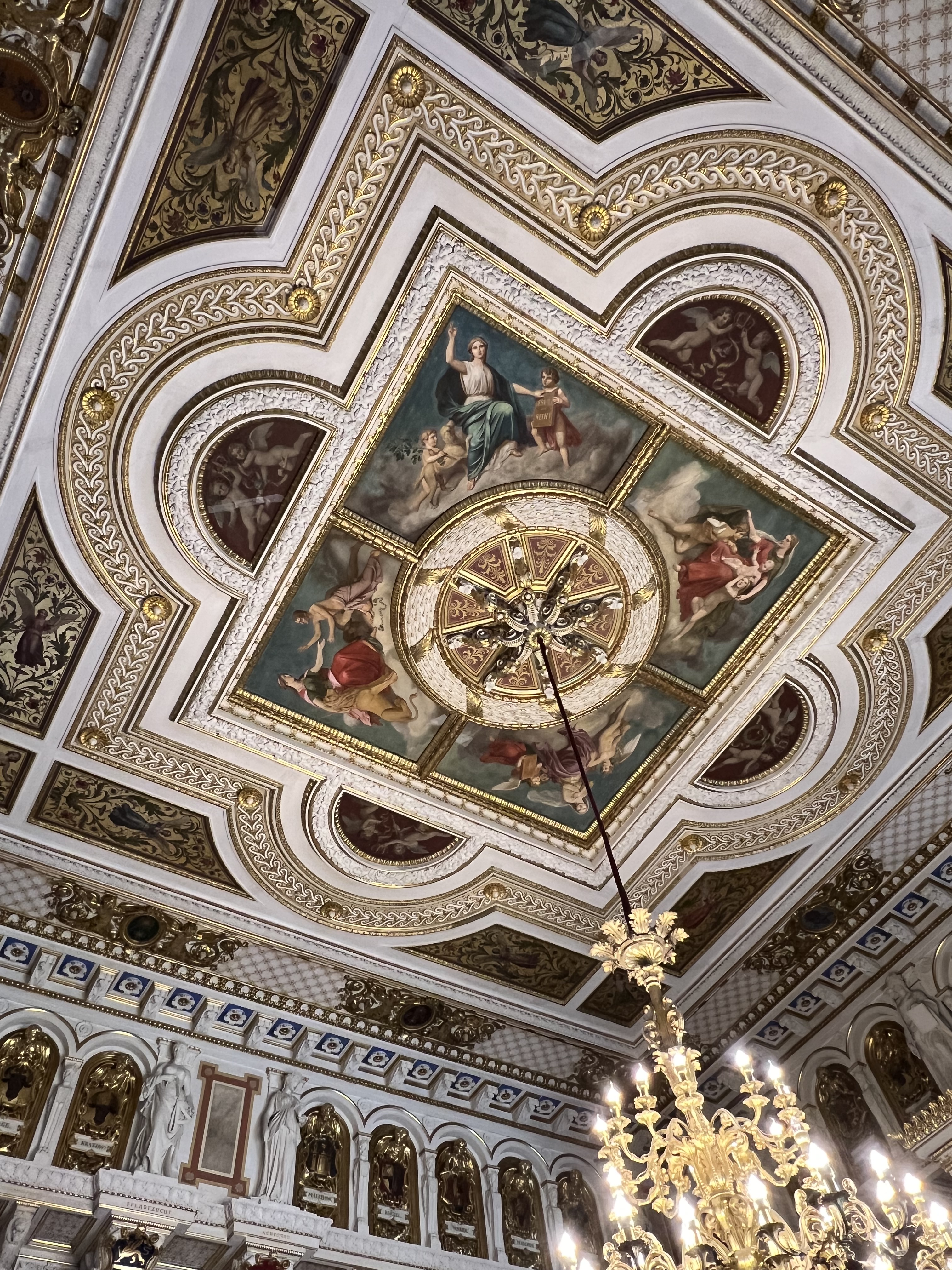
Who knew that one of the most beautiful castles anywhere rises from a lake island in far north Germany? The Dukes of Mecklenburg over centuries constructed what became one of the most important architectural accomplishments in the Romantic style. Located in the city of Schwerin, the castle has over 900 rooms and is topped with a black and gold dome. Imposing indeed! The gardens surrounding the castle were in bloom in yellow and purple and every angle of viewing as one circled the castle giving differing glimpses of the many pinnacles that arose from the structure. Interestingly, the castle houses the first Lutheran Church edifice constructed after the Reformation. A devastating fire in the castle did much damage, but reconstruction has restored the building, although today, the Great Hall has been refurbished to house the Mecklenburg-West Pomerania State Assembly, and one wing is now devoted to state government offices. The wood decorative flooring and ceiling work are outstanding features of the castle as are the beautifully decorated Ducal Apartments.
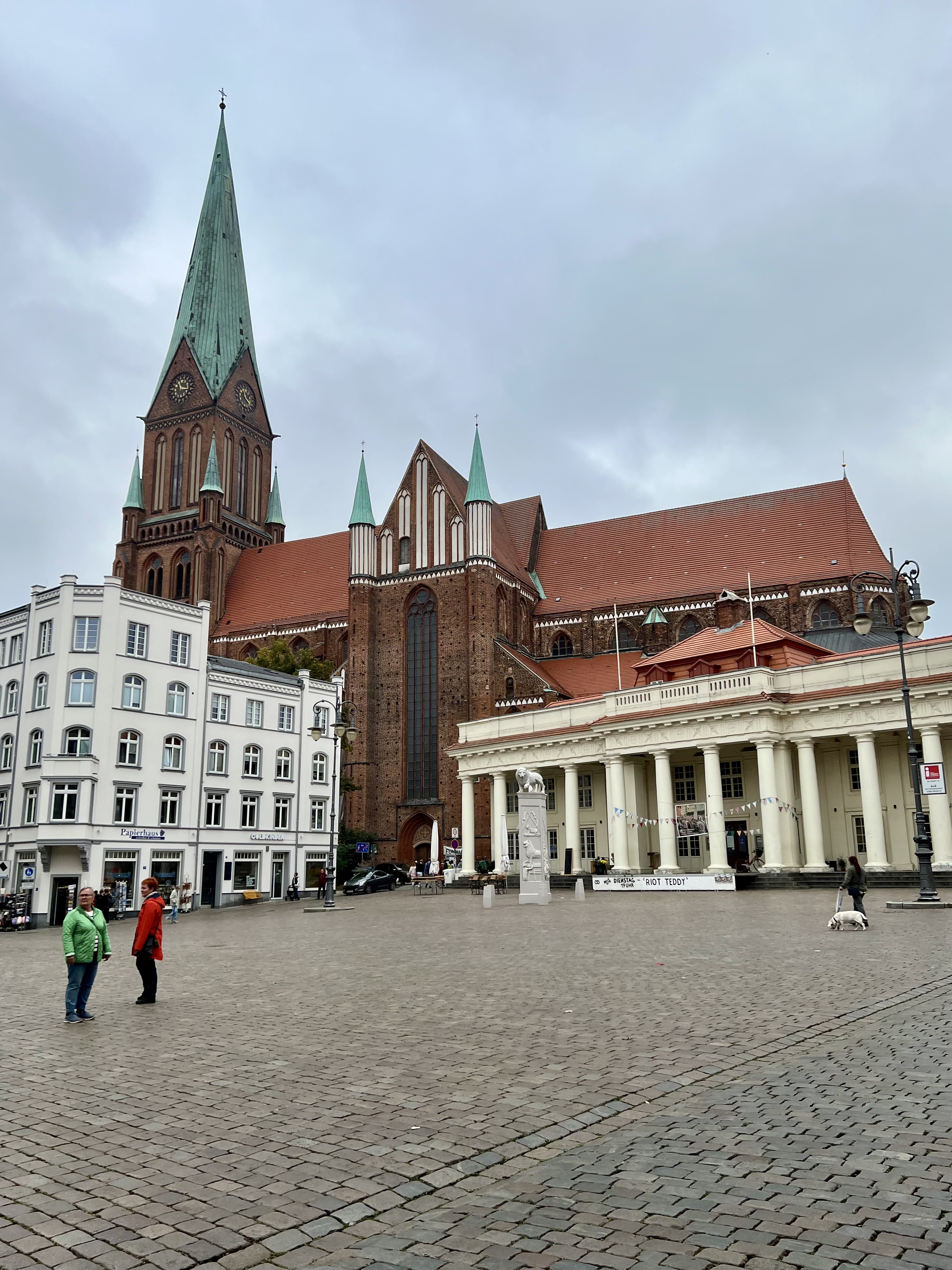
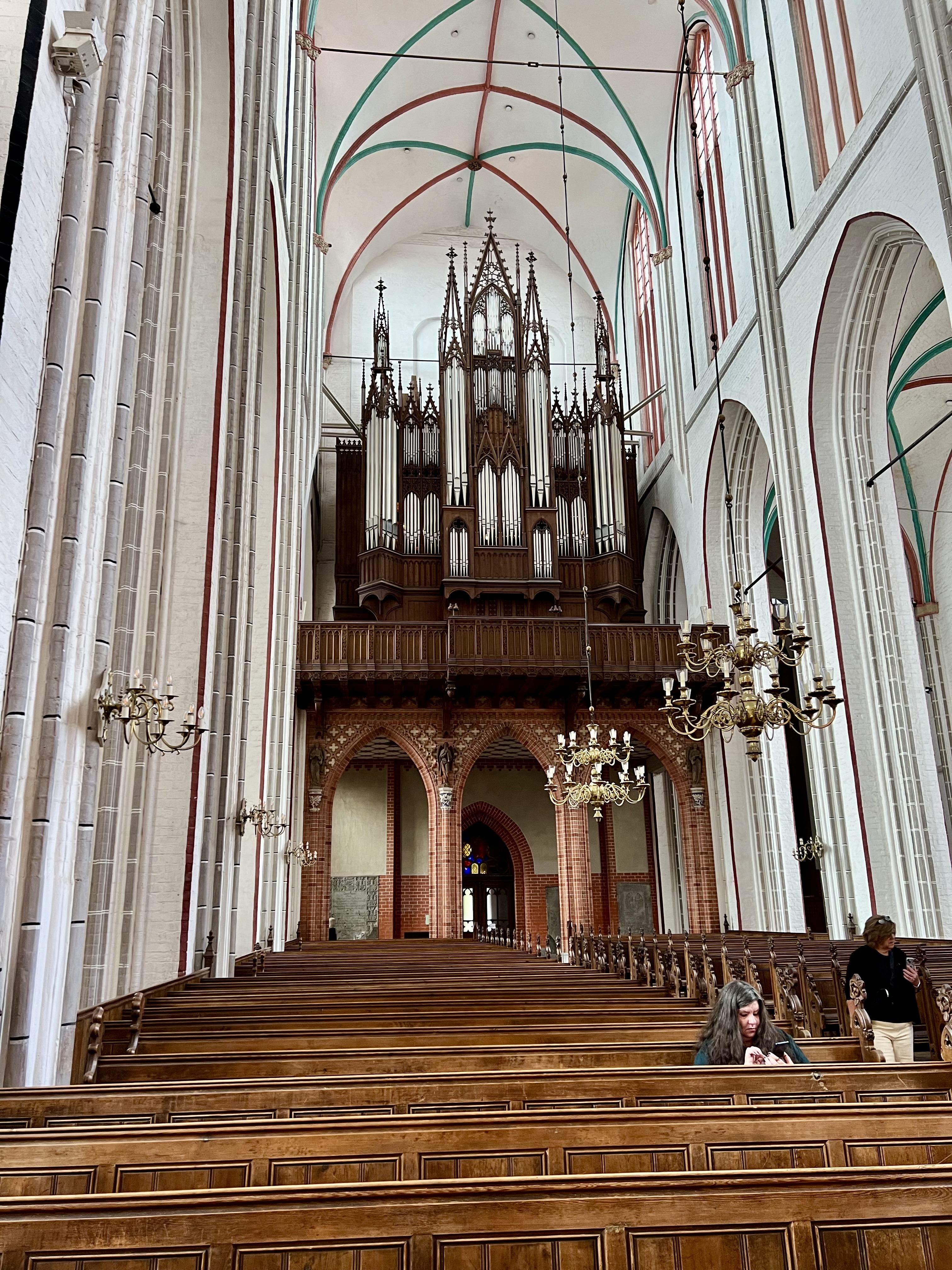
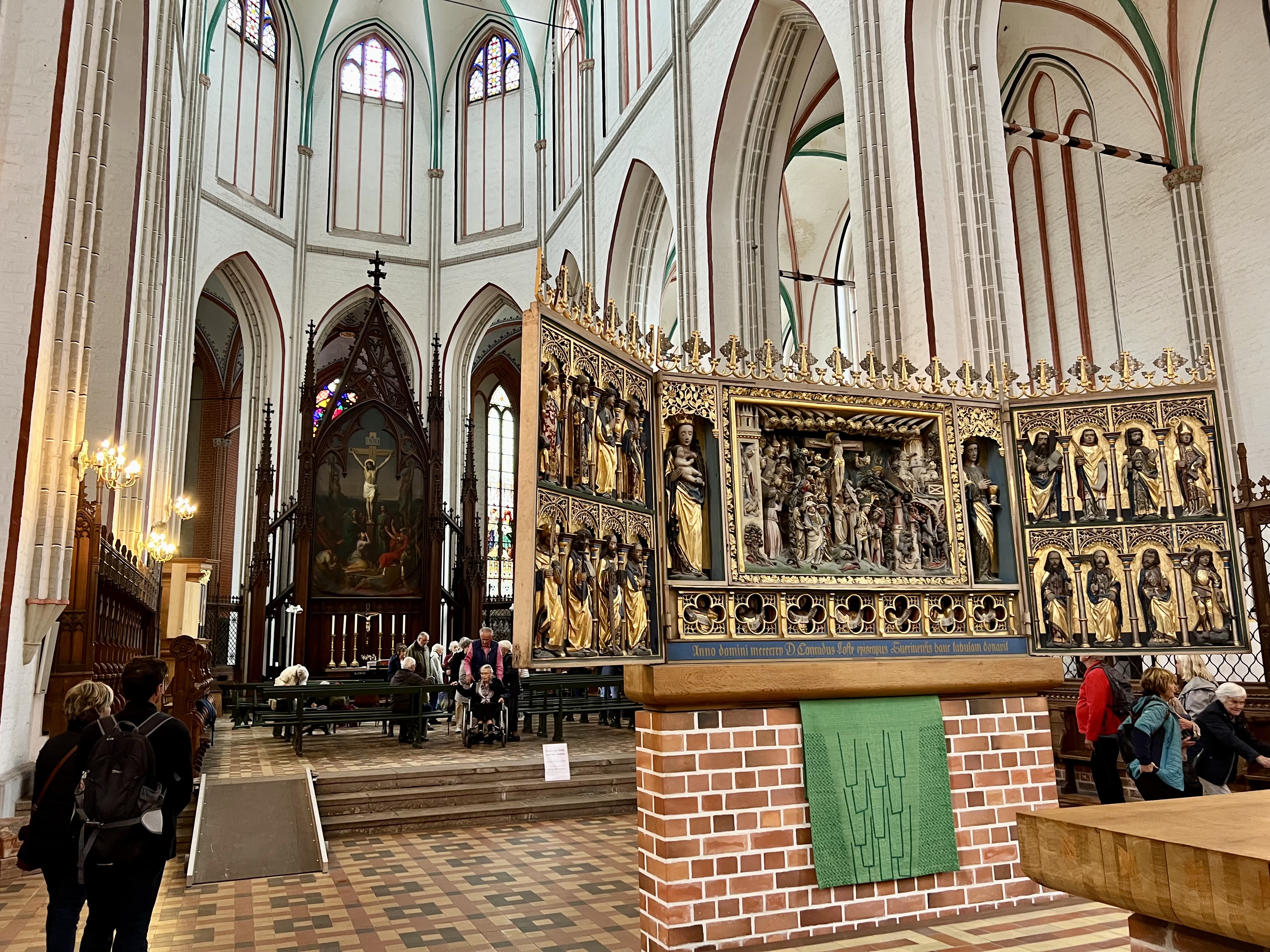

We ambled into the beautiful city of Schwerin which was close by. Fresh and “clean as a whistle,” the cobblestoned streets lead past soft pastel and white renaissance and romantic style buildings. We found a German pastry shop filled with tempting treats. Our hearts leapt when we saw poppyseed pie. We both love and enjoy baking poppyseed desserts; this one did not disappoint. On the way back to the ship, our tour director informed us that Mecklenburg-West Pomerania produces more energy from solar and wind than it can use. Energy export and an efficient power grid are issues not yet solved. Along the way, for about three miles, we saw multiple thousands of solar panels neatly tucked into hillsides and valleys as 150 wind turbines arose from the hilltops in this one energy installation.

Yesterday, September 20, we docked in Kiel, Germany, a port city near Hamburg. We were excited to meet up with friends, Chris and Lula Tiews, whom we had not seen in fifteen years. Chris is a pastor/missionary/professor who is both brilliant and passionate about his ministry. Fluent in multiple languages, most recently Farsi, the language of Iran, Chris has a significant ministry to the Iranian immigrants in Germany. He spoke excitedly of the multiple thousands of conversions to Christianity in this population. Our day progressed too quickly! We caught up on family and friends, current events, hopes and dreams; it seemed like we had never been apart all these years. For those you from Tomball, Chris was very instrumental in developing the sister city relationship with Telgte, Germany, that recently celebrated its 25th anniversary. We enjoyed our long lunch of German food. Happily, I got my favorite German meal of crisped pork knuckle with bread dumplings and red cabbage. On our way back to the ship, we stopped to view the Lutheran Cathedral which had beautiful artistry, but its huge crucifix hanging before the masterfully wood-carved altar typtich caught my eye–stunning and deeply moving! Wonderfully, an organist was playing the pipe organ as we walked reflectively in this spiritual space. A sign outside the cathedral read, “This is the place to come back home!” Indeed, may it be so!
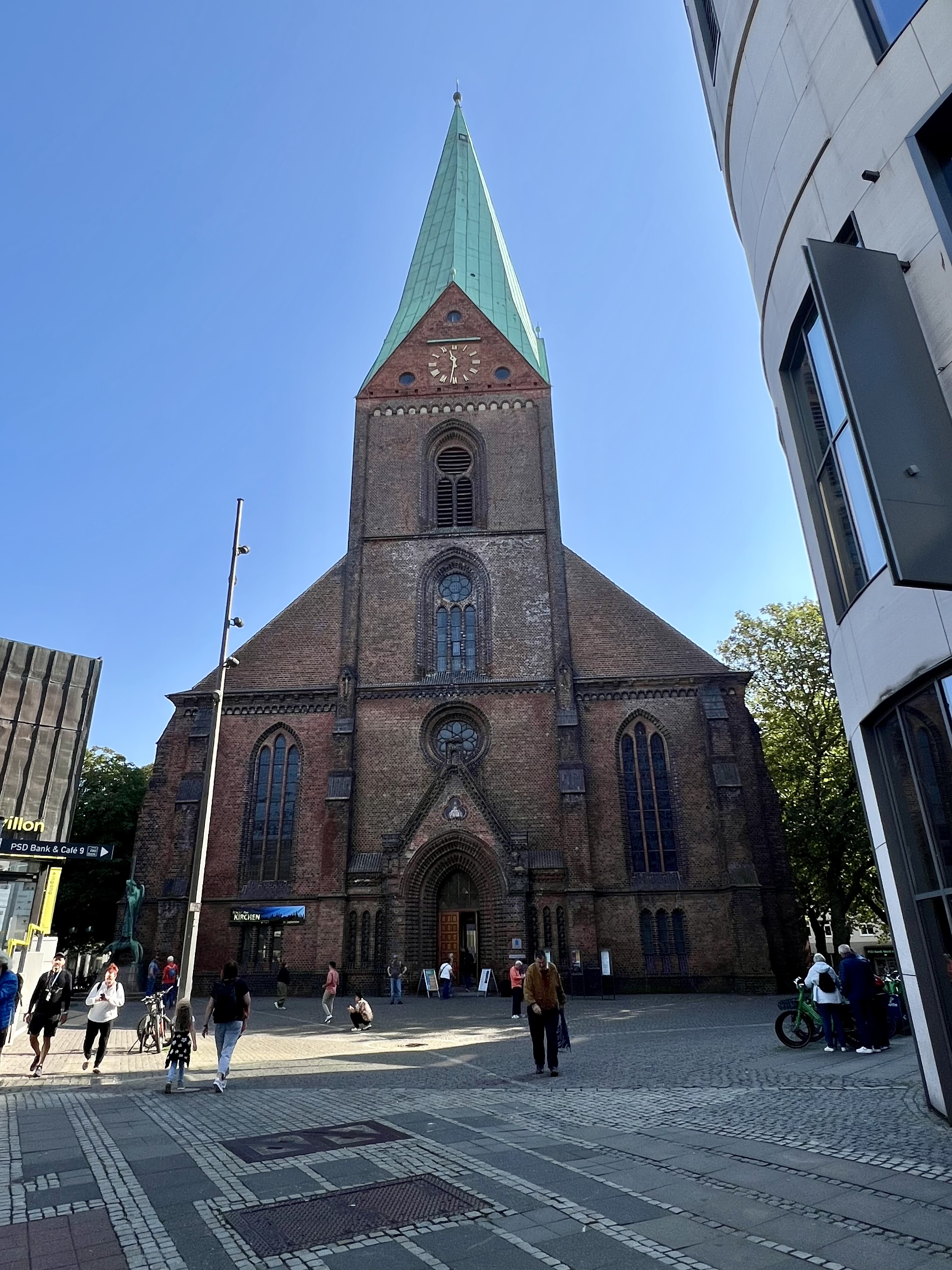
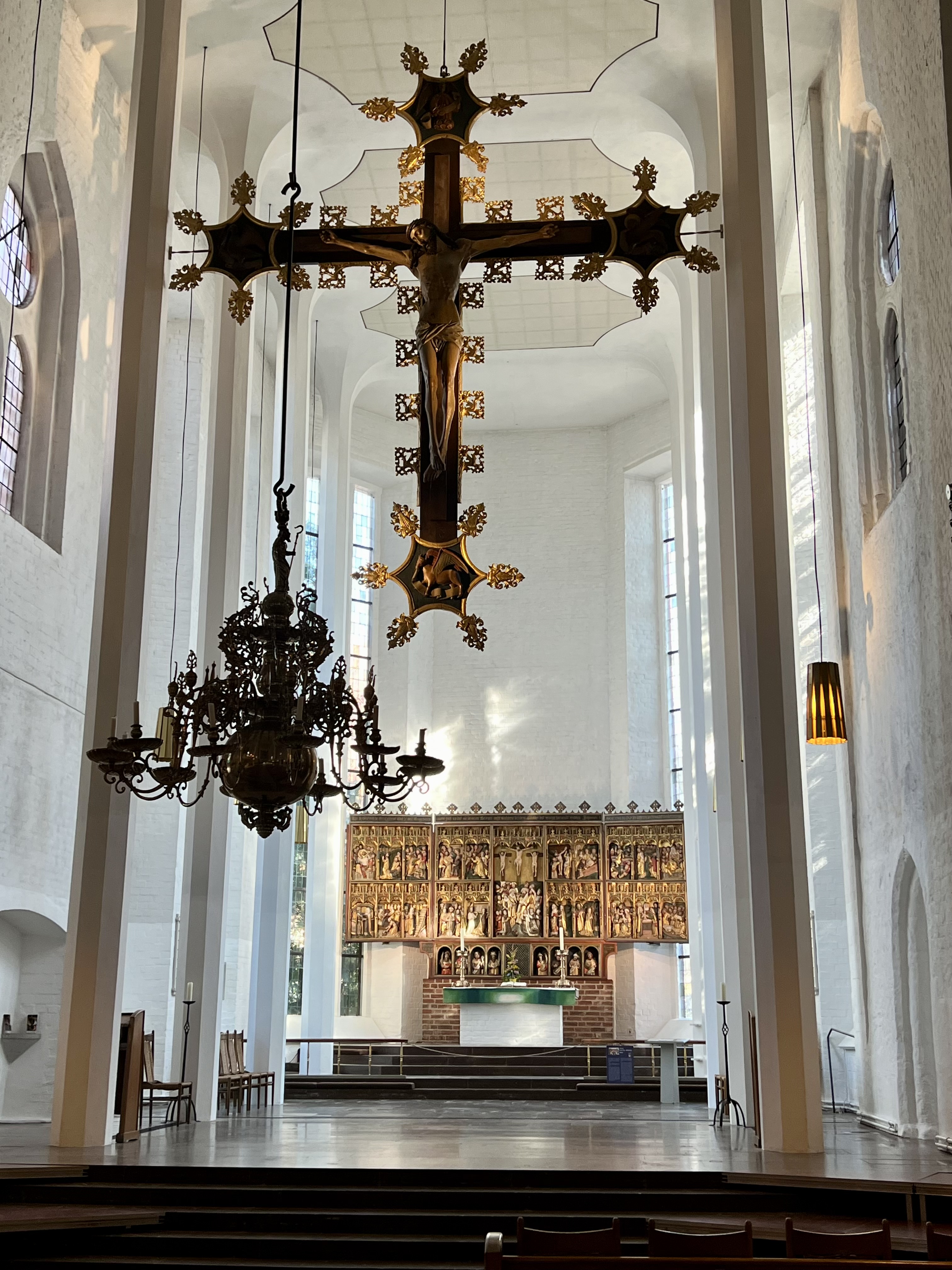


.
Amber Dice
We boarded the Norwegian Dawn on September 15 in Stockholm for our Baltic Cruise. I really like the freestyle dining on Norwegian with no set meal times and with numerous restaurant choices.The seas have been calm thus far and the entertainment quite good, and we are having a fun time.
Our first port was in Tallinn, Estonia. We didn’t book a tour as my research had shown that the old city was compact and in an upper town and lower town configuration. As soon as we departed the port terminal, I hailed a cab and asked for Kathy and me to be taken to the upper town–easier to walk down than up. We toured the Russian Orthodox Cathedral and the Lutheran Cathedral in the upper town. Both beautiful. A communion service was in progress in the Russian Orthodox Cathedral; we watched the beautiful service with ancient chanting for a few minutes. The cathedral has no pews; parishioners stand for the service. The Lutheran cathedral had ancient pews that showed much use over the centuries and were enclosed with half doors on the ends. A historical note–The three Baltic States were occupied by Russia after World War II. Russia began a campaign to ‘Russify’ the countries. One of the ways the Soviet Union employed was to move Russian citizens into the countries to provide a strong Russian presence. That is why one can find large well-maintained Russian Orthodox Churches in Estonia and Latvia (mainly Lutheran) and Lithuania (mainly Roman Catholic). The Soviet Union disintegrated before the project of Russification could be completed. The three Baltic nations have an aversion to Russian politics to this day.
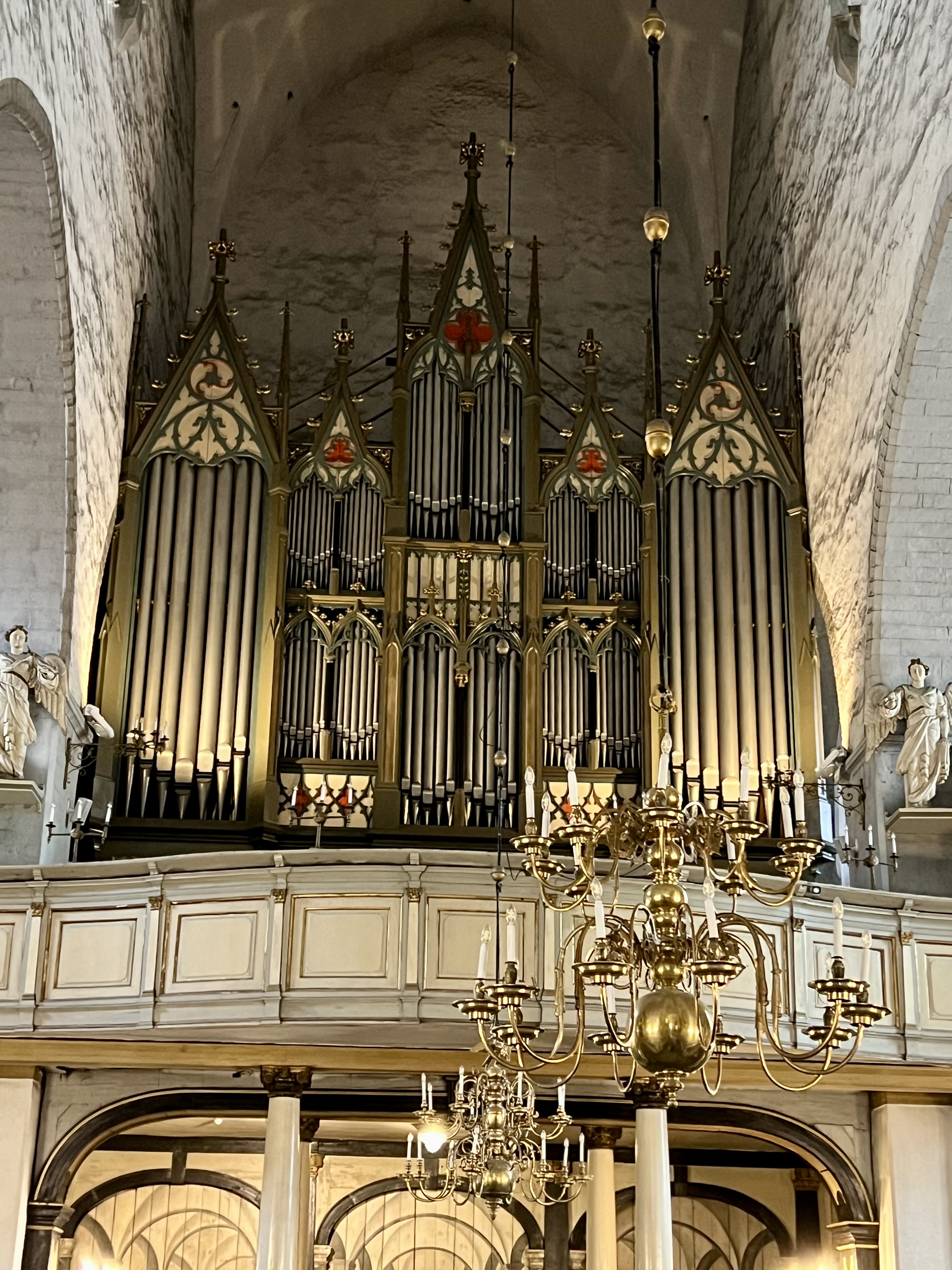
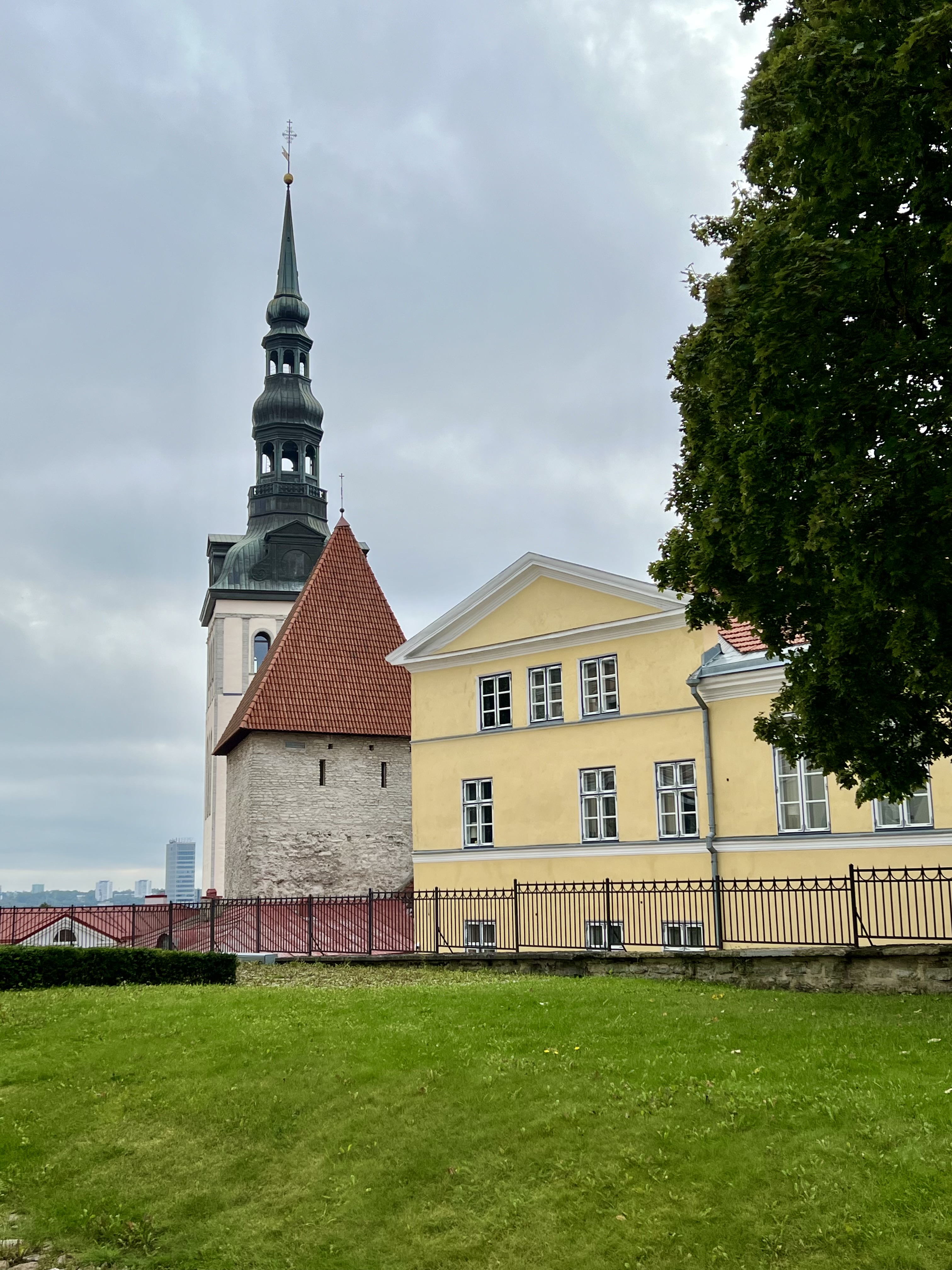
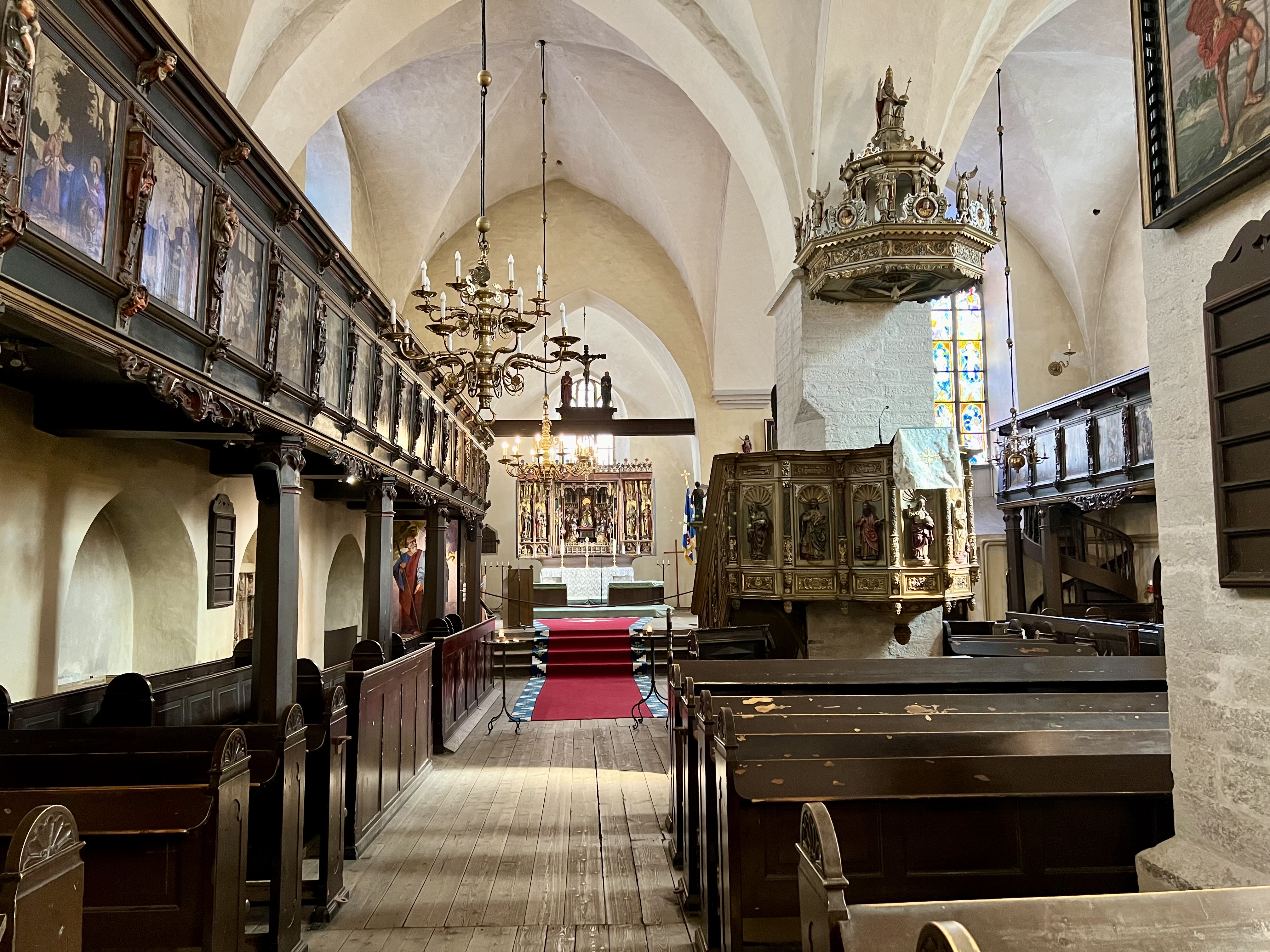
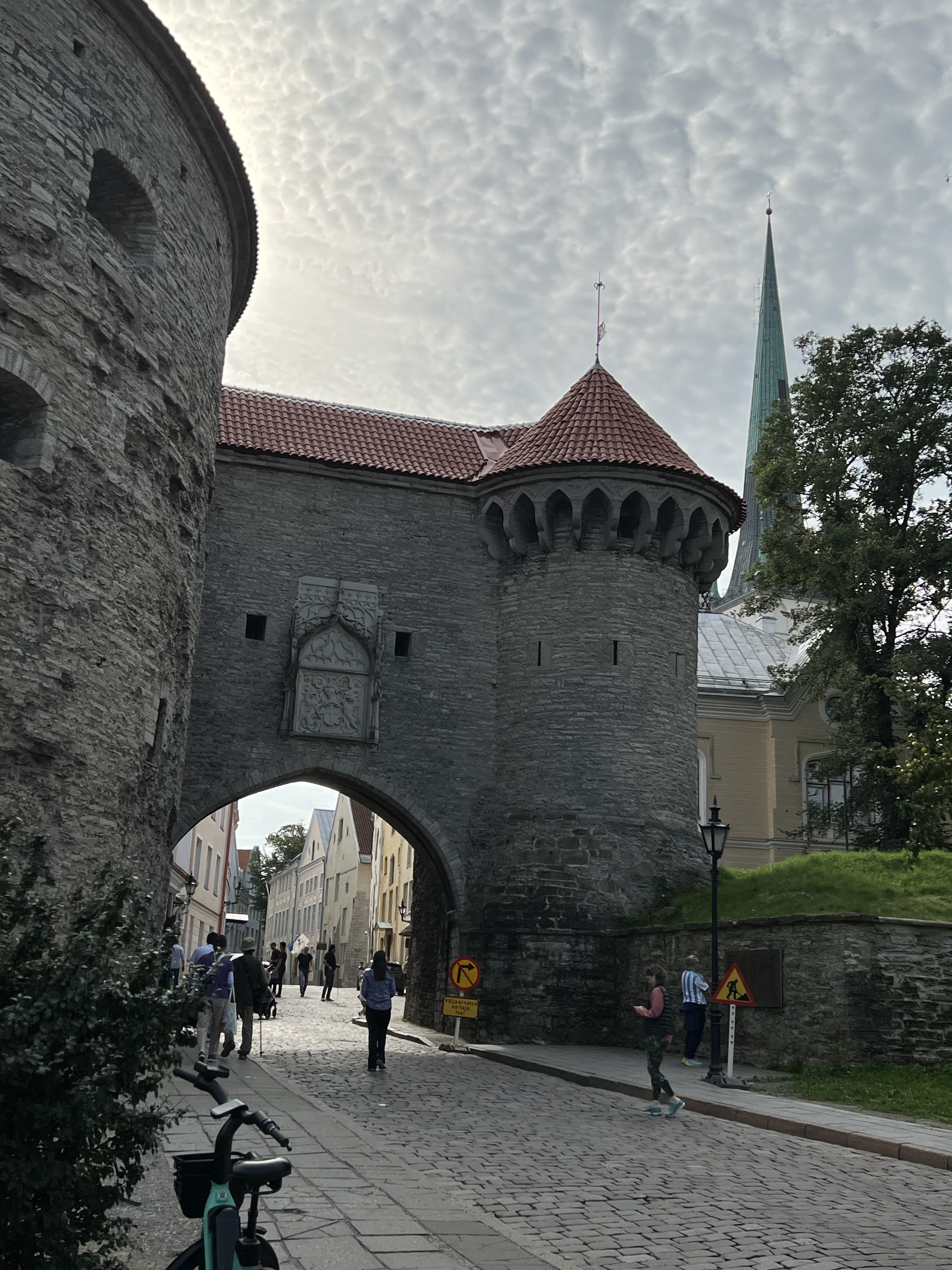
Tallinn still has a very old world vibe and architecture. Spires from churches are abundant. Old fashioned rock cobblestone is the street pavement making walking on it for any length of time difficult. Sidewalks, thankfully, are more modern smooth cobblestone. We enjoyed walking into beautiful Lutheran Churches in the lower town, especially Holy Spirit with its masterful wood carvings and Biblical paintings that ring the balconies. We also had a goal of finding five amber dice for a Bonterra friend. Estonia is known for its amber products. We were having no luck, but after several stores, finally found some.
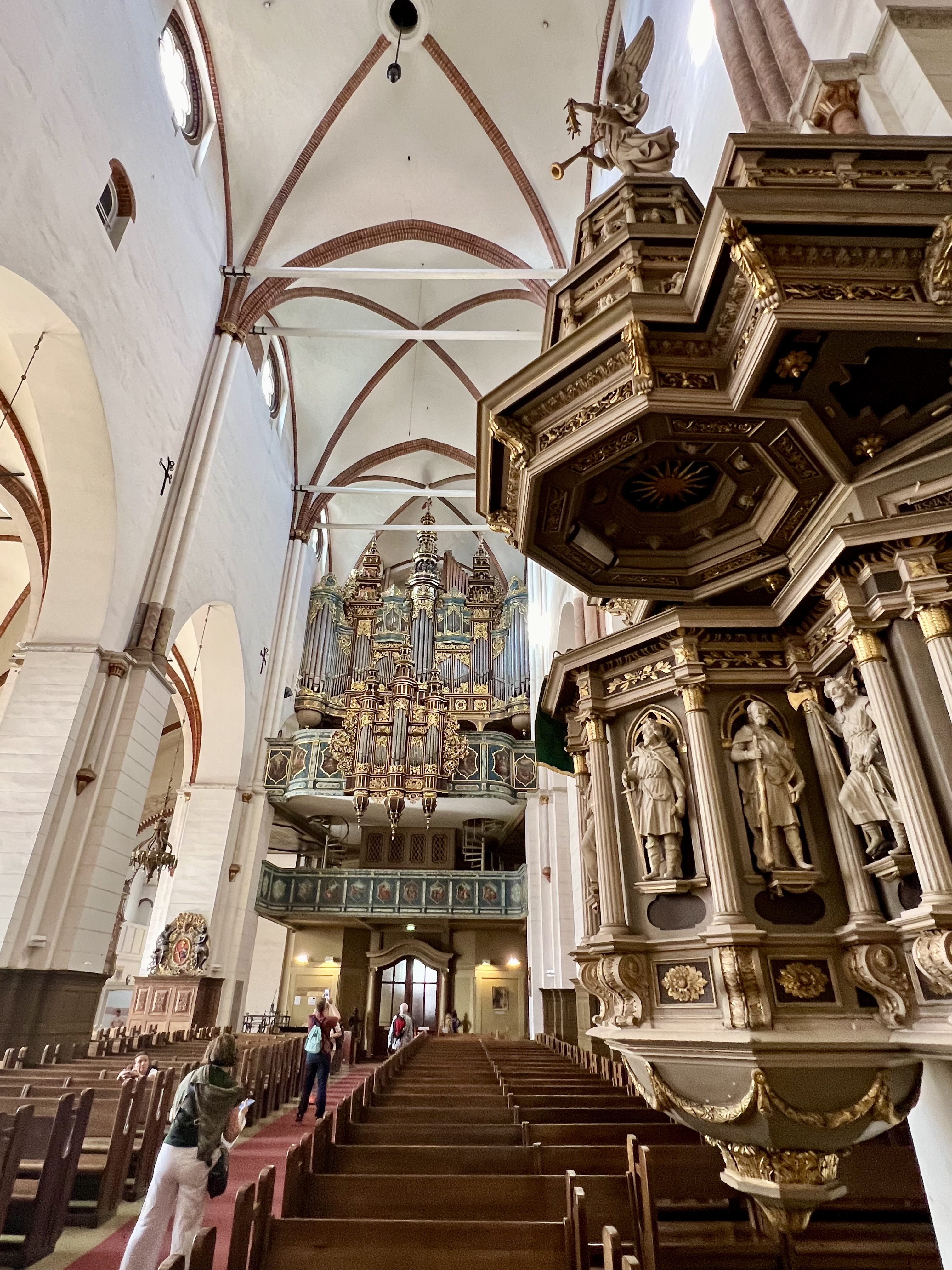
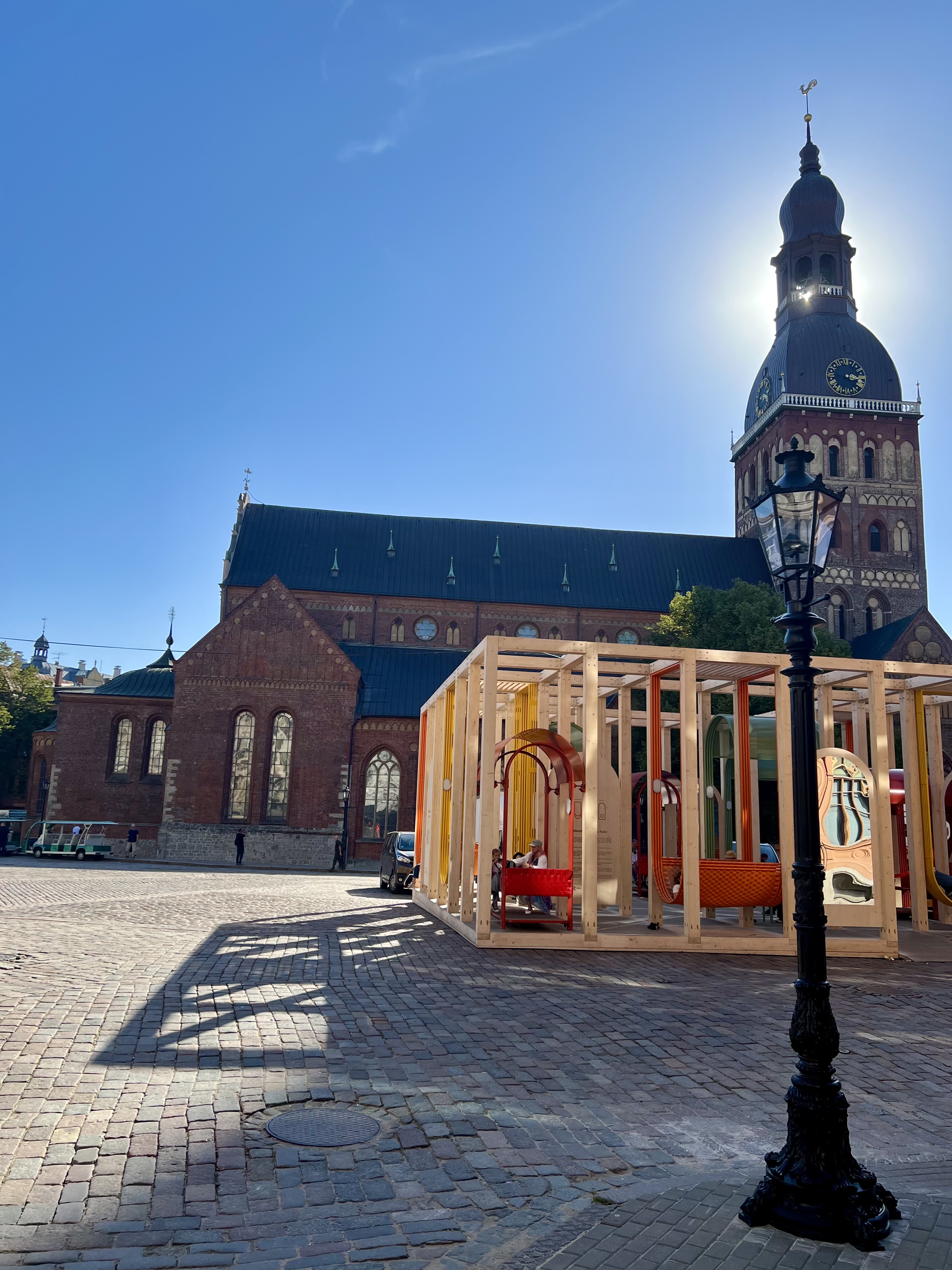
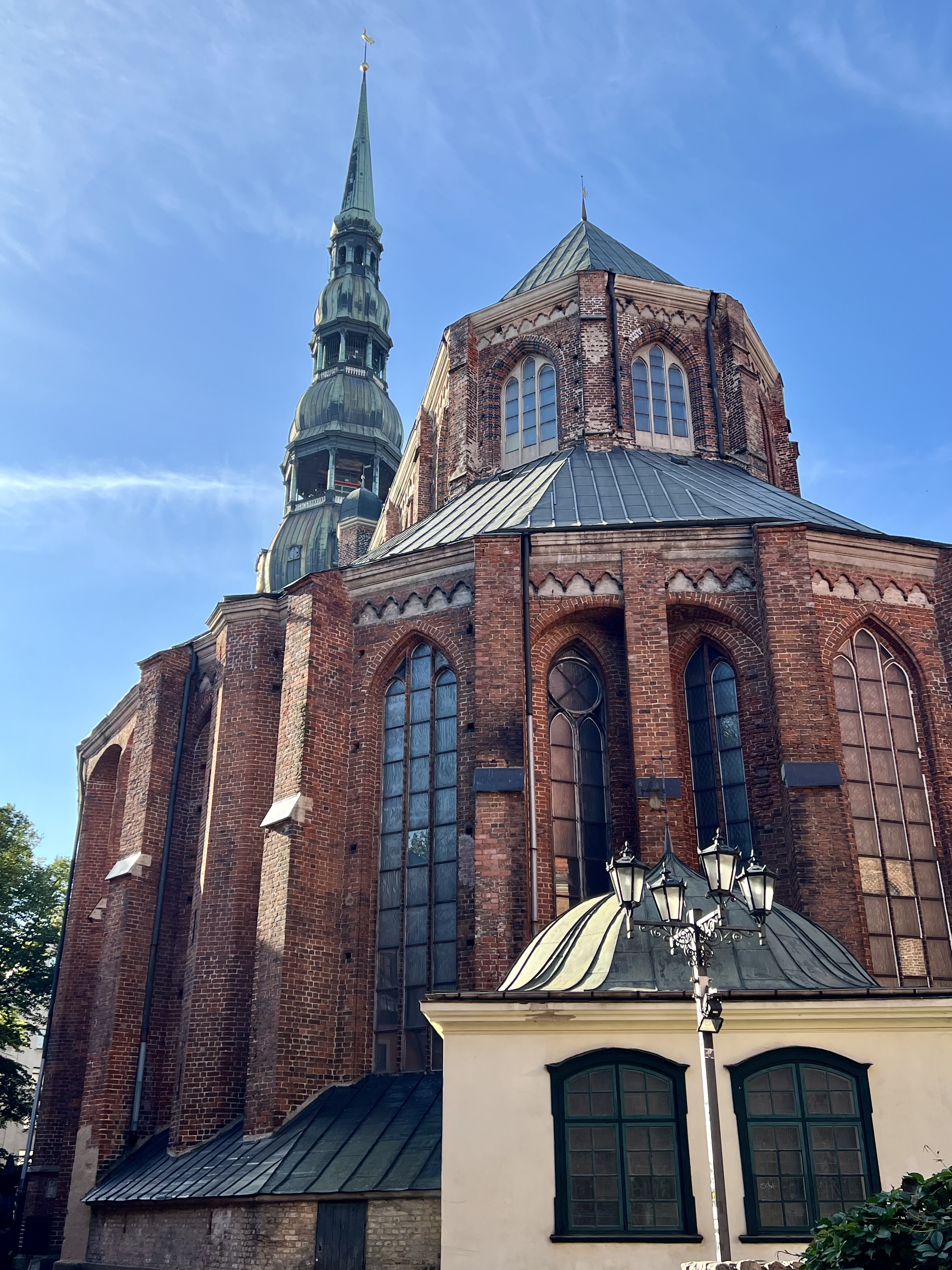

Next day found us in Riga, Latvia. Kathy and I have a bond with this city from my past as Board of Regents chair for Concordia Theological Seminary in Ft. Wayne, Indiana. One of the Board Chair’s responsibilities was to visit seminary extensions. CTS had one in Novosibirsk, Russia, and another in Riga, Latvia. We loved our time spent in Riga. Revisiting this lovely city was amazing! When we were last here the city was in massive repair and rejuvenation after the Russian occupation. Now, the city is old, yet fresh and new, full of modern conveniences. The plentiful and beautiful distinctive church towers still stand proudly amidst art nouveau buildings. Riga has more art nouveau buildings than any city in the world. The Riga Lutheran Cathedral is really stunning now with its Abbey-arched courtyard filled with medieval artifacts. I marveled at the art-embellished work on the cannon. Items of war made to look so beautiful–ironic, right? Our tour guide, Jerry, is a professor at the Lutheran Seminary in Riga. He was so kind to give Kathy and me so much of his time for a personal tour. He gave us many inside stories of the city and one is particularly poignant. The old Jewish synagogue wall is part of the seminary’s courtyard. A Dutch Reformed Church borders another portion of the seminary. During World War II, the pastor of the Dutch Reformed Church heard the Nazi officials were coming to round up Jews and burn their synagogues. He went to the Rabbi to warn him and proposed to take all the synagogue belongings and hide them in his church, while warning him to tell his congregation to flee or hide. This was done. When the Nazis came to burn the synagogue, the pastor and some community leaders came out of the synagogue and told the Nazi officials the synagogue was empty and not in use. They further exclaimed that to burn it would also cause other building connected to it to burn and that would enrage the citizens in the neighborhood. Seeing that this was true, the synagogue was not burned. Today, this Jewish synagogue is the only one prewar that remains in this part of the world that is still active. Interestingly, the Dutch citizens who supported the Dutch church never returned, having fled to the Netherlands, and the congregation closed. Recently, it was given to the Lutheran Church of Estonia and is now part of the Seminary where it is presently being refurbished. Our day in Riga came to a reluctant close but the awesome cityscape will remain as a beautiful memory.
Our evening was eventful and long since today we are at sea and we could stay up late. We ate in a specialty steak restaurant and attended the late showing of a Broadway presentation. It was all good.
Ode to a Swedish Pancake
“Flat and supple you smile at me,
Dark lingonberry eyes ablaze as setting sun;
Maple hair like liquid flowing everywhere.”
Saturdays at our home are often Swedish pancake mornings, a tradition started in our home by Kathy’s mom, Dr. Grandma, many years ago when she wintered with us. Our breakfasts each morning here in Stockholm are a Swedish pancake feast–every morning! Love them!

Our three days in Stockholm have been beautiful and interesting. The weather has been a grand “long sleeve” or “light jacket” joy. Our hotel is just outside the city center, with metro literally right outside. We were upgraded to a suite since we spend many nights in Marriotts–one of the perks. Speaking of metro, we have been impressed with the public transportation system here in Sweden. It is well laid out and easy to access–it is logical, clean and frequent. We have traveled many a mile since we arrived, especially so in Stockholm.


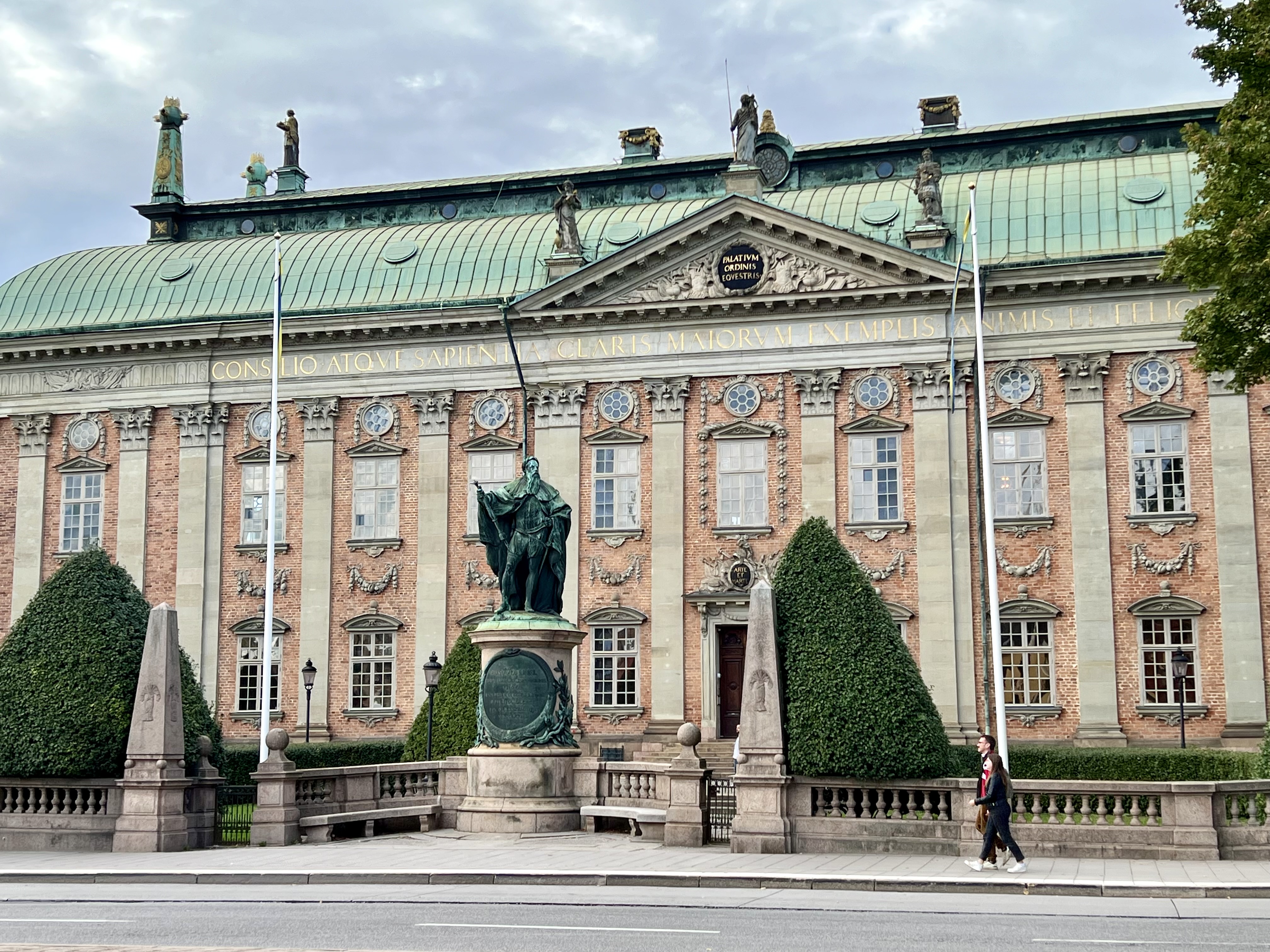

Gamla Stan is the old town historic island of Stockholm which covers many islands. It contains important national sites on its cobbled lanes. We spent a wonderful day wandering medieval alleys and streets. Old Swedish architecture in deep pastels dotted the cityscape, and plazas with fountains beckoned. I had forgotten that old cobblestone requires care in maneuvering, but we survived. Past the Nobel Prize Museum is the 700 room Royal Palace. We arrived in the massive courtyard just in time to witness the “changing of the guard” daily ceremony. It was an impressive program that not only saw the guard change, but was educational as an announcer gave instructions (Swedish and English) to the palace musicians to play the old musical commands for the arrival of the King; infantry charge; Swedish taps; cease warfare; return to barracks; etc. Fascinating. Nearby, the Palace Chapel (cathedral, Church of Sweden-Lutheran) was serene and beautiful. It had a huge pipe organ and ornate carvings with gold-covered pulpit, and the royal pews were covered with massive wooden and gold-adorned Swedish Royal Crowns. Across the island, the Old German Church (Church of Sweden-Lutheran) was the home of the large German population in Stockholm in medieval times. It is beautiful with much gold and paintings of the prophets and apostles hanging in straight lines around the entire space. It has great acoustics for its wonderful gold-covered pipe organ, and the church hosts regular music concerts. Along the way we stopped for lunch in a cozy antique Swedish establishment–my fish soup was amazing. I order fish soup everywhere we travel. It is no surprise how different they are because of different fish; different soup stock and spices; and different ingredients along with the fish. Mine was shell fish along with herring and cod in fish stock with seaweed and zucchini. We dined to candlelight mid-day and enjoyed it! We moseyed over to the Swedish Memorial Church housing the bodies of most Swedish Royalty over time. Its tall towers stand out over the horizon. Kathy shopped some at my insistence and is coming home with a distinctive Swedish sweater. Looks good!
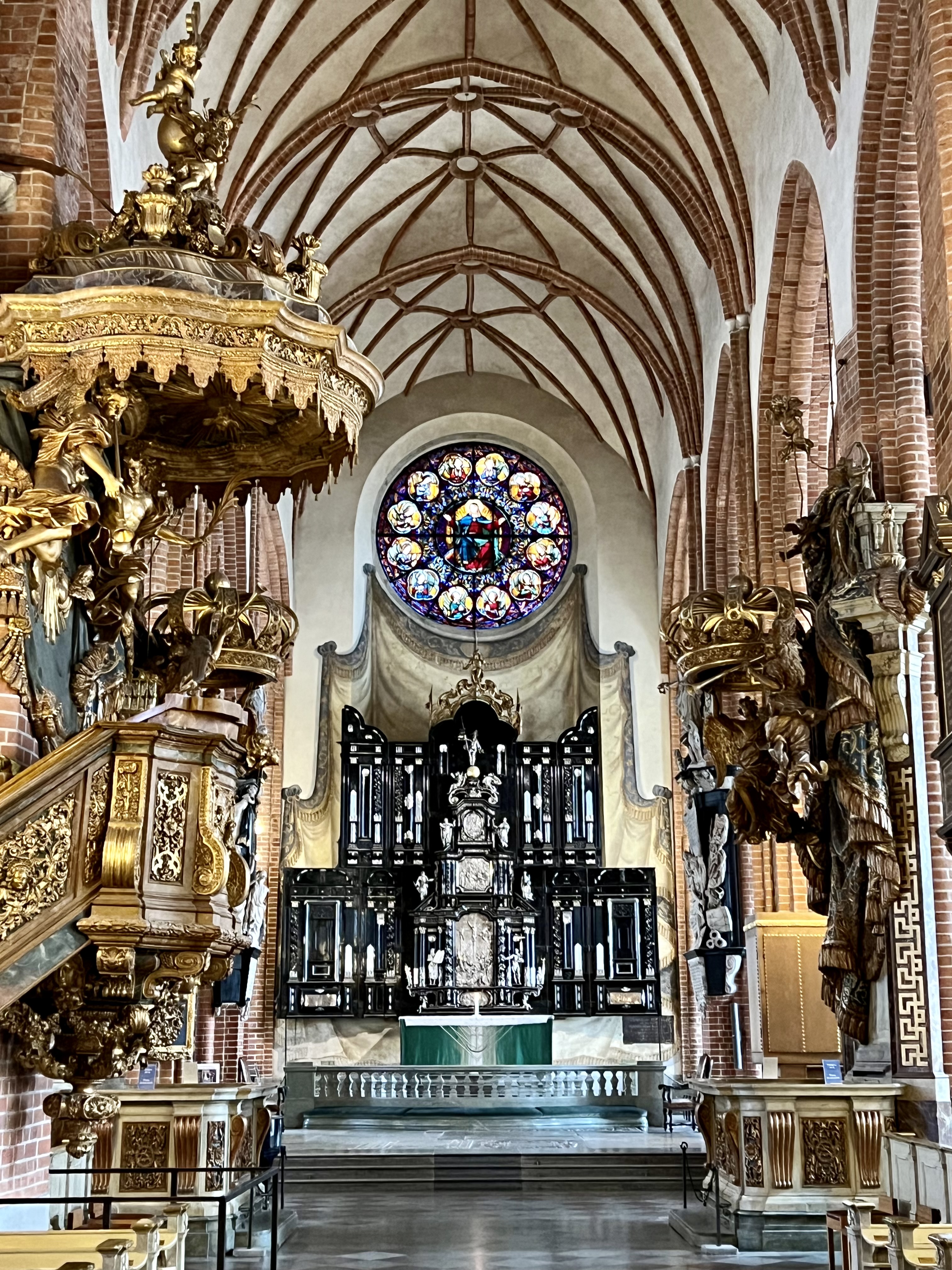
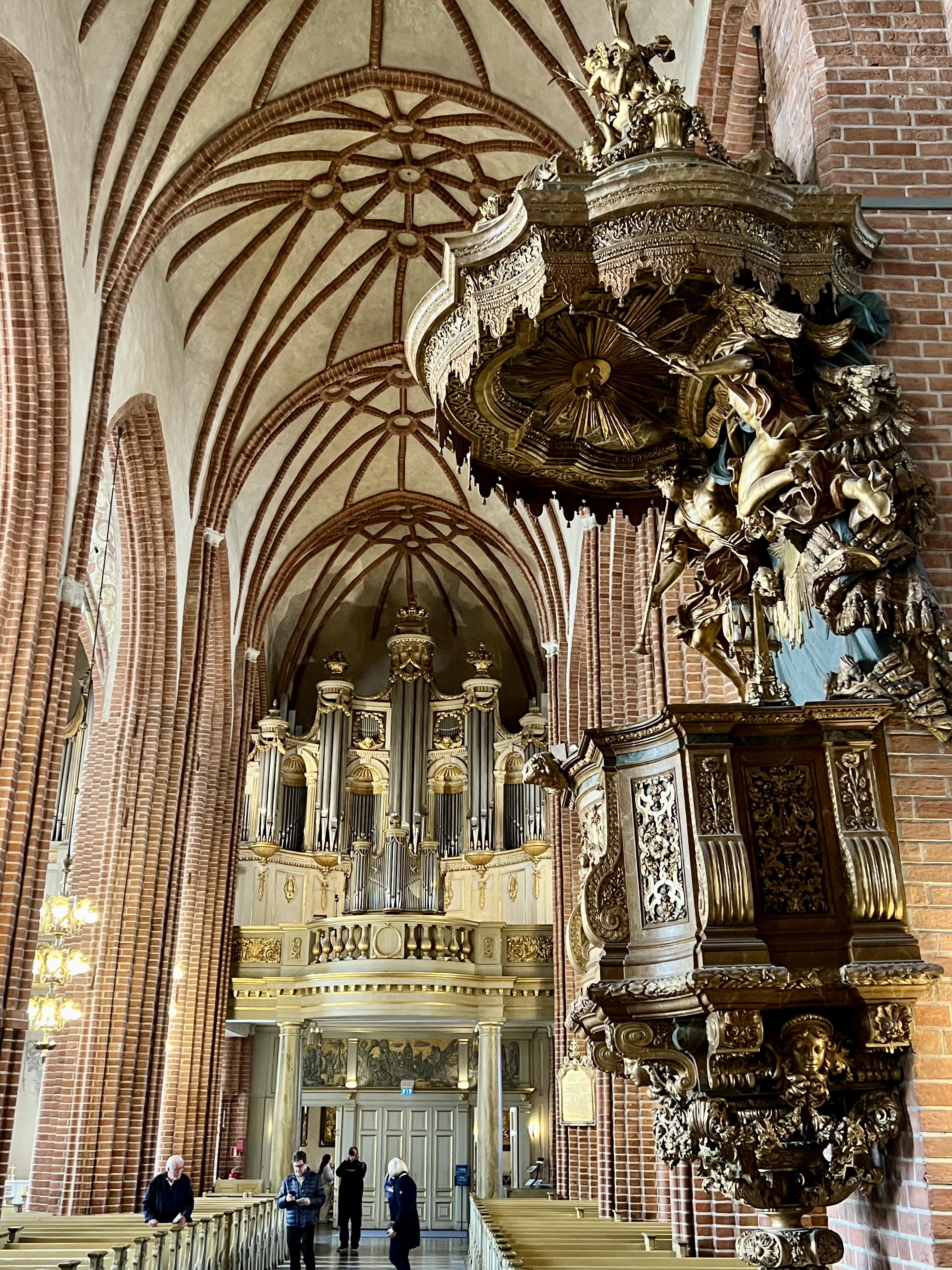
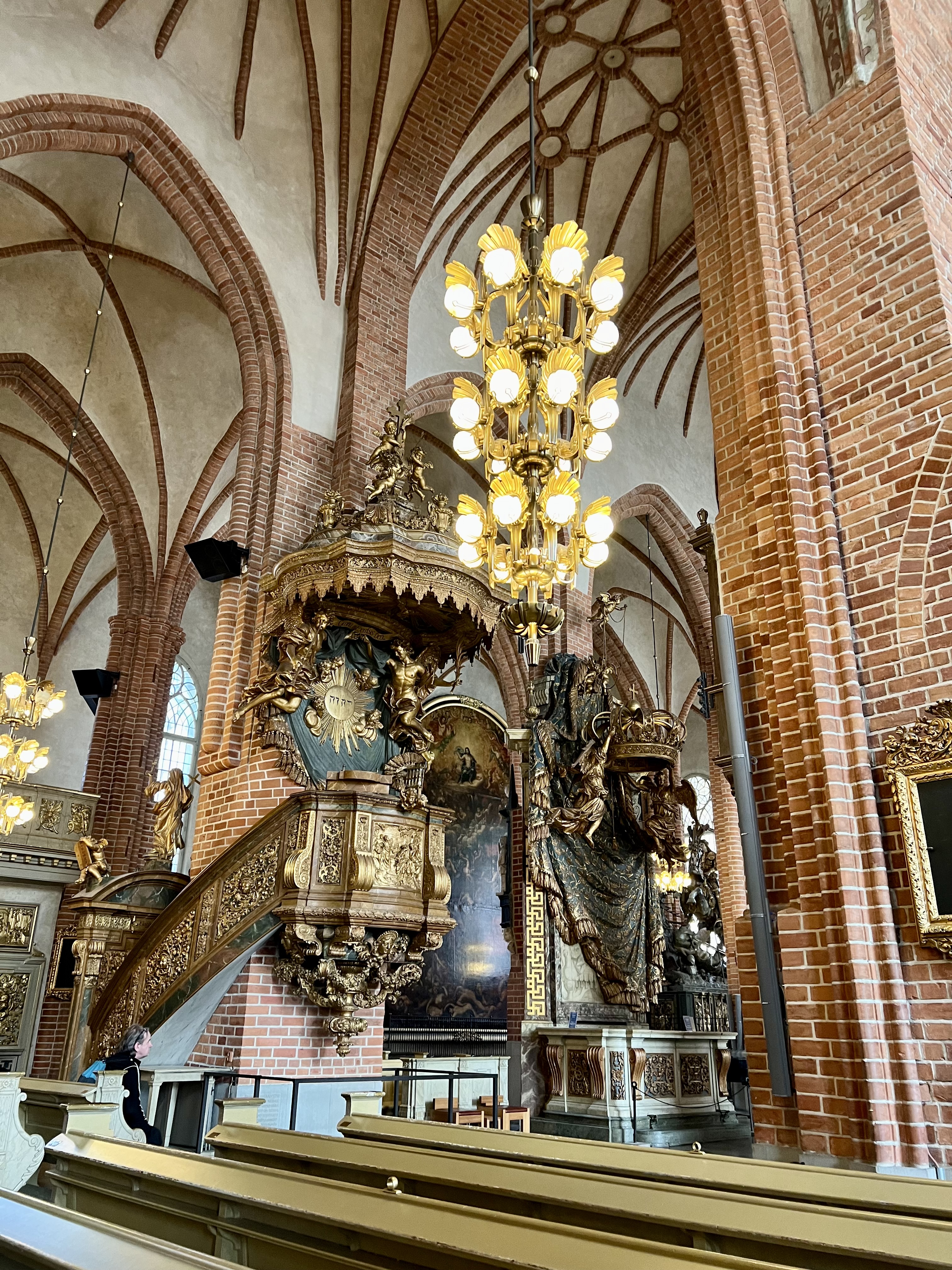
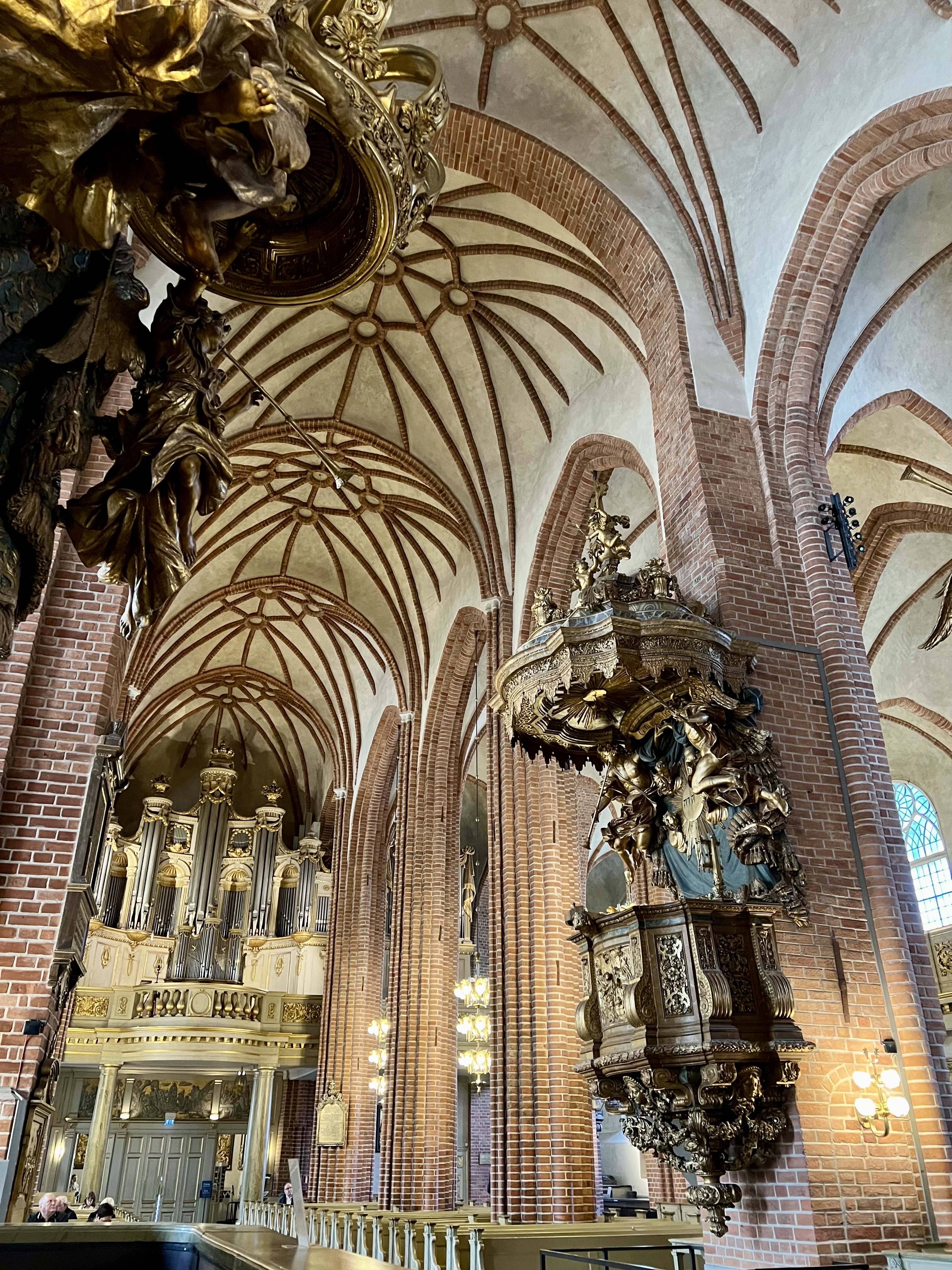


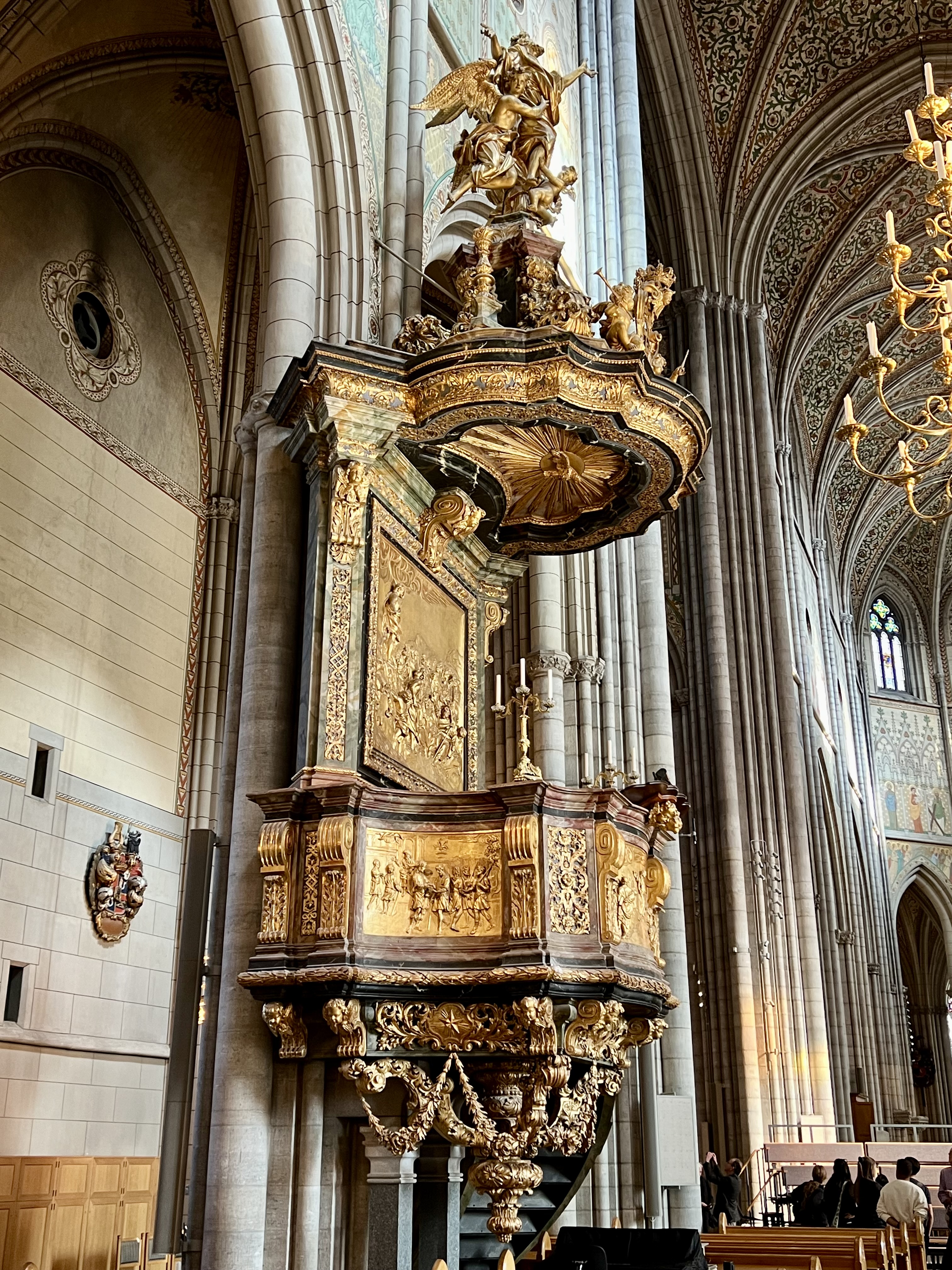
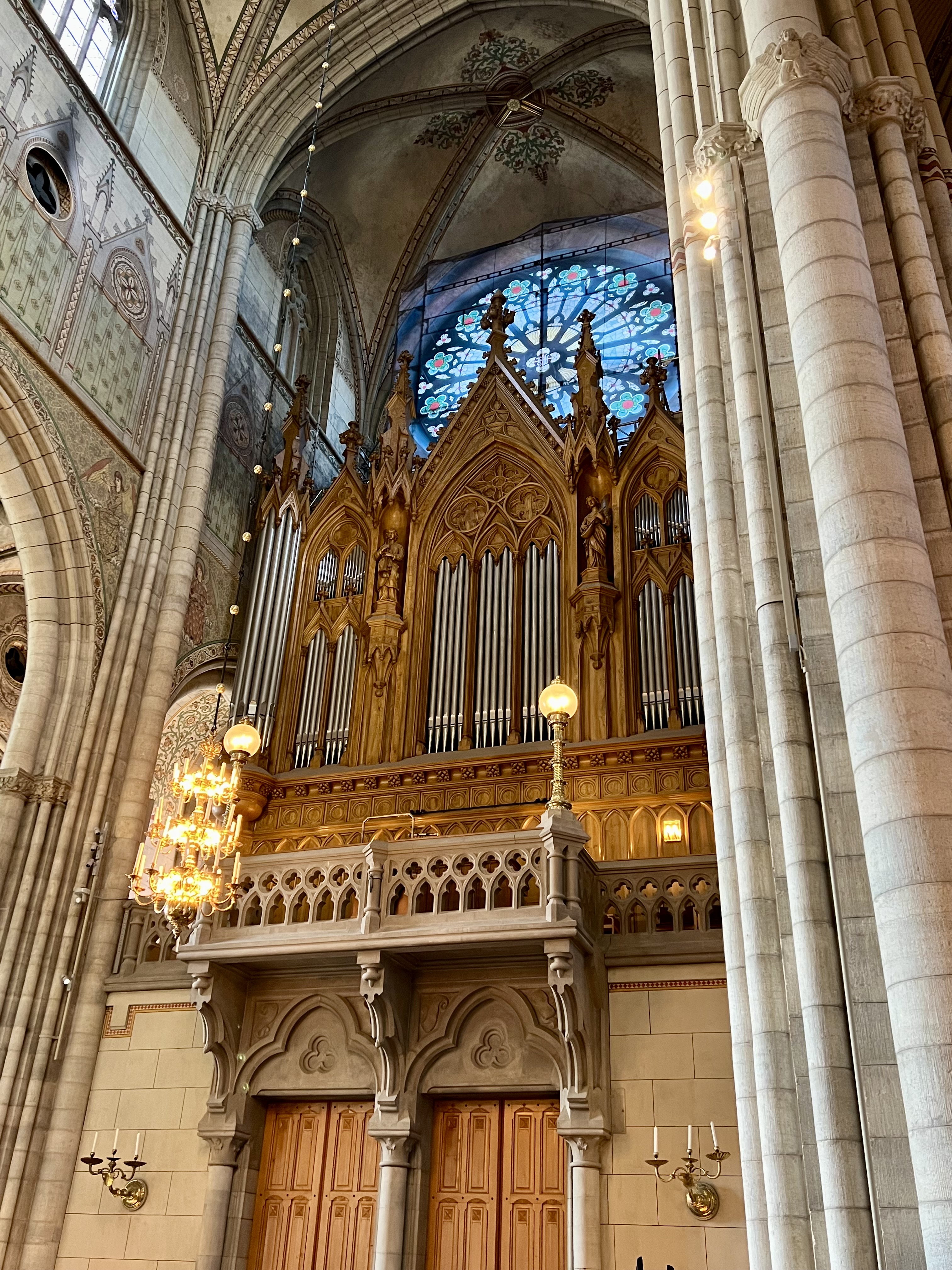
Today we traveled to Uppsala, north of Stockholm via commuter train. Uppsala is the intellectual and spiritual heart of Sweden. We were blessed in that the “Cultural Festival,” highlighting the different cultures represented in Sweden today, was in full swing. I know we walked by six major stages playing many different kinds of music as we pursued the food stalls and enjoyed the ambiance. Upsalla is beautiful with a river running through the center and many bridges linking the two sides. A famous university is located here as is the largest church building in all the Nordic countries–the Church of Sweden-Lutheran cathedral. A fine example of brick gothic architecture, the interior is stunning. Painted walls and ceilings and beautiful wood carvings abound.



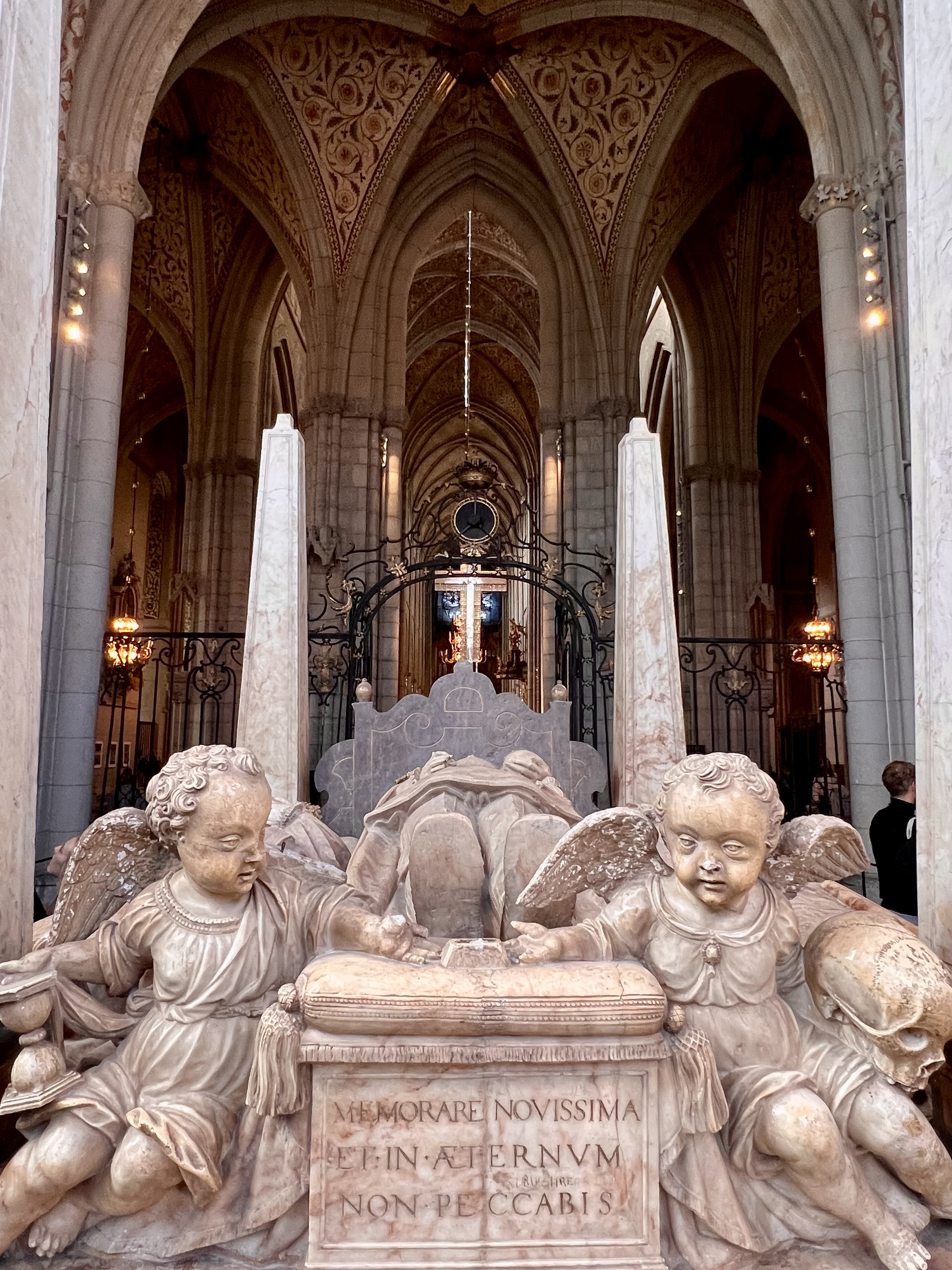
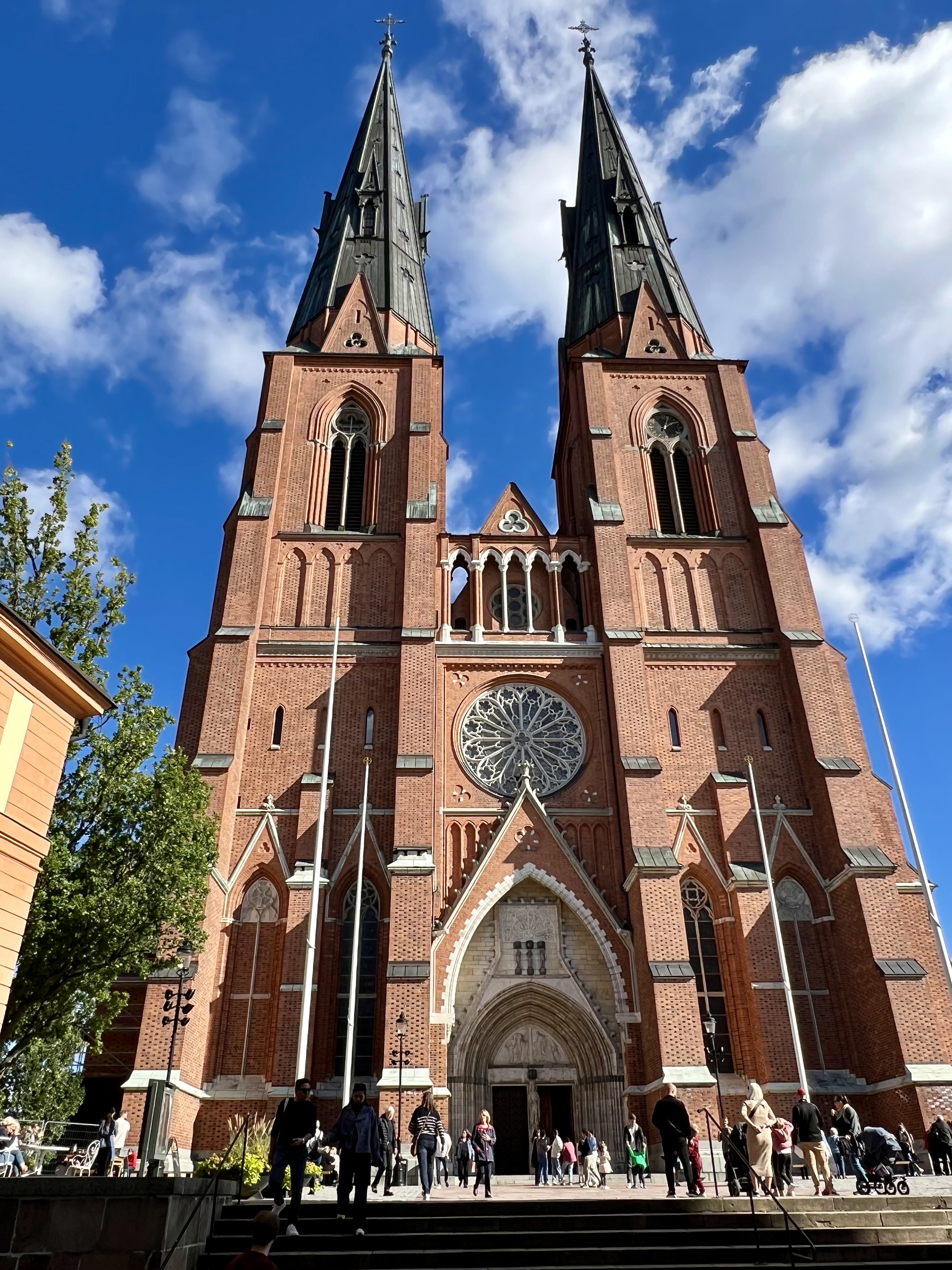
There is so much here we did not get to visit in our three days, but we lallygagged and ate and wandered and absorbed and enjoyed. Just the way I like to travel. By the way, our hotel upgrade came with spa passes. Not my cup of tea so much, but Kathy loved it!
Off the Beaten Path
Gothenburg on Sweden’s western coast faces toward Norway. It is a “young” city, having been constructed from ground up in the 1600s as a port for commerce and a naval bastion to ward off attacks from Sweden’s enemies–at that time Norway and Denmark. We had chosen Gothenburg as a rest stop on our journey not knowing much about it and knowing I would need time to recoup after our air flight into Copenhagen. My oncologist/hematologist had run tests before our trip and told me my immunoglobulins were decreasing again and he was further concerned for my kidneys, so he took me off my multiple myeloma maintenance drug for the duration of our trip. He wished us a great trip and told me I would resume immunoglobulin infusions when we returned home, at which time I would have further testing. As I advise folks, travel when you have the opportunity!


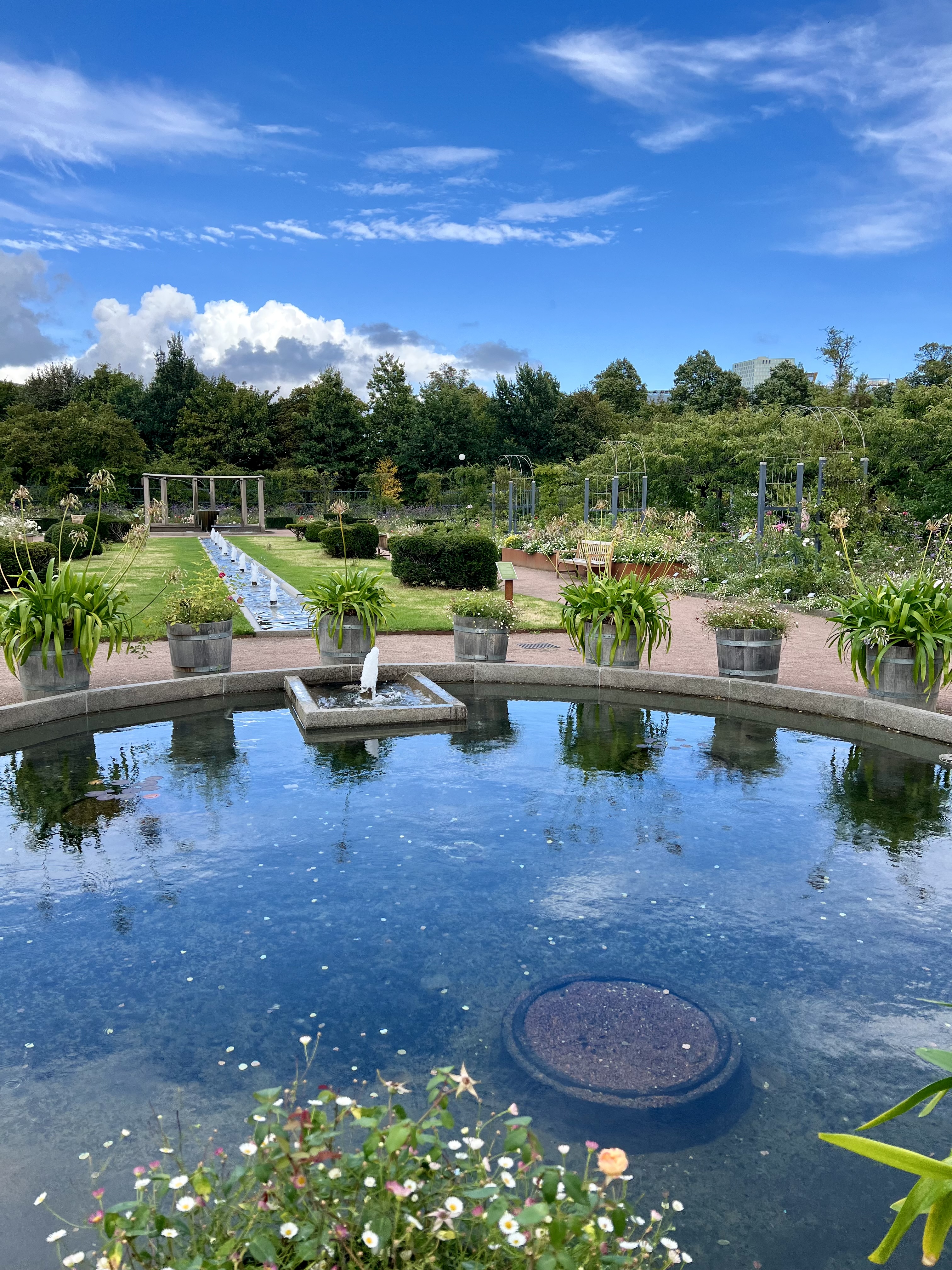
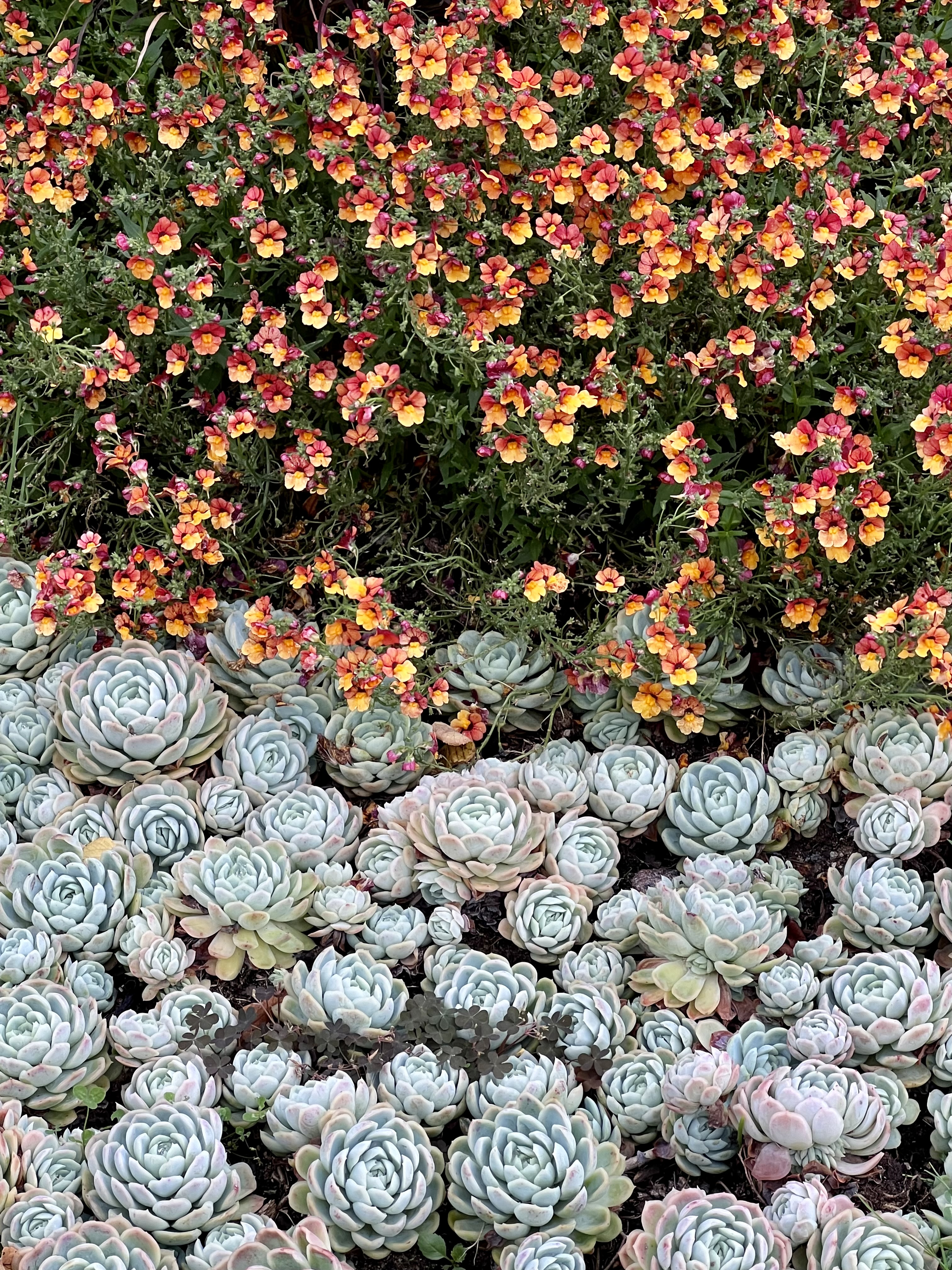
We enjoyed our three-day sojourn in Gothenburg. The weather was pleasant even when the temperatures dropped into the 50’s and low 60’s. This is my preferential weather. The city’s botanical gardens are one of Europe’s finest and were wonderful to stroll. They were close to our hotel and so we ventured there every day to soak up the sun and relish the clean fresh air. We were amused at the hen and chicks plants that were planted to look like rocks in patterns around various gardens. From a distance we did indeed think they were rocks. I will admit that I did sleep late every day until Kathy convinced me that I was missing a wonderful breakfast that was included in the cost of our hotel. How often does one get liver pâté (not braunschweiger), which I love, for breakfast? And Kathy was delighted to enjoy pickled herring for breakfast. As to the other meals, we enjoyed them. One night at a Scandinavian restaurant, the freshly- caught cod was cooked to perfection and more than delightful in a sour cream sauce with tender asparagus as a side. The chocolate pie turned out to be home made chocolate fudge with ice cream. It put a smile on our face remembering a deceased friend who presented us with a gift of homemade fudge every Christmas.


We spent time touring the old parts of the city and enjoyed walking along the canals that course through. All in all it was a restful and delightful “rest stop.” Tomorrow, we catch a bus for Stockholm. We had also bussed from Copenhagen to Gothenburg. I tried four months ago to get train tickets, but they were sold out. Determined to keep the itinerary I had planned, I opted for bus. Having not done this in “like forever,” I was a little nervous, but all is well. The bus depots are by the train stations and the busses are clean and not crowded. They are like a comfortable tourist bus. We survived just fine, proving once again that where there is a will in travel, there is a way!


Copenhagen, the Comfortable Upscale


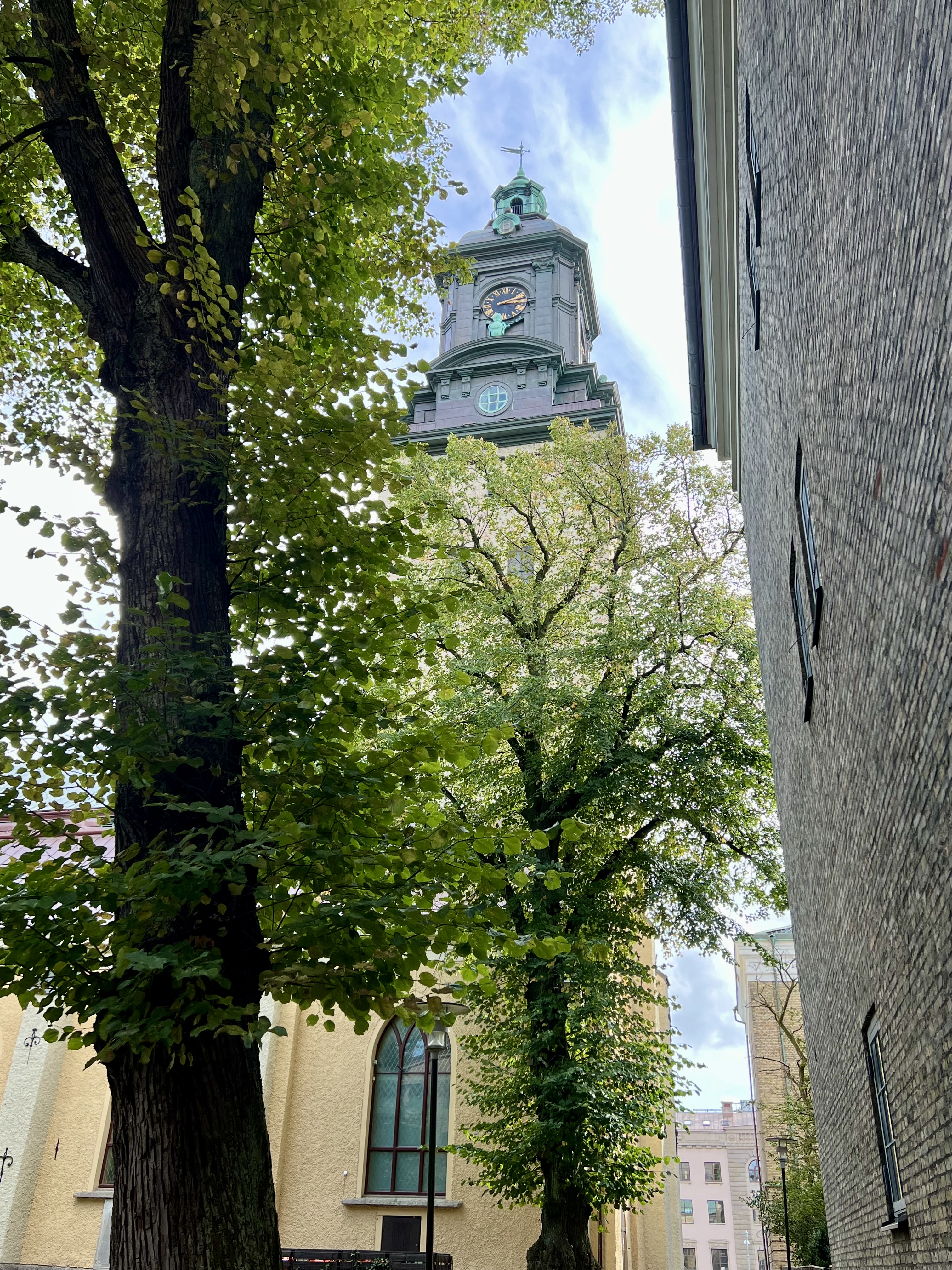
Frederik’s Church, (The Marble Church), a congregation of the Danish State Church – Lutheran
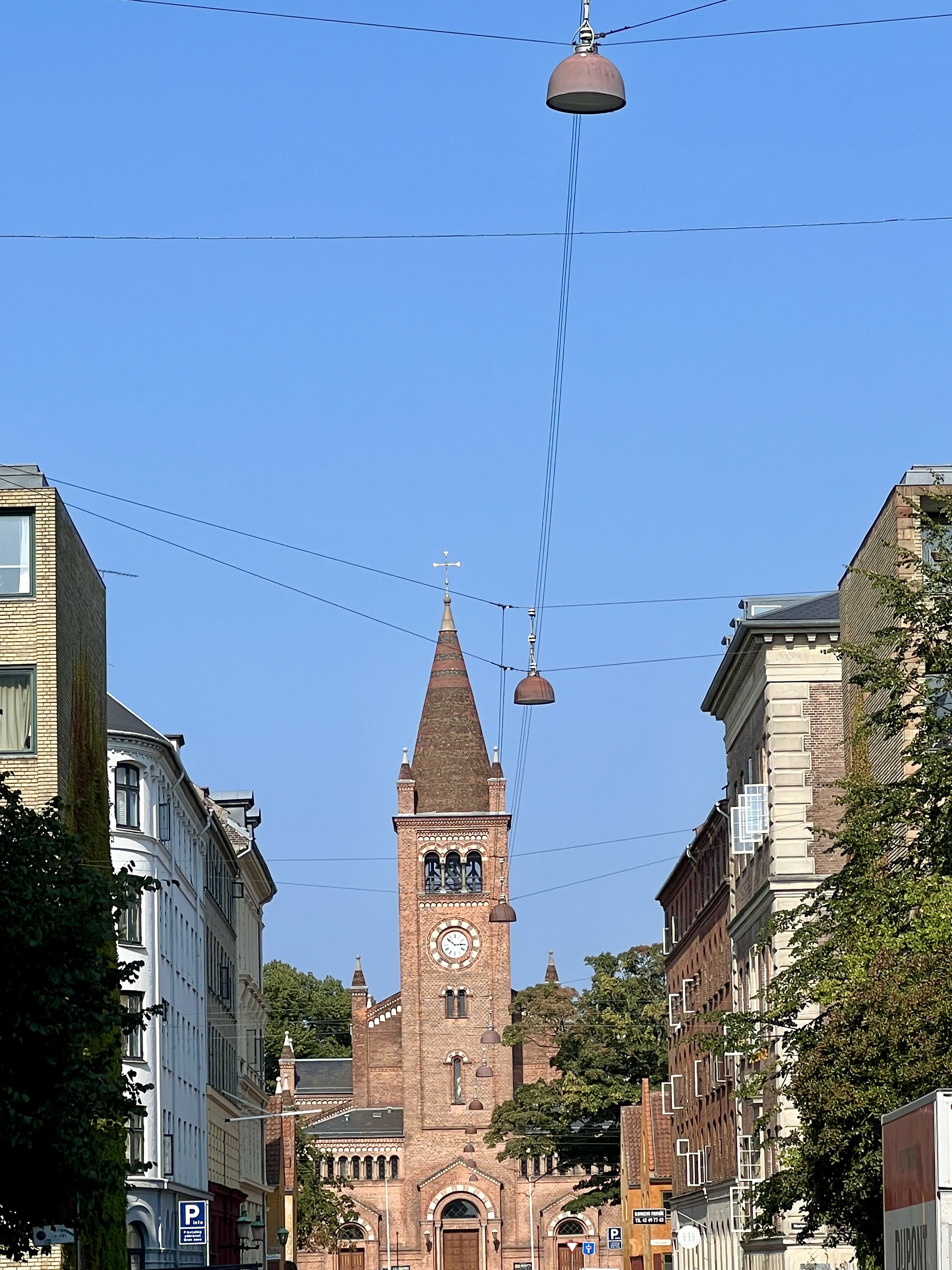
I noticed the lights as soon as we left the Copenhagen airport–suspended canisters hanging above the center of the roads everywhere our taxi drove–no lampposts. The clean appearance mirrored the cleanliness of the city. Our Marriott was situated on an island connected with walk bridges to an area of restaurants and shopping. We were tired from a long day of traveling and were thankful for a comfortable bed. As I dozed, I dreamed of the air flight into the city from Frankfurt, Germany. As we flew over Denmark, I noticed the many islands of this far north archipelago–green forested islands and beautiful plowed fields, each farmstead ringed with trees marking the owner’s land. Fall is in the air and temperatures are in the 70’s daytime. I noticed some yellow in the trees, and we saw vines turning magenta.

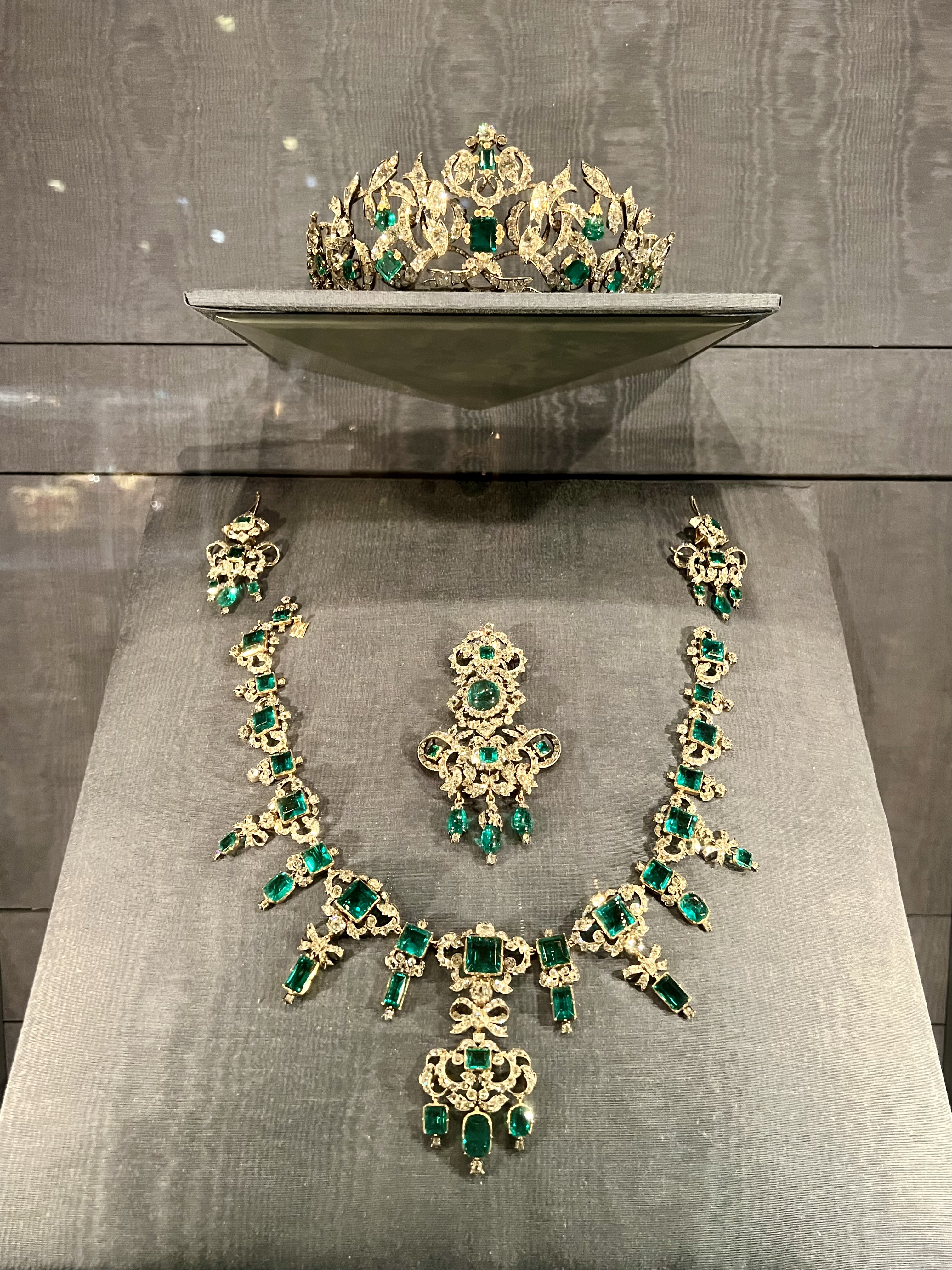


Today, a Sunday, was a wonderful day. We ventured into the central city and toured Rosenborg Castle with its beautiful turrets reaching high into the sky, home of Danish Royalty over the centuries, and now a state museum. Filled with tapestries and painted flooring, the castle sits in a grand park and botanical garden. The Great Hall features large silver lions in front of the royal thrones, and the basement contains the royal jewels, ceremonial garb and crowns of the monarchy. Rather dazzling! We walked the short distance from the Rosenborg to the Amalienborg Palace, home of today’s royal family of King Frederik X. The palace consists of four nearly identical Scandinavian Renaissance buildings surrounding an octagonal plaza with an equestrian statue of King Frederik IV in the center. Fur-capped soldiers stood at attention around the plaza, and the state flags flew indicating the monarch was in residence. It is obvious that Copenhagen is upscale in a very comfortable and livable way. Parks abound, and well laid-out bike lanes are filled with folks out to enjoy the area. We laughed when we saw a young couple–woman biking and man in a large basket in the front (just the way it should be–a male chauvinist might say). I will look for one when we return home–Kathy insists! Sea air and breezes grace the lanes of handsome Danish-designed modern buildings amidst old Scandinavian Renaissance architecture. We enjoyed walking and understood why the people of Denmark are consistently rated the happiest people on earth.
Hungry, we found a Cambodian restaurant–our first Cambodian meal ever–in Denmark! I enjoyed my beef and rice noodle soup, even through the peppers were HOT! Kathy ate some puréed tuna with chili seasoning and rice chips. Tasty. We came back to the hotel, to chill and, God willing, have a great night’s sleep. Tomorrow, we leave for Goteborg (Gothenburg), Sweden’s second largest city. Oops, I forgot…after we landed in Copenhagen on Saturday, Kathy made a beeline for Danish pickled herring. She has some Danish heritage and loves everything Danish, food wise. She ATE IT ALL (even slapped my hand when I reached for some) with dark bread and Danish butter–need I say more?
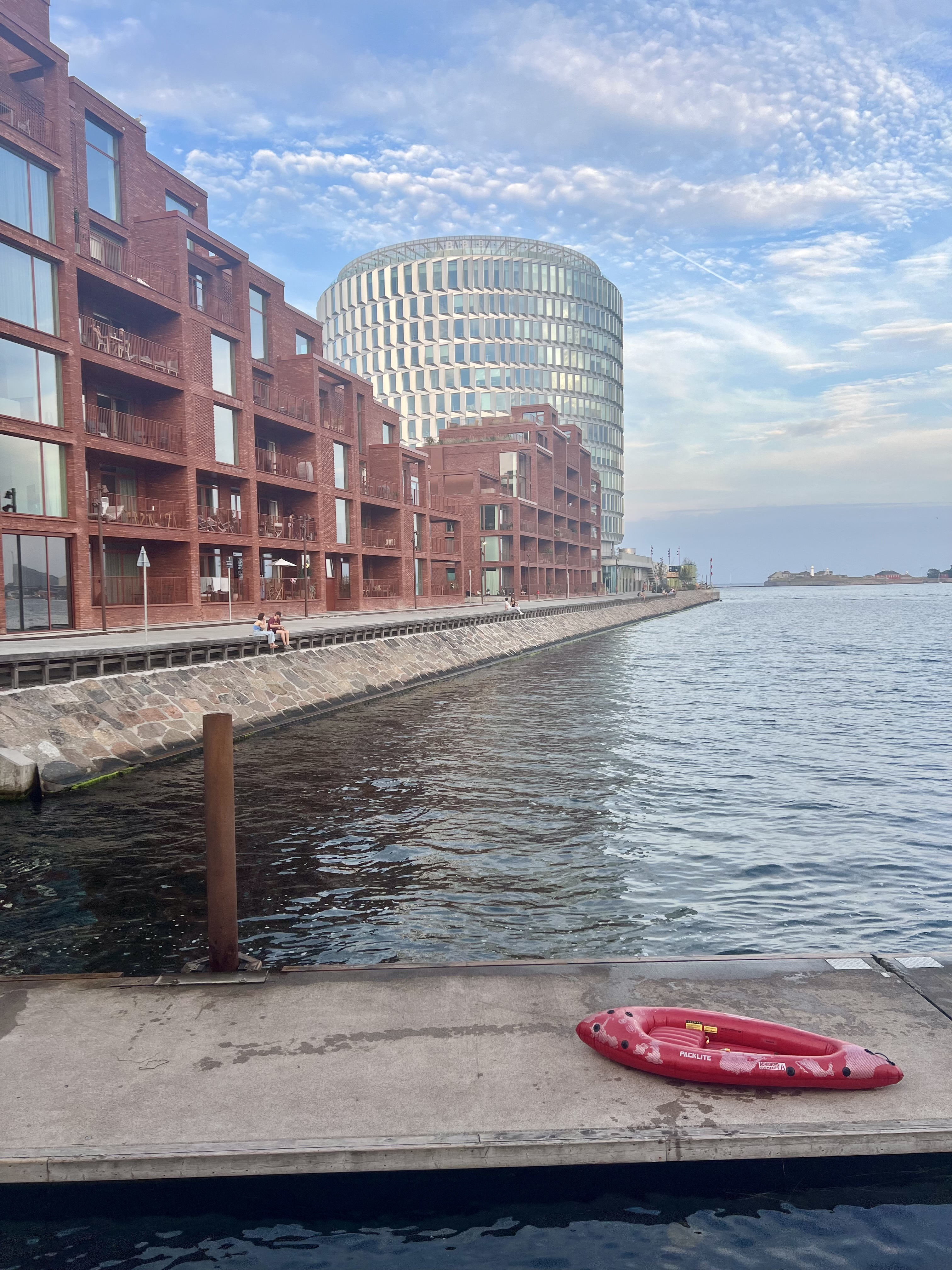
An Addendum–While Kathy edited our photos from today, I went for a walk outside our hotel. I’ll take her after we post this blog. The stylish apartments along the waterway have balconies with live plantings overlooking the sea and the islands beyond. A boardwalk is strewn with people sunbathing and visiting. Awesome boats ply the canals and ocean beyond. In the near distance are striking buildings and I see a raised electric metro train moving toward the central city. “Beautiful people” are swimming in the sea in areas marked off by floating pontoons while others dine in outdoor cafes. I noticed that none of the bikes in the bike parking areas had chains and padlocks! Yes, very upscale in a very livable way!
Waffles, Fries, Chocolate, and Beer
Belgium is famous for its chocolate, fries (don’t call them French), waffles, and beer. We enjoyed a fast and wonderful three days in this charming land. We settled into our hotel in Brussels, the capital of the European Union. Kathy and I had been upgraded to a suite at the Marriott and we tried to give it to our friends, Randy and Melisa. They caught onto the scheme and were adamant in refusing to take the room. Such is life.
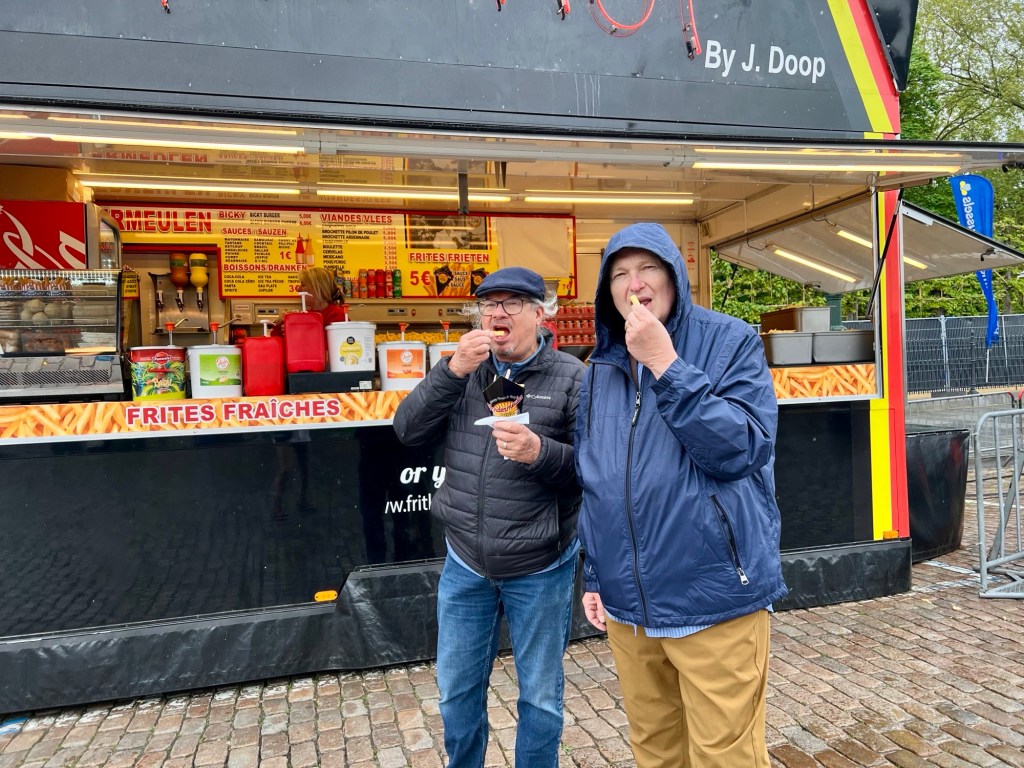
It was sprinkling as we walked to the Grand Place, an absolutely stunning city square. In my mind, it is the most beautiful in Europe. Gold-leafed buildings with statuary and facade peaks line the square. The buildings were once home to the various trade guilds that controlled European trade through much of the medieval period. Truly spectacular! We could not pass up Belgium Frites (Fries). They are double fried and tasty–crisp on the outside and soft on the inside.

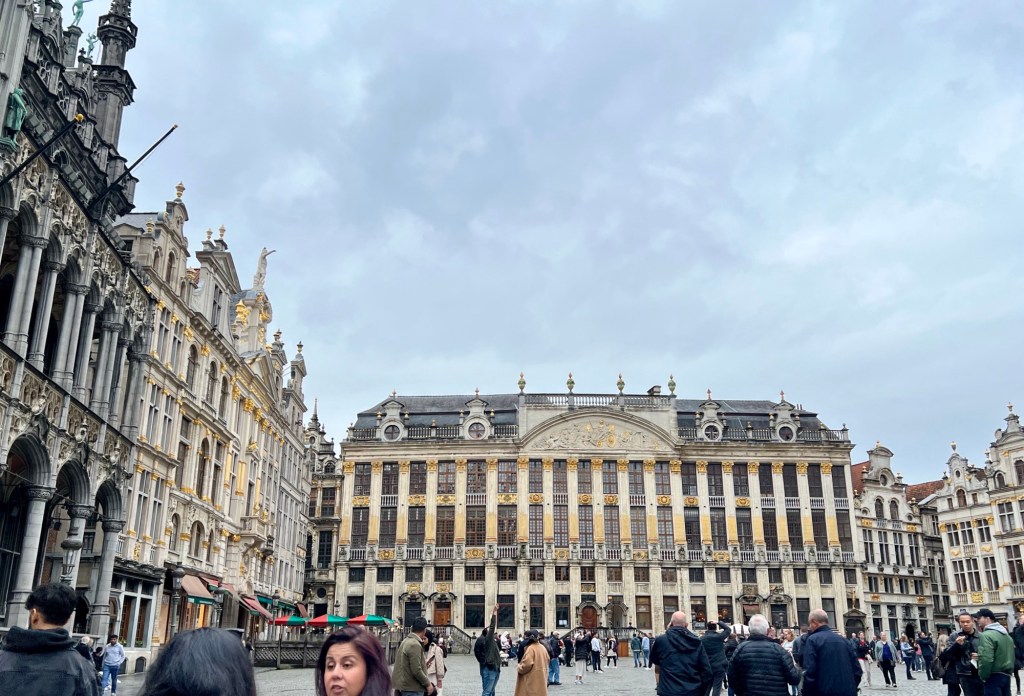


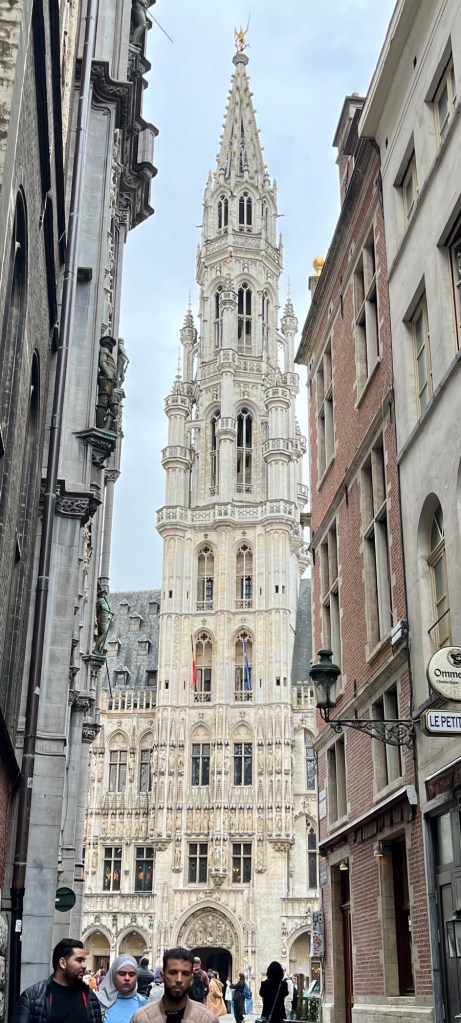
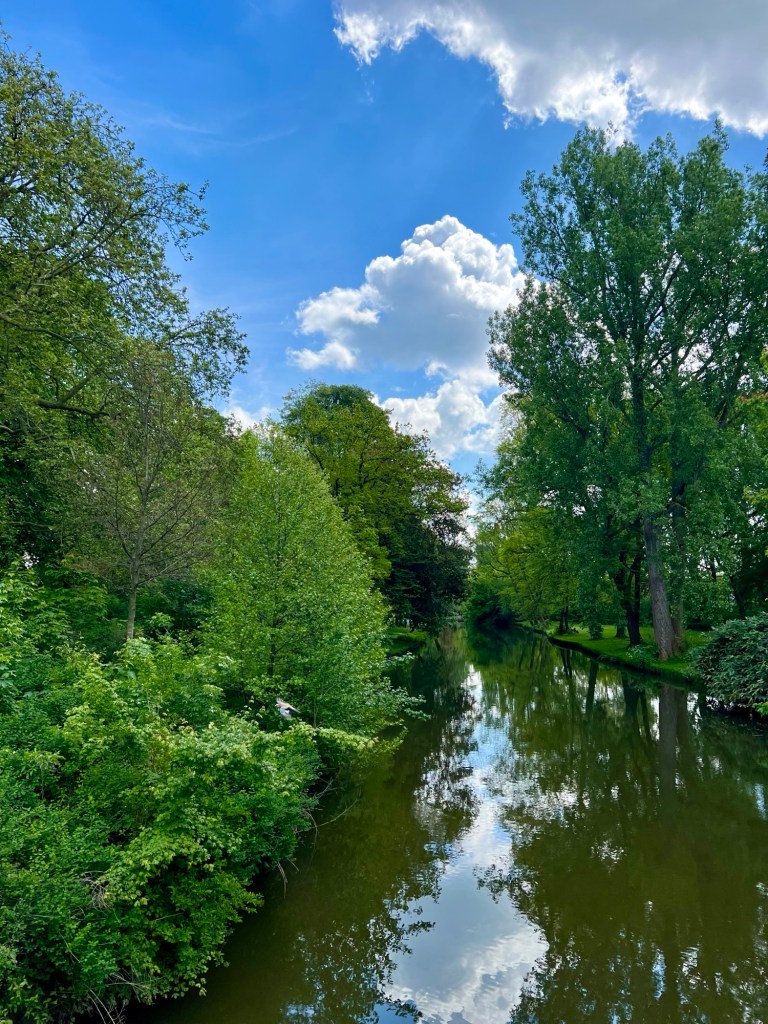
The next morning, May 5, was a bright and beautiful day to spend in Bruges and Ghent. The train ride from Brussels is direct and quick. Bruges is a city time forgot, all for the good. Today it is just as it was hundreds of years ago. Atmospheric, charming, cozy and quaint are descriptive words for this city of canals and cobblestone. Picturesque buildings filled with restaurants, shops, chocolatiers and outdoor cafes line the narrow and winding lanes. Beautiful tree-lined walks pass along rivers.

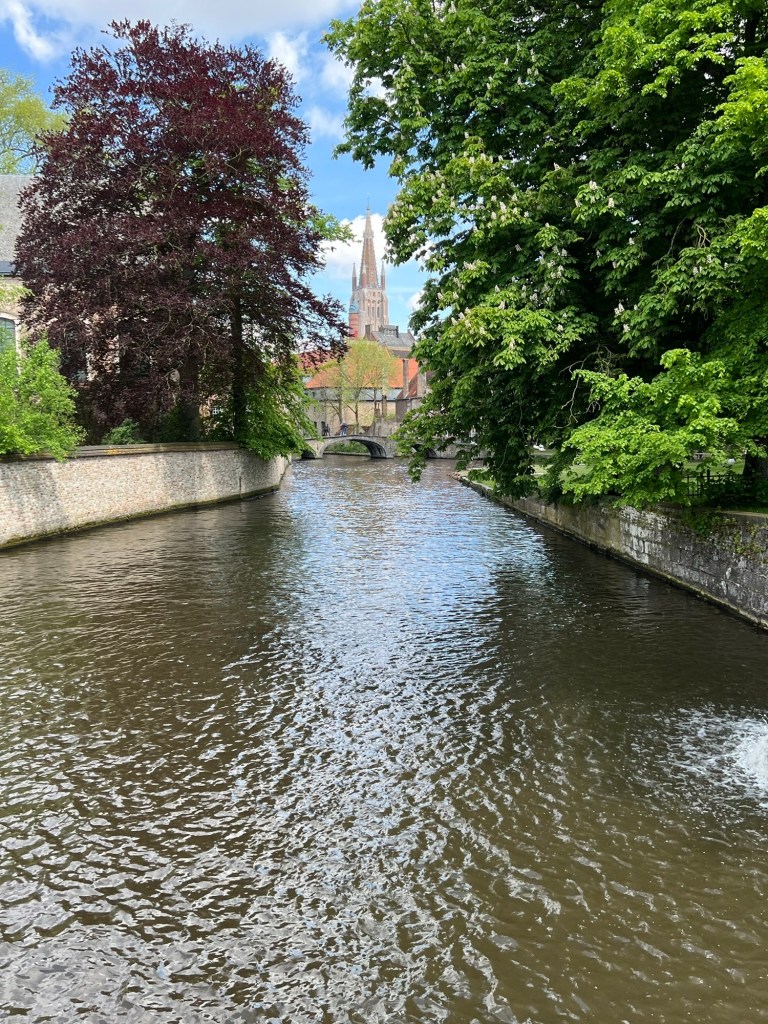
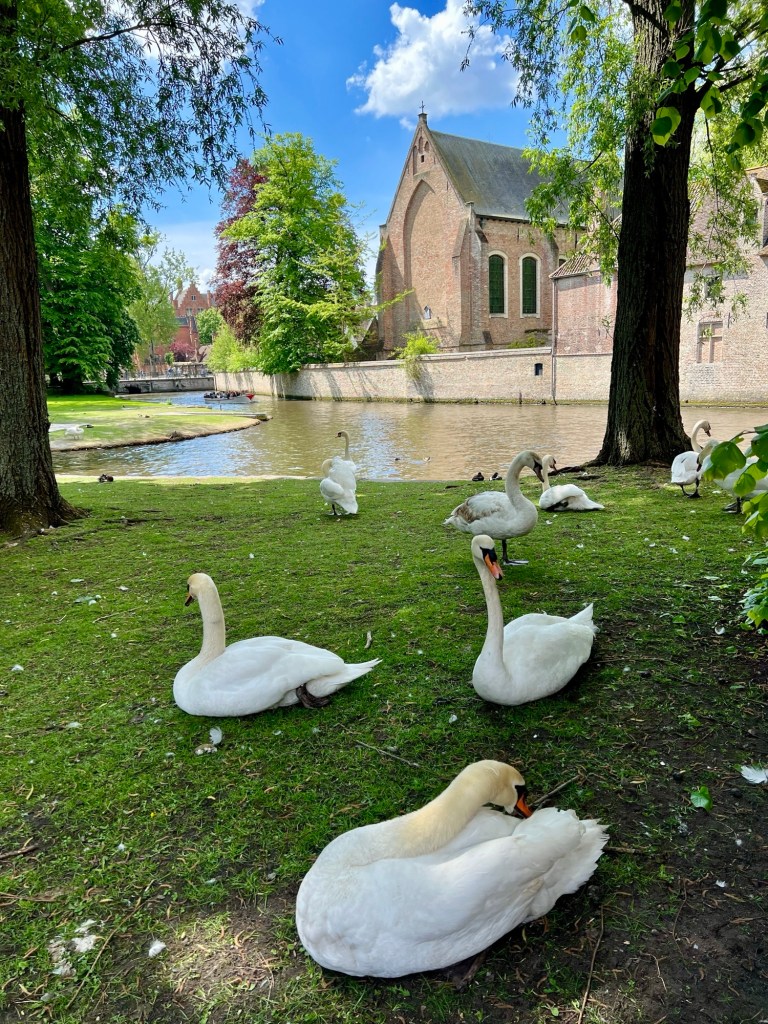
We had a delightful late lunch after we had explored the city. We also ate Belgian Waffles. Light and airy, they are filled with fruit of one’s choosing and adorned with Chantilly (whipped cream) and warm Belgium chocolate poured over the top.

Amazingly, this was the day of the “Tour of Flanders” annual bicycle race, the most important cycling race in Flanders held every spring. It came through the main city square and along the narrow streets. We were able to get a wonderful view along with thousands of enthusiasts. The bicyclists whizzed by followed by cars topped with each contestant’s extra bikes and then emergency and police vehicles. Fun!

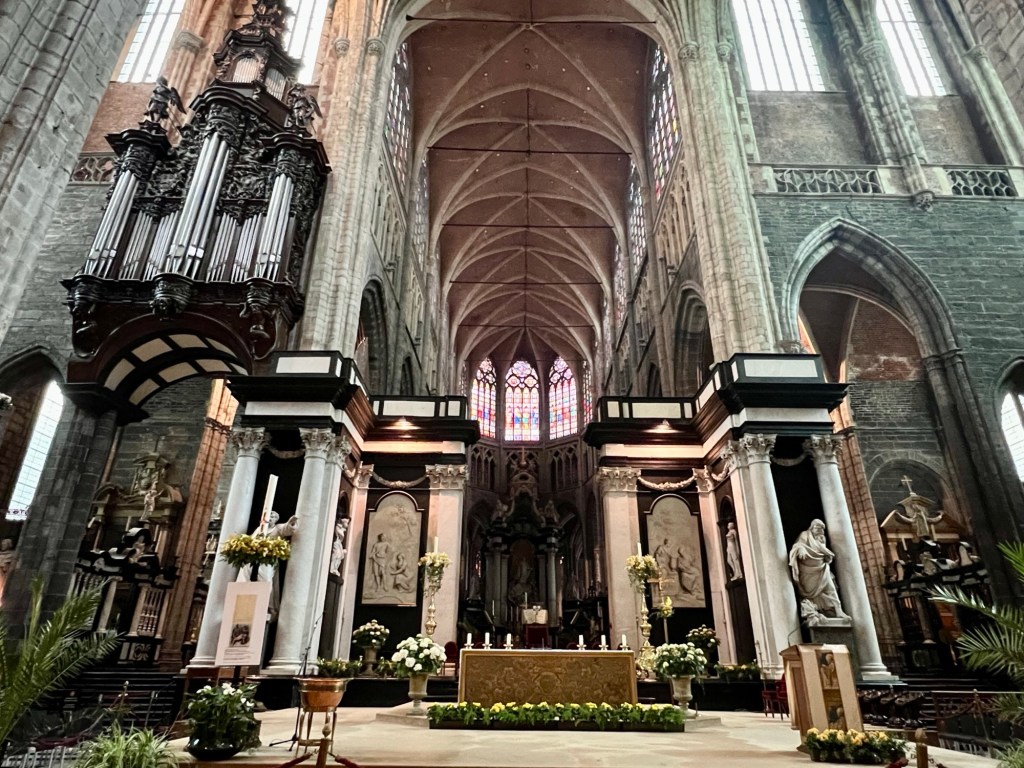
We arrived in Ghent around 5 PM. We rushed to the famous St. Bavo Cathedral before it closed for the day. Beautiful, it has an amazing huge bronze pulpit. Unfortunately, we were too late to see the 15th century Ghent Altar Piece, the famous “Adoration of the Mystic Lamb,” painted by brothers Jan and Hubert van Eyck. One of the great works of Renaissance art, this massive oil painting on panels was the subject of the movie, “The Monument’s Men.” Kathy and I had viewed it on a previous visit, but we were sad Randy and Melisa did not get to see it. We walked around the city amongst the medieval buildings and viewed the many tall towers (for that day) that made Ghent the “Manhattan of the Middle Ages.” We trained back to Brussels for a good night’s sleep–well, our friends, Randy and Melisa, slipped out for “snacks.”



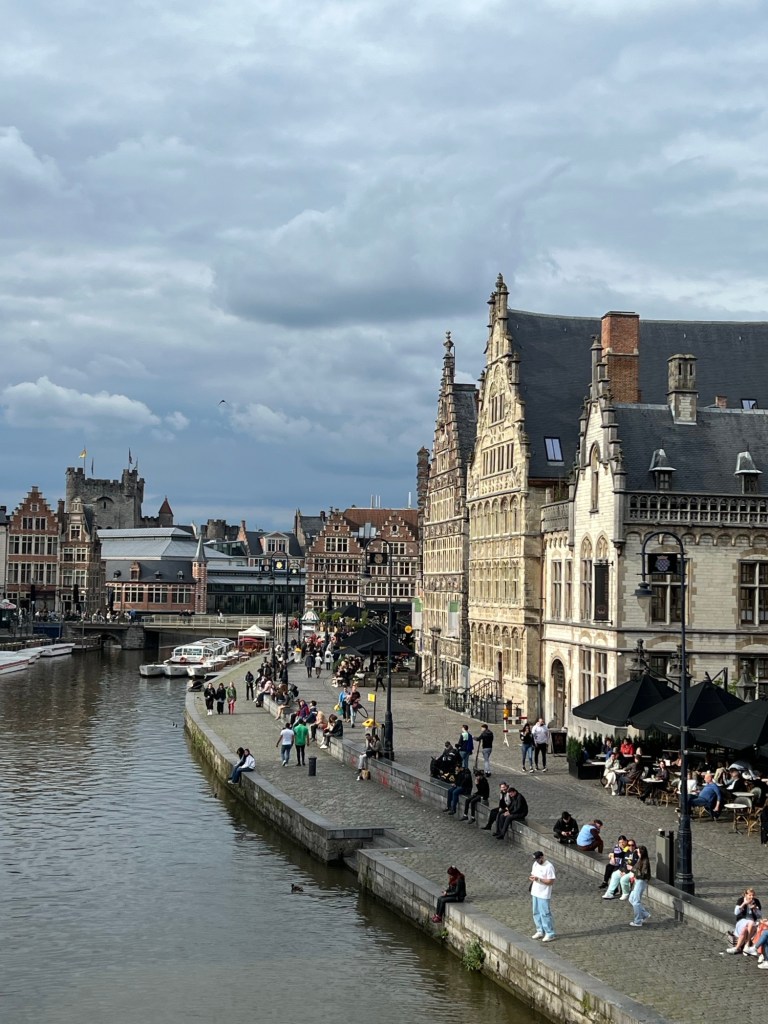
Today we loafed around Brussels. Kathy and I stayed in the hotel for the morning, while Randy and Melisa shopped on wonderful shopping streets. In the early afternoon, they encouraged us to join them on a walk to some of the beautiful areas of the city. We did! Eventually, we found an excellent restaurant that specialized in homemade pasta. It was outstanding. We had crepes for dessert–more chocolate, chantilly, and fruit. At this point, we cannot help ourselves. After all, we rationalize, we may not pass this way again.
As for the waffles, fries, chocolate and beer? We had our share! Tomorrow we train to Amsterdam for the night and fly home Wednesday. We have had a delightful month of travel.
Museum Day and THE Meal
To stroll the Tuileries on May 3, stretching from the Louvre to the Place de la Concorde, is a very Parisian activity. The walk through the Tuileries with its formal hedges, fountains, and flower plantings is very pleasant. Today we noticed bleachers had been set up around the Egyptian obelisk at the center of the Place da la Concorde in preparation for an upcoming summer Olympics sporting event. How photogenic the setting will be!
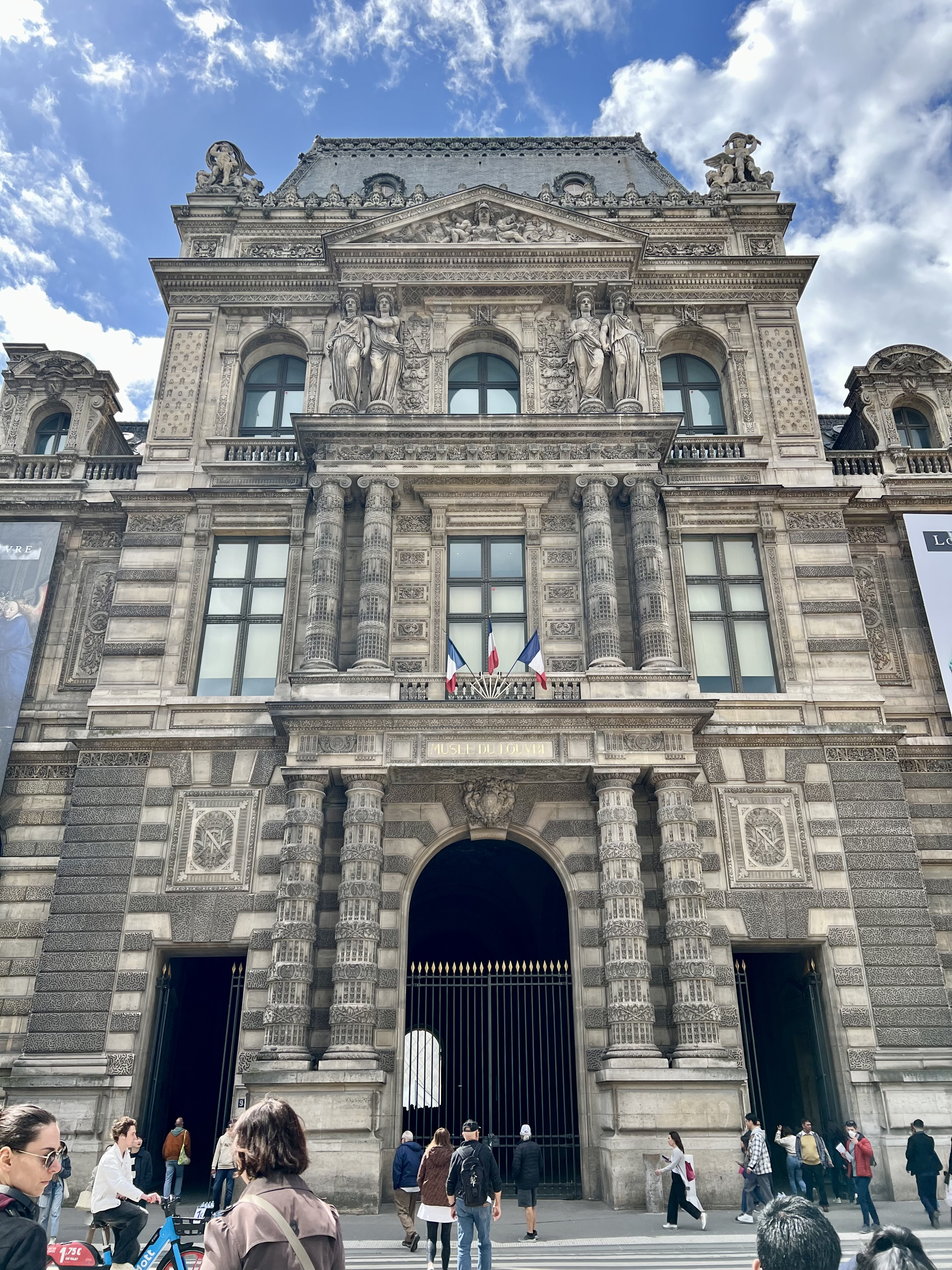
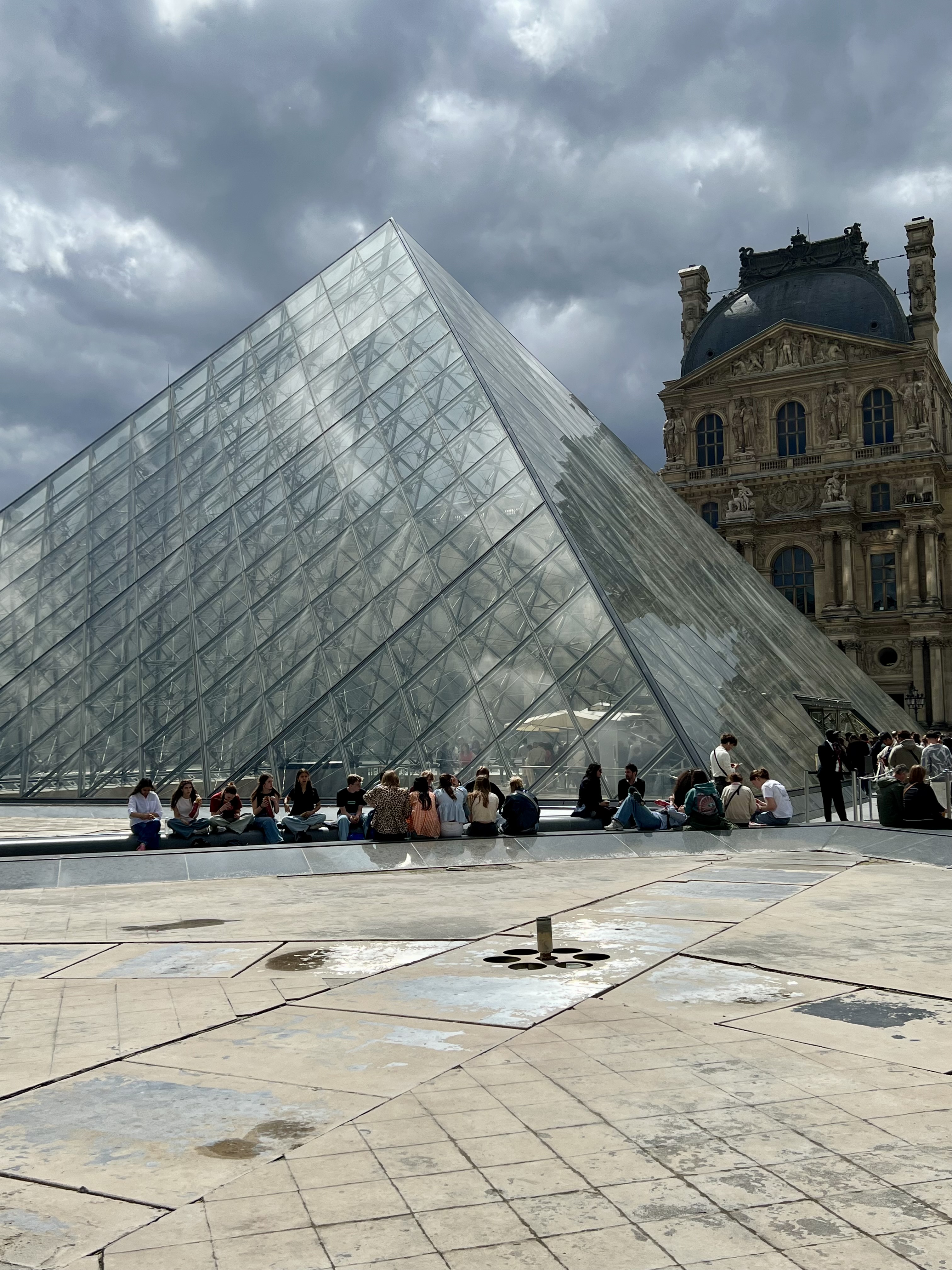


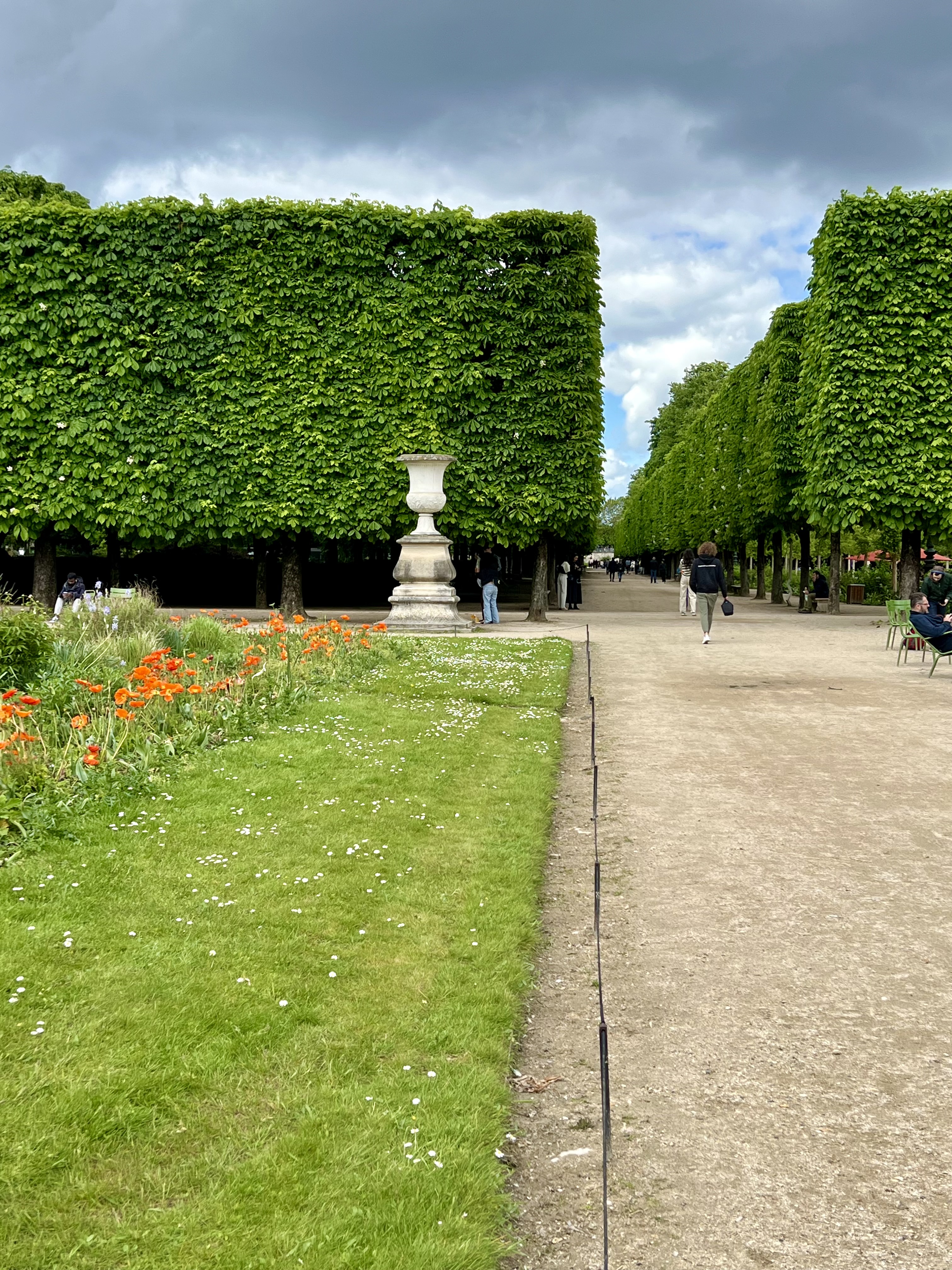
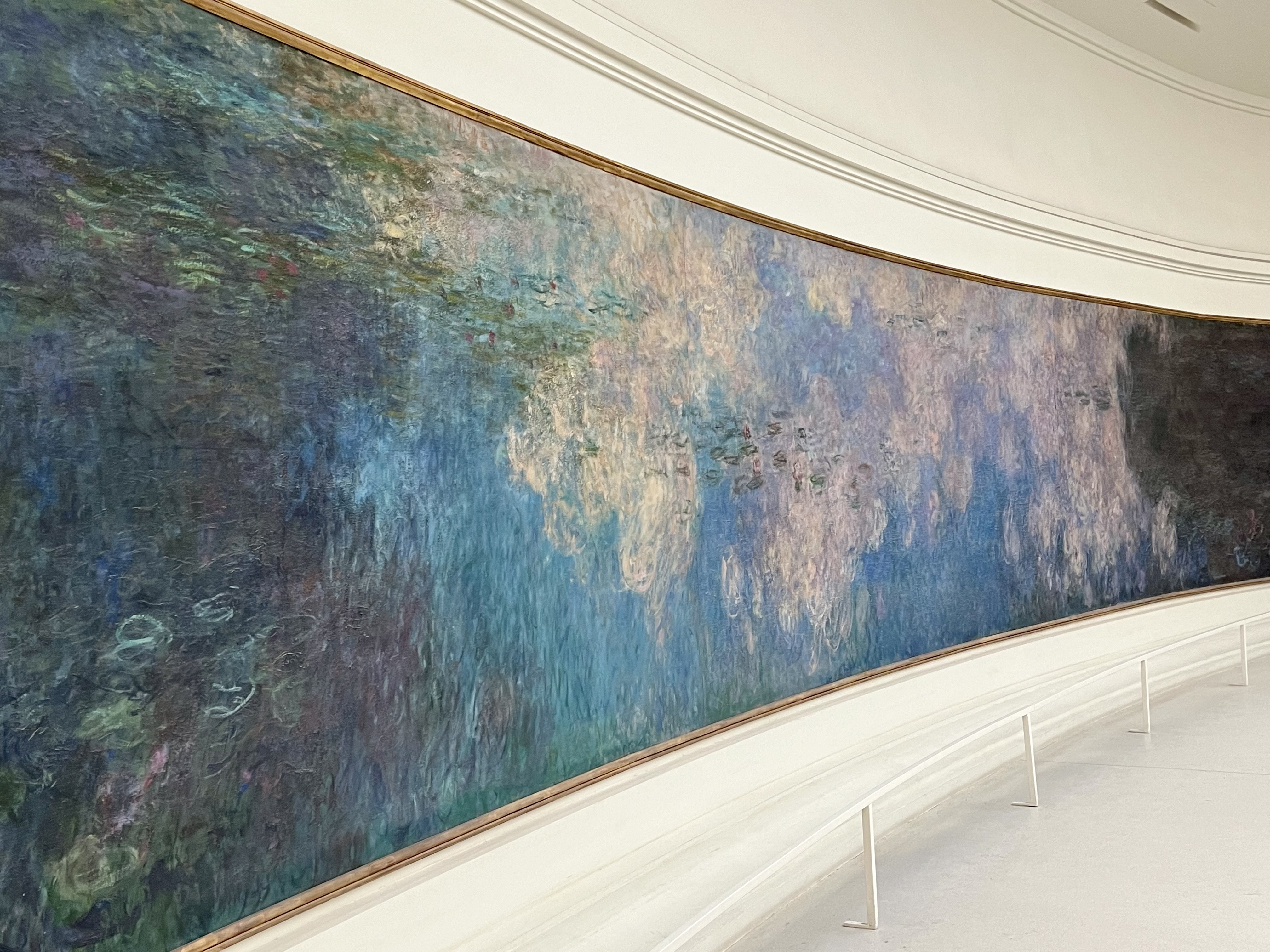
At one end of the Tuileries is the L’Orangerie, the museum that houses Monet’s Water Lilies collection of paintings depicting his home and gardens in Giverny. Monet designed the two rooms of the museum to house his masterwork. Painted at differing times of the day to catch the light changes on the lilies in his pond, with weeping willows dipping into the water, his work is a 360 degree panorama of impressionism at its best.
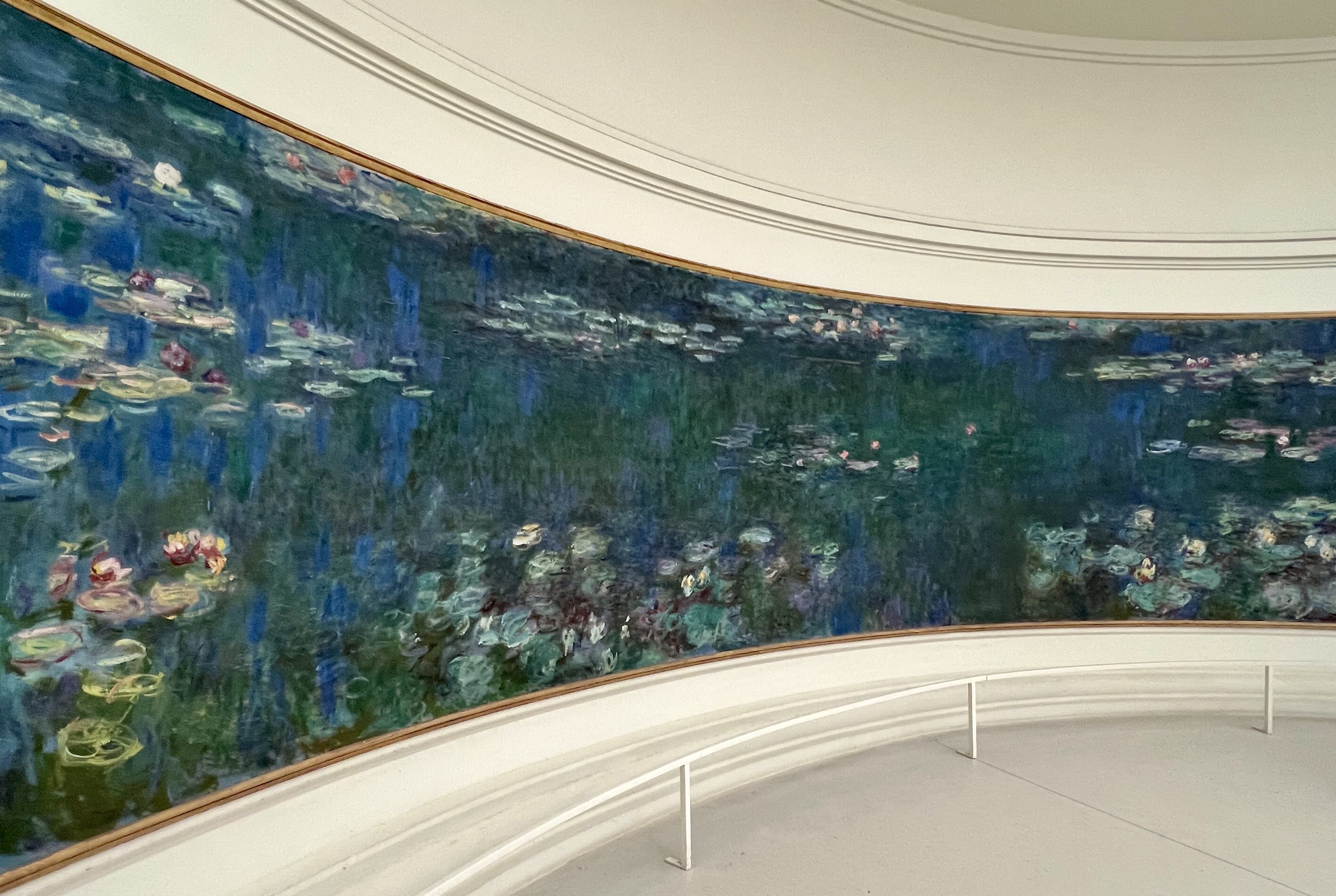


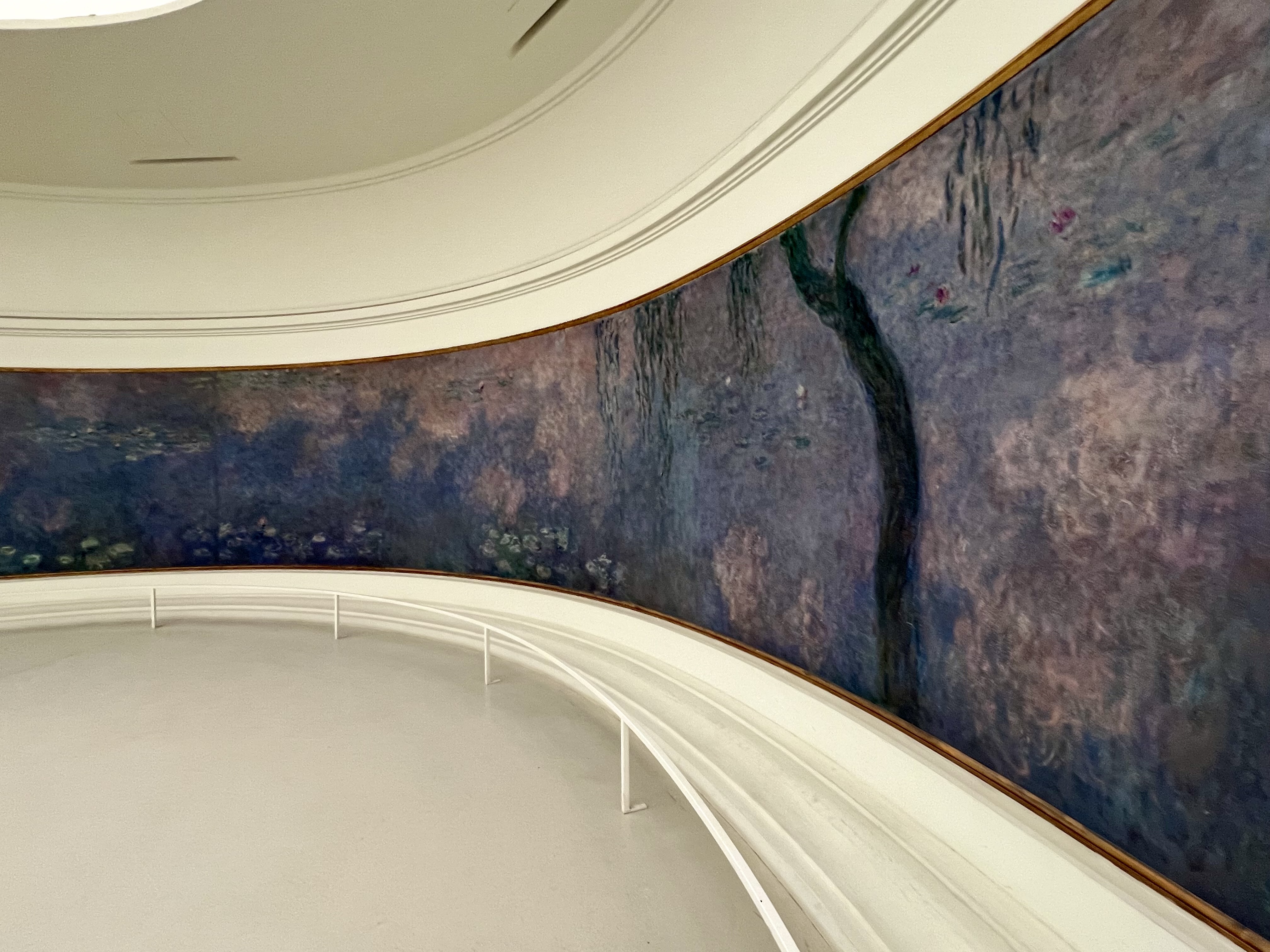
From here, Randy and Melisa, our friends, and we hiked to see the Rodin Gardens and Museum. Melisa was particularly interested in viewing “The Thinker” and “The Kiss.” We were able to see many of Rodin’s sculptures on the wonderfully tranquil grounds of the manicured gardens of the mansion built in the early 18th century. Imitating art, Randy struck the thinker pose at the base of the bronze work. “The Kiss” is a marble work housed inside the museum along with many other marble works from antiquity.


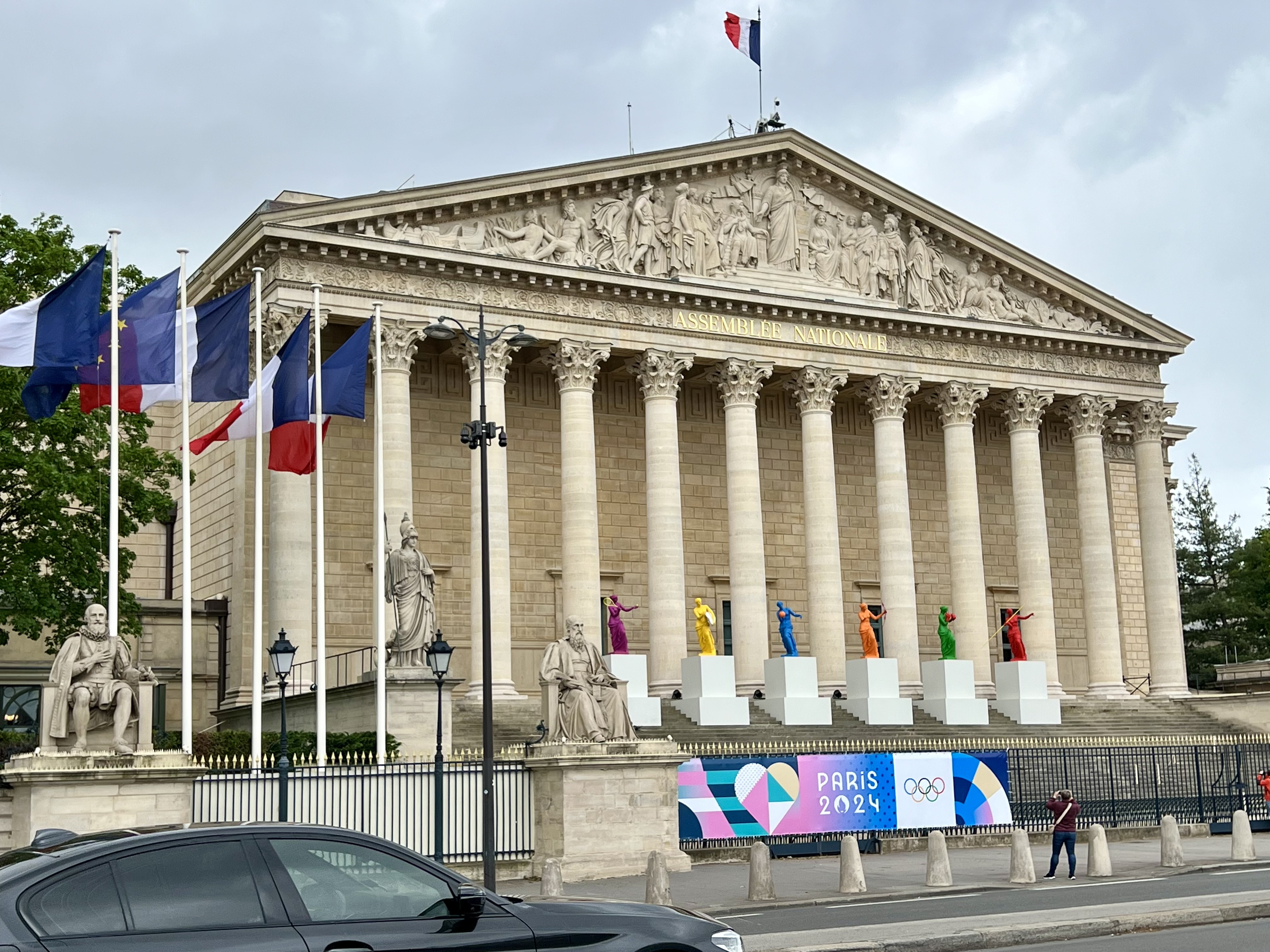
After a long day, Randy charted our course back to our hotel via metro underground. The Paris subway system is extensive and relatively easy to use. The subway stops are clean and bright; unfortunately, while elevators and escalators are available, stair climbing and descending is unavoidable. Once again, we noticed soldiers walking around, fully armed, and we realized preparations are fast underway for the summer Olympics. The National Assembly of France has Olympic colors in statuary representing various sports adorning its front.
Our evening was reserved for a meal at Le Train Bleu, one of Paris’s finer restaurants. I had made the reservations several months in advance. Housed in Gare de Lyon, a train station, the restaurant was built to accommodate wealthy travelers and to showcase the sights of France through paintings on the ceiling and walls. This was formal dining in a magnificent atmosphere of gold gilt and statuary. Smartly attired wait staff changed plating, silver utensils and glass ware depending on each course’s order. Randy had a lobster starter, and I ordered asparagus with warm olive marinade. The wonderful meal for the four of us unfolded from there. I had selected crepes Suzette for my dessert, and the flaming delight was prepared table side. It was a beautiful evening in a magical atmosphere.


Kathy and Melisa inside Le Train Bleu

Market, Mall, and May Day
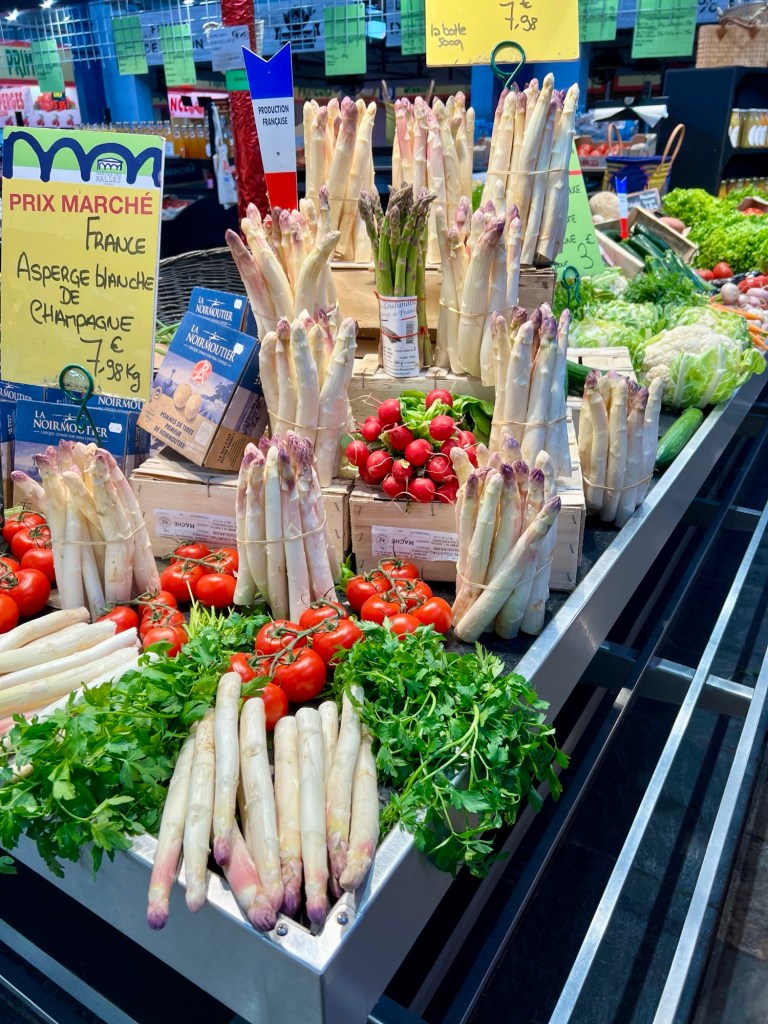
On our last day in Troyes (pronounced “twah”), April 30, we had planned a leisurely day. After a lazy morning start, we went to the Troyes Market, which was a delightful experience. There were typical food stalls of fruits, vegetables, beef and fish; however, there were also stalls selling ready-made foods for take out, such as pickled herring, shrimp and calamari cocktails, potato mixtures of many kinds, etc. We enjoyed browsing the chocolate stands and the oyster shuckers station. We knew that if we lived here, this would be a regular stop for food, and we would eat well!
For the afternoon, we did something we have never done before on one of our overseas adventures–we went to an outlet mall! The one in Troyes is well known. Not unlike our American outlets, we enjoyed a warm day browsing in stores both familiar and unfamiliar. I was hungry, so we went to a buffet cafe with lots of choices and well-prepared entrees. I enjoyed spaghetti Bolognese and some quite delicious cream brûlée. Late afternoon was nap and rest time for Kathy and me, but our friends, Randy and Melisa, went to an outdoor cafe for drinks and to people watch. In the evening, we enjoyed a very good French meal (French onion soup for me, veal smothered with a mushroom sauce with oven fried potato wedges and green beans, and warm chocolate cake with vanilla sauce). There is no rush in France for the evening meal. They do not expect to turn over the table to someone else. Therefore, we capped a leisurely day with a leisurely meal and find ourselves ready for Paris.
Our train ride to Paris took almost two hours on a new, spacious train. Since it was May Day, a significant European festival, we found some prices were elevated–our cab ride to the train station was double in cost, for instance. Once in Paris, we purchased three day train passes and used the metro for our transportation needs. We checked into our hotel, whose entry was via a covered passageway filled with quaint shops and eateries. There are only eight such covered passageways remaining in Paris.
We had five o’clock tickets to a concert in La Sainte Chapell. This chapel was originally built to house relics from the passion of Christ. Floor to ceiling stained glass surrounded us in beautiful light as the strains of stringed music wafted through the air. We decided it would be hard to find a more beautiful venue for a concert. Security was tight; Paris is preparing for the Olympics soon to arrive.
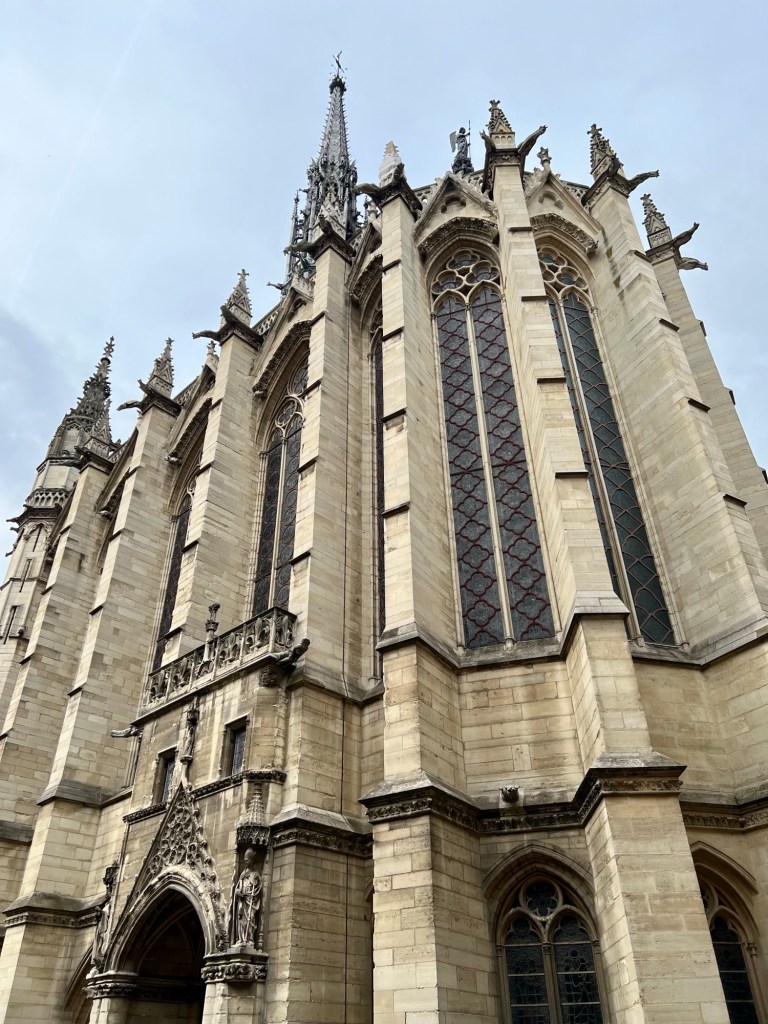


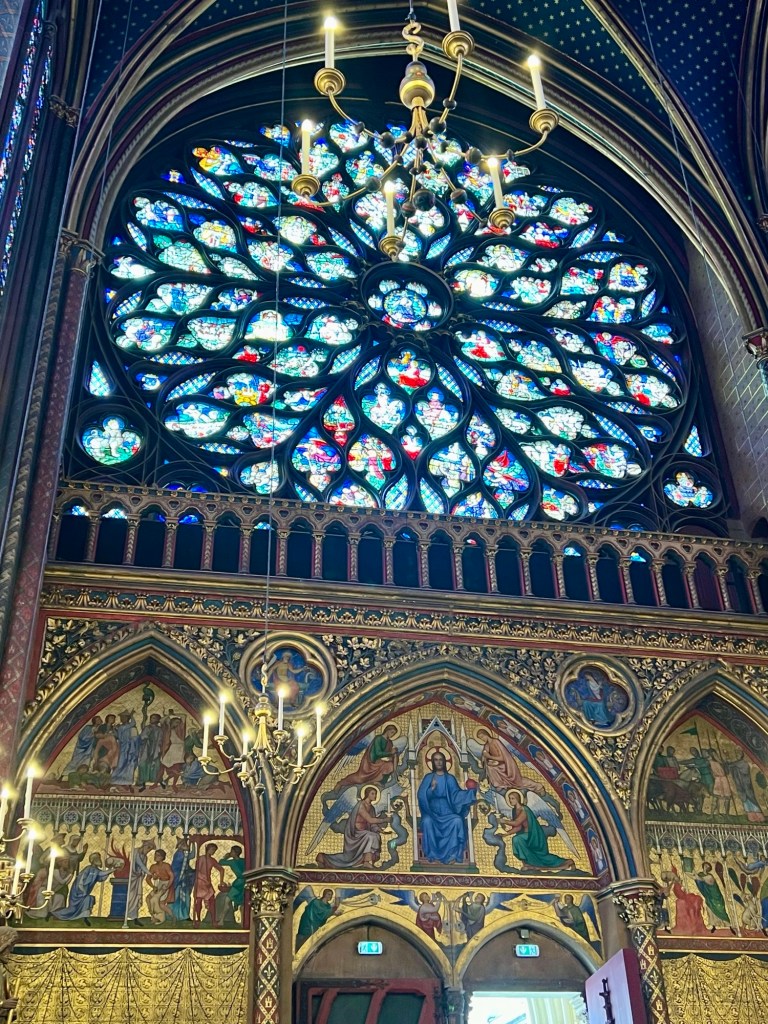
After the hour concert, we walked to the still-under-reconstruction Notre Dame (from the fire). It will not be reopened until the end of the year. From there we walked into the Latin Quarter across the River Seine, our destination being the Luxembourg Gardens. Many folks were out, simply relaxing by the water pools. We took the metro back to the hotel, exhausted from a long day and enjoyed a good night’s sleep.


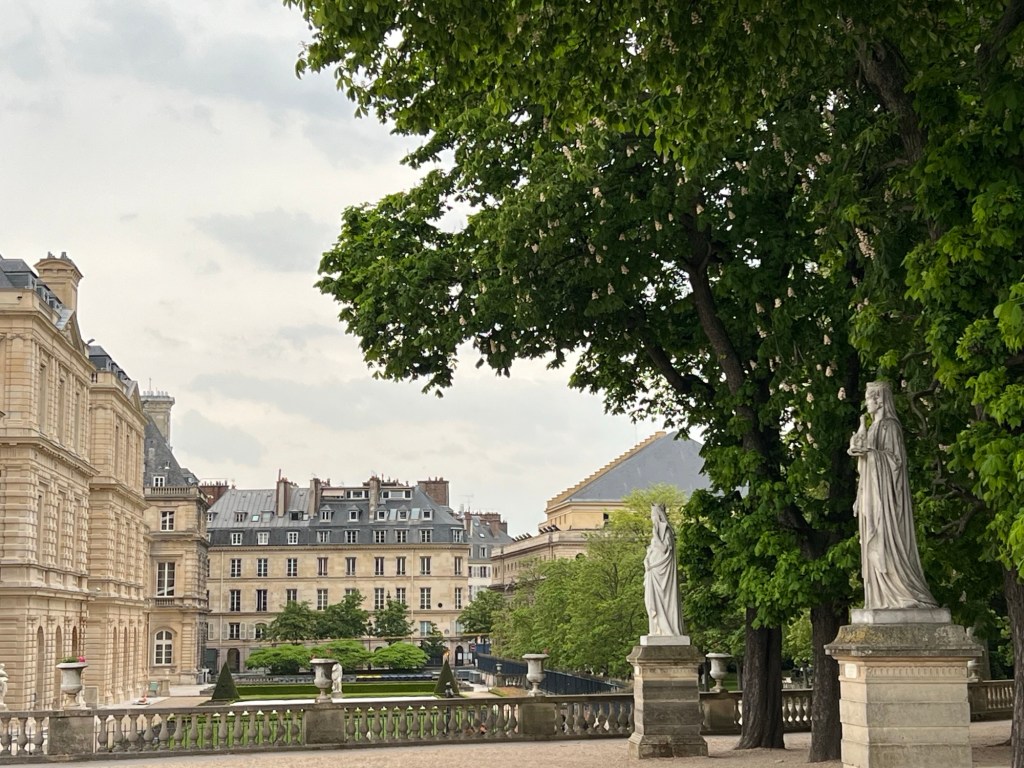
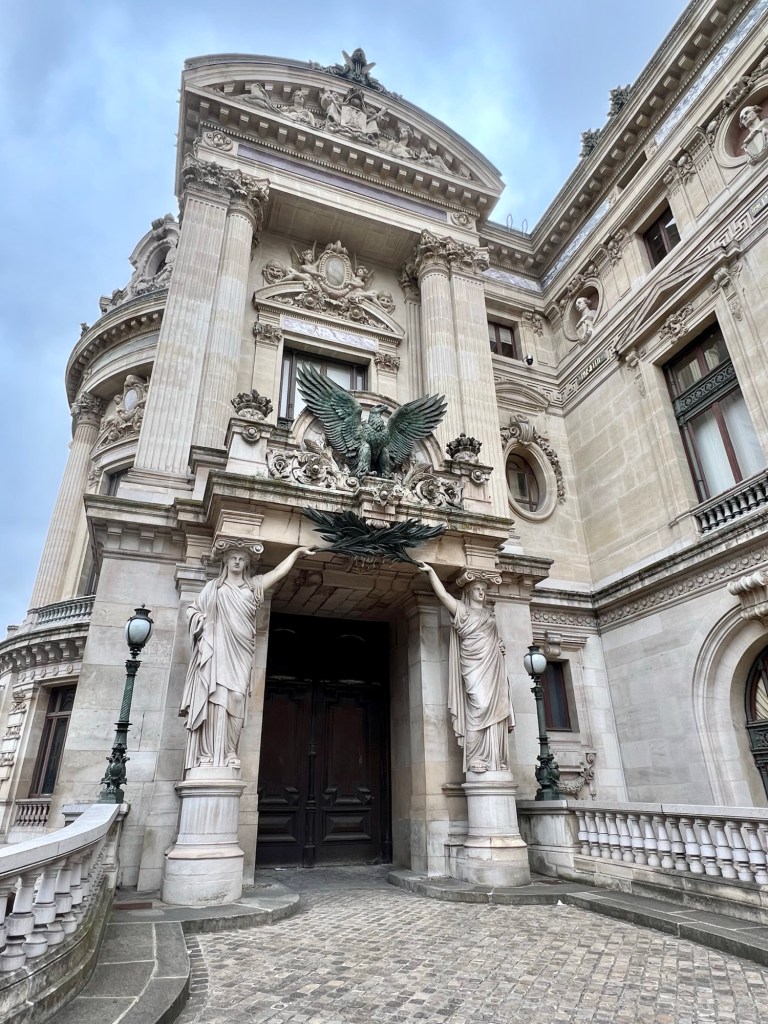
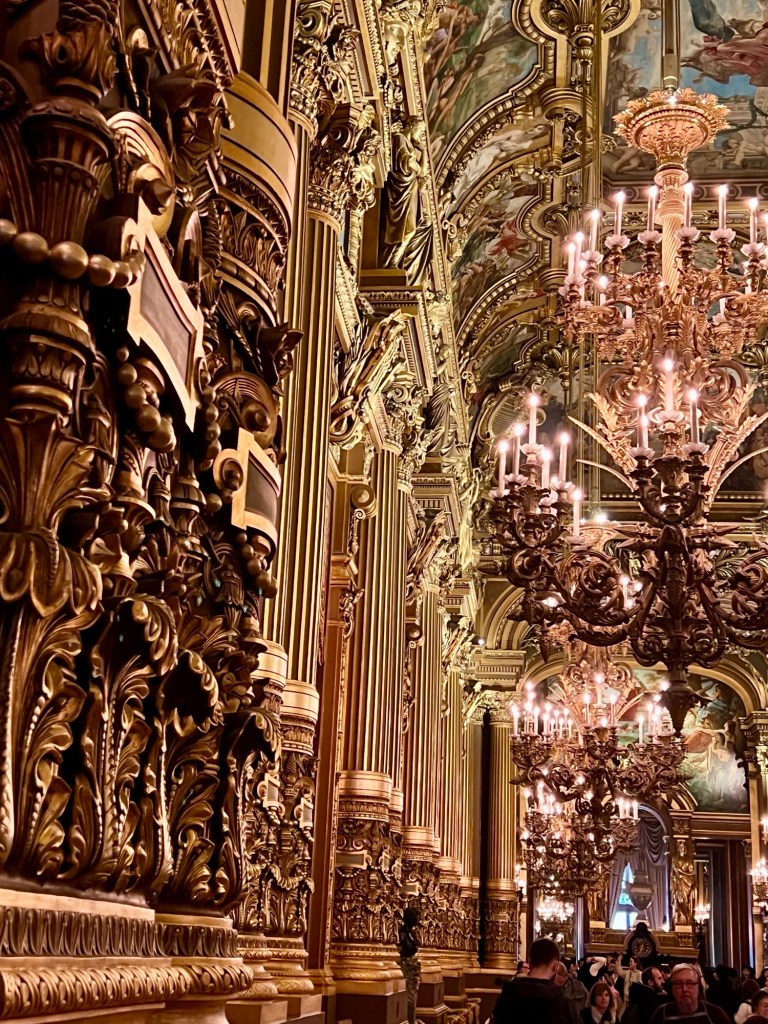
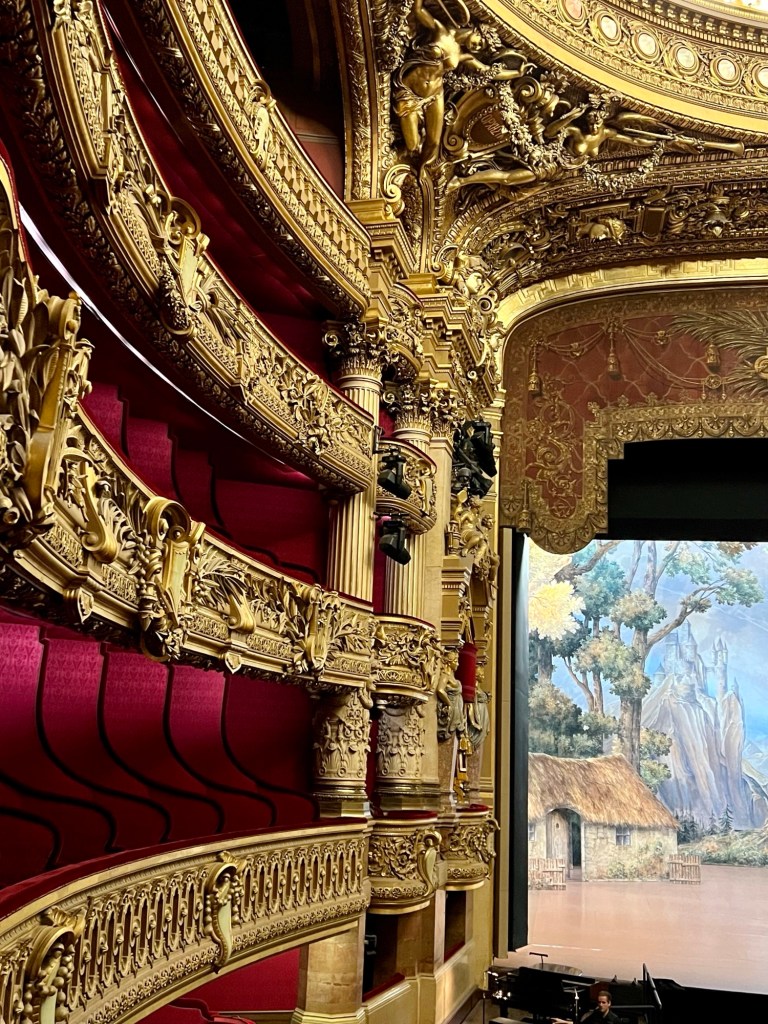
On Thursday, we ate breakfast. Our hotel is very well located, so we walked to our day’s destinations. The Palais Garnier, the Opera House, was spectacular! Multi-tiered with exquisite tiles and mosaics, huge golden statuary and brilliant chandeliers blended into a golden hall with beautifully painted ceilings. The opera hall itself was resplendent.



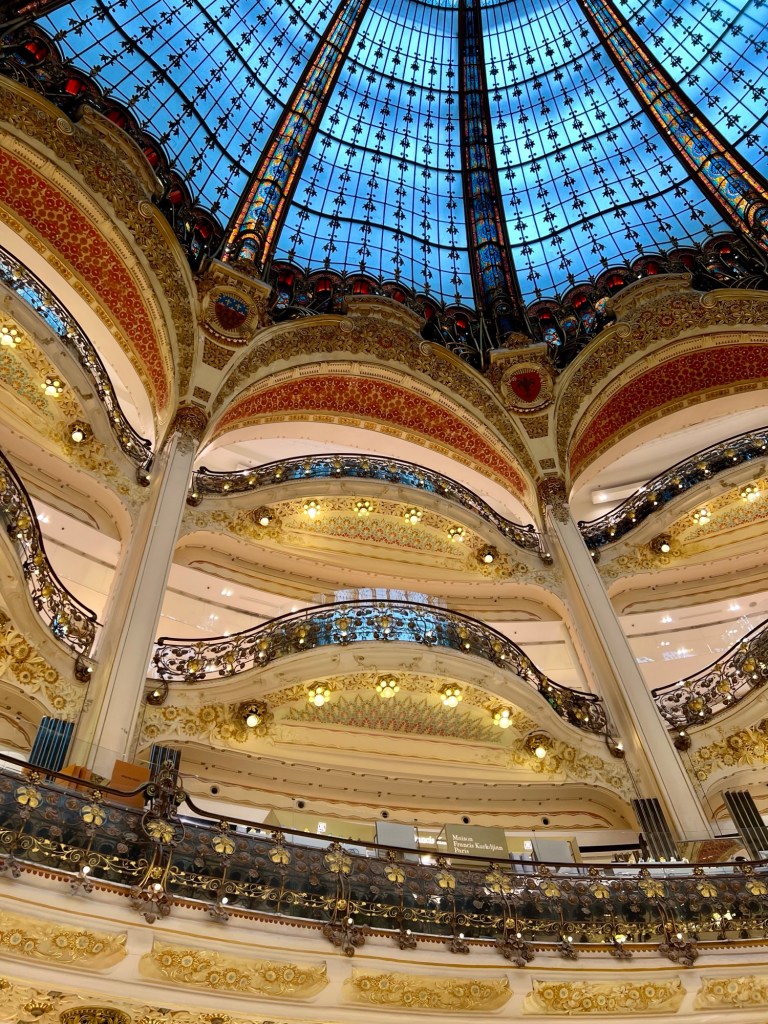
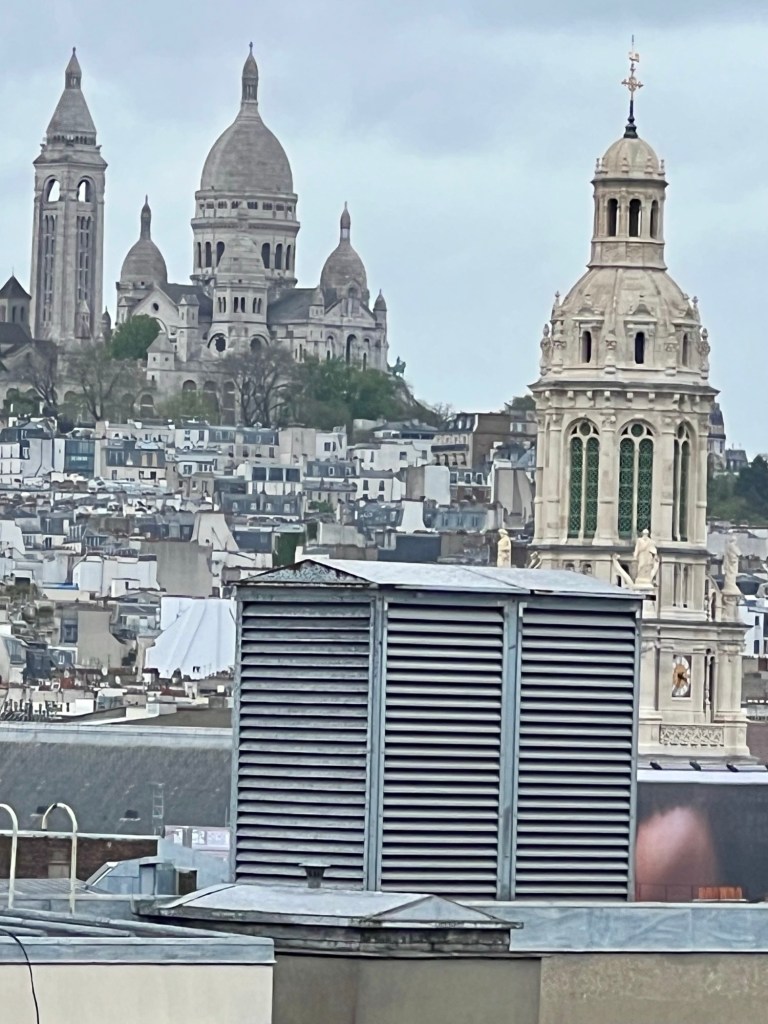
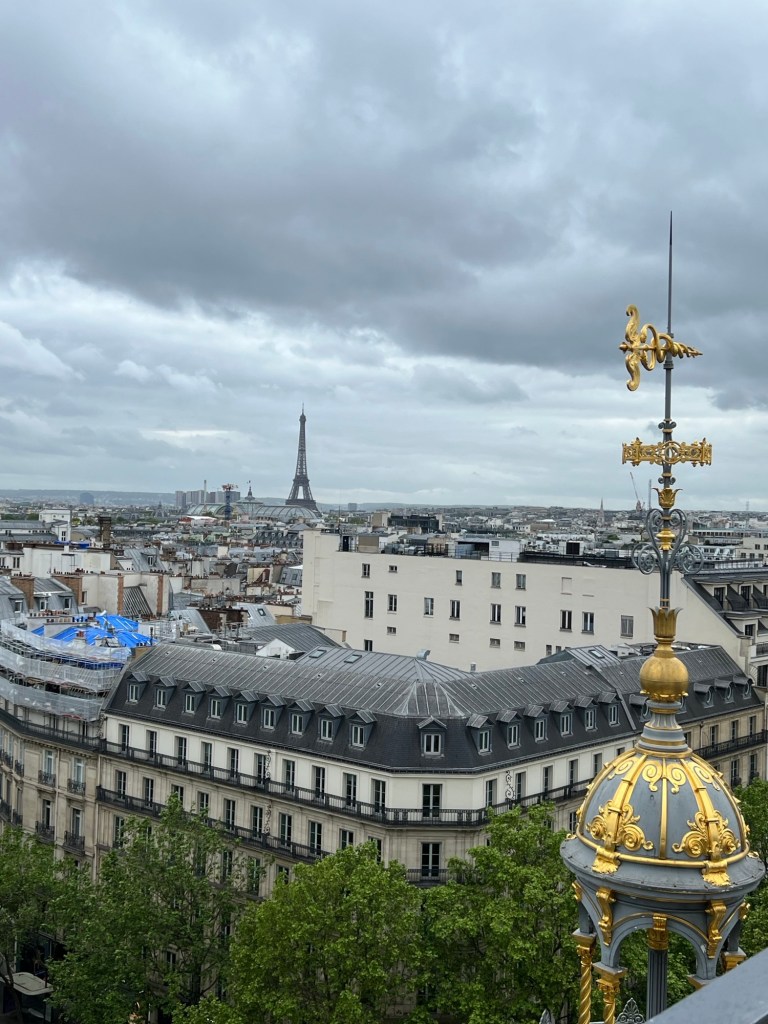
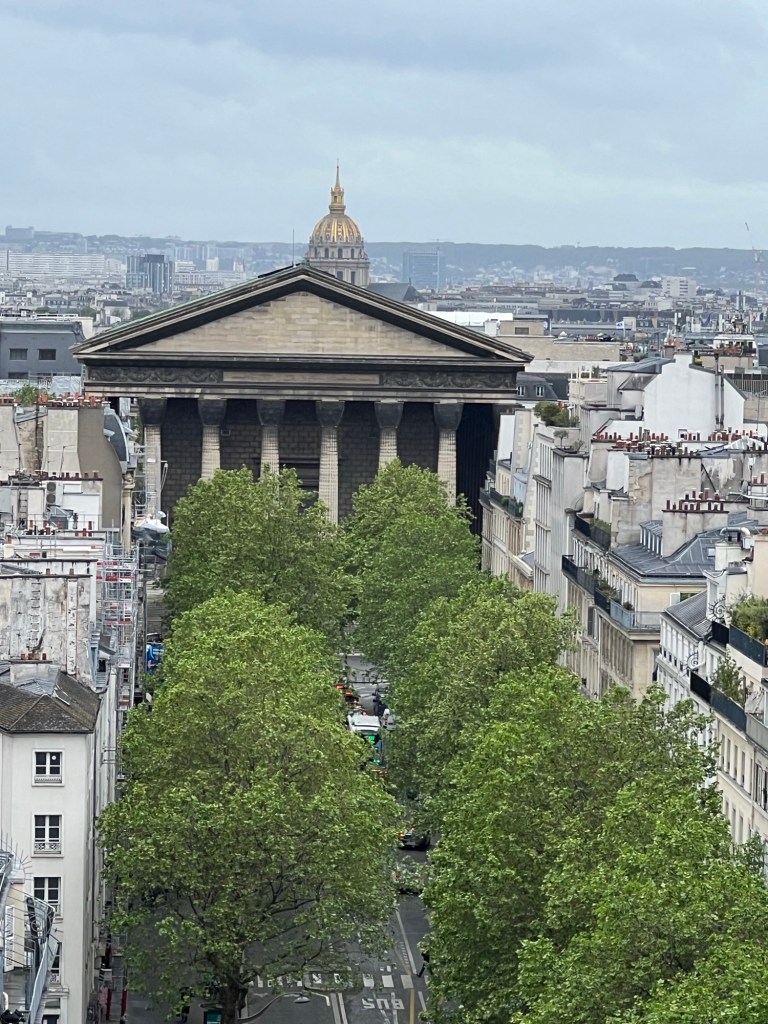
The Galeries Lafayette and Printemps, luxury department stores, were across from the Palais Garnier. We enjoyed seeing the beautiful stained glass dome in the Galleries and looking out from the top of Printemps for beautiful views of the city. We did some minor shopping, but basically enjoyed the views. We had a very good meal at a Brasserie in the area. Randy, our friend, and I ate great lobster rolls. Back at the hotel, Kathy and I took it easy, while Randy and Melisa did some more shopping in the covered passageways. Late in the evening, we went to a Hard Rock Cafe next to our hotel for snacks of nachos, a taste of home in Texas.


Randy enjoyed a cold brew from a two-handed beer glass.
Old Lumber
If you like half-timbered buildings, Troyes is for you! At the beginning of the champagne territory, Troyes is a wonderfully preserved old city. We were in a restaurant and Randy, our friend, noticed an old wooden spiral staircase. “1463,” the waiter proudly declared! One of the churches was begun in the 800’s. Our three day stay here affords us opportunity to explore the beauty of the “old.” Randy and Melisa arose early to take our rented van to the rental agency, only to find it had moved since we made the reservation. It took them some time to get the new address and the van delivered. All ended well.


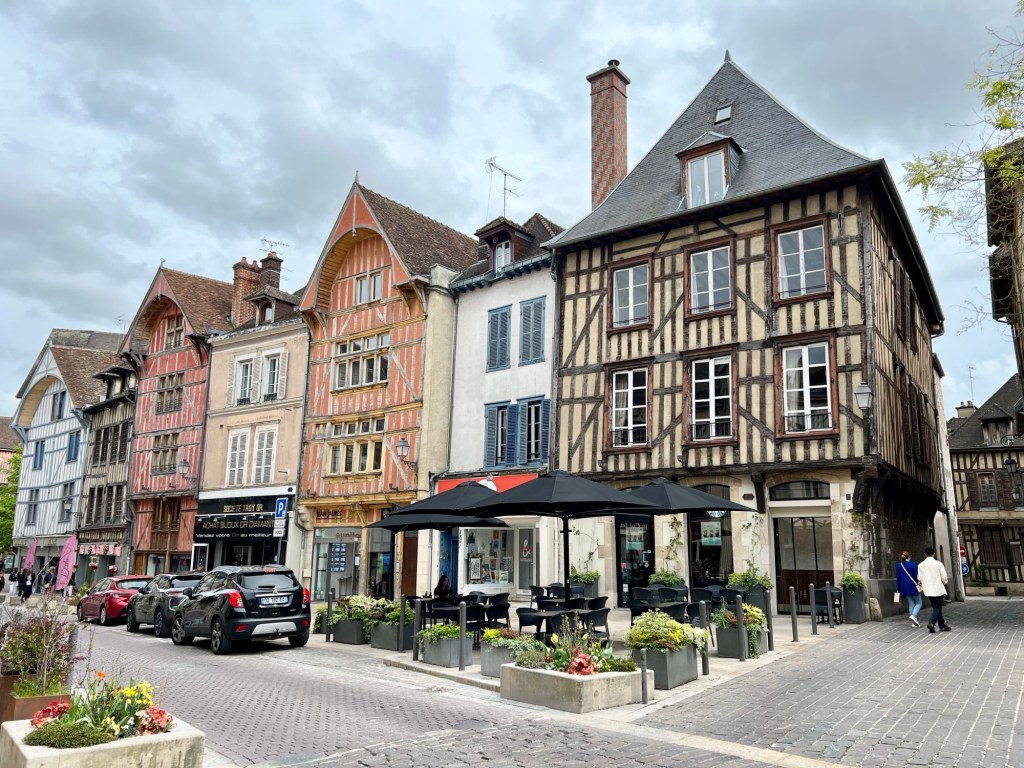


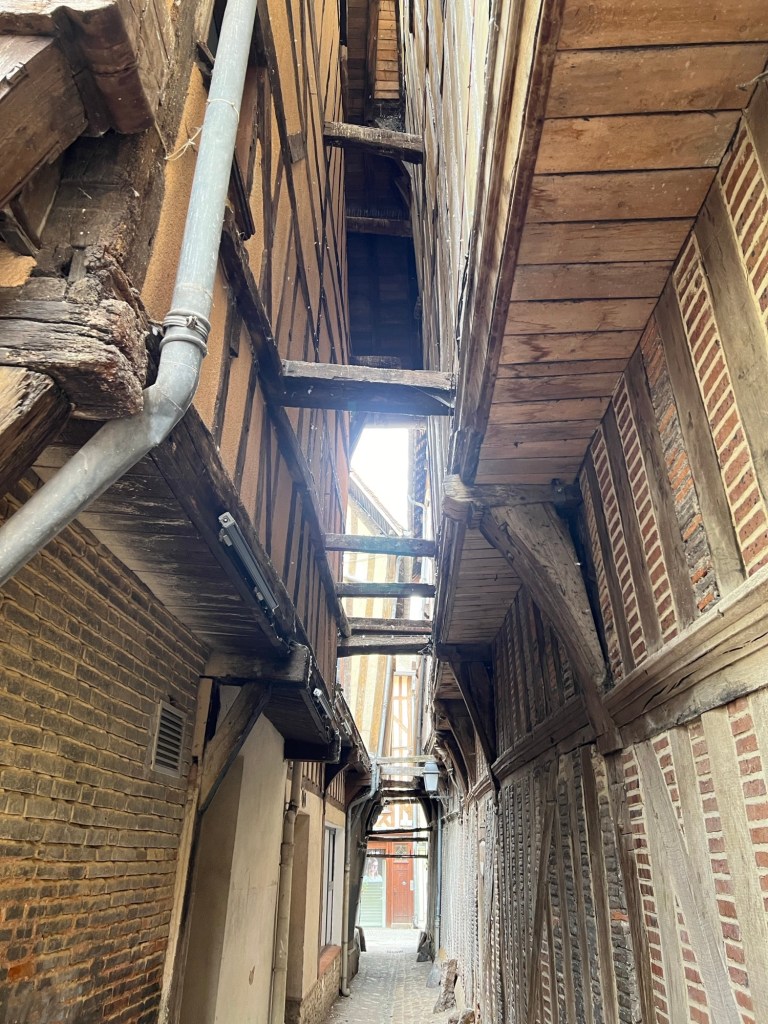

Our hotel upgraded us to nice mini-suites and since it is located in the heart of the old Troyes, we are able to walk the cobblestoned streets almost everywhere. We stop and gawk at the amazing half-timbered buildings. Some of them have leaned quite a bit over the centuries. One alleyway is very narrow and the buildings so lean into each other that one cannot see the sky above. Once again, the city cathedral is impressive as are the two other large churches in the city. As we approached the cathedral, the warden was closing the massive gates. He was kind and told us we could have fifteen minutes inside to view the old stained glass windows. As we headed out, nuns were walking the aisles kindly asking folks to leave.


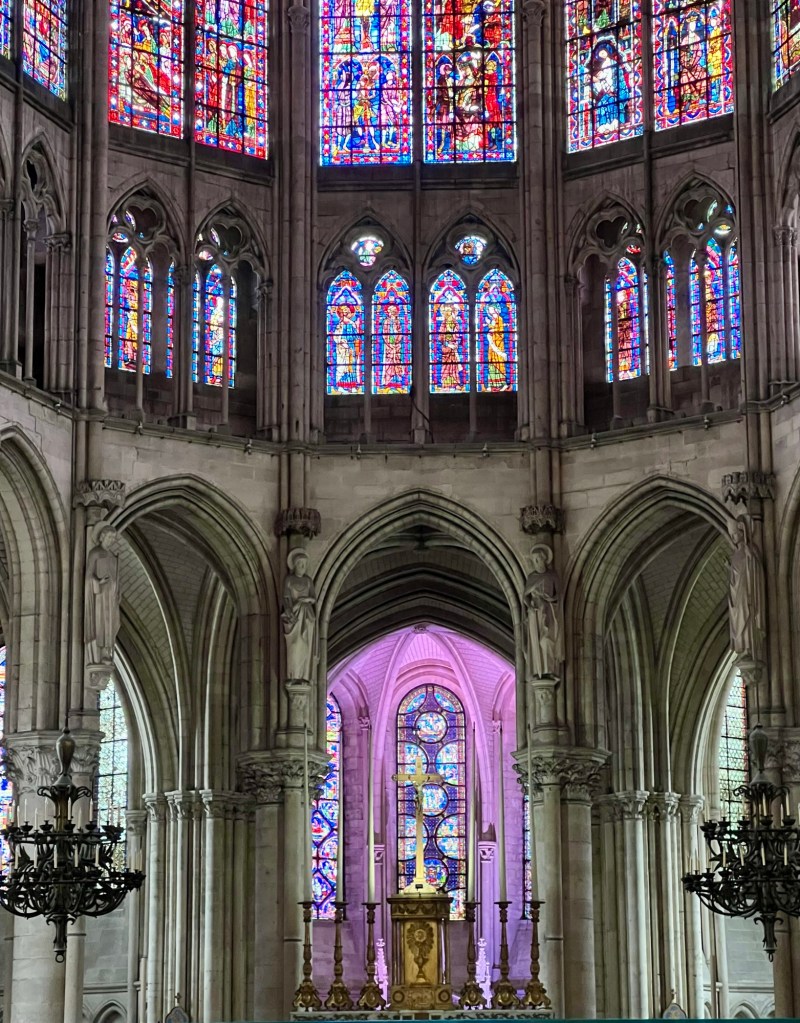
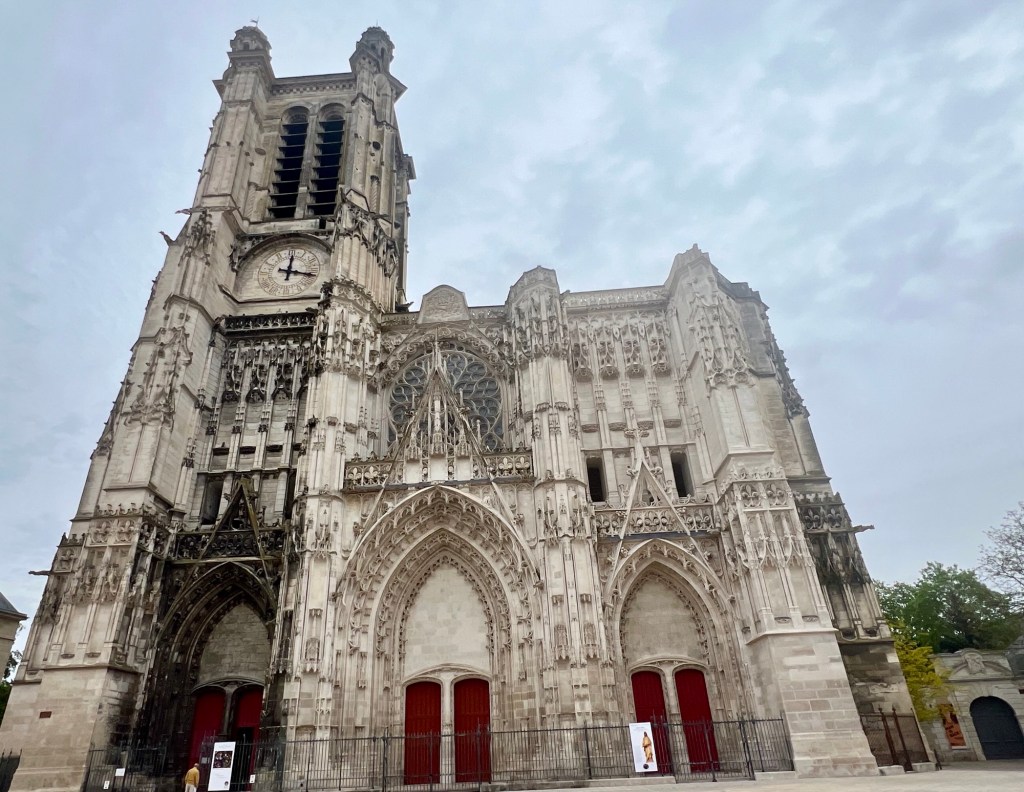
constructed over more than three centuries


We have enjoyed our casual visits with folks from Europe. Politics is a topic they often broach. We also talk about their country and where they live and what that looks like. Interesting and informative, always! When we say we are from Texas…well, everyone knows about Texas! Our hotel desk concierge was excited. He has a dream of moving to Houston and working for the Rockets. He follows the team with passion.
Our service has been fabulous! At one hotel, the hotel clerk parked his car in a handicapped space, so that we could have that space upon our return. He watched patiently and as soon as we drove in, he was out and moving his vehicle so that we could park. We have numerous such kindnesses by staff we could relate. At breakfast, they know who we are and the room in which we stay. Amazing!
Mass and Chablis
On Saturday, April 27, we drove through more beautiful French territory as we traveled along the wine route that stretches from Bordeaux on the Atlantic to Switzerland through central France. Though we were only traversing a small portion of the route, our “short” trip north to Auxerre turned out to be a six-hour journey as we simply could not speed along while traveling through hardwood forests and hill country with the never-ending vibrant fields of yellow rapeseed. Then again, we would wander into a beautiful French country village. We saw farmers in fields, even a scarecrow. Entering Orleans, we took time to visit the St. Croix Cathedral. Not being able to find a parking space, Randy sacrificed his visit by dropping us off and driving around until we had completed our viewing.
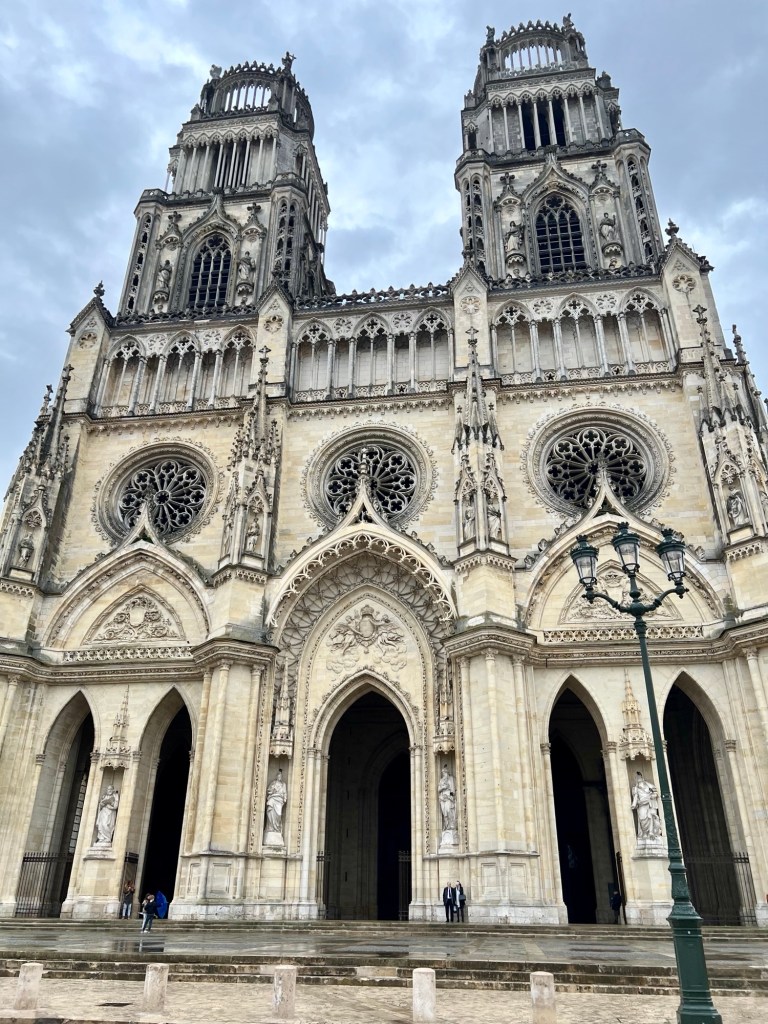
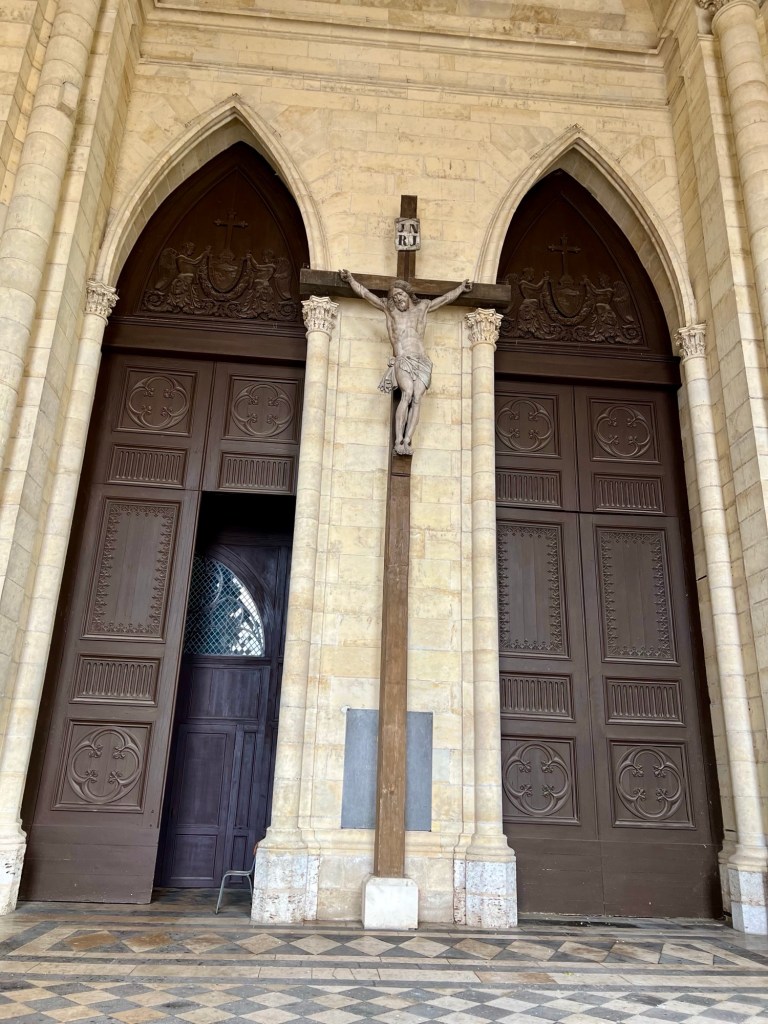
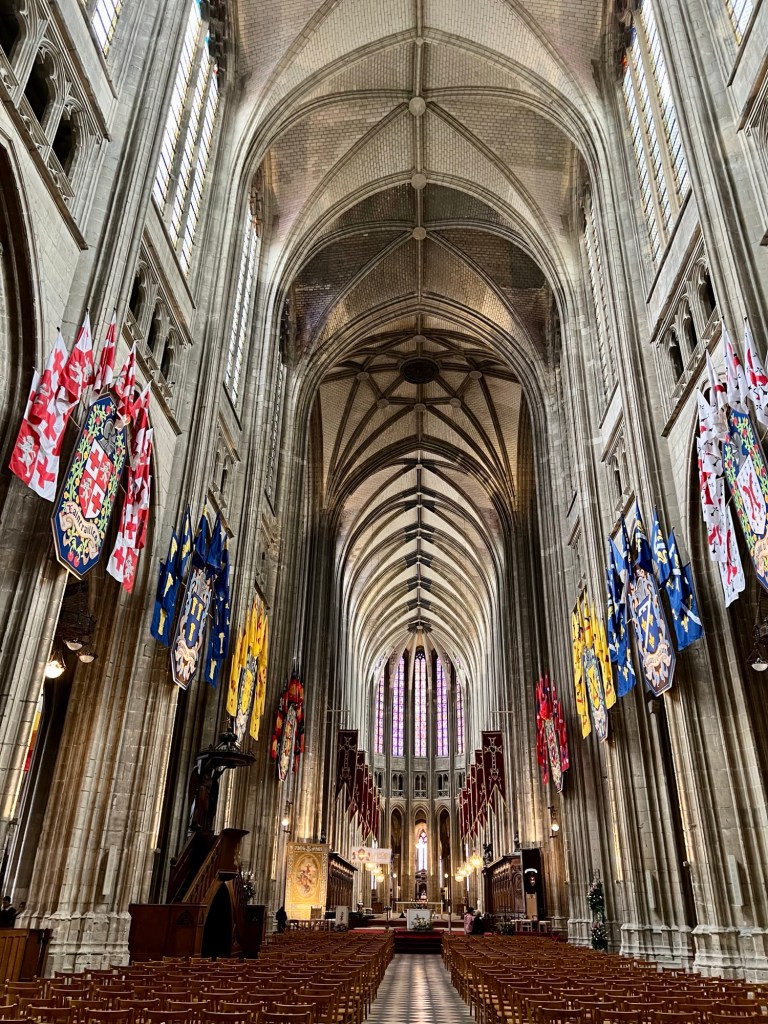

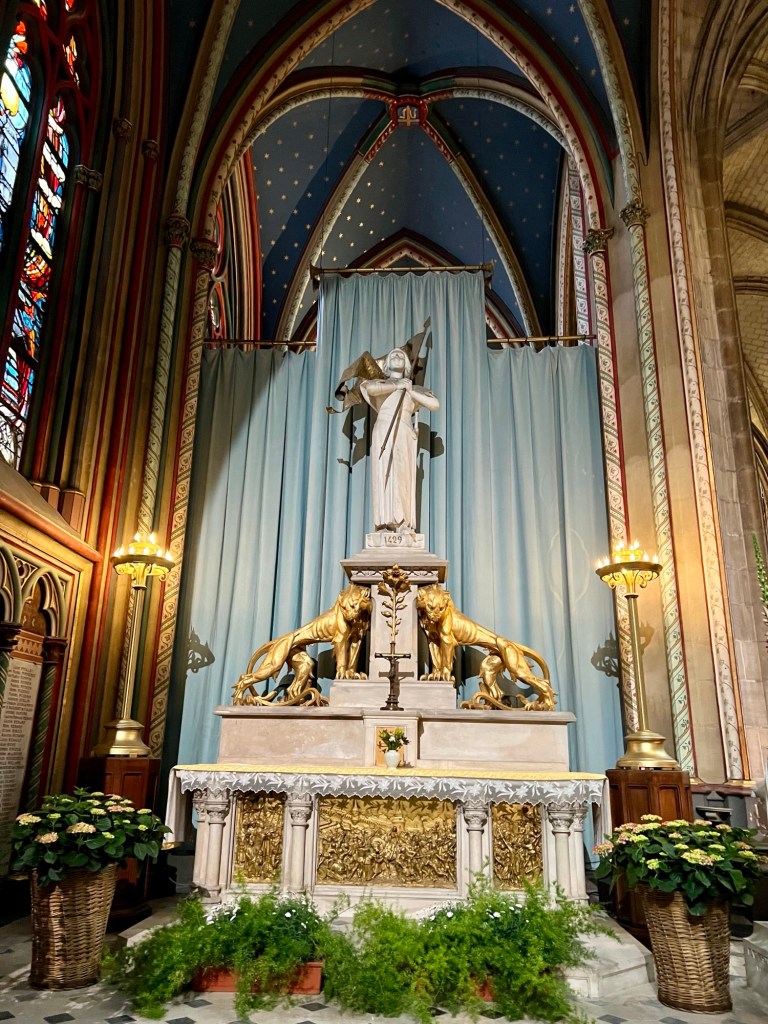
We were intrigued by all we saw. As we drove, we began to see vineyards just beginning to green on the vine. Up hills and down valleys they plunged, some so steeply we speculated about the difficulty of harvesting the grapes. We had indeed hit the wine trail!

Grand Vins de Chablis from 1809
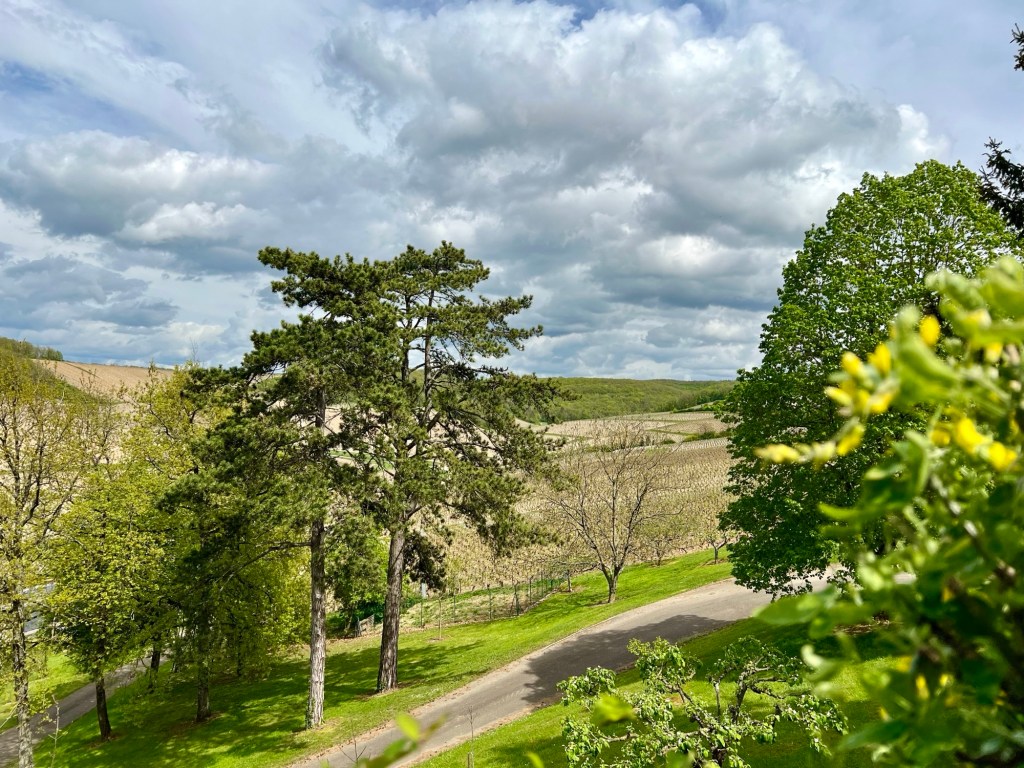
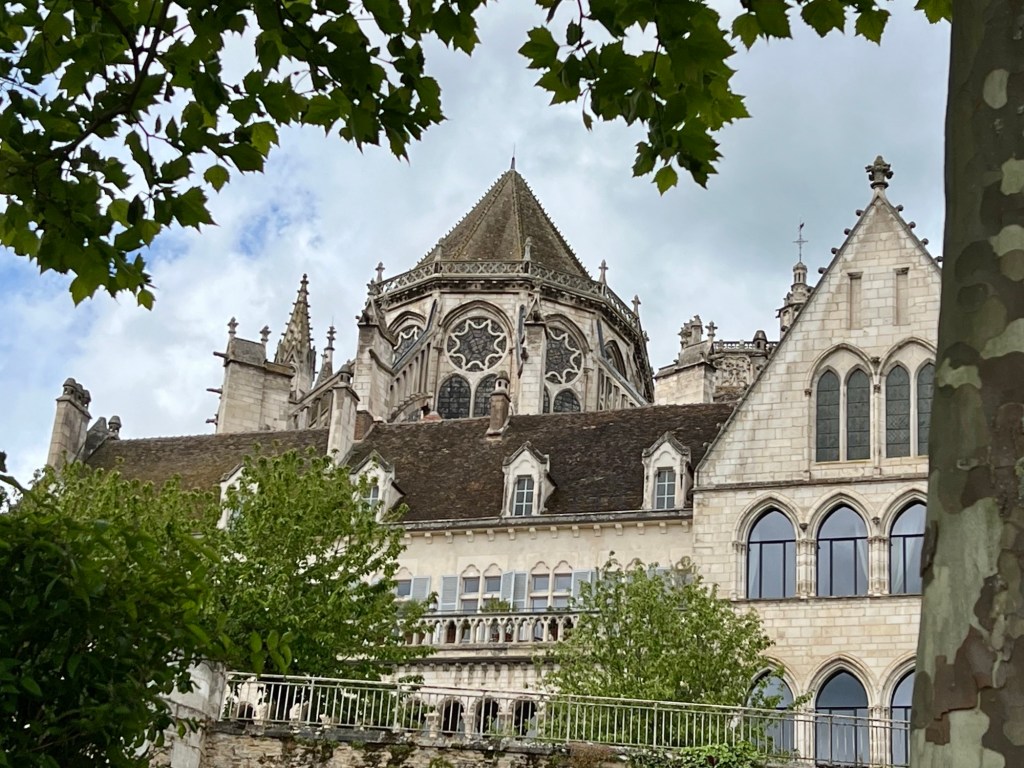
Auxerre is one of the principal stops on the wine trail, and we had a hotel there for the night. A river town with large house boats and high hills, Auxerre is a stately city. Towers and steeples dominate the cityscape. The next morning we walked up to the majestically positioned St. Etienne Cathedral. High above the river below, we arrived as morning mass was beginning. We stayed for the entire service, with a beautiful pipe organ playing, a large congregation participating in singing, prayers, and responsive readings, and respectful, attentive robed youth assisting the clergy throughout the service. We were impressed with the many young families in attendance. Children played and danced, their sounds absorbed into the massive building.


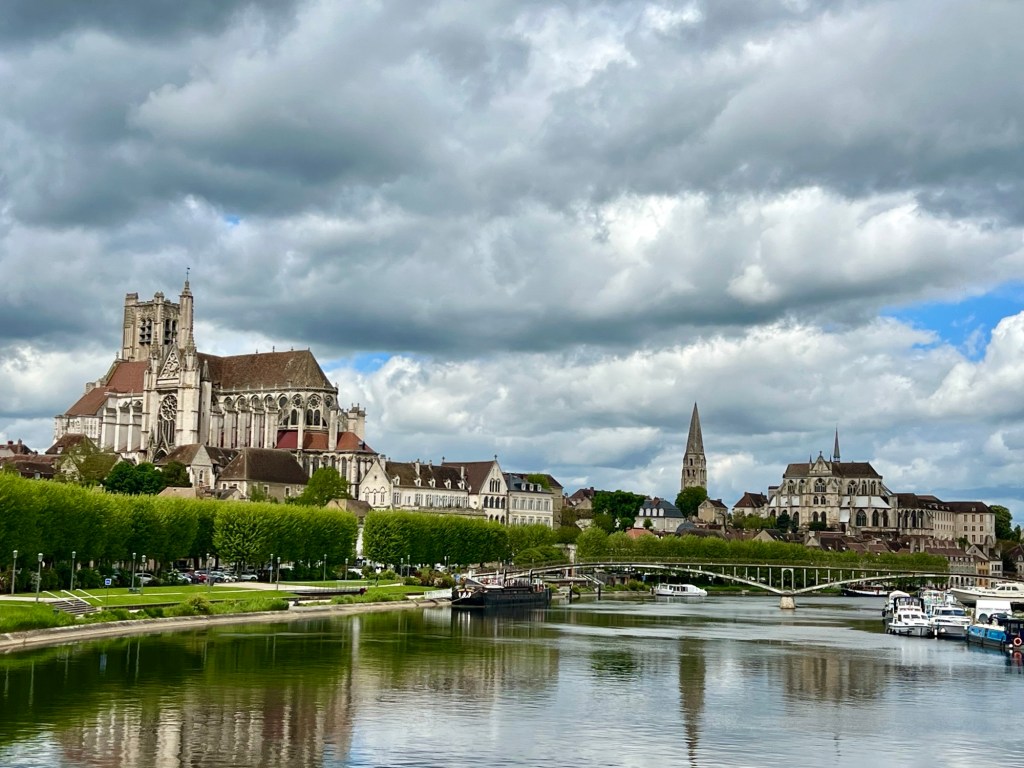
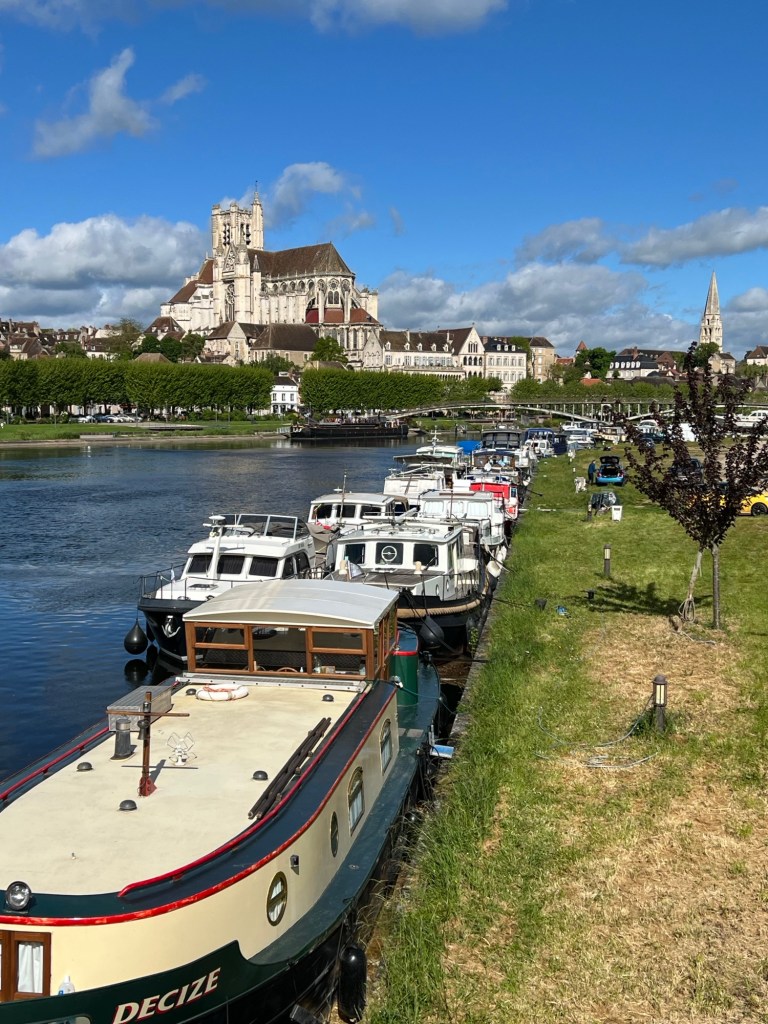
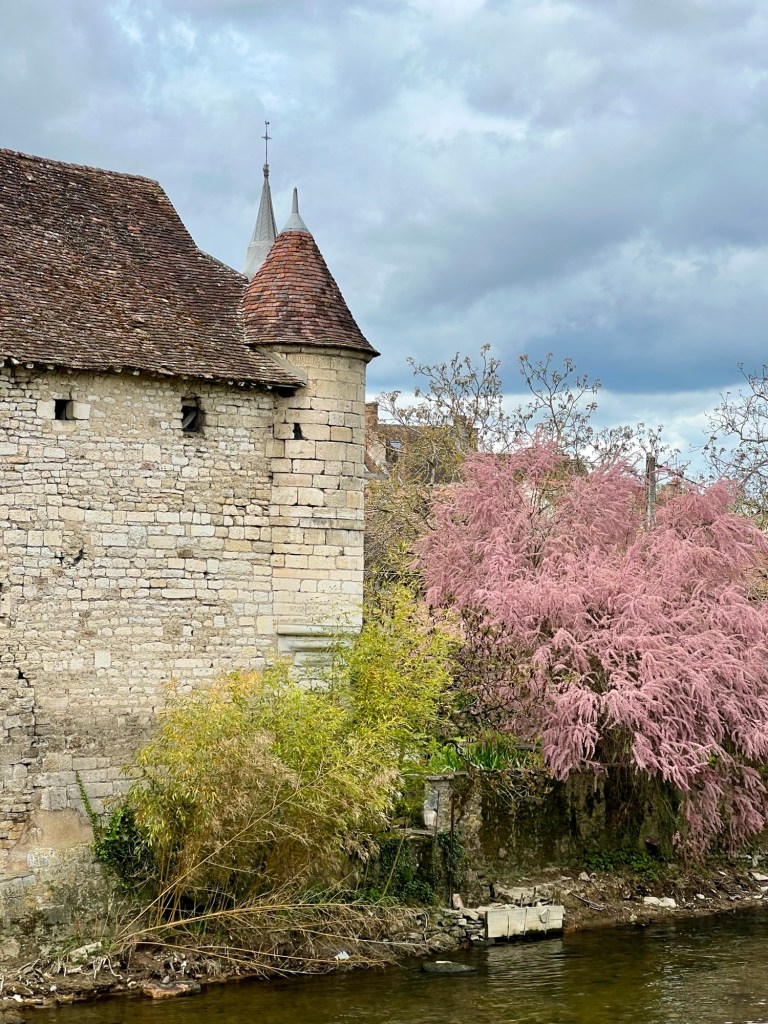
Auxerre and the surrounding area deserved more time, but alas, we had not planned it that way. Driving onward, we arrived in Chablis, the area around which produces the grapes for the wine by its namesake. The village is mesmerizingly charming. Rivers run through with waterfalls and village flowers were stunning. Vineyards rose into the hills all around. Everything was pristine. Being lunchtime, we found a restaurant that shouted “French.” Randy and Melisa, our friends, enjoyed croque monsieur (fried bread and ham and cheese topped with a soft easy-over egg) while Kathy and I ate a locally produced sausage with great dijon mustard–(Dijon is nearby)–and a chocolate soufflé with vanilla cream sauce. It was an enjoyable meal in a dream land setting. Of course, Chablis wine was excellent and appreciated! On we went towards Troyes.


 kgraumann
 wgraumann
